
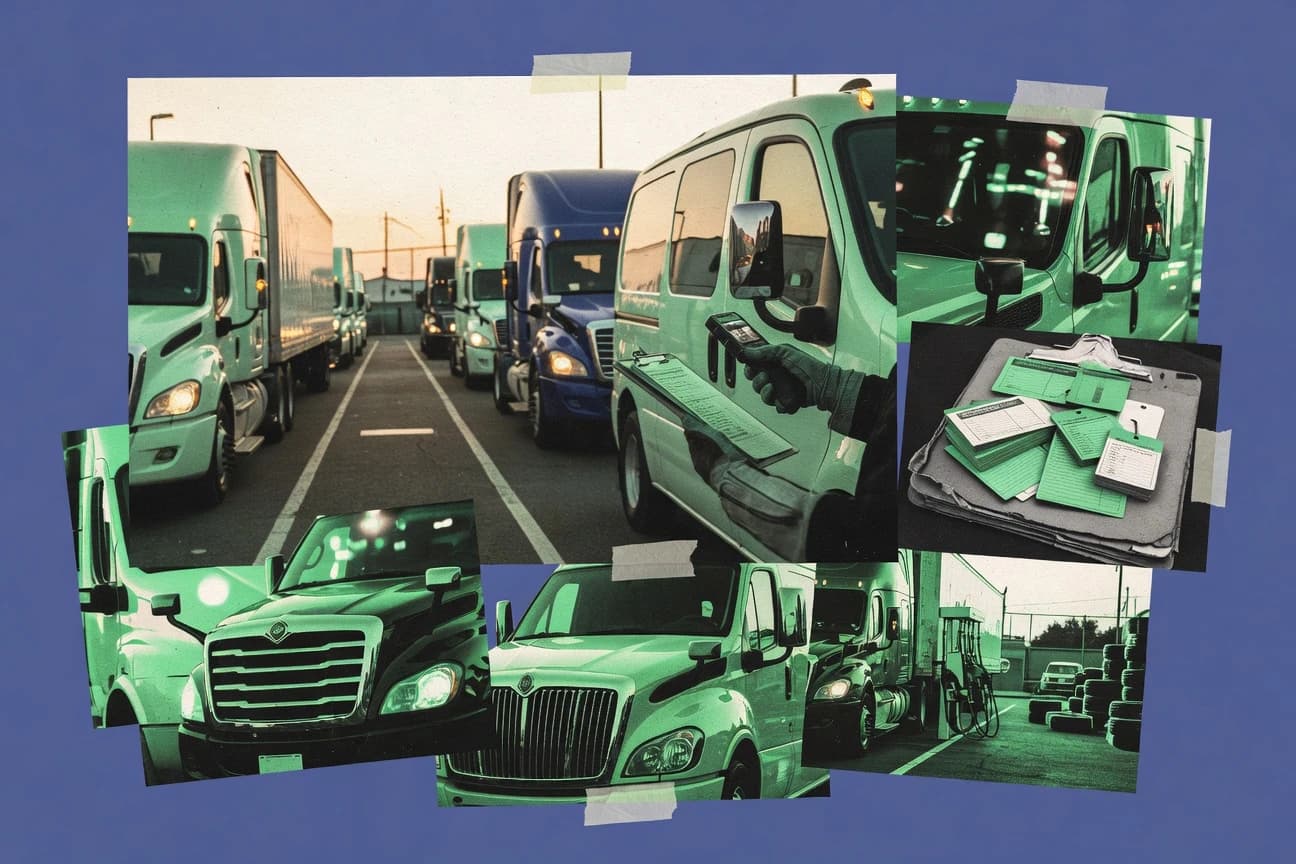

Telematics cut fleet operating costs by 15 percent through fuel savings. Predictive maintenance delivers 1.2 million dollars in annual savings for a 500 vehicle fleet. The following statistics detail efficiency gains, safety improvements, compliance rates, and technology adoption across fleet operations.
Key Takeaways
- Telematics reduce fleet operating costs by 15% through fuel savings.
- Fleets using telematics report 15-20% reduction in fuel costs on average.
- The global fleet management market was valued at USD 26.5 billion in 2022 and is expected to grow at a CAGR of 9.0% from 2023 to 2030.
- 96% of crashes preventable with collision avoidance tech.
- AI-powered fleet management systems predict delays with 92% accuracy.
Fleet managers are reducing costs and improving efficiency by turning real time vehicle data into action.
Related reading
01 · Category
Cost Optimization28 stats
01
Telematics reduce fleet operating costs by 15% through fuel savings.
02
GPS fleet tracking lowers insurance premiums by 10-20% for 70% of users.
03
Predictive maintenance saves $1.2 million annually for a 500-vehicle fleet.
04
Route optimization software reduces mileage by 12%, saving $0.15 per mile.
05
Idling reduction via telematics cuts fuel costs by 25% or $3,500 per truck yearly.
06
ELD mandate compliance avoids $16,000average fine per violation.
07
Tire pressure monitoring saves 5% on fuel, $800 per vehicle annually.
08
Driver training programs reduce accident costs by 30%, $50,000 per incident saved.
09
Asset utilization improvement yields 20% cost per mile reduction.
10
Remote diagnostics cut towing costs by 60%, $2,500 per event.
11
Fuel cards with telematics prevent fraud, saving 5-10% on fuel spend.
12
Benchmarking reduces labor costs by 15% through efficiency gains.
13
Video telematics lowers claims by 40%, saving $100,000+ yearly.
14
EV fleet charging optimization cuts energy costs by 22%.
15
Automated invoicing reduces admin costs by 50%.
16
Geofencing eliminates unauthorized use, saving 8% on fuel theft.
17
Parts inventory optimization via telematics saves 25% on stock holding.
18
Overtime reduction through better scheduling saves 18% on payroll.
19
Compliance software avoids $10,000+ in annual regulatory fines.
20
Dynamic dispatching cuts empty backhauls by 30%, $0.20/mile saved.
21
Oil analysis programs extend intervals, saving 15% on lube costs.
22
Cabling reduction in telematics wiring saves $500per vehicle install.
23
ROI on fleet software averages 3.5x within 12 months.
24
Reduced downtime from telematics saves 12 hours per vehicle monthly.
25
Bulk purchasing via fleet data saves 10-15% on parts.
26
Harassment reduction via cameras lowers turnover costs by 20%.
27
Carbon offset programs via efficient routing save $2,500/vehicle in credits.
28
Telematics fleets save 27% on total cost of ownership (TCO).
Interpretation
Cost Optimization Interpretation
Essentially, telematics turn your fleet from a costly, unhinged metal menagerie into a finely-tuned orchestra of efficiency where every saved penny plays a harmonious note on the balance sheet.
02 · Category
Efficiency and Productivity29 stats
01
Fleets using telematics report 15-20% reduction in fuel costs on average.
02
GPS tracking improves on-road safety by reducing accidents by up to 25%.
03
Automated route optimization cuts idle time by 30% in urban deliveries.
04
Telematics-enabled fleets achieve 10-15% improvement in vehicle utilization rates.
05
Predictive maintenance reduces unplanned downtime by 50% according to 2023 surveys.
06
Driver scorecards from telematics improve fuel efficiency by 12% on average.
07
ELD compliance boosts dispatch efficiency by 20% in long-haul trucking.
08
Real-time visibility reduces empty miles by 18% in logistics fleets.
09
IoT sensors enable 25% faster turnaround times at depots.
10
Dynamic routing with AI decreases delivery times by 22% in e-commerce.
11
Fleet telematics users report 14% increase in miles per gallon (MPG).
12
Engine idling reduced by 40% with geofencing and telematics alerts.
13
Benchmarking tools improve overall equipment effectiveness (OEE) by 16%.
14
Mobile workforce apps cut paperwork time by 70%, boosting productivity.
15
Video-based coaching reduces harsh braking events by 35%.
16
Asset tracking recovers 90% of lost equipment within 24 hours.
17
Integrated fleet platforms increase order fulfillment rates by 28%.
18
Telematics data analytics optimize load factors, improving by 11%.
19
Remote diagnostics reduce repair visits by 45% for heavy equipment.
20
Gamification in driver apps boosts on-time delivery by 19%.
21
AI scheduling reduces overtime costs by 23% in service fleets.
22
CAN bus data integration improves engine performance monitoring by 30%.
23
Fleet pooling apps increase vehicle sharing utilization by 27%.
24
Real-time ETAs via telematics improve customer satisfaction scores by 15 points.
25
Maintenance scheduling via telematics cuts repair costs by 20-30%.
26
62% of fleets report 10%+ productivity gains from dash cams.
27
72% of telematics users see reduced speeding, improving efficiency by 8%.
28
Average fleet reduces fuel consumption by 13.3% with GPS routing.
29
85% of fleets with ELDs report improved Hours of Service compliance, aiding productivity.
Interpretation
Efficiency and Productivity Interpretation
When you connect a fleet with telematics, it's like giving it a financial conscience, a safety-minded co-pilot, and an obsessive-compulsive efficiency coach, all working in harmony to save money, protect drivers, and outmaneuver the chaos of the road.
03 · Category
Market Analysis30 stats
01
The global fleet management market was valued at USD 26.5 billion in 2022 and is expected to grow at a CAGR of 9.0% from 2023 to 2030.
02
In 2023, North America accounted for over 35% of the global fleet management market share due to high adoption in logistics.
03
The telematics segment in fleet management is projected to grow from USD 45.2 billion in 2023 to USD 102.8 billion by 2030 at a CAGR of 12.5%.
04
Europe fleet management market size reached EUR 12.4 billion in 2022, expected to hit EUR 22.1 billion by 2028.
05
Asia-Pacific fleet management market is forecasted to register the highest CAGR of 11.2% during 2023-2030 driven by e-commerce growth.
06
Commercial vehicle telematics market valued at USD 38.4 billion in 2022, projected to reach USD 95.6 billion by 2030.
07
U.S. fleet management software market size was USD 7.2 billion in 2023, growing at 10.8% CAGR to 2032.
08
Global fleet management solutions market expected to reach USD 53.7 billion by 2027 from USD 28.5 billion in 2022.
09
Cloud-based fleet management systems held 62% market share in 2023 due to scalability advantages.
10
Logistics and transportation segment dominated with 45% revenue share in global fleet management in 2023.
11
Fleet management market in construction sector projected to grow at 10.5% CAGR from 2023-2030.
12
Electric vehicle fleet management solutions market to grow from USD 1.2 billion in 2023 to USD 8.5 billion by 2032.
13
Middle East & Africa fleet management market valued at USD 2.1 billion in 2022, CAGR 8.7% to 2030.
14
On-premise deployment held 38% share in fleet management software market in 2023.
15
Global fleet telematics market size estimated at USD 47.6 billion in 2024, reaching USD 112.3 billion by 2032.
16
Passenger car segment in fleet management expected to grow at 9.8% CAGR during 2023-2031.
17
Latin America fleet management market to exhibit 10.2% CAGR from 2023 to 2030.
18
IoT-enabled fleet management market projected to reach USD 75.4 billion by 2028 from USD 32.1 billion in 2023.
19
Utility sector fleet management market size was USD 4.8 billion in 2022, growing to USD 9.2 billion by 2030.
20
Global connected truck market, key to fleet management, valued at USD 12.3 billion in 2023.
21
Fleet management as a service (FMaaS) market to grow at 12.1% CAGR from 2023-2030.
22
Heavy-duty trucks segment accounted for 55% of fleet telematics installations in 2023.
23
Global fleet outsourcing market size reached USD 18.7 billion in 2023.
24
Predictive maintenance in fleet management market to hit USD 15.6 billion by 2030.
25
Small fleet operators (under 50 vehicles) represent 42% of the market in 2024.
26
Enterprise fleets (over 500 vehicles) drive 60% of software subscription revenues in 2023.
27
Aftermarket telematics installations grew 25% YoY in 2023 globally.
28
Fleet management market penetration in SMEs reached 28% in Europe by 2023.
29
Video telematics sub-market valued at USD 4.2 billion in 2023, CAGR 18.5% to 2030.
30
Global fleet ADAS market projected to grow from USD 10.1 billion in 2024 to USD 28.4 billion by 2032.
Interpretation
Market Analysis Interpretation
The world's fleets are being relentlessly digitized, tethered, and optimized, turning every truck, van, and bus into a data-producing asset on a fast track from a billion-dollar industry to a trillion-dollar nervous system for global commerce.
More related reading
04 · Category
Safety, Compliance, and Sustainability29 stats
01
96% of crashes preventable with collision avoidance tech.
02
Telematics reduces fleet accidents by 20-30% industry-wide.
03
Driver monitoring systems cut harsh events by 50%.
04
ELD adoption improves CSA scores by 25% for carriers.
05
70% of fleets report zero tolerance for violations with video tech.
06
Seatbelt usage increases 15% with in-cab alerts.
07
Sustainability: Telematics cuts CO2 emissions by 18% per vehicle.
08
82% compliance rate post-ELD mandate in 2023.
09
AI dashcams detect drowsy driving 92% accurately.
10
Green fleets with telematics reduce NOx emissions by 25%.
11
65% fewer speeding tickets with telematics coaching.
12
ISO 14001 certified fleets via telematics grow 12% YoY.
13
Collision mitigation systems prevent 40% of rear-end crashes.
14
HOS violations dropped 60% post-ELD implementation.
15
Electric fleets cut particulate matter by 90% vs diesel.
16
50% of fleets meet EU Stage V emissions with retrofits.
17
Telematics enables 99% DVIR compliance daily.
18
Biofuel adoption in fleets reduces GHG by 74%.
19
Forward collision warning adopted in 55% of new trucks.
20
Carbon footprint tracking shows 22% reduction in tracked fleets.
21
78% of fleets pass roadside inspections first time with ELDs.
22
Lane departure warnings prevent 25% of rollover incidents.
23
Sustainable routing optimizes for low-emission zones, 15% CO2 cut.
24
Driver fatigue tech mandated in EU for 2024 new vehicles.
25
Telematics fleets average 40% lower injury claims.
26
30% of fleets target net-zero by 2030 with EV telematics.
27
Blind spot monitoring reduces side-swipes by 65%.
28
Compliance auditing software ensures 95% audit readiness.
29
Renewable diesel in fleets cuts lifecycle emissions by 80%.
Interpretation
Safety, Compliance, and Sustainability Interpretation
While the tech points toward a near perfect future on paper, the real story is a gritty, data driven climb where every percentage of prevention, compliance, and cleaner emission hard won from the road represents a life saved, a violation avoided, and a breath of air made easier to take.
05 · Category
Technology and Innovation28 stats
01
AI-powered fleet management systems predict delays with 92% accuracy.
02
68% of fleets adopted cloud-based telematics by end of 2023.
03
Blockchain for fleet supply chain transparency adopted by 15% of large fleets in 2024.
04
5G connectivity in telematics enables 50ms latency for real-time data.
05
Machine learning algorithms detect driver fatigue with 95% accuracy in video telematics.
06
Edge computing in fleet devices processes 80% of data locally, reducing bandwidth needs.
07
45% of new fleet vehicles equipped with OEM telematics in 2024.
08
Digital twins for fleet simulation adopted by 22% of automotive fleets.
09
V2X communication reduces collision risks by 30% in connected fleets.
10
RPA automates 70% of fleet invoicing and billing processes.
11
AR maintenance guides cut technician time by 40% in field service.
12
Big data analytics in fleets process 10TB of data per 100 vehicles daily.
13
Quantum computing pilots for route optimization in 5% of mega-fleets.
14
55% penetration of ADAS Level 2 in new commercial vehicles 2024.
15
NFC-enabled keyless access used in 30% of corporate car fleets.
16
Drone-assisted fleet inspections cover 90% more assets per day.
17
Biometric driver authentication implemented in 18% of security-sensitive fleets.
18
Generative AI chatbots handle 65% of fleet driver queries autonomously.
19
Satellite IoT connectivity reaches 99.9% coverage for remote fleets.
20
Wearables for drivers monitor health metrics in 12% of fleets.
21
Digital logging reduces HOS violations by 80% with AI validation.
22
40% of fleets use low-code platforms for custom telematics apps.
23
Computer vision AI identifies 98% of road hazards preemptively.
24
Hybrid cloud adoption in fleet management at 52% in 2024.
25
RPA bots process 5000+ maintenance tickets weekly in large fleets.
26
75% of fleets plan 5G upgrades by 2025 for video streaming.
27
NFTs for vehicle digital ownership trialed in 2% of luxury fleets.
28
Telematics market sees 28% CAGR for AI-integrated solutions to 2030.
Interpretation
Technology and Innovation Interpretation
While our crystal balls are now 92% accurate and our fleets are increasingly buzzing with AI, blockchain, and digital twins, the real magic is how we're finally using all this wizardry to keep drivers safer, invoices quieter, and roads less congested—one painfully slow bureaucratic process at a time.
Reference
Cite This Report
This report is designed to be cited. We maintain stable URLs and versioned verification dates. Copy the format appropriate for your publication below.
APA
Diana Reeves. (2026, February 13). Fleet Management Statistics. Gitnux. https://gitnux.org/fleet-management-statistics
MLA
Diana Reeves. "Fleet Management Statistics." Gitnux, 13 Feb 2026, https://gitnux.org/fleet-management-statistics.
Chicago
Diana Reeves. 2026. "Fleet Management Statistics." Gitnux. https://gitnux.org/fleet-management-statistics.
Sources & references
100 datasets cited across this report · attribution is report-level