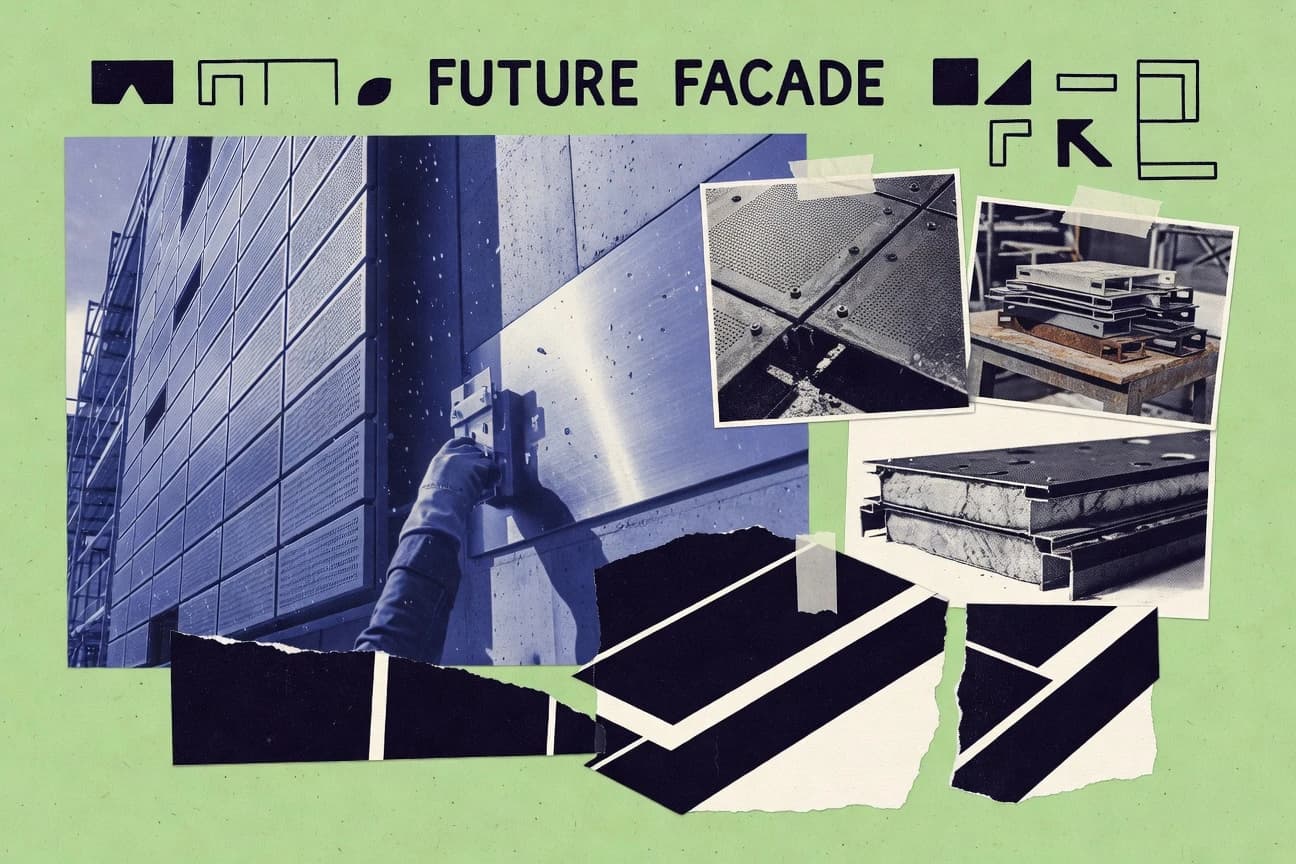

Facade decisions are getting reshaped fast as the global facade market is projected to grow at a 6.6% CAGR from 2023 to 2032, while EU and US retrofit momentum keeps tightening the design brief. When moisture failures, energy demand, and embodied carbon are quantified side by side, the picture gets surprisingly practical, from up to 90% fewer moisture-related failures with ventilated rainscreen systems to higher thermal transmittance penalties in retrofits. The result is a dataset worth unpacking because small envelope choices are repeatedly linked to big shifts in cost, comfort, and carbon.
Key Takeaways
- 6.6% CAGR projected for the global facade market from 2023 to 2032
- 28% of architects cited energy efficiency requirements as a driver for envelope/facade improvements (2021)
- 38% of U.S. building projects reported using exterior insulation and finishing systems (EIFS) or similar exterior wall assemblies (2020)
- Rainscreen/ventilated facade systems can reduce moisture-related failures by up to 90% compared with non-ventilated cladding systems (peer-reviewed study)
- 3.5% increase in U.S. building materials prices in 2023 (BLS Producer Price Index summary)
- 1.6% of residential energy expenditures in the U.S. can be saved through insulation and air sealing (EIA analysis)
- BIM-enabled clashes can reduce rework costs by 10% to 30% in AEC projects (industry study)
- 7.0% of global construction and demolition waste is attributable to façade materials in major city waste inventories (peer-reviewed study)
- Glazing can account for 25% to 50% of a building’s total energy-related emissions (peer-reviewed review)
- Cool roofs can reduce roof heat gain by 20% to 40% (U.S. EPA technical documentation)
- Moisture intrusion probability can drop by an order of magnitude with properly installed ventilated façade systems (peer-reviewed moisture modeling)
- Windscreen/cladding systems rated to resist wind pressures up to 2.4 kPa in specified building codes ranges (IBC/ASCE referenced guidance)
- Sprayed insulation adhesion failures are reduced significantly when surface preparation meets manufacturer specifications (peer-reviewed adhesion study)
- 30% of heat losses in buildings are attributable to external walls in EU building stock energy audits (envelope failure mode weighting)
- 64% of EU respondents reported they are planning energy-efficiency renovations over the next 3 years (façade/envelope retrofit demand indicator)
Facade upgrades are growing fast, cutting energy and moisture risks while improving building sustainability.
Related reading
01 · Category
Market Size1 stats
01
6.6% CAGR projected for the global facade market from 2023 to 2032https://www.fortunebusinessinsights.com/industry-reports/facade-market-102919
Interpretation
Market Size Interpretation
The global facade market is expected to grow at a 6.6% CAGR from 2023 to 2032, signaling steady expansion in market size over the coming decade.
02 · Category
Industry Trends5 stats
01
28% of architects cited energy efficiency requirements as a driver for envelope/facade improvements (2021)https://www.archpaper.com/2021/06/architects-survey-energy-efficiency-envelope
02
38% of U.S. building projects reported using exterior insulation and finishing systems (EIFS) or similar exterior wall assemblies (2020)https://www.builderonline.com/products/materials/eifs-market-data-2020
03
Rainscreen/ventilated facade systems can reduce moisture-related failures by up to 90% compared with non-ventilated cladding systems (peer-reviewed study)https://www.sciencedirect.com/science/article/pii/S0963869515000025
04
20% typical reduction in heating energy demand from high-performance opaque wall systems (peer-reviewed review)https://www.sciencedirect.com/science/article/pii/S0360132319301524
05
42% of global buildings’ lifecycle greenhouse gas emissions occur during operations (GlobalABC 2022 report)https://globalabc.org/resources/publications/2022-global-status-report-buildings-and-construction
Interpretation
Industry Trends Interpretation
Industry Trends are increasingly pointing toward performance-driven facade choices since 28% of architects in 2021 named energy efficiency requirements as a key driver for envelope improvements and 38% of U.S. projects in 2020 used systems like EIFS, while peer reviewed evidence shows ventilated rainscreen facades can cut moisture related failures by up to 90% and high performance opaque walls reduce heating demand by about 20%.
03 · Category
Cost Analysis7 stats
01
3.5% increase in U.S. building materials prices in 2023 (BLS Producer Price Index summary)https://www.bls.gov/news.release/ppi.htm
02
1.6% of residential energy expenditures in the U.S. can be saved through insulation and air sealing (EIA analysis)https://www.eia.gov/analysis/studies/building-energy-efficiency
03
BIM-enabled clashes can reduce rework costs by 10% to 30% in AEC projects (industry study)https://www.researchgate.net/publication/328932170_The_Effect_of_BIM_on_Construction_Clash_Detection_and_Construction_Rework
04
Steel fabrication lead times for facade components averaged 6 to 10 weeks in 2021 (McGraw Hill Construction lead time survey)https://www.constructiondive.com/news/mcgraw-hill-lead-times-2021-materials/606787/
05
Curtain wall procurement lead times increased by ~15% during 2022 supply chain disruptions (industry survey)https://www.enr.com/articles/53662-curtain-wall-procurement-lead-times-increase-2022
06
0.3% to 1.2% typical cost penalty per degree (C) change in façade thermal transmittance (U-value) in commercial retrofits (peer-reviewed)https://www.sciencedirect.com/science/article/pii/S0378778819306666
07
Improving building envelope can reduce HVAC energy use by 20% to 30% (peer-reviewed synthesis)https://www.sciencedirect.com/science/article/pii/S0360132315005203
Interpretation
Cost Analysis Interpretation
In the cost analysis view of facade projects, rising procurement and materials pressures are being partially offset by measurable savings, such as cutting AEC rework costs by 10% to 30% through BIM clash detection and achieving HVAC energy reductions of 20% to 30% from better building envelope upgrades.
04 · Category
Sustainability & Esg11 stats
01
7.0% of global construction and demolition waste is attributable to façade materials in major city waste inventories (peer-reviewed study)https://www.sciencedirect.com/science/article/pii/S0959652616304223
02
Glazing can account for 25% to 50% of a building’s total energy-related emissions (peer-reviewed review)https://www.sciencedirect.com/science/article/pii/S0360132316306246
03
Cool roofs can reduce roof heat gain by 20% to 40% (U.S. EPA technical documentation)https://www.epa.gov/sites/default/files/2014-07/documents/heat-island-cool-roofs.pdf
04
Typical double-glazed units can reduce heat loss by up to 50% compared with single glazing (peer-reviewed)https://www.sciencedirect.com/science/article/pii/S036013230900039X
05
LEED certified buildings can achieve 33% lower energy use than typical buildings (USGBC research)https://www.usgbc.org/resources/leed-impact-report
06
Thermal bridges contribute about 20% to 25% of heat losses in buildings (European Commission/peer-reviewed)https://ec.europa.eu/energy/sites/ener/files/documents/thermal_bridges.pdf
07
Embodied carbon is estimated to represent about 11% of global energy-related CO2 emissions (IPCC/IEA compendium estimate)https://www.iea.org/reports/buildings
08
Up to 30% of building material waste is preventable through better design and procurement (World Bank/UNEP report)https://wedocs.unep.org/bitstream/handle/20.500.11822/27643/BMW_Constructions.pdf
09
Material passport approaches can reduce lifecycle uncertainty by improving traceability for building components (peer-reviewed study)https://www.sciencedirect.com/science/article/pii/S0959652621006127
10
Rainwater harvesting can reduce potable water demand by 30% to 50% in suitable climates (peer-reviewed review)https://www.sciencedirect.com/science/article/pii/S0301479719313139
11
Carbon reduction potential: replacing 25% of high-embodied-carbon façade components with lower-impact alternatives can reduce embodied carbon by ~10% to 20% for façade portions (LCA modeling study)https://www.sciencedirect.com/science/article/pii/S0959652622001568
Interpretation
Sustainability & Esg Interpretation
In sustainability and ESG terms, façades make a measurable difference because glazing alone can drive 25% to 50% of a building’s energy-related emissions and embodied carbon can be about 11% of global energy CO2, meaning targeting façade choices, waste prevention, and better material traceability can realistically cut climate impacts.
05 · Category
Performance Metrics4 stats
01
Moisture intrusion probability can drop by an order of magnitude with properly installed ventilated façade systems (peer-reviewed moisture modeling)https://www.sciencedirect.com/science/article/pii/S0360132308003545
02
Windscreen/cladding systems rated to resist wind pressures up to 2.4 kPa in specified building codes ranges (IBC/ASCE referenced guidance)https://codes.iccsafe.org/content/IBC2018/chapter-16
03
Sprayed insulation adhesion failures are reduced significantly when surface preparation meets manufacturer specifications (peer-reviewed adhesion study)https://www.sciencedirect.com/science/article/pii/S0927024819300517
04
A 1% improvement in window-to-wall ratio can shift heating/cooling loads by several percent depending on climate (peer-reviewed analysis)https://www.sciencedirect.com/science/article/pii/S030626191830271X
Interpretation
Performance Metrics Interpretation
Performance Metrics show that the right façade choices can materially improve outcomes, with properly installed ventilated systems cutting moisture intrusion probability by an order of magnitude and wind resistance reaching 2.4 kPa, while even a 1% boost in window to wall ratio can move heating and cooling loads by several percent depending on climate.
More related reading
06 · Category
Energy & Carbon1 stats
01
30% of heat losses in buildings are attributable to external walls in EU building stock energy audits (envelope failure mode weighting)https://ec.europa.eu/jrc/en/publication/eur-scientific-and-technical-research-reports/energy-efficiency-of-buildings-in-europe-who-is-doing-what-and-when
Interpretation
Energy & Carbon Interpretation
In the Energy and Carbon context, external walls drive 30% of heat losses in EU building stock energy audits, making facade efficiency a major lever for cutting building energy use and related emissions.
07 · Category
Retrofit Demand2 stats
01
64% of EU respondents reported they are planning energy-efficiency renovations over the next 3 years (façade/envelope retrofit demand indicator)https://europa.eu/eurobarometer/surveys/detail/2242
02
In the EU, 3.3% of the building stock is renovated each year (meaning at this rate ~1/30 of stock cycles through renovation, supporting facade replacement/upgrade demand)https://energy.ec.europa.eu/topics/energy-efficiency/energy-efficient-buildings/renovation-wave_en
Interpretation
Retrofit Demand Interpretation
With 64% of EU respondents planning energy efficiency renovations in the next three years and 3.3% of the building stock being renovated annually, retrofit demand for façades and envelopes looks set to stay steadily high.
08 · Category
Market Structure4 stats
01
In the U.S., the construction sector accounted for 5.5% of GDP in 2023, indicating the scale of facade and building-envelope contracting activityhttps://apps.bea.gov/iTable/?reqid=19&step=1&isuri=1&categories=GDPbyIndustry&units=Percent
02
In 2022, the U.S. construction industry employed 7.6 million people (labor demand for façade installation and envelope work)https://www.bls.gov/oes/current/naics_23.htm
03
In 2021, U.S. construction had $1.9 trillion in construction spending (implies large total addressable budgets for facade projects within construction)https://www.census.gov/construction/c30/c30index.html
04
In Japan, the share of residential buildings built with 'wood frame' construction is 71.7% (facade system selection constraint influencing cladding and exterior finish patterns)https://www.stat.go.jp/english/data/jyutaku/
Interpretation
Market Structure Interpretation
From a market structure perspective, the facade and building-envelope segment sits inside a massive US construction base of 7.6 million workers in 2022 and $1.9 trillion in spending in 2021, while Japan’s residential market is heavily skewed toward wood-frame construction at 71.7%, shaping how exterior cladding choices play out in each country.
09 · Category
Building Science2 stats
01
Thermal bridges can increase total annual heating energy demand by 5% to 15% in typical retrofit scenarios depending on climate and detailing (envelope physics quantification)https://www.sciencedirect.com/science/article/pii/S0360132315005605
02
In a meta-analysis of retrofit measures, exterior wall insulation retrofits show average heating energy savings of about 20% (range varies by climate and baseline)https://www.tandfonline.com/doi/abs/10.1080/17455030.2017.1293056
Interpretation
Building Science Interpretation
From a building science perspective, reducing thermal bridges and improving the envelope can materially cut heating demand, since thermal bridges can add 5% to 15% in typical retrofits while exterior wall insulation retrofits often deliver about 20% average heating energy savings.
Reference
Cite This Report
This report is designed to be cited. We maintain stable URLs and versioned verification dates. Copy the format appropriate for your publication below.
APA
Priyanka Sharma. (2026, February 13). Facade Industry Statistics. Gitnux. https://gitnux.org/facade-industry-statistics
MLA
Priyanka Sharma. "Facade Industry Statistics." Gitnux, 13 Feb 2026, https://gitnux.org/facade-industry-statistics.
Chicago
Priyanka Sharma. 2026. "Facade Industry Statistics." Gitnux. https://gitnux.org/facade-industry-statistics.
Sources & references
37 datasets cited across this report
+15 additional datasets cited (not shown individually)