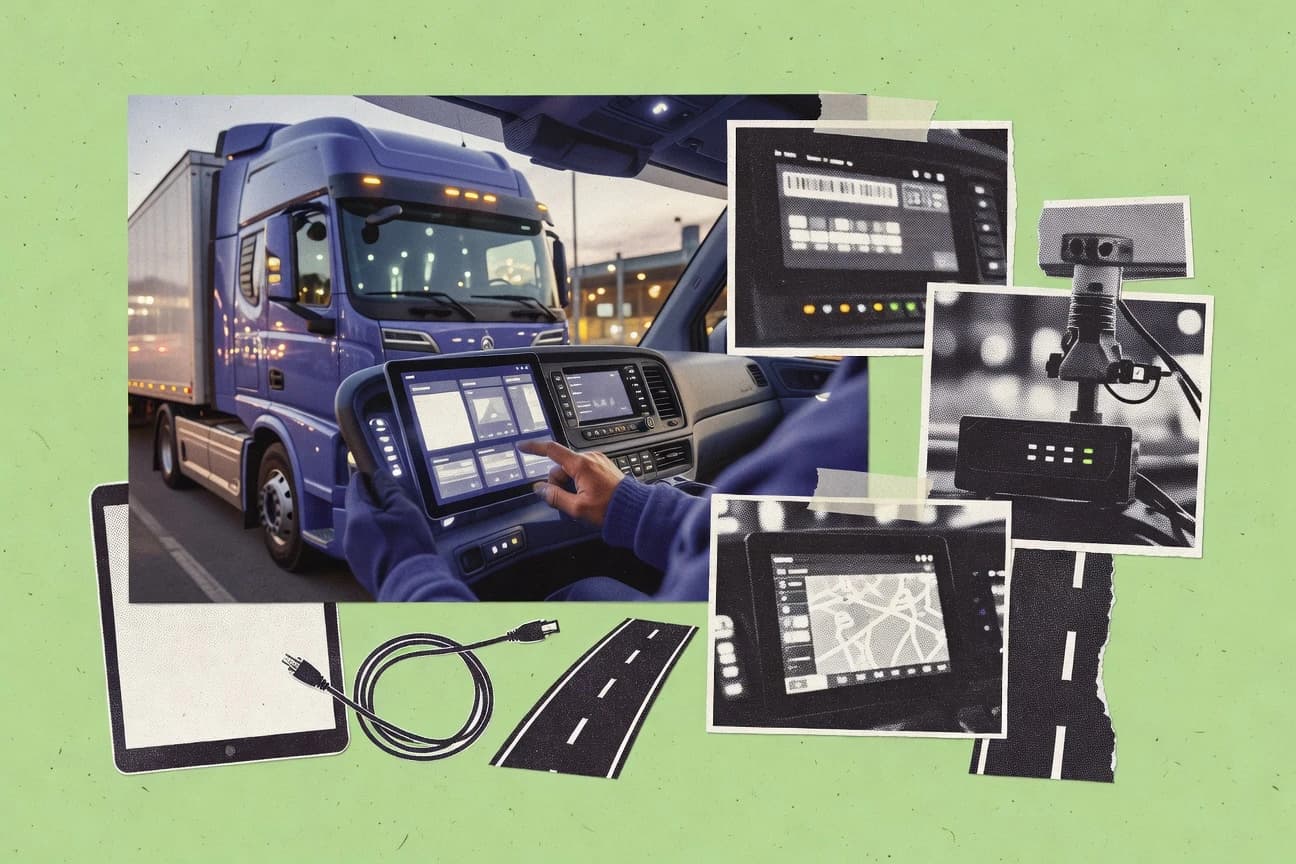

The global market for supply chain management software reached $34.3 billion in 2024. Seventy-seven percent of logistics organizations plan to adopt real-time visibility tools within the next two years.
Key Takeaways
- $1.9 billion global market size for digital freight matching platforms in 2024, reflecting demand for digital brokerage and matching in logistics
- 14.5% compound annual growth rate (CAGR) expected for transportation management system (TMS) software through 2030 (forecast)
- $34.3 billion estimated global market size for supply chain management software in 2024
- 42% of respondents reported increased adoption of digital technologies due to COVID-19 in the transportation and logistics sector (survey year 2021)
- 70% of freight forwarders reported that the use of digital platforms improves customer service (survey year 2022)
- 60% of carriers expect to use more AI for route optimization within 2 years (survey year 2024)
- Delivering better on-time performance: 12% improvement in on-time arrival after implementing route optimization software (case study finding, study year 2022)
- 98% of surveyed companies reported improved shipment tracking accuracy after adopting digital visibility tools (survey year 2021)
- 20% improvement in response time to shipment status queries after implementing digital customer portals (study year 2023)
- $12.5 million potential annual cost savings for a mid-size fleet implementing predictive maintenance (estimate from OEM/maintenance study)
- 35% reduction in paperwork processing time by electronic invoicing in supply chain workflows (survey year 2022)
- Electronic document exchange can reduce total processing costs by up to 10% in cross-border supply chains (UN/CEFACT e-Documents study).
- 61% of trucking fleets use electronic logging devices (ELDs) in the U.S. (compliance adoption baseline, year 2019-2020)
- 66% of transportation firms use cloud for at least one business-critical application (survey year 2023)
- 77% of logistics organizations plan to adopt real-time visibility in the next 12-24 months (survey year 2024)
Digital freight and visibility tools are rapidly expanding, driving faster tracking, lower costs, and AI and cloud adoption.
Related reading
- Digital Transformation In IndustryDigital Transformation In The Transportation Industry Statistics
- Digital Transformation In IndustryDigital Transformation In The Material Handling Industry Statistics
- Transportation VehiclesCommercial Truck Industry Statistics
- Digital Transformation In IndustryDigital Transformation In The Maritime Industry Statistics
01 · Category
Market Size10 stats
01
$1.9 billion global market size for digital freight matching platforms in 2024, reflecting demand for digital brokerage and matching in logisticshttps://www.grandviewresearch.com/industry-analysis/digital-freight-matching-market
02
14.5% compound annual growth rate (CAGR) expected for transportation management system (TMS) software through 2030 (forecast)https://www.grandviewresearch.com/industry-analysis/transportation-management-system-market
03
$34.3 billion estimated global market size for supply chain management software in 2024https://www.grandviewresearch.com/industry-analysis/supply-chain-management-software-market
04
10.6% CAGR expected for telematics market through 2030 (forecast)https://www.grandviewresearch.com/industry-analysis/telematics-market
05
7.8% CAGR expected for fleet management software through 2030 (forecast)https://www.grandviewresearch.com/industry-analysis/fleet-management-market
06
9.4% CAGR expected for logistics analytics market through 2030 (forecast)https://www.grandviewresearch.com/industry-analysis/logistics-analytics-market
07
$27.1 billion expected global investment in connected logistics and supply chain digitization through 2025 (estimate)https://www.mordorintelligence.com/industry-reports/connected-logistics-market
08
Digital document automation market size of $3.2 billion in 2023 for logistics and transportation segments (estimate)https://www.precedenceresearch.com/digital-document-management-market
09
$4.8 billion global market for electronic invoicing and e-document exchange in logistics in 2023 (estimate)https://www.globenewswire.com/news-release/2023/10/10/2766734/0/en/E-Invoicing-Market-Size.html
10
$0.5 billion market size for fleet telematics hardware in 2023 (estimate)https://www.reportlinker.com/p06227819/Fleet-Telematics-Market.html
Interpretation
Market Size Interpretation
In the market size view of digital transformation in trucking, spending is expanding rapidly with a $34.3 billion supply chain management software market in 2024 alongside strong growth forecasts such as 14.5% CAGR for TMS software and a $1.9 billion global market for digital freight matching platforms by 2024.
02 · Category
Industry Trends3 stats
01
42% of respondents reported increased adoption of digital technologies due to COVID-19 in the transportation and logistics sector (survey year 2021)https://www.oecd.org/industry/ind/transport-logistics-and-covid-19.pdf
02
70% of freight forwarders reported that the use of digital platforms improves customer service (survey year 2022)https://unece.org/sites/default/files/2022-08/UN%20ECE%20Digital%20Freight%20Forwarding%20Study.pdf
03
60% of carriers expect to use more AI for route optimization within 2 years (survey year 2024)https://www.supplychainbrain.com/articles/38311-survey-ai-in-logistics-adoption-trends
Interpretation
Industry Trends Interpretation
In the industry trends for trucking, the momentum is clear as 70% of freight forwarders say digital platforms improve customer service and 60% of carriers expect to use more AI for route optimization within two years, building on the 42% increase in digital adoption driven by COVID-19.
03 · Category
Performance Metrics5 stats
01
Delivering better on-time performance: 12% improvement in on-time arrival after implementing route optimization software (case study finding, study year 2022)https://resources.esri.com/content/dam/esrisites/en-us/media/files/resources/government/route-optimization-study.pdf
02
98% of surveyed companies reported improved shipment tracking accuracy after adopting digital visibility tools (survey year 2021)https://www.pitneybowes.com/us/business-insights/reports/shipping-visibility-2021.pdf
03
20% improvement in response time to shipment status queries after implementing digital customer portals (study year 2023)https://www.dhl.com/global-en/home/insights/business-insights/digital-customer-portals-study-2023.html
04
In the U.S., average commercial vehicle crash costs remain high—$19.3 billion in 2022 for large truck crashes (FARS/Insurance Institute analysis).https://www.iii.org/fact-statistic/facts-statistics-large-truck-crashes
05
U.S. truck transportation sector productivity increased by 5.6% from 2016 to 2022 (BLS Multifactor Productivity / industry productivity series).https://www.bls.gov/news.release/prod2.t01.htm
Interpretation
Performance Metrics Interpretation
Performance metrics in trucking are showing clear gains, with route optimization driving a 12% improvement in on-time arrivals and digital visibility tools lifting shipment tracking accuracy to 98% of surveyed companies.
More related reading
04 · Category
Cost Analysis3 stats
01
$12.5 million potential annual cost savings for a mid-size fleet implementing predictive maintenance (estimate from OEM/maintenance study)https://www.zf.com/mobile/en-us/market/aftermarket/predictive-maintenance-case-study.pdf
02
35% reduction in paperwork processing time by electronic invoicing in supply chain workflows (survey year 2022)https://www.unece.org/sites/default/files/2022-11/e-invoicing-in-logistics-survey.pdf
03
Electronic document exchange can reduce total processing costs by up to 10% in cross-border supply chains (UN/CEFACT e-Documents study).https://unece.org/DAM/cefact/pub/uncefact-study/Cost-benefit-of-EDI-and-e-documents.pdf
Interpretation
Cost Analysis Interpretation
For the Cost Analysis angle, trucking fleets can realistically cut major overheads by pairing predictive maintenance that could save about $12.5 million per year for a mid-size operator with digitized invoicing and document exchange that cuts paperwork processing time by 35% and can reduce total cross-border processing costs by up to 10%.
05 · Category
User Adoption4 stats
01
61% of trucking fleets use electronic logging devices (ELDs) in the U.S. (compliance adoption baseline, year 2019-2020)https://rosap.ntl.bts.gov/view/dot/39778
02
66% of transportation firms use cloud for at least one business-critical application (survey year 2023)https://www.gartner.com/en/newsroom/press-releases/2023-10-09-gartner-forecasts-worldwide-end-user-spending-on-public-cloud-services-to-total-675-5-billion-in-2024
03
77% of logistics organizations plan to adopt real-time visibility in the next 12-24 months (survey year 2024)https://www.iqpc.com/resources/articles/real-time-visibility-adoption-survey-2024
04
12% of U.S. motor carriers reported using route optimization software as of 2020 (FMCSA survey of safety tech adoption)https://rosap.ntl.bts.gov/view/dot/49451
Interpretation
User Adoption Interpretation
User adoption in trucking is rising unevenly but clearly, with 77% of logistics organizations planning to adopt real-time visibility within 12 to 24 months while only 12% of U.S. motor carriers reported using route optimization software as of 2020.
06 · Category
Market Sizing4 stats
01
U.S. trucking establishments were 840,947 in 2022 (U.S. Census/County Business Patterns).https://data.census.gov/table?q=840%2C947%20trucking%20establishments%202022&g=0100000US&tid=CBP2022.CB1900.CB1900
02
U.S. e-commerce orders were $1.0 trillion in Q4 2023, supporting demand for last-mile and trucking logistics (U.S. Census Retail E-commerce report).https://www.census.gov/retail/mrts/www/data/pdf/ec_current.pdf
03
U.S. trucking employs about 7.1 million people (Bureau of Labor Statistics, employment in truck transportation).https://www.bls.gov/oes/current/naics4_4841.htm
04
The U.S. Federal Motor Carrier Safety Administration reported that as of 2023 there were 585,000 registered ELD devices and 10,000 ELD providers (FMCSA ELD registration).https://eld.fmcsa.dot.gov/api/ELDRegistrations
Interpretation
Market Sizing Interpretation
With 840,947 U.S. trucking establishments and 7.1 million people employed in truck transportation, the market for digital transformation is large and growing, and it is increasingly enabled by last mile e commerce demand and a rising connected fleet evidenced by 585,000 registered ELD devices as of 2023.
report visual · Key figures
Digital transformation is accelerating across trucking
Forecast demand and adoption signals—from TMS growth to real-time visibility plans—indicate accelerating investment in digitized operations.
14.5%
14.5% compound annual growth rate (CAGR) expected for transportation management system (TMS) software through 2030 (fore
10.6%
10.6% CAGR expected for telematics market through 2030 (forecast)
9.4%
9.4% CAGR expected for logistics analytics market through 2030 (forecast)
77%
77% of logistics organizations plan to adopt real-time visibility in the next 12-24 months (survey year 2024)
source-verifiedgrandviewresearch.com · iqpc.com2030
Reference
Cite This Report
This report is designed to be cited. We maintain stable URLs and versioned verification dates. Copy the format appropriate for your publication below.
APA
Ryan Townsend. (2026, February 13). Digital Transformation In The Trucking Industry Statistics. Gitnux. https://gitnux.org/digital-transformation-in-the-trucking-industry-statistics
MLA
Ryan Townsend. "Digital Transformation In The Trucking Industry Statistics." Gitnux, 13 Feb 2026, https://gitnux.org/digital-transformation-in-the-trucking-industry-statistics.
Chicago
Ryan Townsend. 2026. "Digital Transformation In The Trucking Industry Statistics." Gitnux. https://gitnux.org/digital-transformation-in-the-trucking-industry-statistics.
Sources & references
29 datasets cited across this report
+9 additional datasets cited (not shown individually)