
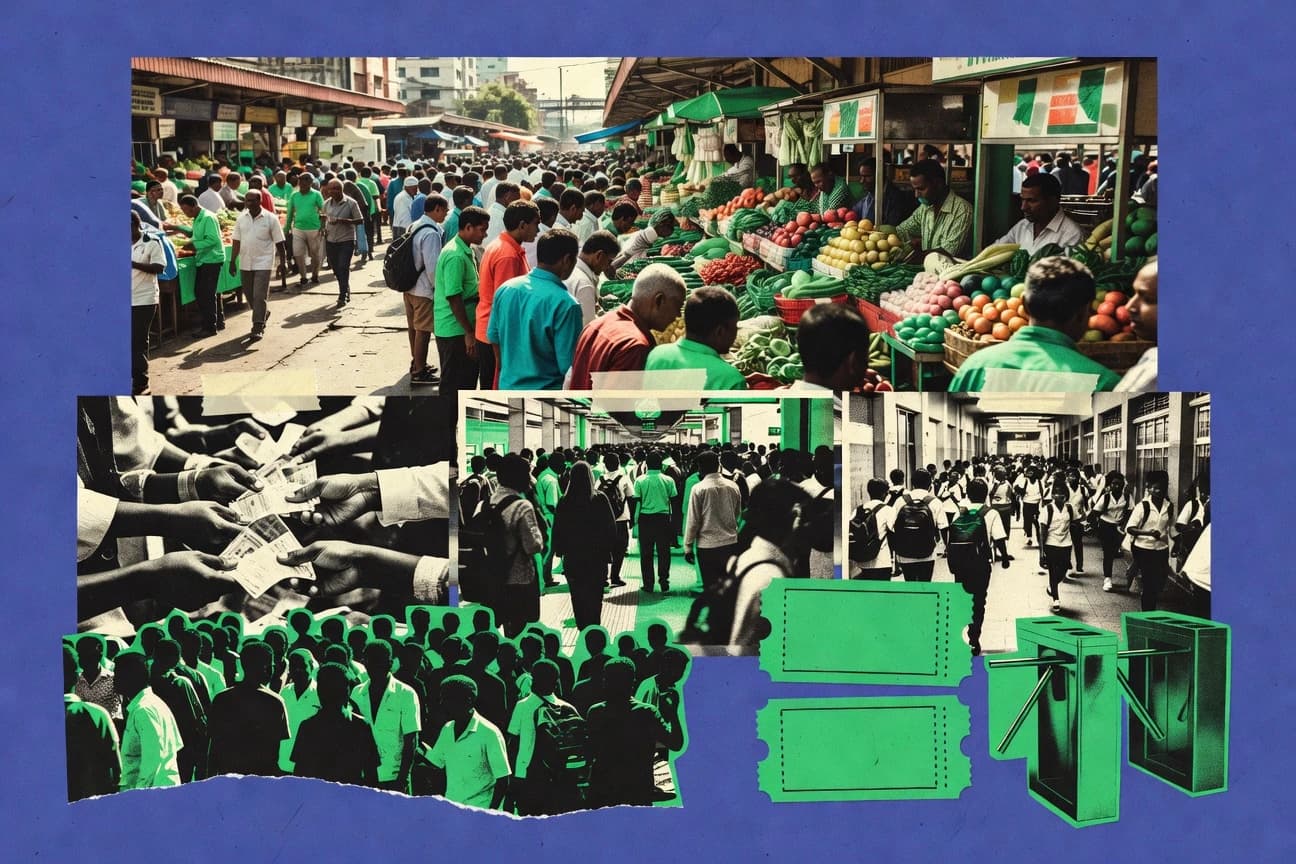

The world population stands at 8.1 billion. Growth now adds about 69 million people each year at a rate of 0.85 percent. These totals show a working-age group of 5.3 billion alongside 727 million people aged 65 and older.
Key Takeaways
- 50.4% of world population is male, 49.6% female as of 2024;
- As of mid-2024, the global population is estimated at 8,118,835,999 people;
- Asia hosts 60% of world population at 4.8 billion in 2024;
- 48% of world population urbanized as of 2024;
- Global crude birth rate is 16.9 births per 1,000 people in 2023;
World population is still growing, but overall growth is slowing as more countries reach lower birth rates.
Related reading
01 · Category
Demographic Structure24 stats
01
50.4% of world population is male, 49.6% female as of 2024;
02
Global sex ratio at birth is 105 boys per 100 girls;
03
25.82% of world population is aged 0-14 in 2024;
04
65.24% of world population is aged 15-64 (working age) in 2024;
05
8.94% of world population is 65+ years old in 2024;
06
Global median age is 31.0 years in 2024;
07
Dependency ratio globally is 52.4% in 2024 (youth + elderly per 100 working age);
08
Youth population (0-14) numbered 2.1 billion in 2024;
09
Elderly population (65+) is 727 million globally in 2024;
10
Working-age population is 5.3 billion in 2024;
11
Global life expectancy at birth is 73.3 years in 2023;
12
Female life expectancy is 75.9 years, male 70.8 years globally;
13
26% of global population lives in large cities (over 1 million);
14
0-14 age group: 25.3% globally (2.05 billion)
15
15-24 age: 15.8% (1.28 billion)
16
25-54 age: 40.6% (3.3 billion)
17
55-64 age: 9.3% (755 million)
18
65+ : 9.0% (731 million)
19
Global sex ratio: 101 males per 100 females overall
20
Child sex ratio (0-14): 109 boys/100 girls
21
Elderly sex ratio (65+): 88 males/100 females
22
Potential support ratio: 7.5 working age per elderly
23
Global old-age dependency ratio: 13.3%
24
Youth dependency ratio: 39.1%
Interpretation
Demographic Structure Interpretation
The planet is a moderately young but rapidly aging party where, thanks to nature's initial bias toward boys and men's shorter lifespans, the dance floor starts with a surplus of bachelors but ends with a noticeable shortage of old gentlemen.
02 · Category
Global Population Totals and Growth15 stats
01
As of mid-2024, the global population is estimated at 8,118,835,999 people;
02
World population reached 8 billion on November 15, 2022;
03
Annual world population growth rate in 2023 was 0.88%;
04
Global population density is approximately 60 people per square kilometer as of 2024;
05
From 1950 to 2024, world population increased by 6.1 billion people;
06
Projected world population for 2050 is 9.7 billion;
07
In 2023, global population growth added 70.4 million people;
08
World population doubled from 2.5 billion in 1950 to 5 billion in 1987;
09
Current global population growth is slowing, down from 2.1% in 1960s to 0.9% in 2023;
10
Earth's land area supports 8.1 billion with average density of 59/km² excluding Antarctica;
11
Global Population Totals and Growth - World population in 2024: 8.12 billion;
12
Annual growth 2024: 0.85%, adding 69 million;
13
From 2000-2024, added 2.1 billion people;
14
Population doubling time now over 80 years;
15
1% of world pop lives in high-income countries with 15% land;
Interpretation
Global Population Totals and Growth Interpretation
While we've impressively crammed over eight billion of us onto this pale blue dot, our growth spurt is finally slowing to a more thoughtful pace, yet we still must wisely manage the space we have, as another two billion neighbors are expected by mid-century.
03 · Category
Population by Continent27 stats
01
Asia hosts 60% of world population at 4.8 billion in 2024;
02
Africa's population is 1.46 billion as of 2024, 18% of global total;
03
Europe population stands at 744 million in 2024;
04
Latin America and Caribbean have 668 million people in 2024;
05
Northern America population is 369 million in 2024;
06
Oceania population is 46 million as of 2024;
07
Asia's population growth rate is 0.85% in 2023;
08
Africa's annual growth rate is 2.35% in 2023, highest globally;
09
Europe's population is declining at -0.12% per year in 2023;
10
Eastern Asia has 1.64 billion people, 20% of world total;
11
Southern Asia population is 2.02 billion in 2024;
12
Western Africa has 430 million residents in 2024;
13
Median age in Asia is 32.2 years in 2024;
14
Africa's median age is 19.3 years, youngest continent;
15
Europe median age is 43.0 years in 2024;
16
Asia population: 4.81 billion (59.35%)
17
Africa: 1.49 billion (18.37%)
18
Europe: 744 million (9.27%)
19
Latin America/Caribbean: 663 million (8.18%)
20
North America: 373 million (4.60%)
21
Eastern Europe pop: 293 million
22
Western Asia: 309 million in 2024
23
Central Asia: 83 million
24
South-Eastern Asia: 695 million
25
Eastern Africa: 500 million in 2024
26
Median age Oceania: 33.5 years
27
Male pop Asia: 2.48 billion, female 2.33 billion
Interpretation
Population by Continent Interpretation
Asia, with over half of humanity and a comfortably middle-aged median of 32, watches with a mix of youthful vigor and seasoned perspective as a booming, teenage Africa prepares to write the next chapter of human history, while a greying Europe gently turns the page.
More related reading
04 · Category
Urbanization and Projections20 stats
01
48% of world population urbanized as of 2024;
02
Urban population totals 4.1 billion in 2024;
03
Rural population is 3.9 billion globally in 2024;
04
World population projected to peak at 10.3 billion in 2080s;
05
Urbanization rate is increasing by 1.5% annually;
06
56% of world population expected urban by 2050;
07
Global population density highest in Monaco at 19,000/km² but world avg 60/km²;
08
Arable land per person declined to 0.19 hectares in 2020;
09
World population to reach 9 billion by 2037;
10
Urban agglomerations over 10 million: 37 in 2024;
11
Urban pop growth rate: 2.0% annually 2020-2025
12
Megacities (10M+): projected 43 by 2030
13
Slum population: 1.1 billion in urban areas 2024
14
World pop 2100 projection: 10.4 billion (medium variant)
15
Low variant 2100: 8.7 billion, high: 12.3 billion
16
Population density South Asia: 350/km²
17
Global water stress affects 2.3 billion in dense areas
18
Food production needs to rise 50% by 2050 for pop growth
19
Energy demand per capita varies 20x in dense vs sparse
20
Climate migration projected 200 million by 2050
Interpretation
Urbanization and Projections Interpretation
While urbanites are busy packing the planet into dense, high-rise anthills, we’re running a global race to see if we can grow food, share water, and house everyone before we literally—and figuratively—hit our collective ceiling.
05 · Category
Vital Statistics19 stats
01
Global crude birth rate is 16.9 births per 1,000 people in 2023;
02
World crude death rate is 7.7 deaths per 1,000 in 2023;
03
Total fertility rate globally is 2.3 children per woman in 2023;
04
Net migration rate worldwide is -0.5 migrants per 1,000 in 2024;
05
134 million births occurred globally in 2023;
06
60 million deaths worldwide in 2023;
07
Infant mortality rate globally is 27.8 deaths per 1,000 live births in 2023;
08
Maternal mortality ratio is 211 deaths per 100,000 live births globally;
09
Global population natural increase rate is 0.92% in 2023;
10
Replacement fertility level is 2.1 children per woman;
11
Births 2024 estimate: 132 million
12
Deaths 2024: 62 million
13
Natural increase: 70 million in 2024
14
Net migration: -1.8 million globally 2024
15
Under-5 mortality: 37 per 1,000 live births 2023
16
Neonatal mortality: 17 per 1,000 live births
17
Stillbirth rate: 13.8 per 1,000 in 2023
18
Contraceptive prevalence: 39% among women 15-49 married
19
Adolescent birth rate: 38 per 1,000 girls 15-19
Interpretation
Vital Statistics Interpretation
Despite welcoming new life at over twice the rate we mourn our losses, our species' expansion is a sobering testament not just to fertility, but to the fragile and uneven progress in keeping those lives intact.
Reference
Cite This Report
This report is designed to be cited. We maintain stable URLs and versioned verification dates. Copy the format appropriate for your publication below.
APA
Alexander Schmidt. (2026, February 13). Current World Population Statistics. Gitnux. https://gitnux.org/current-world-population-statistics
MLA
Alexander Schmidt. "Current World Population Statistics." Gitnux, 13 Feb 2026, https://gitnux.org/current-world-population-statistics.
Chicago
Alexander Schmidt. 2026. "Current World Population Statistics." Gitnux. https://gitnux.org/current-world-population-statistics.
Sources & references
14 datasets cited across this report · attribution is report-level