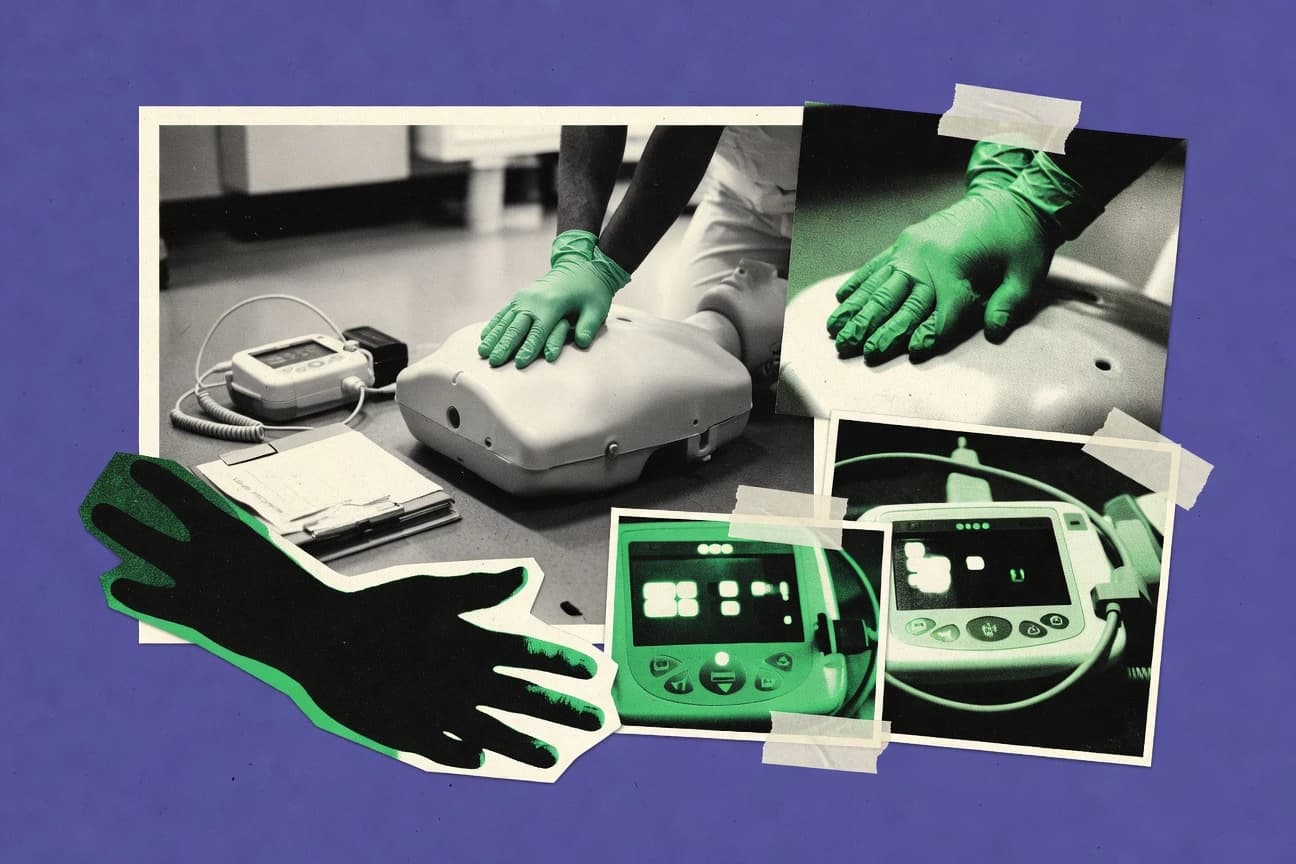

Cardiac arrest is a major cause of death, with most events happening outside hospitals and survival overall staying below 10% for OHCA. This page walks through CPR performance in the U.S. and beyond, from witnessed cases and public versus home settings to how quickly care starts. You’ll also find what keeps bystanders from acting, plus evidence-based targets like compression rate and depth from major guidelines.
Key Takeaways
- In 2022 CARES, bystander CPR rate was 42.3% for OHCA
- U.S. bystander CPR for all OHCA: 39.8% in 2021, up from 35.7% in 2017
- Public location OHCA bystander CPR: 51.2% vs 37.2% home
- In the United States, approximately 356,461 out-of-hospital cardiac arrests (OHCA) occur annually, with only 10.4% surviving to hospital discharge overall
- Globally, cardiac arrest is the third leading cause of death, affecting over 20 million people yearly with survival rates below 10% for OHCA
- In Europe, the incidence of OHCA is 67-170 per 100,000 population annually, varying by country and urban/rural settings
- For witnessed OHCA with bystander CPR and defibrillation within 3 minutes, survival to discharge is 49.5%
- U.S. overall OHCA survival to hospital discharge: 10.4% in 2022 per CARES
- Bystander CPR alone increases survival odds by 2.3 times compared to no CPR
- AHA 2020 guidelines emphasize training for compression rate 100-120/min
- Chest compression depth guideline: 5-6 cm (2-2.4 inches) for adults
- Compression-ventilation ratio 30:2 for untrained bystanders per AHA
- 70% of Americans untrained in CPR, only 40% willing to act
- Red Cross trains 2.2 million in CPR annually worldwide
- U.S. high school CPR training mandated in 38 states as of 2023
Bystander CPR remains low, yet fast action and training could save more lives than statistics show.
Related reading
01 · Category
Bystander Involvement30 stats
01
In 2022 CARES, bystander CPR rate was 42.3% for OHCA
02
U.S. bystander CPR for all OHCA: 39.8% in 2021, up from 35.7% in 2017
03
Public location OHCA bystander CPR: 51.2% vs 37.2% home
04
Witnessed OHCA bystander CPR: 55% rate nationally
05
Dispatcher-assisted bystander CPR: performed in 16.1% of eligible calls
06
Schools with CPR-trained staff: bystander CPR 3x higher survival
07
Barriers to bystander CPR: fear of harm (45%), no training (31%)
08
Hands-only CPR promotion increased bystander rates by 13% in trials
09
Asian Americans bystander CPR 28% vs 41% whites, disparity
10
Nighttime bystander CPR 20% lower (32% vs 52%)
11
Female bystanders perform CPR 2.3x more likely if dispatcher instructed
12
Sports events bystander CPR 72%
13
Airport bystander CPR 74%, AED 19%
14
Rural bystander CPR 35% vs 43% urban
15
COVID-19 bystander CPR dropped 10% to 30%
16
Overdose OHCA bystander CPR 45%, higher naloxone awareness
17
Pediatric bystander CPR 42%, higher if family member collapses
18
Pregnant bystander CPR hesitation higher, 25% rate
19
Nursing home bystander CPR 30%, staff training key
20
Bystander AED application 11.5% nationally
21
Compression-only CPR bystander rate 60% in promoted areas
22
Black neighborhoods bystander CPR 35.8% vs 42.1% white
23
Training increases bystander willingness by 50%
24
Video bystander CPR via app: 80% success rate in trials
25
Family bystander CPR 65% vs strangers 40%
26
42.3% of bystander-eligible OHCA cases received bystander CPR in 2022 (CARES), for overall OHCAhttps://www.cdc.gov/mmwr/volumes/72/wr/mm7214a3.htm
27
55% of witnessed OHCA cases received bystander CPR nationallyhttps://www.ahajournals.org/doi/10.1161/CIRCULATIONAHA.114.011966
28
31.1% of in-home OHCA cases received bystander CPR in the United States (2018 CARES data)https://www.cdc.gov/mmwr/volumes/68/wr/mm6822a1.htm
29
65.7% of public location OHCA cases received bystander CPR in the United States (2018 CARES data)https://www.cdc.gov/mmwr/volumes/68/wr/mm6822a1.htm
30
24.0% of nighttime (midnight-5:59am) OHCA cases received bystander CPR in the United States (2018 CARES data)https://www.cdc.gov/mmwr/volumes/72/wr/mm7214a2.htm
Interpretation
Bystander Involvement Interpretation
Bystander involvement in OHCA is making a clear difference, with CPR rates rising to about 42.3% in 2022 and reaching 51.2% in public locations and 55% for witnessed cases, while dispatcher assistance occurred in only 16.1% of eligible calls.
report visual · Comparison
Bystander CPR is most common in public settings
Among bystander-eligible OHCA cases, bystander CPR rates are highest for public-location events (leader: 65.7%), well above in-home cases (31.1%)—a gap of 34.6 percentage points.
65.7% of public location OHCA cases received bystander CPR in the United States (2018 CARES data)65.7%
42.3% of bystander-eligible OHCA cases received bystander CPR in 2022 (CARES), for overall OHCA
42.3%
31.1% of in-home OHCA cases received bystander CPR in the United States (2018 CARES data)
31.1%
source-verifiedcdc.gov2022
02 · Category
Epidemiology30 stats
01
In the United States, approximately 356,461 out-of-hospital cardiac arrests (OHCA) occur annually, with only 10.4% surviving to hospital discharge overall
02
Globally, cardiac arrest is the third leading cause of death, affecting over 20 million people yearly with survival rates below 10% for OHCA
03
In Europe, the incidence of OHCA is 67-170 per 100,000 population annually, varying by country and urban/rural settings
04
Among U.S. adults, sudden cardiac arrest strikes about 1 in 1,000 yearly, with 90% occurring outside hospitals
05
In Japan, OHCA incidence reached 125,067 cases in 2021, with a one-month survival rate of 9.0%
06
Australian OHCA data shows 31,399 cases from 2017-2021, averaging 6,280 per year with urban areas comprising 75%
07
In Canada, 55,000 OHCA events occur yearly, affecting about 1 in 37 citizens
08
UK OHCA incidence is 55-113 per 100,000, with London reporting higher rates due to population density
09
In high-income countries, OHCA accounts for 50% of coronary heart disease deaths
10
U.S. pediatric OHCA incidence is 15,000 annually, mostly non-shockable rhythms
11
OHCA in public locations occurs at 2.3 times higher rate than at home, per U.S. data
12
Witnessed OHCA comprises 35-50% of cases, improving prognosis significantly
13
Ventricular fibrillation as initial rhythm in 25% of OHCA cases
14
OHCA disproportionately affects males (65%) and those over 65 (60%)
15
In Asia, OHCA survival varies from 2.5% in India to 8.5% in South Korea
16
U.S. OHCA with AED use before EMS: 11.5% of cases
17
EMS-assessed OHCA treated: 70% receive CPR
18
Low-flow time average 11 minutes for OHCA
19
OHCA in nursing homes: 20% of total U.S. cases
20
Shockable rhythms decline with age, from 40% in <50s to 15% in >80s
21
OHCA during sports: 1 in 50,000 participant hours
22
Airport OHCA incidence: 0.9 per million passengers
23
OHCA in schools: rare, 0.54 per 100,000 students/year
24
Pregnancy-related OHCA: 1 in 30,000 deliveries
25
Drug overdose OHCA rose 35% from 2015-2020 in U.S.
26
COVID-19 increased OHCA by 19% with lower bystander CPR
27
Rural OHCA incidence 20% lower than urban but survival 30% worse
28
OHCA in minorities: higher incidence, lower survival (7.3% vs 11.2% white)
29
Nighttime OHCA (midnight-6am): 25% lower bystander CPR
30
EMS response time average 7 minutes for OHCA
Interpretation
Epidemiology Interpretation
Epidemiology shows that out-of-hospital cardiac arrest affects tens of millions worldwide each year while survival remains very low, for example 356,461 cases annually in the United States with only 10.4% surviving to hospital discharge, and across countries incidence commonly falls in the tens per 100,000 with similarly poor outcomes.
03 · Category
Survival Rates28 stats
01
For witnessed OHCA with bystander CPR and defibrillation within 3 minutes, survival to discharge is 49.5%
02
U.S. overall OHCA survival to hospital discharge: 10.4% in 2022 per CARES
03
Bystander CPR alone increases survival odds by 2.3 times compared to no CPR
04
Shockable rhythm OHCA survival: 30% with bystander intervention
05
In-hospital cardiac arrest (IHCA) survival: 25.3% to discharge
06
Dispatcher-assisted CPR increases survival by 58% in OHCA
07
AED use by bystanders boosts survival to 70% if within 3 minutes
08
Pediatric OHCA survival: 9.1% overall, 27% for shockable rhythms
09
Utstein comparator group survival: 39% for bystander-witnessed shockable OHCA
10
Sweden OHCA survival rose from 5% in 1992 to 11% in 2020
11
EMS-treated OHCA survival: 9.1% in U.S. 2022
12
High-quality CPR doubles survival chances in IHCA
13
1-minute delay in CPR reduces survival by 7-10% per delay minute
14
Public AED + CPR survival: 62% in Japan airports
15
Black patients OHCA survival 5.9% vs 10.6% white, racial disparity
16
Good neurological outcome (CPC 1-2): 8.1% for OHCA in 2022 CARES
17
Compressible torso CPR improves survival by 20% over standard
18
Therapeutic hypothermia post-OHCA: 49% good neuro outcome vs 30% control
19
ECPR for refractory OHCA: 30% survival in select centers
20
Bystander AED + CPR in sports: 44% survival
21
Nighttime OHCA survival 50% lower than daytime
22
Rural OHCA survival 6.1% vs 10.5% urban
23
Pregnant OHCA survival 28% with PM of CPR
24
Overdose OHCA survival 12.4% with naloxone + CPR
25
COVID-era OHCA survival dropped to 7.5% from 9.1%
26
IHCA with immediate defibrillation: 35% survival
27
Prolonged CPR (>30 min) survival 4% but 15% good outcome if ROSC
28
Dispatcher CPR survival OR 1.58 (95% CI 1.22-2.04)
Interpretation
Survival Rates Interpretation
Across survival rates, rapid bystander action makes the biggest difference, with witnessed OHCA receiving bystander CPR and defibrillation within 3 minutes reaching 49.5% survival to discharge while overall U.S. OHCA survival remains 10.4%.
More related reading
04 · Category
Techniques And Guidelines26 stats
01
AHA 2020 guidelines emphasize training for compression rate 100-120/min
02
Chest compression depth guideline: 5-6 cm (2-2.4 inches) for adults
03
Compression-ventilation ratio 30:2 for untrained bystanders per AHA
04
Hands-only CPR recommended for untrained adults over 8 years
05
Pediatric CPR: 15:2 ratio if 2 rescuers, depth 1/3 chest
06
Allow full chest recoil between compressions, no leaning >10kg
07
Initial shock preferred if shockable rhythm per 2020 ILCOR
08
Head-tilt chin-lift for airway unless trauma
09
Minimize interruptions <10 seconds total pre-shock
10
Rate 100-120 compressions/min, recoil visualized
11
Pregnancy CPR: manual LUD displacement after 20 weeks
12
Opioid overdose: ventilate first, naloxone + CPR
13
Dispatcher instructions: emphasize chest compressions first
14
Real-time feedback devices improve quality 30%, guideline endorsed
15
ECPR considered for witnessed refractory VF
16
Temperature management 32-36C post-ROSC 24h
17
Avoid routine epinephrine >20min in non-shockable
18
Double sequential defibrillation not recommended routinely
19
Ultrasound during CPR if no pause >10s
20
Pediatric AED pads if >8yo or >25kg
21
Reversible causes (Hs & Ts) assessment every 2 cycles
22
Compression fraction >80% target for high-quality CPR
23
Jaw thrust for suspected trauma airway
24
IV/IO access during CPR, epi q3-5min
25
Post-arrest: 12-lead ECG within 10min ROSC
26
Team dynamics: closed-loop communication, role assignment
Interpretation
Techniques And Guidelines Interpretation
The AHA Techniques and Guidelines stress that high quality CPR is driven by precise numbers, aiming for 100 to 120 compressions per minute with 5 to 6 cm depth, while using a simple 30 to 2 compression ventilations ratio for untrained adults and 15 to 2 with one third chest depth for two rescuer pediatric care.
05 · Category
Training And Certification27 stats
01
70% of Americans untrained in CPR, only 40% willing to act
02
Red Cross trains 2.2 million in CPR annually worldwide
03
U.S. high school CPR training mandated in 38 states as of 2023
04
AHA CPR courses: 12 million trained yearly
05
Online CPR training completion rate 85%, hands-on 95%
06
Layperson CPR retention 80% at 6 months, 50% at 2 years
07
Workplace CPR training: 55% of large firms
08
Pediatric CPR training increases adult confidence by 30%
09
Dispatcher training improves bystander CPR quality 40%
10
AED training with CPR boosts usage 3-fold
11
Annual CPR recertification: 70% compliance in healthcare
12
Community CPR training programs increase local bystander rates 15%
13
Virtual reality CPR training: 90% skill acquisition vs 75% traditional
14
Nursing staff CPR competency 92% post-training
15
School CPR programs train 1 in 4 students yearly
16
EMS CPR quality training reduces pauses 50%
17
Global CPR training gap: 2.8 billion untrained adults
18
Hands-only CPR video training: 95% willing to perform
19
Racial disparities in training access: 20% lower in minorities
20
Post-COVID online CPR surged 300%
21
Athlete CPR training: 85% of NCAA programs
22
Airport staff AED/CPR trained 100% mandated
23
Rural training programs increase certification 25%
24
CPR instructor ratio 1:12 max per AHA guidelines
25
Cost of CPR class: $80-110 average U.S.
26
BLS certification renewal every 2 years, 90% pass rate
27
High-performance CPR teams trained in 40% U.S. hospitals
Interpretation
Training And Certification Interpretation
Despite strong participation in CPR training, with organizations like the Red Cross and the AHA reaching millions each year, the gap between widespread untrained Americans and uneven willingness to act shows why training and certification must do more than just reach people, since 70% are untrained but only 40% are willing, even as retention drops from 80% at 6 months to 50% at 2 years.
Reference
Cite This Report
This report is designed to be cited. We maintain stable URLs and versioned verification dates. Copy the format appropriate for your publication below.
APA
Alexander Schmidt. (2026, February 13). Cpr Statistics. Gitnux. https://gitnux.org/cpr-statistics
MLA
Alexander Schmidt. "Cpr Statistics." Gitnux, 13 Feb 2026, https://gitnux.org/cpr-statistics.
Chicago
Alexander Schmidt. 2026. "Cpr Statistics." Gitnux. https://gitnux.org/cpr-statistics.
Sources & references
4 datasets cited across this report
+2 additional datasets cited (not shown individually)