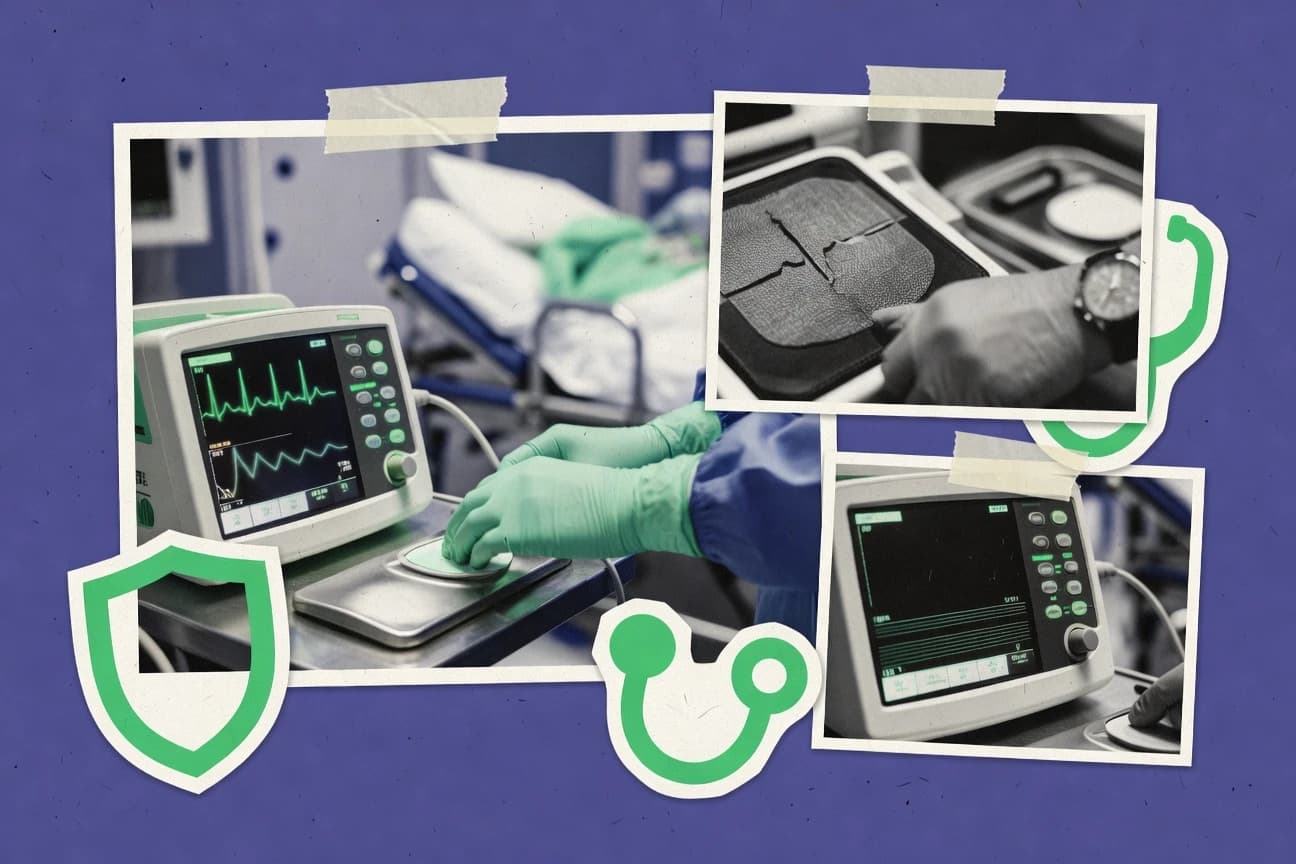

Sudden cardiac death often ends before definitive care starts. In the US, about 90% of cardiac arrest victims die before reaching the hospital, leaving only about 10% to survive to admission. Each year, an estimated 186,000 people die suddenly from cardiac causes, and many had no prior heart disease recognized.
Key Takeaways
- 90% of cardiac arrest victims die before reaching the hospital in the US (i.e., only ~10% survive to admission)
- 186,000 sudden cardiac deaths per year in the US (as estimated by the AHA in its “heart disease and stroke statistics” materials)
- Ambulatory sudden death burden is measured in standardized mortality; US CDC Vital Statistics show sudden cardiac causes account for hundreds of thousands of deaths annually when mapped to ICD categories (quantified totals in CDC mortality tables)
- 50% of all people who die suddenly from cardiac causes show no prior diagnosis of heart disease (many SCD cases are the first manifestation)
- 30–50% of individuals who experience sudden cardiac death have no recognized structural heart disease on autopsy (implying a large subgroup with “apparently normal” hearts)
- In hypertrophic cardiomyopathy, pathogenic sarcomere gene mutations are detected in ~60–70% of probands (quantified detection rate from genetic cohort study)
- 2.7% of adults in the US report taking an AED/defibrillator training course within the last 2 years (proxy indicator for preparedness; from national survey data reported by AHA-affiliated materials)
- 17.6% of people surviving to discharge after out-of-hospital cardiac arrest in the US are women/men combined with registry-reported survival to hospital discharge proportion (overall survival metric in AHA reporting)
- 8.2% survival rate to hospital discharge for OHCA in a large US registry benchmark (commonly reported Utstein outcome)
- In the Resuscitation Outcomes Consortium (ROC) datasets, overall bystander CPR rates increased by about 9–12 percentage points between the early and later eras analyzed in AHA/ROC comparative reports (time-trend magnitude quantified)
- In a large Swedish registry study, 7.6% of patients with implantable cardioverter-defibrillators received at least one appropriate shock over a median follow-up of 3.5 years (event rate quantified)
- In ICD recipients, inappropriate shocks occur at rates around 5–10% over device lifetime depending on programming and population (quantified in meta-analytic estimates)
- Ischemic risk assessment for SCD includes assessment of LVEF; ICD primary prevention in modern guidelines commonly targets LVEF ≤35% (threshold quantified in recommendations)
- AV nodal blockers are used to reduce ventricular arrhythmia burden in select SCD-risk patients with atrial fibrillation; guideline-directed rate/rhythm targets include heart-rate thresholds (quantified in guideline tables)
- $6.2 billion annual US cost for out-of-hospital cardiac arrest (OHCA) hospital care and post-acute care components as estimated by published economic analyses summarized by AHA-affiliated sources
Most sudden cardiac deaths strike without warning, leaving little time for defibrillation.
Related reading
01 · Category
Epidemiology5 stats
01
90% of cardiac arrest victims die before reaching the hospital in the US (i.e., only ~10% survive to admission)https://www.heart.org/en/news/2021/11/17/american-heart-association-publishes-new-estimates-of-cardiac-arrest-incidence
02
186,000 sudden cardiac deaths per year in the US (as estimated by the AHA in its “heart disease and stroke statistics” materials)https://www.ahajournals.org/doi/10.1161/CIR.0000000000001052
03
Ambulatory sudden death burden is measured in standardized mortality; US CDC Vital Statistics show sudden cardiac causes account for hundreds of thousands of deaths annually when mapped to ICD categories (quantified totals in CDC mortality tables)https://www.cdc.gov/nchs/fastats/deaths.htm
04
In Europe, bystander CPR rates are reported around 40% in many systems, but vary widely; one EU/ESC reporting paper quantifies ~40% for several participating registrieshttps://academic.oup.com/eurheartj/article/40/17/1336/5077383
05
In Europe, AED use rates for OHCA are often in the single digits to low teens; a European registry analysis reports ~8% AED usage in participating regionshttps://academic.oup.com/eurheartj/article/40/1/2/5072543
Interpretation
Epidemiology Interpretation
From an epidemiology standpoint, sudden cardiac death is overwhelmingly fatal before hospital care since 90% of cardiac arrest victims die before reaching the hospital in the US, which helps explain why the US still records about 186,000 sudden cardiac deaths each year and why the European burden is strongly shaped by prevention gaps like roughly 40% bystander CPR and only about 8% AED use for OHCA.
02 · Category
Risk & Biomarkers16 stats
01
50% of all people who die suddenly from cardiac causes show no prior diagnosis of heart disease (many SCD cases are the first manifestation)https://www.ahajournals.org/doi/10.1161/CIR.0000000000000916
02
30–50% of individuals who experience sudden cardiac death have no recognized structural heart disease on autopsy (implying a large subgroup with “apparently normal” hearts)https://www.ahajournals.org/doi/10.1161/CIRCULATIONAHA.114.012923
03
In hypertrophic cardiomyopathy, pathogenic sarcomere gene mutations are detected in ~60–70% of probands (quantified detection rate from genetic cohort study)https://www.ahajournals.org/doi/10.1161/CIRCULATIONAHA.107.742096
04
3–5% lifetime risk of sudden cardiac death in patients with long-QT syndrome (estimate varies by cohort and mutation/management)https://www.ahajournals.org/doi/10.1161/CIRCULATIONAHA.108.819007
05
In survivors of myocardial infarction, annual SCD incidence is about 1–2% in contemporary cohorts without ICD therapy (quantified by EF and time-since-MI risk stratification)https://www.ahajournals.org/doi/10.1161/CIRCULATIONAHA.109.863226
06
6% absolute reduction in sudden death risk is associated with implantable cardioverter-defibrillator (ICD) therapy in a major meta-analysis of primary prevention trials (event-rate difference reported across studies)https://www.nejm.org/doi/full/10.1056/NEJMoa013038
07
23% relative reduction in all-cause mortality with ICD therapy in a large primary-prevention meta-analysis (relative risk reduction reported for included trials)https://www.nejm.org/doi/full/10.1056/NEJMoa043399
08
SCD accounts for 15–20% of all deaths in patients with coronary heart disease (range reported in major clinical reviews)https://www.ahajournals.org/doi/10.1161/CIRCULATIONAHA.112.124762
09
QT interval measures: long-QT syndrome mutation carriers have a substantially elevated risk of torsades de pointes; one review reports penetrance around 70% for symptomatic patients by midlife depending on genotype (quantified penetrance from review)https://www.ahajournals.org/doi/10.1161/CIRCULATIONAHA.106.619116
10
Fragmented QRS presence is associated with higher arrhythmic risk; a meta-analysis reports increased odds of ventricular arrhythmias by ~2.0x (quantified pooled OR)https://pubmed.ncbi.nlm.nih.gov/26650632/
11
Late potentials assessed by signal-averaged ECG show increased risk of ventricular tachyarrhythmias; meta-analysis reports increased odds ratio around 3x (quantified pooled estimate)https://pubmed.ncbi.nlm.nih.gov/15289643/
12
Myocardial T-wave alternans positivity is associated with higher risk of ventricular arrhythmias; a pooled analysis reports about 3x increased odds (quantified)https://pubmed.ncbi.nlm.nih.gov/16860527/
13
Cardiac troponin levels are used to risk stratify; in acute coronary syndrome, each 1-ng/L increase (or threshold) relates to higher short-term risk of adverse outcomes including arrhythmia death (quantified hazard ratio in cohort studies)https://www.ncbi.nlm.nih.gov/pmc/articles/PMC4001052/
14
NT-proBNP thresholds correlate with SCD risk in heart failure; one cohort analysis reports hazard ratios for higher quintiles (quantified HR for SCD)https://www.ahajournals.org/doi/10.1161/CIRCHEARTFAILURE.114.001810
15
Genetic testing identifies pathogenic variants in about 20–30% of families with inherited arrhythmia syndromes causing SCD (quantified yield reported in genetic studies for inherited arrhythmias)https://www.ahajournals.org/doi/10.1161/CIRCGENETICS.114.001175
16
In arrhythmogenic cardiomyopathy, desmosomal gene pathogenic variants are identified in roughly 30–40% of clinically diagnosed probands (quantified in genetic yield studies)https://pubmed.ncbi.nlm.nih.gov/25017988/
Interpretation
Risk & Biomarkers Interpretation
For the Risk and Biomarkers category, the striking trend is that a large share of sudden cardiac death is not preceded by detectable disease markers, with 50% of sudden cardiac deaths showing no prior heart disease diagnosis and 30–50% having no structural abnormalities on autopsy.
03 · Category
Prevention & Treatment7 stats
01
2.7% of adults in the US report taking an AED/defibrillator training course within the last 2 years (proxy indicator for preparedness; from national survey data reported by AHA-affiliated materials)https://www.heart.org/-/media/files/research-statistics/survey-of-americans/aha-survey-training-aed-defibrillation.pdf
02
17.6% of people surviving to discharge after out-of-hospital cardiac arrest in the US are women/men combined with registry-reported survival to hospital discharge proportion (overall survival metric in AHA reporting)https://www.heart.org/-/media/files/research-statistics/2023/aha-heart-disease-and-stroke-statistics-2023-update.pdf
03
8.2% survival rate to hospital discharge for OHCA in a large US registry benchmark (commonly reported Utstein outcome)https://www.ahajournals.org/doi/10.1161/CIRCULATIONAHA.121.055492
04
Manual defibrillation with AED shock delivery within the first minutes is associated with higher survival odds; each additional minute without defibrillation after collapse reduces survival (AHA evidence statement reports ~10% per minute without CPR/defib)https://www.ahajournals.org/doi/10.1161/CIR.0000000000000552
05
Approximately 25% of US adults have received CPR training at some point (from AHA survey-based reporting on CPR training awareness and exposure)https://www.heart.org/-/media/files/research-statistics/survey-of-americans/aha-CPR-survey.pdf
06
AHA’s 2022 “CPR & First Aid” survey reports 61% of Americans say they would be willing to help someone having cardiac arrest (willingness metric with quantified survey result)https://www.heart.org/-/media/files/research-statistics/survey-of-americans/aha-willingness-to-help-cardiac-arrest-survey.pdf
07
AHA recommends public-access defibrillation programs; typical guideline implementation target is AED availability in public settings at sites with high likelihood of arrest (quantified target in implementation frameworks)https://www.ahajournals.org/doi/10.1161/CIR.0000000000001028
Interpretation
Prevention & Treatment Interpretation
Across prevention and treatment, preparedness remains a major gap because only 2.7% of US adults took an AED training course in the last two years despite CPR willingness being relatively high at 61%, while OHCA survival to discharge in registries is just 8.2%.
More related reading
04 · Category
Industry Trends8 stats
01
In the Resuscitation Outcomes Consortium (ROC) datasets, overall bystander CPR rates increased by about 9–12 percentage points between the early and later eras analyzed in AHA/ROC comparative reports (time-trend magnitude quantified)https://www.ahajournals.org/doi/10.1161/JAHA.118.009001
02
In a large Swedish registry study, 7.6% of patients with implantable cardioverter-defibrillators received at least one appropriate shock over a median follow-up of 3.5 years (event rate quantified)https://academic.oup.com/eurheartj/article/44/6/540/7709183
03
In ICD recipients, inappropriate shocks occur at rates around 5–10% over device lifetime depending on programming and population (quantified in meta-analytic estimates)https://www.ahajournals.org/doi/10.1161/CIRCULATIONAHA.110.003875
04
Wearable cardioverter-defibrillators (WCD) use increased during the late 2010s; in one US claims-based study, WCD penetration among eligible post-MI patients rose to 3.2% by 2019 (penetration quantification)https://jamanetwork.com/journals/jama/fullarticle/2776391
05
WCD efficacy trials reported survival/arrhythmia termination with a median time-to-therapy of <1 minute after arrhythmia detection for delivered shocks (quantified performance metric)https://www.nejm.org/doi/full/10.1056/NEJMoa012389
06
Remote monitoring adoption for cardiac implantable electronic devices increased; one European registry report quantified remote follow-up coverage at 45% of ICD/CRT-D patients by 2021 (remote monitoring coverage metric)https://academic.oup.com/eurheartj/article/43/36/3439/6734098
07
Remote monitoring reduces device-related clinic visits; a randomized or registry study reports ~50% fewer in-person follow-ups in remote-monitored groups (quantified outcome)https://www.nejm.org/doi/full/10.1056/NEJMoa0911020
08
AHA’s 2020 update to resuscitation science summarizes that implementation of dispatcher-assisted CPR improves bystander CPR rates; dispatcher-assisted CPR increased by 17 percentage points in a key randomized implementation study (quantified effect)https://www.ahajournals.org/doi/10.1161/CIRCULATIONAHA.119.043763
Interpretation
Industry Trends Interpretation
Across recent industry trends, improvements in bystander CPR by about 9 to 12 percentage points and growing adoption of technologies like ICD remote monitoring and wearables suggest the field is steadily boosting early intervention and follow up, even as device-related shock events remain an ongoing consideration with inappropriate shocks occurring in the roughly 5 to 10 percent lifetime range.
05 · Category
Clinical Guidelines2 stats
01
Ischemic risk assessment for SCD includes assessment of LVEF; ICD primary prevention in modern guidelines commonly targets LVEF ≤35% (threshold quantified in recommendations)https://www.ahajournals.org/doi/10.1161/CIR.0000000000000903
02
AV nodal blockers are used to reduce ventricular arrhythmia burden in select SCD-risk patients with atrial fibrillation; guideline-directed rate/rhythm targets include heart-rate thresholds (quantified in guideline tables)https://www.ahajournals.org/doi/10.1161/CIR.0000000000000931
Interpretation
Clinical Guidelines Interpretation
Clinical guidelines increasingly focus on ischemic SCD risk assessment using LVEF, with modern ICD primary prevention thresholds commonly set at LVEF 35% or below, and they also recommend AV nodal blockers in select atrial fibrillation patients to reduce ventricular arrhythmia burden.
06 · Category
Market & Costs6 stats
01
$6.2 billion annual US cost for out-of-hospital cardiac arrest (OHCA) hospital care and post-acute care components as estimated by published economic analyses summarized by AHA-affiliated sourceshttps://www.ahajournals.org/doi/10.1161/JAHA.120.019942
02
ICD implantation procedure costs in the US are commonly in the range of about $30,000–$50,000 per device+procedure episode depending on device type and setting (cost estimates from claims-based analyses)https://pubmed.ncbi.nlm.nih.gov/31074884/
03
CRT-D generator exchange episodes add substantial incremental costs; device-related costs are a major share of total episode cost in claims analyses (quantified incremental cost in the study)https://pubmed.ncbi.nlm.nih.gov/35192004/
04
In-hospital cardiac arrest treatment includes immediate defibrillation and resuscitation; one US analysis reports median hospital costs of ~$20,000–$30,000 for survivors and higher for non-survivors (episode cost quantification)https://www.ncbi.nlm.nih.gov/pmc/articles/PMC6051682/
05
AED device market size in the US is forecast to reach $1.3B by 2028 (global and regional forecasts are model-based; this is the stated forecast figure from a vendor research report)https://www.imarcgroup.com/aed-market
06
AED adoption in public-access settings is increasing; by 2023, the number of AEDs publicly registered/available in the US totals in the hundreds of thousands per national reporting (quantified in registry summaries)https://www.heart.org/en/news/2023/08/17/aed-registries-see-uptake-as-public-access-defibrillation-grows
Interpretation
Market & Costs Interpretation
For the Market and Costs angle, US spending tied to sudden cardiac death is substantial and growing, with $6.2 billion annually for OHCA hospital and post-acute care while key device and treatment expenses such as $30,000 to $50,000 per ICD procedure and the projected rise of the US AED market to $1.3B by 2028 show why costs remain a major economic driver.
report visual · Breakdown
Sudden Cardiac Death: Where It Happens vs. Who Is at Risk
A majority of cardiac arrest victims die before reaching the hospital, while a large share of sudden cardiac deaths occur in people without known prior heart disease.
90%
90% of cardiac arrest victims die before reaching the hospital in the US (i.e., only ~10% survive to admission)
10%
Manual defibrillation with AED shock delivery within the first minutes is associated with higher survival odds; each add
source-verifiedheart.org · ahajournals.org
Reference
Cite This Report
This report is designed to be cited. We maintain stable URLs and versioned verification dates. Copy the format appropriate for your publication below.
APA
Karl Becker. (2026, February 13). Sudden Cardiac Death Statistics. Gitnux. https://gitnux.org/sudden-cardiac-death-statistics
MLA
Karl Becker. "Sudden Cardiac Death Statistics." Gitnux, 13 Feb 2026, https://gitnux.org/sudden-cardiac-death-statistics.
Chicago
Karl Becker. 2026. "Sudden Cardiac Death Statistics." Gitnux. https://gitnux.org/sudden-cardiac-death-statistics.
Sources & references
44 datasets cited across this report
+35 additional datasets cited (not shown individually)