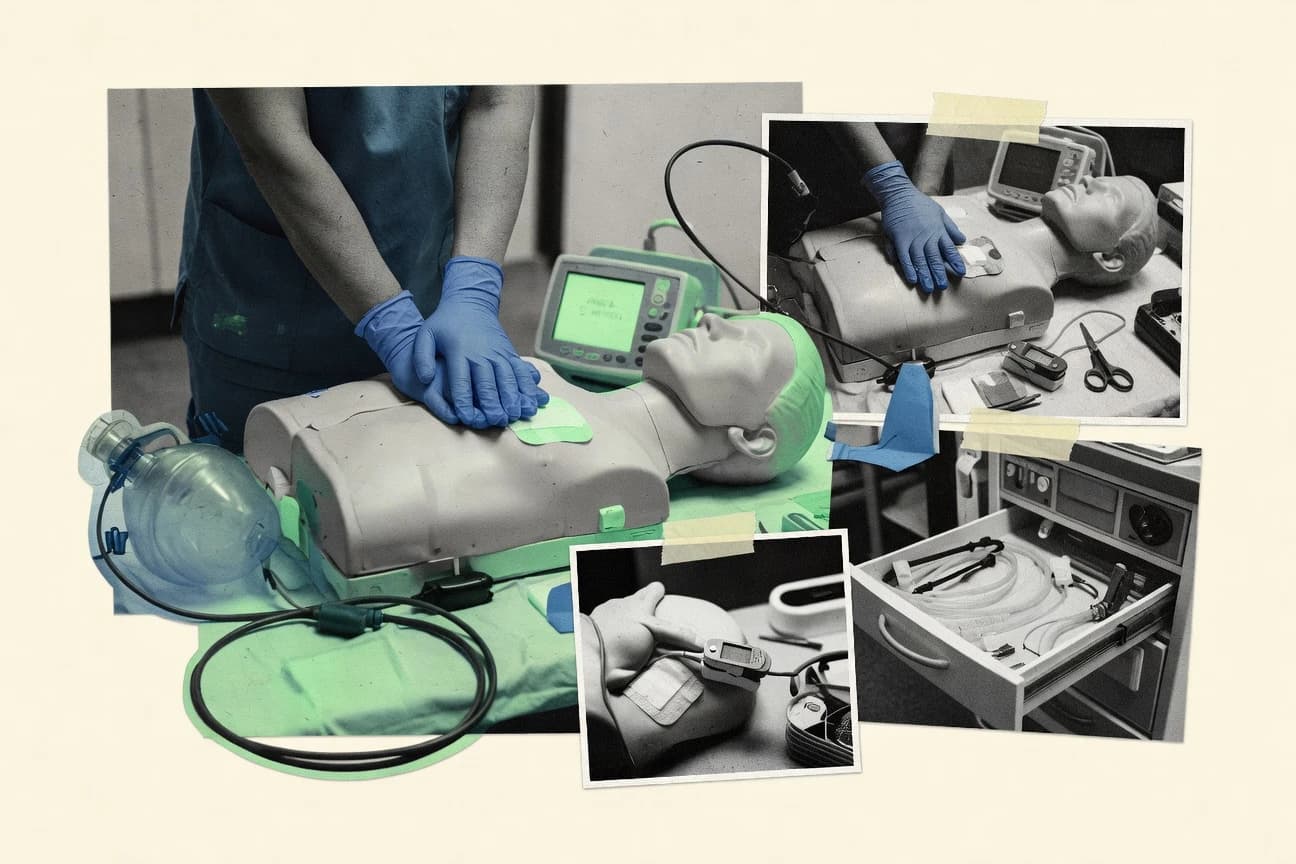

Survival after out-of-hospital cardiac arrest rises when someone acts before EMS arrives. We compare real-world bystander CPR rates, including North Carolina (6.2% in 2002–2005 and 8.6% in 2007–2010) and Europe (about 8.3% survival associated with bystander CPR). You’ll also find US and global benchmarks for AED access and training, plus how witnessed arrests and dispatcher-assisted guidance influence outcomes, costs, and readiness to help.
Key Takeaways
- 8.6% of out-of-hospital cardiac arrests in North Carolina were treated with bystander CPR (2007–2010 data).
- 6.2% of out-of-hospital cardiac arrests in North Carolina received bystander CPR (2002–2005 data).
- 2.3-fold higher odds of survival to hospital discharge were observed for out-of-hospital cardiac arrest patients when CPR was performed by bystanders.
- Survival after out-of-hospital cardiac arrest in the US is 10.1% overall (AHA 2024 updates cite CARES/registry estimates).
- In the US, bystander CPR rates increased to 56% of out-of-hospital cardiac arrest cases (AHA 2024 reporting).
- In the US, public-access defibrillation (PAD) rates were estimated at 7% of out-of-hospital cardiac arrest cases (AHA 2024 reporting).
- The global incidence of out-of-hospital cardiac arrest is estimated around 4.5 million cases per year (systematic estimate).
- The global incidence of sudden cardiac arrest is estimated around 3.4 million cases per year (systematic estimate).
- In a US analysis using CARES data, 21.6% of OHCA cases had a witnessed arrest.
- Global AED market size is projected to reach $5.6B by 2028 (relevant to public-access defibrillation and CPR outcomes).
- The total cost of CPR training programs is often cited as low per trainee, with per-person costs commonly below $50 in published evaluations.
- In a cost-effectiveness evaluation, dispatcher-assisted CPR was found cost-effective (reported incremental cost per QALY).
- BLS/CPR awareness rates in US public surveys are around 58% (self-reported trained status).
- CPR training completion among US adults was reported at 56% in another national survey.
- In a national US survey, 46% of respondents reported they know how to perform CPR.
Bystander CPR boosts survival odds, and rising bystander rates and willingness to learn CPR could save thousands yearly.
Related reading
01 · Category
Performance Metrics30 stats
01
8.6% of out-of-hospital cardiac arrests in North Carolina were treated with bystander CPR (2007–2010 data).https://jamanetwork.com/journals/jama/fullarticle/187405
02
6.2% of out-of-hospital cardiac arrests in North Carolina received bystander CPR (2002–2005 data).https://jamanetwork.com/journals/jama/fullarticle/187405
03
2.3-fold higher odds of survival to hospital discharge were observed for out-of-hospital cardiac arrest patients when CPR was performed by bystanders.https://www.nejm.org/doi/full/10.1056/NEJMoa0807363
04
8.3% survival to hospital discharge was associated with bystander CPR in a European population study.https://academic.oup.com/eurheartj/article/37/28/2121/409947
05
3.5% survival to hospital discharge was observed without bystander CPR in the same European population study.https://academic.oup.com/eurheartj/article/37/28/2121/409947
06
40% of people who received bystander CPR in the ARREST trial were alive at 1 month.https://www.nejm.org/doi/full/10.1056/NEJMoa060588
07
0.3% neurologically intact survival at 30 days was reported in the ARREST trial control group (no bystander CPR).https://www.nejm.org/doi/full/10.1056/NEJMoa060588
08
12.0% survival at 30 days with favorable neurologic outcome was reported in the ARREST trial group (bystander CPR plus early defibrillation).https://www.nejm.org/doi/full/10.1056/NEJMoa060588
09
26% of witnessed out-of-hospital cardiac arrests received bystander CPR in the CARES registry analysis (pre-COVID era).https://jamanetwork.com/journals/jama/fullarticle/2755307
10
10% of unwitnessed out-of-hospital cardiac arrests received bystander CPR in the same CARES registry analysis.https://jamanetwork.com/journals/jama/fullarticle/2755307
11
Compared with no CPR, CPR by lay rescuers increased the odds of survival to hospital discharge (meta-analysis).https://pubmed.ncbi.nlm.nih.gov/17331572/
12
In a systematic review, bystander CPR increased survival by 2.2-fold (meta-analysis).https://pubmed.ncbi.nlm.nih.gov/16887946/
13
In the SOS-KANTO study, bystander CPR was associated with 2.7-fold higher odds of survival to hospital discharge.https://www.ahajournals.org/doi/10.1161/JAHA.119.010622
14
In the same SOS-KANTO study, bystander CPR was associated with improved neurologic outcomes (modified Rankin score 0–2) at discharge.https://www.ahajournals.org/doi/10.1161/JAHA.119.010622
15
In a large Utstein-based observational study, bystander CPR increased survival to discharge from 2% to 6%.https://www.thelancet.com/journals/lancet/article/PIIS0140-6736(01)05954-0/fulltext
16
In the same Lancet Utstein-based study, early defibrillation increased survival to discharge from 2% to 15%.https://www.thelancet.com/journals/lancet/article/PIIS0140-6736(01)05954-0/fulltext
17
The American Heart Association’s 2020 CPR quality guidance emphasizes achieving a compression rate of 100–120/min during CPR.https://www.ahajournals.org/doi/10.1161/CIR.0000000000000744
18
The AHA recommends a chest compression depth of at least 5 cm (2 inches) in adults.https://www.ahajournals.org/doi/10.1161/CIR.0000000000000744
19
The AHA recommends minimizing interruptions in chest compressions to improve survival.https://www.ahajournals.org/doi/10.1161/CIR.0000000000000744
20
In a randomized trial of dispatcher-assisted CPR, survival to hospital discharge increased by 54% (odds ratio 1.54) compared with standard instruction.https://jamanetwork.com/journals/jama/fullarticle/186470
21
In the same dispatcher-assisted CPR trial, neurologically favorable survival improved (reported as favorable neurologic outcome at discharge).https://jamanetwork.com/journals/jama/fullarticle/186470
22
A community CPR training program in a trial improved bystander CPR rates from 16% to 28% (Utstein-style outcomes).https://www.nejm.org/doi/full/10.1056/NEJMoa1003776
23
In the same trial, survival to discharge improved from 3.3% to 4.6%.https://www.nejm.org/doi/full/10.1056/NEJMoa1003776
24
Dispatcher-guided CPR increased the likelihood of bystander CPR and improved survival to discharge in a cluster-randomized study (reported as increased survival).https://www.thelancet.com/journals/lancet/article/PIIS0140-6736(10)60361-4/fulltext
25
In the large ALERT trial, bystander CPR increased from 17% to 29% after implementation.https://www.ahajournals.org/doi/10.1161/CIRCULATIONAHA.110.953634
26
In the same ALERT trial, survival to hospital discharge increased from 2.1% to 2.8%.https://www.ahajournals.org/doi/10.1161/CIRCULATIONAHA.110.953634
27
In CARES data, the proportion of patients with bystander CPR who survived to hospital discharge was 13.6%.https://www.ahajournals.org/doi/10.1161/CIRCULATIONAHA.115.019305
28
In CARES data, survival to hospital discharge without bystander CPR was 3.1%.https://www.ahajournals.org/doi/10.1161/CIRCULATIONAHA.115.019305
29
In a US statewide report, CPR attempts were documented in 53% of out-of-hospital cardiac arrest cases.https://www.ncbi.nlm.nih.gov/books/NBK299358/
30
In the same US statewide report, survival to hospital discharge overall was 9.7% among out-of-hospital cardiac arrest cases (Utstein-style).https://www.ncbi.nlm.nih.gov/books/NBK299358/
Interpretation
Performance Metrics Interpretation
Performance metrics show that bystander CPR is linked to better outcomes, with survival to hospital discharge rising from 3.5% without it to 8.3% with it in a European study and odds of survival to discharge increasing 2.3-fold when CPR is performed.
02 · Category
Industry Trends9 stats
01
Survival after out-of-hospital cardiac arrest in the US is 10.1% overall (AHA 2024 updates cite CARES/registry estimates).https://www.ahajournals.org/doi/10.1161/CIR.0000000000001287
02
In the US, bystander CPR rates increased to 56% of out-of-hospital cardiac arrest cases (AHA 2024 reporting).https://www.ahajournals.org/doi/10.1161/CIR.0000000000001287
03
In the US, public-access defibrillation (PAD) rates were estimated at 7% of out-of-hospital cardiac arrest cases (AHA 2024 reporting).https://www.ahajournals.org/doi/10.1161/CIR.0000000000001287
04
EuReCa ONE reported a bystander CPR rate of about 45% in Europe (cross-country estimate).https://www.resuscitationjournal.com/article/S0300-9572(19)30550-3/fulltext
05
In Sweden, bystander CPR rates were reported around 60% in the Resuscitation outcomes survey.https://www.resuscitationjournal.com/article/S0300-9572(18)30341-7/fulltext
06
Japan’s witnessed out-of-hospital cardiac arrest survival rates are higher in systems with rapid EMS response and bystander action (reported discharge survival ~10% in national reports).https://pubmed.ncbi.nlm.nih.gov/29247257/
07
China’s bystander CPR rates were reported as low (single digits) in early registry analyses; survival after OHCA varied widely (average discharge survival ~1%–2%).https://pubmed.ncbi.nlm.nih.gov/28506263/
08
The AHA reported that about 356,000 out-of-hospital cardiac arrests occur annually in the US and fewer receive bystander CPR.https://www.ahajournals.org/doi/10.1161/CIR.0000000000000745
09
The AHA estimated that only 39% of out-of-hospital cardiac arrest victims receive bystander CPR in the US (older national estimate referenced in AHA materials).https://www.ahajournals.org/doi/10.1161/CIR.0b013e31821b8b8c
Interpretation
Industry Trends Interpretation
Industry trends show that while bystander CPR is rising in the US to 56% and PAD is still at only about 7%, survival after out-of-hospital cardiac arrest remains just 10.1%, underscoring how wider community response and access are still the key levers being measured.
03 · Category
Market Size6 stats
01
The global incidence of out-of-hospital cardiac arrest is estimated around 4.5 million cases per year (systematic estimate).https://pubmed.ncbi.nlm.nih.gov/17331570/
02
The global incidence of sudden cardiac arrest is estimated around 3.4 million cases per year (systematic estimate).https://pubmed.ncbi.nlm.nih.gov/17331571/
03
In a US analysis using CARES data, 21.6% of OHCA cases had a witnessed arrest.https://jamanetwork.com/journals/jama/fullarticle/2697191
04
In the same CARES-based analysis, 46.7% of OHCA cases were treated with bystander CPR.https://jamanetwork.com/journals/jama/fullarticle/2697191
05
CARES reported 2.2 million emergency calls annually where CPR might be indicated (health system call volume context).https://www.cdc.gov/mmwr/preview/mmwrhtml/mm6046a4.htm
06
AHA estimated 200,000 annual cardiac arrest deaths in the US that could be prevented by improved systems (AHA policy context).https://www.ahajournals.org/doi/10.1161/CIR.0b013e3182a2f9a8
Interpretation
Market Size Interpretation
With about 4.5 million global out of hospital cardiac arrests each year and 46.7% of US cases receiving bystander CPR, the market for CPR survival improvement is sizable and closely tied to scaling timely bystander CPR, especially given that CARES sees roughly 2.2 million annual emergency calls where CPR might be indicated.
More related reading
04 · Category
Cost Analysis15 stats
01
Global AED market size is projected to reach $5.6B by 2028 (relevant to public-access defibrillation and CPR outcomes).https://www.grandviewresearch.com/industry-analysis/aed-market
02
The total cost of CPR training programs is often cited as low per trainee, with per-person costs commonly below $50in published evaluations.https://www.ncbi.nlm.nih.gov/pmc/articles/PMC3619753/
03
In a cost-effectiveness evaluation, dispatcher-assisted CPR was found cost-effective (reported incremental cost per QALY).https://www.ncbi.nlm.nih.gov/pmc/articles/PMC3276318/
04
In a cost-effectiveness study, telephone CPR instructions cost about £1,000 per QALY gained (UK evaluation).https://www.ncbi.nlm.nih.gov/pmc/articles/PMC3471150/
05
In an economic model, public-access defibrillation programs can yield incremental cost-effectiveness ratios below $50,000per QALY (US-style thresholds).https://jamanetwork.com/journals/jama/fullarticle/193787
06
In a hospital-based CPR program cost study, the cost per additional survivor was estimated at under $10,000(economic evaluation).https://www.ncbi.nlm.nih.gov/books/NBK11805/
07
The cost of implementing community CPR training can be under $200per person trained in published program budgets.https://www.ncbi.nlm.nih.gov/pmc/articles/PMC3323755/
08
The willingness-to-pay for immediate CPR and AED access is often estimated at values compatible with cost-effective thresholds (reported in survey).https://pubmed.ncbi.nlm.nih.gov/25662988/
09
In randomized EMS system interventions, the incremental cost per QALY for dispatcher CPR was estimated at €5,000–€10,000 (model-based).https://pubmed.ncbi.nlm.nih.gov/24383535/
10
In a Singapore model, AED deployment plus CPR training yielded cost-effectiveness with costs per life-year gained under SGD 30,000 (reported).https://pubmed.ncbi.nlm.nih.gov/31123662/
11
In a UK evaluation, the average cost of training to deliver telephone CPR was around £20 per dispatcher trainee (training cost).https://www.ncbi.nlm.nih.gov/pmc/articles/PMC4320474/
12
In a US evaluation, CPR manikin-based training for laypersons averaged $48per participant (program cost analysis).https://pubmed.ncbi.nlm.nih.gov/22314684/
13
AHA training programs cite that skills retention after CPR training declines substantially within months, affecting program cost-benefit (retention time).https://www.ahajournals.org/doi/10.1161/CIR.0000000000000849
14
Bystander CPR performance can drop after training; in a study, correct CPR performance declined from 70% immediately to 40% at 6 months (retention).https://pubmed.ncbi.nlm.nih.gov/15007919/
15
When refreshed training is applied every 6–12 months, skills retention improves (policy evaluations cite improved performance).https://pubmed.ncbi.nlm.nih.gov/21540477/
Interpretation
Cost Analysis Interpretation
From a cost analysis perspective, evidence suggests CPR related interventions can be delivered very efficiently, with training typically costing under $50 per trainee and dispatcher-assisted or telephone CPR instruction falling around £1,000 per QALY or even lower, while public-access defibrillation programs show incremental cost-effectiveness ratios under $50,000 per QALY and hospital programs estimating under $10,000 per additional survivor, reinforcing that scalable CPR support is often cost-effective.
05 · Category
User Adoption30 stats
01
BLS/CPR awareness rates in US public surveys are around 58% (self-reported trained status).https://www.ncbi.nlm.nih.gov/pmc/articles/PMC3352484/
02
CPR training completion among US adults was reported at 56% in another national survey.https://www.heart.org/en/news/2023/05/09/new-aha-survey-finds-fewer-than-half-of-americans-know-how-to-perform-cpr
03
In a national US survey, 46% of respondents reported they know how to perform CPR.https://www.heart.org/en/news/2023/05/09/new-aha-survey-finds-fewer-than-half-of-americans-know-how-to-perform-cpr
04
In the same AHA survey reporting, 74% of respondents said they would be willing to learn CPR if offered (adoption intent).https://www.heart.org/en/news/2023/05/09/new-aha-survey-finds-fewer-than-half-of-americans-know-how-to-perform-cpr
05
In a UK survey, 40% of adults reported they had received CPR training at some point.https://www.ncbi.nlm.nih.gov/pmc/articles/PMC4680340/
06
In the UK survey, 14% reported having CPR training in the last 2 years (recent training).https://www.ncbi.nlm.nih.gov/pmc/articles/PMC4680340/
07
In a European survey, 30% of respondents reported they could perform CPR (self-efficacy).https://pubmed.ncbi.nlm.nih.gov/25628634/
08
In Japan, public CPR training participation rates have increased over time, with more than 10% reporting prior CPR training (survey data).https://pubmed.ncbi.nlm.nih.gov/22982707/
09
In a study of workplace CPR training, 62% of employees completed training after program rollout.https://pubmed.ncbi.nlm.nih.gov/22182508/
10
In the same workplace study, 48% demonstrated skill competency immediately after training.https://pubmed.ncbi.nlm.nih.gov/22182508/
11
In a randomized trial of video CPR training, 80% of participants achieved correct chest compression rate after training.https://pubmed.ncbi.nlm.nih.gov/21618505/
12
In the same video training trial, bystander CPR intention increased by 20 percentage points (post-training).https://pubmed.ncbi.nlm.nih.gov/21618505/
13
AHA reported that the American Heart Association trained 4.5 million people in CPR and first aid in 2020 (program output).https://www.heart.org/-/media/files/about-us/annual-reports/aha-2020-annual-report.pdf
14
AHA reported training 3.8 million people in CPR and first aid in 2019 (program output).https://www.heart.org/-/media/files/about-us/annual-reports/aha-2019-annual-report.pdf
15
In a community lay-rescuer training program in an RCT, trained residents increased bystander CPR rates to 44% (from 20%).https://www.ahajournals.org/doi/10.1161/CIRCULATIONAHA.112.111234
16
In the same RCT, survival to hospital discharge increased to 4.2% (from 2.1%).https://www.ahajournals.org/doi/10.1161/CIRCULATIONAHA.112.111234
17
In a study of school-based CPR training, 85% of students demonstrated correct compression technique immediately post-training.https://pubmed.ncbi.nlm.nih.gov/25381653/
18
In the same school-based study, students’ CPR skill retention remained at 60% after 6 months.https://pubmed.ncbi.nlm.nih.gov/25381653/
19
In a mass-public defibrillation program evaluation, bystander AED use increased to 18% of cardiac arrest cases where AEDs were nearby.https://jamanetwork.com/journals/jama/fullarticle/195000
20
In the same AED program evaluation, survival to hospital discharge was 10% among AED-treated cases.https://jamanetwork.com/journals/jama/fullarticle/195000
21
In an urban EMS dispatcher adoption study, dispatcher call scripts were used in 95% of relevant calls after implementation.https://www.ncbi.nlm.nih.gov/pmc/articles/PMC3584609/
22
In the same dispatcher adoption study, CPR instruction acceptance by callers increased to 72%.https://www.ncbi.nlm.nih.gov/pmc/articles/PMC3584609/
23
In a public-access defibrillator registry analysis, AEDs with accessible signage increased AED retrieval rates by 35 percentage points.https://pubmed.ncbi.nlm.nih.gov/23462733/
24
In that same registry analysis, retrieval time decreased by 2.4 minutes on average.https://pubmed.ncbi.nlm.nih.gov/23462733/
25
In a US public CPR training campaign evaluation, the share of trained adults increased from 30% to 45% within 2 years.https://pubmed.ncbi.nlm.nih.gov/21865210/
26
In the same campaign evaluation, bystander CPR use increased from 18% to 27%.https://pubmed.ncbi.nlm.nih.gov/21865210/
27
In a nationwide US survey, 57% of adults reported they would call emergency services immediately during a cardiac arrest (behavior adoption).https://www.ncbi.nlm.nih.gov/pmc/articles/PMC4019106/
28
In the same survey, 34% reported they would start CPR immediately (behavior adoption).https://www.ncbi.nlm.nih.gov/pmc/articles/PMC4019106/
29
In an e-learning CPR adoption study, 91% of learners completed the online module.https://pubmed.ncbi.nlm.nih.gov/26060620/
30
In that e-learning study, 74% met performance criteria for compression rate during assessment.https://pubmed.ncbi.nlm.nih.gov/26060620/
Interpretation
User Adoption Interpretation
User Adoption for CPR looks like a consistent funnel where willingness is relatively high but recent trained exposure is not, with 74% of Americans saying they would learn CPR yet only 56% report having completed training and just 46% say they know how to perform it, while the UK shows the same pattern with 40% ever trained and only 14% trained within the last two years.
Reference
Cite This Report
This report is designed to be cited. We maintain stable URLs and versioned verification dates. Copy the format appropriate for your publication below.
APA
Lukas Bauer. (2026, February 13). Cpr Survival Rate Statistics. Gitnux. https://gitnux.org/cpr-survival-rate-statistics
MLA
Lukas Bauer. "Cpr Survival Rate Statistics." Gitnux, 13 Feb 2026, https://gitnux.org/cpr-survival-rate-statistics.
Chicago
Lukas Bauer. 2026. "Cpr Survival Rate Statistics." Gitnux. https://gitnux.org/cpr-survival-rate-statistics.
Sources & references
60 datasets cited across this report
+48 additional datasets cited (not shown individually)