
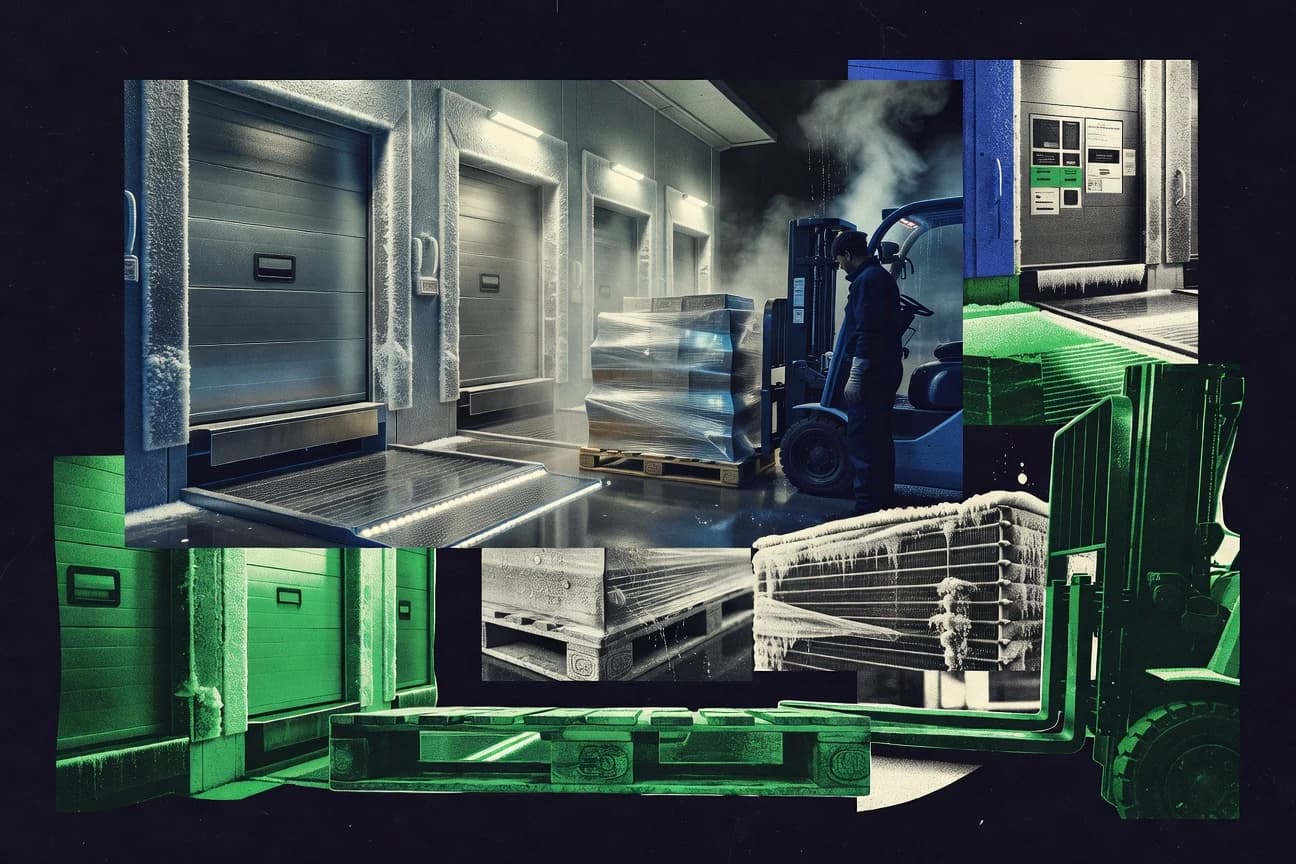

The global cold storage market is projected to reach $26.1 billion by 2030. This growth is driven by measurable performance improvements, like a 9% reduction in spoilage claims from optimized refrigeration maintenance.
Key Takeaways
- US$ 11.9 billion global cold storage market projected for 2024, establishing the market’s current scale
- 15.1% CAGR for the global cold chain logistics market over 2023–2032, quantifying growth momentum feeding cold storage utilization
- US$ 419.0 billion global cold chain market valuation in 2024 (reported in the study’s market sizing section), measuring current sector size
- US retail and wholesale food cold chain losses can be reduced with improved temperature control; FAO reports reduced spoilage from post-harvest improvements, quantified across the post-harvest stage
- Cybersecurity and data integrity requirements (e.g., FDA 21 CFR Part 11) reduce risk of falsified monitoring records in compliant cold storage environments
- IoT temperature monitoring in cold chain can reduce temperature excursion durations; studies quantify excursion reduction when using real-time monitoring and alerts
- 1.8 billion metric tons of food is wasted globally each year, establishing the magnitude of losses cold storage helps mitigate
- The global cold storage capacity is projected to reach 850 million cubic meters by 2030 in a forecast, quantifying future storage volume demand
- The cold chain market’s value chain depends on temperature-controlled warehousing; a typical cold storage system is designed to maintain specified setpoints within tight tolerances (e.g., ±1°C/±2°C depending on product requirements) as covered in industry standards
- ISO 22000 sets out management system requirements for food safety, which cold storage warehouses implement to reduce stored-food hazard risk
- FDA regulates biologics, including temperature-controlled distribution and storage under 21 CFR Parts 210/211 and 21 CFR Part 211’s current good manufacturing practice (cGMP) expectations that cold storage must support
- HACCP is required under Codex principles for food safety management; cold storage operators apply hazard analysis to storage-associated risks such as temperature abuse
- US electricity generation emissions are a major driver of refrigerated warehouse operating costs and carbon footprint, with US power sector carbon intensity reported by US EIA at about 0.37 kg CO2 per kWh (2023 average referenced by EIA)
- Refrigerant leaks contribute to climate impact; HFCs have high global warming potentials quantified by IPCC, informing sustainability practices for refrigeration systems
- EU F-gas Regulation (EU) 2024/573 includes phase-down steps quantified to reduce HFC availability starting 2024, influencing cold storage refrigeration adoption
Cold storage is expanding rapidly, driven by rising cold chain needs, tighter regulations, and IoT aided efficiency.
Related reading
01 · Category
Market Size8 stats
01
US$ 11.9 billion global cold storage market projected for 2024, establishing the market’s current scale
02
15.1% CAGR for the global cold chain logistics market over 2023–2032, quantifying growth momentum feeding cold storage utilization
03
US$ 419.0 billion global cold chain market valuation in 2024 (reported in the study’s market sizing section), measuring current sector size
04
US$ 26.1 billion global cold storage market forecast in 2030 (from a 2023 starting point), reflecting long-run market expansion
05
US$ 8.5 billion investment in cold chain logistics infrastructure in China’s 14th Five-Year Plan context (2021–2025), showing public-sector scale for storage buildout
06
$1.35 billion US cold storage revenue (2028 forecast) — projected US cold storage revenue by 2028
07
$4.3 billion — US investment in cold chain logistics technology and infrastructure (2023 spend) — capex indicator for modernization of cold storage
08
$2.7 billion — global logistics automation spending related to warehousing (2023 spend; includes cold storage automation)
Interpretation
Market Size Interpretation
The market size for cold storage is already massive at about US$11.9 billion in 2024 and is set to expand sharply, with global cold storage reaching US$26.1 billion by 2030 and the broader cold chain market valued at US$419.0 billion in 2024, underscoring strong, long-term demand captured by this Market Size category.
02 · Category
Risk & Technology12 stats
01
US retail and wholesale food cold chain losses can be reduced with improved temperature control; FAO reports reduced spoilage from post-harvest improvements, quantified across the post-harvest stage
02
Cybersecurity and data integrity requirements (e.g., FDA 21 CFR Part 11) reduce risk of falsified monitoring records in compliant cold storage environments
03
IoT temperature monitoring in cold chain can reduce temperature excursion durations; studies quantify excursion reduction when using real-time monitoring and alerts
04
Bluetooth/RTLS-based tracking in warehouses can reduce picking time by measurable percentages in intralogistics studies, improving cold storage throughput and minimizing dwell time
05
Computer vision and automated inventory management can improve stock accuracy; peer-reviewed research reports measurable improvements in warehouse inventory accuracy
06
Predictive maintenance reduces unplanned downtime; industry/academic evidence often quantifies reductions (e.g., % downtime reduction) when predictive analytics is deployed in industrial refrigeration systems
07
Reefer container temperature monitoring reduces claim rates; studies quantify reduced refrigeration malfunction incidents when monitoring is implemented
08
Warehouse automation (AS/RS or conveyors) can improve throughput by measurable percentages; cold storage facilities benefit because faster handling lowers product exposure to out-of-temp conditions
09
Machine learning demand forecasting reduces stockouts and overstocks; cold storage uses it to improve inventory turns, quantified in peer-reviewed forecasting studies
10
Real-time location systems (RTLS) in healthcare supply chains reduce time-to-availability; measured improvements translate to reduced waiting and risk for temperature-sensitive items stored in cold rooms
11
Cold chain validation with temperature data loggers reduces uncertainty; studies quantify improvements in monitoring effectiveness when using calibrated data loggers
12
Energy-efficiency controls (e.g., variable-speed drives, high-precision thermostats) can reduce compressor energy use; research reports measurable compressor energy reductions from advanced control strategies
Interpretation
Risk & Technology Interpretation
Across Risk and Technology in cold storage, better temperature control and real time monitoring consistently reduce spoilage and shorten temperature excursions while compliant cybersecurity requirements help prevent falsified records, making traceable, digitally supervised operations a measurable way to cut risk.
03 · Category
Capacity & Utilization3 stats
01
1.8 billion metric tons of food is wasted globally each year, establishing the magnitude of losses cold storage helps mitigate
02
The global cold storage capacity is projected to reach 850 million cubic meters by 2030 in a forecast, quantifying future storage volume demand
03
The cold chain market’s value chain depends on temperature-controlled warehousing; a typical cold storage system is designed to maintain specified setpoints within tight tolerances (e.g., ±1°C/±2°C depending on product requirements) as covered in industry standards
Interpretation
Capacity & Utilization Interpretation
With global cold storage capacity projected to grow to 850 million cubic meters by 2030, the Capacity and Utilization story is that expanding temperature controlled warehousing will be essential to curb the scale of losses from 1.8 billion metric tons of food wasted worldwide each year.
04 · Category
Supply Chain & Compliance6 stats
01
ISO 22000 sets out management system requirements for food safety, which cold storage warehouses implement to reduce stored-food hazard risk
02
FDA regulates biologics, including temperature-controlled distribution and storage under 21 CFR Parts 210/211 and 21 CFR Part 211’s current good manufacturing practice (cGMP) expectations that cold storage must support
03
HACCP is required under Codex principles for food safety management; cold storage operators apply hazard analysis to storage-associated risks such as temperature abuse
04
CE-marking/requirements for certain refrigerated transport and storage units in the EU are tied to safety and performance compliance; cold storage suppliers must meet specified standards
05
ASHRAE Standard 90.1 sets energy efficiency requirements affecting refrigeration systems and warehouse HVAC design, quantified by compliance metrics
06
ASME B31.5 piping standard affects design/testing for refrigeration piping systems used in cold storage facilities, enforcing measurable code compliance
Interpretation
Supply Chain & Compliance Interpretation
Across the Cold Storage Warehouse sector, compliance is increasingly driven by food safety and controlled storage standards that go beyond general best practices, including ISO 22000 adoption for hazard reduction plus explicit regulatory and technical requirements such as FDA coverage under 21 CFR Parts 210 and 211, HACCP expectations under Codex, EU CE linked rules for refrigerated units, and measurable energy and piping constraints from ASHRAE 90.1 and ASME B31.5.
05 · Category
Energy & Sustainability7 stats
01
US electricity generation emissions are a major driver of refrigerated warehouse operating costs and carbon footprint, with US power sector carbon intensity reported by US EIA at about 0.37 kg CO2 per kWh (2023 average referenced by EIA)
02
Refrigerant leaks contribute to climate impact; HFCs have high global warming potentials quantified by IPCC, informing sustainability practices for refrigeration systems
03
EU F-gas Regulation (EU) 2024/573 includes phase-down steps quantified to reduce HFC availability starting 2024, influencing cold storage refrigeration adoption
04
UK’s CRC/ESOS energy audits require certain organizations to conduct energy audits (ESOS) every 4 years; ESOS coverage thresholds quantify who must audit, affecting cold storage operators’ energy compliance
05
US EPA reports that refrigeration and air-conditioning are among the largest contributors to greenhouse gas emissions from stationary sources, quantified in the EPA’s inventory/analysis context
06
World Bank estimates that improving energy efficiency in buildings can reduce energy consumption by 20–30%, relevant to warehouse refrigeration and HVAC energy use
07
IPCC AR6 quantifies methane’s warming contribution; reducing leaks (including from refrigeration-adjacent supply chains) supports methane-related climate benefits
Interpretation
Energy & Sustainability Interpretation
Energy and sustainability pressures are reshaping cold storage operations because electricity generation emissions drive refriger ated warehouse carbon costs, HFC refrigerant leaks have high climate impact under IPCC quantifications, and EU F gas rules phase down HFC availability starting 2024, while energy audits every four years in the UK and World Bank findings that building efficiency can cut energy use by 20 to 30 percent reinforce the push to reduce emissions and demand.
More related reading
06 · Category
Industry Trends1 stats
01
34% of global respondents report using refrigerated storage due to food safety/quality concerns (survey, 2022) — adoption driver tied to cold storage demand
Interpretation
Industry Trends Interpretation
With 34% of global respondents using refrigerated storage for food safety and quality reasons, the industry trends clearly show safety focused needs are a major adoption driver for cold storage.
07 · Category
Energy & Cost2 stats
01
$0.50–$0.65 per kWh typical industrial electricity price range in the US (2023) — cost level used in energy cost calculations for refrigerated warehousing
02
2.4% annual growth in US commercial and industrial electricity sales (2023–2024) — demand growth context affecting operating energy costs for cold storage operators
Interpretation
Energy & Cost Interpretation
With typical US industrial electricity at about $0.50 to $0.65 per kWh in 2023 and commercial and industrial electricity sales projected to grow by 2.4% annually from 2023 to 2024, energy costs for cold storage operators are set to remain a major and rising expense within the Energy and Cost category.
08 · Category
User Adoption2 stats
01
35% of warehouse operations report using IoT-enabled monitoring for temperature control (survey, 2023) — adoption metric tied directly to cold storage performance
02
52% of supply chain organizations use cloud-based warehouse management systems (survey, 2023) — WMS adoption supporting cold storage inventory accuracy
Interpretation
User Adoption Interpretation
In the user adoption of cold storage warehousing, 52% of supply chain organizations already use cloud based WMS and 35% report using IoT enabled monitoring for temperature control, showing that digital systems and real time conditions are becoming mainstream.
09 · Category
Performance Metrics1 stats
01
9% reduction in cold storage spoilage/claims after refrigeration maintenance optimization (case-study quantified in trade research)
Interpretation
Performance Metrics Interpretation
A case study shows that optimizing refrigeration maintenance cut cold storage spoilage or claims by 9%, indicating that targeted performance improvements can measurably reduce losses in the cold storage warehouse industry.
report visual · Key figures
Cold storage industry growth: market scale, capacity expansion, and momentum
The cold storage market is expanding alongside cold-chain logistics, with forecasts pointing to higher market value and capacity by 2030—supported by sustained growth momentum.
15.1%
15.1% CAGR for the global cold chain logistics market over 2023–2032, quantifying growth momentum feeding cold storage u
$11.9 billion
US$ 11.9 billion global cold storage market projected for 2024, establishing the market’s current scale
$26.1 billion
US$ 26.1 billion global cold storage market forecast in 2030 (from a 2023 starting point), reflecting long-run market ex
850
The global cold storage capacity is projected to reach 850 million cubic meters by 2030 in a forecast, quantifying futur
source-verifiedimarcgroup.com · fortunebusinessinsights.com · precedenceresearch.com · researchandmarkets.com2030
Reference
Cite This Report
This report is designed to be cited. We maintain stable URLs and versioned verification dates. Copy the format appropriate for your publication below.
APA
David Sutherland. (2026, February 13). Cold Storage Warehouse Industry Statistics. Gitnux. https://gitnux.org/cold-storage-warehouse-industry-statistics
MLA
David Sutherland. "Cold Storage Warehouse Industry Statistics." Gitnux, 13 Feb 2026, https://gitnux.org/cold-storage-warehouse-industry-statistics.
Chicago
David Sutherland. 2026. "Cold Storage Warehouse Industry Statistics." Gitnux. https://gitnux.org/cold-storage-warehouse-industry-statistics.
Sources & references
42 datasets cited across this report · attribution is report-level
+17 additional datasets cited (not shown individually)