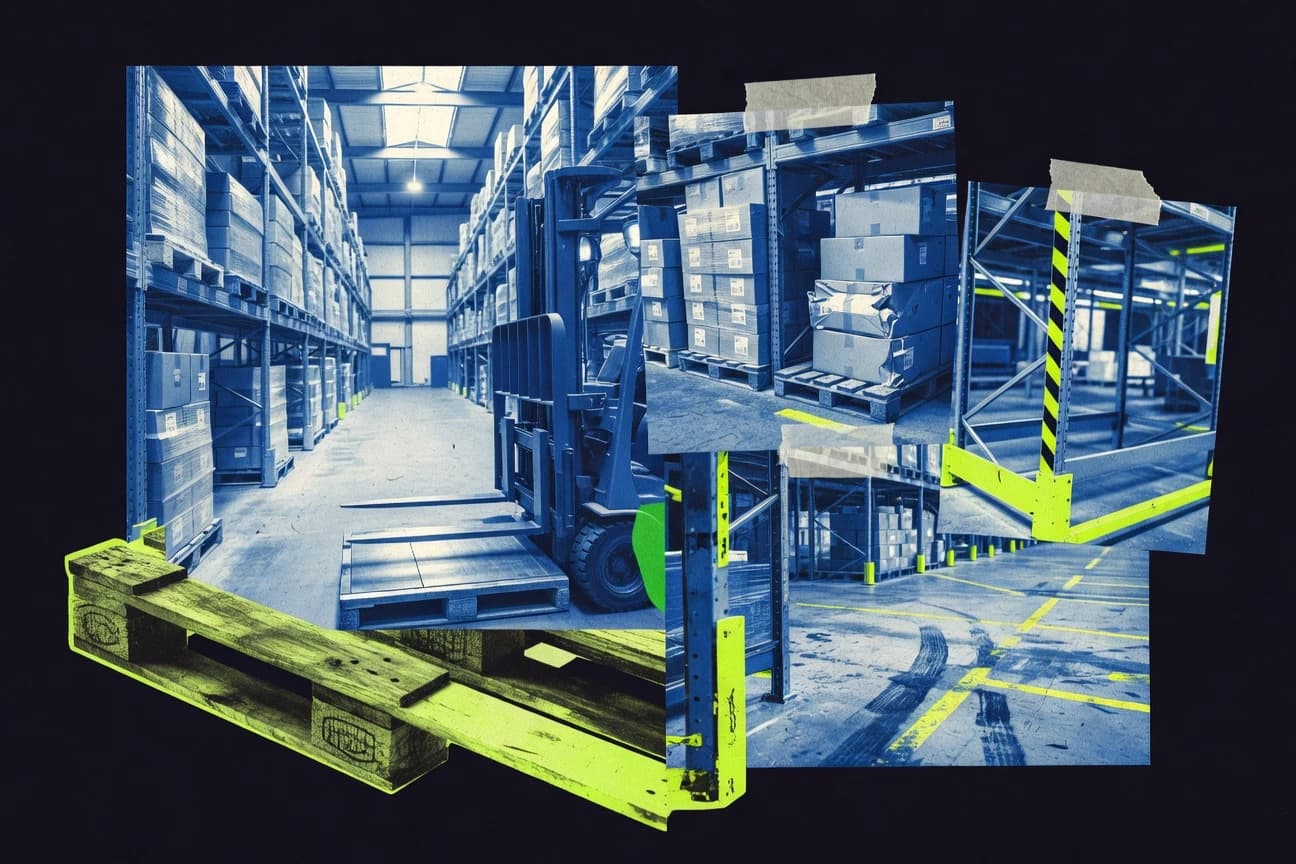

Warehouses shape employment and logistics across the US and beyond, employing about 1.8 million workers and paying an average of $18.50 per hour in 2023. This page looks at where demand is growing and why, from Asia-Pacific’s 42% share of global warehouse space demand to the US network of more than 31,000 3PL warehouses that support 15% of imports. It also explores how operating conditions and investments affect outcomes such as turnover, training, safety, inventory accuracy, and faster order fulfillment, alongside the technologies driving automation and efficiency.
Key Takeaways
- US warehouse workforce totals 1.8 million employees as of 2023.
- Average hourly wage for warehouse workers in the US is $18.50 in 2023.
- 42% of warehouse staff turnover rate annually in high-volume facilities.
- The global warehouse market size reached $450 billion in 2023 and is projected to grow to $612 billion by 2028 at a CAGR of 6.3%.
- In the US, there were over 31,000 third-party logistics (3PL) warehouses operating in 2023, handling 15% of all US imports.
- Asia-Pacific region accounted for 42% of the global warehouse space demand in 2023, driven by e-commerce expansion in China and India.
- Average warehouse picking time per order is 45 seconds in automated facilities versus 120 seconds in manual ones.
- US warehouses achieve 99.9% inventory accuracy with RFID implementation.
- Order fulfillment cycle time averages 24 hours in top-performing warehouses.
- Warehouse OSHA recordable incidents average 3.8 per 100 full-time workers annually.
- 72% of warehouses implemented energy-efficient LED lighting by 2023, reducing energy use by 50%.
- Carbon emissions from warehouses fell 18% with solar panel installations in 20% of facilities.
- 65% of warehouses use AGVs, boosting throughput by 50% on average.
- AI-driven demand forecasting reduces stockouts by 35% in smart warehouses.
- Robotic picking systems achieve 1,000 picks per hour per robot.
Related reading
01 · Category
Labor And Employment19 stats
01
US warehouse workforce totals 1.8 million employees as of 2023.
02
Average hourly wage for warehouse workers in the US is $18.50in 2023.
03
42% of warehouse staff turnover rate annually in high-volume facilities.
04
Training hours per employee average 40 annually in top warehouses.
05
55% of warehouses report labor shortages as their top challenge in 2023.
06
Female representation in warehouse jobs increased to 32% in 2023.
07
Overtime hours account for 15% of total warehouse labor costs globally.
08
Gig workers make up 18% of seasonal warehouse staffing in peak periods.
09
Safety training completion rate is 92% in certified warehouses.
10
Injury rates per 100 workers dropped to 4.2 in 2023 US warehouses.
11
Europe warehouse sector employs 2.5 million people in 2023.
12
UK warehouse picker salary averages £25,000 annually.
13
60% of warehouses offer flexible shifts to retain staff.
14
Upskilling programs increased productivity by 22% in trained workers.
15
Aging workforce: 25% of US warehouse workers over 55.
16
Unionization rates in warehouses rose to 12% in 2023.
17
Mental health support programs in 45% of large warehouses.
18
Absenteeism rates average 7.2% in peak seasons.
19
Diversity training mandatory in 68% of corporate warehouses.
02 · Category
Market Size And Growth18 stats
01
The global warehouse market size reached $450 billion in 2023 and is projected to grow to $612 billion by 2028 at a CAGR of 6.3%.
02
In the US, there were over 31,000 third-party logistics (3PL) warehouses operating in 2023, handling 15% of all US imports.
03
Asia-Pacific region accounted for 42% of the global warehouse space demand in 2023, driven by e-commerce expansion in China and India.
04
Warehouse vacancy rates in the US dropped to 4.8% in Q4 2023, the lowest in over two decades.
05
E-commerce drove 28% of new warehouse leasing activity in Europe during 2023.
06
The UK warehouse market saw rents increase by 12.5% year-over-year in prime locations in 2023.
07
US warehouse construction starts hit 541 million square feet in 2022, a record high.
08
China's warehouse vacancy rate fell to 1.8% in Tier 1 cities by end of 2023.
09
Global cold chain warehouse capacity grew by 8.2% annually from 2020-2023.
10
Brazil's warehouse market expanded by 15% in absorption rates in 2023 due to agribusiness.
11
Global warehouse automation market valued at $22 billion in 2023.
12
India's warehouse capacity is expected to double to 200 million sq ft by 2025.
13
Australia saw 5.2 million sqm of warehouse space under construction in 2023.
14
Mexico's nearshoring boosted warehouse demand by 22% in 2023.
15
German warehouse rents rose 8.7% in 2023 due to supply constraints.
16
Southeast Asia warehouse investment hit $4.5 billion in 2023.
17
US industrial vacancy rate stabilized at 5.2% amid record deliveries.
18
South Korea's logistics warehouse market grew 11% YoY in 2023.
03 · Category
Operational Efficiency19 stats
01
Average warehouse picking time per order is 45 seconds in automated facilities versus 120 seconds in manual ones.
02
US warehouses achieve 99.9% inventory accuracy with RFID implementation.
03
Order fulfillment cycle time averages 24 hours in top-performing warehouses.
04
Slotting optimization reduces travel time by 30% in high-volume distribution centers.
05
Error rates in picking drop to 0.05% with voice-directed systems.
06
Cross-docking operations handle up to 500% more throughput than traditional storage.
07
Labor productivity in warehouses improved by 25% post-WMS upgrades in 2023 surveys.
08
Put-away efficiency reaches 95% within 15 minutes per pallet in optimized systems.
09
Cycle counting frequency increased to weekly in 68% of large warehouses, reducing discrepancies by 40%.
10
Receiving dock turnaround time averages 22 minutes for inbound trucks in efficient facilities.
11
Average dwell time for inventory in warehouses is 14 days.
12
Wave picking increases order batch efficiency by 35%., source zone picking by 20%.
13
75% of warehouses use ERP integration for real-time inventory visibility.
14
Pallet throughput averages 150 per hour per dock door.
15
ABC analysis classifies 80% of SKUs as C items requiring minimal space.
16
Dynamic slotting adjusts locations weekly, improving pick rates by 18%.
17
Returns processing costs 15% of total warehouse expenses.
18
92% order accuracy achieved with barcode scanning mandates.
19
Truck unloading rates average 25 pallets per hour.
More related reading
04 · Category
Safety, Sustainability, And Trends20 stats
01
Warehouse OSHA recordable incidents average 3.8 per 100 full-time workers annually.
02
72% of warehouses implemented energy-efficient LED lighting by 2023, reducing energy use by 50%.
03
Carbon emissions from warehouses fell 18% with solar panel installations in 20% of facilities.
04
Forklift accidents decreased 25% after mandatory telematics adoption.
05
85% of new warehouses built to LEED standards in 2023 for sustainability.
06
Water usage per square foot in green warehouses is 30% lower than average.
07
Fire safety compliance reached 96% in audited US warehouses.
08
Recycling rates for warehouse packaging materials hit 65% globally.
09
Micro-fulfillment centers grew 40% in urban areas for same-day delivery.
10
28% of warehouses predict automation will eliminate 20% of manual jobs by 2025.
11
Forklifts cause 35% of warehouse injuries, averaging 34,900 cases yearly in US.
12
40% energy savings from variable frequency drives on fans.
13
Zero-waste certifications held by 15% of global warehouses.
14
EV charging stations in 28% of new warehouses for fleet transition.
15
Ergonomic interventions reduce musculoskeletal disorders by 30%.
16
75% of warehouses use RFID for hazardous material tracking.
17
Green roofs on warehouses cut cooling costs by 25%.
18
AI safety monitors prevent 88% of potential collisions.
19
Omnichannel fulfillment trends show 50% growth in BOPIS orders.
20
Reshoring increases US warehouse demand by 12% in manufacturing sectors.
Interpretation
Safety, Sustainability, And Trends Interpretation
Warehouses are making measurable progress on both safety and sustainability, with forklift accidents down 25% after telematics and carbon emissions falling 18% as 20% of facilities add solar while 72% switch to LED lighting.
05 · Category
Technology And Automation19 stats
01
65% of warehouses use AGVs, boosting throughput by 50% on average.
02
AI-driven demand forecasting reduces stockouts by 35% in smart warehouses.
03
Robotic picking systems achieve 1,000 picks per hour per robot.
04
IoT sensors monitor 92% of pallet locations in real-time in advanced facilities.
05
Blockchain integration in supply chain traceability covers 22% of global warehouses by 2023.
06
5G networks enable 40% faster data transfer for warehouse WMS systems.
07
Machine vision systems detect 99.7% of packaging defects automatically.
08
Digital twins simulate warehouse operations with 98% accuracy for layout optimization.
09
Cloud-based WMS adoption rose to 78% in enterprises, cutting IT costs by 30%.
10
Drones for inventory counting reduce time by 70% in large-scale warehouses.
11
Autonomous mobile robots (AMRs) handle 60% of internal transport in modern DCs.
12
Predictive maintenance via AI cuts downtime by 45% in conveyor systems.
13
AR glasses assist pickers, boosting accuracy to 99.5%.
14
Edge computing processes 80% of warehouse data locally for faster decisions.
15
Warehouse robotics market CAGR is 16.5% through 2030.
16
Computer vision sorts 2,500 items per hour in depalletizing.
17
WES (Warehouse Execution Systems) optimize 95% of AS/RS movements.
18
55% of warehouses testing cobots for collaborative tasks.
19
RPA automates 70% of administrative warehouse tasks.
report visual · Key figures
Warehouse Statistics statistics snapshot
Selected headline statistics from verified sources for a stable visual baseline.
1.8
US warehouse workforce totals 1.8 million employees as of 2023.
$18.50
Average hourly wage for warehouse workers in the US is $18.50 in 2023.
42%
42% of warehouse staff turnover rate annually in high-volume facilities.
40
Training hours per employee average 40 annually in top warehouses.
55%
55% of warehouses report labor shortages as their top challenge in 2023.
32%
Female representation in warehouse jobs increased to 32% in 2023.
Reference
Cite This Report
This report is designed to be cited. We maintain stable URLs and versioned verification dates. Copy the format appropriate for your publication below.
APA
Rachel Svensson. (2026, February 13). Warehouse Statistics. Gitnux. https://gitnux.org/warehouse-statistics
MLA
Rachel Svensson. "Warehouse Statistics." Gitnux, 13 Feb 2026, https://gitnux.org/warehouse-statistics.
Chicago
Rachel Svensson. 2026. "Warehouse Statistics." Gitnux. https://gitnux.org/warehouse-statistics.
Sources & references
86 datasets cited across this report