
GITNUXSOFTWARE ADVICE
Cybersecurity Information SecurityTop 10 Best Video Redaction Software of 2026
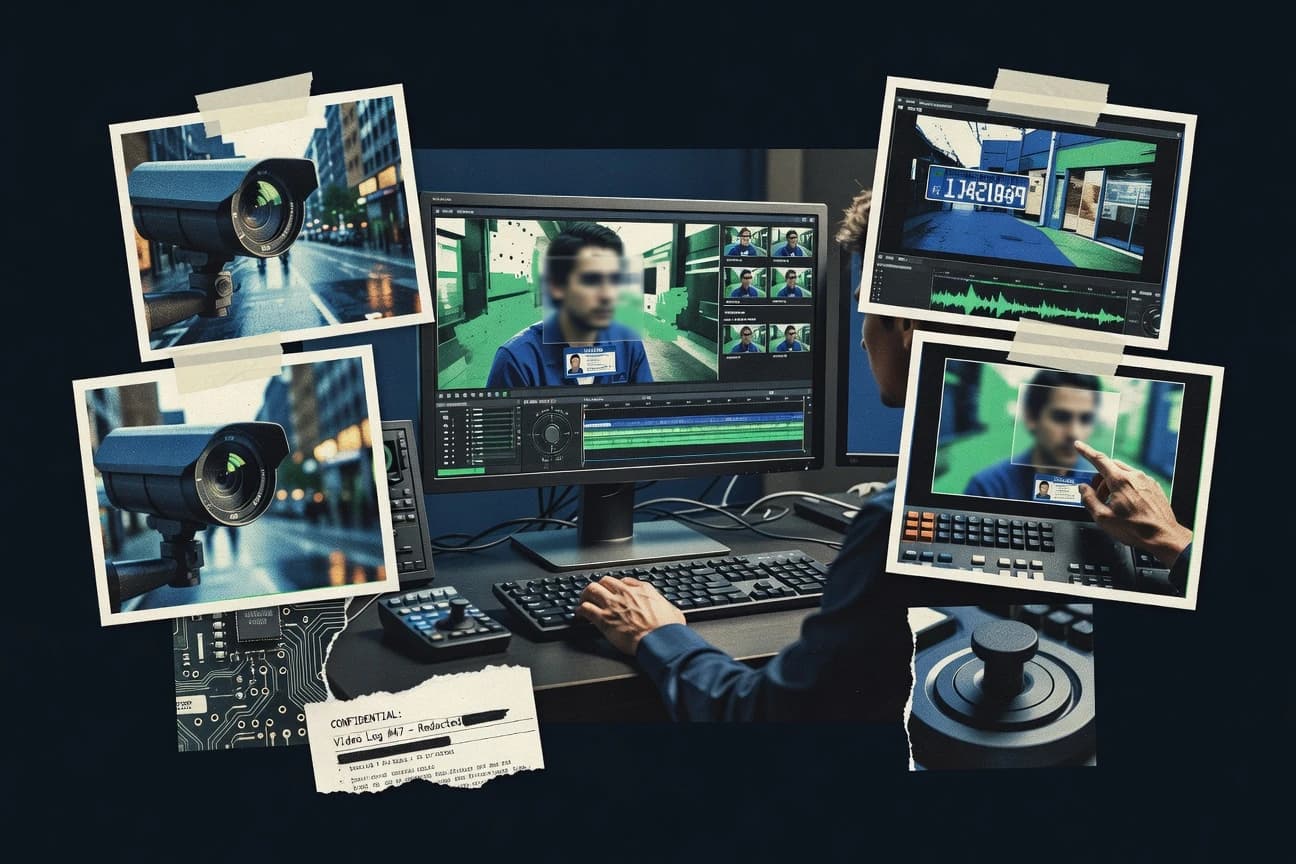
Ranked roundup of video redaction software tools with evaluation notes for editors and compliance teams, including CaseGuard Studio, Pixelate, and Pimloc.

How we ranked these tools
Core product claims cross-referenced against official documentation, changelogs, and independent technical reviews.
Analyzed video reviews and hundreds of written evaluations to capture real-world user experiences with each tool.
AI persona simulations modeled how different user types would experience each tool across common use cases and workflows.
Final rankings reviewed and approved by our editorial team with authority to override AI-generated scores based on domain expertise.
Score: Features 40% · Ease 30% · Value 30%
Gitnux may earn a commission through links on this page — this does not influence rankings. Editorial policy
CaseGuard Studio is the best fit when evidence teams need repeatable, automated redaction with consistent masked outputs across many MP4 files, while Pixelate by Accrevent is the better pick for SMBs running standardized batch review cycles.
Editor’s top 3 picks
Three quick recommendations before you dive into the full comparison below — each one leads on a different dimension.
CaseGuard Studio
Run-level redaction configuration keeps masking behavior consistent across batch jobs for predictable publication-ready outputs.
Built for fits when evidence teams need repeatable automated redaction and consistent masked outputs across many MP4 files..
Pixelate by Accrevent
Editor pickOperator-friendly redaction automation that applies consistent masking rules across batches of similar footage.
Built for fits when teams need automated, repeatable video redaction across batches and standardized review cycles..
Pimloc SecureRedact
Editor pickSecure-redaction workflow with traceable processing records designed for after-the-fact review of redaction actions.
Built for fits when operations teams must redact repeated case videos with controlled, reviewable outputs..
Comparison Table
CaseGuard Studio
enterpriseDesktop software for redacting video, audio, images, and documents.
Run-level redaction configuration keeps masking behavior consistent across batch jobs for predictable publication-ready outputs.
CaseGuard Studio is positioned for teams that need automated redaction at scale, including repeated runs across large MP4 libraries. The tool focuses on privacy masking types such as facial regions and license plate regions, with output that preserves the original timeline structure for downstream review. Detection confidence controls and masking configuration reduce manual intervention when privacy regions vary between videos. The audit-friendly workflow expectations align with evidentiary integrity requirements where the team must track what was redacted per run.
A key tradeoff is that detection quality depends on video resolution, lighting, and camera angle, so some clips require manual review or parameter tuning to avoid missed regions. It fits situations where multiple similar clips must be redacted consistently, such as public records processing or law enforcement evidence preparation. It is also a fit when batch throughput matters more than bespoke editing, since redaction runs are designed to produce predictable masked outputs across many files.
- +Automated redaction runs support batch throughput for large video sets
- +Configurable detection thresholds improve consistency across mixed footage
- +Masking output preserves timeline structure for downstream review
- +Focused privacy masking types cover common PII regions
- –Detection can miss small, low-contrast targets in low-resolution footage
- –Parameter tuning can be required for consistent results across camera setups
- –Manual review is often needed for borderline detections
- –Automation benefits depend on integrating runs into an external workflow
Law enforcement evidence units
Redact faces and plates in case videos
Faster case processing cycles
Public records processing teams
Mask PII across high-volume uploads
Lower manual redaction workload
Show 2 more scenarios
Media legal teams
Prepare redacted footage for review
More consistent redaction decisions
Redaction outputs support repeatable masking so reviewers can verify sensitive regions quickly.
Video compliance operations
Standardize redaction rules across cameras
Fewer rule deviations
Configurable thresholds and masks help standardize privacy handling for different source quality.
Best for: Fits when evidence teams need repeatable automated redaction and consistent masked outputs across many MP4 files.
Pixelate by Accrevent
SMBAutomated video redaction solution for compliance and privacy protection.
Operator-friendly redaction automation that applies consistent masking rules across batches of similar footage.
Pixelate by Accrevent is built for automated redaction tasks that need repeatable privacy masking across many video files rather than one-off edits. It supports batch processing and is positioned for environments that care about frame-accurate edited outputs and repeatable masking behavior. The workflow suits privacy teams handling public-records style requests where the same redaction criteria must apply across multiple assets.
A practical tradeoff is governance setup and workflow discipline, since consistent outcomes depend on defining the right targeting rules for each video type. Pixelate fits best when footage categories are predictable, such as interview recordings with similar framing, and operators need the system to apply the same redaction approach across shipments.
- +Automated redaction workflow that reduces manual frame cleanup work
- +Batch processing supports high-volume request and case workflows
- +Consistent masking rules make repeated edits easier to standardize
- +Outputs remain compatible with typical MP4-based review pipelines
- –Requires configuration discipline to keep targeting rules consistent
- –Less effective for highly irregular scenes without prior rule tuning
- –Advanced governance requires coordinated operator workflow setup
- –Does not replace a full manual pass for edge-case frames
Privacy and compliance teams
Public records redaction batches
Faster release-ready exports
Legal operations teams
Evidence video de-identification
Reduced review rework
Show 2 more scenarios
Investigations teams
Interview and deposition clips
Lower manual editing time
Uses repeatable targeting to handle multiple recordings with similar framing.
Media operations teams
Internal privacy masking at scale
More consistent exports
Runs batch redaction to standardize privacy handling before publishing internal assets.
Best for: Fits when teams need automated, repeatable video redaction across batches and standardized review cycles.
Pimloc SecureRedact
enterpriseVideo privacy software that detects and obscures faces, bodies, and sensitive details.
Secure-redaction workflow with traceable processing records designed for after-the-fact review of redaction actions.
Pimloc SecureRedact focuses on moving from source footage to redacted MP4 outputs while keeping the masking aligned across frames. Automated detection can reduce manual keyframing time, and manual controls support when detection misses or when redaction requirements are nuanced. The governance story emphasizes secure handling around processed files, plus traceable activity records that support operational review after redaction.
A key tradeoff is that accurate results depend on video quality and consistent subject visibility, especially for fast motion and occlusion-heavy scenes. Pimloc SecureRedact fits best when a team needs to run similar redaction rules repeatedly across many case videos, such as public records response packages.
- +Automated masking reduces manual keyframe effort on clear, centered subjects
- +Manual refinement supports precise control when detections fail
- +Batch-friendly workflow supports repeating rules across case sets
- +Traceable processing records help review redaction outcomes
- –Detection accuracy drops with low light and heavy occlusion
- –Complex projects require careful rule configuration to avoid over-redaction
- –Frame-accurate refinement takes time for long clips
- –Best results depend on consistent camera framing
Legal ops teams
Redact case evidence clips before sharing
Faster evidence sharing
Public records coordinators
Batch redact request response videos
Lower turnaround time
Show 2 more scenarios
Compliance and privacy teams
Mask recurring identifiers across recordings
More consistent masking
Policy-driven redaction helps keep sensitive regions covered across batches and exports.
Investigations units
Refine redaction on difficult scenes
Better evidentiary consistency
Manual refinement handles edge cases where motion and framing defeat automated detection.
Best for: Fits when operations teams must redact repeated case videos with controlled, reviewable outputs.
Veritone Redact
enterpriseAI-assisted redaction for video, audio, and imagery within evidence workflows.
AI workflow integration that drives automated redaction runs and controlled outputs through API-connected processing.
Veritone Redact targets privacy masking workflows for video footage with repeatable output characteristics.
Automated redaction can be combined with manual controls for exception handling and targeted changes.
Programmatic operation through Veritone’s workflow and API surface supports batch runs and controlled processing pipelines.
- +Automated privacy masking reduces frame-by-frame manual work
- +Batch processing supports high-volume redaction queues
- +API-driven workflow fits programmatic evidence handling
- +Configurable outputs support MP4 delivery for downstream review
- –Operational setup is required to align detection targets with review needs
- –Advanced governance depends on Veritone workflow configuration
- –Tuning detection behavior can be iterative for edge cases
- –Complex redaction rules require careful workflow design
Best for: Fits when media teams need automated redaction at scale with repeatable edits.
Redactor by Evidence.com
enterpriseBody-worn camera video redaction module within the Evidence.com platform.
Redaction job state stays connected to Evidence.com evidence records for review tracking and controlled exports.
Redactor by Evidence.com removes sensitive content from recorded videos by generating redacted output tied to an evidence workflow. It supports automated redaction controls alongside manual review steps so redactions can be adjusted frame-accurately before export.
The solution fits law enforcement evidence management use cases where audit trails and repeatable processing matter for chain-of-custody style handling. Integration with Evidence.com workflows gives administrators a centralized way to manage redaction jobs and review states across users.
- +Evidence.com workflow integration keeps redaction jobs tied to evidence records
- +Manual review steps allow correction after automated detection
- +Audit-oriented processing supports evidentiary handling needs
- +Exports work as a closed loop from redaction to deliverable video
- –Automation results can require human tuning for reliable face and plate masking
- –Batch throughput depends on queue configuration and operator review capacity
- –Advanced customization is limited compared with toolchains built around FFmpeg scripting
- –Redaction rule control is less granular than annotation-first editors
Best for: Fits when agencies need evidence-linked redaction workflows with review control and auditable job history.
Focal
vertical specialistCloud-based video redaction platform for law enforcement and forensic analysts.
Evidence-oriented batch processing that applies consistent redaction configurations and produces frame-accurate redaction outputs for review queues.
Focal targets teams that need evidentiary redaction workflows on real video evidence, not just preview edits. It supports automated detection workflows for sensitive visuals and privacy masking, then renders redactions with frame-accurate output suitable for review and export.
Editing control focuses on repeatable processing runs across collections of files, with settings designed for consistent results rather than one-off manual tweaking. Focal fits organizations that require governed processing steps and traceable work products for record handling.
- +Automated privacy masking workflow supports batch processing for large evidence sets
- +Frame-accurate redaction rendering supports consistent cut points across batches
- +Export-focused output workflow fits review queues and downstream evidence handling
- +Repeatable configuration reduces variance between operators on similar footage
- –Automation breadth depends on the supported detection targets and media types
- –Integrations require planning for lab-style pipelines and evidence intake formats
- –Complex scenarios can still need manual review to confirm redaction coverage
- –Advanced governance depends on administrative setup and operational discipline
Best for: Fits when investigators need consistent automated redaction runs, frame-accurate exports, and controlled review steps.
Videntifier Redact
vertical specialistForensic video redaction and analysis tool for law enforcement investigations.
Redaction is designed around frame-stable privacy masking that can be reviewed and corrected before exporting edited MP4 output.
Videntifier Redact is a video redaction tool that focuses on privacy masking for video evidence workflows, with a workflow designed around finding sensitive regions and applying frame-consistent blur or blackout. It combines automated detection with editing controls so redactions can be reviewed and adjusted before export. The output workflow is oriented toward evidentiary reuse, where edited MP4 files and an audit-friendly processing flow matter more than timeline-first creative editing.
- +Automated region identification reduces repetitive manual masking work
- +Frame-consistent redaction output supports evidence review use cases
- +Review and adjustment workflow helps correct automated targeting errors
- +Batch-style processing fits higher-volume redaction requests
- –Automation quality depends on input quality and detection coverage
- –Less suited to highly custom, keyframe-by-keyframe creative edits
- –Governance controls like RBAC and audit logs are not the centerpiece
- –Complex multi-subject scenes can require extra manual refinement
Best for: Fits when evidence teams need consistent video privacy masking with reviewable, frame-stable results.
BlurFaces by MotionDSP
enterpriseVideo redaction and enhancement toolkit for forensic and intelligence workflows.
Temporal consistency through face tracking keeps blur aligned as individuals move through the scene.
BlurFaces by MotionDSP is a video redaction workflow focused on face masking across frames. It combines face detection with temporal tracking so blur can persist as people move, rather than treating each frame as independent.
The output workflow is built around batch-friendly processing of video files with consistent visual privacy masking. MotionDSP also provides an API surface for integrating automated face redaction into existing media pipelines.
- +Face detection tied to tracking produces more consistent blur across motion
- +API integration supports embedding redaction in automated media pipelines
- +Batch processing fits repeatable redaction on large collections of videos
- +Frame-accurate masking reduces the need for manual touch-ups
- –Primarily oriented toward facial privacy masking rather than general object coverage
- –Tracking quality depends on face visibility and camera motion in the source
- –Integrations require pipeline wiring around video ingestion and output handling
Best for: Fits when production teams need repeatable face redaction for recorded video evidence at scale.
Brighter AI
API-firstComputer-vision software for anonymizing faces, license plates, and other video details.
Rule-driven automated redaction that outputs edited video files in batches with consistent masking configuration.
Brighter AI performs automated video redaction from uploaded footage and applies privacy masking consistently across frames. It focuses on detecting sensitive content and generating edited outputs with configurable redaction styles for visual privacy needs.
Workflow control centers on repeatable runs and batch processing so teams can re-run the same redaction rules across multiple files. The software fits teams that need frame-accurate privacy masking with clear processing settings for evidence-adjacent workflows.
- +Automated redaction runs reduce manual frame-by-frame masking time
- +Batch processing supports applying the same redaction rules across files
- +Configurable masking output styles help match internal privacy policies
- +Consistent detection-to-edit behavior supports repeatable production workflows
- –Complex scenes can require manual review to catch missed regions
- –Redaction quality depends on input video clarity and motion
- –Limited visibility into per-frame decisions can slow audit-oriented checks
- –Integrations are less flexible than solutions offering deeper editing pipeline hooks
Best for: Fits when teams need repeatable automated privacy masking across many videos with minimal operator work.
PolicePad by SafeKids AI
vertical specialistAI-powered redaction tool for body-worn camera and surveillance footage.
Case workflow that couples automated privacy masking with guided manual correction for export-ready video delivery.
PolicePad by SafeKids AI is a video redaction tool built for protecting sensitive material in recordings used by public-facing organizations. It focuses on privacy masking workflows that combine automated redaction with manual review, so edits can be verified frame-accurately before export.
The system is oriented around repeating redaction tasks across cases, including face and license plate handling, plus non-visual obfuscation for areas that appear in footage. Redaction outputs are delivered in standard video formats suitable for evidence sharing and publication workflows.
- +Automated redaction reduces repetitive masking work across long recordings
- +Manual review support helps catch missed detections before export
- +Face and license plate targeting covers common privacy exposure points
- +Case-oriented workflow supports consistent handling across multiple videos
- –Automation quality drops on low light and extreme motion blur
- –Requires setup discipline to keep redaction settings consistent across cases
- –Batch throughput depends on processing pipeline speed and queue capacity
- –Audio redaction coverage is limited compared with full transcript-based workflows
Best for: Fits when investigations teams need consistent face and plate masking with human review before releasing footage.
Conclusion
After evaluating 10 cybersecurity information security, CaseGuard Studio stands out as our overall top pick — it scored highest across our combined criteria of features, ease of use, and value, which is why it sits at #1 in the rankings above.
Use the comparison table and detailed reviews above to validate the fit against your own requirements before committing to a tool.
How to Choose the Right video redaction software
Video redaction software turns recorded footage into publication-ready outputs by automating privacy masking and keeping edits consistent across repeated cases. This guide covers CaseGuard Studio, Pixelate by Accrevent, Pimloc SecureRedact, Veritone Redact, Redactor by Evidence.com, Focal, Videntifier Redact, BlurFaces by MotionDSP, Brighter AI, and PolicePad by SafeKids AI.
Coverage focuses on how each tool runs automated redaction at scale, how operators correct detections during review, and how batch jobs stay consistent from input to MP4 export. Tools like CaseGuard Studio emphasize run-level masking configuration for predictable outputs, while Veritone Redact routes automated processing through API-connected workflow runs.
Video redaction software for automated privacy masking, review control, and frame-accurate exports
Video redaction software applies automated privacy masking to video files, then supports review and refinement before producing edited MP4 output. Tools such as CaseGuard Studio focus on repeatable run-level redaction configuration so batch jobs produce consistent masked results across many MP4 files.
Other platforms prioritize evidence and workflow traceability, such as Redactor by Evidence.com keeping redaction job state tied to Evidence.com records for connected review tracking and controlled exports. Face-focused options like BlurFaces by MotionDSP use face tracking so blur remains aligned as individuals move, which matters for temporally consistent facial redaction.
Video redaction control, automation, and review-ready output
Video redaction software must convert detections into frame-accurate masked results that survive review and export into MP4 workflows. The tools in this list separate automated detection from operator correction, so the deciding features are how runs stay consistent and how job history connects to evidence review.
Run-level consistency for batch jobs
CaseGuard Studio uses run-level redaction configuration to keep masking behavior consistent across batch jobs, which helps teams standardize outputs across many MP4 files. Pixelate by Accrevent also emphasizes consistent redaction automation across batches, but it relies more on teams maintaining targeting rules across similar footage sets.
Workflow traceability linked to evidence records
Redactor by Evidence.com keeps redaction job state connected to Evidence.com evidence records so reviewers can trace what was redacted and what was exported. Pimloc SecureRedact provides traceable processing records designed for after-the-fact review of redaction actions, which supports governance even when automation needs later correction.
APIs and automation surfaces for pipeline integration
Veritone Redact drives automated privacy masking through API-connected processing so media teams can route redaction into broader workflow systems. BlurFaces by MotionDSP also highlights API integration to embed redaction into automated media pipelines, with temporal face tracking built for motion.
Frame-stable masking and reviewable exports
Focal focuses on frame-accurate redaction rendering for consistent cut points across batches, which supports controlled review queues. Videntifier Redact emphasizes frame-stable privacy masking that teams can review and correct before exporting edited MP4 output.
Manual refinement that closes gaps in automated detection
Pimloc SecureRedact combines automated masking with manual refinement for cases where detections fail, and it supports precise control when targets are missed. PolicePad by SafeKids AI couples automated privacy masking with guided manual correction so teams can reach export-ready delivery with human verification.
Detection reliability aligned to scene conditions
CaseGuard Studio reports that detection can miss small, low-contrast targets in low-resolution footage, which becomes a gating factor for fine-grained redaction needs. Pimloc SecureRedact also shows a clear ceiling in low light and heavy occlusion, so teams with poor lighting or obstruction-heavy camera views need stronger review coverage.
Decision framework for choosing video redaction automation and review controls
Start with how work moves from automated masking into operator review, because the selected tool must keep edits consistent from detection to exported MP4 output. Next, match integration and governance expectations to the workflow shape, because some products connect redaction jobs to evidence systems while others mainly provide batch redaction with configurable runs.
Choose consistency strategy for batch processing
If the redaction team needs repeatable outputs across large MP4 sets, CaseGuard Studio is built around run-level redaction configuration for consistent masking behavior in batch jobs. If the team works with batches of similar footage and can maintain targeting rules, Pixelate by Accrevent uses operator-friendly automation and batch processing to reduce manual frame cleanup.
Select governance based on how evidence review tracks edits
If redaction must attach directly to evidence records for review tracking and controlled exports, choose Redactor by Evidence.com because it ties redaction job state to Evidence.com evidence records. If traceable processing records matter more than a single evidence-system coupling, Pimloc SecureRedact provides secure-redaction workflow records designed for after-the-fact review of redaction actions.
Match API and pipeline integration depth to the media stack
If redaction runs must be orchestrated through a workflow platform via API-connected processing, Veritone Redact targets that integration shape for automated privacy masking at scale. If embedding redaction into automated media pipelines is the priority and face redaction temporal behavior matters, BlurFaces by MotionDSP emphasizes API integration plus temporal consistency through face tracking.
Pick the output stability model for review queues
If the review queue needs frame-accurate rendering that preserves consistent cut points across batches, use Focal because it produces frame-accurate redaction outputs for controlled review steps. If review correction happens inside an editing loop before export, Videntifier Redact supports reviewable frame-stable masking and then exports edited MP4 output.
Plan for where automated detection will fail and how humans intervene
If detection gaps are expected and precision manual refinement is required, Pimloc SecureRedact provides manual refinement to correct automated masking when detections fail. If the workflow demands guided manual correction for export-ready delivery, PolicePad by SafeKids AI couples automated redaction with human review support for missed detections.
Confirm scene-condition fit before committing to scale
If coverage must include small or low-contrast targets in lower-resolution footage, CaseGuard Studio signals detection misses for small low-contrast areas and may require parameter tuning by camera setup. If the footage often has low light or heavy occlusion, Pimloc SecureRedact reports accuracy drops in those conditions, so review capacity must be planned around likely misses.
Who should buy video redaction software
Video redaction software fits teams that must convert repeated case media into masked outputs with reviewable corrections and predictable batch behavior. The right choice depends on whether the team centers evidence traceability, media pipeline automation, or face-tracking stability for motion-heavy footage.
Evidence and investigations teams running repeated case videos
CaseGuard Studio supports repeatable automated redaction and consistent masked outputs across many MP4 files when teams need predictable publication-ready results. Pimloc SecureRedact adds traceable processing records designed for after-the-fact review when governance requires proof of what was redacted.
Agency teams using evidence records as the system of record
Redactor by Evidence.com connects redaction job state to Evidence.com evidence records so reviewers can track edits tied to evidence items. Focal also targets evidence-oriented batch processing with consistent redaction configurations and frame-accurate exports for review queues.
Media and production teams automating redaction inside pipelines
Veritone Redact emphasizes API-connected processing so redaction runs can be driven through a larger workflow stack at scale. BlurFaces by MotionDSP pairs API integration with face tracking that keeps blur aligned as individuals move.
Release teams that need human correction before export
PolicePad by SafeKids AI couples automated redaction with guided manual correction so teams can catch missed detections before export-ready delivery. Videntifier Redact supports frame-stable masking that teams can review and correct before exporting edited MP4 output.
Operational teams that must standardize rule application across batch cycles
Pixelate by Accrevent uses operator-friendly redaction automation that applies consistent masking rules across batches of similar footage. Brighter AI also outputs edited video files in batches using rule-driven automated redaction, with consistent masking configuration that reduces manual work.
Common mistakes when selecting video redaction software
Buyers often underestimate how detection reliability changes with scene conditions and how much governance discipline affects consistent masked outputs. These mistakes show up when teams treat automated masking as fully deterministic or when they choose a workflow fit that does not match how evidence review is conducted.
Assuming automated masking will stay consistent without run or rule governance.
CaseGuard Studio is built for run-level redaction configuration to keep masking behavior consistent across batch jobs, while Pixelate by Accrevent depends on configuration discipline to keep targeting rules consistent. Teams that skip rule standardization should expect higher manual correction time when scenes vary across requests.
Choosing a tool without mapping redaction history to evidence review workflows.
Redactor by Evidence.com keeps redaction job state tied to Evidence.com evidence records for connected review tracking and controlled exports. Pimloc SecureRedact provides traceable processing records designed for after-the-fact review, so it can fit teams that need auditability even when the evidence system differs.
Overestimating performance on low light, occlusion, and small targets.
Pimloc SecureRedact reports detection accuracy drops with low light and heavy occlusion, and CaseGuard Studio reports missed detections for small, low-contrast targets in low-resolution footage. Buyers should plan review coverage for the exact camera and lighting conditions used in real evidence.
Picking a face-focused tool for general redaction requirements.
BlurFaces by MotionDSP is primarily oriented toward facial privacy masking rather than general object coverage, so coverage gaps appear outside face use cases. PolicePad by SafeKids AI couples automated privacy masking with guided manual correction for export-ready delivery, which can reduce missed regions when non-face targets matter.
How We Selected and Ranked These Tools
We evaluated CaseGuard Studio, Pixelate by Accrevent, Pimloc SecureRedact, Veritone Redact, Redactor by Evidence.com, Focal, Videntifier Redact, BlurFaces by MotionDSP, Brighter AI, and PolicePad by SafeKids AI on features, ease, and value using the supplied tool scores. Features carried 40% of the ranking because automated privacy masking, batch processing, and the review-to-export path determine real throughput and consistency.
Ease and value carried 30% each because run-level configuration, operator correction, and integration friction affect how repeatable outcomes stay under workload. CaseGuard Studio separated on run-level redaction configuration that keeps masking behavior consistent across batch jobs for predictable publication-ready MP4 exports.
Frequently Asked Questions About video redaction software
Which tool is best for frame-accurate automated masking across large MP4 batches?
How does the redaction review workflow work before exporting a finalized MP4?
What breaks if the workflow needs temporal tracking instead of independent frame edits?
When do facial redaction and license plate redaction require different configuration or thresholds?
Which solution offers an API surface for integrating automated redaction into an existing pipeline?
How do audit logs and traceable processing records support chain-of-custody style handling?
What security controls matter most when multiple operators need permissioned access to redaction jobs?
How do tools handle batch re-runs when cases require the same masking rules applied repeatedly?
Where does manual redaction editing fit when automated detection is incomplete?
Tools reviewed
Primary sources checked during evaluation.
Referenced in the comparison table and product reviews above.
- Cybersecurity Information SecurityTop 10 Best Video Security Software of 2026
- Legal Professional ServicesTop 10 Best Redaction Software of 2026
- Cybersecurity Information SecurityTop 10 Best Video Surveillance Analytics Software of 2026
- Public Safety CrimeTop 10 Best Video Forensics Software of 2026
- Technology Digital MediaTop 10 Best Music Video Editing Software of 2026
Keep exploring
Comparing two specific tools?
Software Alternatives
See head-to-head software comparisons with feature breakdowns, pricing, and our recommendation for each use case.
Explore software alternatives→In this category
Cybersecurity Information Security alternatives
See side-by-side comparisons of cybersecurity information security tools and pick the right one for your stack.
Compare cybersecurity information security tools→