
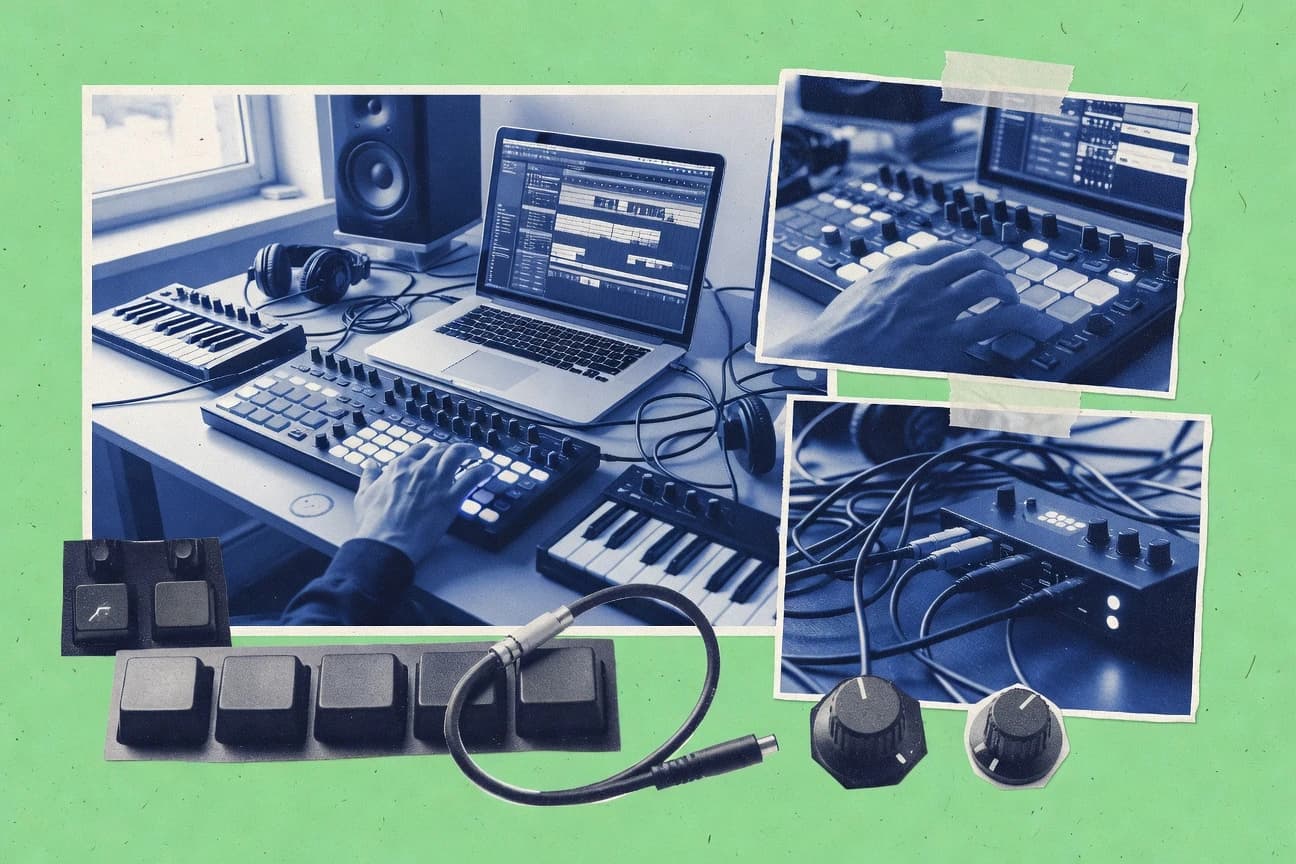
GITNUXSOFTWARE ADVICE
Business FinanceTop 10 Best Sequencer Software of 2026
Top 10 sequencer software ranked by music production features and compatibility, covering FL Studio, Reason, and Logic Pro, plus key tradeoffs.

How we ranked these tools
Core product claims cross-referenced against official documentation, changelogs, and independent technical reviews.
Analyzed video reviews and hundreds of written evaluations to capture real-world user experiences with each tool.
AI persona simulations modeled how different user types would experience each tool across common use cases and workflows.
Final rankings reviewed and approved by our editorial team with authority to override AI-generated scores based on domain expertise.
Score: Features 40% · Ease 30% · Value 30%
Gitnux may earn a commission through links on this page — this does not influence rankings. Editorial policy
FL Studio is the best pick if you want loop-driven producers to move fast with pattern-first MIDI iteration and clean arrangement finalization, while Bitwig Studio fits when you need deeper per-note control and device routing without leaving your clip-driven flow.
Editor’s top 3 picks
Three quick recommendations before you dive into the full comparison below — each one leads on a different dimension.
FL Studio
Step sequencing and pattern chaining let drum and phrase structures evolve quickly inside one project workflow.
Built for fits when loop-driven producers want rapid MIDI iteration and strong arrangement finalization..
Reason
Editor pickDevice-focused automation routes to parameters on the rack instruments used by the sequence.
Built for fits when producers sequence and sound-design inside one rack graph without constant tool switching..
Bitwig Studio
Editor pickGrid-based modulation with flexible assignment lets sequence edits reshape sound without leaving the timeline.
Built for fits when pattern-centric production needs deep MIDI control and device routing..
Comparison Table
FL Studio
SMBPattern-based DAW built around a step sequencer and piano roll.
Step sequencing and pattern chaining let drum and phrase structures evolve quickly inside one project workflow.
FL Studio’s sequencing centers on pattern-based composition that maps cleanly to drum grids and repeated song sections. The piano roll supports detailed note editing for velocity and microtiming-style tweaks, while automation lanes tie parameter changes to timeline playback. VST hosting enables running third-party instruments inside the same session and recording their MIDI output when drivers expose it correctly.
The main tradeoff is that pattern-first composition can feel less direct than purely clip- or timeline-first editors for long-form sound design writing. FL Studio fits best when a producer expects to iterate in tight loops, then switch into song mode to finalize an arrangement for a full mixdown.
- +Pattern sequencing accelerates loop-based arrangement building
- +Piano roll edits support fast MIDI iteration for detailed parts
- +Automation lanes record parameter changes per track
- +VST hosting keeps instruments inside the same session
- –Long-form editing can be slower when staying pattern-first
- –Some automation details require careful track routing and naming
- –Advanced hardware sync setups add complexity for external gear
- –Large template projects can strain navigation and responsiveness
Electronic music producers
Iterate drum patterns fast
Shorter time to full grooves
Beatmakers using third-party instruments
Compose MIDI for VST instruments
Fewer DAW switching steps
Show 1 more scenario
MIDI-focused arrangers
Polish timing in piano roll
Cleaner MIDI transfers
Piano roll note editing supports detailed adjustments before exporting MIDI for other workflows.
Best for: Fits when loop-driven producers want rapid MIDI iteration and strong arrangement finalization.
Reason
SMBRack-based DAW with built-in sequencer and virtual instruments.
Device-focused automation routes to parameters on the rack instruments used by the sequence.
Reason fits producers who want sequencing and sound design in one consistent rack-centric workflow. MIDI recording and piano-roll editing pair with step-focused pattern tools for drum grid construction and tight repeatable ideas. Automation lanes attach to parameters that live on rack devices, so automation curves follow the same device graph the notes drive.
A tradeoff is limited cross-app integration compared with DAWs that center on broad plugin ecosystems and deep third-party automation control. Reason works best when the session stays inside Reason for sequencing, orchestration, and sound shaping, especially when using built-in instruments and rack effects. The workflow can feel less comfortable when the production relies on complex external plugin hosting or large multi-DAW collaboration.
- +Rack-first sequencing keeps MIDI, automation, and routing aligned
- +Piano-roll editing with strong parameter automation on device targets
- +Step-oriented pattern workflow speeds drum and riff iteration
- +Consistent device chain reduces patch drift during composition
- –Less flexible for external plugin hosting workflows
- –Advanced arrangement operations can feel slower than DAW-native editors
- –Project reuse across different templates needs more manual planning
- –Editing multi-layer MIDI with dense automation requires careful zooming
Beatmakers crafting drums
Build tight patterns with rack sounds
Faster iteration on drum ideas
Producers scoring in Reason
Orchestrate notes with parameter shaping
More controlled arrangement gestures
Show 1 more scenario
Electronic music collaborators
Keep routing consistent across takes
Less time lost to patch changes
Rerendering and editing preserves the device chain so repeated MIDI passes stay musically aligned.
Best for: Fits when producers sequence and sound-design inside one rack graph without constant tool switching.
Bitwig Studio
enterpriseModular DAW with clip launcher and per-note MIDI sequencing.
Grid-based modulation with flexible assignment lets sequence edits reshape sound without leaving the timeline.
Bitwig Studio supports MIDI sequencing with step-driven techniques and expressive performance capture in the same project. Its modular routing approach shows up in how devices can be chained and how modulation targets can be organized around notes, clips, and tracks. The workflow encourages building repeatable patterns that can be auditioned live and refined in the same session.
A tradeoff appears in session complexity. Large projects with many devices and modulation links can become harder to read than linear-arrangement workflows in simpler DAWs. Bitwig fits situations where sequences, sound design, and performance control need to stay tightly coupled during iteration.
- +Modulation destinations stay organized when building complex sequences
- +VST hosting supports instrument and effect workflows inside the DAW
- +Clip-based arrangement supports fast auditioning of pattern variations
- +MIDI editing stays expressive for both drawing and real-time capture
- –Heavy routing and modulation can make sessions harder to audit
- –Some advanced workflows take time to learn and template correctly
- –Device-heavy setups can increase CPU load during playback
- –Workflow customization can fragment muscle memory across templates
Electronic music producers
Iterate chord and drum variations quickly
Faster arrangement iteration
Sound designers
Turn note movement into evolving timbres
More repeatable sound design
Show 2 more scenarios
Live performers
Trigger patterns and shape parameters on stage
Tighter live control
Scene and clip workflows support structured switching while keeping automation in sync.
Studios collaborating on projects
Maintain consistent routing across tracks
More consistent sessions
Device chains and modulation targeting make it easier to reuse structured signal paths.
Best for: Fits when pattern-centric production needs deep MIDI control and device routing.
Renoise
vertical specialistTracker-style sequencer with sample-based composition workflow.
Renoise provides native pattern-based automation and parameter locking inside the tracker grid.
Renoise is a tracker-style sequencer built around a grid-first workflow rather than a timeline-first DAW. It supports pattern-based composition with per-track effects, real-time recording, and MIDI sequencing with tight quantization control.
Integration stays practical through VST hosting, MIDI clock support, and direct MIDI file export for moving ideas between systems. Automation is handled natively through Renoise’s track FX and automation lanes, with parameter locking behavior inside the pattern workflow.
- +Tracker interface enables fast pattern editing and effect entry
- +VST hosting supports instrument and effect workflows without a host DAW
- +Parameter-level automation integrates with the pattern and track FX system
- +Deterministic pattern chaining supports repeatable song-mode structure
- –Tracker-style layout requires relearning for timeline-first users
- –Advanced sequencing workflows can demand careful device and MIDI routing setup
- –Some DAW-centric features like advanced audio clip workflows are not the focus
- –Large projects can feel slower to navigate than timeline-centric editors
Best for: Fits when composing with patterns, microtimed MIDI detail, and tracker workflow speed outweigh DAW timeline ergonomics.
SunVox
vertical specialistCross-platform modular synthesizer and pattern-based tracker sequencer.
Real-time module patching inside a step-based tracker workflow for composing and routing in one view.
SunVox runs as a modular, tracker-style sequencer that builds music by wiring sound modules and stepping patterns. It offers song mode with pattern sequencing, realtime note entry, and tight timing controls suited to grid-based composition.
SunVox can host external instruments via built-in VST hosting support and it can export MIDI so ideas leave the app for DAW workflows. The result favors fast composition inside a self-contained environment over traditional DAW track-and-lane editing.
- +Tracker workflow with pattern sequencing for rapid arrangement drafts
- +Modular patching model for custom synth routing and signal effects
- +Built-in VST hosting for reusing external instruments in sessions
- +MIDI export supports moving sequences into DAW timelines
- –DAW-style automation lanes are limited compared to full-feature editors
- –Modular wiring increases learning time versus linear piano-roll sequencers
Best for: Fits when tracker-style composition, modular routing, and MIDI handoff matter more than deep DAW editing.
Numerology
vertical specialistModular step sequencer plugin for macOS with advanced probability and modulation.
Reusable pattern chaining lets sequences behave like modular blocks instead of single-pass timeline clips.
Numerology from five12.com focuses on MIDI sequencing with a graph-like workflow for building patterns and chaining sequences into song-level structure. Its core capabilities center on step-based editing, repeatable pattern blocks, and MIDI routing built for keeping timing consistent during live composition.
The software also supports instrument control via MIDI event editing and offers export paths for taking sequence material out to other DAWs. Numerology is most distinct for how it structures sequence behavior around reusable pattern segments rather than only linear timeline editing.
- +Pattern chaining encourages reusable musical structures across sections
- +Step editing speeds up grid-level MIDI iteration for drums and riffs
- +MIDI routing keeps multi-instrument workflows centralized
- +Export-ready sequence material supports DAW handoff
- –DAW-style arrangement features feel thinner than timeline-first editors
- –Complex pattern graphs require setup discipline to avoid routing mistakes
- –Automation depth depends on how MIDI events get mapped per target
- –Live performance features are less integrated than dedicated performance sequencers
Best for: Fits when pattern-based MIDI composition needs reusable sequence blocks and DAW handoff.
LMMS
SMBOpen-source DAW with beat and bassline sequencer tools.
Integrated drum sequencer and tracker-style pattern builder for assembling arrangements without switching to a separate MIDI editor.
LMMS pairs a tracker-style workflow with a modular VST hosting and instrument rack for building MIDI patterns into full song arrangements. The arrangement engine supports linear playback while the built-in instruments and drum sequencer cover common sketching needs without external plugins.
VST hosting expands the sound palette, and MIDI file import and export support round-trip work with other sequencers. Compared with heavier DAWs, LMMS puts more emphasis on pattern-based construction than on deep automation editing across many plugin parameters.
- +Pattern-first workflow speeds up short MIDI ideas and repeatable song sections
- +Built-in instruments and drum sequencer reduce dependence on external plugins
- +VST hosting lets projects mix hosted instruments with LMMS sequence parts
- +MIDI file import and export supports asset exchange with other DAWs
- –Automation and parameter editing for hosted plugins can feel limited for complex mixes
- –Audio recording and editing tools are less developed than in full DAWs
Best for: Fits when pattern-based MIDI composition and lightweight VST hosting matter more than deep automation editing.
Logic Pro
enterpriseApple DAW with comprehensive MIDI sequencing and built-in instruments.
Score Editor that edits the same MIDI regions as the Piano Roll, keeping notation and performance data synchronized.
Logic Pro pairs a full linear arrangement DAW with deep MIDI editing and AU hosting for instrument and FX workflow inside one app. Score Editor and Piano Roll support tight note-level edits, including microtiming and controller automation that stays attached to regions.
The environment also includes step-based tools like the arpeggiator, note repeat, and pattern-style workflows that complement linear song mode. For control and repeatability, Logic Pro emphasizes project-level automation lanes, quantization options, and tight synchronization for external MIDI gear and video timelines.
- +Score Editor and Piano Roll share consistent region-based MIDI editing
- +Automation lanes stay tightly linked to timeline regions and track intent
- +AU hosting supports broad instrument and effects workflows without exporting
- +Microtiming and detailed quantize options support expressive timing control
- –Advanced MIDI editing requires frequent mode and editor context switching
- –Some niche sequencing workflows depend on specific Apple feature areas
Best for: Fits when arranging, scoring, and detailed MIDI automation must stay inside one DAW workflow.
Reaper
SMBLightweight DAW with MIDI sequencing and extensive scripting.
ReaScript automation ties MIDI editing, routing changes, and batch operations into the same project workflow.
Reaper sequences MIDI inside its DAW workflow with timeline editing, piano roll, and MIDI routing that can also feed external instruments. Its standout approach is tight control over how MIDI is recorded, transformed, and played back through extensible FX chains and scripting hooks.
Reaper supports VST hosting and AU plugin support, which broadens sequencer feature coverage via third-party devices. For step-style workflows, it can build grid-like editing through MIDI item operations, though it is not a dedicated step-sequencer replacement for pattern-centric composition.
- +Deep MIDI routing and transformation via track and item FX chains
- +Extensive extensibility through ReaScript and configurable actions
- +Strong VST hosting plus AU plugin support for instrument and MIDI FX coverage
- +Fast workflow customization with macros, toolbars, and keyboard mappings
- –Step sequencing and pattern chaining workflows need more setup than pattern-first DAWs
- –MIDI clip launcher style performance relies on workarounds and careful item management
Best for: Fits when custom MIDI workflows matter more than a dedicated pattern sequencer UI.
Waveform
SMBTracktion DAW with pattern-based MIDI sequencing and modular rack.
Tracktion’s Track view ties clip-based pattern edits directly to arrangement playback, reducing rework between song and pattern.
Waveform from Tracktion focuses on fast MIDI sequencing inside a full DAW workflow, with an integrated piano roll, event editing, and pattern-oriented tools. It supports step sequencing and repeat-style workflows for drums and melodic ideas, plus clip and arrangement workflows for turning patterns into songs.
The app also includes VST hosting so external instruments and effects can be sequenced without leaving the DAW. Automation for MIDI and audio is handled in the same session, which reduces handoffs between edits and playback.
- +Integrated MIDI editing with piano roll and event-level control in one timeline
- +Step sequencing workflows that work well for drums and rhythmic pattern creation
- +Automation lanes stay close to clips and arrangement events
- +VST hosting reduces tool switching for instruments and sequencing playback
- –Deep sequencer features take time to learn compared with simpler DAWs
- –Advanced step workflow is less focused than dedicated pattern sequencers
- –Some micro-editing tasks feel slower than in note-graph-first editors
- –Workflow depends on understanding Tracktion’s routing and clip logic
Best for: Fits when MIDI sequencing needs to stay inside a single DAW session for editing, automation, and arrangement.
Conclusion
After evaluating 10 business finance, FL Studio stands out as our overall top pick — it scored highest across our combined criteria of features, ease of use, and value, which is why it sits at #1 in the rankings above.
Use the comparison table and detailed reviews above to validate the fit against your own requirements before committing to a tool.
How to Choose the Right sequencer software
Sequencer software organizes MIDI note creation and playback so patterns, sequences, and automation stay editable as production complexity grows. This guide covers FL Studio, Reason, Bitwig Studio, Renoise, SunVox, Numerology, LMMS, Logic Pro, Reaper, and Waveform based on their sequencing workflow, editor ergonomics, and integration behavior.
The standout differences across the list show up in how pattern chaining and step editing behave, how rack devices and automation targets get routed, and how tracker-style grids handle microtimed detail. FL Studio emphasizes pattern sequencing and rapid MIDI iteration inside one project workflow, while Reason keeps sequencing aligned with rack instruments through device-targeted automation.
Sequencer software for MIDI pattern editing, step workflows, and DAW-ready playback
Sequencer software creates timed MIDI events and links them to an editing interface like a piano roll, tracker grid, or score editor. It also defines how sequences scale from short loops into arrangement-length playback using pattern chaining, song mode, and clip or region editing.
FL Studio stands out with step sequencing and pattern chaining that let drum and phrase structures evolve within one project workflow. Renoise focuses on tracker-style pattern editing with parameter locking in the grid, which supports microtimed MIDI detail and fast effect entry without requiring a separate host DAW.
Sequencer software capabilities that change real MIDI workflow
Sequencer software is judged by how fast it turns ideas into repeatable MIDI patterns, sequences, and automation moves. The decisive differences show up when pattern chaining, device-targeted automation, and tracker-style grids determine how edits scale from drafts to arrangement-length playback.
Pattern chaining and pattern-first arrangement editing
FL Studio and Numerology treat patterns as reusable blocks so drum and phrase structures can evolve without rebuilding from scratch.
Device-targeted automation inside the rack graph
Reason keeps sequencing aligned with rack instruments by routing automation to the device targets used by the sequence.
Modulation routing that reshapes sequence edits without leaving the timeline
Bitwig Studio uses grid-based modulation assignments so sequence changes can drive sound-layer edits while staying timeline-centric.
Tracker grid editing with parameter locking for microtimed detail
Renoise and SunVox support tracker-style grids where parameter locking and per-step effects can capture fine MIDI timing detail.
Pick the sequencer that matches the sequencing architecture in the workflow
Good matches depend on how the editor maps editing intent to playback structure. Some tools keep patterns and steps at the center, while others keep timeline regions or automation lanes at the center, and that changes the cost of making frequent edits.
Choose pattern-first when frequent structure changes matter more than timeline ergonomics
Pick FL Studio if pattern sequencing and rapid piano roll iteration must stay inside one project workflow while building arrangements from evolving drum and phrase blocks. Pick Renoise if a tracker grid with parameter locking must drive microtimed MIDI detail without switching to a separate pattern editor.
Choose rack-first when sound-design parameters must stay tied to the same device targets
Pick Reason when sequencing and sound design inside one rack graph must keep MIDI and automation aligned on the exact instrument targets being played. Reject tools that separate pattern edits from device-targeted automation when edits must remain consistent across instrument changes.
Choose grid modulation when sequence edits must reshape sound via flexible destination assignments
Pick Bitwig Studio when modulation destinations need to remain organized while building complex sequences that require repeated reshaping of sound through the timeline. Avoid workflow mismatches if the editor being used makes it hard to audit dense routing during iteration.
Choose DAW-native region workflows when scoring, arrangement, or timeline-linked automation is the center of gravity
Pick Logic Pro when Score Editor and Piano Roll edits must stay synchronized to the same MIDI regions for both notation and performance data. Pick Waveform when pattern-style edits must stay directly tied to arrangement playback in the same timeline to avoid rework between song and pattern.
Choose script-driven workflows when custom MIDI transformations and batch operations outweigh step UI
Pick Reaper if custom MIDI workflows must be assembled through ReaScript automation that ties routing and transformation changes into one project action system. Plan extra setup time if step sequencing and pattern chaining need to happen as quickly as they do in pattern-first DAWs.
Choose modular tracker patching when composing and routing must happen in the same step view
Pick SunVox when module patching and step-based tracker composition need to stay in one view for quick drafting and MIDI handoff. Avoid it when long-form automation-lane editing is the primary workflow requirement, because DAW-style automation lanes are limited compared with full-feature editors.
Who benefits from each sequencing style
Sequencer software matches best when the workflow center of gravity is clear. The choice between pattern-first, rack-first, grid-modulation, tracker-grid, or script-driven editing determines how quickly routine edits become repeatable.
Loop-driven producers who build arrangements from repeating phrase and drum blocks
FL Studio supports step sequencing plus pattern chaining so repeated structures can be revised quickly inside one project workflow.
Producers who sequence and sound-design inside a single rack graph
Reason keeps automation and MIDI aligned on device targets so edits stay consistent when instruments on the rack are changed.
MIDI composers who need dense modulation routing while iterating on sequences
Bitwig Studio’s modulation destinations remain organized while sequence edits reshape sound through grid-based assignments.
Tracker users who rely on parameter locking for microtimed grid-level detail
Renoise and SunVox enable tracker-style effect entry and parameter locking in the grid for tight per-step control.
Users who prefer customizing MIDI workflows with automation scripts
Reaper supports deep MIDI routing and transformation via ReaScript so repeatable batch actions can be built around existing project structures.
Common selection pitfalls that waste editing time
Most mismatches show up when the chosen editor forces a different editing model than the one used for day-to-day iteration. The result is usually slower edits, extra mode switching, or routing setup mistakes that appear after the first few hours of work.
Buying a timeline-first editor but expecting pattern chaining to behave like a pattern-first workflow
Numerology and FL Studio handle reusable pattern blocks as core building units, while DAW-style region editors can make repeated structure edits feel less immediate.
Assuming automation targets will stay attached to the same sound-design devices across the rack workflow
Reason routes automation to device parameters on the rack instrument targets used by the sequence, while other editors may require careful track routing and naming to keep intent aligned.
Switching to a tracker grid without planning for routing and audit overhead in complex sessions
Bitwig Studio can make dense routing harder to audit when modulation and routing grow complex, so session organization and template setup need to be deliberate.
Choosing a script-first approach without budgeting time for setup discipline
Reaper can deliver deep MIDI routing and transformation through ReaScript, but step sequencing and pattern chaining workflows often need more setup than pattern-first DAWs.
Expecting DAW-style automation lanes to match full-feature sequencing editors inside a modular tracker workflow
SunVox provides real-time module patching and tracker step composition, but DAW-style automation lanes are limited compared with full-feature editors.
How We Selected and Ranked These Tools
We evaluated each sequencer software on features and compatibility with real sequencing workflows, including pattern-first editing, rack-linked automation, and tracker-grid microtimed control. Features accounted for 40% of the ranking because sequencing speed depends on how the editor represents patterns, steps, and edits during iteration.
Ease and value each accounted for 30% because workflow friction shows up as mode switching, routing setup, and the time required to reach repeatable results. FL Studio separated itself by combining step sequencing with pattern chaining so MIDI iteration and arrangement building stay inside one project workflow.
Frequently Asked Questions About sequencer software
Which sequencer software handles pattern chaining and step editing faster than a timeline-first DAW workflow?
How does MIDI file export support handoff between these sequencer tools and other DAWs?
When does automation editing stay tied to regions, and which tools keep it attached to the same MIDI data?
What breaks if a workflow requires deep routing control across instruments and sequence events in the same project graph?
Which tools offer native step-style or grid-first control without turning sequencing into a heavy scripting task?
How do MIDI clock and external hardware sync expectations differ across tracker-oriented and DAW-oriented tools?
Which sequencer tools provide extensive MIDI processing beyond note placement, including per-device automation targets?
What tradeoff appears when prioritizing a tracker grid workflow over a linear arrangement timeline?
How do extensibility mechanisms differ between these sequencers when custom automation or processing is required?
Tools reviewed
Primary sources checked during evaluation.
Referenced in the comparison table and product reviews above.
- Business FinanceTop 10 Best Bpm Software of 2026
- Business FinanceTop 10 Best Audio Transcribe Software of 2026
- Business FinanceTop 10 Best Instrument Tracking Software of 2026
- Entertainment EventsTop 10 Best Music Recording Software of 2026
- Technology Digital MediaTop 10 Best Transcribing Software of 2026
Keep exploring
Comparing two specific tools?
Software Alternatives
See head-to-head software comparisons with feature breakdowns, pricing, and our recommendation for each use case.
Explore software alternatives→In this category
Business Finance alternatives
See side-by-side comparisons of business finance tools and pick the right one for your stack.
Compare business finance tools→