GITNUXSOFTWARE ADVICE
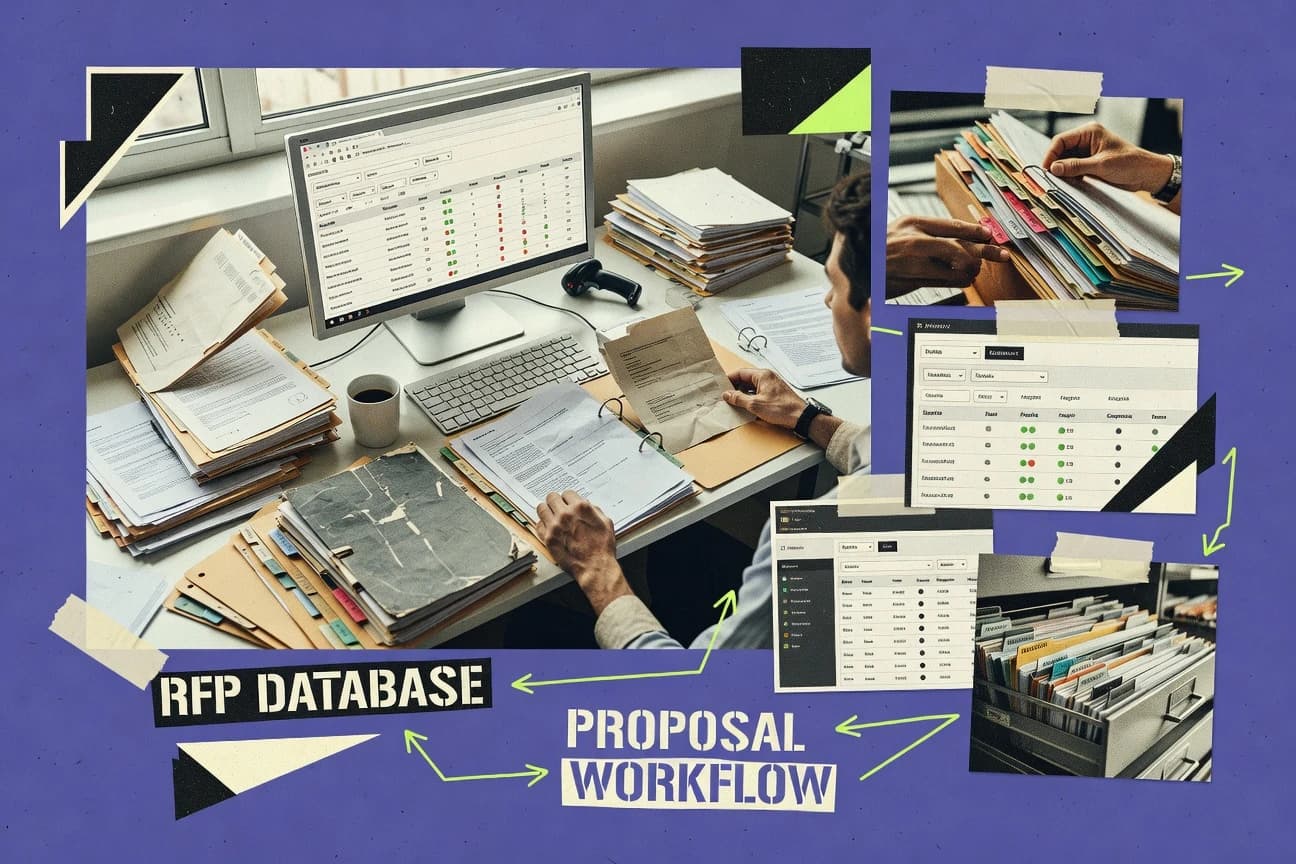
Business FinanceTop 10 Best Rfp Database Software of 2026
Top 10 rfp database software list ranks options for sourcing RFP data. Editorial comparison of tools like Proposify, RocketDocs, GovWin IQ.

How we ranked these tools
Gitnux editors write the brief first: the topic, the inclusion rules, and the frame for what belongs.
Agents extract product evidence with provenance, then collect written reviews and transcribe video reviews and podcasts.
Framework: Features 40% · Ease 30% · Value 30%
Gitnux may earn a commission through links on this page — this does not influence rankings. Editorial policy
Proposify is the best fit for proposal teams that want controlled reusable answers with approval and signature-ready workflows, while GovWin IQ is the sharper choice if you’re mainly focused on continuous government RFP intake, qualification, and routing across agencies.
Editor’s top 3 picks
Three quick recommendations before you dive into the full comparison below — each one leads on a different dimension.
Proposify
Answer library with section-level approval and assignment creates controlled reuse across opportunities.
Best for: Fits when proposal teams want controlled reusable answers with calendar and approval workflows.
RocketDocs
Editor pickContent approval workflow ties edits to versioned proposal sections for consistent publishing.
Best for: Fits when bid teams need controlled reusable responses across many RFPs.
GovWin IQ
Editor pickGovWin IQ’s bid intelligence workflow connects opportunity tracking to qualification decisions and pursuit routing.
Best for: Fits when capture teams need ongoing RFP intake, qualification, and routing across agencies.
Comparison Table
Proposify
SMBProposal software with templates, content reuse, approvals, and electronic signatures.
Answer library with section-level approval and assignment creates controlled reuse across opportunities.
Proposify is a strong fit for organizations that standardize responses across RFPs and need repeatable content assembly. It supports answer templates and a library workflow that can enforce content approval before reuse. The opportunity workspace organizes questionnaire-driven responses while maintaining section ownership for subject-matter experts.
A tradeoff is that advanced automation and governance depend on how teams model their content library and ownership rules up front. Proposify works best when proposal contributors already use structured RFP sections and when internal stakeholders can follow defined approval steps before submission.
- +Answer library supports reusable approved responses by section
- +Questionnaire-driven drafting reduces manual copy and reformatting
- +CRM workflow integration keeps opportunity context synchronized
- +Content ownership routing supports subject-matter expert collaboration
- –Complex governance needs up-front modeling of library ownership
- –Version history is practical for authors but limited for deep review
Proposal ops teams
Standardize responses across frequent RFPs
Faster, consistent proposal drafts
Subject-matter experts
Own and update assigned responses
Lower review overhead
Show 1 more scenario
Bid managers
Coordinate deadlines across opportunities
Fewer missed timelines
Proposal calendar and deadline tracking align contributor work to submission timing for each bid.
Best for: Fits when proposal teams want controlled reusable answers with calendar and approval workflows.
RocketDocs
SMBRFP and proposal automation platform with a centralized knowledge base for response content.
Content approval workflow ties edits to versioned proposal sections for consistent publishing.
RocketDocs fits when an organization wants a centralized content library that stays aligned to specific opportunities and response deadlines. The workflow model supports subject-matter expert assignment and an approval path so content is vetted before it enters an RFP response. RocketDocs also targets bid qualification and requirements structuring so teams can standardize what gets asked and how answers map to sections.
A tradeoff is that deep automation depends on setting up content categories, ownership rules, and approval steps before high-volume bids. RocketDocs works best when a bid team runs repeatable questionnaires and wants version control for approved response content across multiple opportunities.
- +Answer library supports section-level reuse across opportunities
- +Approval workflow enforces content review before publishing
- +Document and spreadsheet import reduces manual requirements entry
- +Permission controls separate authoring, review, and final assembly
- –Onboarding takes time to define content structure and ownership
- –Complex governance can slow edits during active bid windows
- –Reporting depth is narrower for usage analytics than workflow features
- –Integration coverage depends on specific bid toolchain needs
Revenue operations teams
Standardize questionnaire answers for bids
Faster, consistent proposal drafting
Proposal managers
Route SME reviews before submission
Reduced revision churn
Show 2 more scenarios
Compliance and governance leads
Control who can publish content
More reliable content governance
Use permissioning and audit traceability to restrict updates and track approved versions.
Customer success enablement
Maintain response answers by category
Lower risk of stale claims
Keep an approved answer library organized by topic so teams avoid outdated wording.
Best for: Fits when bid teams need controlled reusable responses across many RFPs.
GovWin IQ
vertical specialistGovernment contracting intelligence software with federal, state, and local opportunity data.
GovWin IQ’s bid intelligence workflow connects opportunity tracking to qualification decisions and pursuit routing.
GovWin IQ is built for teams that track government bid flow across multiple agencies and requirements sources. It supports systematic intake into opportunity views, with tools that help teams decide which pursuits deserve effort. The library-centric approach fits users who reuse past winning or response patterns by keeping context attached to each opportunity.
A tradeoff appears in workflow alignment and governance. Teams that need heavy customization of response assembly or deep content lifecycle management may find GovWin IQ lighter than dedicated proposal content repository systems. The best fit is continuous RFP intake and bid qualification where capture teams want consistent filtering and repeatable routing into pursuit.
- +Opportunity monitoring tied to pursuit stages and agency focus
- +Reusable opportunity context reduces rework during bid reviews
- +Filtering supports qualified shortlists instead of raw document piles
- +Automation reduces manual chasing of new RFP signals
- –Customization depth for response authoring is limited versus content platforms
- –Workflow governance needs clear ownership to avoid stale pursuits
- –Advanced reporting may require internal process discipline to stay current
- –Some integrations depend on established account setup patterns
GovCon capture teams
Qualify incoming RFP signals fast
Higher focus on winnable bids
Business development analysts
Maintain rolling shortlists
Less spreadsheet churn
Show 2 more scenarios
Proposal managers
Route bid decisions to stakeholders
Clearer handoffs to proposals
Proposal managers use opportunity context to align internal reviewers and schedule response work.
Sales operations teams
Track pipeline from RFP intake
More accurate pursuit reporting
Ops teams map pursuit stages to reporting views for consistent pipeline hygiene.
Best for: Fits when capture teams need ongoing RFP intake, qualification, and routing across agencies.
Responsive
enterpriseRFP response software with content management, workflow automation, and reporting.
Approval-gated reusable answer blocks with expiration and workflow rules tied to response generation.
Responsive.io centers on creating and governing a reusable RFP response content library tied to opportunities and deadlines. It supports section-level collaboration with review and approval checkpoints for individual answers, plus content lifecycle controls like expiration.
- +Reusable answer library with review and approval checkpoints per section
- +Content expiration controls reduce outdated responses in active bids
- +Workflow rules connect content status to proposal generation
- +API support supports bid data synchronization across tools
- –Setup requires careful configuration of content governance states
- –Document parsing and format preservation coverage can be limited by input quality
- –Complex response assembly can require strong internal taxonomy discipline
- –Reporting depth depends on how consistently teams label and route content
Best for: Fits when bid teams need controlled, reusable answers that generate proposals with governed approval states.
Loopio
enterpriseRFP response management software with a searchable content library and collaboration tools.
Loopio’s response assembly links questionnaire sections to reusable, approval-gated answers to standardize draft quality.
Loopio organizes RFP responses in a centralized content library that supports reusable answers and approval-ready drafts. The system maps questionnaires to response content and tracks bid qualification and response deadlines across opportunities.
- +Reusable answer library supports consistent, approval-aligned response building
- +Opportunity tracking ties RFP intake to deadlines and bid qualification status
- +Role-based permissions and change history help control shared response content
- +Questionnaire-to-response mapping reduces manual cross-referencing during drafting
- –Section-level collaboration features can feel limited for complex redline workflows
- –External system integrations require careful configuration to keep metadata consistent
- –Document import and parsing coverage can vary by RFP file format and layout
- –Content governance needs ongoing owner assignment to avoid stale approved answers
Best for: Fits when teams need an RFP content repository with structured approvals and deadline tracking across bids.
AutoRFP.ai
API-firstAI-assisted RFP response software for drafting answers from approved company content.
RFP intake to response assembly automation that reuses approved answer blocks by question type.
AutoRFP.ai is an RFP database and content reuse tool built around turning incoming requirements into structured, reusable proposal answers. It supports maintaining a proposal content library with governed responses and versioned updates for sections and question types.
- +Answer library with governed reusable responses for faster drafting
- +Automation that maps intake requirements to existing answer blocks
- +Content approval flow reduces inconsistent wording across bids
- +Library maintenance supports updates without rewriting every response
- –Collaboration is stronger at section-level than full-document review
- –Integration depth depends on workflow exports rather than native CRM alignment
- –Admin governance requires disciplined ownership assignment to stay current
- –Analytics coverage focuses on usage tracking more than response effectiveness
Best for: Fits when proposal teams need a governed RFP answer library and deadline-based assembly workflow.
GovTribe
vertical specialistGovernment contracting data platform for finding opportunities, agencies, and competitors.
Curated government bid records focused on workflow-ready opportunity tracking and response drafting from source metadata.
GovTribe is a bid and RFP opportunity database built for public-sector research workflows, not just a document repository. The product centers on curated government buying data and workflow-friendly discovery of active bids.
- +RFP and bid discovery organized around public-sector opportunities
- +Opportunity tracking reduces manual re-entry of bid metadata
- +Repeatable response drafting workflows support faster first drafts
- +Import and structured handoff from opportunity records
- –Less depth than dedicated repositories for section-level collaboration
- –Document version controls and redline review are not the primary workflow
- –Content approval workflow options appear limited for complex review cycles
- –API and automation surface are narrower than tools built for integrations
Best for: Fits when teams need reliable public-sector opportunity tracking and structured bid-to-draft handoffs.
Qvidian (Upland)
enterpriseEnterprise proposal management system with a searchable answer database, document assembly, and task tracking.
Qvidian’s content approval workflow ties each reusable response item to owners and approvers before bid teams can select it.
Qvidian (Upland) is a Q&A and proposal response management system geared toward reusing approved answers across RFP submissions. It centers on authoring reusable response content, assigning subject-matter experts, and pushing content through an approval workflow before it reaches bid teams.
- +Approval workflow with role-based ownership per response item
- +Subject-matter expert assignment for faster, traceable response drafting
- +Response library browsing supports consistent assembly across bids
- +Content-level controls for expiring or limiting what is usable
- –Deep library governance needs careful adoption from proposal teams
- –Import and parsing from spreadsheets can be uneven across formats
- –Workflow configuration adds admin overhead for smaller teams
- –Analytics focus more on content usage than proposal performance details
Best for: Fits when proposal teams need governed reusable response content for many RFPs with SME review cycles.
Bidsketch
SMBProposal creation tool featuring reusable content blocks, template management, and electronic signatures.
Answer-level reuse inside Bidsketch templates helps teams standardize responses across multiple RFPs while keeping edits section-scoped.
Bidsketch centralizes bid and proposal content so teams can assemble responses from reusable building blocks tied to opportunities and deadlines. It provides a response editor that supports section-based drafting and answer reuse, with control points for reviewing and updating content used across multiple RFPs.
- +Opportunity-linked workflows keep deadlines and response status in one place
- +Reusable answers reduce repeated drafting across similar RFP questionnaires
- +Section-level collaboration supports edits scoped to specific response parts
- +Document assembly workflows help generate consistent proposal outputs
- –Less flexible for organizations that need heavy content rule engines
- –Content library governance depends on consistent internal process
- –Questionnaire import coverage can vary by source format and structure
- –Advanced governance reporting can require extra admin setup
Best for: Fits when mid-market bid teams need reusable answer drafting and opportunity-based response workflows.
Expedience
enterpriseProposal automation software built for Microsoft Word featuring a searchable content library and answer tagging.
Answer reuse plus template mapping that generates formatted responses from approved content blocks.
Expedience is an RFP database solution geared toward keeping reusable bid content consistent across teams and proposals. It supports a proposal content repository with answer building, reuse, and controls around what gets used in responses.
- +Reusable answer building reduces repeated drafting across proposal cycles
- +Template-driven output generation keeps formatting consistent across responses
- +Approval-oriented workflows support controlled publishing of shared content
- +API access supports integration with external content sources and systems
- –Governance requires disciplined ownership to avoid stale reusable content
- –Advanced configuration takes time for teams with minimal workflow setup experience
- –Content import and parsing coverage may require preprocessing for complex documents
- –Section-level collaboration depends on workspace structure rather than ad hoc editing
Best for: Fits when teams need controlled reuse of proposal answers with template-based document generation.
Conclusion
After evaluating 10 rfp database software, Proposify stands out as our overall top pick — it scored highest across our combined criteria of features, ease of use, and value, which is why it sits at #1 in the rankings above.
Use the comparison table and detailed reviews above to validate the fit against your own requirements before committing to a tool.
How to Choose the Right Rfp Database Software
This buyer’s guide covers rfp database software built to store reusable RFP answers and assemble proposal responses with controlled approval states. The guide evaluates Proposify, RocketDocs, GovWin IQ, Responsive, Loopio, AutoRFP.ai, GovTribe, Qvidian, Bidsketch, and Expedience.
The standout differences show up in integration depth for bid workflows, the automation surface from intake to publishing, and admin and governance controls that keep approved content from drifting across opportunities. Each tool review also focuses on how the proposal content repository handles section-level ownership, version history boundaries, and response assembly consistency under deadline pressure.
RFP Database Software for controlled proposal answer libraries and governed response assembly
RFP database software organizes an internal content library so teams can reuse approved response blocks across questionnaires, templates, and recurring bid cycles. Instead of storing only documents, tools like Proposify and RocketDocs center on answer-level reuse with approval workflows that gate what bid teams can publish.
These systems typically connect RFP intake to response assembly so questionnaire inputs map to reusable answers and generate formatted outputs with consistent section structure. The strongest products in this set add governance controls such as answer ownership, section-level approval checkpoints, and content expiration rules that reduce outdated content being reused in active bids.
Controls and automation that keep RFP answers current
RFP database software succeeds when it turns reusable answer blocks into governed outputs with an approval state attached to each section. Teams then generate drafts from the same approved building blocks across questionnaires without letting outdated wording drift into active proposals.
These tools also need a clear automation path from RFP intake to response assembly so structured inputs map to the correct approved answers. The most reliable options pair assignment and review workflows with version boundaries and expiration rules so published text reflects the intended owner and date range.
Section-level answer reuse with gated approval states
Proposify and RocketDocs both use an answer library that supports reuse by section with approval workflow gates before publishing into assembled proposals. Responsive and Loopio also place approvals at answer or block level so response generation respects governed states.
Answer ownership and SME assignment at the item level
Qvidian ties each reusable response item to owners and approvers so SMEs control what bid teams can select. Proposify achieves controlled reuse by pairing its answer library with section-level approval and assignment across opportunities.
Expiration and workflow rules for controlled reuse
Responsive includes expiration and workflow rules tied to response generation so gated reusable blocks stop being used when they age out. Expedience also requires disciplined ownership to avoid stale reusable content, and it combines approved blocks with template mapping for formatted output.
Bid intelligence and pursuit workflow wiring
GovWin IQ connects opportunity tracking to qualification decisions and pursuit routing, which reduces rework when capturing and reviewing bid context. GovTribe also organizes bid-to-draft handoffs around public-sector opportunity tracking, but it relies less on deep review controls.
Intake to assembly automation that maps questions to blocks
AutoRFP.ai automates RFP intake to response assembly by reusing approved answer blocks by question type. Loopio and Bidsketch both link questionnaire sections to reusable, approval-aligned answers so draft quality stays consistent across similar RFPs.
Output consistency through template-driven document generation
Expedience generates formatted responses from approved content blocks through template-driven output generation. Bidsketch uses answer-level reuse inside templates so teams standardize responses across multiple RFPs while edits remain section-scoped.
Pick the workflow shape that matches how responses get reviewed
A useful buying decision starts with who owns content review and how that ownership maps to assembled responses. Tools in this set differ on whether governance is optimized for section-level approvals, owner assignment cycles, or opportunity routing that drives the drafting queue.
Next, the decision should confirm how automation connects structured intake to the response template layer. Some products center mapping and drafting speed while others spend more effort on governance boundaries that keep approved text stable under deadline pressure.
Choose section governance first when teams need approval-gated reuse
If bid teams publish proposals from many reusable sections, Proposify or RocketDocs provide answer libraries with section-level approval workflows tied to publishing. This approach fits groups that treat approval as a requirement for reuse across opportunities rather than a later editorial step.
Choose expiration-backed governance when outdated wording causes recurring risk
If content freshness failures are frequent, Responsive adds expiration and workflow rules tied to response generation so expired blocks stop being used. This is also a better match than tools that rely mainly on disciplined internal process without expiry enforcement.
Choose SME item ownership when approvals must be traceable to individuals
If approvals require clear role-based ownership per response item, Qvidian supports role-based ownership tied to owners and approvers before selection by bid teams. This helps when subject-matter review cycles must be auditable at the answer-item level.
Choose opportunity routing when RFP intake drives pursuit decisions
If the drafting queue depends on qualification and pursuit routing, GovWin IQ links opportunity monitoring to pursuit stages and qualification decisions. This differs from content-first repositories that do not connect intelligence to the bid workflow beyond metadata entry.
Choose automated question-to-block assembly when questionnaires are the dominant input
If RFP intake arrives as structured questionnaires and speed depends on mapping questions to preapproved blocks, AutoRFP.ai and Loopio automate response assembly from intake. This fork matters because some tools emphasize templates and reuse while others automate the mapping step itself.
Choose template-scoped edits when formatting consistency is the priority constraint
If formatting consistency across proposal generations is the key constraint, Expedience and Bidsketch focus on template-driven output generation from approved blocks. This approach suits teams that need consistent section structure while still allowing section-scoped edits.
Who should buy Rfp Database Software
RFP database software fits teams that run repeated RFP cycles and depend on reusable answer blocks with controlled publication states. The strongest matches usually have multiple contributors that review content sections and require governed reuse across deadlines.
These tools also fit organizations that attach capture and qualification steps to bid drafting. When opportunity tracking and response assembly move together, the drafting system avoids re-entering bid metadata and reduces the chance that the wrong context drives the wrong answers.
Bid and proposal teams managing many recurring RFP questionnaires
Proposify and RocketDocs support answer library reuse by section with approval workflow gates that standardize drafts across opportunities. This helps when teams reuse approved responses for the same question types across a calendar of bids.
Public-sector capture teams that route pursuits based on qualification
GovWin IQ connects opportunity tracking to qualification decisions and pursuit routing, which reduces manual handoffs during capture. GovTribe also organizes bid-to-draft handoffs around public-sector opportunity tracking but shifts less effort to section-level governance.
SME-led review organizations that require traceable ownership at the response item level
Qvidian ties approvals and ownership to response items so SMEs can control selection before bid teams use content. This supports review cycles where ownership and accountability must attach to the specific reusable answer block.
Operations teams focused on content freshness controls during active bid windows
Responsive includes expiration and workflow rules tied to response generation, which prevents outdated reusable blocks from continuing into new proposals. This addresses the specific failure mode of stale answers being repeatedly reused.
Common failure points when implementing Rfp Database Software
Governed reuse fails when content structure and ownership are defined late in the bid cycle. Several tools require upfront modeling of library ownership and governance states to keep approvals enforceable during deadline crunch.
The second failure point is treating integrations and exports as an afterthought. External system integrations and workflow exports can leave metadata inconsistent unless governance metadata is carried through intake, assembly, and publishing.
Building reusable content without modeling ownership and governance states
Proposify and RocketDocs can require up-front modeling of library ownership so approvals and reusable answers stay consistent across opportunities. Delaying governance setup tends to slow edits during active bid windows.
Relying on reviews without expiry controls for high-change answers
Responsive adds expiration and workflow rules tied to response generation, which reduces reused content going stale. Teams that skip expiry rules often reintroduce outdated language during long-running bid calendars.
Underestimating the setup work needed for intake mapping to answer blocks
AutoRFP.ai and Loopio depend on question-to-block mapping so structured intake connects to existing approved blocks. Poorly prepared intake fields can force manual correction before output generation.
Expecting deep redline collaboration when the workflow is optimized for assembly and approvals
Loopio’s section-level collaboration can feel limited for complex redline workflows, which can slow full-document review cycles. Teams should validate whether their review process matches section-level approvals and publishing gates.
Letting template-driven generation proceed without disciplined ownership
Expedience and Bidsketch both generate formatted outputs from approved content and templates, which makes ownership discipline critical. Without clear ownership, reusable blocks become a source of stale or inconsistent output across proposal cycles.
How We Selected and Ranked These Tools
We evaluated Proposify, RocketDocs, GovWin IQ, Responsive, Loopio, AutoRFP.ai, GovTribe, Qvidian, Bidsketch, and Expedience using feature coverage at 40% weight, ease of adoption at 30% weight, and value at 30% weight. Proposify ranked highest because its answer library supports reusable approved responses by section with assignment and section-level approval controls that keep reuse constrained across opportunities.
Proposify also uses questionnaire-driven drafting that reduces manual copy and reformatting, which improves throughput during deadline pressure. The ranking also penalized tools where onboarding complexity slows governance modeling or where version history and deep review are less central to the workflow.
Frequently Asked Questions About Rfp Database Software
How do these RFP databases handle reusable answer blocks across multiple opportunities?
Which tools support APIs or integration hooks for syncing RFP metadata with other systems?
How does single sign-on or RBAC-style access control typically work in these platforms?
What data migration steps are required when moving questionnaires and existing responses into an RFP database?
How does each system treat version control and updates for approved content over time?
What happens if an approved response expires before a proposal deadline?
How do section-level review and collaboration differ from whole-document review?
Which tool best fits government contracting workflows that require ongoing pursuit-stage qualification and routing?
What breaks if a team tries to treat a response library as unstructured text instead of a managed answer model?
Tools reviewed
Primary sources checked during evaluation.
Referenced in the comparison table and product reviews above.
- Business FinanceTop 10 Best Rfp Management Software of 2026
- Business FinanceTop 10 Best Rfp Response Automation Software of 2026
- Digital Products And SoftwareTop 10 Best Rfp Writing Software of 2026
- Business FinanceTop 10 Best Project Database Software of 2026
- Tourism HospitalityTop 10 Best Hotel Rfp Software of 2026
Keep exploring
Comparing two specific tools?
Software Alternatives
See head-to-head software comparisons with feature breakdowns, pricing, and our recommendation for each use case.
Explore software alternatives→In this category
Business Finance alternatives
See side-by-side comparisons of business finance tools and pick the right one for your stack.
Compare business finance tools→