
GITNUXSOFTWARE ADVICE
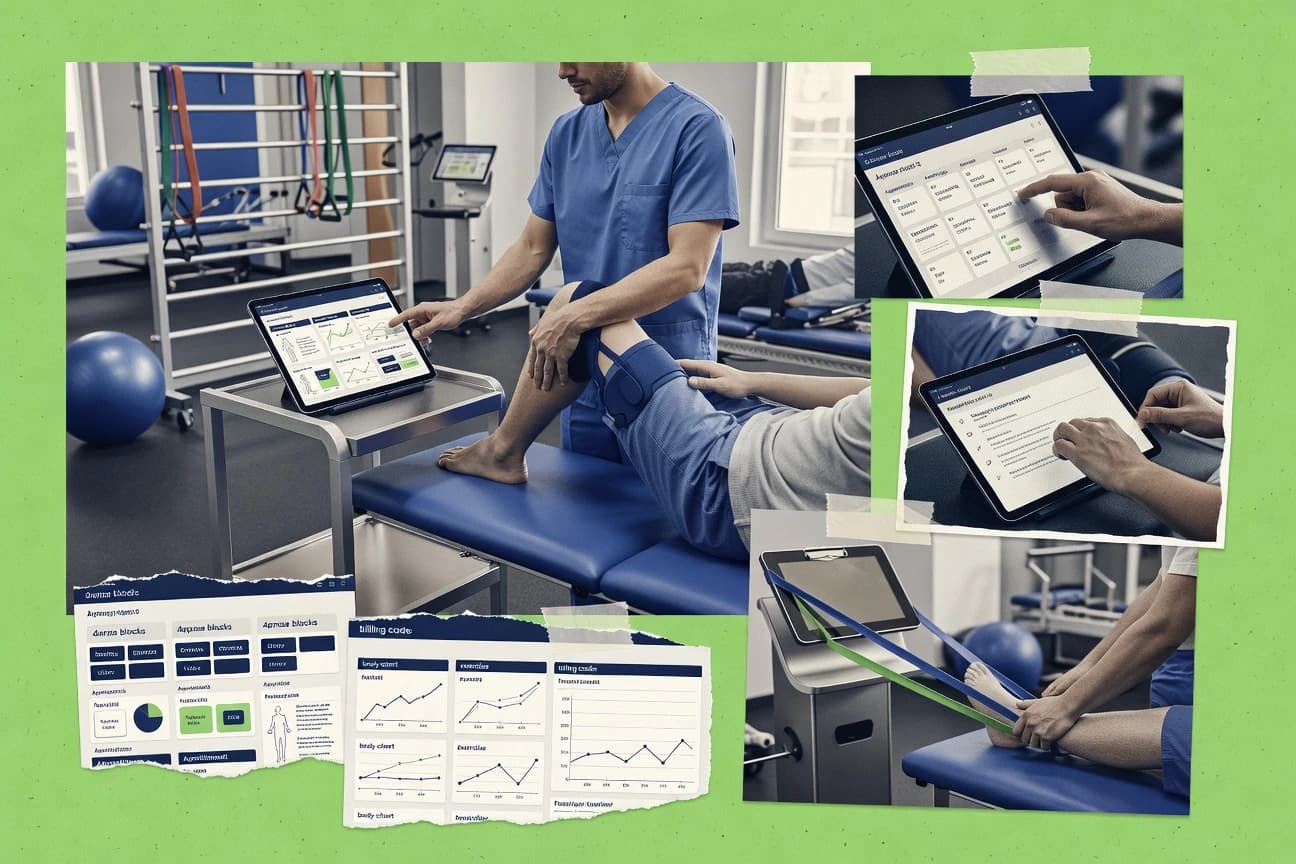
Healthcare MedicineTop 10 Best Physiotherapy Management Software of 2026
Ranked roundup of top physiotherapy management software for clinics, with criteria and tradeoffs for WebPT, Nookal, and Practice Perfect.

How we ranked these tools
Core product claims cross-referenced against official documentation, changelogs, and independent technical reviews.
Analyzed video reviews and hundreds of written evaluations to capture real-world user experiences with each tool.
AI persona simulations modeled how different user types would experience each tool across common use cases and workflows.
Final rankings reviewed and approved by our editorial team with authority to override AI-generated scores based on domain expertise.
Score: Features 40% · Ease 30% · Value 30%
Gitnux may earn a commission through links on this page — this does not influence rankings. Editorial policy
WebPT is the best pick for multi-practitioner rehabilitation clinics that need standardized rehab documentation tied closely to scheduling and patient communications, while Jane fits outpatient physiotherapy and allied-health teams that want repeatable session notes and shared exercise instructions in one place.
Editor’s top 3 picks
Three quick recommendations before you dive into the full comparison below — each one leads on a different dimension.
WebPT
Exercise prescription and home exercise program authoring stay linked to the treatment plan and visit documentation.
Built for fits when multi-practitioner clinics need standardized documentation tied to scheduling and patient communications..
Nookal
Editor pickPatient-facing intake forms tied to onboarding reduce clerical workload before first-visit documentation begins.
Built for fits when outpatient physiotherapy clinics need scheduling, intake, and structured notes in one operational workflow..
Practice Perfect
Editor pickTemplate-driven physiotherapy documentation that keeps treatment plan data consistent across recurring visits.
Built for fits when a physiotherapy clinic needs template-driven documentation and appointment workflows without heavy customization..
Comparison Table
WebPT
vertical specialistElectronic medical record and practice management software for rehabilitation providers.
Exercise prescription and home exercise program authoring stay linked to the treatment plan and visit documentation.
WebPT centers on appointment-driven documentation, so each visit links to clinical templates, recurring notes, and updates to a treatment plan. The workflow is built for day-to-day physiotherapy documentation tasks such as progress notes, exercise prescription, and clinically tracked assessments. WebPT also supports patient portal interactions so patients receive plan-related materials and ongoing instructions without manual handoffs.
A tradeoff is that high customization depends on disciplined template governance to prevent inconsistent note structures across clinicians. WebPT fits clinics that run standardized documentation templates and want appointment throughput without losing clinical detail.
- +Visit-linked documentation reduces duplicate charting for each appointment
- +Treatment plan and exercise documentation stay connected to clinical goals
- +Patient portal delivery reduces manual sharing of home exercises
- +Audit trail visibility supports clinician-to-clinician continuity
- –Template governance is required to keep documentation consistent across clinicians
- –Advanced automation beyond standard clinical workflows can require process redesign
- –Some reporting needs depend on how notes and assessments are structured
- –Data export workflows can feel less granular than purpose-built analytics tools
Private practice owners
Standardize clinic notes across clinicians
Fewer documentation rework cycles
Clinic operations teams
Run recurring appointment documentation
Higher throughput per clinician
Show 2 more scenarios
Physical therapists
Track plan updates with exercises
Clearer patient adherence
Clinical goals connect to exercise prescription and home exercise program instructions during follow-ups.
Front desk coordinators
Coordinate patient-facing plan materials
Reduced manual document delivery
The patient portal helps deliver plan-related instructions and ongoing materials after visits.
Best for: Fits when multi-practitioner clinics need standardized documentation tied to scheduling and patient communications.
Nookal
vertical specialistPractice management software supporting physiotherapy, allied health, and multidisciplinary clinics.
Patient-facing intake forms tied to onboarding reduce clerical workload before first-visit documentation begins.
Nookal supports appointment scheduling for both one-off and recurring appointments tied to clinician availability. Clinical documentation workflows include treatment planning and progress notes so sessions map to ongoing plans instead of separate static entries. Patient intake is handled through online forms and patient-facing communication features that reduce admin work during new referrals.
A key tradeoff is that deeper integration with external hospital data exchange standards is not a core differentiator in this category, so clinics with heavy EHR exchange requirements may need additional middleware. Nookal fits best when a clinic standardizes SOAP-style session capture and wants consistent intake and consent collection for large volumes of appointments.
- +Recurring appointment workflows reduce administrative rebooking errors
- +Structured session documentation supports consistent progress-note completion
- +Patient intake forms cut manual data entry during onboarding
- +Patient messaging supports follow-up without switching tools
- –External EHR interoperability is not a standout focus for complex exchange
- –Advanced customization of clinical templates requires process discipline
- –Multi-department governance needs careful role assignment
- –Reporting depth may lag clinics with complex KPI dashboards
Clinic admins
Manage recurring appointment templates
Fewer scheduling mistakes
Physiotherapists
Standardize session documentation
More consistent documentation
Show 2 more scenarios
Intake coordinators
Collect consent and intake remotely
Less pre-visit admin work
Intake teams route patient forms through the patient intake workflow to prefill clinic records.
Multidisciplinary practices
Coordinate follow-ups
Faster follow-up coordination
Teams keep appointment-linked patient messaging inside one workflow to reduce handoffs.
Best for: Fits when outpatient physiotherapy clinics need scheduling, intake, and structured notes in one operational workflow.
Practice Perfect
vertical specialistPractice management and electronic medical record software for therapy clinics.
Template-driven physiotherapy documentation that keeps treatment plan data consistent across recurring visits.
Practice Perfect centers physiotherapy documentation around repeatable clinical templates and visit progress capture so each appointment produces consistent records. Appointment scheduling and practitioner availability tools support ongoing care schedules with fewer manual updates. Patient intake and consent capture help move details from the first touch into the clinical workflow. This combination fits clinics that need documentation discipline without building custom forms for every provider.
A tradeoff is that advanced interoperability depends on external integration work, since the platform is mainly optimized for clinic workflows rather than deep EHR connectivity. Teams that run standardized treatment protocols tend to see faster adoption because templates and care plan fields drive consistent note creation. Clinics with highly customized assessments often need a configuration pass to match their exact note style.
- +Physiotherapy note templates standardize progress capture across clinicians
- +Scheduling tools support ongoing care patterns with fewer reschedules
- +Structured treatment plan fields reduce duplication between visits
- +Digital intake and consent capture connect front desk to clinical charts
- –Interoperability depth may require additional integration effort
- –Highly custom assessment workflows can need extra configuration work
- –Telehealth support coverage may be limited without add-on processes
- –Reporting beyond operational tracking can require manual exports
Physiotherapy clinic managers
Maintain consistent care documentation
Fewer charting inconsistencies
Physiotherapists
Document progress on every appointment
Faster note creation
Show 2 more scenarios
Front-desk coordinators
Reduce manual intake and consent handling
Less re-entry work
Digital intake and consent capture routes information into the patient record workflow.
Clinic operations teams
Manage recurring appointment schedules
Lower scheduling workload
Scheduling and ongoing visit handling reduce administrative churn for continuing patients.
Best for: Fits when a physiotherapy clinic needs template-driven documentation and appointment workflows without heavy customization.
Cliniko
vertical specialistPractice management software for physiotherapy clinics and other healthcare practices.
Practitioner-to-patient messaging and document sharing from within the scheduling and clinical workflow, with audit-style record context.
Cliniko is a physiotherapy management system built around practice administration, patient communication, and clinical documentation in one workflow. It covers appointment scheduling with recurring bookings, a patient portal, and structured progress note templates that support SOAP-style physiotherapy documentation.
The system also supports patient intake forms, automated reminders, referral-related workflows, and clinical messaging tied to the patient record. Reporting and export features focus on operational visibility and clinical activity across practitioners.
- +Appointment scheduling with recurring rules and practitioner calendars
- +Patient portal supports messaging and document sharing per patient
- +Clinical templates speed physiotherapy note entry and consistency
- +Automated reminders reduce missed sessions and manual follow-ups
- –Advanced governance requires careful role setup across the team
- –EHR-grade interoperability depends on external integrations rather than native HL7 focus
- –Some specialty workflows need manual workarounds outside standard templates
- –Reporting depth favors operations over granular outcome analytics
Best for: Fits when a physiotherapy clinic needs appointment automation plus patient portal messaging in one record.
Jane
SMBCloud practice management software for physiotherapy and allied health businesses.
Jane’s exercise prescription workflow links plan content to the patient’s home exercise program within the same treatment timeline.
Jane schedules recurring physiotherapy appointments and organizes session notes around each patient. The system supports treatment-plan work with clinical templates for consistent documentation and progress tracking.
Jane also manages exercise prescription and home exercise program content so clinicians and patients work from the same instructions. Jane’s collaboration tools connect practitioners to shared case updates through the clinic workflow.
- +Recurring appointment scheduling reduces manual calendar maintenance
- +Clinical templates standardize documentation for common session elements
- +Exercise prescription content supports consistent home program delivery
- +Case-level patient workflow keeps documentation and plans in one place
- –Advanced reporting needs setup and can lag for high-volume clinics
- –Integration options depend on external systems rather than built-in native connectors
- –Some governance controls require disciplined role assignment
- –Telehealth workflows can feel lighter than documentation-centric rivals
Best for: Fits when outpatient clinics need repeatable documentation, session scheduling, and shared exercise instructions.
Splose
vertical specialistAllied health practice management software with clinical notes, scheduling, and billing.
Configurable clinical templates that standardize documentation sections across multiple practitioners.
Splose is physiotherapy management software designed for clinics that need day-to-day coordination across patients, scheduling, and clinical records. The core workflow centers on appointment management and physiotherapy documentation workflows that track assessments and follow-ups.
Splose supports structured exercise prescription and patient communication artifacts like consent forms. Administration is geared toward clinic operations with configurable templates and repeatable documentation patterns.
- +Appointment workflow and practitioner calendar support routine clinic throughput
- +Clinical documentation templates reduce variability across SOAP-style notes
- +Exercise prescription and home program records keep treatment plans consistent
- +Operational setup for clinics supports repeatable intake and follow-up flows
- –Automation options for recurring home exercise workflows feel limited
- –Integration depth for external health systems is not clearly defined for HL7 FHIR
- –Role separation controls and audit log depth are not detailed enough for governance
- –Telehealth workflows and consent handling are not clearly scoped for distributed care
Best for: Fits when small to mid-size physiotherapy clinics need structured notes and scheduling in one system.
WriteUpp
SMBOnline practice management software for physiotherapists and allied health professionals.
Reusable physiotherapy documentation templates that accelerate SOAP notes and progress notes creation during sessions.
WriteUpp targets physiotherapy clinics with charting, scheduling, and clinical documentation workflows built around day-to-day treatment documentation. It emphasizes reusable clinical templates for consistent documentation and faster creation of SOAP notes and progress notes during appointments.
The system includes patient-facing workflows for forms and visit details, which reduces manual handoffs between reception and clinicians. Administrative controls focus on practitioner assignment, appointment calendars, and operational oversight of patient interactions.
- +Template-driven physiotherapy documentation for consistent SOAP notes
- +Appointment scheduling that aligns therapist calendars with patient visits
- +Patient-facing forms flow reduces reception to clinician rework
- +Clinic workflow coverage supports core documentation through treatment cycles
- –HL7 FHIR interoperability and healthcare data exchange are not a stated focus
- –Automation depth for multi-step referrals and authorizations is limited
- –EHR integration scope for external labs or imaging is unclear
- –Reporting customization appears constrained for clinic-level analytics needs
Best for: Fits when a physiotherapy practice needs structured documentation templates and therapist-aligned scheduling.
Power Diary
SMBPractice management software for healthcare and allied health professionals.
The Home Exercise Program builder links prescribed tasks to treatment episodes and patient-facing instructions.
Power Diary centralizes physiotherapy scheduling, clinical documentation, and billing workflows in one system. It supports recurring appointments, structured SOAP-style notes, and treatment planning tools that reduce manual entry between visits.
The patient portal route supports paperwork intake and appointment communication tied to individual treatment episodes. Integration options focus on exports and connectivity patterns for clinics that need operational data handoff rather than deep clinical interoperability.
- +Recurring appointment workflows reduce repetitive scheduling work
- +Structured clinical templates speed up consistent SOAP-style documentation
- +Built-in exercise and home program support keeps plans attached to episodes
- +Patient portal reduces admin load for forms and appointment updates
- –Advanced automation depends on add-ons and careful workflow design
- –Reporting depth for clinical outcome measures can be limited versus analytics-first tools
- –Granular role governance and audit log controls require extra configuration discipline
- –API and integration documentation is not as explicit for custom EHR connectivity
Best for: Fits when clinics want one place for scheduling, physiotherapy notes, and patient portal workflows.
Halaxy
SMBPractice management platform for healthcare providers including physiotherapists.
Template-driven physiotherapy documentation that standardizes structured notes across practitioners while still supporting visit-specific measurement capture.
Halaxy is a physiotherapy management system that organizes patient intake, clinical documentation, and appointment workflows in one place. It supports physiotherapy documentation with configurable templates for structured notes, plus treatment plans and recurring scheduling for ongoing care.
It also centers on measurement capture for progress tracking, including range-of-motion and pain scale style documentation tied to visits. Admin controls cover practitioner management and operational governance needed to run a clinic with multiple clinicians.
- +Configurable clinical templates keep SOAP style notes consistent
- +Recurring appointment scheduling supports ongoing treatment pathways
- +Outcome tracking ties measurements to specific visits and sessions
- +Clinic administration supports multiple practitioners in one workspace
- –Telehealth workflow coverage is narrower than scheduling and documentation
- –Integrations outside core clinic workflows require add-ons or custom work
- –Reporting depth depends heavily on template design discipline
- –Mobile clinician workflow capability is limited versus desktop-centric use
Best for: Fits when a clinic needs structured physiotherapy notes and recurring scheduling without extensive custom integration work.
Raintree Systems
enterpriseEnterprise rehabilitation software for therapy documentation, scheduling, and business operations.
Practice-wide clinical template configuration that standardizes SOAP-style documentation while keeping per-patient progress notes consistent over time.
Raintree Systems focuses on physiotherapy practice management with structured clinical documentation, appointment scheduling, and patient records built for day-to-day therapy workflows. The system supports treatment plan and progress note capture, including clinical outcome tracking used to monitor range-of-motion changes and pain trends across visits.
Staff administration ties practitioner calendars and role-based access to a centralized patient chart so teams can document and coordinate care without switching systems. Automation features reduce repetitive data entry during recurring visits and follow-up documentation cycles.
- +Structured physiotherapy documentation templates for consistent SOAP-style notes
- +Practitioner calendar supports day-to-day appointment management
- +Clinical tracking for outcomes like range-of-motion and pain scales
- +Workflow support for recurring visits and follow-up documentation
- –Integration depth depends on external connectivity for HL7 FHIR-style exchange
- –Automation coverage is limited for multi-site care coordination workflows
- –Complex reporting setup can require administrator time to tune views
- –Patient portal and telehealth workflows may require additional configuration
Best for: Fits when therapy clinics need repeatable documentation and outcome tracking with controlled access across practitioners.
Conclusion
After evaluating 10 healthcare medicine, WebPT stands out as our overall top pick — it scored highest across our combined criteria of features, ease of use, and value, which is why it sits at #1 in the rankings above.
Use the comparison table and detailed reviews above to validate the fit against your own requirements before committing to a tool.
How to Choose the Right physiotherapy management software
This buyer's guide covers physiotherapy management software used for scheduling, physiotherapy documentation, and patient communications across WebPT, Nookal, Practice Perfect, Cliniko, Jane, Splose, WriteUpp, Power Diary, Halaxy, and Raintree Systems.
The guide turns tool-specific capabilities from each product record into concrete evaluation criteria, selection steps, and buyer-fit segments for clinics handling recurring care and multi-practitioner documentation.
Physiotherapy practice management platforms that tie clinical notes to schedules and patient communication
Physiotherapy management software centralizes appointment scheduling, therapist documentation, and patient-facing workflows for outpatient and rehabilitation clinics, often across episodes of care. It reduces duplicate charting by structuring session notes and treatment plan capture, then linking those records to recurring visits and home exercise program delivery.
Tools like WebPT and Cliniko show what this looks like when scheduling, SOAP-style documentation, and patient communications are designed to operate inside one operational record rather than through disconnected systems.
Mechanisms that separate physiotherapy management tools in real clinic workflows
The right tool depends on how well it links clinical capture to the rest of daily operations, especially recurring visits and episode-level instructions. Evaluation should focus on the mechanics that prevent rework and the controls that keep templates consistent across clinicians.
Across WebPT, Nookal, and Halaxy, the most differentiating work is how documentation and home program content stay connected to each patient timeline and how reliably the system can support multi-practitioner governance.
Treatment-plan and home-exercise linkage inside episode timelines
WebPT links exercise prescription and home exercise program authoring directly to treatment plan and visit documentation, which reduces disconnected handoffs. Power Diary uses a Home Exercise Program builder that ties prescribed tasks to treatment episodes and patient-facing instructions, which keeps exercise changes attached to the same care period.
Template-governed SOAP-style documentation consistency
Practice Perfect keeps treatment plan data consistent across recurring visits through template-driven physiotherapy documentation. WriteUpp and Splose also center reusable clinical templates to standardize SOAP-style notes sections, which reduces variability in progress-note completion across practitioners.
Patient intake capture that reduces front-desk rework
Nookal’s patient-facing intake forms tied to onboarding reduce clerical data entry before first-visit documentation starts. Cliniko also supports patient intake forms and connects them to clinical messaging inside the patient record, which can reduce the back-and-forth between reception and clinicians.
Practitioner-to-patient messaging and document sharing from within the workflow
Cliniko supports practitioner-to-patient messaging and document sharing from within the scheduling and clinical workflow, which keeps patient communications aligned with record context. Nookal also includes patient messaging tied to the patient record, but Cliniko’s workflow context is more explicitly connected to scheduling and documentation screens.
Visit-specific measurement capture for outcome tracking
Halaxy ties visit-specific measurement capture to structured notes, including range-of-motion and pain-style tracking tied to appointments. Raintree Systems tracks clinical outcomes like range-of-motion changes and pain trends across visits, with staff administration tying practitioner calendars and access to a centralized patient chart.
Configurable clinical template configuration for multi-practitioner standardization
Splose provides configurable clinical templates that standardize documentation sections across multiple practitioners. Raintree Systems adds practice-wide clinical template configuration that standardizes SOAP-style documentation while keeping per-patient progress notes consistent over time.
A clinic workflow decision path for physiotherapy management software
Selection starts with the clinic’s highest-friction workflow: recurring visits, exercise plan delivery, patient intake, or outcome tracking. Then the tool choice should match governance needs because template consistency and role assignment determine whether documentation stays reliable at scale.
Four fundamentally different philosophies show up across WebPT, Cliniko, Nookal, and Raintree Systems. Each philosophy leads to different strengths and different operational tradeoffs.
Map recurring-visit documentation to a single operational record
If recurring appointments drive the day, pick a tool where scheduling and visit documentation are designed to stay linked. WebPT ties scheduling to structured SOAP-style progress notes, which keeps visit-linked documentation consistent across appointments. Jane and Power Diary also focus on recurring appointment management plus session notes organized per patient timeline.
Choose an exercise workflow model based on where home-program changes originate
If clinicians need to author exercises and home programs as part of treatment plan documentation, prioritize WebPT and Jane. WebPT links exercise prescription and home exercise program authoring to treatment plan and visit documentation, while Jane links plan content to home exercise program within the same treatment timeline. If the clinic prefers a dedicated home program builder that attaches tasks to episodes, Power Diary’s Home Exercise Program builder is a closer match.
Set documentation consistency strategy before adding customization
If documentation standardization across clinicians matters most, use tools built around template governance and plan fields. Practice Perfect standardizes progress-note capture and keeps treatment plan data consistent across recurring visits with template-driven documentation. Splose and Halaxy also standardize SOAP-style sections with configurable templates, but governance requires consistent template design discipline.
Decide how patient intake and messaging must flow across front desk and clinicians
If onboarding intake is a major clerical workload, Nookal’s patient-facing intake forms tied to onboarding reduce manual entry before documentation begins. If the clinic needs two-way communications and sharing artifacts from within the patient record, Cliniko’s practitioner-to-patient messaging and document sharing from the scheduling and clinical workflow is a stronger match. If messaging is secondary to record templates, WebPT and WriteUpp still connect patient communication to the operational record without making messaging the central differentiator.
Pick outcome tracking depth based on measurement structure and reporting expectations
If the clinic relies on range-of-motion and pain-scale style tracking tied to visits, Halaxy and Raintree Systems support measurement capture tied to specific sessions. If reporting beyond operational tracking matters, tools like Nookal and WebPT can require note and assessment structuring discipline because reporting depth can depend on how notes are structured. If advanced analytics or KPI dashboards are the primary goal, plan for more manual exports in Practice Perfect and Cliniko reporting setups.
Validate interoperability assumptions early using the system’s integration posture
If HL7 FHIR-style exchange or deep EHR interoperability is required, prioritize tools where integration is explicitly a focus or where external connectivity is clearly supported. Nookal’s external EHR interoperability is not presented as a standout focus for complex exchange, and Practice Perfect interoperability depth may require additional integration effort. If integration clarity is unclear in the evaluation stage, WriteUpp, Power Diary, and Splose can be configured for operational connectivity, but their healthcare data exchange depth is not framed as their primary strength.
Clinic profiles that match how these tools are built
Physiotherapy management software fits clinics whose daily work is dominated by recurring appointments and therapist documentation. It also fits clinics that distribute exercise instructions through a clinician-authored home program workflow.
Fit varies by how much the clinic needs exercise workflow depth, patient messaging context, and outcome measurement capture. The best matches below map directly to each tool’s stated best-for scenario.
Multi-practitioner clinics that require standardized documentation tied to visit workflow
WebPT fits when multiple practitioners need standardized clinical documentation that stays connected to scheduling and patient communications. It also provides an audit visibility strength for clinical changes and keeps documentation continuity across practitioners.
Outpatient physiotherapy clinics that need intake, scheduling, and structured notes in one operating workflow
Nookal fits outpatient clinics that want day-to-day scheduling plus patient intake forms and structured session documentation. Recurring appointment workflows and patient messaging reduce follow-up friction without switching tools.
Template-first clinics focused on reducing re-typing across recurring visits
Practice Perfect fits clinics that want template-driven physiotherapy documentation where treatment plan fields stay consistent across recurring visits. This model reduces duplication between visits and aligns digital intake and consent capture with front-desk workflows.
Clinics that treat patient communication as part of the record, not a separate system
Cliniko fits when patient portal messaging and document sharing must originate from within scheduling and clinical workflow screens. Practitioner-to-patient messaging stays tied to the scheduling and record context for each patient.
Clinics that depend on visit-level measurement capture and tightly controlled access across practitioners
Raintree Systems fits teams that need structured clinical tracking for outcomes like range-of-motion and pain trends across visits. Its staff administration ties practitioner calendars and role-based access to a centralized patient chart for coordinated care documentation.
Where physiotherapy management software implementations typically fail
Common failures happen when clinics adopt a tool without aligning template governance, measurement structure, and workflow ownership. Several products also rely on configuration discipline to deliver the consistency they advertise through template-driven documentation.
Mistakes below map to concrete limitations described for tools such as WebPT, Nookal, Cliniko, Splose, and Power Diary.
Assuming advanced automation works without process redesign
WebPT can require process redesign when automation goes beyond standard clinical workflows, which can lead to inconsistent clinician adoption. Power Diary and Nookal also depend on workflow design for advanced automation, so automation expectations should match the clinic’s operational pattern.
Customizing clinical templates without governance ownership
WebPT and Practice Perfect both require template governance discipline to keep documentation consistent across clinicians. Cliniko’s advanced governance requires careful role setup, and Nookal’s advanced customization of clinical templates needs process discipline to avoid fragmentation.
Building reporting on inconsistent note structure
WebPT notes and assessments need consistent structuring because some reporting needs depend on how notes and assessments are structured. Nookal and Halaxy also tie reporting depth to template design discipline, so inconsistent templates create gaps in outcome reporting.
Treating integrations and interoperability as guaranteed without validating the exchange model
Cliniko, Practice Perfect, and Raintree Systems can depend on external integrations for EHR-grade interoperability rather than native HL7 focus. Splose and WriteUpp do not frame HL7 FHIR exchange as a primary strength, so integration requirements should be tested against the integration posture before rollout.
Under-scoping telehealth and distributed-care workflows
Practice Perfect can have limited telehealth support without add-on processes, and Halaxy telehealth coverage is narrower than scheduling and documentation. Splose and Power Diary also show constrained telehealth scope in their operational descriptions, so telehealth requirements should be validated early.
How We Selected and Ranked These Tools
We evaluated WebPT, Nookal, Practice Perfect, Cliniko, Jane, Splose, WriteUpp, Power Diary, Halaxy, and Raintree Systems on features and ease of use, then scored value based on how tightly the documented workflows cover physiotherapy scheduling, clinical documentation, and patient communication. Features carried the most weight at forty percent, while ease of use and value each accounted for thirty percent of the overall result. This criteria-based scoring reflects editorial research from the provided product records rather than private lab testing or hands-on deployment experiments.
WebPT separated itself from the lower-ranked tools by tying exercise prescription and home exercise program authoring directly to the treatment plan and visit documentation, which elevates both documentation consistency and patient-facing instruction quality. That tight linkage contributed to WebPT’s highest features score and helped it maintain top performance across ease of use and value as well.
Frequently Asked Questions About physiotherapy management software
Which physiotherapy management software keeps exercise prescription and home exercise instructions linked to visit documentation?
How do these systems handle SOAP-style progress notes without re-typing across recurring sessions?
When a clinic needs patient intake, consent capture, and front-desk-to-clinician handoffs in one flow, which tools fit best?
What breaks if a clinic requires deep integration through standards-based interoperability like HL7 FHIR, and the chosen system only supports exports?
How does role-based access control show up in practice, especially for multi-practitioner charting and documentation?
How do administrators configure templates when multiple clinicians document the same assessment areas but measurement capture must stay visit-specific?
Which tool best supports recurring appointment workflows with patient portal messaging tied to the patient record?
Where does referral-related workflow coverage fall short when moving from intake to ongoing care coordination?
How does a clinic start cleanly when patient history and clinical templates need to carry into a new system without breaking chart structure?
Tools reviewed
Primary sources checked during evaluation.
Referenced in the comparison table and product reviews above.
- Healthcare MedicineTop 10 Best Physiotherapy Software of 2026
- Healthcare MedicineTop 10 Best Physiotherapy Clinic Management Software of 2026
- Healthcare MedicineTop 10 Best Physical Therapy Electronic Medical Records Software of 2026
- Healthcare MedicineTop 10 Best Physiotherapy Practice Management Software of 2026
- Healthcare MedicineTop 10 Best Massage Therapy Computer Software of 2026
Keep exploring
Comparing two specific tools?
Software Alternatives
See head-to-head software comparisons with feature breakdowns, pricing, and our recommendation for each use case.
Explore software alternatives→In this category
Healthcare Medicine alternatives
See side-by-side comparisons of healthcare medicine tools and pick the right one for your stack.
Compare healthcare medicine tools→