
GITNUXSOFTWARE ADVICE
Waste Management RecyclingTop 10 Best Medical Waste Disposal Software of 2026
Ranked roundup of medical waste disposal software for compliance and tracking, covering eWorks360, Sphera, Vanta, and CurbWaste.

How we ranked these tools
Core product claims cross-referenced against official documentation, changelogs, and independent technical reviews.
Analyzed video reviews and hundreds of written evaluations to capture real-world user experiences with each tool.
AI persona simulations modeled how different user types would experience each tool across common use cases and workflows.
Final rankings reviewed and approved by our editorial team with authority to override AI-generated scores based on domain expertise.
Score: Features 40% · Ease 30% · Value 30%
Gitnux may earn a commission through links on this page — this does not influence rankings. Editorial policy
CurbWaste is the best pick for mid-sized multi-site medical waste teams that need barcode-based custody with pickup coordination and invoice-ready records, and if you’re running regulated healthcare logistics where compliance outputs matter most, BioTrack is the smarter fit.
Editor’s top 3 picks
Three quick recommendations before you dive into the full comparison below — each one leads on a different dimension.
CurbWaste
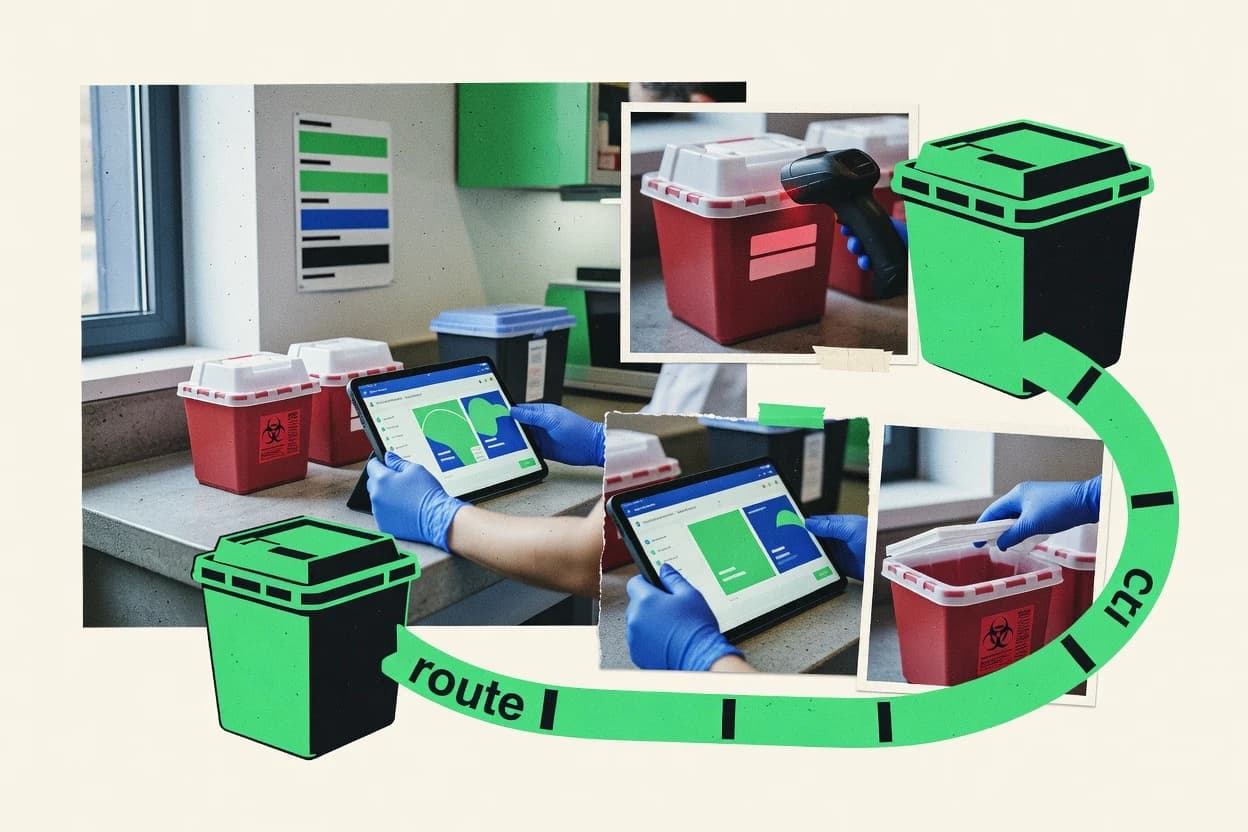
Barcode scanning connected to container inventory carries container identity across pickup scheduling and delivery confirmation.
Built for fits when multi-site teams need barcode-based tracking with documented custody and pickup coordination..
WasteLogics
Editor pickContainer traceability ties scan events to transporter and treatment milestones, then seals disposal certificates to the same chain.
Built for fits when compliance teams need container-level traceability across recurring pickups and end-of-life paperwork..
Hauler Hero
Editor pickField crews use barcode scanning tied to container inventory so pickups, handoffs, and completion records stay aligned.
Built for fits when haulers need recurring route tracking and barcode-based pickup verification at scale..
Comparison Table
CurbWaste
SMBCurbWaste manages waste sales, scheduling, dispatch, invoicing, and customer communication.
Barcode scanning connected to container inventory carries container identity across pickup scheduling and delivery confirmation.
CurbWaste centers on end-to-end tracking for sharps waste and other regulated streams, with point-of-generation logging that ties each container to subsequent pickup actions. Barcode scanning and container inventory tracking support recurring routes and reduce mismatches between what staff label and what transport receives.
A practical tradeoff is that the workflow depends on disciplined container labeling and accurate pickup scheduling inputs, or else reconciliation becomes operational rather than automated. The strongest fit appears when compliance teams need consistent chain-of-custody records across multiple facilities that use recurring transporter routes.
- +Barcode-first container inventory reduces pickup-to-label mismatches
- +Pickup scheduling supports recurring routes for transporter coordination
- +Audit logs trace who changed waste events and documentation
- +Role-based access limits generator access to job-relevant actions
- –Reliable use requires consistent container labeling at point of generation
- –Complex multi-participant flows require more setup time than single-site use
- –Exceptions still need manual handling when pickups diverge from schedules
- –External data exchange depth is limited without dedicated integration work
Environmental and compliance teams
Manage chain-of-custody records across sites
Faster compliance reporting cycles
Waste operations coordinators
Run recurring pickups with route consistency
Fewer missed or partial pickups
Show 2 more scenarios
Clinical facility managers
Track waste at point of generation
Reduced reconciliation work
Point-of-generation logging ties waste actions to specific containers for downstream verification.
Healthcare IT integration teams
Connect lab or facility event data
Less manual data entry
Extensibility supports automating waste event creation from upstream systems with controlled access.
Best for: Fits when multi-site teams need barcode-based tracking with documented custody and pickup coordination.
WasteLogics
SMBWasteLogics manages waste collections, vehicle routing, containers, invoicing, and customer records.
Container traceability ties scan events to transporter and treatment milestones, then seals disposal certificates to the same chain.
WasteLogics fits organizations that need electronic, auditable records across generator operations, transport coordination, and treatment facility verification. The workflow centers on point-of-generation logging and container-level traceability, then rolls activity forward into transporter and treatment steps with completion documents. Integration depth is geared toward operational systems rather than lab analytics, with automation focused on task routing and status updates as pickups progress. Governance supports role-separated access and change trails for compliance workflows, which helps when multiple sites share the same operational backbone.
A key tradeoff is that setup relies on accurate waste stream definitions and standardized site data so forms, scan flows, and record mapping stay consistent. When waste operations run recurring pickups, WasteLogics reduces manual handoffs by tying scheduled collection events to outcomes and certificates. In multi-site programs, teams can standardize container and documentation processes while still keeping site-specific rules and users under controlled permissions.
- +Strong end-to-end documentation flow from logging to certificates
- +Role-separated access supports compliance review without broad permissions
- +Workflow configuration supports recurring pickup operations and status-driven handoffs
- +Container traceability reduces mismatch risk across pickup steps
- –Accurate waste stream definitions are required to avoid downstream mapping errors
- –Advanced integrations may require an implementation partner for clean data mapping
- –Operational reporting depends on consistent scan and completion behavior
- –Barcode scan adoption requires process discipline at point of generation
Environmental health coordinators
Run manifests and completion workflows
Fewer document reconciliation gaps
Waste operations managers
Manage recurring pickup scheduling
Lower manual coordination effort
Show 2 more scenarios
Multi-site compliance leads
Standardize processes across sites
More consistent operator outputs
Applies consistent container handling and documentation steps while keeping site-specific permissions.
Regulated healthcare facilities
Control point-of-generation logging
Cleaner traceability for audits
Supports structured logging workflows to maintain consistent evidence from packaging to disposal.
Best for: Fits when compliance teams need container-level traceability across recurring pickups and end-of-life paperwork.
Hauler Hero
SMBHauler Hero provides scheduling, routing, payments, customer management, and dispatch tools for haulers.
Field crews use barcode scanning tied to container inventory so pickups, handoffs, and completion records stay aligned.
Hauler Hero is built around end-to-end movement from pickup scheduling through treatment or disposal records, so field activity maps to retained documentation. Point-of-generation logging and barcode scanning help reduce manual entry when staff capture waste details and confirm container identities. Container inventory management supports repeat pickups, which can reduce reconciliation work across multiple visits to the same generator site.
A key tradeoff is that automation depth depends on how the organization structures sites, containers, and waste profiles before going live. The best fit appears in recurring routes where route coordination and completion documentation must stay consistent across many pickups.
- +Barcode scanning and point-of-generation logging reduce manual waste data entry.
- +Container inventory tracking supports repeat pickups and fewer handoff disputes.
- +Pickup scheduling links field work to completion documentation for records.
- +Role-based access limits who can change workflow-critical settings.
- –Route and waste profile setup requires disciplined configuration before scaling.
- –External integration coverage can require process workarounds for deep EHR use.
- –Some advanced reporting depends on consistent data capture at generation.
Medical waste haulers
Recurring routes with field verification
Fewer receipt mismatches
Healthcare facilities
On-site logging and inventory
Cleaner generator records
Show 1 more scenario
Compliance and operations managers
Documented handoffs and approvals
More defensible reporting
Audit visibility supports review of operational changes that affect pickup and completion artifacts.
Best for: Fits when haulers need recurring route tracking and barcode-based pickup verification at scale.
BioTrack
vertical specialistWaste management software for biohazard and medical waste haulers.
Barcode-first container event capture that links point-of-generation records to transporter coordination and disposal certificate outputs.
BioTrack is medical waste disposal software focused on generator-side workflows like tracking, documentation, and pickup coordination. It organizes waste activity around barcode-friendly container handling and operational logs that support chain-of-custody style review.
Automation centers on moving records through handoff steps toward disposal and certificate-ready outputs for compliance reporting. Extensibility shows up through integration and API options that let facilities connect inventory, labs, and transport coordination processes.
- +Barcode-driven container tracking reduces manual transcription during point-of-generation logging
- +Pickup scheduling ties waste events to transporter handoff windows
- +Audit-friendly activity trails support chain-of-custody review
- +API and integration options support connecting facility systems for data exchange
- –Requires careful configuration of waste stream categories and event mappings
- –Reporting depth can lag facilities that need custom manifest and certificate layouts
- –Workflows may feel rigid for atypical pickup cadences
- –Advanced governance features require dedicated admin attention
Best for: Fits when mid-size healthcare networks need operational logging, barcode container control, and certificate-ready compliance outputs.
AMCS Platform
enterpriseAMCS Platform manages waste collection, routing, fleet operations, billing, and compliance.
Service-event lifecycle management that links scheduling, handoffs, and disposal or destruction documentation in one workflow.
AMCS Platform coordinates regulated medical waste workflows from pickup scheduling through treatment and documentation handoffs. It is built around appointment planning, transporter coordination, and evidence generation for disposal and destruction records across multiple waste streams.
The system also supports operational controls for generator compliance workflows, including managed status changes tied to service events. Integration work can center on data exchange with enterprise systems used by healthcare facilities and treatment networks.
- +Strong pickup scheduling and service-event lifecycle tracking
- +Clear transporter and treatment coordination workflow states
- +Documentation artifacts tied to completed service milestones
- +Administration features for managing partner and facility configurations
- –Operational setup requires careful configuration of partners and service mappings
- –Some compliance reporting paths depend on defined workflow and data capture at source
Best for: Fits when waste management operators need end-to-end coordination from dispatch to documented treatment outcomes.
Routeware
enterpriseRouteware provides routing, dispatch, customer management, and billing software for waste companies.
Routeware’s route-centric pickup execution workflow combines scanning, handoffs, and certificate-ready outputs from the route run.
Routeware is medical waste disposal software built for managing regulated waste operations across generators, transporters, and treatment facilities. Core capabilities focus on route tracking, recurring pickup scheduling, and chain-of-custody workflow support tied to pickup events.
Routeware also supports container and barcode-based scanning workflows that help reconcile what was generated and what was collected. Reporting features target compliance monitoring through disposition and certificate artifacts generated from the end-to-end pickup process.
- +Strong route tracking and pickup lifecycle management for recurring stops
- +Barcode scanning workflows that support container-level reconciliation
- +Chain-of-custody steps map cleanly to pickup events and handoffs
- +Operational reporting ties pickup activity to downstream disposal outcomes
- –Setup needs careful waste type and container configuration discipline
- –Healthcare facility integration depth can require process mapping work
Best for: Fits when regulated medical waste pickups require recurring routing, scanning reconciliation, and chain-of-custody handoffs.
Wastebits
vertical specialistWastebits manages waste profiles, manifests, compliance records, and regulated waste workflows.
API-driven document workflow that links point-of-generation entries to downstream transporter and treatment verification records.
Wastebits is a medical waste disposal software used to manage regulatory workflow from site-level logging through documentation. It differentiates through integrations built around waste hauling and facility coordination, including automated data exchange for manifests and certificates.
Core capabilities cover generator tracking, container and pickup planning, and reporting that ties activity to compliance artifacts. Automation and API access support integration with existing healthcare and lab systems.
- +API and integration options support manifest and document data exchange
- +Recurring pickup scheduling reduces manual coordination work for waste streams
- +Container inventory tracking supports barcode-driven operational checks
- +Admin controls support multi-site operations and role-based access
- –Setup requires strong mapping between waste streams and facility configurations
- –Workflows for specialized waste categories can require additional coordination
Best for: Fits when regulated sites need integrated pickup scheduling and document exchange across generator, transporter, and treatment partners.
Re-TRAC Connect
vertical specialistRe-TRAC Connect tracks waste programs, regulatory data, materials, and reporting requirements.
Recurring pickup management that links scheduled service events to container and manifest status updates, reducing orphan records.
Re-TRAC Connect is a medical waste disposal software focused on operational tracking from waste generation through pickup coordination and treatment verification. The system centers on electronic manifest workflows and status updates that connect generator data to transporter handoffs and facility processing records. It supports recurring pickup management and container inventory so barcode-based field capture can stay aligned with scheduled service events.
- +Recurring pickup scheduling aligns pickup events with waste stream volumes
- +Container inventory supports barcode-driven field capture against dispatch records
- +Electronic manifest workflow ties generator entries to downstream processing statuses
- +Role-based access controls keep operational actions separated by function
- –Best outcomes depend on disciplined configuration of service locations and waste categories
- –API and data export coverage is narrower than broader enterprise integration suites
Best for: Fits when healthcare and lab operators need end-to-end tracking across pickup, transporter handoff, and treatment verification.
WasteWatcher
vertical specialistMedical and regulated waste tracking platform with compliance reporting, billing, and audit-ready records for healthcare facilities.
Container inventory plus barcode-driven labeling tied to pickup and receipt events for end-to-end chain continuity.
WasteWatcher is a web-based system for managing regulated medical waste workflows from point-of-generation logging through pickup and receipt tracking. It focuses on container-level inventory, barcode-driven labeling, and audit-ready paperwork artifacts for disposal and treatment proof.
The tool supports recurring pickup scheduling and transporter coordination so generator and treatment steps stay linked in one record. Reporting is built around compliance timelines and event history rather than dashboards alone.
- +Barcode-based container inventory helps reduce mislabeling during generation
- +Recurring pickup scheduling supports repeat routes and predictable coordination
- +Event history ties pickups, receipts, and certificates into a single audit trail
- +Web workflow reduces reliance on desktop-only operations for field steps
- –Integration depth for EHR or lab systems is limited versus enterprise compliance suites
- –Audit log coverage can feel coarse for multi-role governance needs
- –Complex waste stream setup requires careful mapping to avoid classification drift
- –Route tracking detail is constrained compared with logistics-first tools
Best for: Fits when mid-market providers need point-to-treatment tracking with container inventory and recurring pickup coordination.
MedWaste
enterpriseNational-scale medical waste traceability platform with live GPS tracking, digital chain of custody, and WHO-aligned compliance reporting.
Event-based disposal documentation that links classification entries to pickup and downstream treatment verification records.
MedWaste is intrazero.com’s medical waste disposal tracking system geared toward generator compliance workflows and end-to-end documentation. The core workflow centers on waste stream classification entry, point-of-generation logging, and organizer-ready records for pickup and treatment evidence.
Admin controls focus on user access and operational accountability rather than custom analytics. Integration is positioned around exchanging operational details with partners in the disposal chain, with an automation focus on reducing manual manifest and certificate handling.
- +Point-of-generation logging keeps waste records tied to real events
- +Waste stream classification supports consistent category handling across sites
- +Operational records map well to pickup and treatment verification needs
- +Role-based access supports separation between requesters and approvers
- –Partner data exchange depends on transporter and treatment coordination
- –Automation coverage can require disciplined setup of waste categories
- –Advanced customization for unique hospital workflows may be limited
- –Reporting granularity depends on how events are captured at entry
Best for: Fits when regulated facilities need consistent waste logging and documentation across generator, transporter, and treatment handoffs.
Conclusion
After evaluating 10 waste management recycling, CurbWaste stands out as our overall top pick — it scored highest across our combined criteria of features, ease of use, and value, which is why it sits at #1 in the rankings above.
Use the comparison table and detailed reviews above to validate the fit against your own requirements before committing to a tool.
How to Choose the Right medical waste disposal software
Medical waste disposal software manages regulated medical waste workflows from point-of-generation logging through transporter coordination and disposal or destruction documentation. This guide covers CurbWaste, WasteLogics, Hauler Hero, BioTrack, AMCS Platform, Routeware, Wastebits, Re-TRAC Connect, WasteWatcher, and MedWaste based on how each tool handles tracking continuity and operational execution.
The strongest cards emphasize barcode-first container identity, recurring pickup scheduling, and certificate-ready documentation that ties handoffs to the same chain. The guide also flags governance gaps where audit log coverage or integration depth is narrower than enterprise compliance expectations.
Medical waste disposal software for chain-of-custody tracking and certificate-ready compliance
Medical waste disposal software records regulated medical waste events at the point of generation, connects those events to container inventory, and carries the same identity through pickup, handoff, and treatment verification. Tools like CurbWaste use barcode scanning connected to container inventory to reduce pickup-to-label mismatches and preserve container identity across delivery confirmation.
WasteLogics centers container traceability that ties scan events to transporter and treatment milestones, then seals disposal certificates to the same chain of custody. Across the category, evaluation hinges on whether the workflow model links service-event states to the documentation outputs without breaking traceability at recurring pickup boundaries.
Compliance traceability and automation controls for regulated medical waste
This category succeeds when point-of-generation logging keeps the same waste and container identity through pickup, transporter handoffs, and disposal certificate outputs. The strongest workflows minimize orphan records at pickup boundaries and keep service-event states tied to the documents needed for compliance reporting.
Barcode-first container inventory that persists through pickup
CurbWaste, Hauler Hero, and BioTrack connect barcode scanning to container inventory so field captures match the pickup and delivery identity at handoff. WasteWatcher also uses barcode-driven container inventory tied to pickup and receipt events for chain continuity.
Recurring pickup lifecycle management tied to handoffs
Routeware, AMCS Platform, and Re-TRAC Connect manage recurring pickup execution with scanning reconciliation and service-event state tracking. This design supports repeated stops and documented handoffs without breaking continuity.
Certificate-ready documentation sealed to the same trace chain
WasteLogics ties scan events to transporter and treatment milestones and then seals disposal certificates to the same chain. CurbWaste and BioTrack also emphasize certificate-ready outputs connected to the same point-of-generation and transporter handoff records.
Integration and API surface for document exchange
Wastebits highlights API-driven document workflows that link point-of-generation entries to downstream transporter and treatment verification records. The cards also flag that deeper EHR use can require workarounds in Hauler Hero and that narrower API coverage can limit export paths in Re-TRAC Connect.
Governance through role separation during compliance review
WasteLogics uses role-separated access for compliance review without broad permissions. Other tools in the set focus more on operational execution, so governance depth varies when multiple stakeholders review certificates and handoff records.
Choose by workflow model, identity persistence, and integration depth
Medical waste disposal software choices differ by workflow shape rather than by feature checklists. The key decision is whether the system models waste and container identity as a persistent object through scheduling, pickup execution, and certificate outputs. The second decision is how the platform handles configuration discipline when waste stream categories, event mappings, and service-partner relationships must be correct for downstream documents to remain valid.
Validate container identity persistence from scan to certificate
Shortlist CurbWaste if barcode scanning connected to container inventory must carry the same identity across pickup scheduling and delivery confirmation. Shortlist WasteLogics if disposal certificates must be sealed to transporter and treatment milestones tied to scan events.
Match the workflow model to how pickups are actually executed
Choose Routeware when route-centric pickup execution must combine scanning, handoffs, and certificate-ready outputs from the route run. Choose AMCS Platform when dispatch to documented treatment outcomes must stay in one service-event lifecycle workflow.
Plan for configuration discipline versus partner complexity
If the organization can enforce strict waste type and container configuration, Routeware can support recurring stop tracking with reconciliation. If partner setup and workflow mapping are harder, CurbWaste and BioTrack emphasize barcode-driven point-of-generation logging but still require consistent container labeling and event mapping.
Select integration depth based on who exchanges documents
Choose Wastebits when API-driven document workflow needs to link point-of-generation entries to transporter and treatment verification records. If EHR or lab connectivity is deep in scope, the cards flag that Hauler Hero external integration coverage can require process workarounds.
Gate access and reviews by role rather than broad permissions
Choose WasteLogics when compliance teams must review without granting broad access because role-separated access supports audit-ready review workflows. If governance needs exceed what the set describes as audit log coverage, WasteWatcher is flagged as having coarser audit log coverage for multi-role governance.
Who should buy medical waste disposal software built around chain-of-custody continuity
Teams should select tools where scan events, container inventory, and pickup service-event states stay aligned through treatment verification and certificate outputs. The fit also depends on whether day-to-day operations run as multi-stop routes or as recurring site-to-transporter pickups with multiple documents per handoff.
Multi-site healthcare networks running barcode-controlled container pickups
BioTrack and CurbWaste focus on barcode-first container event capture that ties point-of-generation records to transporter coordination and disposal certificate outputs. Hauler Hero also aligns pickups, handoffs, and completion records through barcode scanning tied to container inventory.
Compliance teams that must seal disposal certificates to the same trace chain
WasteLogics seals disposal certificates to the same chain by tying scan events to transporter and treatment milestones. CurbWaste also targets certificate-ready documentation that remains connected to the same chain across delivery confirmation.
Waste management operators coordinating dispatch through treatment outcomes
AMCS Platform is built around a service-event lifecycle that links scheduling, handoffs, and disposal or destruction documentation in one workflow. This design fits organizations that need clear transporter and treatment coordination workflow states.
Regulated sites that need API-driven document exchange across generator, transporter, and treatment partners
Wastebits is positioned for API-driven document workflow that links point-of-generation entries to downstream transporter and treatment verification records. The set flags that deeper enterprise integration may require extra mapping work even when API exists.
Providers managing recurring pickup schedules that must stay consistent with container and manifest status
Re-TRAC Connect emphasizes recurring pickup management that links scheduled service events to container and manifest status updates to reduce orphan records. WasteWatcher also pairs recurring pickup scheduling with container inventory tied to pickup and receipt events.
Common buying and rollout mistakes in regulated medical waste disposal software
Rollouts fail when configuration discipline breaks the link between scanned identity, container inventory, and the documentation outputs required at treatment completion. Buyers also overestimate integration completeness when deep facility connectivity requires process mapping and clean waste stream definitions.
Buying for barcode scanning but ignoring label discipline at point of generation
CurbWaste and Hauler Hero both depend on consistent container labeling to reduce pickup-to-label mismatches. If point-of-generation staff cannot sustain standardized labeling, barcode-first workflows will produce identity conflicts.
Mapping waste streams and event definitions loosely before enabling recurring pickups
WasteLogics requires accurate waste stream definitions to avoid downstream mapping errors. Routeware and BioTrack also flag the need for careful configuration of waste stream categories and event mappings.
Expecting enterprise-grade governance without validating role separation and audit log depth
WasteLogics includes role-separated access for compliance review without broad permissions. WasteWatcher is flagged for coarse audit log coverage for multi-role governance needs.
Overestimating integration coverage for EHR or lab systems without process mapping work
Hauler Hero warns that external integration coverage can require process workarounds for deep EHR use. Wastebits can support API-driven document exchange, but it still needs strong mapping between waste streams and facility configurations.
Assuming automation will compensate for partner and workflow setup complexity
AMCS Platform notes that partner and service mappings require careful operational setup for end-to-end lifecycle workflows. Re-TRAC Connect is also configuration-sensitive, because best outcomes depend on disciplined configuration of service locations and waste categories.
How We Selected and Ranked These Tools
We evaluated each product card for operational traceability from barcode-driven container capture through pickup execution to certificate-ready outputs. Features made up 40% of the scoring, and ease and value each made up 30% of the scoring.
CurbWaste set the benchmark because barcode scanning connected to container inventory carries container identity across pickup scheduling and delivery confirmation. CurbWaste also supported recurring routes through pickup scheduling for transporter coordination, which raised its execution score compared with tools that emphasized other parts of the chain.
Frequently Asked Questions About medical waste disposal software
How do barcode-driven container tracking workflows differ between CurbWaste and Routeware?
Which platforms support manifest workflows that connect transporter handoffs to disposal certificates?
What breaks if recurring pickup management is missing when switching from Hauler Hero to a tool without that feature?
When should an organization use BioTrack versus AMCS Platform for end-to-end coordination?
How does audit logging and RBAC coverage show up in CurbWaste compared to WasteWatcher?
Which tools provide integration or API access for healthcare and partner systems?
How should data migration be handled when moving container and event history into WasteLogics?
What tradeoff appears when choosing a route-centric workflow like Routeware instead of an evidence-first lifecycle like AMCS Platform?
How do admin controls and workflow configuration differ between WasteLogics and Hauler Hero?
Where does extensibility matter most when integrating waste workflows with labs and inventory systems using BioTrack?
Tools reviewed
Primary sources checked during evaluation.
Referenced in the comparison table and product reviews above.
- Environment EnergyTop 10 Best Waste Disposal Software of 2026
- Waste Management RecyclingTop 10 Best Hazardous Waste Tracking Software of 2026
- Healthcare MedicineTop 10 Best Medical Waste Software of 2026
- Waste Management RecyclingTop 10 Best Waste Management Payment Processing Services of 2026
- Technology Digital MediaTop 10 Best Medical Web Services of 2026
Keep exploring
Comparing two specific tools?
Software Alternatives
See head-to-head software comparisons with feature breakdowns, pricing, and our recommendation for each use case.
Explore software alternatives→In this category
Waste Management Recycling alternatives
See side-by-side comparisons of waste management recycling tools and pick the right one for your stack.
Compare waste management recycling tools→