
GITNUXSOFTWARE ADVICE
Healthcare MedicineTop 10 Best Medical Waste Software of 2026
Ranked roundup of medical waste software for clinics and hospitals, comparing MedPro Waste Tracker, Intelex, and other compliance tools.

How we ranked these tools
Core product claims cross-referenced against official documentation, changelogs, and independent technical reviews.
Analyzed video reviews and hundreds of written evaluations to capture real-world user experiences with each tool.
AI persona simulations modeled how different user types would experience each tool across common use cases and workflows.
Final rankings reviewed and approved by our editorial team with authority to override AI-generated scores based on domain expertise.
Score: Features 40% · Ease 30% · Value 30%
Gitnux may earn a commission through links on this page — this does not influence rankings. Editorial policy
MedPro Waste Tracker is the best fit if you need point-of-generation scanning with consistent custody and pickup reconciliation, whereas Waste Management Healthcare Solutions works better for multi-site clinics coordinating collection documentation under one services partner.
Editor’s top 3 picks
Three quick recommendations before you dive into the full comparison below — each one leads on a different dimension.
MedPro Waste Tracker
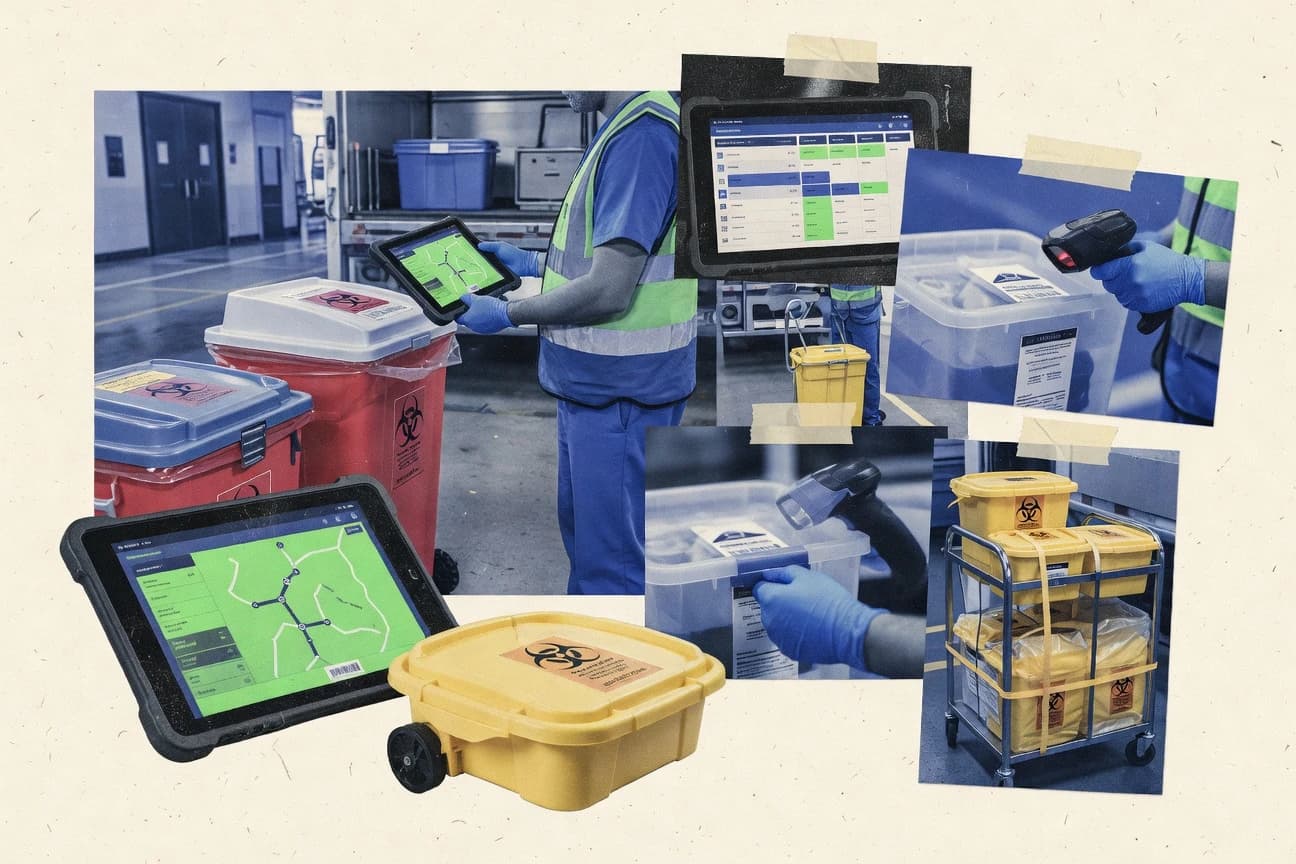
Point-of-generation barcode scanning that ties container and pickup records to a traceable audit trail for closure.
Built for fits when clinics and hospitals need point-of-generation scanning with consistent custody and pickup reconciliation..
Waste Management Healthcare Solutions
Editor pickPickup-centered record linking keeps collection events, facility details, and documentation aligned.
Built for fits when multi-site clinics need collection coordination plus documentation consistency with a single waste services partner..
Enablon
Editor pickConfigurable approval workflow steps that bind waste record closure to enterprise governance oversight.
Built for fits when multi-site EHS governance must control waste records and approvals..
Comparison Table
MedPro Waste Tracker
vertical specialistMedical waste management and compliance tracking platform for healthcare facilities.
Point-of-generation barcode scanning that ties container and pickup records to a traceable audit trail for closure.
MedPro Waste Tracker centers on generator compliance workflows by keeping site-level profiles and linking each pickup to the originating entries. Barcode scanning supports faster point-of-generation logging for sharps and regulated streams, and container inventory records reduce ad-hoc counting. The software also supports disposal facility and transporter coordination so pickup schedules and documentation stay tied to the right custody sequence.
The main tradeoff is workflow setup effort for multi-site rollouts, since generator profiles and waste stream configuration must be aligned before scanning and pickup reconciliation become consistent. Best fit is day-to-day operations where staff complete scanning and logging at the floor level and managers need consistent pickup closure, treatment certification handling, and defensible audit trails.
- +Barcode scanning speeds point-of-generation logging for sharps and regulated waste
- +Generator profile and waste stream classification alignment reduces misrouting risk
- +Audit trail supports later reconciliation across pickup and documentation steps
- +Multi-site configuration keeps site-specific activity and pickup records separated
- –Multi-site onboarding requires careful generator and waste stream configuration work
- –Some advanced integration needs may require custom coordination outside built workflows
Clinic operations teams
Daily sharps logging at treatment rooms
Fewer manual entry errors
Environmental compliance managers
Reconcile manifests across multiple sites
Cleaner compliance documentation
Show 1 more scenario
Facilities directors
Standardize transporter and disposal workflows
More predictable pickup operations
Transporter coordination and disposal facility mapping keep pickup scheduling and documentation aligned.
Best for: Fits when clinics and hospitals need point-of-generation scanning with consistent custody and pickup reconciliation.
Waste Management Healthcare Solutions
enterpriseMedical waste disposal and compliance tracking for healthcare generators.
Pickup-centered record linking keeps collection events, facility details, and documentation aligned.
Waste Management Healthcare Solutions fits organizations that need coordination between facility operations and external waste services. Generator-facing workflows are oriented around pickup planning and record creation so field schedules and paperwork stay aligned. Documentation handling supports audit-oriented review of waste transfers and outcomes tied to collection events.
A key tradeoff is that the system is strongest when used with Waste Management services rather than as a standalone workflow engine for every external partner. Teams that manage multi-site collections benefit most when they standardize container inventory, site contacts, and recurring pickups.
- +Operational focus ties pickup scheduling to generated documentation records
- +Strong coordination model for multi-site facility administration
- +Document history supports custody and compliance reviews by event
- +Role-based access supports controlled views for site staff
- –Best coverage depends on using Waste Management service relationships
- –Integration extensibility is not as detailed as specialized API-first tools
- –Configuration requires care for site mapping and recurring pickup setup
- –Some internal tracking workflows can feel secondary to operations
Environmental health teams
Standardize documentation for pickups
Fewer documentation mismatches
Facility operations managers
Run recurring pickup schedules
More predictable service execution
Show 2 more scenarios
Compliance coordinators
Support custody transfer reviews
Faster audit response
Maintain event-linked history used during compliance audits and internal reviews.
Regional waste coordinators
Manage multi-site waste administration
Lower cross-site admin overhead
Assign site contacts and access while tracking operational records across facilities.
Best for: Fits when multi-site clinics need collection coordination plus documentation consistency with a single waste services partner.
Enablon
enterpriseEnterprise risk and environmental management software with waste and compliance capabilities.
Configurable approval workflow steps that bind waste record closure to enterprise governance oversight.
Enablon fits organizations that already run enterprise EHS governance and need waste tracking to follow shared controls. Workflow configuration supports point-of-generation logging, internal review steps, and closure states tied to downstream documentation. Multi-site management helps standardize how sites enter waste handling information and how corporate teams reconcile outcomes for compliance oversight.
A tradeoff is that Enablon’s depth pushes implementation work into workflow design, role mapping, and process configuration before day-to-day usage is smooth. It is a strong fit for hospitals and large clinic networks that require consistent governance across facilities and want waste data to feed broader EHS oversight cycles.
- +Enterprise governance workflows align waste tracking with EHS controls
- +Multi-site coordination supports consistent processes across facilities
- +Configurable approvals enable structured review before record closure
- +Audit trail support supports oversight and internal compliance review
- –Workflow configuration requires governance discipline to avoid process drift
- –Barcode-first field capture is not the primary interaction model
- –Manifest handling workflows depend on how integrations and document steps are configured
- –Admin setup time is higher than lightweight waste-tracker tools
EHS compliance teams
Standardize generator workflows across hospitals
Fewer reconciliation gaps across sites
Multi-site operations leaders
Coordinate waste handling across facilities
Consistent handling and oversight
Show 2 more scenarios
Compliance analysts
Audit trail for regulator-ready review
Faster internal audit response
Analysts rely on activity history to trace changes and approvals tied to waste handling records.
EHS IT administrators
Integrate waste events into EHS reporting
Centralized compliance reporting data
EHS IT maps waste records into the organization’s EHS systems and reporting needs through integration options.
Best for: Fits when multi-site EHS governance must control waste records and approvals.
BioMedical Waste Solutions Tracker
vertical specialistOnline portal for scheduling medical waste pickups and tracking compliance manifests.
Point-of-generation logging connected to pickup documentation so the generator can maintain traceability from events to transfer records.
BioMedical Waste Solutions Tracker centers on regulated medical waste tracking workflows for clinics and other generator sites. It supports generator-side logging tied to waste stream classification and container handling so teams can maintain chain-of-custody style documentation from point-of-generation through pickup.
The system focuses on manifest-related records and reporting outputs that align with common compliance needs for sharps waste, biohazardous waste, and related categories. Administrative controls and audit-style history help reduce gaps between operational logs and the documentation provided for disposal and transporter steps.
- +Generator-focused workflow keeps waste events tied to waste stream classification.
- +Documentation trail supports chain-of-custody style records across generator steps.
- +Container and pickup related tracking reduces manual reconciliation work.
- +Admin history supports internal review of changes to waste records.
- –Automation depth for multi-site operations appears limited versus higher-ranked tools.
- –Requires consistent setup discipline for waste categories and generator profiles.
- –Barcode scanning coverage is not clearly end-to-end for every logging step.
- –API and integration surface is not prominent for transporter and facility systems.
Best for: Fits when generator teams need structured waste logging and documentation outputs without heavy enterprise integrations.
Veolia Healthcare Waste Portal
enterpriseDigital waste tracking and compliance management for healthcare medical waste streams.
Pickup status and waste transfer closeout are viewable from the generator portal aligned to Veolia collection events.
Veolia Healthcare Waste Portal records generator-site waste activity tied to Veolia’s handling workflow, including pickup coordination and waste transfer documentation. It is differentiated by operational visibility into pickup status and compliance artifacts that support regulated medical waste closeout after each collection event.
The portal also supports multi-site administration through generator profiles, so facilities can route reporting and operational requests under distinct site records. Governance is centered on user access tied to generator locations and activity history used for internal review of chain-of-custody steps.
- +Pickup coordination view linked to waste transfer closeout
- +Generator profiles support consistent reporting across multiple sites
- +Activity history supports internal review of chain-of-custody steps
- +Transporter and disposal workflow artifacts reduce manual reconciliation
- –Best fit when Veolia is the waste handler and operator
- –Configuration and site setup require governance discipline to avoid reporting drift
- –Limited evidence of deep customization of internal waste workflows
- –API and extensibility details are not prominent for external system integration
Best for: Fits when healthcare organizations want generator-site visibility into pickups and transfer documentation under Veolia operations.
Clean Harbors Waste Tracking
enterpriseMedical and hazardous waste management platform with manifest tracking and compliance reporting.
Generator-profile-based classification that flows into manifest and disposal documentation linked to pickup scheduling.
Clean Harbors Waste Tracking is oriented around regulated medical waste logistics for organizations that contract pickup and disposal through Clean Harbors. It supports waste stream classification driven by generator profiles, then ties manifests and disposal documentation to scheduled transporter activity.
The workflow is designed around point-of-generation logging and barcode-like identification so container and pickup records reconcile across sites. Built-in administration for multi-site operators focuses on controlling who can act on generator and shipment records and producing an audit trail for compliance review.
- +Waste stream driven by generator profiles to reduce classification drift
- +Ties manifests and disposal documentation to scheduled pickup workflows
- +Barcode-style container identification supports faster point-of-generation logging
- +Centralizes compliance history for multi-site generator and shipment records
- –Limited visibility for organizations that want to manage non-Clean Harbors transporters
- –Setup depends on clean generator profile configuration across all locations
- –Automation is strongest inside the Clean Harbors workflow rather than open-ended custom flows
- –API and extensibility surface is less clear for external EHR or LIS integrations
Best for: Fits when a healthcare operator uses Clean Harbors for regulated waste pickup and needs cradle-to-grave tracking and reconciliation.
EHS Insight
SMBEnvironmental health and safety software with waste management and compliance tracking.
End-to-end configuration that ties point-of-generation logging to waste transfer records and closure documentation for multi-site control.
EHS Insight is built for EHS and regulated waste workflows, with medical waste tracking organized around generator, pickup, and compliance recordkeeping. The system focuses on operational logging and documentation continuity from point-of-generation entries to waste transfer records and closure artifacts.
It is positioned for multi-site operations that need shared controls, consistent configuration, and reporting outputs aligned to regulated waste obligations. EHS Insight also supports integration and data exchange paths that reduce re-keying between EHS operations and external systems.
- +Workflow continuity from point-of-generation logs to waste transfer records
- +Configuration supports consistent handling across multiple generator sites
- +Audit-friendly documentation structure for regulated waste obligations
- +Integration and API options reduce duplicate data entry during operations
- –Setup and governance decisions are needed to keep generator profiles consistent
- –Sharps-specific workflows can require configuration to match local procedures
- –Advanced reconciliation needs tighter process discipline than basic tracking
- –Reporting customization requires admin attention to maintain output consistency
Best for: Fits when clinics and health systems need regulated waste documentation continuity across multiple sites.
SpheraCloud EHS and Sustainability
enterpriseEnterprise EHS and sustainability software with environmental data and waste management functions.
Cross-domain EHS configuration that links waste records to wider environmental and safety compliance controls.
SpheraCloud EHS and Sustainability connects environmental, health, and safety compliance workflows with data governance capabilities that go beyond waste-only tracking.
The product supports regulated waste documentation through configurable processes and integrates EHS data for cross-topic reporting needs.
For medical waste operations, it can model generator and site context, manage compliance artifacts, and support audit-ready change control with administrative oversight.
The coverage fits organizations that want medical waste activity embedded inside a broader EHS program rather than isolated tracking.
- +Designed to run medical waste workflows inside a broader EHS program
- +Configurable process controls help keep waste records aligned to policies
- +Strong administrative controls for oversight across multiple sites
- +Audit trail support helps track record changes for compliance reviews
- –Requires EHS process design work to match site-specific waste workflows
- –Medical waste workflows may need integration effort to match existing scanning
Best for: Fits when multi-site hospitals want medical waste managed under centralized EHS governance.
Intelex Environmental Management
enterpriseEnvironmental management software for waste records, compliance tasks, audits, and reporting.
Configurable compliance workflow and evidence management that keeps waste-related activities tied to audit history and controlled documents.
Intelex Environmental Management supports environmental compliance workflows that medical waste teams can configure for regulated medical and biohazardous waste tracking. It emphasizes audit trails, document controls, and configurable processes so generator profiles and related records stay tied to the compliance history.
Intelex also offers integration and automation surfaces that help connect waste activities to other enterprise systems, including tracking artifacts used for regulatory reporting. For hospitals and clinics managing multi-site operations, governance controls and change management can reduce off-process logging across facilities.
- +Strong audit trail coverage across configured compliance workflows
- +Document control features support evidence retention for regulated activities
- +Automation and integration options reduce manual handoffs between systems
- +Multi-site governance helps keep waste records consistent across locations
- –Waste tracking setup can require administrator configuration work
- –Out-of-the-box waste workflows may need tailoring to match each generator process
Best for: Fits when organizations need configurable compliance workflows and audit-ready documentation across multiple sites.
Wastebits
vertical specialistWaste management software for generators, haulers, facilities, and disposal records.
Event-to-document automation that ties point-of-generation logging into downstream transfer and certification records.
Wastebits is a medical waste software vendor focused on workflow capture for regulated waste events and downstream documentation. It centers on configurable waste profiles and generator workflows that support cradle-to-grave tracking and transporter coordination for pickup and disposal records.
Wastebits also provides integration and automation hooks through an API surface designed for bidirectional data exchange with internal systems. Governance features are oriented around audit trail needs, with controls that support multi-site administration and compliance reporting output.
- +Configurable waste profiles align generator data with waste stream classification needs
- +API supports integration with scheduling, ERP, and lab systems for event-driven updates
- +Audit trail oriented logging supports compliance review of status changes
- +Multi-site administration supports shared templates with site-level execution
- –Implementation needs disciplined configuration of profiles and generator rules
- –Complex manifest reconciliation workflows may require training for ops teams
- –Some onboarding tasks depend on correct data mapping between systems
- –Barcode scanning workflows can be limited by hardware and label format choices
Best for: Fits when multi-site operators need regulated waste documentation workflows with API-driven integrations and strong audit trails.
Conclusion
After evaluating 10 healthcare medicine, MedPro Waste Tracker stands out as our overall top pick — it scored highest across our combined criteria of features, ease of use, and value, which is why it sits at #1 in the rankings above.
Use the comparison table and detailed reviews above to validate the fit against your own requirements before committing to a tool.
How to Choose the Right medical waste software
Medical waste software centralizes regulated waste tracking from point-of-generation logging through pickup scheduling and waste transfer documentation so clinics and hospitals can keep an auditable chain of custody across sites. This guide compares MedPro Waste Tracker, Intelex Environmental Management, and other tools that differ in how they capture generator events, bind them to closure, and produce compliance-ready evidence.
The coverage starts with the workflows each tool emphasizes, including MedPro Waste Tracker’s point-of-generation barcode scanning tied to closure audit trails and Intelex Environmental Management’s configurable compliance workflow and evidence management. The comparison then moves into admin and governance controls like configurable approval steps in Enablon and configuration discipline for multi-site generator profiles in Clean Harbors Waste Tracking.
Medical waste tracking and compliance software that manages regulated waste records
Medical waste software tracks generator activities for sharps waste, biohazardous waste, and other waste stream classifications and then links those events to pickup scheduling, waste transfer records, and treatment or disposal closeout evidence. The system typically enforces the relationships between generator profiles, waste stream classification, and downstream documentation outputs so closure can be reconciled across the cradle-to-grave workflow.
MedPro Waste Tracker focuses on point-of-generation barcode scanning that ties container and pickup records to a traceable audit trail for closure. Wastebits takes an event-to-document automation approach that uses API-driven integration so point-of-generation updates can propagate into downstream transfer and certification records.
Medical waste software evaluation criteria for custody, closure, and compliance evidence
Medical waste software must connect point-of-generation capture to downstream closure records so audits can trace actions across the chain of custody. Tools differ most in how they bind container events to pickup and transfer documentation.
The strongest systems also control how multi-site generator profiles and waste stream classification rules drive manifest and disposal outputs. This matters because misclassification or inconsistent site setup creates reconciliation failures at pickup closeout.
Point-of-generation barcode scanning tied to closure
MedPro Waste Tracker ties barcode scanning to container and pickup records so closures carry a traceable audit trail. BioMedical Waste Solutions Tracker ties point-of-generation logging to pickup documentation for generator traceability from events to transfer records.
Approval workflow governance that locks record closure
Enablon provides configurable approval workflow steps that bind waste record closure to enterprise governance oversight. Intelex Environmental Management adds configurable compliance workflow and evidence management that ties waste-related activities to audit history and controlled documents.
Pickup-centered linking between collection events and documentation
Waste Management Healthcare Solutions uses pickup-centered record linking that aligns facility details and documentation with collection events. Veolia Healthcare Waste Portal exposes pickup status and waste transfer closeout from the generator portal aligned to Veolia collection events.
API-driven event-to-document automation for downstream records
Wastebits emphasizes event-to-document automation that turns point-of-generation updates into downstream transfer and certification records. Wastebits also provides API support for event-driven updates into scheduling, ERP, and lab systems.
Generator-profile classification that reduces waste misrouting
MedPro Waste Tracker aligns generator profile and waste stream classification so misrouting risk drops when waste handling varies by site. Clean Harbors Waste Tracking drives waste stream outcomes from generator profiles and ties manifests and disposal documentation to scheduled pickup workflows.
Medical waste software decision framework for integration depth and multi-site control
Selection should start with where regulated waste events are captured and how those events become auditable closure. MedPro Waste Tracker and BioMedical Waste Solutions Tracker prioritize point-of-generation scanning or logging, while Wastebits prioritizes event-driven propagation into downstream records.
After capture and propagation, the decision should move to governance controls that prevent inconsistent site closure. Enablon and Intelex Environmental Management focus on approval and evidence controls, while Clean Harbors and Waste Management Healthcare Solutions emphasize pickup-driven operational alignment and generator profile setup.
Match the capture workflow to the site’s day-to-day interaction model
If container events are handled with barcode capture at the point of generation, MedPro Waste Tracker provides point-of-generation barcode scanning tied to audit trail closure. If sites prefer generator-focused structured logging with documentation outputs, BioMedical Waste Solutions Tracker connects generator events to pickup documentation for traceability.
Verify that closure is governed by approvals or by operator-driven reconciliation
If waste record closure must pass configurable approval workflow steps, Enablon ties closure to enterprise governance oversight. If organizations need configurable compliance workflow plus evidence retention tied to audit history, Intelex Environmental Management links waste activities to audit trail coverage and controlled document evidence.
Decide whether pickup events or point-of-generation events drive reconciliation
If reconciliation must be centered on collection events and pickup documentation, Waste Management Healthcare Solutions provides pickup-centered record linking that aligns collection events with documentation records. If closure needs generator-site visibility tied to transporter operations, Veolia Healthcare Waste Portal ties pickup status and transfer closeout viewable from the generator portal to Veolia collection events.
Choose the automation philosophy based on integration needs for downstream evidence
If the requirement is API-driven event-to-document automation for transfer and certification records, Wastebits ties point-of-generation updates into downstream documentation and supports API integrations for scheduling, ERP, and lab systems. If the emphasis is workflow continuity from point-of-generation logs to waste transfer records across sites, EHS Insight provides end-to-end configuration for multi-site documentation continuity.
Align classification control to generator profile configuration strategy across sites
If generator and waste stream classification alignment is the risk control, MedPro Waste Tracker aligns generator profiles and waste stream classification to reduce misrouting risk. If regulated waste handling depends on strict generator profile setup across locations, Clean Harbors Waste Tracking uses generator-profile-driven classification that flows into manifest and disposal documentation linked to pickup scheduling.
Who medical waste software fits best by workflow ownership and governance maturity
Clinics and hospitals with multiple generator sites need systems that keep point-of-generation capture consistent and bind closure to pickup and transfer records. These organizations should evaluate tools based on how they enforce configuration consistency across generator profiles and how they control closure approvals.
Operators that rely on a single waste services partner also need visibility that matches that partner’s collection and closeout workflow. Tools that focus on portal visibility and pickup closeout can align daily operations with transporter-driven events.
Multi-site hospitals and health systems with standardized scanning needs
MedPro Waste Tracker supports point-of-generation barcode scanning that ties container and pickup records to an audit trail for closure. Enablon and Intelex Environmental Management add governance controls when approval steps and evidence retention are required across facilities.
Enterprise EHS teams that govern regulated records through approvals
Enablon provides configurable approval workflow steps that bind waste record closure to enterprise governance oversight. SpheraCloud EHS and Sustainability supports cross-domain EHS configuration that links waste records to wider EHS controls.
Organizations integrating waste events into ERP and lab systems
Wastebits uses event-to-document automation and offers API support for event-driven updates into scheduling, ERP, and lab systems. This supports downstream documentation propagation without relying on manual reconciliation after pickup.
Healthcare organizations coordinating with a specific waste services operator
Waste Management Healthcare Solutions emphasizes pickup scheduling coordination tied to generated documentation records using its coordination model for multi-site facility administration. Veolia Healthcare Waste Portal provides generator-site visibility into pickup status and waste transfer closeout aligned to Veolia collection events.
Operators that prioritize generator-profile classification for manifests and disposal outputs
Clean Harbors Waste Tracking ties waste stream classification from generator profiles into manifest and disposal documentation linked to scheduled pickup workflows. MedPro Waste Tracker also aligns generator profiles and waste stream classification to reduce misrouting risk when waste handling differs by site.
Common medical waste software pitfalls that break audit traceability or multi-site consistency
Many deployments fail because point-of-generation capture and closure governance do not align with how sites actually generate waste. Other failures happen when multi-site generator profiles and waste stream classification rules are created without a governance plan.
Some tools also require operational training for reconciliation workflows. Complex manifest reconciliation can stall daily throughput when teams are not prepared for the tool’s event-to-document behavior.
Choosing a tool with point-of-generation capture that does not create closure-ready audit trails
MedPro Waste Tracker ties point-of-generation barcode scanning to container and pickup records for a traceable closure audit trail. BioMedical Waste Solutions Tracker supports point-of-generation logging tied to pickup documentation, so closure evidence must be validated against the transfer records generated for each waste stream.
Underestimating the configuration governance needed for multi-site generator profiles and waste stream classification
Enablon workflow configuration requires governance discipline to avoid process drift across facilities. Clean Harbors Waste Tracking depends on consistent generator profile configuration across locations, so profile review cycles must be defined before onboarding.
Assuming pickup coordination features will automatically fit existing waste handler relationships
Waste Management Healthcare Solutions best coverage depends on using Waste Management service relationships, so internal expectations must be checked against the organization’s existing pickup contracts. Veolia Healthcare Waste Portal is best aligned when Veolia is the waste handler, so generator-site visibility should be mapped to Veolia collection events.
Buying API-first automation without training ops teams on manifest reconciliation behavior
Wastebits can tie point-of-generation logging into downstream transfer and certification records through API-driven event automation. Complex manifest reconciliation workflows still require training for ops teams when rules and profiles drive how events become documentation.
How We Selected and Ranked These Tools
We evaluated MedPro Waste Tracker, Intelex Environmental Management, and the other listed tools on regulated medical waste tracking capability through closure evidence, with features weighted at 40%. We weighted ease of use and operational fit at 30% each across onboarding friction, workflow clarity, and how quickly teams can complete point-of-generation logging through pickup closeout.
MedPro Waste Tracker earned the highest overall rating because its point-of-generation barcode scanning ties container and pickup records to a traceable audit trail for closure. MedPro Waste Tracker also aligns generator profile and waste stream classification to reduce misrouting risk, while several alternatives emphasize pickup coordination, enterprise approvals, or broader EHS configuration instead of barcode-to-closure traceability.
Frequently Asked Questions About medical waste software
How does point-of-generation logging differ between MedPro Waste Tracker and BioMedical Waste Solutions Tracker?
Which tools support pickup-centered workflows for regulated medical waste coordination?
What breaks if a clinic cannot maintain consistent waste stream classification across sites?
How does Intelex Environmental Management handle audit trails compared with Enablon’s approval workflow?
When does multi-site RBAC matter most for medical waste software like EHS Insight and SpheraCloud?
Which solutions provide API-driven integration for event-to-document automation?
How do barcode-like container identifiers affect chain-of-custody traceability in Clean Harbors Waste Tracking and Veolia Healthcare Waste Portal?
What integration and data migration questions should be answered before moving from spreadsheets to MedPro Waste Tracker or Intelex?
Where does EHS Insight tend to fall short versus Waste Management Healthcare Solutions when transporter and disposal partners must be coordinated?
Tools reviewed
Primary sources checked during evaluation.
Referenced in the comparison table and product reviews above.
- Healthcare MedicineTop 10 Best Medical Hospital Software of 2026
- Waste Management RecyclingTop 10 Best Waste Management Software of 2026
- Utilities PowerTop 10 Best Waste Management Computer Software of 2026
- Healthcare MedicineTop 10 Best Emr Electronic Medical Records Software of 2026
- Healthcare MedicineTop 10 Best Medical Claims Auditing Software of 2026
Keep exploring
Comparing two specific tools?
Software Alternatives
See head-to-head software comparisons with feature breakdowns, pricing, and our recommendation for each use case.
Explore software alternatives→In this category
Healthcare Medicine alternatives
See side-by-side comparisons of healthcare medicine tools and pick the right one for your stack.
Compare healthcare medicine tools→