
GITNUXSOFTWARE ADVICE
Business FinanceTop 10 Best Life Safety Inspection Software of 2026
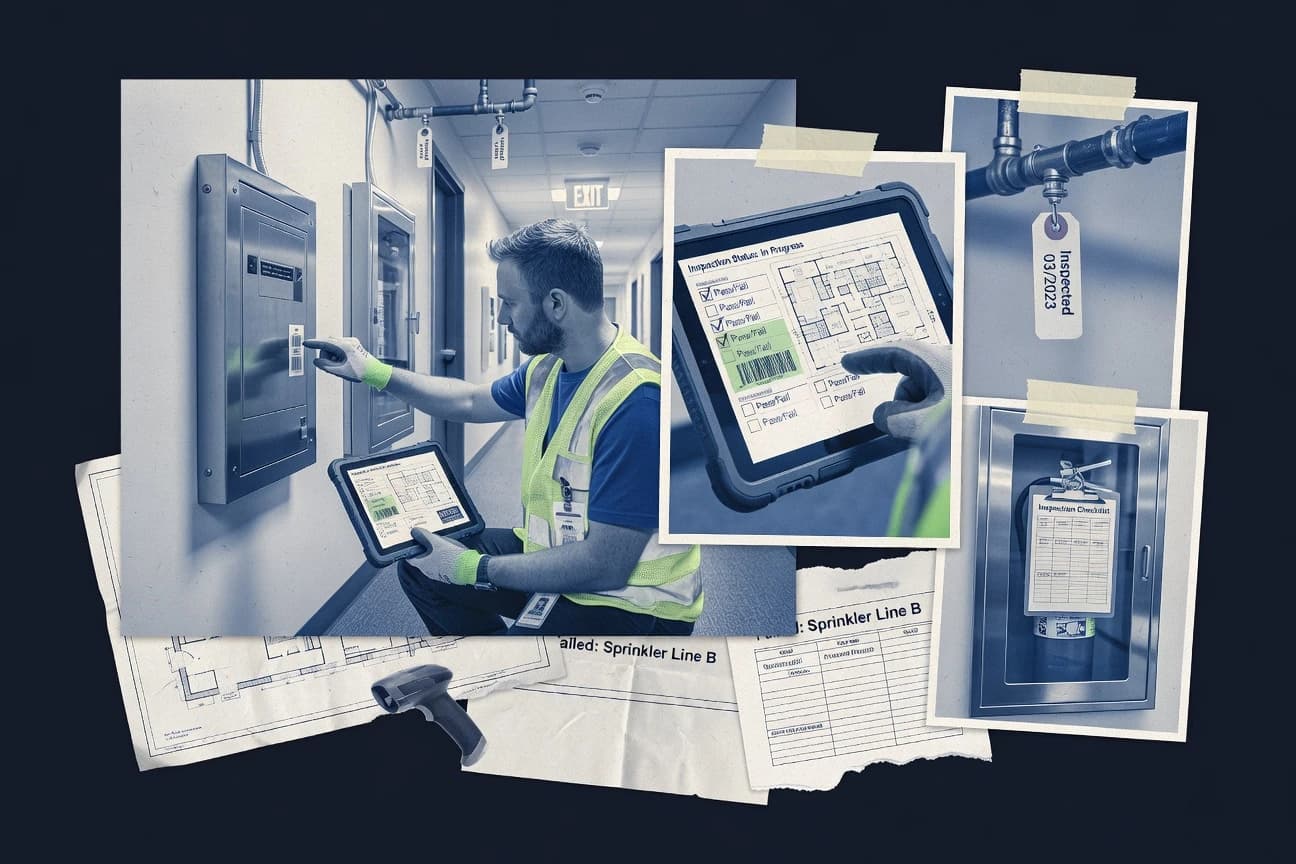
Top 10 life safety inspection software ranked for inspectors and facilities, with reporting-focused comparisons including InspectPoint and BuildingReports.

How we ranked these tools
Core product claims cross-referenced against official documentation, changelogs, and independent technical reviews.
Analyzed video reviews and hundreds of written evaluations to capture real-world user experiences with each tool.
AI persona simulations modeled how different user types would experience each tool across common use cases and workflows.
Final rankings reviewed and approved by our editorial team with authority to override AI-generated scores based on domain expertise.
Score: Features 40% · Ease 30% · Value 30%
Gitnux may earn a commission through links on this page — this does not influence rankings. Editorial policy
ComplianceQuest is the right pick if you’re running enterprise EHS and quality inspections across multiple properties and need governed recurrence with traceable corrective actions, whereas InspectPoint fits commercial facilities teams that need mobile deficiency workflows and centralized reporting.
Editor’s top 3 picks
Three quick recommendations before you dive into the full comparison below — each one leads on a different dimension.
ComplianceQuest
Deficiency-driven reinspection scheduling that recalculates follow-up cycles from corrective action status.
Built for fits when multi-property teams need governed inspection recurrence and traceable corrective actions at scale..
InspectPoint
Editor pickDeficiency-to-corrective-action routing that preserves inspection history for reinspection planning.
Built for fits when facilities teams need mobile inspections, deficiency workflows, and centralized reporting across many sites..
BuildingReports
Editor pickRecurring inspection scheduling ties follow-up cycles to asset inspection programs, so reinspection planning is built into the workflow.
Built for fits when multi-site fire and life safety inspections need consistent evidence capture and recurring schedules..
Comparison Table
ComplianceQuest
enterpriseEnterprise EHS and quality software with inspections, audits, incidents, and corrective actions.
Deficiency-driven reinspection scheduling that recalculates follow-up cycles from corrective action status.
ComplianceQuest supports field inspections with structured checklists, photo evidence capture, and offline-capable mobile use for on-site collection. Findings flow into deficiency records that drive corrective action workflows, including due dates, assignment, and closure state. Recurring schedules can be managed as inspection frequency rules so teams run reinspection cycles consistently.
A key tradeoff is that deeper automation and governance controls require deliberate configuration of inspection templates, deficiency types, and recurrence rules. ComplianceQuest fits best when facilities teams need repeatable inspection programs across many properties and must demonstrate traceable follow-through on each deficiency.
- +Rule-driven recurring inspections reduce missed schedules across portfolios
- +Deficiency records link directly to corrective action workflow and reinspection timing
- +Audit-friendly inspection history with photo evidence attached to findings
- +Flexible reporting filters support targeted AHJ-style documentation needs
- –Template and recurrence configuration takes planning before teams scale
- –Complex workflows can slow adoption for inspectors with limited admin support
- –Cross-site rollups depend on consistent field data capture practices
Facilities operations leaders
Manage portfolio fire and life safety cadence
Fewer missed inspections
Fire and life safety inspectors
Capture findings with evidence and notes
Clear defect documentation
Show 2 more scenarios
Corrective action coordinators
Route deficiencies into accountable work
Faster resolution cycles
Assign corrective action tasks, track due dates, and close deficiencies with workflow state changes.
Compliance reporting teams
Produce inspection summaries for oversight
Repeatable reporting packs
Use filtered inspection and deficiency reporting to compile documented histories for stakeholders.
Best for: Fits when multi-property teams need governed inspection recurrence and traceable corrective actions at scale.
InspectPoint
vertical specialistFire and life safety inspection software for commercial contractors.
Deficiency-to-corrective-action routing that preserves inspection history for reinspection planning.
InspectPoint fits facilities teams that run recurring fire and life safety inspections across multiple sites and need consistent electronic inspection reports. Inspection templates and configurable checklists support common asset types like fire doors, extinguishers, alarms, and emergency lighting, while mobile capture allows inspectors to attach photos and notes at the point of work. The deficiency workflow connects findings to corrective actions and keeps reinspection planning aligned to the inspection history.
A practical tradeoff appears in how much configuration is required before workflows match a specific authority having jurisdiction structure and internal corrective action policies. InspectPoint is a strong choice when inspectors already operate around checklists and a facilities manager needs centralized reporting without rebuilding every asset program from scratch.
- +Mobile inspections support photo evidence capture for field verification
- +Deficiency workflow ties findings to corrective action and reinspection planning
- +Configurable templates keep inspection structure consistent across sites
- +Reporting highlights completion, open items, and inspection history
- –Workflow configuration takes time for organizations with complex routing rules
- –Advanced reporting formats can require careful template and status mapping
- –Offline capture behavior depends on device conditions and field connectivity
Facilities compliance managers
Track recurring life safety program status
Fewer overdue corrective actions
Mobile inspectors
Capture findings with photo evidence
Cleaner documentation at source
Show 2 more scenarios
Property operations teams
Standardize checklists across facilities
Uniform inspection results
Checklist templates enforce consistent inspection steps while still allowing site-specific notes.
EHS and safety coordinators
Run deficiency workflows with audit trails
Stronger accountability
Workflow history supports review of who captured findings and how they moved through corrective action.
Best for: Fits when facilities teams need mobile inspections, deficiency workflows, and centralized reporting across many sites.
BuildingReports
vertical specialistInspection reporting software for fire and life safety equipment.
Recurring inspection scheduling ties follow-up cycles to asset inspection programs, so reinspection planning is built into the workflow.
BuildingReports supports electronic inspection reports built from configurable checklist templates and structured inspection findings. Inspectors can record deficiency details with attached photo evidence, and completed reports include field metadata such as location. The system’s recurring inspection scheduling supports inspection frequency rules tied to an asset’s inspection program so teams can plan reinspection cycles.
A practical tradeoff is that deeper governance and role control requires careful configuration up front so teams do not create overlapping checklist versions. BuildingReports fits organizations that run ongoing fire door and fire extinguisher programs across multiple sites and need consistent evidence capture and repeated report cycles.
- +Recurring inspection scheduling supports repeat cycles without manual reminders
- +Mobile capture includes photo evidence tied to each inspection finding
- +Checklist-driven reports standardize deficiency documentation across sites
- +Field metadata like location improves traceability for completed inspections
- –Checklist and workflow configuration requires upfront planning to avoid version drift
- –Advanced governance and custom workflows can require more admin effort than smaller teams expect
- –Integration coverage depends on the specific workflow and may not cover every CMMS path
Independent inspection firms
Route multiple inspectors across sites
Faster report turnaround
Facility compliance managers
Track deficiencies and reinspection timelines
Fewer missed rechecks
Show 2 more scenarios
Property owners and operators
Standardize inspection programs
More consistent documentation
Consistent electronic reports support internal reviews and authority having jurisdiction style documentation needs.
Fire safety departments
Run recurring equipment inspections
Improved schedule adherence
Repeat scheduling and structured checklists help coordinate inspections across many asset types.
Best for: Fits when multi-site fire and life safety inspections need consistent evidence capture and recurring schedules.
Inspect2GO
SMBMobile inspection app builder for fire and safety code enforcement.
Field checklists generate electronic inspection reports with attached photo evidence per deficiency record.
Inspect2GO is inspection workflow software focused on mobile capture for fire and life safety inspections and electronic reporting. Its core capability centers on checklist-driven inspections that produce field-ready reports with photo evidence and deficiency documentation.
Inspect2GO also supports corrective action follow-through and reinspection scheduling for completed findings. Integration and automation depend largely on how teams export or connect inspection outputs to their internal systems.
- +Checklist-first mobile inspections reduce time spent formatting field notes
- +Photo evidence capture ties directly to recorded findings
- +Deficiency tracking supports assigning resolution work and closure workflows
- +Recurring inspection schedules help standardize inspection frequency across sites
- –Offline mobile access and offline sync behavior require careful pilot testing
- –Authority having jurisdiction reporting formats can need template work to match internal standards
- –Reporting depth depends on how checklist fields are modeled before launch
- –Integrations may require custom export and mapping for CMMS-style workflows
Best for: Fits when mid-size facilities teams need mobile life safety inspections with repeatable checklists and actionable findings.
MobileEyes
vertical specialistMobile software for fire inspection, prevention, and compliance workflows.
Inspector photo evidence capture tied to each deficiency supports faster review and reinspection validation.
MobileEyes supports mobile life safety inspection workflows where inspectors capture findings, attach photo evidence, and complete reports in the field. Deficiency tracking and corrective action workflow support help connect each issue to its remediation steps.
The system organizes recurring inspection schedules for repeated fire and life safety duties and outputs electronic inspection reports for internal review. MobileEyes is positioned for teams that need field data collection and structured reporting focused on compliance documentation.
- +Mobile field inspection forms with photo attachments reduce rework later
- +Recurring schedules help standardize repeated fire and life safety duties
- +Deficiency tracking keeps findings linked to corrective action
- +Electronic inspection reporting supports faster internal follow-up
- –Limited visibility into cross-site rollups for management and AHJ-style reporting
- –Offline capture and later sync behavior can add operational complexity
- –Deep customization for complex occupancy and impairment programs may require governance
- –Corrective action automation for multi-step remediation depends on configured workflows
Best for: Fits when facilities teams need mobile inspections, evidence capture, and recurring schedules for fire and life safety compliance.
SiteDocs
SMBField safety management software for inspections, forms, corrective actions, and reporting.
Field-submitted checklist items carry attached photo evidence through deficiency and reinspection workflows.
SiteDocs manages fire and life safety inspection workflows with mobile capture, deficiency tracking, and recurring schedule support for facilities teams and inspectors. It organizes inspections around checklist templates and photo evidence so reports can be generated from field submissions.
Deficiencies can be assigned into corrective action workflows with reinspection dates tied to the original findings. Integration depth depends on SiteDocs exposing automation and API endpoints that fit the facility team’s existing systems.
- +Mobile inspection capture supports photo evidence attached to specific checklist items
- +Recurring inspection schedules reduce missed fire and life safety inspection cycles
- +Deficiency records can drive corrective action assignments and follow-up dates
- +Inspection report generation reflects the checklist structure from the field
- –Advanced cross-system workflows require stronger API and integration documentation
- –Governance and RBAC depth is harder to validate without detailed admin control specifics
- –Offline mobile access behavior needs confirmation for intermittent connectivity scenarios
- –Complex, multi-entity compliance reporting may need manual configuration effort
Best for: Fits when facilities teams need recurring inspections, deficiency tracking, and field-ready photo documentation.
GoCanvas
SMBMobile forms and workflow software for inspections, reports, and compliance records.
Offline mobile access with geotagging keeps inspection data and evidence usable even during connectivity outages.
GoCanvas is a mobile-first life safety inspection system built for field capture with form-driven workflows and media evidence. It supports electronic inspection reports with offline mobile access, geotagged records, and photo capture tied to checklist items.
Its inspection flow is geared toward deficiency tracking and corrective action workflows that can be assigned and followed through across inspection cycles. Reporting centers on exported inspection documentation for facilities teams that need consistent records from repeated site visits.
- +Offline mobile access keeps inspections running without reliable connectivity
- +Geotagged inspection records and photo capture strengthen site and deficiency context
- +Form-driven checklist execution reduces variability between inspectors
- +Deficiency tracking supports assigned corrective action follow-up
- –Complex workflows need careful configuration to prevent checklist and assignment drift
- –Authority having jurisdiction reporting coverage may require custom report assembly
- –Advanced reporting and filters can require extra setup beyond standard exports
- –Large media-heavy inspections can slow field capture on older devices
Best for: Fits when field teams need consistent offline inspections with photo evidence and repeatable corrective action follow-through.
FMX
enterpriseFacilities management software for inspections, preventive maintenance, and work orders.
Offline mobile field inspections that retain geotagged, photo-supported inspection history for later reporting.
FMX is an inspection workflow tool for fire and life safety teams that focuses on mobile field capture and structured deficiency tracking. FMX supports inspection checklist templates, photo evidence capture, and electronic inspection reports that facility teams can review and route for correction.
The system also supports reinspection scheduling for recurring programs and generates documentation outputs that can be used for AHJ-facing records. FMX is distinct in how it combines offline-capable field work with audit-ready inspection history across sites.
- +Offline mobile inspections with geotagged record attachment
- +Deficiency workflow ties findings to corrective action and reinspection timing
- +Electronic report generation supports inspector-to-facility review cycles
- +Photo evidence capture reduces ambiguity during review and follow-up
- –Template and workflow setup needs disciplined governance to avoid drift
- –Some inspection types require custom checklist templates to match local programs
- –Reporting depth can lag specialized platforms for multi-program compliance packs
- –Integrations outside the core workflow depend on available API and export options
Best for: Fits when facility teams need mobile inspection capture, deficiency workflows, and reinspection scheduling across multiple sites.
Fire Inspect Hub
vertical specialistLife safety inspection software with multi-system inspections, frequency tracking, and JCAHO reporting.
Photo evidence capture that stays linked to each inspection finding during report generation.
Fire Inspect Hub supports mobile fire and life safety inspection workflows with checklist-based field capture and deficiency tracking. It is designed for generating electronic inspection reports that can include photo evidence tied to inspection findings.
The system also covers reinspection scheduling and corrective action follow-up so responsibilities and closure states can be tracked across cycles. Administrative controls focus on managing inspection templates and operational records that inspectors and facilities teams need for ongoing inspection programs.
- +Mobile inspection checklists connect findings to photo evidence
- +Deficiency tracking supports corrective action and reinspection cycles
- +Electronic inspection reports reduce manual transcription during closeout
- +Template-driven inspections help standardize recurring inspection programs
- –Advanced reporting depth for AJH detail mapping is limited versus higher-ranked tools
- –Offline mobile workflow behavior depends on disciplined device and sync management
Best for: Fits when teams need checklist inspections with photo-backed deficiencies and repeat cycles across facilities.
ServiceTrade
enterpriseNFPA-compliant fire and life safety inspection software with mobile field execution and deficiency tracking.
Recurring work orders with structured findings and follow-up tasks link inspections to corrective action and reinspection work.
ServiceTrade is a field service and work order management system that can be adapted to life safety inspection workflows with checklists, recurring jobs, and digital reports. Deficiency tracking is handled through job findings and follow-up work, which supports corrective action routing and reinspection cycles.
The system’s reporting focuses on operational visibility for assigned work rather than specialized authority having jurisdiction reporting formats. Life safety teams using mobile data capture can convert inspections into structured work records that schedule the next inspection round.
- +Recurring work orders simplify repeat inspection schedules across sites
- +Finding and follow-up structures support deficiency-to-corrective-action workflows
- +Mobile capture turns inspection notes and evidence into task records
- +Role-based assignment supports routing inspectors to the right jobs
- –Life safety reporting formats for AHJ submissions require configuration work
- –Checklist templates need careful setup to match each occupancy and inspection frequency rule
- –The workflow model fits field service work orders more than inspection-certification tracking
- –Extending to multiple inspection types can increase admin overhead
Best for: Fits when facilities teams want work order automation and mobile findings for recurring life safety inspections.
Conclusion
After evaluating 10 business finance, ComplianceQuest stands out as our overall top pick — it scored highest across our combined criteria of features, ease of use, and value, which is why it sits at #1 in the rankings above.
Use the comparison table and detailed reviews above to validate the fit against your own requirements before committing to a tool.
How to Choose the Right life safety inspection software
Life safety inspection software centralizes fire and life safety inspection checklists, deficiency tracking, and corrective action workflows so teams can document findings and manage reinspection cycles across many assets and sites.
This buyer's guide covers ComplianceQuest, InspectPoint, and BuildingReports first, then compares eight additional tools that compete on offline mobile capture, photo evidence attachment, and deficiency-to-follow-up automation for recurring inspections and reinspection scheduling.
Life safety inspection software for checklist capture, deficiency workflows, and reinspection scheduling
Life safety inspection software helps facilities and inspectors run recurring fire and life safety inspection programs by turning checklists into electronic inspection reports, linking each deficiency to corrective action, and scheduling reinspection follow-ups.
ComplianceQuest is built around deficiency-driven reinspection scheduling that recalculates follow-up cycles from corrective action status, so recurrence stays governed by the workflow rather than manual reminders. InspectPoint emphasizes deficiency-to-corrective-action routing while preserving inspection history so reinspection planning can be tied back to what happened in the field during the original mobile inspection.
Inspection checklists, deficiency workflows, and reinspection scheduling
Life safety inspection software earns its value when checklist capture turns into deficiency records that carry through corrective action and reinspection follow-ups. The strongest tools tie scheduling and evidence back to the deficiency record so the next cycle reflects field outcomes and not just a calendar reminder.
Deficiency-driven reinspection scheduling
ComplianceQuest recalculates follow-up cycles from corrective action status so reinspection timing stays governed by the workflow. BuildingReports ties recurring inspection scheduling to asset inspection programs so follow-up cycles are built into the process.
Deficiency-to-corrective-action routing that preserves history
InspectPoint routes deficiencies into corrective action planning while preserving inspection history for reinspection decisions. ComplianceQuest connects deficiency records directly into corrective action workflow and reinspection timing so field findings drive follow-up.
Offline mobile inspections with usable evidence context
GoCanvas keeps offline mobile access working and uses geotagged inspection records plus photo capture to retain site and deficiency context. FMX provides offline mobile field inspections with geotagged, photo-supported inspection history that remains usable for later reporting.
Checklist-first mobile capture with photo attachments per finding
Inspect2GO generates electronic inspection reports from field checklists and attaches photo evidence per deficiency record. MobileEyes keeps inspector photo evidence linked to each deficiency during review and reinspection validation.
Recurring schedules that reduce missed fire and life safety cycles
BuildingReports uses recurring inspection scheduling to support repeat cycles without manual reminders. SiteDocs reduces missed inspection cycles by using recurring inspection schedules paired with field-submitted checklist items and attached photo evidence through deficiency and reinspection workflows.
Finding-to-work-order follow-up for repeatable inspections
ServiceTrade converts inspection outcomes into recurring work orders with structured findings and follow-up tasks that link inspections to corrective action and reinspection work. InspectPoint supports deficiency workflows that tie findings to corrective action and reinspection planning across many sites.
Choosing life safety inspection software by workflow control and field operations fit
The selection should start with how reinspection timing is controlled because tools vary in whether recurrence is calendar-based or recalculated from corrective action status. The next split is field operations, because offline behavior, sync reliability, and photo evidence attachment determine whether inspectors can finish reports and whether teams can validate them later.
Pick workflow-first recurrence if corrective action status drives follow-ups
Choose ComplianceQuest when reinspection cycles must recalculate from corrective action status so recurrence reflects what actually gets fixed. Choose BuildingReports when recurring inspection scheduling must connect follow-up cycles directly to asset inspection programs.
Pick history-preserving routing when inspectors need reinspection decisions tied to prior evidence
Choose InspectPoint when deficiency-to-corrective-action routing must preserve inspection history so reinspection planning can reference what happened during the original mobile inspection. Choose ServiceTrade when recurring work orders should become the execution layer for corrective action and reinspection tasks.
Validate offline capture and geotag behavior against field connectivity realities
Choose GoCanvas when offline mobile access plus geotagged inspection records and photo capture must keep inspections running during connectivity outages. Choose FMX when offline mobile field inspections must retain geotagged, photo-supported inspection history for later reporting.
Select checklist-first reporting when time spent formatting notes must be minimized
Choose Inspect2GO when checklists should generate electronic inspection reports quickly with attached photo evidence per deficiency record. Choose MobileEyes when photo evidence capture must stay tied to each deficiency to speed up review and reinspection validation.
Plan governance effort if workflows and checklists need heavy configuration
Choose ComplianceQuest when rule-driven recurring inspections need planning time for template and recurrence configuration before teams scale. Choose BuildingReports or SiteDocs when checklist and workflow configuration requires upfront planning to avoid version drift and to keep governance consistent across teams.
Teams that benefit from governed reinspection cycles and evidence-linked deficiencies
Life safety inspection software fits teams that must standardize fire and life safety inspection evidence while tracking deficiencies through corrective action and into reinspection. The best fit depends on whether the organization needs portfolio-wide recurrence governance, offline field execution, or structured work-order follow-up for repeatable inspections.
Multi-property inspection programs that require governed recurrence at scale
ComplianceQuest is built for multi-property teams that need governed inspection recurrence and traceable corrective actions across portfolios. Its deficiency records link directly to corrective action workflow and reinspection timing.
Facilities teams running mobile inspections with centralized reporting across many sites
InspectPoint fits facilities teams that need mobile inspections, deficiency workflows, and centralized reporting across many sites. It supports photo evidence capture for field verification while keeping deficiencies tied to corrective action and reinspection planning.
Field teams that frequently operate under connectivity outages
GoCanvas is a fit when offline mobile access must keep inspection data and evidence usable during connectivity outages. It adds geotagged inspection records and photo capture to preserve site and deficiency context.
Operators who want recurring inspection cycles tightly coupled to asset inspection programs
BuildingReports fits teams that need consistent evidence capture paired with recurring schedules. Its recurring inspection scheduling ties follow-up cycles to asset inspection programs so reinspection planning is built into the workflow.
Facilities groups that prefer corrective action execution via recurring work orders
ServiceTrade fits teams that want work order automation where inspections produce structured findings and follow-up tasks. It links inspections to corrective action and reinspection work through recurring work orders.
Common failure modes during life safety inspection software rollout
Most rollout issues come from mismatched expectations about how workflows and templates must be configured to support recurrence and deficiency tracking. Other issues come from under-testing offline sync behavior and assuming evidence will remain attached to the right deficiency record after reconnecting.
Assuming recurrence is automatic without mapping corrective action status to scheduling logic
ComplianceQuest requires planning for template and recurrence configuration so rule-driven recurring inspections stay accurate. BuildingReports also needs upfront checklist and workflow configuration planning to avoid version drift when follow-up cycles are tied to programs.
Skipping offline pilot tests that confirm photo evidence stays linked to the correct deficiency after sync
GoCanvas offline mobile access and geotagging require careful configuration to prevent checklist and assignment drift. Inspect2GO offline sync behavior also needs pilot testing because offline sync quality determines whether electronic reports carry attached photo evidence per deficiency record.
Overlooking how advanced reporting needs template and status mapping work
InspectPoint advanced reporting formats can require careful template and status mapping, which slows adoption if admin support is limited. GoCanvas authority having jurisdiction reporting coverage can need custom report assembly, which can delay AHJ-ready output.
Choosing a checklist workflow without confirming governance depth for cross-site rollups
MobileEyes is weaker on cross-site rollups for management and AHJ-style reporting, which can stall portfolio reporting needs. SiteDocs can require stronger API and integration documentation for advanced cross-system workflows and deeper governance validation.
How We Selected and Ranked These Tools
We evaluated life safety inspection software based on how it handles deficiency-to-corrective-action continuity and reinspection scheduling control, then weighted features at 40% of the score. We weighted ease of use at 30% and value at 30% to reflect whether inspectors complete electronic inspection reports and whether teams can maintain templates and recurrence rules.
ComplianceQuest ranked highest because its deficiency-driven reinspection scheduling recalculates follow-up cycles from corrective action status and because deficiency records link directly to corrective action workflow and reinspection timing. The next highest placement reflected each tool’s strongest differentiator, such as InspectPoint’s deficiency-to-corrective-action routing that preserves inspection history and BuildingReports’ recurring inspection scheduling tied to asset inspection programs.
Frequently Asked Questions About life safety inspection software
How do ComplianceQuest and InspectPoint handle deficiency state changes through reinspection cycles?
Which tools support offline mobile access for field inspections with photo evidence capture?
When an inspection team needs authority having jurisdiction style reporting, how do ComplianceQuest and others differ?
What breaks if a life safety program requires recalculating reinspection dates after corrective actions slip?
How do BuildingReports and Inspect2GO generate electronic inspection reports from checklist data?
Which systems provide audit trails and governance controls for inspection template consistency?
How do GoCanvas and FMX link evidence to specific checklist items during later review?
What integration options and automation pathways exist for connecting inspection outputs to internal systems?
When should a facilities team choose a work order oriented approach like ServiceTrade over inspection-first workflows?
Tools reviewed
Primary sources checked during evaluation.
Referenced in the comparison table and product reviews above.
- Business FinanceTop 10 Best Safety Software of 2026
- Financial Services InsuranceTop 10 Best Life Insurance Policy Software of 2026
- Safety AccidentsTop 10 Best Workplace Safety Inspection Software of 2026
- Business FinanceTop 10 Best Fire Extinguisher Inspection Software of 2026
- Healthcare MedicineTop 10 Best Health Inspection Software of 2026
Keep exploring
Comparing two specific tools?
Software Alternatives
See head-to-head software comparisons with feature breakdowns, pricing, and our recommendation for each use case.
Explore software alternatives→In this category
Business Finance alternatives
See side-by-side comparisons of business finance tools and pick the right one for your stack.
Compare business finance tools→