GITNUXSOFTWARE ADVICE
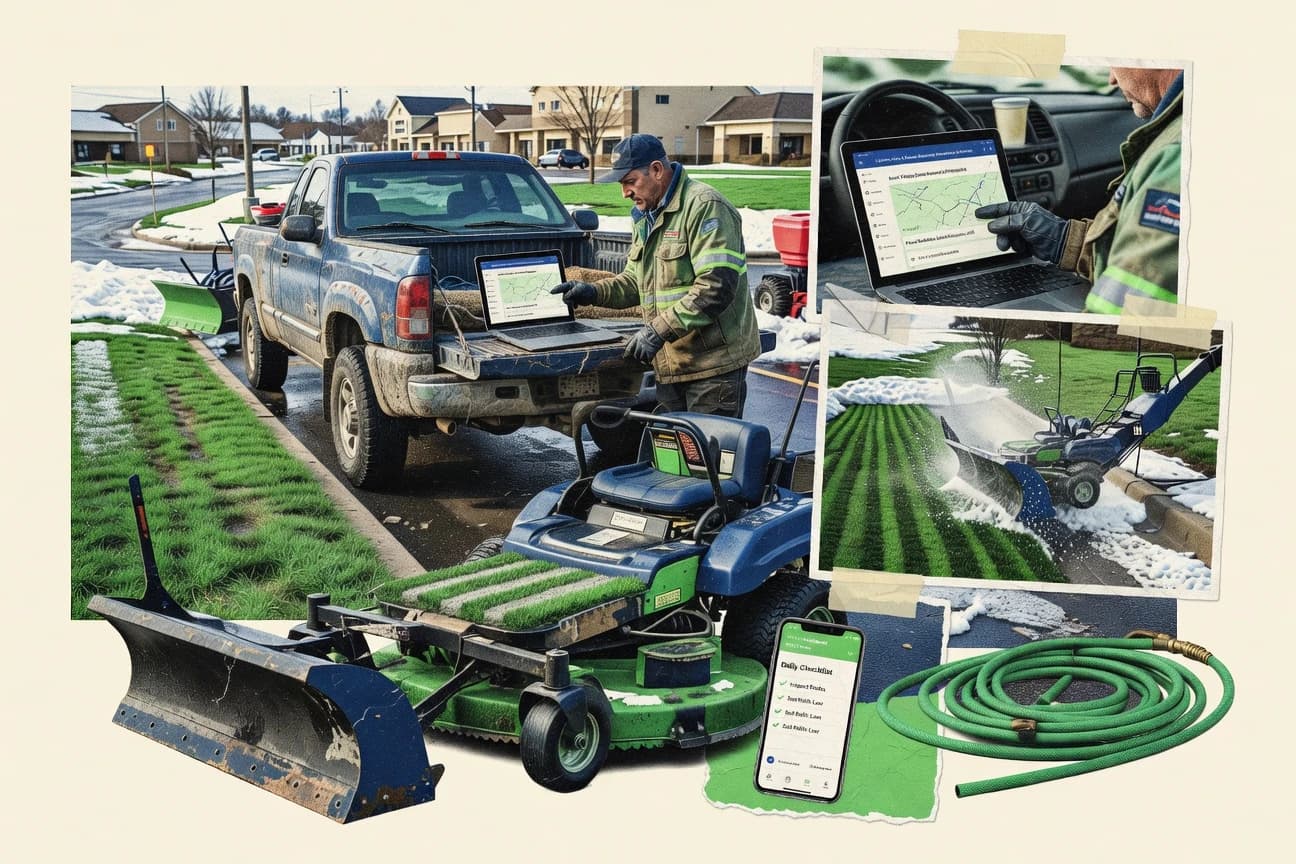
Construction InfrastructureTop 10 Best Lawn Care And Snow Removal Software of 2026
Ranked list of lawn care and snow removal software with feature, pricing, and review comparisons for scheduling, routing, and winter ops.

How we ranked these tools
Before any source is gathered, an editor locks the question, what qualifies, and how the piece will be judged.
Search agents gather the source set and the review record, including transcriptions of video reviews and podcasts.
Framework: Features 40% · Ease 30% · Value 30%
Gitnux may earn a commission through links on this page — this does not influence rankings. Editorial policy
SaberTask is the strongest pick if you want repeatable lawn and snow work-order execution with property history and solid mobile documentation, while Yeti Software fits ops managers who run recurring jobs plus dispatch for storm response; if you need a lower-cost entry, RootControl is a pragmatic seasonal option.
Editor’s top 3 picks
Three quick recommendations before you dive into the full comparison below — each one leads on a different dimension.
SaberTask
Property-linked service history that preserves site instructions, photos, and task completion notes across lawn and snow seasons.
Best for: Fits when crews need repeatable work order execution with property history and mobile documentation across lawn and snow seasons.
Yeti Software
Editor pickProperty service history is reused to drive site-specific instructions on recurring work orders.
Best for: Fits when an ops manager needs recurring property jobs plus dispatch for storm response.
CLIP
Editor pickProperty-level work order history with mobile before-and-after photo capture for each job, tied to office status review.
Best for: Fits when mid-size field teams need disciplined work orders, photo evidence, and recurring service execution without deep ERP rework.
Comparison Table
SaberTask
SMBLandscaping and snow removal software with crew scheduling, route optimization, job costing, and a SnowManager winter module.
Property-linked service history that preserves site instructions, photos, and task completion notes across lawn and snow seasons.
SaberTask centers around work orders that connect customer sites to crew assignments, task checklists, and completion documentation. Lawn workflows map mowing schedules to field execution, and snow workflows support storm response steps like plow routing and deicing tracking tied to specific jobs. Property history stays attached to the site record, which makes repeat maintenance and seasonal contracts easier to review than exporting spreadsheets.
A tradeoff is that complex pricing logic and accounting layouts are handled through configuration rather than a deeply opinionated accounting engine inside the same workflow. Teams get the best results when operations need consistent field execution data such as before and after photos, task notes, and completion timestamps for each site.
- +Work orders connect site instructions to crew execution details
- +Mobile checklists support consistent mowing and snow response procedures
- +Property service history stays attached to the customer site record
- +Dispatch planning supports multi-crew scheduling without losing context
- –Accounting exports require extra mapping for custom job costing rules
- –Route planning depth can feel light for fully automated optimization needs
- –Photo capture workflows rely on consistent user behavior during field time
- –Template-heavy setups increase admin effort during seasonal changes
Regional lawn operations managers
Recurring mowing work orders by site
Fewer missed site requirements
Snow removal dispatch leads
Storm response task checklists and completion
Faster closeout after storms
Show 2 more scenarios
Branch administrators
Multi-crew seasonal operations governance
Lower coordination overhead
Manage dispatch workflows so multiple crews complete documented tasks under the right job context.
Field supervisors
On-site evidence with photo documentation
Clearer service verification
Capture before and after photos and task notes during each site visit for later review.
Best for: Fits when crews need repeatable work order execution with property history and mobile documentation across lawn and snow seasons.
Yeti Software
vertical specialistSnow removal and lawn care management platform built for exterior maintenance contractors with dispatch, GPS tracking, and billing.
Property service history is reused to drive site-specific instructions on recurring work orders.
Yeti Software fits operators who manage repeated visits to the same properties, then need consistent job costing from estimate through invoicing. The product is structured around work orders and job records that can be reused across seasons for the same sites. Crew dispatch and mobile field execution help keep mowing and plowing tasks aligned with site-specific instructions and property history.
A tradeoff appears in automation depth and configuration effort, because recurring scheduling and storm response workflows require deliberate setup to match real routes and priorities. Yeti Software works best when one operations manager owns scheduling rules and communicates job changes to crews through dispatch updates.
- +Recurring service scheduling keeps lawn and snow jobs consistent by property
- +Work orders link estimates, proposals, and invoicing into a single job flow
- +Crew dispatch supports day-of assignments for field teams during peak storms
- +Property service history supports site-specific instructions across seasons
- –Route optimization requires more manual configuration than drag-and-drop route tools
- –Deicing and salt usage tracking is limited without disciplined field data entry
- –Customer portal workflows can need extra steps for multi-stage storm updates
Lawn care operations managers
Recurring mowing plans by property
Fewer scheduling mistakes
Snow removal dispatch leads
Plow route management during storms
Faster crew redeployments
Show 2 more scenarios
Service business bookkeepers
Job costing from estimate to invoice
More consistent invoicing
Keeps job records tied to proposals so invoicing reflects completed work scope.
Field supervisors
GPS time capture for crews
Cleaner daily accountability
Tracks crew time against assigned work orders so supervisors can reconcile daily output.
Best for: Fits when an ops manager needs recurring property jobs plus dispatch for storm response.
CLIP
SMBLawn care management and snow removal software with scheduling, route optimization, billing, and QuickBooks sync.
Property-level work order history with mobile before-and-after photo capture for each job, tied to office status review.
CLIP organizes daily operations around work orders tied to specific properties, which helps teams keep site-specific instructions and service history in one place. The mobile workflow supports field crew mobile app capture of photos and task notes, then creates a review trail through work order status changes. Recurring service scheduling reduces manual re-creation of mowing schedules and other maintenance tasks across seasonal cycles.
A tradeoff appears when work needs heavy quoting and job costing customization beyond standard job-to-invoice workflows. CLIP fits teams running structured dispatch and consistent property routines, but it can be harder to adapt when operations require highly custom operational steps for each site.
- +Work orders stay tied to property history and field notes
- +Mobile capture of photos and task notes supports office review
- +Recurring service scheduling reduces administrative work
- +Status-driven workflows fit dispatch and follow-up operations
- –Limited room for highly custom quoting and job costing steps
- –Setup discipline is needed to keep property data consistent
- –Deep process changes can depend on configuration boundaries
Lawn operations managers
Recurring mowing work orders with photos
Fewer missed service expectations
Snow dispatch coordinators
Storm response work order workflow
Cleaner crew assignment follow-through
Show 2 more scenarios
Field crew supervisors
Crew execution notes and evidence
Reduced back-and-forth questions
Collect job notes on mobile and attach evidence so supervisor review is faster.
Customer service teams
Property service history visibility
Shorter issue resolution cycles
Reference completed work order history tied to property to answer service questions quickly.
Best for: Fits when mid-size field teams need disciplined work orders, photo evidence, and recurring service execution without deep ERP rework.
GorillaDesk
SMBSubscription billing and scheduling software for lawn care, pest control, and snow removal businesses.
Recurring service scheduling that carries forward property-specific instructions into dispatched work orders for consistent lawn and snow execution.
GorillaDesk is a field service system for lawn care and snow removal teams that ties estimates, work orders, and ongoing job history to the same property record. The most distinct capability is routing and dispatch support that aligns crew schedules with recurring service plans and storm response workflows.
- +Property-level service history links repeated lawn and snow visits in one timeline
- +Work order workflow supports recurring service scheduling and on-site updates
- +Crew scheduling and dispatch tools reduce manual handoffs during storms
- +Mobile-friendly task capture supports photos and structured field notes
- –Automation needs more configuration discipline to keep recurring jobs consistent
- –Limited depth for advanced route optimization beyond standard scheduling and dispatch
- –Job costing and material tracking coverage feels thinner for complex fleets
- –Data exports require extra effort for audit-style reporting across many sites
Best for: Fits when regional lawn and snow operators need property-based work orders, dispatch, and field documentation tied to recurring schedules.
LawnPro
vertical specialistLawn care business software for scheduling, routing, estimates, invoicing, and customer management.
Storm response workflows that synchronize plow route management tasks with crew dispatch and deicing application tracking.
LawnPro manages lawn care and snow removal work orders from estimate to invoicing, with scheduling tied to property records. The system supports recurring service scheduling for mowing and seasonal contracts, plus snow route planning workflows for plow and deicing tasks.
- +Recurring service scheduling connects mowing schedules to property service history
- +Snow work supports plow route management with storm response workflow tracking
- +Crew dispatch and GPS time tracking reduce manual reconciliation for completed jobs
- +Before-and-after photo capture ties evidence to individual work orders
- –Advanced route optimization requires careful manual setup per operating area
- –Deicing application tracking depends on consistent field scan discipline
- –Reporting depth for job costing varies by workflow configuration
- –API extensibility is limited for custom integrations beyond core field updates
Best for: Fits when crews need mobile field execution plus photo and material logs for seasonal lawn and snow work.
Aspire
enterpriseEnterprise business management software for commercial landscape, snow, and janitorial contractors.
Geofenced clock-in and GPS time tracking tied to property work orders for dependable field verification.
Aspire is lawn care and snow removal software built around scheduling, field work orders, and job costing for recurring seasons. It manages property service history, site-specific instructions, and work documentation like before-and-after photos tied to customer sites.
- +Geofenced clock-in supports cleaner job verification at the property level
- +Property service history keeps instructions consistent across seasonal contracts
- +Work orders link field documentation to specific sites for audit-friendly records
- +Estimate-to-invoicing workflow reduces manual handoffs between teams
- –Limited visibility into route planning compared with dedicated route optimization tools
- –Snow-specific workflows can require extra setup to match storm response practices
- –Automation rules are less granular than tools built for complex dispatch logic
- –Reporting depth for material and deicing tracking trails heavier inventory systems
Best for: Fits when mid-size crews need recurring lawn and snow workflows with mobile execution and job costing.
HCPSSnowplow
vertical specialistOperations software for snow and ice management contractors with routing and dispatch.
Job execution tracking that connects storm response events to property service history for crews working across seasons.
HCPSSnowplow from hcponline.com is specialized software for managing snow and related lawn service workflows within a single operating process. The core capabilities center on plow route planning, work order execution, and storm response tracking that ties scheduled activity to property history.
- +Storm response workflows keep plow routes tied to specific work orders
- +Crew updates reduce status lag between dispatch and field operations
- +Property service history supports repeat site instructions across seasons
- +Seasonal contract handling supports consistent scheduling year over year
- –Limited evidence of deep third-party integrations beyond core operations
- –Snow route planning coverage can feel narrow for complex multi-yard fleets
- –Automation and API options appear constrained compared with route-optimization-first tools
- –Admin governance controls like granular RBAC and audit logs are not clearly documented
Best for: Fits when one team needs shared dispatch and job tracking for snow plus routine lawn work.
Arborgold
vertical specialistGreen industry software for scheduling, estimating, routing, billing, and customer management.
Storm response workflows that transition from recurring maintenance scheduling to plow route management while keeping work order documentation intact.
Arborgold is a field-service system built for lawn care and snow removal operations that need recurring service scheduling tied to work orders. It centralizes crew dispatch, property service history, and job costing so estimates, proposals, and invoicing stay connected to field execution.
- +Recurring service scheduling links directly to work orders and property history
- +Job costing keeps labor and materials structured per customer visit
- +Storm response workflows connect crews, dispatch, and site instructions
- +Before-and-after photos stay tied to specific work orders
- –Administrative configuration can be complex when many crews and routes interact
- –Automation depth for weather-triggered scheduling is limited without disciplined operations
- –GPS time tracking and geofenced clock-in are not guaranteed for every workflow
- –API surface and extensibility options are not clearly documented for custom integrations
Best for: Fits when dispatch-led lawn and snow teams need work orders with property history and job costing tied to field proof.
Yardbook
SMBLandscape business software for scheduling, estimates, invoicing, payments, and crew management.
Property service history linked to job execution includes site-specific instructions and photo evidence for repeat work orders.
Yardbook manages recurring lawn care services and routes around property work orders for both scheduling and field execution. It also covers snow removal workflows with plow and deicing oriented task planning tied to specific sites.
- +Work orders stay tied to property service history and repeatable schedules
- +Before-and-after photo capture supports clearer completion evidence
- +Snow workflow supports plow and deicing oriented task planning per site
- +Site-specific instructions reduce dispatch-time guessing
- –Automation depth for weather-triggered scheduling is limited without extra process
- –Role separation and audit log controls are less granular than enterprise field suites
- –Material inventory and salt usage tracking are not designed for tight accounting
Best for: Fits when crews need property-level work orders with consistent instructions across seasons.
RootControl
SMBLandscape management and CRM software with snow ops, plow routing, salt-usage logging, and GPS-geofenced clock-in.
Work orders tie recurring schedules to site-specific instructions so crews get the same procedural context each visit.
RootControl targets lawn care and snow removal operators that need job scheduling tied to job cost tracking and field execution. Work orders link recurring service plans with site-specific instructions so crews can follow the same steps across visits.
- +Job costing stays connected to field work through work orders
- +Recurring service scheduling supports consistent mowing and maintenance cycles
- +Property service history helps crews and schedulers reference prior work
- +Estimate to invoicing workflow reduces handoffs between teams
- –Advanced storm response automation needs stricter internal process to work reliably
- –API documentation is limited compared with enterprises that require deep integrations
- –Geofenced clock-in and GPS time tracking coverage depends on the mobile flow setup
- –Crew dispatch changes can create extra coordination when multiple crews serve one site
Best for: Fits when seasonal operators need job costing linked to dispatch and invoice workflow across lawn and snow seasons.
Conclusion
After evaluating 10 lawn care and snow removal software, SaberTask stands out as our overall top pick — it scored highest across our combined criteria of features, ease of use, and value, which is why it sits at #1 in the rankings above.
Use the comparison table and detailed reviews above to validate the fit against your own requirements before committing to a tool.
How to Choose the Right Lawn Care And Snow Removal Software
Lawn care and snow removal software connects estimates, work orders, and crew execution across seasonal contracts so the same property context drives every visit. This buyer’s guide covers SaberTask, Yeti Software, CLIP, GorillaDesk, LawnPro, Aspire, HCPSSnowplow, Arborgold, Yardbook, and RootControl.
The tools differ most in how strongly they preserve property-linked service history into mobile field checklists and photo evidence. They also vary in route and storm response coverage, with SaberTask and LawnPro leaning toward operational continuity while Aspire emphasizes GPS time verification and Yardbook emphasizes straightforward property evidence.
Lawn Care And Snow Removal Software that manages recurring work orders and storm response execution
Lawn care and snow removal software manages property jobs across lawn and snow seasons using work orders that carry site-specific instructions, status updates, and completion documentation from office to field. It typically supports recurring service scheduling for mowing cycles and storm response workflows for plow work, then ties those field updates back to property service history.
SaberTask is built around property-linked service history that preserves site instructions, photos, and task completion notes across lawn and snow seasons. Yeti Software also reuses property service history to drive site-specific instructions on recurring work orders, while LawnPro focuses on storm response workflows that synchronize plow route management tasks with crew dispatch and deicing application tracking.
Property-linked service history, dispatch execution, and storm workflows
Property-linked service history determines whether field teams follow the same site-specific instructions across lawn and snow seasons. SaberTask preserves site instructions, photos, and task completion notes across both seasons so recurring work orders stay consistent.
Storm workflows determine whether crews can switch from routine maintenance to plow route management without losing documentation. LawnPro synchronizes plow route management tasks with crew dispatch and deicing application tracking, while HCPSSnowplow ties storm response events to property service history across seasons.
Work orders anchored to property context
SaberTask ties work orders to property-linked service history so site instructions, photos, and task completion notes persist across lawn and snow seasons. Yardbook also links work orders to property service history with site-specific instructions and photo evidence for repeat work orders.
Recurring service scheduling that carries forward instructions
Yeti Software uses recurring service scheduling to keep lawn and snow jobs consistent by property, and it connects work orders to estimates, proposals, and invoicing in one job flow. GorillaDesk carries recurring schedules forward into dispatched work orders with property-specific instructions for consistent execution.
Storm response workflows that connect dispatch to field proof
LawnPro focuses on storm response workflows that synchronize plow route management with crew dispatch and deicing application tracking. Arborgold transitions from recurring maintenance scheduling to plow route management while keeping work order documentation intact.
Mobile evidence for office review
CLIP supports mobile before-and-after photo capture for each property-level work order tied to office status review. SaberTask also supports mobile checklists tied to work order execution details so office review can match field completion notes.
Field verification with geofenced time capture
Aspire provides geofenced clock-in and GPS time tracking tied to property work orders for field verification. RootControl focuses on work orders that deliver recurring procedural context to crews for consistent job costing linked to dispatch and invoice workflow.
Execution tracking across storms and routine visits
HCPSSnowplow connects storm response events to property service history and reduces status lag between dispatch and field operations through crew updates. GorillaDesk links property-level service history into one timeline to support recurring lawn and snow visits with on-site updates.
Choose based on how work orders become field execution and how storms disrupt schedules
The best fit depends on where work order consistency is enforced, either through property history carried forward into mobile checklists or through recurring schedule templates that push instructions into dispatch. SaberTask and GorillaDesk both emphasize property-history continuity, while Yeti Software emphasizes job flow connections from estimates through invoicing.
Storm execution adds a second axis, because some tools center on plow route management and material logs while others center on storm-to-work-order tracking with evidence. LawnPro is built around storm response synchronization and deicing application tracking, while HCPSSnowplow centers storm response events connected to property service history.
Pick the system that preserves site instructions across seasons
If crews need repeatable procedural context and documentation across lawn and snow seasons, SaberTask preserves site instructions, photos, and task completion notes across both seasons. If the main requirement is recurring consistency with property instructions pushed into dispatched work orders, GorillaDesk carries recurring schedules into field execution.
Decide whether storms need plow-route mechanics or event-linked tracking
If storm workflows must include plow route management tasks and deicing application tracking alongside dispatch, LawnPro matches that operational shape. If the operation needs storm response events tied to work orders with crew updates that reduce status lag, HCPSSnowplow fits the tracking-first model.
Match mobile evidence to office review expectations
If office review relies on before-and-after photo evidence per job, CLIP supports mobile photo capture tied to office status review. If office review also needs mobile checklists aligned to task completion notes, SaberTask supports mobile checklists connected to crew execution details.
Validate verification depth with clock-in and GPS tracking
If field verification requires geofenced clock-in and GPS time tracking tied to property work orders, Aspire supports that verification mechanism. If verification is instead enforced through recurring work order procedural context and job costing connected to dispatch and invoices, RootControl matches that enforcement style.
Plan for route optimization maturity versus manual configuration tolerance
If the operation expects advanced route planning, avoid tools where route optimization requires more manual configuration than drag-and-drop route tools, because Yeti Software flags that route optimization needs more manual configuration. If route automation is not the centerpiece and scheduling and dispatch consistency matter more, GorillaDesk and Arborgold emphasize scheduling and documentation continuity.
Check quoting and job costing flexibility against real workflows
If the business depends on highly custom quoting and job costing steps, CLIP warns that it has limited room for highly custom quoting and job costing steps. If job costing workflows must export cleanly to accounting rules with custom mapping, SaberTask notes that accounting exports require extra mapping for custom job costing rules.
Who this category of Lawn Care And Snow Removal Software fits
Lawn care and snow removal software becomes valuable when service history and documentation must stay attached to the same properties as contracts shift across seasons. Teams typically use recurring service scheduling for mowing cycles and storm response workflows for plow operations, then rely on property-linked work orders to drive consistent field completion.
The right tool fit depends on whether work order execution consistency comes from property history preservation, recurring scheduling templates, or field verification mechanisms like geofenced clock-in. SaberTask and Yeti Software target property context reuse, while Aspire targets GPS time verification.
Operators running both lawn and plow work with repeatable property procedures
SaberTask is built for property-linked service history that preserves site instructions, photos, and task completion notes across lawn and snow seasons.
Regional teams that dispatch recurring work orders and need a unified property timeline
GorillaDesk supports property-level service history that links repeated visits into one timeline and carries forward instructions into dispatched work orders.
Storm response teams that track plow routes and deicing materials alongside dispatch
LawnPro synchronizes plow route management tasks with crew dispatch and deicing application tracking so storm work stays documented end to end.
Mid-size crews that must prove job completion with mobile evidence per property
CLIP ties property-level work order history to mobile before-and-after photo capture for each job, with notes reviewed by the office.
Teams that need field verification through location-based clock-in and GPS time tracking
Aspire provides geofenced clock-in and GPS time tracking tied to property work orders to verify completion at the property level.
Common implementation pitfalls for lawn care and snow removal workflows
Failures usually come from treating property data quality and workflow discipline as optional, because multiple tools rely on property-linked history and mobile task notes to keep recurring jobs consistent. Several tools also expose that storm response automation needs operational setup discipline to function as expected.
Another recurring pitfall is overestimating route planning automation when the tool focuses more on scheduling and dispatch workflows. Yeti Software flags that route optimization needs more manual configuration than drag-and-drop route tools, while SaberTask notes route planning depth can feel light for fully automated optimization needs.
Entering inconsistent property instructions so work orders repeat the wrong procedural steps.
SaberTask and Yeti Software both base recurring execution on property service history reuse, so teams need a process to keep site instructions and task completion notes consistent.
Expecting storm automation to work without disciplined setup and field data capture.
LawnPro warns that deicing application tracking depends on consistent field scan discipline, while GorillaDesk warns automation needs more configuration discipline to keep recurring jobs consistent.
Overbuying for route optimization and underbuying for storm documentation and dispatch execution.
Yeti Software signals more manual configuration is needed for route optimization than drag-and-drop tools provide, and SaberTask notes route planning depth can feel light for fully automated optimization needs.
Using tools that do not fit the quoting and job costing complexity the business requires.
CLIP warns of limited room for highly custom quoting and job costing steps, and SaberTask warns accounting exports require extra mapping for custom job costing rules.
Skipping role separation and auditability expectations when teams scale beyond one dispatcher and one supervisor.
Yardbook notes that role separation and audit log controls are less granular than enterprise field suites, so multi-manager operations can hit governance gaps during office review.
How We Selected and Ranked These Tools
We evaluated SaberTask, Yeti Software, CLIP, GorillaDesk, LawnPro, Aspire, HCPSSnowplow, Arborgold, Yardbook, and RootControl by weighing property-linked work order execution quality at 40% and operational ease at 30%. We used features coverage at 40% and ease plus day-to-day deployment fit at 30% to balance daily usability with field workflow depth.
We weighted value at 30% based on how well recurring service scheduling, storm response workflows, and field evidence reduce rework across lawn and snow seasons. SaberTask ranked first because property-linked service history preserves site instructions, photos, and task completion notes across lawn and snow seasons, and because work orders connect site instructions to crew execution details with mobile checklists for consistent completion.
Frequently Asked Questions About Lawn Care And Snow Removal Software
How do saberTask and Yeti Software handle recurring service scheduling for both mowing and storm response work orders?
Which tool best preserves site-specific instructions across multiple seasons and repeat visits?
What tradeoff appears when using photo evidence and job notes as the system of record versus using status updates alone?
How do GorillaDesk and LawnPro connect GPS or mobile execution to completion records for snow tasks?
When property service history must drive field execution instructions, how does each platform pass that context to dispatched crews?
Where does job costing and estimate-to-invoicing alignment break down if the workflow design is not matched to dispatch operations?
Which system supports geofenced clock-in and GPS time tracking tied to property work orders for field verification?
How do storm response workflows differ between Arborgold and LawnPro for plow route management and deicing activity tracking?
What integration and API expectations typically determine whether CLIP or SaberTask can fit into an existing operational stack?
Tools reviewed
Primary sources checked during evaluation.
Referenced in the comparison table and product reviews above.
- Personal Care ServicesTop 10 Best Snow Removal Software of 2026
- Construction InfrastructureTop 10 Best Lawn Care Software of 2026
- Construction InfrastructureTop 10 Best Landscaping Businesses Accounting Software of 2026
- Construction InfrastructureTop 10 Best Lawn Maintenance Billing Software of 2026
- Construction InfrastructureTop 10 Best Landscape Contractor Software of 2026
Keep exploring
Comparing two specific tools?
Software Alternatives
See head-to-head software comparisons with feature breakdowns, pricing, and our recommendation for each use case.
Explore software alternatives→In this category
Construction Infrastructure alternatives
See side-by-side comparisons of construction infrastructure tools and pick the right one for your stack.
Compare construction infrastructure tools→