
GITNUXSOFTWARE ADVICE
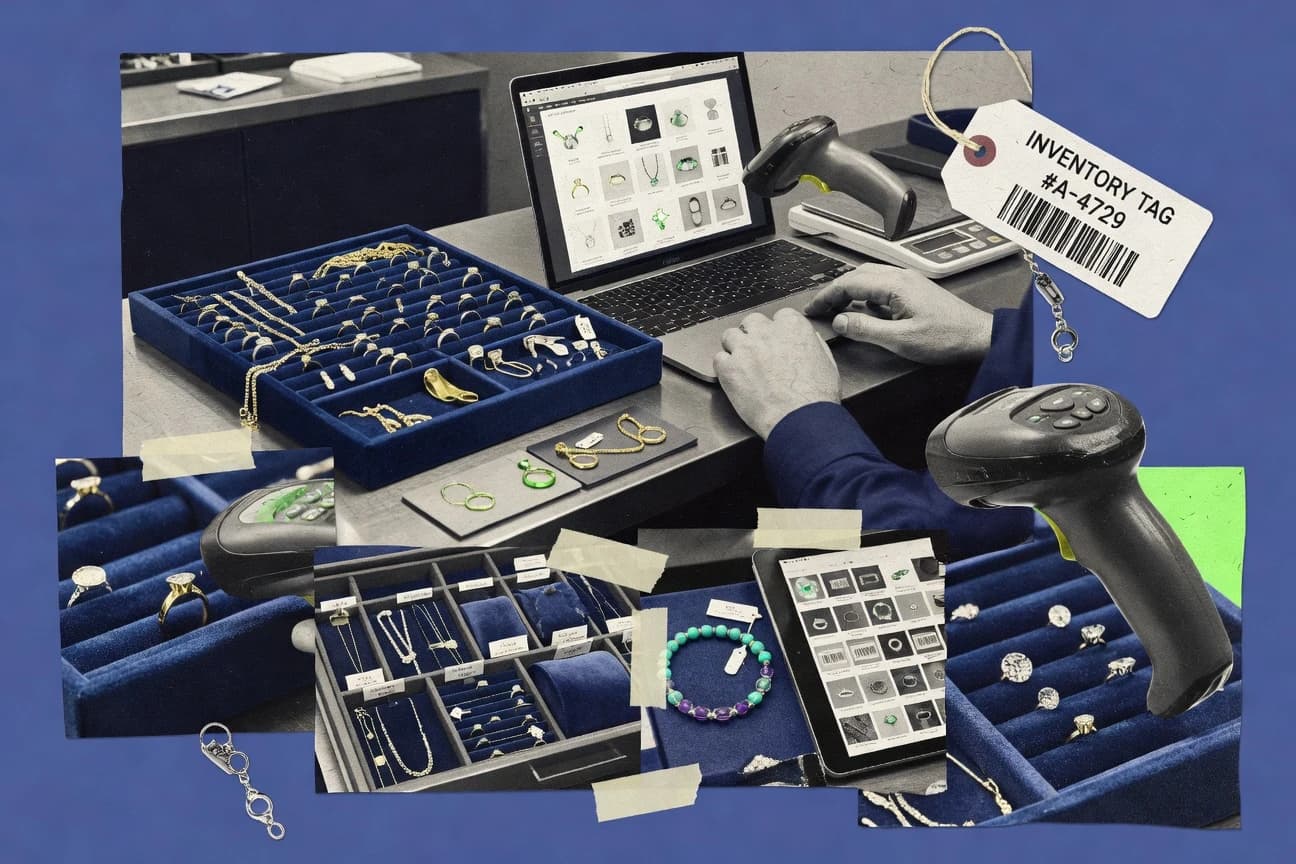
Consumer RetailTop 10 Best Jewelry Inventory Software of 2026
Top 10 jewelry inventory software ranked by features and use for jewelers, with comparisons covering Lightspeed Retail, The Edge, and Shopify.

How we ranked these tools
Core product claims cross-referenced against official documentation, changelogs, and independent technical reviews.
Analyzed video reviews and hundreds of written evaluations to capture real-world user experiences with each tool.
AI persona simulations modeled how different user types would experience each tool across common use cases and workflows.
Final rankings reviewed and approved by our editorial team with authority to override AI-generated scores based on domain expertise.
Score: Features 40% · Ease 30% · Value 30%
Gitnux may earn a commission through links on this page — this does not influence rankings. Editorial policy
Lightspeed Retail is the best fit if your jewelry inventory has to stay synced to POS and ecommerce with barcode-led operations across locations, while The Edge is the smarter alternative when you need item-linked documentation and stronger multi-location reconciliation for repairs and customer records.
Editor’s top 3 picks
Three quick recommendations before you dive into the full comparison below — each one leads on a different dimension.
Lightspeed Retail
Inventory event webhooks plus API endpoints for SKU and stock movement workflows across POS and external systems.
Built for fits when multi-location jewelry inventory must stay synced to POS and ecommerce with barcode-driven operations..
The Edge
Editor pickCertificate and report attachments can be bound to tracked inventory units.
Built for fits when jewelry stores need item-linked documentation and multi-location inventory reconciliation..

Shopify
Editor pickWebhooks plus Admin APIs keep inventory quantities and product metadata synchronized with external fulfillment and accounting systems.
Built for fits when jewelry inventory maps to sellable SKUs and ecommerce orders drive most stock movements..
Comparison Table
Lightspeed Retail
SMBRetail point-of-sale software with inventory, purchasing, reporting, and customer management.
Inventory event webhooks plus API endpoints for SKU and stock movement workflows across POS and external systems.
Lightspeed Retail manages multi-location stock by tracking item quantities per store and applying stock movements from receiving and transfers. Jewelry teams can keep product-level metadata for attributes and can link related documents to item records for ongoing traceability during audits and repairs. The platform’s automation surface includes POS and back-office synchronization plus API access for inventory and order event integrations.
A tradeoff is that jewelry-specific modeling like ring size matrices and stone-level composition still requires careful SKU and attribute design to keep assemblies consistent. Lightspeed Retail fits best when inventory accuracy depends on fast barcode capture during receiving and consistent stock transfer discipline across locations.
- +Barcode-driven receiving and transfers keep stock counts current across locations
- +API and webhooks support inventory sync to external ecommerce and back-office systems
- +Item-level metadata supports jewelry merchandising workflows without custom software
- +Operational reports support reconciliation for ongoing inventory control
- –Stone composition and ring size matrices require disciplined SKU and attribute mapping
- –Advanced work-in-progress and disassembly flows need process design outside core UI
- –Attachment and traceability depends on consistent operator behavior at intake
Retail ops managers
Run barcode receiving and inter-store transfers
Fewer count discrepancies
Ecommerce integration teams
Sync SKU stock with storefront stock
Lower oversell risk
Show 2 more scenarios
Merchandising and catalog teams
Maintain jewelry attributes per item
Faster item lookup
Store variant and attribute data so staff can search and sell the right merchandise quickly.
Repair and intake coordinators
Track items through memo intake
More reliable handoffs
Record intake and related documents to maintain operational traceability during repair workflows.
Best for: Fits when multi-location jewelry inventory must stay synced to POS and ecommerce with barcode-driven operations.
The Edge
vertical specialistJewelry store software covering point of sale, inventory, repair, and customer management.
Certificate and report attachments can be bound to tracked inventory units.
The Edge is a practical fit for jewelry retailers that need SKU-level inventory that stays synchronized across locations and day-to-day transactions. The app emphasizes item-level documentation, including certificate or report attachments, and keeps those artifacts connected to the tracked unit through operational changes. Admin controls focus on operational governance through roles and transaction histories rather than broad spreadsheet exports.
A tradeoff appears in workflow depth for advanced manufacturing structures, where assembly and disassembly require stricter process setup than simple item catalogs. The Edge works best when teams already use barcode scanning for receipts, stock transfers, and stocktakes so the system can reconcile counts quickly.
- +Item-level certificate attachments stay linked through inventory movements
- +Perpetual updates across receiving, transfers, and stocktakes
- +Multi-location inventory supports transfers with traceable transaction history
- +Barcode-driven workflows reduce mis-scans during stocktakes
- –Assembly workflows need disciplined setup to avoid data inconsistencies
- –Stone grading and metal fineness fields require careful entry standards
- –Custom reporting takes more configuration than standard inventory views
- –Advanced search filters feel limited for high-cardinality attribute models
Jewelry store ops teams
Maintain per-item paperwork during transfers
Faster inspections and fewer paperwork mismatches
Inventory control managers
Reconcile cycle counts across locations
Reduced variances and clearer corrections
Show 2 more scenarios
Store managers
Track consignment and memo stock
More accurate availability for sales
Managers manage memo states while keeping valuation and availability consistent with operational events.
Retail buyers
Receive and categorize gemstones and mounts
Cleaner catalog-to-inventory mapping
Buyers record jewelry attributes and keep stone documentation aligned to each received unit.
Best for: Fits when jewelry stores need item-linked documentation and multi-location inventory reconciliation.
Shopify
SMBCommerce software with product inventory, omnichannel sales, and app integrations.
Webhooks plus Admin APIs keep inventory quantities and product metadata synchronized with external fulfillment and accounting systems.
Shopify’s core inventory model maps directly to products, variants, and location-level availability, which fits SKUs where each sellable unit can be represented as a variant. Multi-location stock is handled in Shopify by tracking quantity per location and by connecting checkout orders to inventory deductions. Jewelry teams can represent ring size matrices and other attribute-driven variants using Shopify option sets, then keep availability consistent across channels. Shopify also provides webhooks for events like order creation and fulfillment updates, and it exposes APIs that apps use to sync inventory and metadata.
A key tradeoff is that Shopify does not natively manage serialized inventory at the individual item level without external logic, so true per-piece traceability usually requires an app or custom integration. Shopify works well when inventory granularity aligns with sellable SKUs and when updates originate from orders and fulfillments rather than from atelier assembly and disassembly steps. It is a stronger fit for end-to-end ecommerce operations than for deep operational jewelry control such as lot linkage, component finding traceability, and certificate document management at scale.
- +Variant-based inventory mapping aligns with SKU-level ecommerce listings
- +Location quantities support fulfillment routing without exporting data first
- +Webhooks and APIs enable inventory sync with external systems
- +Attribute-driven options handle ring size matrices for consistent availability
- –Serialized inventory and per-piece tracking needs apps or custom work
- –Lot and component-level workflows often require external tracking layers
- –Certificate attachment for each piece is limited without extensions
- –Assembly and disassembly tracking is not built into core inventory
Ecommerce merchandisers
Manage size-based variant availability
Fewer out-of-stock customer orders
Ops teams integrating systems
Sync Shopify stock to ERP
ERP inventory stays current
Show 1 more scenario
Small jewelry brands
Centralize product setup and stock
One place to manage sellable SKUs
Store jewelry attributes on products and variants while using location quantities for delivery routing.
Best for: Fits when jewelry inventory maps to sellable SKUs and ecommerce orders drive most stock movements.
Jewel360
vertical specialistCloud-based point-of-sale and inventory software built for jewelry retailers.
Item record attachments designed to keep certificates and internal notes attached through the full movement history.
Jewel360 is jewelry inventory software designed to track items with jewelry-specific attributes rather than treating inventory as generic SKUs. It supports item-level movement workflows like receiving, dispatching, and stock adjustments across locations.
Jewel360 also centers on serialized tracking and document attachments so audits can follow the item lifecycle. The system focuses on day-to-day inventory accuracy for boutiques, pawn and consignment workflows, and repair intake tracking.
- +Serialized inventory records stay linked across transfers and adjustments
- +Document attachments help keep certificates and notes with each item
- +Multi-location stock reduces manual reconciliation between stores
- +Barcode scanning supports faster stocktake entry and correction
- –Attribute configuration takes setup effort to match real product catalogs
- –Automation options for complex assemblies may be limited
- –Role separation for day-to-day operations can require extra governance
- –Advanced valuation fields depend on consistent data entry habits
Best for: Fits when boutiques need item-level traceability, attachments, and multi-location stock without custom development.
Cin7 Core
SMBInventory management software for purchasing, warehousing, orders, and multichannel commerce.
Document attachment support on item records helps keep certificate evidence linked to the exact stock item through receiving and fulfillment.
Cin7 Core handles the end-to-end operational loop from supplier purchasing to warehouse stock movement and then on to sales order fulfillment. Stock visibility is built around perpetual-style updates triggered by inbound receiving, transfers, adjustments, and stocktakes.
Jewelry operations often depend on item-level evidence and attribute consistency, and Cin7 Core supports document association to keep certificates attached to inventory items. Attribute coverage can cover ring size, metal descriptors, and other custom fields through item configuration, but the setup must reflect the real jewelry catalog structure.
Cin7 Core’s practical differentiator for jewelry is integration depth, since inventory and order data must stay synchronized across POS, ecommerce, and accounting. The integration layer supports data exchange that keeps stock balances and order commitments aligned when sales channels place orders.
- +Inventory flows across purchase, transfer, and stocktake with a consistent item record
- +Multi-location stock transfers keep warehouse balances aligned with orders
- +Document attachments support jewelry-facing evidence like certificates per item
- +Integration layer connects inventory and order data to POS, ecommerce, and accounting
- –Jewelry-specific attributes require careful configuration to match real-world variants
- –Complex fulfillment rules can demand setup discipline to avoid mismatched stock movements
- –Role-based governance and audit detail can feel limited compared with systems built for stores only
- –Advanced jewelry workflows like stone component tracking need add-on logic
Best for: Fits when jewelry teams need multi-location inventory control and tight order sync across POS and ecommerce.
Zoho Inventory
SMBCloud inventory software for stock control, orders, purchasing, warehouses, and integrations.
API-driven synchronization of inventory transactions and product data across systems, supporting custom jewelry workflows.
Zoho Inventory fits jewelry businesses that need multi-location SKU-level control with work-order style fulfillment workflows. It supports barcode-driven receiving and stock movement, plus purchase orders and sales order flows that track on-hand quantity across locations.
Zoho Inventory also integrates with Zoho apps for accounting-linked inventory valuation and with external systems via API for automated sync of products and transactions. For jewelry-specific attributes like serialized pieces or component breakdowns, it can be adapted through item attributes and assembly-style workflows rather than a dedicated stone and karat schema.
- +Barcode scanning and location-aware stock moves for shop-floor speed
- +Purchase order and sales order workflows connect inventory to day-to-day operations
- +API supports programmatic sync of items, stock, and transaction documents
- +Strong Zoho ecosystem linkage for accounting-aligned inventory flows
- –No native stone inventory structure for karat and fineness grading workflows
- –Serialized inventory needs careful configuration for item-level traceability
- –Assembly and disassembly workflows can get complex without disciplined BOM setup
- –Inventory valuation behavior depends on accounting integration configuration
Best for: Fits when jewelry firms want multi-location SKU control with barcode scanning and Zoho ecosystem integrations.
Finale Inventory
SMBCloud inventory management software for multichannel sellers, purchasing, and warehouse operations.
Item records support linked certificate and grading documentation kept with each serialized piece.
Finale Inventory targets jewelry store workflows with serialized, SKU-level tracking and attribute capture for individual pieces. It supports multi-location stock management and recurring stocktake reconciliation so inventory stays aligned with physical counts.
Jewelry-specific attachments like certificates and grading documents can be stored and kept with items to support audit-style traceability. Automation focuses on turning item movements into consistent inventory updates across locations.
- +Serialized tracking supports per-piece history across edits and movements
- +Certificate and grading document attachments tie to the tracked item
- +Multi-location stock and transfers keep counts consistent between sites
- +Cycle count style stocktake reconciliation reduces month-end surprises
- –Attribute capture for complex assemblies needs deliberate data entry
- –Automation coverage for repairs and WIP depends on how workflows are modeled
- –Barcode scanning capability may require label setup discipline
- –Advanced integrations are limited without a documented API-first workflow
Best for: Fits when jewelry teams need per-piece traceability, attachments, and multi-location reconciliation.
ZSolTech
vertical specialistJewelry inventory ERP tracking items by weight, karat, and purity with barcode and RFID scanning.
Certificate attachment linking to the exact jewelry item record so supporting documents stay tied through transfers.
Jewelry inventory requires more than item counts, because each piece depends on serialized details, component states, and paper trails tied to certificates. ZSolTech focuses on managing jewelry items with attribute capture for rings and other categories plus attachments for supporting documents.
It also supports multi-location stock handling and operational workflows for receiving, transfers, and stock reconciliation. For stores that need tighter control of inventory records across locations and staff actions, ZSolTech adds governance-friendly processes around day-to-day stock movement.
- +Jewelry-first item records with attribute capture for ring sizing workflows
- +Document attachment support for certificate and report references
- +Multi-location inventory handling for stock separation and movement
- +Operational workflows for receiving and stock transfers
- –Advanced serialized inventory workflows need careful data entry discipline
- –API and automation documentation coverage appears limited for external system integration
Best for: Fits when jewelry stores need certificate attachments and multi-location stock movement with controlled workflows.
NetSuite Jewelry ERP
enterpriseEnterprise cloud ERP with jewelry-specific lot tracking for stones, weight-based metal controls, and serialized finished pieces.
REST and SuiteTalk integration with item and transaction records enables automated inventory and attribute sync across POS and ecommerce systems.
NetSuite Jewelry ERP records and manages jewelry inventory through serialized and lot-aware stock movements, tied to sales, purchase, and accounting activity. It supports multi-location stock handling with stock transfers and perpetual inventory valuation workflows that keep ledger balances aligned with physical movements.
Inventory control can be automated via saved searches, workflows, and the SuiteTalk and REST API surface for syncing external POS and ecommerce systems to item and transaction data. Integration depth is strongest when jewelry-specific attributes, documents, and barcoded processes are implemented to match NetSuite item and transaction records.
- +Perpetual inventory valuation stays synchronized with sales and purchase postings
- +SuiteTalk and REST API support item, inventory, and transaction data synchronization
- +Workflow automation can drive status changes from receiving to fulfillment
- +Multi-location stock transfers connect operational movements to accounting impact
- –Jewelry attributes require deliberate item configuration to avoid attribute gaps
- –Serialized and lot processes need governance discipline across item setup
- –Barcode scanning and RFID workflows depend heavily on connected devices and integrations
- –Repair intake and WIP tracking require customization rather than a dedicated jewelry wizard
Best for: Fits when operations need tight accounting alignment and deep system integration for jewelry inventory control.
Valigara
vertical specialistCloud-based jewelry ERP with real-time inventory, GIA/IGI integration, and multichannel sales sync.
Inventory record attachments that stay linked to the exact serialized jewelry item.
Valigara is jewelry inventory software aimed at retailers and workshops that need item-level records tied to showroom and sales workflows. It centers on structured jewelry attributes and ongoing stock changes rather than generic product catalogs.
The system supports serializable tracking for individually identifiable pieces, attachment handling for documentation, and multi-user operations for day-to-day inventory tasks. Valigara also targets process control for receiving, transfers, and stocktakes so counts and movement history stay auditable across locations.
- +Serialized inventory workflow for uniquely identified jewelry pieces
- +Document attachments tied to specific inventory records
- +Multi-user operations for shared inventory updates
- +Cycle-to-cycle stock change history supports stocktake reconciliation
- –Less visibility into complex component and finding assembly tracking
- –Limited depth for ring size matrix and attribute variant modeling
- –Admin governance controls feel light for strict approval workflows
- –Automation and API tooling lack breadth for advanced integrations
Best for: Fits when teams must keep jewelry-by-piece records current across stores and handle documentation attachments.
Conclusion
After evaluating 10 consumer retail, Lightspeed Retail stands out as our overall top pick — it scored highest across our combined criteria of features, ease of use, and value, which is why it sits at #1 in the rankings above.
Use the comparison table and detailed reviews above to validate the fit against your own requirements before committing to a tool.
How to Choose the Right jewelry inventory software
Jewelry inventory software has to manage SKU-level stock alongside serialized jewelry pieces, while keeping certificates and reports attached to the same item record through transfers, receiving, and stocktakes. This buyer’s guide covers Lightspeed Retail, The Edge, Shopify, Jewel360, Cin7 Core, Zoho Inventory, Finale Inventory, ZSolTech, NetSuite Jewelry ERP, and Valigara.
Across these tools, the deciding differences show up in inventory sync mechanics, including Lightspeed Retail inventory event webhooks and API endpoints versus Shopify admin APIs and webhooks, plus item-record attachment behavior for documentation. Governance depth also varies, since Netsuite Jewelry ERP relies on REST and SuiteTalk integration with item and transaction records, while Zoho Inventory emphasizes API-driven transaction synchronization and barcode scanning.
Jewelry inventory software for serialized items, certificates, and SKU-level stock control
Jewelry inventory software tracks perpetual inventory while supporting jewelry-specific workflows like certificate attachment binding, ring size matrix handling, and serialized or attribute-driven item movement across locations. Many teams use item record attachments so the same certificate evidence stays linked when items move through receiving, transfers, and stocktakes.
Lightspeed Retail stands out with inventory event webhooks plus API endpoints for SKU and stock movement workflows across POS and external systems, which helps keep multi-location quantities aligned with POS and ecommerce operations. The Edge and Jewel360 both emphasize item-linked certificate and report attachments that stay bound through inventory movements, while Shopify relies on variant-based inventory mapping with location quantities for fulfillment routing without exporting data first.
What to verify in jewelry inventory software
Jewelry inventory software has to keep SKU-level stock synchronized while it tracks serialized pieces and binds certificates and grading reports to the same item record through receiving, transfers, and stocktakes. The strongest implementations show this behavior consistently across inventory movements instead of only during initial receipt.
These features matter most when teams run multi-location operations and need external systems to reflect inventory changes fast. Inventory event webhooks and Admin APIs reduce manual exports, while item-level document attachments prevent certificate evidence from getting detached during stock changes.
Inventory movement integration with APIs and webhooks
Lightspeed Retail publishes inventory event webhooks and provides API endpoints for SKU and stock movement workflows across POS and external systems. Shopify provides webhooks plus Admin APIs to synchronize inventory quantities and product metadata to fulfillment and accounting systems.
Item-linked certificate and report attachments through inventory history
The Edge supports certificate and report attachments bound to tracked inventory units so documentation stays linked through inventory movements. Jewel360 and Finale Inventory both keep certificate and internal notes or certificate and grading documents attached to the item record across transfers and edits.
Serialized inventory workflow coverage for per-piece tracking
Lightspeed Retail and Jewel360 keep serialized inventory records linked across transfers and adjustments, which supports per-piece history. Finale Inventory and Valigara emphasize serialized tracking with document attachments tied to each serialized inventory record for multi-location reconciliation.
Attribute mapping support for metal and ring size operations
Zoho Inventory lacks native stone inventory structure for karat and fineness workflows, so teams must rely on careful configuration for jewelry attributes. Lightspeed Retail can support ring size matrices and stone composition fields, but the mapping requires disciplined SKU and attribute modeling.
Multi-location stock transfers that stay consistent with receiving and orders
Cin7 Core coordinates inventory flows across purchase, transfers, and stocktake using a consistent item record across locations. The Edge also supports perpetual updates across receiving, transfers, and stocktakes with item-linked documentation behavior.
How to choose jewelry inventory software by synchronization and governance needs
Start by deciding where stock movement truth must live, since webhooks, Admin APIs, and ERP integrations change the amount of manual reconciliation needed. Tools that offer event-driven sync and inventory movement APIs reduce delays and lower the chance of drift between storefront, POS, and accounting.
Then pick the product philosophy for jewelry-specific data capture, since certificate attachments and attribute modeling can require different setup patterns. Serialized item workflows generally need strict item record design, while assembly and disassembly or component-level tracking needs clear process modeling.
Map inventory sync to required system boundaries
Choose Lightspeed Retail when inventory movements must trigger external updates through inventory event webhooks and SKU and stock movement API endpoints for POS and ecommerce workflows. Choose Shopify when jewelry inventory maps to sellable SKUs and location quantities must align with fulfillment routing using Admin APIs and webhooks.
Validate certificate and report binding behavior across movements
Choose The Edge when certificate and report attachments must stay bound to tracked inventory units through receiving, transfers, and stocktakes. Choose Jewel360 or Finale Inventory when the requirement is item record attachments designed to keep certificates and internal notes or certificate and grading documentation with the tracked item through the full movement history.
Confirm serialized item workflows meet per-piece expectations
Choose Lightspeed Retail or Jewel360 when serialized inventory records must remain linked during transfers and adjustments across multiple locations. Choose Finale Inventory or Valigara when per-piece history with document attachments tied to each serialized inventory record is the primary operational requirement.
Pick a jewelry attribute approach based on stone and ring sizing depth
Choose Lightspeed Retail when stone composition and ring size matrices must be represented in disciplined SKU and attribute mapping that matches the real catalog. Avoid relying on Zoho Inventory for native stone inventory structures for karat and fineness workflows, since it requires careful configuration for item-level traceability.
Test how complex workflows get modeled in the UI and automation surface
Choose Lightspeed Retail with a process design plan when advanced work-in-progress and disassembly flows require governance outside the core UI. Choose Cin7 Core when purchase, transfer, and stocktake flows must share a consistent item record and multi-location transfers must stay aligned with order sync.
Who jewelry inventory software fits best
Jewelry inventory software fits organizations that must manage serialized pieces and keep certificate evidence attached through inventory changes. It also fits teams that must reconcile multi-location stock with ecommerce and POS ordering behavior without detaching documentation or losing per-piece identity.
The best fit depends on whether the operating model is API-driven inventory sync, item-linked certificate workflows, or deeper ERP-aligned inventory valuation and transaction integration.
Multi-location jewelry retailers with barcode-driven receiving and transfers
Lightspeed Retail supports barcode-driven receiving and transfers while keeping stock counts current across locations, and it pairs this with API and webhooks for external sync. Zoho Inventory also supports barcode scanning and location-aware stock moves but lacks native stone inventory structure for karat and fineness workflows.
Stores that must bind certificates and grading reports to tracked units
The Edge keeps certificate and report attachments bound to tracked inventory units through inventory movements and supports perpetual updates across receiving, transfers, and stocktakes. Jewel360 and Finale Inventory keep item record attachments designed to maintain certificate and grading documentation across the full movement history.
Boutiques that rely on serialized item history for disputes and service
Jewel360 and Finale Inventory emphasize serialized inventory record history with documentation tied to the tracked item so each piece can be audited after edits and movements. Valigara also keeps inventory record attachments linked to the exact serialized item for multi-store tracking.
Operations teams that must align inventory with accounting postings
NetSuite Jewelry ERP provides REST and SuiteTalk integration with item and transaction records for automated inventory and attribute sync across systems. This alignment supports perpetual inventory valuation synchronized with sales and purchase postings.
Common mistakes jewelry teams make with inventory software
Teams often overestimate how well a generic item record can represent jewelry-specific attributes like ring size matrices, stone composition, and grading fields. Documentation attachment features also fail when item record design and SKU attribute mapping are not disciplined.
Another recurring issue is assuming serialized and lot-style workflows come “ready to run” without setup choices. Automation and integration behavior may depend on how inventory movements are modeled in each system.
Assuming certificate attachments stay linked without verifying movement-by-movement behavior
The Edge binds certificate and report attachments to tracked inventory units, so the attachment behavior should be tested across receiving, transfers, and stocktakes using real item records. Jewel360 and Finale Inventory also keep item-linked document attachments through movement history, but attribute configuration still needs catalog-accurate setup.
Using jewelry attribute fields without a defined mapping standard for the catalog
Lightspeed Retail can handle stone composition and ring size matrices, but the catalog requires disciplined SKU and attribute mapping to prevent inconsistencies. ZSolTech and Jewel360 support ring sizing workflows and item attributes, but serialized and attribute-driven workflows still depend on careful data entry standards.
Choosing an integration path without checking inventory movement sync coverage
Lightspeed Retail offers inventory event webhooks plus API endpoints for SKU and stock movement workflows, so sync gaps become obvious during test transfers. Shopify supports webhooks and Admin APIs, but serialized inventory and per-piece tracking often needs apps or custom work if the jewelry workflow requires more than variant-based mapping.
Underestimating how much workflow modeling complex assemblies, repairs, or WIP require
Lightspeed Retail notes that advanced work-in-progress and disassembly flows need process design outside core UI, so the workflow must be mapped before rollout. Finale Inventory flags that automation coverage for repairs and WIP depends on how workflows are modeled, so the setup has to reflect the real repair intake process.
How We Selected and Ranked These Tools
We evaluated inventory movement integration, documentation attachment behavior, and jewelry-specific operational fit across Lightspeed Retail, The Edge, Shopify, Jewel360, Cin7 Core, Zoho Inventory, Finale Inventory, ZSolTech, NetSuite Jewelry ERP, and Valigara. Features counted for 40% of the ranking, and we weighted integration breadth through webhooks and APIs, plus item-linked certificate attachment behavior across receiving, transfers, and stocktakes.
Ease and value each counted for 30%, and we used each tool’s listed operational friction points like attribute mapping discipline and serialized workflow setup requirements to calibrate usability. Lightspeed Retail received the top position because inventory event webhooks plus API endpoints cover SKU and stock movement workflows across POS and external systems while barcode-driven receiving and transfers help keep multi-location counts current.
Frequently Asked Questions About jewelry inventory software
How do Lightspeed Retail and Finale Inventory handle barcode-led receiving and serialized updates?
Which tools keep certificate or grading document attachments bound to the exact serialized unit?
How do The Edge and Jewel360 manage multi-location inventory transfers and reconciliation?
What breaks if a jewelry operation needs SKU-level inventory sync with both POS and ecommerce events?
How does Cin7 Core move inventory across warehouses while keeping purchase and fulfillment workflows consistent?
How do Lightspeed Retail and NetSuite Jewelry ERP differ in integration depth for inventory and accounting alignment?
Which tools support admin controls and staff action governance for day-to-day stock movement?
When do inventory valuations and audit trails diverge between a jewelry store and an ERP-style system?
How do Zoho Inventory and Jewel360 support jewelry-specific data models beyond generic SKUs?
Tools reviewed
Primary sources checked during evaluation.
shopify.comReferenced in the comparison table and product reviews above.
- Consumer RetailTop 10 Best Jewellery Inventory Software of 2026
- Consumer RetailTop 10 Best Amazon Seller Inventory Management Software of 2026
- Consumer RetailTop 10 Best Retail Stock Software of 2026
- Consumer RetailTop 10 Best Business Retail Software of 2026
- Consumer RetailTop 10 Best Catalog Software of 2026
Keep exploring
Comparing two specific tools?
Software Alternatives
See head-to-head software comparisons with feature breakdowns, pricing, and our recommendation for each use case.
Explore software alternatives→In this category
Consumer Retail alternatives
See side-by-side comparisons of consumer retail tools and pick the right one for your stack.
Compare consumer retail tools→