
GITNUXSOFTWARE ADVICE
Healthcare MedicineTop 10 Best Home Care Emr Software of 2026
Explore a ranked top 10 list of home care emr software with tradeoffs and criteria for home care providers comparing Rosemark System, Axxess, and AlayaCare.

How we ranked these tools
Core product claims cross-referenced against official documentation, changelogs, and independent technical reviews.
Analyzed video reviews and hundreds of written evaluations to capture real-world user experiences with each tool.
AI persona simulations modeled how different user types would experience each tool across common use cases and workflows.
Final rankings reviewed and approved by our editorial team with authority to override AI-generated scores based on domain expertise.
Score: Features 40% · Ease 30% · Value 30%
Gitnux may earn a commission through links on this page — this does not influence rankings. Editorial policy
Rosemark System is the strongest pick if you’re running home care scheduling and billing with mobile documentation tied to care plans and shift workflows, whereas Axxess fits teams that need mobile visit notes plus office review across multiple roles and locations.
Editor’s top 3 picks
Three quick recommendations before you dive into the full comparison below — each one leads on a different dimension.
Rosemark System
Visit note capture on mobile devices that maintains continuity between shift documentation, care plan updates, and medication records.
Built for fits when home care agencies need mobile documentation tied to care plans and shift workflows..
Axxess
Editor pickVisit-level documentation workflow that connects schedule assignments to field charting and subsequent office review.
Built for fits when agencies need mobile visit documentation plus office review across multiple roles and locations..
AlayaCare
Editor pickCare task and form configuration connects planned services to point-of-care documentation for each visit.
Built for fits when agencies want one workflow from scheduling through visit documentation and compliance reporting..
Comparison Table
Rosemark System
SMBHome care management software for scheduling, billing, payroll, client records, and reporting.
Visit note capture on mobile devices that maintains continuity between shift documentation, care plan updates, and medication records.
Rosemark System centers on mobile clinician charting that captures shift notes, assessments, and visit details at the point of care. Care plan management connects documented findings to ongoing plan elements, so care updates are traceable to the same visit records. Medication management workflows are built into routine documentation, which reduces reliance on separate tracking tools. Scheduling and agency operations features support staff coordination across recurring visits.
The main tradeoff is that organizations with complex authorization and branching rules may need disciplined configuration to match their real-world service authorization workflows. Rosemark System fits teams that document consistently per visit and want caregiver documentation to drive downstream reporting without manual reconciliation.
- +Mobile charting workflow reduces post-visit documentation lag
- +Care plan updates stay linked to the originating visit records
- +Medication tracking supports shift-level documentation continuity
- +Scheduling and agency operations tools support multi-caregiver coordination
- –Complex authorization rules can require careful setup discipline
- –Interface coverage depends on selected integration paths
Home care agency directors
Reduce reconciliation after shift documentation
Less manual backfill work
Care coordinators
Maintain care plan changes by visit
Fewer care plan drift issues
Show 2 more scenarios
Mobile clinicians
Document during care with offline tolerance
Faster on-the-spot charting
Clinicians capture assessments and shift notes in a mobile workflow suited to in-home environments.
Compliance and operations staff
Report on documented services
More consistent documentation trails
Operations teams generate reporting from documented visit and medication activity tied to schedules.
Best for: Fits when home care agencies need mobile documentation tied to care plans and shift workflows.
Axxess
vertical specialistHome-based care software covering electronic documentation, operations, and clinical workflows.
Visit-level documentation workflow that connects schedule assignments to field charting and subsequent office review.
Axxess supports mobile documentation workflows that map caregiver entries to visit-level records and downstream documentation needs like care plan updates and clinical assessments. Home care agencies can manage care plans, service authorizations, and shift notes from the same operational context as daily scheduling. RBAC-style permissioning and audit visibility help administrators control who can view and edit documentation across office and field roles. Apxcess also targets multi-branch operations with centralized administration patterns for consistent configuration across locations.
A tradeoff is that agencies with highly customized care workflows may need more configuration work to match Axxess templates to internal processes. A common usage situation is a growing home health or personal care organization that wants visit documentation, scheduling, and office review to run through one operational record and reduce manual handoffs between roles. Another situation is when compliance reporting and visit documentation must be produced from field notes without post-visit re-entry.
- +Mobile clinician charting tied to visit and schedule context
- +Care plan and authorization workflows reduce disconnected documentation
- +RBAC-style role controls for office and field access separation
- +Multi-branch administration supports consistent operations
- –Template fit can require configuration for nonstandard care workflows
- –Some integration scenarios depend on specific interface setup
- –Offline charting behavior can vary by mobile deployment choices
- –Advanced workflow automation may require tighter internal process alignment
Operations and clinical supervisors
Review shift notes by visit
Faster corrections before billing
Home care schedulers
Track caregiver assignments and changes
Fewer mismatched visit records
Show 2 more scenarios
Clinical managers
Maintain care plan updates
More consistent plan-of-care history
Care plan changes stay connected to visit documentation and assessment checkpoints.
IT and integration analysts
Connect EMR to billing systems
Reduced manual data transfer
Teams use HL7 interfaces and API access to connect operational data to external systems.
Best for: Fits when agencies need mobile visit documentation plus office review across multiple roles and locations.
AlayaCare
vertical specialistCloud software for home care scheduling, clinical documentation, billing, and operations.
Care task and form configuration connects planned services to point-of-care documentation for each visit.
AlayaCare covers core documentation needs for home care with visit notes, structured assessments, and care plan tasks captured during mobile work. Scheduling and visit management help connect caregiver shifts to the documentation that must be completed per service. Agency administration provides governance for roles and record visibility, plus configurable forms and task definitions for consistent charting across branches.
A tradeoff is that deep customization of workflows and templates requires careful upfront configuration of form structures and task logic. AlayaCare fits agencies with multiple teams that want one operational flow, where visit planning, point-of-care documentation, and task completion follow the same configuration.
- +Mobile point-of-care charting ties tasks directly to planned visits
- +Configurable forms and care task templates keep documentation consistent
- +Role-based access supports separation between clinical and operations staff
- +Audit trails support tracking changes to clinical entries and workflows
- –Workflow and template customization needs governance discipline
- –Complex multi-branch setups can require repeated data and configuration checks
- –Some specialized reporting needs careful setup of data capture fields
Clinical operations managers
Standardize assessments across multiple teams
More consistent documentation quality
Home care agency owners
Reduce handoffs between operations and clinicians
Fewer missed documentation steps
Show 2 more scenarios
Care coordinators
Track task completion during visits
Better care plan follow-through
Care task structures support documenting visit-level outcomes tied to client plans.
Compliance and quality staff
Monitor documentation changes
Faster internal quality reviews
Audit history supports reviewing who updated clinical entries and what changed.
Best for: Fits when agencies want one workflow from scheduling through visit documentation and compliance reporting.
WellSky Personal Care
enterpriseHome care software for scheduling, caregiver management, documentation, and billing.
Visit-based documentation that remains anchored to scheduled shift context for consistent charting across recurring care plans.
WellSky Personal Care targets home care documentation workflows with client charting, visit context, and structured notes for personal care delivery.
Care plan management ties ongoing service requirements to field documentation across scheduled visits.
Caregiver scheduling and visit assignment connect back to documentation so staff work from the same visit and task context.
Administrative controls and operational reporting support multi-staff agencies that need governance over chart access and output data.
- +Point-of-care visit documentation aligned to shift context
- +Care plan management supports recurring personal care services
- +Caregiver scheduling integrates with visit assignments for field work
- +RBAC with audit visibility supports agency governance
- –Documentation depth can feel limited for advanced skilled nursing workflows
- –Integration breadth for claims and downstream systems is not turnkey
- –Offline charting behavior depends on specific deployment configuration
- –Admin governance features require disciplined role mapping and review
Best for: Fits when home care teams need structured point-of-care documentation tied to visit context and care plans.
MatrixCare Home Care
enterpriseHome care management software with scheduling, documentation, billing, and compliance tools.
Visit-level documentation workflow that stays anchored to care plan status across scheduled shifts.
MatrixCare Home Care captures point-of-care documentation for home health and personal care visits using a mobile clinician workflow. It supports visit notes, care plan management, and clinical assessment capture tied to an agency’s home care operations.
The product also centers on caregiver scheduling and shift documentation so operations teams can reconcile what happened versus what was assigned. It adds reporting views for compliance-oriented outcomes like care plan status and documentation completion across visits.
- +Mobile visit documentation workflow supports shift-level point-of-care notes
- +Care plan management ties documentation to ongoing plan status
- +Caregiver scheduling supports daily assignments and visit reconciliation
- +Reporting views track documentation completeness across visits
- –Offline charting and sync conflict handling are not clearly documented in public materials
- –Advanced administration and configuration require staff with workflow governance experience
- –Interoperability specifics for HL7 and FHIR interfaces are not clearly surfaced
- –Extensibility options beyond core modules are limited without implementation support
Best for: Fits when home care agencies need visit documentation tied to care plans with operational scheduling visibility.
HHAeXchange
enterpriseHome care management platform for agencies, payers, caregivers, and Medicaid workflows.
Visit-level shift note and documentation flows that align directly with scheduling and downstream operational processes.
HHAeXchange focuses on home care documentation and operations workflows for agencies that need visit-based clinical notes, scheduling, and billing support in one EMR workflow. It supports clinician-facing point-of-care charting for shift notes and care plan documentation while tracking service delivery details used downstream.
The system also provides reporting for agency operations and compliance workflows tied to home health and personal care service delivery. Automation and integration options center on connecting schedules, visits, and documentation to external systems used in claims and interoperability.
- +Visit-centered documentation reduces gaps between scheduling and clinical notes
- +Care plan and shift note workflows match common home care documentation cycles
- +Agency reporting supports operational visibility across branches and schedules
- +Integration options support data movement between documentation and downstream systems
- –Workflow configuration takes governance discipline to keep visits and notes consistent
- –Some advanced automation patterns require process mapping before deployment
- –Specialized clinical scenarios can increase data entry steps for staff
- –Interoperability depth depends on external interface setup and acceptance testing
Best for: Fits when a home care agency needs visit-based documentation plus operational reporting across multiple teams.
CareSmartz360
SMBHome care management software for scheduling, caregiver administration, billing, and compliance.
Shift notes are structured around caregiver assignments so field documentation stays aligned to the care day schedule.
CareSmartz360 targets home care documentation workflows with agency-focused operational features and mobile-ready visit recording. It supports shift notes and care plan management workflows that keep clinical documentation tied to scheduled caregiver assignments.
Scheduling and caregiver coordination functions are designed around field delivery so documentation, tasks, and visit capture happen during the care day. Administration tools focus on multi-user operations with governance controls for consistent charting across staff.
- +Visit and shift documentation flows map cleanly to scheduled caregiver assignments
- +Care plan management supports structured progress notes tied to ongoing care
- +Home care scheduling reduces manual coordination between office and field staff
- +Agency administration supports multi-user operations and standardized documentation
- –Interoperability tooling needs confirmation for HL7 and FHIR interface coverage
- –Automation depth for authorization and claims workflows looks limited without add-ons
- –Offline charting and sync behavior needs clarity for low-connectivity environments
- –Reporting breadth depends on configuration, which can add admin overhead
Best for: Fits when a home care agency needs visit documentation and shift notes tied to scheduling with strong internal governance.
Birdie
vertical specialistHome care platform for care planning, digital care records, rostering, and family communication.
Shift-connected documentation that keeps tasks, notes, and supervisor review anchored to the specific visit workflow.
Birdie (birdie.care) is a home care EMR focused on visit and shift documentation workflows for personal care and skilled nursing teams. Core capabilities include mobile point-of-care charting, care plan and task documentation tied to scheduled shifts, and caregiver workflows that support real-time updates during the visit window.
The product also centers on medication and assessment capture at the point of care, then organizes notes so supervisors can review completed charting without manual re-entry. Birdie’s distinctiveness comes from how tightly scheduling, documentation, and visit-level recordkeeping stay connected inside a single operational flow.
- +Visit and shift charting flows align with caregiver mobile documentation
- +Care plan tasks map cleanly to scheduled shifts for faster completion
- +Medication and clinical notes are captured during point-of-care entry
- +Supervisor review supports completed visit record turnaround
- –Less visibility into multi-agency governance when teams operate across branches
- –Interoperability support depends on integration setup for external systems
- –Customization of documentation fields can require configuration discipline
- –Offline charting reliability varies by device connectivity conditions
Best for: Fits when a home care agency needs mobile visit notes tied to schedules and care plans.
KanTime
vertical specialistCloud clinical software for home health, hospice, and personal care documentation and operations.
Mobile point-of-care documentation tied to visit workflows, designed to keep caregiver shift notes synchronized with agency records.
KanTime captures home care clinical documentation and visit workflows for home health and personal care agencies. It supports mobile point-of-care charting for shift notes, care plan activities, and medication documentation during or after visits.
Agencies use scheduling and service coordination features to manage caregiver assignments and maintain visit records tied to care plans. KanTime also includes reporting used for compliance-oriented operational visibility across branches and programs.
- +Mobile point-of-care charting supports faster shift documentation
- +Scheduling and caregiver assignment workflows reduce manual handoffs
- +Visit-based records make it easier to track care delivery
- +Reporting gives operational views for multi-branch activity
- –Care plan and authorization workflows need careful configuration
- –Interoperability details for HL7 or FHIR are not consistently surfaced
- –Offline charting behavior for poor connectivity is not clearly documented
- –Some admin governance controls feel limited for large organizations
Best for: Fits when mid-size home care agencies need mobile shift notes plus visit tracking and operational reporting.
Aaniie
vertical specialistHome-based care software for clinical documentation, scheduling, billing, and workforce management.
Visit workflow templates that standardize shift notes and assessments per service line, reducing per-visit documentation drift.
Aaniie is a home care electronic medical record built for agencies that need consistent point-of-care documentation across in-home visits. It covers visit workflows, clinical charting, and care plan documentation in a way that targets day-to-day scheduling and documentation operations rather than hospital-style EMR patterns.
The system also supports caregiver-facing data entry workflows through a mobile clinician app style interface for shift notes and assessments at the point of care. Audit trails, role-based access control, and administrative oversight are positioned for compliance-sensitive home health operations.
- +Mobile visit documentation flow designed for shift notes capture
- +Care plan documentation supports continuity across repeat visits
- +Role-based access control supports operational segregation
- +Administrative oversight supports audit-style traceability of changes
- –Limited visibility into standardized exchange tooling like HL7 or FHIR
- –Automation depth for caregiver verification workflows feels constrained
- –Data capture customization options can require governance discipline
- –Reporting breadth for multi-branch operational rollups appears limited
Best for: Fits when home care teams need mobile point-of-care documentation with controlled access for compliance workflows.
Conclusion
After evaluating 10 healthcare medicine, Rosemark System stands out as our overall top pick — it scored highest across our combined criteria of features, ease of use, and value, which is why it sits at #1 in the rankings above.
Use the comparison table and detailed reviews above to validate the fit against your own requirements before committing to a tool.
How to Choose the Right home care emr software
This buyer's guide covers home care electronic medical record software tools and how to evaluate scheduling, visit documentation, medication tracking, and office review workflows across Rosemark System, Axxess, AlayaCare, WellSky Personal Care, MatrixCare Home Care, HHAeXchange, CareSmartz360, Birdie, KanTime, and Aaniie.
The guide turns each product's documented workflows into concrete selection criteria, with tool-specific examples for integration depth, admin governance, offline and sync behavior, and automation coverage.
Home care EMR software that connects in-home documentation, shift workflows, and agency operations
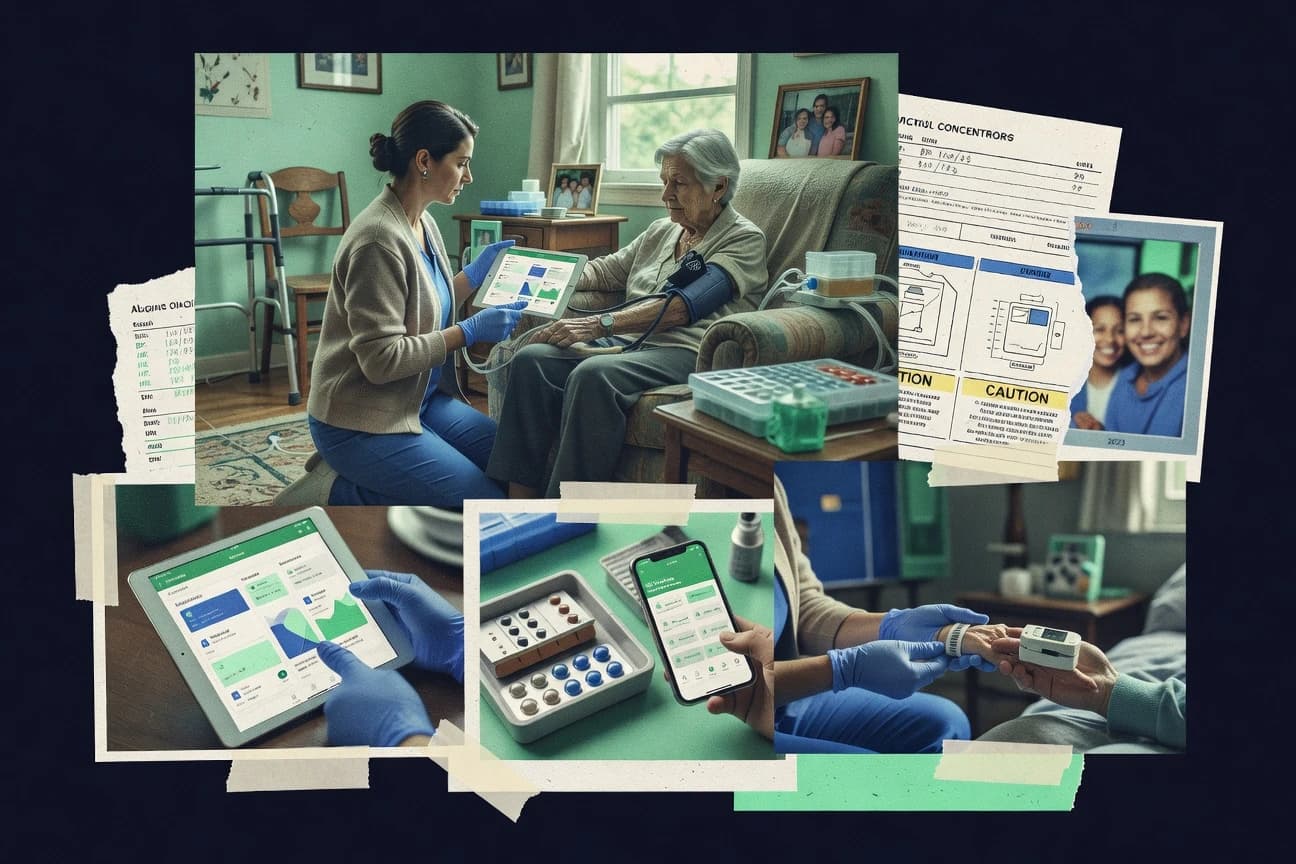
Home care EMR software records point-of-care documentation from mobile clinicians and ties each shift note to the scheduled visit and ongoing care plan. It also supports agency operations like scheduling, caregiver assignment, care task tracking, authorization workflows, and compliance reporting.
Tools like Axxess and AlayaCare show the common shape in practice. They combine visit-level documentation workflows with office review and configurable templates so documentation stays consistent from the field through back-office reconciliation.
Evaluation criteria for home care EMR visit documentation, governance, and integration control
Home care EMR tools live or die on whether visit records, shift notes, and care plan updates stay linked to caregiver scheduling during point-of-care capture. Rosemark System and Axxess both emphasize visit-level continuity so charting does not drift after the shift.
The next differentiator is control depth for office and multi-branch operations. AlayaCare, WellSky Personal Care, and Axxess highlight role-based access and audit trails, while other tools shift the burden to governance discipline and configuration.
Mobile visit note capture that stays connected to the care plan
This feature ensures shift documentation remains linked to the originating visit record and then updates care plan state without re-keying. Rosemark System ties visit note capture on mobile devices to care plan updates and medication records, while MatrixCare Home Care anchors visit documentation to care plan status across scheduled shifts.
Care task and form configuration that maps planned services to point-of-care fields
This feature reduces per-visit documentation drift by configuring tasks and forms so field staff complete the right items for each planned service. AlayaCare connects care task and form configuration to point-of-care documentation for each visit, and Aaniie uses visit workflow templates to standardize shift notes and assessments per service line.
Office review workflows tied to schedule assignments and visit context
This feature connects what the caregiver documents in the field to office review for completeness and workflow correctness. Axxess uses a visit-level documentation workflow that connects schedule assignments to field charting and subsequent office review, while Birdie organizes notes so supervisors can review completed charting without manual re-entry.
Authorization and governance workflows with role controls and audit visibility
This feature supports role mapping and audit trails so changes to clinical entries and workflow states are traceable across clinical and operations staff. Axxess and WellSky Personal Care both position RBAC-style role controls and audit visibility for agency governance, while AlayaCare includes audit trails for tracking changes to clinical entries and workflows.
Integration depth and interoperability surface for downstream systems
This feature determines how easily the EMR can move data into claims, billing, payer, and health data exchange workflows through interfaces and APIs. Axxess calls out HL7-based interfaces and API access, and Rosemark System states interface options for health data exchange but warns coverage depends on selected integration paths.
Offline charting and sync conflict behavior for low-connectivity shifts
This feature covers whether mobile charting works reliably when connectivity drops and how data sync conflicts are handled after reconnecting. Rosemark System emphasizes offline-capable charting workflows, while MatrixCare Home Care and CareSmartz360 indicate offline charting and sync conflict handling are not clearly surfaced and require confirmation through deployment configuration.
Decision framework for selecting the right home care EMR for shift documentation
Start by matching the tool's documentation workflow to the agency's operational rhythm. If shift notes must stay tightly tied to scheduled caregiver assignments and then roll into care plan continuity, Rosemark System, Axxess, and MatrixCare Home Care fit that workflow shape.
Next, validate control depth for clinical and office roles. Axxess and WellSky Personal Care separate access with RBAC-style role controls and support governance reporting, while several lower-ranked tools require stronger internal process alignment to keep visits and notes consistent.
Map the workflow from scheduled shift to mobile capture to office review
Choose Axxess when visit-level documentation must connect schedule assignments to field charting and then office review. Choose Rosemark System when mobile visit note capture must maintain continuity between shift documentation, care plan updates, and medication records.
Confirm whether care tasks and documentation templates reduce field drift
Choose AlayaCare when planned services must translate into point-of-care care task forms through configurable templates. Choose Aaniie when standardized shift notes and assessments per service line must be enforced through visit workflow templates.
Evaluate governance controls for multi-role and multi-branch operations
Choose Axxess when role-based controls are needed to separate office and field access across multiple roles and locations. Choose AlayaCare or WellSky Personal Care when audit trails and role-based access are required to track changes to clinical entries and workflow states.
Test integration and data movement expectations for claims and downstream interoperability
Choose Axxess when HL7-based interface options and API access must connect billing and payer workflows to EMR documentation. Choose Rosemark System or HHAeXchange when integration depends on selected interface paths and acceptance testing for interoperability.
Validate offline charting and sync outcomes for real device and connectivity patterns
Choose tools that explicitly support offline-capable charting for field work where network gaps are common. Rosemark System emphasizes offline-capable charting workflows, while MatrixCare Home Care and CareSmartz360 highlight offline and sync behavior clarity gaps that can require careful deployment verification.
Pick the tool that matches how automation will be implemented in practice
Choose Axxess when advanced workflow automation needs closer alignment with internal process mapping and setup discipline. Choose CareSmartz360 when structured shift notes tied to caregiver assignments are central, and expect that deeper authorization and claims automation may require add-ons or configuration.
Home care EMR buyer fit by operational model and documentation depth
Home care agencies typically need one tool that standardizes mobile point-of-care documentation while keeping shift records reconciled to scheduling, care plans, and medication history. The best fit depends on whether the agency prioritizes office review across roles, template-driven documentation consistency, or mobile shift capture continuity.
The tools below align directly to the reviewed best-for targets for scheduling, documentation, and compliance workflows across home care operations.
Multi-role agencies needing mobile charting plus office review across locations
Axxess fits agencies that require consistent documentation across caregivers, visits, and office teams with a visit-level documentation workflow that connects schedule assignments to field charting and office review. Axxess also supports RBAC-style role controls and multi-branch administration for consistent operations.
Agencies that must keep care plan updates and medication records continuous from the shift
Rosemark System fits when mobile visit note capture must maintain continuity between shift documentation, care plan updates, and medication records. Its standalone visit note capture workflow reduces post-visit documentation lag and keeps clinical history current during the shift.
Agencies that want one workflow from scheduling through visit documentation and compliance reporting
AlayaCare fits agencies that want workflow continuity between scheduling, visit execution, and compliance reporting. AlayaCare ties care tasks and configurable forms directly to point-of-care documentation for each visit and includes audit trails for changes.
Agencies focused on structured recurring personal care documentation tied to shift context
WellSky Personal Care fits teams that need point-of-care documentation aligned to shift context for recurring personal care services and care plan management. Its caregiver scheduling and task assignment integrate with visit context, and its RBAC with audit visibility supports governance.
Mid-size agencies that prioritize visit-based mobile shift notes and operational reporting
KanTime fits mid-size home care agencies that need mobile point-of-care charting tied to visit workflows plus reporting across branches. It supports scheduling and caregiver assignment workflows that reduce manual handoffs and keeps visit records synchronized with agency records.
Common selection pitfalls when buying home care EMR software
Many home care EMR rollouts fail when documentation workflows are configured without matching the agency's authorization logic or shift-level governance expectations. Rosemark System and Axxess both improve continuity by linking field capture to care plan state, but authorization rules can require setup discipline.
Other failures come from underestimating offline charting behavior or expecting interoperability depth without interface acceptance testing. MatrixCare Home Care and HHAeXchange both position interoperability as dependent on external interface setup and acceptance.
Assuming authorization workflows work out of the box for nonstandard care rules
Rosemark System and Axxess both note complex authorization rules and workflow setup that require governance discipline to keep authorization logic aligned with real operations. Before implementation, map authorization states to the exact visit and care plan events used by the agency.
Choosing a tool without validating offline charting and sync outcomes on target devices
MatrixCare Home Care and CareSmartz360 indicate offline charting and sync conflict handling is not clearly surfaced, which can produce unpredictable behavior in low-connectivity shifts. Validate offline charting behavior and reconciling outcomes using the same device models and connectivity patterns used in the field.
Overlooking documentation template configuration effort for consistent care task completion
AlayaCare and Aaniie rely on care task and form configuration or visit workflow templates to prevent documentation drift, which requires configuration governance. If governance discipline is weak, field staff may create inconsistent entries even when templates exist.
Underestimating the integration path work needed for claims, payer, or downstream systems
Axxess provides HL7-based interface options and API access, but some integration scenarios depend on specific interface setup. Rosemark System and HHAeXchange also indicate interoperability depth depends on selected integration paths and external interface acceptance testing.
Expecting advanced automation without matching internal process alignment
Axxess and HHAeXchange call out that advanced workflow automation patterns need process mapping and internal alignment. If scheduling, visits, and documentation workflows are not standardized before automation, the system can amplify mismatches rather than fix them.
How We Selected and Ranked These Tools
We evaluated home care EMR tools across visit documentation workflow quality, how tightly field capture stays connected to scheduling and care plan state, and how consistently office users can review and reconcile documentation. We also scored ease of use and value as separate factors that affect daily throughput for mobile clinicians and back-office teams. Features carried the most weight in the overall rating, while ease of use and value each had a substantial impact on the final ordering.
Rosemark System separated itself from lower-ranked tools through its mobile visit note capture continuity that links shift documentation, care plan updates, and medication records, which directly improves the visit-to-after-visit workflow and raised both features and ease-of-use outcomes.
Frequently Asked Questions About home care emr software
How do home care EMR systems handle mobile point-of-care documentation when caregivers chart offline?
Which platform links schedule assignments to visit charting so office review matches field documentation?
How does care plan management work across recurring visits and service lines?
What automation and integration capabilities matter when agencies need data exchange with external clinical and billing systems?
How do admin roles and access controls show up in day-to-day operations?
What breaks if field documentation is not structurally aligned to tasks and care tasks planned for the visit?
Which systems emphasize audit-ready capture for compliance workflows rather than flexible free-text notes?
How do these platforms support shift notes for multiple roles inside one agency?
What technical setup steps typically affect caregiver workflows when deploying an EMR across mobile devices?
Tools reviewed
Primary sources checked during evaluation.
Referenced in the comparison table and product reviews above.
- Healthcare MedicineTop 10 Best Home Health Emr Software of 2026
- Healthcare MedicineTop 10 Best Nursing Home Emr Software of 2026
- Healthcare MedicineTop 10 Best Home Care Software of 2026
- Healthcare MedicineTop 10 Best Home Health Care Software of 2026
- Healthcare MedicineTop 10 Best Healthcare Emr Software of 2026
Keep exploring
Comparing two specific tools?
Software Alternatives
See head-to-head software comparisons with feature breakdowns, pricing, and our recommendation for each use case.
Explore software alternatives→In this category
Healthcare Medicine alternatives
See side-by-side comparisons of healthcare medicine tools and pick the right one for your stack.
Compare healthcare medicine tools→