
GITNUXSOFTWARE ADVICE
Arts Creative ExpressionTop 10 Best Facial Mocap Software of 2026
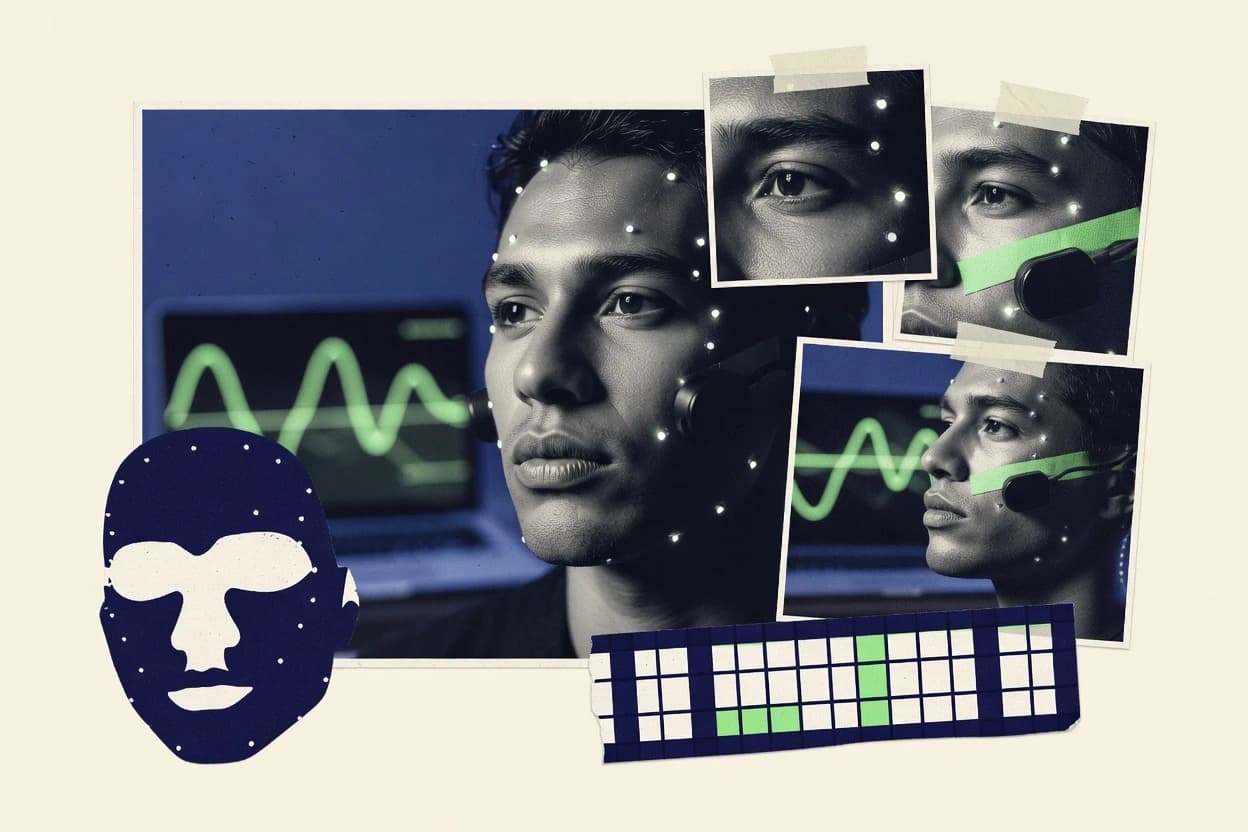
Top 10 facial mocap software tools ranked for face capture workflows, with FaceCap, Brekel Face v2, MocapX, NVIDIA Audio2Face, and MetaHuman Animator.

How we ranked these tools
Core product claims cross-referenced against official documentation, changelogs, and independent technical reviews.
Analyzed video reviews and hundreds of written evaluations to capture real-world user experiences with each tool.
AI persona simulations modeled how different user types would experience each tool across common use cases and workflows.
Final rankings reviewed and approved by our editorial team with authority to override AI-generated scores based on domain expertise.
Score: Features 40% · Ease 30% · Value 30%
Gitnux may earn a commission through links on this page — this does not influence rankings. Editorial policy
FaceCap is the best choice if you want quick, video-based facial mocap data for rig driving when schedules are tight, whereas MocapX fits teams working in Maya or Unreal who need repeatable blendshape solving from recorded performances before retargeting.
Editor’s top 3 picks
Three quick recommendations before you dive into the full comparison below — each one leads on a different dimension.
FaceCap
Video-to-animation capture focused on rig-driving outputs for repeated facial take iteration.
Built for fits when animation teams need video-based facial mocap data for rig driving on short schedules..
Brekel Face v2
Editor pickSession calibration plus live preview tightly couples tracking quality feedback to export timing.
Built for fits when a small team needs repeatable facial capture-to-export workflow without custom solver work..
MocapX
Editor pickFace fitting controls that tune solve behavior for more consistent blendshape results across multiple takes.
Built for fits when teams need repeatable facial blendshape solving from recorded performances before rig retargeting..
Comparison Table
FaceCap
SMBiPhone facial motion capture app that records facial expressions, head rotation, and eye movement for animation.
Video-to-animation capture focused on rig-driving outputs for repeated facial take iteration.
FaceCap is built for facial mocap from ordinary footage, with output designed to drive a facial rig in typical animation workflows. Core capabilities focus on capture, solver-like parameter estimation, and export to formats used for animation interchange. The tool is a strong fit for teams that need fast facial take turnaround for dialogue, expression blocking, and review-driven refinement. Output consistency across multiple takes matters when animators refine performance over several passes.
A tradeoff appears in environments where lighting or occlusion varies strongly between frames, since video-based face capture can lose stability on eyes, mouth corners, and jaw edges. FaceCap works best when the subject can keep a stable face orientation and the frame keeps the mouth and eyes clear. A common usage situation is daily facial animation capture for short scenes, where artists need quick data creation and predictable handoff to rigging or engine tools.
- +Fast capture workflow for iteration across many facial takes
- +Export-oriented output fits common rig driving and animation handoff
- +Practical markerless capture reduces stage setup overhead
- +Good fit for dialogue and expression blocking workflows
- –Less reliable when eyes or mouth corners become occluded
- –Performance can drift with large head motion and changing lighting
- –Depth-accurate results require controlled framing and exposure
Freelance animators
Rapid facial takes for dialogue
Faster take-to-anim workflow
Indie character teams
Retargeted expressions for character rigs
More usable takes per session
Show 2 more scenarios
Previs and blocking artists
Expression blocking without a stage
Quicker approvals for scenes
Create consistent facial performance data from ordinary video for early animation reviews.
Small studios
Template-based facial performance capture
Lower rework from clearer takes
Repeat capture sessions to match director notes and tighten acting beats over multiple revisions.
Best for: Fits when animation teams need video-based facial mocap data for rig driving on short schedules.
Brekel Face v2
SMBFacial motion capture software for recording and streaming blendshape and head pose data.
Session calibration plus live preview tightly couples tracking quality feedback to export timing.
Brekel Face v2 targets markerless facial capture workflows where a webcam or depth-camera feed drives a usable facial performance output. The core workflow centers on setting up face tracking, calibrating the session, and previewing the solve before exporting for retargeting or rig control. Exports support common interchange so data can reach Maya, Unreal Engine, Unity, and common motion toolchains without rebuilding the capture stage.
A key tradeoff is that output quality depends heavily on stable face visibility and lighting, which can limit results during occlusion or fast head motion. Brekel Face v2 fits best for short performance takes, iterative animation reviews, and re-exporting cleaned motion across multiple rigs where the capture session can be repeated with consistent settings.
- +Rapid calibration and live preview reduce reshoot cycles
- +Export-focused pipeline supports DCC and engine round-trips
- +Repeatable take workflow supports consistent facial performance iteration
- +Markerless capture avoids physical tracking marker management
- –Tracking accuracy drops with occlusion and off-axis head motion
- –Limited automation for batch capture across many subjects
- –Solver behavior requires session setup discipline for stable results
Independent animators
Iterate facial animation on a tight schedule
Fewer retakes and faster approvals
Small studios
Transfer facial takes across multiple rigs
Consistent motion across productions
Show 2 more scenarios
Real-time previsualization teams
Prototype facial performance for review
Faster preprod feedback loops
Generates usable facial output quickly for editor review and animation blocking.
Performance capture artists
Improve take-to-take tracking consistency
More stable facial motion data
Uses calibration and preview to standardize capture sessions for repeatable results.
Best for: Fits when a small team needs repeatable facial capture-to-export workflow without custom solver work.
MocapX
vertical specialistFacial motion capture tools for Maya and Unreal workflows with realtime streaming and cleanup features.
Face fitting controls that tune solve behavior for more consistent blendshape results across multiple takes.
MocapX is positioned for teams that need a repeatable facial solving workflow from recorded input rather than only live streaming capture. The workflow centers on tuning tracking and face fitting, then generating blendshape output suitable for rig animation and downstream retargeting. Export support targets common facial animation handoff needs for character pipelines.
A key tradeoff is that reliable solves depend on capture quality, camera coverage, and tracking visibility during the source recording. MocapX fits best when a facial performance shoot can be planned for stable face coverage, such as scripted dialog takes for a controlled stage or a consistent studio setup.
- +Blendshape-driven output designed for character facial rigs
- +Configurable solve and fitting controls for consistent sessions
- +Workflow supports export handoff to common DCC pipelines
- +Retargeting control supports pipeline consistency across takes
- –Solve stability depends on clear face visibility in input
- –Iterative setup time can be significant for new characters
- –Automation depth for batch processing is limited versus API-first tools
- –Advanced pipeline integration can require manual export mapping
Facial performance TDs
Convert dialog takes into blendshapes
Faster rig animation handoff
Indie animation studios
Retarget a solved face rig
Lower per-character animation cost
Show 2 more scenarios
Previsualization teams
Rapid iteration on facial performance
Shorter iteration cycles
Teams iterate on capture and solver settings, then export intermediate facial animation for review.
Motion library curators
Standardize facial takes for reuse
More consistent animation reuse
Curators maintain consistent solve settings so recorded performances remain comparable across sessions.
Best for: Fits when teams need repeatable facial blendshape solving from recorded performances before rig retargeting.
Live Link Face
vertical specialistMobile facial capture app for driving MetaHumans and other Unreal Engine character rigs in real time.
Direct Live Link streaming from ARKit facial tracking into Unreal for immediate rig control and recording.
Live Link Face turns iPhone facial capture into real-time animation inputs for Unreal Engine via the Live Link pipeline. The workflow centers on ARKit blendshapes delivered as parameter streams into Unreal, which suits facial rig driving and rapid iteration.
It supports take recording inside Unreal workflows when paired with an Unreal Live Link capture setup. Live Link Face is most effective when the target rig is already built around Unreal-compatible facial blendshape inputs rather than custom solvers.
- +Real-time Unreal streaming with ARKit blendshape parameter updates
- +Straightforward capture-to-animation loop for facial rig driving
- +Works well with Unreal Live Link recording workflows
- +Portable phone capture supports fast setup on set
- –Limited to ARKit blendshape outputs for face solving
- –Less suitable for pipelines needing BVH, Alembic cache, or full solver exports
- –Performance quality can drop under occlusion and extreme head motion
- –Retargeting depends on consistent facial rig mapping in Unreal
Best for: Fits when Unreal teams need quick, on-set facial capture without custom solver integration.
Rokoko Face Capture
SMBPhone-based facial capture workflow integrated with Rokoko animation and retargeting tools.
Capture-side calibration that stabilizes jaw and eye behavior for consistent facial solving across sessions.
Rokoko Face Capture records facial performance into blendshape and rig-friendly animation using its dedicated face capture workflow. The tool focuses on live facial solving and downstream retargeting onto common facial rigs, with export paths for common DCC and engine pipelines.
It also supports calibration steps tailored to face tracking for consistent jaw and eye region behavior across sessions. Rokoko Face Capture is built for artists and technical teams that want repeatable facial capture output with predictable rig mapping rather than only on-screen previews.
- +Live facial solving tailored for face-first performance capture sessions
- +Predictable retargeting workflow from captured output to facial rigs
- +Jaw and eye region mapping tuned through capture-side calibration steps
- +Export compatibility for common animation pipelines into DCC and engine workflows
- –Facial results depend on stable tracking conditions and consistent setup
- –Blendshape density can lag behind high-end rigs for extreme expressions
- –Advanced cleanup often requires additional corrective passes in a DCC
- –Integration depth varies by target toolchain and rig requirements
Best for: Fits when animation teams need repeatable facial capture outputs for rigged characters with manageable post cleanup.
Live Link Face
vertical specialistiPhone facial capture app that streams ARKit face data into Unreal Engine pipelines.
Live Link streaming of ARKit blendshapes into Unreal Engine for immediate facial animation playback.
Live Link Face is an iPhone-based facial capture app built for real-time ingestion into Unreal Engine through Live Link. It produces ARKit blendshape animation driven by the front camera, which makes it fit capture-and-iterate workflows without setting up marker-based rigs.
The output is designed for character animation use in Unreal, with retargeting to facial rigs via Unreal’s animation pipeline. For teams that need markerless, low-latency performance capture, Live Link Face is a practical starting point when the target pipeline is Unreal-first.
- +ARKit blendshape output supports fast facial animation iteration in Unreal
- +Real-time Live Link streaming reduces turnaround between take and playback
- +Front-camera capture works without optical marker setups
- +Direct Unreal ingestion avoids an intermediate offline facial solver step
- –Capture fidelity is limited by ARKit blendshape expressiveness versus custom rigs
- –Depth, occlusion, and eye-detail performance can degrade with lighting changes
- –Export paths outside Unreal character pipelines are not the primary focus
Best for: Fits when small teams need markerless facial capture with quick Unreal playback.
Animate
API-firstAI motion capture platform that includes face and body animation tools from video.
Performance-to-animation generation tuned for blendshape facial rigs, reducing the amount of manual face animation cleanup.
Animate from deepmotion is a facial mocap workflow focused on fast capture-to-animation for blendshape-driven rigs. The tool emphasizes a single performance session that produces cleaned face motion suitable for retargeting onto facial characters.
Export options support common DCC and interchange pipelines so the result can be placed into an existing animation timeline. Compared with depth-sensor or optical-reflective stage setups, Animate prioritizes usability and iteration speed over physical calibration overhead.
- +Capture to animation flow is geared for quick turnaround sessions
- +Produces rig-friendly facial motion designed for blendshape characters
- +Export targets common DCC and interchange steps for pipeline placement
- +Character retargeting supports reusing the same performance across assets
- –Solver quality can vary when facial features are partially occluded
- –Deep facial inference limits control granularity versus manual cleanup
- –Pipeline integration depends on the exported format path for fidelity
- –Advanced governance and automation require external workflow orchestration
Best for: Fits when teams need fast facial performance iteration and consistent retargeting into existing character rigs.
Metahuman Animator
enterpriseFacial animation system for generating high-fidelity MetaHuman performances from video and depth data.
MetaHuman-targeted facial solve that outputs animation aligned to the MetaHuman control rig.
Metahuman Animator is built around producing facial animation that matches the MetaHuman facial rig’s expected controls, which reduces the amount of rig-matching work required after capture.
The workflow is most efficient when the asset, animation curves, and review loop stay inside Unreal Engine, because the tool’s outputs align to MetaHuman conventions rather than generic animation data.
Outside Unreal-centric pipelines, face capture teams typically spend time translating results into their character rigs, since the tool’s output focus is MetaHuman control compatibility.
- +MetaHuman facial rig output reduces manual retargeting steps
- +Unreal-native workflow keeps face animation and assets aligned
- +Jaw and eye motion are authored to the rig’s control expectations
- +Produces animation that fits common MetaHuman lip-sync pipelines
- –Unreal-centric workflow limits use with non-MetaHuman characters
- –Capture-to-animation quality depends on source input conditions
- –Less flexible export-centric pipeline than solver-based mocap tools
- –Iteration requires Unreal asset context rather than standalone processing
Best for: Fits when face capture teams need Unreal-driven MetaHuman animation without building a custom retarget pipeline.
Move Live
SMBMarkerless motion capture platform with face tracking support for animation and virtual production.
Real-time take turnaround that converts live face footage into rigged, blendshape facial animation for fast review.
Move Live captures facial performance from a live video feed and turns it into a rigged facial animation workflow for real-time iteration. It focuses on practical output for animation teams by generating blendshape-driven motion that can be used downstream in common production pipelines.
The tooling emphasizes fast feedback loops for take review and retargeting to compatible facial rigs. Its strongest fit is for facial mocap work where delivery needs to convert quickly into engine or DCC animation assets.
- +Live capture workflow reduces time between performance and usable facial takes
- +Blendshape-driven output supports common facial rigs and retargeting steps
- +Exported animation data fits common downstream animation workflows
- +Iteration-friendly take review helps refine actor performance quickly
- –Achieving stable results depends on subject framing and consistent lighting
- –Less control than marker-based stages when occlusion or extreme angles occur
- –Corrective shape coverage can lag behind high-fidelity studio rigs
- –Pipeline setup can require rig-specific validation for best results
Best for: Fits when teams need markerless facial capture with quick rig animation handoff for iteration and retargeting.
ARKit Face Tracking
API-firstApple face tracking framework used to build real-time facial mocap apps on supported iPhone and iPad devices.
ARKit Face Tracking’s ARSession-driven blendshape stream supports real-time expression capture without external tracking hardware.
ARKit Face Tracking supports real-time face capture on Apple devices using ARKit blendshapes. It outputs a standardized set of expression coefficients suitable for immediate animation preview and downstream retargeting into facial rigs.
The API is integration-first, with frame-based updates delivered through ARSession callbacks. This makes it a strong choice for markerless facial mocap workflows that must fit tightly into an iOS or iPadOS app pipeline.
- +ARKit blendshapes provide consistent, frame-based expression coefficients
- +Real-time delivery through ARSession callbacks supports interactive capture
- +Works markerless on Apple depth-sensing hardware for practical setup
- +Straightforward integration into iOS and iPadOS capture apps
- –Blendshape output may require significant mapping for custom rigs
- –Limited export and offline pipeline tooling versus dedicated mocap suites
- –Tracking quality degrades with occlusion, lighting changes, and fast motion
- –Requires building the capture app and managing session lifecycle logic
Best for: Fits when a team needs fast, markerless facial capture inside an Apple app workflow.
Conclusion
After evaluating 10 arts creative expression, FaceCap stands out as our overall top pick — it scored highest across our combined criteria of features, ease of use, and value, which is why it sits at #1 in the rankings above.
Use the comparison table and detailed reviews above to validate the fit against your own requirements before committing to a tool.
How to Choose the Right facial mocap software
Facial mocap software turns face performance into animation-ready data for blendshape facial rigs and rig driving workflows. This buyer’s guide covers FaceCap, Brekel Face v2, MocapX, and Live Link Face for Unreal, plus NVIDIA Audio2Face-style capture-adjacent workflows and the MetaHuman Animator path.
The most consequential differences show up in how capture quality holds under occlusion and lighting changes, how quickly teams can iterate take-to-rig output, and whether the tool outputs what the downstream DCC or engine expects. Those differences affect solver behavior, export formats, and the amount of manual face cleanup needed after the first pass.
Facial mocap software for face capture, solver output, and rig-ready blendshape animation
Facial mocap software captures facial motion from video or device sensors and converts expression performance into rig-driving animation data such as blendshape coefficients or animation curves. FaceCap is built around video-to-animation capture that focuses on driving rig parameters for repeated facial take iteration.
Other tools take different delivery paths. Brekel Face v2 pairs session calibration with live preview so tracking feedback and export timing stay tightly coupled for repeatable capture-to-export workflow, while MocapX emphasizes face fitting controls that tune solve behavior for more consistent blendshape results across multiple takes.
Facial mocap evaluation criteria for rig-ready expression capture
The fastest path to usable facial animation depends on how consistently a tool holds jaw, eye, and corner detail when the face moves or lighting shifts. Face capture that drifts forces manual cleanup and delays rig-driven iteration.
Rig driving and downstream export expectations decide whether a tool’s output matches common facial pipelines. FaceCap, Brekel Face v2, MocapX, and Live Link Face each solve the capture-to-usable-output problem using different delivery shapes.
Iteration speed from take to animation-ready output
FaceCap is built around video-to-animation capture designed for repeated facial take iteration with export-oriented output. Brekel Face v2 couples session calibration with live preview so tracking feedback and export timing stay tightly coupled for repeatable capture-to-export workflow.
Solve stability under occlusion and off-axis head motion
FaceCap becomes less reliable when eyes or mouth corners become occluded and performance can drift with large head motion and changing lighting. Rokoko Face Capture depends on stable tracking conditions and consistent setup and can lag behind high-end rigs for extreme expressions.
Rig fitting controls that reduce per-character variance
MocapX offers face fitting controls that tune solve behavior for more consistent blendshape results across multiple takes. Animate generates rig-friendly facial motion for blendshape facial rigs while still varying in solver quality when facial features are partially occluded.
Output compatibility with target engines and rig parameter formats
Live Link Face streams ARKit blendshape parameter updates into Unreal Engine for immediate rig control and recording. Metahuman Animator targets the MetaHuman control rig so output stays aligned with Unreal-native character facial assets.
Automation and repeatability for batch capture sessions
FaceCap focuses on an export-oriented workflow that fits animation teams iterating across many facial takes. Brekel Face v2 reduces reshoot cycles through rapid calibration and live preview, while Move Live emphasizes live take turnaround designed for quick rigged blendshape handoff for review.
Export breadth for non-Unreal facial pipelines
FaceCap is optimized for video-based facial mocap data that fits common rig driving and animation handoff patterns. Live Link Face stays largely tied to ARKit blendshape outputs for face solving and is less suitable for pipelines needing BVH export, Alembic cache, or full solver exports.
How to choose facial mocap software by workflow, solve control, and downstream targets
Start by matching the tool’s delivery path to the rig driving environment that receives the take. Unreal-native streaming and rig-aligned solves behave differently than video-to-animation capture that is meant to drive parameters in DCC animation workflows.
Then pick solve control depth based on how often the subject will occlude eyes and mouth corners. Tools that depend on stable visibility will require more stage discipline, while tools with fitting controls let teams normalize solve behavior across characters.
Choose Unreal streaming or offline capture output based on where animation gets recorded
If Unreal Engine is the capture playback endpoint, Live Link Face streams ARKit blendshapes into Unreal for immediate facial rig control and recording. If the pipeline expects exported animation data for rig driving or DCC handoff, FaceCap’s video-to-animation capture and export-oriented output fit repeated facial take iteration.
Select for solve repeatability by using fitting controls or calibration-driven feedback
If repeatability across multiple takes and multiple characters is the priority, MocapX face fitting controls tune solve behavior for consistent blendshape results. If the priority is reducing reshoots during production, Brekel Face v2 pairs rapid calibration with live preview so tracking feedback shows up before export timing locks.
Model expected occlusion and head motion risks and pick the tool with matching failure modes
If eye and mouth corner occlusion is common, FaceCap can become less reliable and performance can drift with large head motion and changing lighting. If facial visibility and consistent setup are manageable, Rokoko Face Capture provides predictable retargeting workflow but still depends on stable tracking conditions.
Decide whether the project is rig-aligned to a specific character system or needs broader retargeting
For MetaHuman-specific work where Unreal assets must stay aligned, Metahuman Animator outputs animation aligned to the MetaHuman control rig. For blendshape character workflows that need quicker cleanup reduction, Animate focuses on performance-to-animation generation tuned for blendshape facial rigs.
Pick throughput for fast review loops versus higher control granularity
For quick review turnaround where live capture converts face footage into rigged blendshape animation, Move Live is designed for fast take turnaround. For iterative rig driving across many takes with a capture-to-export loop, FaceCap’s workflow supports animation iteration across repeated facial performances.
Who facial mocap software is built for
Facial mocap software is most useful for teams that need expression timing and shape fidelity mapped into facial rig parameters rather than manually animated keyframes. The tool choice changes based on whether the team captures on-set for Unreal playback or performs video-based capture for DCC rig driving.
Different products also match different constraints around occlusion tolerance and how much per-character fitting work is acceptable before production.
Animation teams driving blendshape facial rigs on a tight schedule
FaceCap’s video-to-animation capture is built for repeated facial take iteration with export-oriented output. Move Live also targets quick rigged blendshape handoff for review when timing between performance and usable take matters.
Small teams that need repeatable capture-to-export without solver customization
Brekel Face v2 emphasizes session calibration and live preview so tracking quality feedback reduces reshoot cycles. This reduces the need for custom solver work while keeping an export-focused pipeline for DCC and engine round-trips.
Character teams with many faces that need consistent blendshape solving behavior
MocapX provides face fitting controls that tune solve behavior for consistent blendshape results across multiple takes. That reduces per-character variance when the same rig driving rules must hold for every performer.
Unreal workflows that want immediate facial parameter streaming
Live Link Face streams ARKit blendshape updates into Unreal for immediate rig control and recording. Metahuman Animator keeps face animation aligned to the MetaHuman control rig when the character system is fixed.
Common facial mocap buying and deployment pitfalls
Buying mistakes often come from assuming every tool produces the same kind of outputs for the same downstream rigs. Unreal streaming tools and video-to-animation capture tools can fail differently, so mismatched expectations cause the cleanup workload to spike.
Operational mistakes also show up when stage visibility is not matched to the solver’s sensitivity to occlusion and head motion.
Choosing Unreal streaming while the pipeline needs full solver export formats
Live Link Face is tied to ARKit blendshape outputs for face solving and is less suitable for pipelines needing BVH, Alembic cache, or full solver exports. If the pipeline expects broader export shapes, FaceCap is designed around export-oriented capture for animation handoff.
Assuming accuracy will hold when eyes and mouth corners get blocked
FaceCap can become less reliable when eyes or mouth corners are occluded and it can drift with large head motion and changing lighting. Brekel Face v2 also sees tracking accuracy drop with occlusion and off-axis head motion.
Underestimating per-character setup time when solve behavior must be consistent
MocapX solve stability depends on clear face visibility in input and can require significant iterative setup time for new characters. Rokoko Face Capture improves retargeting predictability but still depends on consistent setup to keep jaw and eye behavior stable.
Picking a MetaHuman-specific solve for non-MetaHuman characters
Metahuman Animator is Unreal-centric and limits use with non-MetaHuman characters. For broader blendshape character workflows, Animate focuses on rig-friendly facial motion for blendshape rigs instead of MetaHuman-only alignment.
How We Selected and Ranked These Tools
We evaluated FaceCap, Brekel Face v2, MocapX, and Live Link Face for face capture workflows based on features tied to rig-driving iteration, solve behavior under occlusion, and fit to engine or DCC delivery needs. Features account for 40% of the score because tools show concrete differences in calibration, face fitting controls, and streaming behavior that change cleanup workload.
Ease and value each account for 30% because session calibration time, reshoot cycles, and export-oriented turnaround determine how quickly usable facial animation gets delivered. FaceCap ranked highest because its video-to-animation capture is focused on rig-driving outputs that support repeated facial take iteration with an export-oriented workflow designed for animation handoff.
Frequently Asked Questions About facial mocap software
How do NVIDIA Audio2Face-style pipelines compare with FaceCap when converting face capture into usable rig animation?
Which tool delivers ARKit blendshape streams directly into Unreal Engine without custom rig wiring?
How does MocapX handle take-to-take consistency for blendshape solving across multiple recorded performances?
When should teams choose FaceCap over a desktop camera pipeline like Brekel Face v2?
What breaks if the target character rig is not built around ARKit blendshapes in Live Link Face?
Where does Rokoko Face Capture fall short compared with capture-to-animation tools like Animate from deepmotion?
How does Move Live support rapid review and handoff compared with offline solve workflows?
How should teams plan data migration when switching between general facial mocap exports and MetaHuman-specific animation output?
What security and admin controls matter when facial mocap capture runs as part of an Unreal pipeline?
Tools reviewed
Primary sources checked during evaluation.
Referenced in the comparison table and product reviews above.
Keep exploring
Comparing two specific tools?
Software Alternatives
See head-to-head software comparisons with feature breakdowns, pricing, and our recommendation for each use case.
Explore software alternatives→In this category
Arts Creative Expression alternatives
See side-by-side comparisons of arts creative expression tools and pick the right one for your stack.
Compare arts creative expression tools→