
GITNUXSOFTWARE ADVICE
Art DesignTop 10 Best 3D Architect Software of 2026
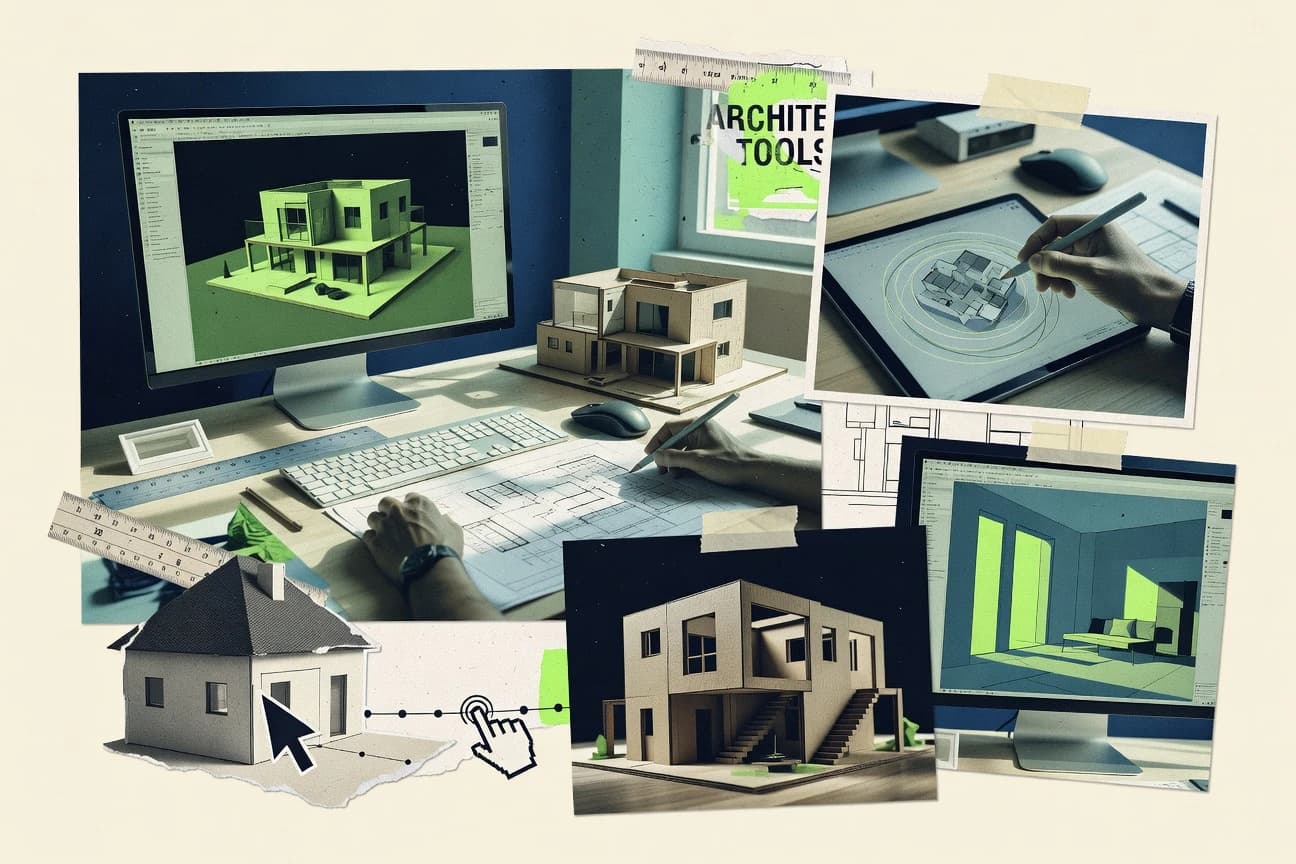
Top 10 3d architect software tools ranked by features and pricing, with comparisons for home designers and pros using Floorplanner, Cedreo, or RoomSketcher.

How we ranked these tools
Core product claims cross-referenced against official documentation, changelogs, and independent technical reviews.
Analyzed video reviews and hundreds of written evaluations to capture real-world user experiences with each tool.
AI persona simulations modeled how different user types would experience each tool across common use cases and workflows.
Final rankings reviewed and approved by our editorial team with authority to override AI-generated scores based on domain expertise.
Score: Features 40% · Ease 30% · Value 30%
Gitnux may earn a commission through links on this page — this does not influence rankings. Editorial policy
Floorplanner is the best fit for teams that need quick browser-based 2D plans with interactive 3D stakeholder review, while Cedreo is the stronger choice when you’re a residential remodeler pushing rapid, repeatable 3D proposal visuals for early scope alignment.
Editor’s top 3 picks
Three quick recommendations before you dive into the full comparison below — each one leads on a different dimension.
Floorplanner
Live 3D room generation that updates from 2D wall edits without a separate modeling pass.
Built for fits when teams need fast 3D interior concepts with link-based stakeholder review..
Cedreo
Editor pickWalkthrough animation exports that tie design updates directly to client presentation visuals.
Built for fits when residential remodelers need rapid 3D proposals and repeatable presentation outputs for early scope alignment..
RoomSketcher
Editor pickInstant 3D generation from floor plans, paired with quick furniture and scene placement for stakeholder walkthrough visuals.
Built for fits when design teams need quick 3D visuals and exportable drawings for client reviews..
Comparison Table
Floorplanner
SMBBrowser-based floor plan software with 2D layouts and interactive 3D views.
Live 3D room generation that updates from 2D wall edits without a separate modeling pass.
Floorplanner’s core loop starts with drawing walls, doors, and windows, then generating 3D perspectives from the same model so changes carry through across views. The furnishing workflow uses a packaged object library and materials controls to populate rooms for presentations and walkthrough-style viewing. Shared links enable review cycles where multiple stakeholders can view the same layout without file management friction.
A key tradeoff is limited construction-document depth compared with BIM-authoring tools, since parametric building components, model coordination, and data-rich exports are not its focus. Floorplanner fits best for interior layouts, remodeling concepts, and early space planning where stakeholders need updated visuals quickly after design edits.
- +Rapid 2D to 3D updates from the same layout model
- +Drag-and-drop furnishing with configurable materials for presentations
- +Shareable link viewing supports lightweight stakeholder review cycles
- +Exportable visual outputs for slide decks and internal documentation
- –Limited depth for construction documentation and component authoring
- –Fewer interoperability routes than dedicated BIM or CAD ecosystems
- –Automation and API surface are not suited for large-scale programmatic generation
Interior designers and studios
Client-ready remodel concepts
Faster client decision cycles
Real estate marketing teams
Layout visualizations for listings
More persuasive listing assets
Show 2 more scenarios
Project managers
Stakeholder review of space options
Reduced review coordination time
Circulate shareable links to compare layout alternatives with minimal file overhead.
Architectural concept teams
Early space planning iterations
Shorter iteration loops
Rework wall geometry and see immediate 3D perspective changes for option studies.
Best for: Fits when teams need fast 3D interior concepts with link-based stakeholder review.
Cedreo
vertical specialistWeb-based 3D home design software for floor plans, exteriors, interiors, and visual presentations.
Walkthrough animation exports that tie design updates directly to client presentation visuals.
Cedreo’s core strength is producing client-ready 3D models for residential projects with structured design inputs and consistent visual outputs. The workflow centers on generating room layouts, deriving view sets, and producing walkthrough-style animations for stakeholder review. Cedreo’s automation bias favors repeatable deliverables over authoring-heavy modeling tasks.
A practical tradeoff appears in complex, engineering-led projects where requirements demand construction-document accuracy across model-heavy changes. Cedreo works best when design intent and presentation visuals drive decisions early, while downstream documentation and detailed BIM coordination happen in other tools. Teams that need frequent revision cycles for proposals benefit most from its fast update cadence.
- +Proposal-focused 3D workflow that prioritizes client-ready outputs
- +Walkthrough animation generation for quick stakeholder review
- +Structured components that reduce time spent on repetitive design work
- +View outputs for elevations and walkthrough alignment
- –Less suitable for deep engineering workflows and BIM-grade coordination
- –Limited flexibility for highly custom modeling beyond preset components
- –Revision-heavy projects can still require manual model cleanup
- –Collaboration and governance controls are not designed like enterprise BIM
Remodeling sales teams
3D proposals from room layout
Faster signoff on proposals
Estimating teams
Scenario comparisons during proposals
Reduced rework in follow-ups
Show 2 more scenarios
Project managers
Stakeholder walkthrough reviews
Fewer scope misunderstandings
Shares walkthrough animations to validate layout intent with clients and internal staff.
Design consultants
Client presentation packages
Cleaner customer deliverables
Produces elevations and view sets that stay visually consistent across proposals.
Best for: Fits when residential remodelers need rapid 3D proposals and repeatable presentation outputs for early scope alignment.
RoomSketcher
SMBFloor plan and home design software for 2D plans, 3D views, and virtual tours.
Instant 3D generation from floor plans, paired with quick furniture and scene placement for stakeholder walkthrough visuals.
RoomSketcher focuses on concept-to-visual communication with quick room layout drafting and immediate 3D model generation. Users can create floor plans, generate elevations and walkthrough-style views, and populate scenes using built-in furnishings and architectural objects. Export options support external use for coordination deliverables, and generated visuals remain easy to review in place of editing complex construction geometry.
A practical tradeoff is limited BIM-grade control for assemblies and construction documentation, since the workflow centers on visualization rather than building information modeling authoring. RoomSketcher fits best when early design intent needs to be communicated quickly, or when clients need annotated visuals without waiting for a full BIM model refresh.
- +Fast floor plan to 3D view generation for rapid concept iterations
- +Object library workflow supports quick scene building without modeling detail
- +Walkthrough-style visualization helps non-technical reviews
- +Exportable drawings and views support external presentation workflows
- –Limited construction-document workflows compared with BIM authoring tools
- –Shallow parametric control for assemblies and complex building behavior
- –Scene customization can require more manual adjustments than BIM-native pipelines
Real estate brokers and agents
Create listing-ready 3D walkthrough visuals
Faster client decision cycles
Interior design consultants
Test layouts and finishes quickly
More revisions before lock-in
Show 2 more scenarios
Architects for early design review
Communicate massing intent in meetings
Shorter iteration loops
Generate clear 3D views from floor plan concepts for quick stakeholder feedback.
Facilities and space planners
Plan layouts for renovations
Fewer coordination misunderstandings
Model room layouts and produce visual references for renovation planning conversations.
Best for: Fits when design teams need quick 3D visuals and exportable drawings for client reviews.
Chief Architect
vertical specialistResidential architectural design software for floor plans, construction documents, and 3D visualization.
Automatically maintains elevations, sections, and dimensional annotations from a single building model across design iterations.
Chief Architect produces 2D drafting and 3D modeling in one desktop workflow, with a large architectural object library that maps directly to typical residential and light commercial components. The software generates coordinated floor plans, elevations, and sections from shared building data, then renders walkthrough animations using its built-in visualization tools.
Chief Architect also supports construction documentation workflows with view sets and annotation tools tied to model changes. For interoperability, it can exchange geometry through common CAD formats and support IFC-based import and export for cross-tool handoffs.
- +Fast floor plan to 3D conversion using parameterized building components
- +Coordinated view updates reduce manual rework across elevations and sections
- +Integrated rendering and walkthrough animation tools stay inside one project
- +Large object library supports common residential detailing without heavy modeling
- –APIs and automation hooks for custom pipelines are limited versus code-driven ecosystems
- –Complex BIM-level data workflows require careful modeling discipline
- –Clash and issue management is not a native replacement for dedicated tools
- –Point cloud ingestion and photogrammetry alignment are not central strengths
Best for: Fits when firms need quick coordinated documentation and visualization for residential and small commercial projects.
Planner 5D
SMBOnline home and interior design software for floor plans, furnishings, and 3D visualization.
Instant plan-to-render changes with walkthrough animation generated from the same workspace.
Planner 5D lets users design and visualize building layouts in a browser-based 3D workflow, with quick switches between plan views and rendered scenes. The tool supports importing and placing architectural objects from its catalog, then generating presentation-style walkthrough animations and still images from the same model. It also supports exporting drawings for documentation use cases and reusing designs across projects through saved project assets.
- +Browser-first modeling speeds iteration between layouts and 3D renders
- +Large object catalog helps users assemble rooms without custom modeling
- +Walkthrough animation and scene rendering support presentation-ready outputs
- +Exported drawings support basic documentation handoff
- –Family creation and parametric control are limited versus BIM authoring tools
- –IFC interoperability and construction-documentation-grade outputs are not a focus
- –Large projects can slow down during interactive editing and rendering
- –Advanced coordination workflows require manual steps outside the model
Best for: Fits when small teams need fast 3D visualization from a reusable object library.
HomeByMe
SMBOnline interior and home planning software for floor plans, furniture layouts, and 3D images.
In-browser model editing with client-friendly publishing for sharing interactive 3D scenes.
HomeByMe is a browser-based 3D home design tool used for fast spatial layouts, material choices, and presentation exports. Its core workflow centers on placing architectural components in 3D, generating 2D outputs like floor plans and elevations, and using a built-in object library for common residential elements.
The product emphasizes conceptual design and client-ready visuals over construction-grade authoring. HomeByMe supports collaboration and publishing of projects, but it does not aim to replace BIM authoring workflows.
- +Browser-first workflow keeps model editing accessible across devices
- +Built-in object library speeds up residential furnishing and layout
- +Automatic generation of common 2D views supports quick plan iteration
- +Rendering and walkthrough outputs help client reviews without extra tools
- –Limited construction documentation depth compared with BIM authoring
- –External interoperability is narrower than tools focused on IFC and DWG workflows
- –Family creation is less granular than parametric BIM component authoring
- –Large models can feel slower when adding many customized objects
Best for: Fits when residential concept design needs fast 3D visuals and basic 2D outputs for stakeholder review.
Live Home 3D
SMBHome design software for floor plans, 3D modeling, interiors, and walkthroughs.
Tightly coupled 2D plan drafting that drives a connected 3D model and keeps edits consistent across key views.
Live Home 3D focuses on fast architectural visualization workflows with a guided modeling and furnishing experience designed for residential concepts. It supports 2D floor plan work tied to 3D model generation, plus common view outputs like sections, elevations, and walkthrough-style animations.
A large object library and built-in material editing speed up iterative design reviews without requiring BIM authoring discipline. The workflow emphasizes desktop modeling and render-ready scene assembly rather than multi-user BIM coordination or exchange-heavy documentation pipelines.
- +Floor plan to 3D generation reduces redraw time for residential layouts.
- +Object library and scene placement support quick iterations for design reviews.
- +Rendering and camera walkthroughs help communicate spatial intent early.
- +View sets for sections and elevations support straightforward presentation outputs.
- –Limited BIM authoring depth for parametric components and documentation-grade output.
- –IFC and DWG workflows are not centered on full round-trip construction documentation.
- –Clash detection and issue management are not part of the core workflow.
- –Family creation depth is less granular than authoring tools built for components.
Best for: Fits when architectural concepts and residential visualization need quick iteration without BIM-first governance.
Sweet Home 3D
SMBFree interior design software for drawing floor plans, arranging furniture, and viewing 3D scenes.
Real-time conversion of a 2D floor plan layout into a navigable 3D scene for quick spatial checks.
Sweet Home 3D is a desktop-focused 3D house planning tool built around an interactive floor plan and a 3D view that updates in real time. It supports object placement from libraries, basic architectural viewing such as elevation and section views, and lightweight rendering for walkthrough-style inspection.
The workflow is geared toward quick spatial iteration rather than BIM-grade authoring or construction documentation. File interoperability is strongest around common 2D plan assets and exported 3D models, with limited depth for IFC-centric exchanges.
- +Interactive 2D floor plan stays tightly synchronized with 3D view updates
- +Large object library supports rapid furnishing and spatial studies
- +Export options cover common 3D formats for handoff to other tools
- +Walkthrough navigation helps validate sightlines and spatial proportions
- –No parametric modeling workflow for families and controlled dimensions
- –Limited architectural documentation output beyond basic views
- –Object-centric scenes lack BIM-level metadata for schedules
- –Integration and automation are thin without a scriptable API surface
Best for: Fits when interior designers need fast floor-to-3D iteration and simple walkthroughs, not BIM authoring.
Autodesk Revit
enterpriseBuilding information modeling software for architectural design, documentation, and coordination.
The Revit API can drive view generation, element interrogation, and geometry processing from add-ins.
Autodesk Revit supports BIM authoring for architectural components through a parametric element data model that stays consistent across 2D views and 3D geometry. It generates floor plans, elevations, and sections from the same model, then produces construction documentation with view templates and schedule tools.
Revit also supports IFC interoperability and DWG import and export for coordination workflows, plus RVT interoperability for exchanging models inside the Revit ecosystem. Automation comes through Revit API extensibility and add-ins that hook into model events, geometry, and views.
- +Parametric architectural components keep 2D view output aligned with 3D edits
- +Schedules and tagging tools reduce manual consistency work for documentation
- +Revit API supports automation for model, views, and geometry-driven tasks
- +IFC interoperability and DWG exchange support common coordination pipelines
- –Family creation workflows require detailed configuration to avoid downstream issues
- –Large models can slow authoring when view filters and schedules are heavy
- –Many collaboration workflows depend on add-ins for issue tracking and review
- –Governance around worksharing and permissions needs explicit process discipline
Best for: Fits when teams need consistent BIM authoring across plan, section, and model output for documentation.
Homestyler
SMBCloud-based interior and home design software for floor plans, furnishings, and rendered scenes.
Live, navigable walkthrough animation generated from an edited room layout and placed furnishing scene.
Homestyler is a browser-first 3D design tool focused on residential and interior visualization rather than BIM authoring depth. It supports drag-and-drop room layouts, furniture and decor placement, and real-time preview suitable for concept studies and client-facing walkthrough animations.
The workflow centers on object libraries and scene editing, with export options that prioritize viewing and sharing over construction documentation output. Homestyler is distinct in how quickly it gets from a room sketch to a navigable 3D scene using a guided layout and asset model.
- +Fast browser-based 3D scene creation for interiors and space planning
- +Asset-driven layout workflow with drag-and-drop furniture placement
- +Real-time preview that supports quick design iteration
- +Shareable client scenes for concept reviews and walkthrough animations
- –Limited BIM authoring and construction documentation workflows
- –IFC interoperability and drafting-grade exports are not a primary focus
- –Less control over parametric families and component schemas
- –Automation and API extensibility surface is minimal for workflow integration
Best for: Fits when design teams need quick interior visualization and client walkthroughs without BIM-scale documentation.
Conclusion
After evaluating 10 art design, Floorplanner stands out as our overall top pick — it scored highest across our combined criteria of features, ease of use, and value, which is why it sits at #1 in the rankings above.
Use the comparison table and detailed reviews above to validate the fit against your own requirements before committing to a tool.
How to Choose the Right 3d architect software
This buyer’s guide covers top 3d architect software tools that convert 2D layouts into linked 3D views for design review workflows. It includes Floorplanner, Cedreo, RoomSketcher, Chief Architect, Planner 5D, HomeByMe, Live Home 3D, Sweet Home 3D, Autodesk Revit, and Homestyler.
Coverage prioritizes how each tool keeps 2D and 3D changes aligned, whether the workflow targets interior visualization or BIM-grade documentation. Readers will see how Floorplanner maintains live 3D rooms from 2D wall edits, and how Autodesk Revit uses its API to automate element interrogation and geometry processing through add-ins.
3D architect software for linked 2D-to-3D design, documentation, and stakeholder visualization
3D architect software creates coordinated architectural visuals by tying room layouts, elevations, and sections to a connected 3D model so updates propagate through the workspace. Many tools in this list generate 3D quickly from floor plans to support rapid concept iteration and client-ready walkthroughs.
Floorplanner emphasizes live 3D room generation driven by the same layout model that powers 2D wall edits. Autodesk Revit focuses on parametric building components and uses the Revit API for automation that can generate views, interrogate elements, and process geometry through add-ins for documentation workflows.
Key features for 2D-to-3D alignment, documentation readiness, and workflow automation
Tools in this category succeed when the workspace keeps 2D edits and 3D output synchronized without a separate remodeling pass. Floorplanner and Live Home 3D both tie 3D updates to connected 2D plan editing, which reduces review churn when layouts change during stakeholder iterations.
Documentation depth and interoperability matter when projects move from concept visuals into schedules, annotations, and exportable building data. Autodesk Revit uses parametric architectural components with the Revit API to support automation for view generation and element interrogation, while Planner 5D and RoomSketcher emphasize fast visualization over BIM-grade coordination.
Live 2D-to-3D synchronization
Floorplanner maintains live 3D rooms from 2D wall edits using the same layout model. Sweet Home 3D keeps the interactive 2D floor plan synchronized with a navigable 3D scene for spatial checks.
Stakeholder walkthrough outputs from the active layout
Cedreo generates walkthrough animation aligned to client-ready proposal visuals so design updates flow into presentation outputs. Homestyler produces live, navigable walkthrough animation from edited room layout plus furnishing scenes.
Coordinated views tied to a single building model
Chief Architect automatically maintains elevations, sections, and dimensional annotations from a single building model across iterations. Autodesk Revit keeps plan, section, and model output aligned via parametric components so schedules and tagging stay consistent.
Automation and extensibility surface for custom pipelines
Autodesk Revit exposes the Revit API so add-ins can drive view generation, element interrogation, and geometry processing. Floorplanner focuses on linked 2D-to-3D updates rather than code-driven pipelines, which limits automation hooks for custom governance workflows.
Component authoring and depth for construction documentation
Chief Architect is designed for coordinated documentation work but limits deep automation versus code-driven BIM ecosystems. RoomSketcher and Planner 5D prioritize object library assembly and fast rendering over BIM-grade authoring and documentation workflows.
How to choose 3D architect software by workflow philosophy and integration depth
The first fork is whether the tool treats the layout as the source of truth for connected 3D output. Floorplanner and Live Home 3D update 3D views from connected 2D plan edits, which fits rapid iteration and client review.
The second fork is whether the tool targets BIM-grade element logic that supports schedules and automation. Autodesk Revit uses parametric architectural components and the Revit API, while Cedreo, Planner 5D, and RoomSketcher lean toward presentation-first outputs built from presets and object libraries.
Pick the source-of-truth model
Choose Floorplanner when 2D wall edits must propagate into linked 3D room geometry for fast interior concept reviews. Choose Sweet Home 3D when the priority is real-time floor plan to navigable 3D conversion for spatial studies and simple walkthroughs.
Match the output to the stakeholder moment
Choose Cedreo when walkthrough animation must turn directly into client presentation visuals during early scope alignment. Choose Homestyler or Planner 5D when browser-first interior visuals and quick walkthroughs matter more than documentation-grade exports.
Decide whether governance-grade BIM authoring is required
Choose Autodesk Revit when parametric building components must keep plan, section, and schedules aligned for documentation workflows. Choose Chief Architect when coordinated elevations, sections, and dimensional annotations must stay consistent across iterations without needing API-driven automation pipelines.
Evaluate customization through automation hooks
Choose Autodesk Revit when the workflow requires add-ins that drive view generation and geometry processing through the Revit API. Choose Floorplanner when the workflow benefits more from rapid layout-driven updates than from custom automation hooks for governance or pipeline integration.
Check how deep the tool goes beyond presets
Choose RoomSketcher when quick floor plan to 3D view generation plus object library scene placement supports concept walkthrough visuals. Choose Planner 5D or Cedreo when repeatable preset-based assembly is acceptable and deep parametric control for complex building behavior is not required.
Who should buy which 3D architect software
Interior-focused teams often benefit from tools that convert floor layouts into connected 3D scenes quickly and keep edits synchronized for stakeholder review. Visualization-first tools like RoomSketcher and Floorplanner reduce redraw time when layouts change frequently.
BIM-focused teams need consistent parametric component logic and automation interfaces for documentation workflows. Autodesk Revit fits when schedules, tagging, and add-in automation for view and geometry processing must stay reliable at scale.
Residential remodelers and proposal teams
Cedreo supports client-ready proposal workflows with walkthrough animation generated from design updates for early scope alignment.
Interior design teams producing concept walkthroughs
RoomSketcher and Planner 5D use fast floor plan to 3D generation plus object library scene building for quick stakeholder walkthrough visuals.
Firms producing coordinated documentation packages
Chief Architect maintains elevations, sections, and dimensional annotations from a single building model, while Autodesk Revit supports documentation workflows through parametric components and the Revit API.
Teams building custom automation and geometry pipelines
Autodesk Revit is the fit when add-ins need to drive view generation and geometry processing using the Revit API.
Common pitfalls when buying 3D architect software
Teams often overestimate how far visualization-first workflows can replace BIM-grade authoring. Several tools in this list emphasize object libraries and connected layouts, which speeds concept work but limits construction-documentation depth.
Teams also misjudge the effort needed for customization and automation. Revit add-in development and configuration can require disciplined family setup, while tools like Floorplanner focus more on live layout synchronization than on code-driven extensibility.
Buying a fast 3D floor-to-visual tool and then expecting construction-documentation-grade output
RoomSketcher and Planner 5D support fast concept iterations but provide limited construction-document workflows compared with BIM authoring tools.
Assuming API automation is available without a BIM ecosystem
Chief Architect provides coordinated view updates but has limited APIs and automation hooks for custom pipelines versus code-driven ecosystems.
Underestimating family configuration complexity in parametric BIM authoring
Autodesk Revit includes parametric components and schedules, but family creation workflows require detailed configuration to avoid downstream issues.
Choosing preset-driven scene assembly when complex building behavior needs parametric control
Planner 5D and HomeByMe focus on object library assembly for quick visuals, which leaves shallow parametric control for assemblies and complex building behavior.
How We Selected and Ranked These Tools
We evaluated each tool on feature depth for linked 2D-to-3D updates, ease of producing stakeholder-ready views, and overall value for the target workflow. Features account for 40% of the score, and ease and value each account for 30% so fast layout iteration and practical day-to-day output carry equal weight with capability.
Floorplanner earned the top position because it delivers live 3D room generation that updates directly from 2D wall edits using the same layout model, which reduces rework during interior concept review. Floorplanner also combines drag-and-drop furnishing with configurable materials for presentation-oriented iterations, which increases throughput for rooms that change often during early scope alignment.
Frequently Asked Questions About 3d architect software
Which tools generate live 3D rooms from 2D edits without a separate modeling pass?
How does data migration typically work when moving an existing interior concept into browser-based tools?
What breaks if a workflow needs BIM authoring consistency across plan, section, and schedules rather than visualization?
Which tools support API extensibility for automation around model events, views, and geometry processing?
When stakeholder review must happen through shareable links or published scenes, what options exist?
How do CAD exchange and BIM interoperability capabilities differ across the list?
What admin controls and security features are expected for teams that need SSO and auditability?
Which tools offer walkthrough animation export tied to an editable layout?
Where does point-based furnishing speed and object libraries fit compared with document-ready annotation workflows?
Tools reviewed
Primary sources checked during evaluation.
Referenced in the comparison table and product reviews above.
- Art DesignTop 10 Best 2D Design Software of 2026
- Construction InfrastructureTop 10 Best Architect Software of 2026
- Technology Digital MediaTop 10 Best Enterprise Architect Software of 2026
- Furniture And Home DecorTop 10 Best 3D Kitchen Design Software of 2026
- Art DesignTop 10 Best 3D Product Rendering Software of 2026
Keep exploring
Comparing two specific tools?
Software Alternatives
See head-to-head software comparisons with feature breakdowns, pricing, and our recommendation for each use case.
Explore software alternatives→In this category
Art Design alternatives
See side-by-side comparisons of art design tools and pick the right one for your stack.
Compare art design tools→