
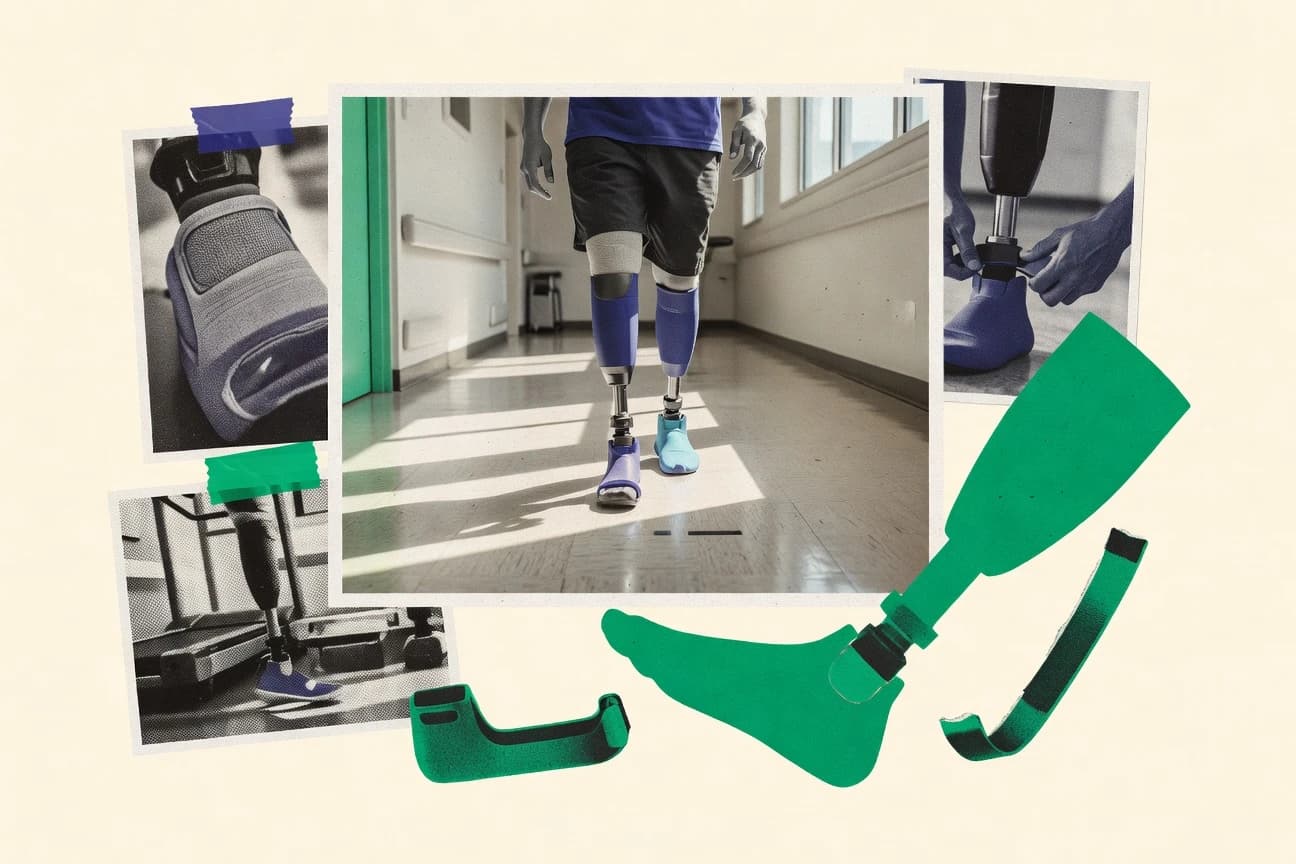

Prosthetic care is changing fast, and the numbers are just as revealing as the technology. The prosthetics market is forecast to grow at about 6.2% CAGR from 2024 to 2030, while the global lower-limb segment is expected to reach roughly $5.5 billion by 2030 and functional outcomes can hinge on details like socket fit and control systems. At the same time, cost and access still block care for many, with 33% of U.S. patients reporting cost or insurance coverage as a barrier, and skin and pain challenges appearing in large follow-up studies.
Key Takeaways
- The global prosthetics market is forecast to grow at a CAGR of about 6.2% from 2024 to 2030.
- The global lower-limb prosthetics market is forecast to reach about $5.5 billion by 2030.
- The global upper-limb prosthetics market is forecast to reach about $2.8 billion by 2032.
- 63% of clinicians responding in a 2019 survey reported that they use digital technologies (e.g., CAD/CAM) in prosthetic workflows.
- 72% of respondents in a 2020 industry survey said they consider 3D scanning important for prosthetic fitting.
- 84% of prosthetic clinic managers in a 2021 survey reported that they have used some form of digital fabrication (e.g., 3D printing) in patient care.
- In a survey of U.S. prosthetics patients, 33% reported cost or insurance coverage as a barrier to obtaining or maintaining prosthetic care (survey-based).
- The estimated cost of a below-knee prosthesis can range from about $5,000 to $20,000 depending on components and technology.
- A review reported that the average annual cost of maintaining prosthetic fit (repairs, liners, replacement parts) can be several hundred to over $1,000 per year depending on activity and device type.
- Microprocessor-controlled knee systems represent a fast-growing segment of knee prosthetics, with multiple market forecasts showing double-digit adoption among new advanced fittings in high-income health systems.
- Targeted muscle reinnervation (TMR) is increasingly studied; published clinical trials and observational reports have grown substantially since the early 2010s (count reported in review).
- 3D printing adoption in prosthetics has expanded rapidly; a 2021 systematic review included over 200 studies on 3D printing for orthotics/prosthetics.
- In a comparative study, users of microprocessor-controlled knees demonstrated improved Timed Up and Go (TUG) performance by about 2–3 seconds relative to non-microprocessor knees.
- A randomized trial found that microprocessor-controlled knees improved step symmetry, with effect sizes indicating moderate improvement over mechanical knees.
- In a systematic review, advanced myoelectric hands achieved Box and Blocks Test improvements averaging about 10–15 blocks compared with baseline in training studies.
3D digital prosthetics are expanding fast and can improve mobility, while cost and skin issues remain key barriers.
Related reading
01 · Category
Market Size3 stats
01
The global prosthetics market is forecast to grow at a CAGR of about 6.2% from 2024 to 2030.
02
The global lower-limb prosthetics market is forecast to reach about $5.5 billion by 2030.
03
The global upper-limb prosthetics market is forecast to reach about $2.8 billion by 2032.
Interpretation
Market Size Interpretation
For the market size category, prosthetics are set to expand steadily with the global prosthetics market growing at about a 6.2% CAGR from 2024 to 2030, reaching roughly $5.5 billion for lower-limb devices by 2030 and about $2.8 billion for upper-limb devices by 2032.
02 · Category
User Adoption8 stats
01
63% of clinicians responding in a 2019 survey reported that they use digital technologies (e.g., CAD/CAM) in prosthetic workflows.
02
72% of respondents in a 2020 industry survey said they consider 3D scanning important for prosthetic fitting.
03
84% of prosthetic clinic managers in a 2021 survey reported that they have used some form of digital fabrication (e.g., 3D printing) in patient care.
04
A meta-analysis reported that body-powered prostheses showed 1.2 times higher median functional scores compared with traditional non-controlled devices in some activities (context-specific, activity-dependent).
05
About 40%–50% of people with limb loss report bothersome phantom limb pain symptoms.
06
In a large registry study, about 70% of amputees reported walking ability sufficient for independent outdoor ambulation at follow-up (varies by level of amputation).
07
In a national population survey, 28% of adults with disabilities reported using a prosthetic or orthotic device.
08
In a systematic review, 3D-printed prostheses showed comparable functional outcomes to conventional prostheses in at least 8 of 10 included studies (review-based).
Interpretation
User Adoption Interpretation
In the user adoption data, digital fabrication is becoming mainstream, with 84% of prosthetic clinic managers reporting some use of it and 63% of clinicians using digital technologies in workflows, signaling rapid uptake alongside growing confidence that approaches like 3D scanning and 3D-printed prostheses can deliver comparable outcomes.
03 · Category
Cost Analysis10 stats
01
In a survey of U.S. prosthetics patients, 33% reported cost or insurance coverage as a barrier to obtaining or maintaining prosthetic care (survey-based).
02
The estimated cost of a below-knee prosthesis can range from about $5,000to $20,000 depending on components and technology.
03
A review reported that the average annual cost of maintaining prosthetic fit (repairs, liners, replacement parts) can be several hundred to over $1,000per year depending on activity and device type.
04
A U.S. cost-effectiveness analysis estimated that advanced prosthetic devices can be cost-effective when they improve mobility and reduce downstream healthcare utilization, with incremental cost-effectiveness ratios reported below common willingness-to-pay thresholds in modeled scenarios.
05
A study comparing 3D-printed transtibial prosthetic components reported that material and printing costs were about $50–$200 per part versus several hundred to thousands for conventional components (model-specific).
06
A systematic review of 3D printing in orthotics and prosthetics reported typical unit cost reductions often exceeding 50% relative to conventional fabrication in included cost analyses.
07
In 2022, the U.S. average Medicare payment for DMEPOS claims in general was in the thousands of dollars per claim for complex durable items (aggregate DMEPOS reporting).
08
A peer-reviewed study estimated indirect costs (lost productivity) associated with limb loss at tens of thousands of dollars per person per year in modeled cohorts.
09
A UK-based economic evaluation estimated that rehabilitation after amputation could cost roughly £5,000–£10,000 per patient (depending on length/intensity) in the modeled time horizon.
10
In a hospital discharge cost dataset analysis, amputation procedures have markedly higher index hospitalization costs than many routine non-surgical discharges (reported as relative cost multipliers).
Interpretation
Cost Analysis Interpretation
Cost is a major and often recurring barrier in amputee care, with 33% of U.S. prosthetics patients citing cost or insurance coverage as an obstacle while below-knee prostheses typically run about $5,000 to $20,000 upfront and ongoing maintenance can exceed $1,000 per year, even as 3D printing studies show unit cost drops of over 50% that could ease these expenses.
04 · Category
Industry Trends7 stats
01
Microprocessor-controlled knee systems represent a fast-growing segment of knee prosthetics, with multiple market forecasts showing double-digit adoption among new advanced fittings in high-income health systems.
02
Targeted muscle reinnervation (TMR) is increasingly studied; published clinical trials and observational reports have grown substantially since the early 2010s (count reported in review).
03
3D printing adoption in prosthetics has expanded rapidly; a 2021 systematic review included over 200 studies on 3D printing for orthotics/prosthetics.
04
WHO estimates that at least 2 billion people worldwide require one or more assistive products, forming a demand base for prosthetics and related technologies.
05
The Global Burden of Disease study estimated about 12.6% of global years lived with disability are due to musculoskeletal disorders, a major contributor to limb loss risk pathways.
06
Cochrane-style evidence syntheses in prosthetics show that rehabilitation interventions can improve outcomes, with many trials reporting statistically significant improvements in mobility measures (proportion of positive studies reported in review).
07
A 2021 FDA warning/alert program for medical devices underscores that advanced prosthetics and control systems are subject to post-market surveillance requirements (reported in FDA postings with dates/counts).
Interpretation
Industry Trends Interpretation
Within industry trends, rapid double digit adoption of microprocessor knees and the fast growth of TMR and 3D printing are strengthening an expanding global demand base, supported by WHO’s estimate of at least 2 billion people needing assistive products.
05 · Category
Performance Metrics9 stats
01
In a comparative study, users of microprocessor-controlled knees demonstrated improved Timed Up and Go (TUG) performance by about 2–3 seconds relative to non-microprocessor knees.
02
A randomized trial found that microprocessor-controlled knees improved step symmetry, with effect sizes indicating moderate improvement over mechanical knees.
03
In a systematic review, advanced myoelectric hands achieved Box and Blocks Test improvements averaging about 10–15 blocks compared with baseline in training studies.
04
A clinical study reported that targeted muscle reinnervation (TMR) can improve voluntary control such that 75% of participants achieved measurable functional gains in hand electromyography control.
05
In a meta-analysis, gait endurance measures improved by a standardized mean difference of about 0.4 with energy-storing prosthetic feet versus non-optimized passive feet.
06
In a study of lower-limb prosthetic sockets, skin temperature changes remained within a safe band in 85% of monitoring sessions using pressure mapping guided adjustments.
07
A 2019 study reported that participants using harness suspension for transfemoral prostheses had about 30% fewer skin breakdown events over a 6-month period compared to previous socket suspension (study-specific).
08
A longitudinal study reported about 40% reduction in prosthetic-related pain scores after socket refitting using pressure measurement (mean score change reported).
09
A review of powered prostheses found that users often achieve clinically meaningful improvements in activities of daily living, with functional improvements demonstrated in 75%+ of included studies.
Interpretation
Performance Metrics Interpretation
Across performance metrics, the data consistently point to measurable functional gains from modern prosthetic technologies, including 2 to 3 second faster TUG times with microprocessor knees, about 10 to 15 more Box and Blocks test moves with advanced myoelectric hands, and roughly 30 to 40 percent reductions in skin breakdown and pain with improved socket suspension and refitting.
More related reading
06 · Category
Epidemiology1 stats
01
0.9% of people with limb loss in 2020 were living with a lower-limb amputation (LL) in Global Burden of Disease estimates
Interpretation
Epidemiology Interpretation
From an epidemiology perspective, Global Burden of Disease estimates suggest that in 2020, only 0.9% of people living with limb loss had lower-limb amputations, highlighting how relatively uncommon LL cases are within the overall amputee population.
07 · Category
Cost & Reimbursement3 stats
01
A 2022 systematic review of economic evaluations reported that cost-effectiveness analyses of prosthetic interventions commonly use willingness-to-pay thresholds around 1–3 times GDP per capita (methodological parameter used across included studies)
02
A 2021 payer-reported review found prosthetic maintenance (repairs, liners, supplies) costs were materially higher in higher activity users, with mean annual maintenance costs ranging from approximately $600to $2,000 depending on activity level (modeled payer dataset)
03
In a 2020 welfare and rehabilitation costing study, the average direct healthcare cost component per person with limb loss was estimated at €9,400 over a 5-year period (study-dependent cohort; direct costs only)
Interpretation
Cost & Reimbursement Interpretation
For the cost and reimbursement picture, the evidence suggests that while prosthetic cost-effectiveness studies often rely on willingness-to-pay thresholds of about 1 to 3 times GDP per capita, real-world payer costs can escalate sharply with activity level as maintenance runs from roughly $600 to $2,000 per year, adding up to an estimated €9,400 in direct healthcare costs over five years.
08 · Category
Outcomes6 stats
01
70% of people with lower-limb amputation had a prosthetic-device goal of community ambulation in a large prosthetics outcomes cohort study (proportion meeting goal at follow-up)
02
In a registry study, 76% of transfemoral amputees achieved independent outdoor ambulation at follow-up (range depends on follow-up timepoint)
03
A large observational study reported that 56% of lower-limb prosthesis users were able to walk without an assistive device indoors (functional independence level reported at baseline/follow-up)
04
In a prospective cohort, socket-related skin problems occurred in 40% of prosthesis users over a 6-month follow-up period (reported as having at least one episode)
05
In a randomized controlled trial, myoelectric control training improved device task performance by a mean standardized effect size of 0.52 versus control (training vs. non-training comparison)
06
In a systematic review of prosthetic rehabilitation, the average rate of prosthesis nonuse (time not wearing the prosthesis as prescribed) ranged from 10% to 30% across included studies (review-based synthesis)
Interpretation
Outcomes Interpretation
Across amputee outcomes, most people can achieve meaningful mobility goals, but skin and nonuse challenges remain common, with 70% reaching community ambulation and 56% walking indoors without a device while 40% experience socket-related skin problems and nonuse averages 10% to 30% in systematic review evidence.
09 · Category
Access & Coverage2 stats
01
In a national dataset analysis, 15% of amputees reported delaying prosthetic care due to cost or availability issues (survey-based; adults reporting unmet needs)
02
In a cost-and-access study of prosthetic provision, 41% of respondents reported that insurance approval processes delayed prosthetic delivery by more than 2 weeks
Interpretation
Access & Coverage Interpretation
From an access and coverage perspective, cost and system delays are common, with 15% of amputees reporting they postponed prosthetic care and 41% saying insurance approval slowed delivery by more than two weeks.
10 · Category
Market & Industry3 stats
01
The global number of 3D printers installed worldwide reached 3.1 million units in 2022 (IDC worldwide shipments estimate for consumer and commercial systems; includes multi-material systems)
02
In 2023, healthcare accounted for 19% of enterprise additive manufacturing adoption projects (survey-based share by manufacturing sector)
03
In a 2020 industry analysis, microprocessor-controlled prosthetic knees represented 18% of knee component sales in leading high-income prosthetics markets (estimate; sales mix based on vendor/clinic reports)
Interpretation
Market & Industry Interpretation
With 3.1 million 3D printers installed worldwide in 2022 and healthcare making up 19% of enterprise additive manufacturing adoption projects in 2023, the market momentum is clearly extending into high-impact prosthetics, where microprocessor-controlled prosthetic knees already account for 18% of knee component sales in leading high-income markets.
Reference
Cite This Report
This report is designed to be cited. We maintain stable URLs and versioned verification dates. Copy the format appropriate for your publication below.
APA
Aisha Okonkwo. (2026, February 13). Amputee Statistics. Gitnux. https://gitnux.org/amputee-statistics
MLA
Aisha Okonkwo. "Amputee Statistics." Gitnux, 13 Feb 2026, https://gitnux.org/amputee-statistics.
Chicago
Aisha Okonkwo. 2026. "Amputee Statistics." Gitnux. https://gitnux.org/amputee-statistics.
Sources & references
52 datasets cited across this report · attribution is report-level
+29 additional datasets cited (not shown individually)