
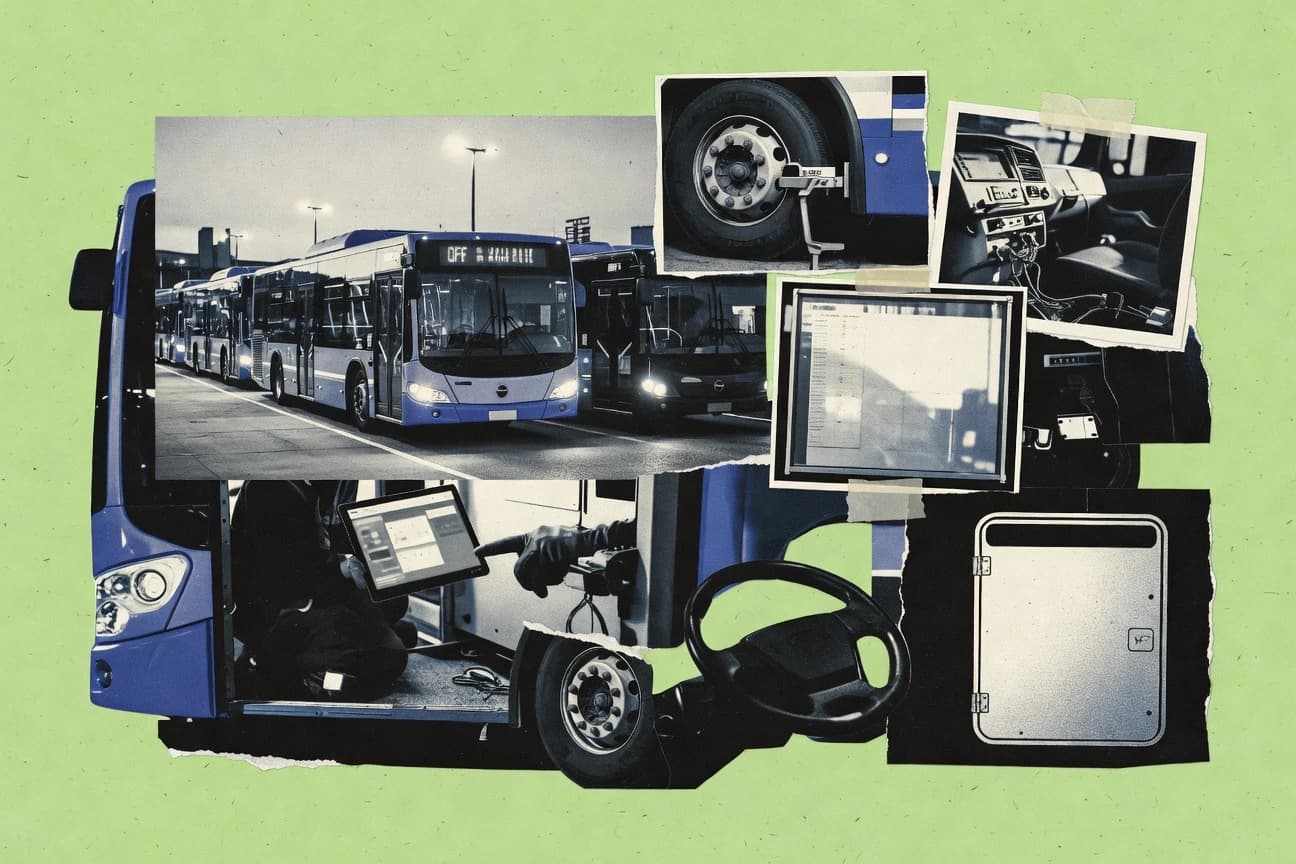

AI in bus and transit isn’t just about smarter apps—it’s about how agencies plan routes, manage dispatch, and deliver real-time passenger information. Research and surveys link AI-enabled routing and predictive maintenance to measurable gains, from reduced fuel use to lower downtime. As EU digital investment and the shift to zero-emission vehicles expand, demand grows for robust, compliant, data-quality foundations. Explore the use cases and the results reported across industry studies and research.
Key Takeaways
- 27% of respondents in a global transportation survey reported using AI for routing/dispatch or operational planning
- 72% of transit agencies reported using real-time information for passengers (2019 survey year)
- EUR 1.2 trillion: EU-wide digital transformation investment target by 2027 (includes transport digitalization programs enabling AI use cases)
- USD 9.2 billion: global AI in transportation market size in 2023 (forecast includes autonomous driving, traffic management, and fleet analytics)
- USD 12.5 billion: global transportation analytics market size in 2023 (used for demand forecasting, operations optimization, and planning)
- USD 21.5 billion: estimated market size for fleet management systems in 2023 (telematics/analytics enabling AI-driven fleet optimization)
- 61% of organizations using AI analytics report that it helps improve customer experience (2024 industry survey; passenger information is a common use case)
- 22% of agencies reported using traffic prediction models for bus priority (2018 survey baseline)
- 13% of respondents report using AI for fraud detection and compliance (2019–2020 transportation industry surveys; helps ticketing fraud controls)
- 15–25% reduction in bus bunching reported using optimization algorithms informed by real-time data (2017–2020 research synthesis)
- 9.4% average reduction in fuel consumption from AI-enabled route optimization reported in a fleet analytics meta-analysis (2018–2022 literature)
- 12% reduction in unplanned downtime with predictive maintenance models reported across multiple industrial case studies (2019–2021 review)
- $0.70 per mile: average annual savings from reduced maintenance labor in telematics-enabled predictive maintenance programs (fleet economics study)
- 10–20% cost reduction range from condition-based maintenance (CBM) compared with reactive maintenance in a 2020 academic review
- USD 3.4 billion: estimated global cost impact of poor data quality in transportation analytics projects (2022 estimate)
AI adoption is rising fast in bus and transit, cutting fuel use, downtime, and costs through real time planning.
Related reading
01 · Category
Industry Trends7 stats
01
27% of respondents in a global transportation survey reported using AI for routing/dispatch or operational planning
02
72% of transit agencies reported using real-time information for passengers (2019 survey year)
03
EUR 1.2 trillion: EU-wide digital transformation investment target by 2027 (includes transport digitalization programs enabling AI use cases)
04
EU: 2030 target of at least 30 million zero-emission vehicles (ZEV) to be on roads; accelerates AI needs in fleet energy management and routing
05
46% of all global CO2 emissions come from transport-related activities according to IPCC AR6 (drives AI for fleet emissions optimization)
06
7.7%: average year-over-year increase in global public transport ridership in 2023 (recovery baseline from ITF/UNWTO; supports AI optimization demand)
07
2024: EU Horizon Europe call targets “AI for Mobility” technologies (supports AI adoption in public transport, including bus systems)
Interpretation
Industry Trends Interpretation
Industry Trends in AI adoption for bus and broader public transport are being strongly shaped by scale and urgency, with 27% of survey respondents already using AI for routing or operational planning and transport accounting for 46% of global CO2 emissions, while real time passenger information is widespread at 72% and major EU digital and zero emission vehicle targets push fleets toward further AI driven optimization.
02 · Category
Market Size6 stats
01
USD 9.2 billion: global AI in transportation market size in 2023 (forecast includes autonomous driving, traffic management, and fleet analytics)
02
USD 12.5 billion: global transportation analytics market size in 2023 (used for demand forecasting, operations optimization, and planning)
03
USD 21.5 billion: estimated market size for fleet management systems in 2023 (telematics/analytics enabling AI-driven fleet optimization)
04
USD 18.4 billion: global smart transportation market size in 2022 (includes traffic and public transit optimization software)
05
USD 2.9 billion: global smart parking market size in 2023 (related ITS spend that competes for transit digitization budgets)
06
1.0% of global GDP is spent on rail and public transit infrastructure services (context for investment capacity; OECD transport spending stats 2022)
Interpretation
Market Size Interpretation
The market size for AI and related analytics in transportation is already sizeable, with global AI in transportation reaching USD 9.2 billion in 2023 while the broader transportation analytics market is USD 12.5 billion and fleet management systems are estimated at USD 21.5 billion, signaling strong and growing investment capacity behind AI adoption in the bus industry.
03 · Category
User Adoption4 stats
01
61% of organizations using AI analytics report that it helps improve customer experience (2024 industry survey; passenger information is a common use case)
02
22% of agencies reported using traffic prediction models for bus priority (2018 survey baseline)
03
13% of respondents report using AI for fraud detection and compliance (2019–2020 transportation industry surveys; helps ticketing fraud controls)
04
12,000+: number of transit stops served by GTFS feeds for a major US transit network used in AI demand forecasting studies (dataset size in study)
Interpretation
User Adoption Interpretation
User adoption of AI in the bus industry is already delivering customer facing value, with 61% of organizations using AI analytics reporting improved customer experience, while smaller but meaningful shares such as 22% using traffic prediction for bus priority and 13% using AI for fraud detection show the technology is spreading beyond analytics into operational and compliance use cases.
More related reading
04 · Category
Performance Metrics17 stats
01
15–25% reduction in bus bunching reported using optimization algorithms informed by real-time data (2017–2020 research synthesis)
02
9.4% average reduction in fuel consumption from AI-enabled route optimization reported in a fleet analytics meta-analysis (2018–2022 literature)
03
12% reduction in unplanned downtime with predictive maintenance models reported across multiple industrial case studies (2019–2021 review)
04
Up to 30% reduction in maintenance costs from predictive maintenance implementations (reviewed estimates; 2020–2021)
05
AI-based computer vision detection accuracy of 95% for safety-critical events in a 2021 peer-reviewed transit video analytics study
06
92% mean accuracy in automatic bus stop detection using deep learning in a 2020 published study
07
3.2% improvement in schedule adherence after deploying real-time AI-based control strategies for transit signal priority (study year 2019)
08
1.7x faster incident detection: AI-enhanced CCTV analytics versus manual monitoring in a transportation operations pilot (2019)
09
23% reduction in average boarding time with AI-assisted passenger flow management in a 2022 field evaluation
10
Up to 40% reduction in idling time with AI-driven operational scheduling in logistics studies (transferable to fleet operations)
11
5–10% improvement in capacity utilization from AI-based demand forecasting and dispatching (transit planning research)
12
25% reduction in customer complaints reported after deploying AI-driven service monitoring and routing adjustments in a transit case study (publication year 2020)
13
2.1x: average improvement in schedule recovery times from AI-assisted dispatching in a 2020 operational research study
14
10% reduction in energy consumption from smart charging and operational optimization using AI in electric bus studies (2021)
15
9% reduction in emissions from eco-driving assistance systems based on AI-enabled driver guidance (study 2020)
16
25% improvement in asset utilization after AI-based maintenance and scheduling optimization (2018–2019 research synthesis)
17
1.5M: number of GTFS-referenced trips used for AI timetable reliability prediction in a peer-reviewed study (study dataset size)
Interpretation
Performance Metrics Interpretation
Across performance metrics, AI is consistently delivering measurable operational gains such as 15–25% less bus bunching, about 9.4% lower fuel use, and roughly 12% fewer unplanned downtime events, with supporting evidence from strong detection accuracy like 95% for safety-critical events.
05 · Category
Cost Analysis9 stats
01
$0.70per mile: average annual savings from reduced maintenance labor in telematics-enabled predictive maintenance programs (fleet economics study)
02
10–20% cost reduction range from condition-based maintenance (CBM) compared with reactive maintenance in a 2020 academic review
03
USD 3.4 billion: estimated global cost impact of poor data quality in transportation analytics projects (2022 estimate)
04
15% reduction in total cost of ownership reported in a case study of AI-enabled route optimization for fleets (2021)
05
USD 120–200k per year savings potential per depot from AI-based maintenance scheduling optimization (2019 research estimate)
06
2.5x: improvement in maintenance technician productivity in AI-assisted work-order prioritization pilot (2019)
07
50% of fleet downtime costs are driven by unexpected breakdowns; predictive approaches can reduce this (2017 review; used to motivate AI maintenance)
08
15% reduction in labor required for inspections reported after AI vision-based asset inspection (construction-equipment analog; applied to bus fleet checks)
09
20% lower procurement cycle time when AI-assisted demand and maintenance forecasting is used (2019 supply chain analytics study)
Interpretation
Cost Analysis Interpretation
For the cost analysis angle, the evidence points to meaningful savings driven by AI-enabled operational decisions, with reported maintenance and route optimization benefits ranging from 10 to 20 percent lower costs and a 15 percent reduction in total cost of ownership, while even maintenance scheduling optimization can cut depot expenses by an estimated USD 120 to 200k per year and improved productivity delivers a 2.5x gain.
Reference
Cite This Report
This report is designed to be cited. We maintain stable URLs and versioned verification dates. Copy the format appropriate for your publication below.
APA
Henrik Dahl. (2026, February 13). AI In The Bus Industry Statistics. Gitnux. https://gitnux.org/ai-in-the-bus-industry-statistics
MLA
Henrik Dahl. "AI In The Bus Industry Statistics." Gitnux, 13 Feb 2026, https://gitnux.org/ai-in-the-bus-industry-statistics.
Chicago
Henrik Dahl. 2026. "AI In The Bus Industry Statistics." Gitnux. https://gitnux.org/ai-in-the-bus-industry-statistics.
Sources & references
43 datasets cited across this report · attribution is report-level
+23 additional datasets cited (not shown individually)