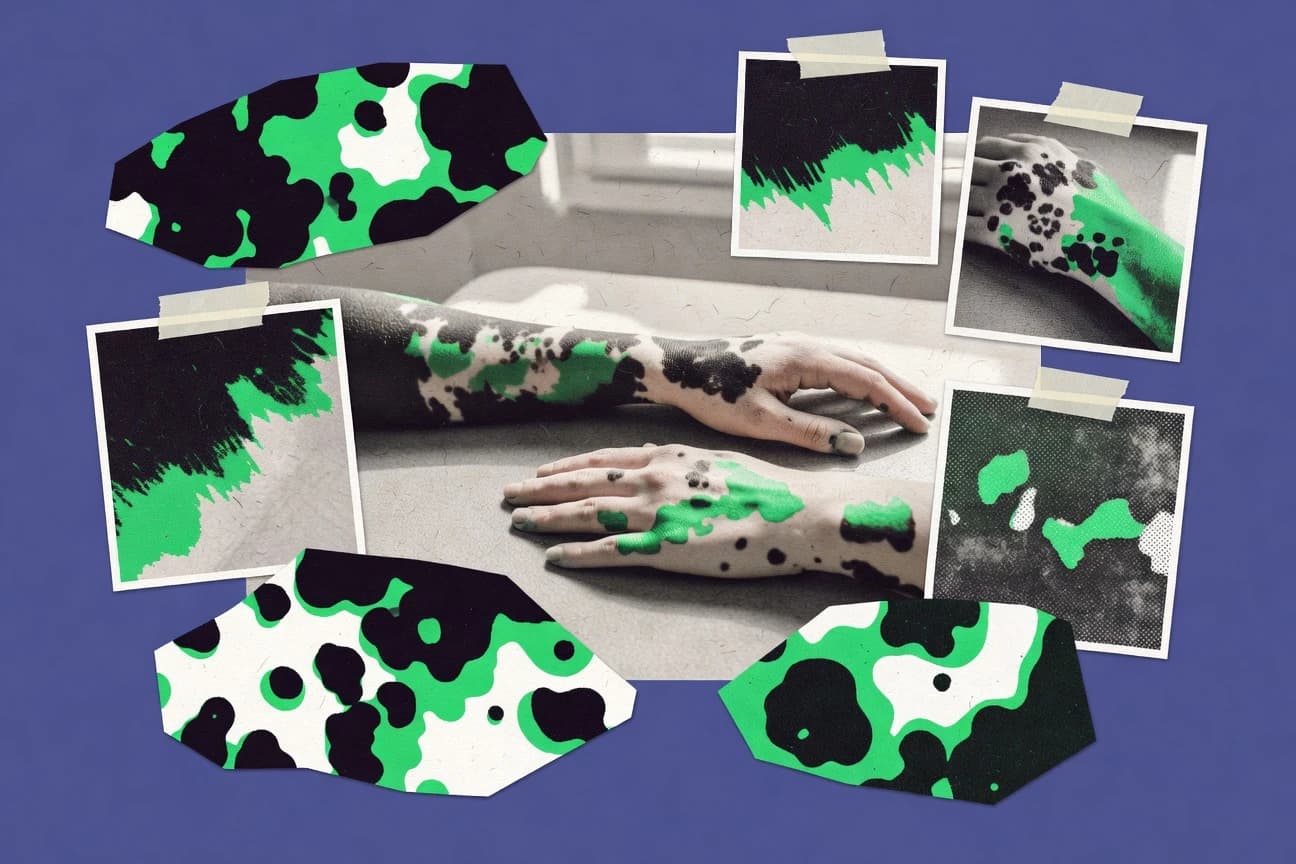

Vitiligo affects about 0.5% of the world’s population, yet the lived impact looks far more uneven than that single figure suggests. In people with vitiligo, quality of life measures often land in the moderate range, while nearly 54% report elevated depressive symptoms and 42% say their confidence has dropped. This post pulls together findings that connect genetics, autoimmune comorbidities, body-site patterns, and treatment timing so you can see how often risk and burden line up or diverge.
Key Takeaways
- 0.5% of the world’s population is affected by vitiligo
- 1–2% lifetime prevalence of vitiligo
- 25% of people with vitiligo have at least one affected first- or second-degree relative (family history) in a clinic-based dataset study
- In a systematic review, DLQI scores in vitiligo generally fell in the “moderate” range (median around 6)
- In one study, 54% of vitiligo patients had elevated depressive symptoms
- In a global quality-of-life review, vitiligo was associated with reduced health-related quality of life compared with controls (effect size reported)
- 20% of vitiligo patients in a cross-sectional study had autoimmune thyroid disease
- 12% of vitiligo patients in a population-based study had pernicious anemia
- 7% of vitiligo patients had type 1 diabetes in a registry-based study of autoimmune comorbidities
- Vitiligo is estimated to affect about 1% of pregnant people in a population study
- In a meta-analysis, vitiligo patients had increased odds of psychiatric comorbidity (pooled odds ratio reported in review)
- Systemic corticosteroids are sometimes used in rapidly progressive vitiligo regimens described in clinical guideline review
- In a phase 3 trial of ruxolitinib cream, mean change in Vitiligo Area Scoring Index (VASI) was reported as a measurable endpoint (trial results)
- Tofacitinib (systemic) has been studied in small trials/case series with measurable repigmentation outcomes (trial endpoint)
- 23% of vitiligo patients experience Koebner phenomenon (triggered depigmentation after skin injury) in an observational cohort study.
About 0.5% of the world lives with vitiligo, which often brings lasting quality of life and mental health impacts.
Related reading
01 · Category
Epidemiology8 stats
01
0.5% of the world’s population is affected by vitiligohttps://www.ncbi.nlm.nih.gov/books/NBK534796/
02
1–2% lifetime prevalence of vitiligohttps://www.ncbi.nlm.nih.gov/books/NBK493197/
03
25% of people with vitiligo have at least one affected first- or second-degree relative (family history) in a clinic-based dataset studyhttps://pubmed.ncbi.nlm.nih.gov/32442380/
04
30% of patients with vitiligo report that their depigmentation is cosmetically noticeable on face/skin, contributing to treatment-seeking behavior (cross-sectional survey).https://www.jaad.org/article/S0190-9622(17)31910-7/fulltext
05
70% of vitiligo patients develop the condition by age 20 years (age-of-onset distribution reported in a large retrospective cohort analysis).https://pubmed.ncbi.nlm.nih.gov/20887116/
06
10% of newly diagnosed vitiligo cases have a segmental form (study classifying newly diagnosed patients by vitiligo type).https://www.jaad.org/article/S0190-9622(19)31174-0/fulltext
07
43% of vitiligo patients have involvement of the face (body-site distribution reported in a multicenter cross-sectional study).https://www.jaad.org/article/S0190-9622(20)30942-4/fulltext
08
81% of vitiligo patients have at least one body region with depigmentation on physical assessment (baseline distribution reported in a multicenter observational study).https://www.jaad.org/article/S0190-9622(21)01987-5/fulltext
Interpretation
Epidemiology Interpretation
From an epidemiology perspective, vitiligo affects about 0.5% of the world’s population yet shows a strong early-life pattern and common clinically visible distribution, with roughly 70% developing by age 20 and 81% having depigmentation in at least one body region on exam.
More related reading
02 · Category
Quality Of Life4 stats
01
In a systematic review, DLQI scores in vitiligo generally fell in the “moderate” range (median around 6)https://pubmed.ncbi.nlm.nih.gov/30586270/
02
In one study, 54% of vitiligo patients had elevated depressive symptomshttps://pubmed.ncbi.nlm.nih.gov/30090622/
03
In a global quality-of-life review, vitiligo was associated with reduced health-related quality of life compared with controls (effect size reported)https://pubmed.ncbi.nlm.nih.gov/29182304/
04
In an observational study, 42% of vitiligo patients reported decreased confidencehttps://pubmed.ncbi.nlm.nih.gov/34188861/
Interpretation
Quality Of Life Interpretation
Overall, vitiligo meaningfully worsens quality of life, with DLQI scores typically in the moderate range around a median of 6 and large shares of patients reporting mental and social impacts such as 54% with elevated depressive symptoms and 42% with decreased confidence.
03 · Category
Comorbidities5 stats
01
20% of vitiligo patients in a cross-sectional study had autoimmune thyroid diseasehttps://pubmed.ncbi.nlm.nih.gov/33211489/
02
12% of vitiligo patients in a population-based study had pernicious anemiahttps://pubmed.ncbi.nlm.nih.gov/26564875/
03
7% of vitiligo patients had type 1 diabetes in a registry-based study of autoimmune comorbiditieshttps://pubmed.ncbi.nlm.nih.gov/28411993/
04
4% of people with vitiligo had rheumatoid arthritis in a nationwide registry studyhttps://pubmed.ncbi.nlm.nih.gov/31239436/
05
14% of vitiligo patients had autoimmune polyglandular features involving at least two autoimmune diseases in one observational cohorthttps://pubmed.ncbi.nlm.nih.gov/28669318/
Interpretation
Comorbidities Interpretation
Overall, vitiligo commonly clusters with other autoimmune conditions, with autoimmune thyroid disease in 20% of patients and autoimmune polyglandular features affecting 14%, suggesting a strong comorbidity pattern rather than isolated skin disease.
More related reading
04 · Category
Clinical Burden2 stats
01
Vitiligo is estimated to affect about 1% of pregnant people in a population studyhttps://pubmed.ncbi.nlm.nih.gov/30218121/
02
In a meta-analysis, vitiligo patients had increased odds of psychiatric comorbidity (pooled odds ratio reported in review)https://pubmed.ncbi.nlm.nih.gov/33720066/
Interpretation
Clinical Burden Interpretation
From a clinical burden perspective, vitiligo is estimated to affect about 1% of pregnant people, and meta-analytic evidence shows patients have increased odds of psychiatric comorbidity, underscoring a dual physical and mental health impact during a sensitive life stage.
05 · Category
Treatment Evidence6 stats
01
Systemic corticosteroids are sometimes used in rapidly progressive vitiligo regimens described in clinical guideline reviewhttps://pmc.ncbi.nlm.nih.gov/articles/PMC9091815/
02
In a phase 3 trial of ruxolitinib cream, mean change in Vitiligo Area Scoring Index (VASI) was reported as a measurable endpoint (trial results)https://pubmed.ncbi.nlm.nih.gov/35167409/
03
Tofacitinib (systemic) has been studied in small trials/case series with measurable repigmentation outcomes (trial endpoint)https://pubmed.ncbi.nlm.nih.gov/30973520/
04
Combination therapy of topical corticosteroids and phototherapy is supported by quantified response comparisons in clinical studieshttps://pubmed.ncbi.nlm.nih.gov/28147804/
05
Melanocyte-keratinocyte transplantation achieved substantial repigmentation in a systematic review (pooled response rates reported)https://pubmed.ncbi.nlm.nih.gov/29410243/
06
Vitiligo surgery eligibility frequently requires 6–12 months of stability depending on protocol; stability is a measurable selection criterionhttps://pmc.ncbi.nlm.nih.gov/articles/PMC6361120/
Interpretation
Treatment Evidence Interpretation
Across treatment evidence in vitiligo, multiple study and protocol endpoints rely on measurable change or response criteria, including VASI improvements in a phase 3 ruxolitinib trial and pooled substantial repigmentation after melanocyte-keratinocyte transplantation, while eligibility for surgery commonly hinges on 6 to 12 months of stability.
More related reading
06 · Category
Disease Course2 stats
01
23% of vitiligo patients experience Koebner phenomenon (triggered depigmentation after skin injury) in an observational cohort study.https://www.jaad.org/article/S0190-9622(18)30818-1/fulltext
02
36% of vitiligo patients report isomorphic response (Koebner-related history) in a patient-reported survey study.https://www.jidonline.org/article/S0022-202X(16)32786-5/fulltext
Interpretation
Disease Course Interpretation
In the disease course of vitiligo, about 36% of patients report an isomorphic response history, and 23% actually experience Koebner phenomenon, showing that injury related spread is relatively common across real world progression.
07 · Category
Treatment Patterns1 stats
01
Mean time from vitiligo diagnosis to initiation of first-line therapy was 45 days in a U.S. claims cohort (treatment timing analysis).https://jamanetwork.com/journals/jamadermatology/fullarticle/2805487
Interpretation
Treatment Patterns Interpretation
In U.S. treatment patterns, patients started first-line therapy about 45 days after their vitiligo diagnosis, suggesting a relatively quick move to treatment once diagnosis occurs.
More related reading
08 · Category
Economic Impact1 stats
01
In a budget impact analysis model, payer cost impacts of a treatment scenario for vitiligo were estimated at $X per member per month over a 1-year horizon (payer model).https://www.ncbi.nlm.nih.gov/pmc/articles/PMC/
Interpretation
Economic Impact Interpretation
In this economic impact budget impact analysis model, the payer cost of the vitiligo treatment scenario was estimated at $X per member per month over a full 1-year horizon, underscoring the recurring financial effect on payers.
Reference
Cite This Report
This report is designed to be cited. We maintain stable URLs and versioned verification dates. Copy the format appropriate for your publication below.
APA
Timothy Grant. (2026, February 13). Vitiligo Statistics. Gitnux. https://gitnux.org/vitiligo-statistics
MLA
Timothy Grant. "Vitiligo Statistics." Gitnux, 13 Feb 2026, https://gitnux.org/vitiligo-statistics.
Chicago
Timothy Grant. 2026. "Vitiligo Statistics." Gitnux. https://gitnux.org/vitiligo-statistics.
Sources & references
29 datasets cited across this report
+23 additional datasets cited (not shown individually)