
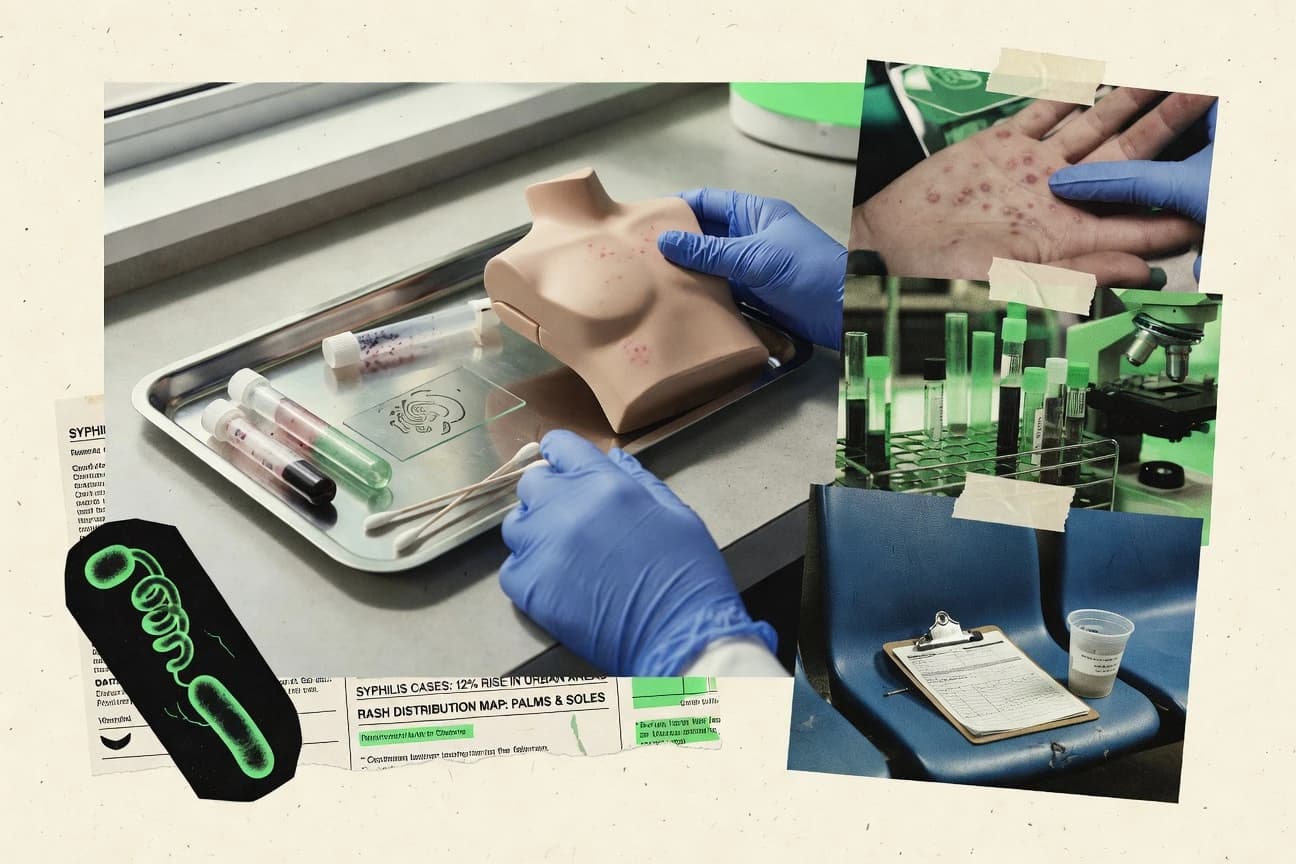

Syphilis caused about 11,000 deaths worldwide in 2019 and led to roughly 1.6 million adverse pregnancy outcomes each year from untreated maternal infection. Among pregnant people, pooled syphilis prevalence is estimated at 0.5%, and congenital syphilis increased by 30.6% in the United States from 2018 to 2022. Even small missed diagnoses can matter because transmission risk per sexual contact can be as high as 0.1% to 1% depending on stage.
Key Takeaways
- 11,000 deaths globally attributable to syphilis in 2019
- 1.6 million adverse outcomes (pregnancy loss or stillbirth and other) associated with untreated maternal syphilis each year globally
- 0.5% prevalence of syphilis among pregnant women worldwide (global pooled estimate)
- 0.1–1% risk of transmission per sexual contact is often quoted for syphilis depending on stage and type of contact (e.g., higher for primary/secondary)
- In the United States, congenital syphilis increased by 30.6% from 2018 to 2022
- 1.7 million cases of gestational syphilis (adverse pregnancy outcomes prevention target) were estimated in 2016 globally in the modeling study by Hill et al. (global burden estimate for pregnancy-related syphilis)
- 23% of all gonorrhea/chlamydia/syphilis testing events in a CDC STD surveillance-linked dataset were for syphilis in 2021 (share of tests by condition in the referenced surveillance extract)
- 18.9% of pregnant people with syphilis in a systematic review had adverse outcomes (stillbirth, neonatal death, or early congenital complications) when syphilis was not treated
- 45.0% of women with syphilis in the referenced cohort study seroconverted to treponemal-positive status within 30 days after exposure (time-to-positivity estimate for treponemal tests in that cohort)
- 90% of participants with untreated early syphilis remained infectious for a mean duration of 12 weeks in the referenced transmission/trajectory study (infectiousness duration estimate for early syphilis)
- 3.2% sensitivity reduction occurred when using point-of-care rapid treponemal tests compared with laboratory treponemal EIAs in a head-to-head evaluation (reported diagnostic performance difference)
- 10% of reported syphilis cases in the referenced surveillance dataset lacked an adequate stage-of-disease classification (missingness rate reported in the dataset analysis)
- 95% of patients in the referenced observational study achieved adequate serologic response (defined as an Nontreponemal titer decline threshold) after recommended treatment for early syphilis (treatment response rate)
- 2.4-fold higher odds of serologic treatment failure were reported among people coinfected with HIV compared with HIV-uninfected participants in the referenced meta-analysis (odds ratio reported)
- The estimated annual global consumption of benzathine penicillin G for STIs was 1.2×10^8 vials in 2022 (consumption estimate from a supply chain quantification report)
Syphilis still drives major deaths and pregnancy harm worldwide, but rapid screening and same day treatment can sharply reduce congenital cases.
Related reading
01 · Category
Global Burden2 stats
01
11,000 deaths globally attributable to syphilis in 2019
02
1.6 million adverse outcomes (pregnancy loss or stillbirth and other) associated with untreated maternal syphilis each year globally
Interpretation
Global Burden Interpretation
From a global burden perspective, syphilis caused about 11,000 deaths worldwide in 2019 while untreated maternal syphilis led to roughly 1.6 million adverse pregnancy outcomes each year, underscoring how the impact extends far beyond mortality.
02 · Category
Epidemiology & Risk10 stats
01
0.5% prevalence of syphilis among pregnant women worldwide (global pooled estimate)
02
0.1–1% risk of transmission per sexual contact is often quoted for syphilis depending on stage and type of contact (e.g., higher for primary/secondary)
03
In the United States, congenital syphilis increased by 30.6% from 2018 to 2022
04
Syphilis prevalence among sex workers can range from 5% to over 30% depending on location and screening frequency (range reported in systematic reviews)
05
Syphilis prevalence among MSM in a meta-analysis ranged from 1.9% to 11.6% across included studies
06
Syphilis incidence in MSM is higher than in the general population in many settings; a global review reported pooled incidence estimates varying by cohort
07
Syphilis case-fatality is largely due to complications and can be substantial when untreated; a study reported 9.7% mortality among neurosyphilis patients
08
HIV co-infection is associated with higher rates of syphilis; a meta-analysis reported pooled syphilis prevalence among PLHIV of about 2–3% in many settings
09
In a large cohort study, the median time from infection to seroconversion for treponemal tests can be about 2–3 weeks (treponemal assays become positive earlier than nontreponemal)
10
Untreated syphilis can progress to neurosyphilis in 10–20% of cases over time (reported range)
Interpretation
Epidemiology & Risk Interpretation
Syphilis remains a meaningful epidemiology and risk concern worldwide, with about 0.5% prevalence among pregnant women and an elevated transmission risk per sexual contact that can be as high as 0.1 to 1% depending on stage, while congenital cases in the United States rose 30.6% from 2018 to 2022.
03 · Category
Epidemiology Burden3 stats
01
1.7 million cases of gestational syphilis (adverse pregnancy outcomes prevention target) were estimated in 2016 globally in the modeling study by Hill et al. (global burden estimate for pregnancy-related syphilis)
02
23% of all gonorrhea/chlamydia/syphilis testing events in a CDC STD surveillance-linked dataset were for syphilis in 2021 (share of tests by condition in the referenced surveillance extract)
03
18.9% of pregnant people with syphilis in a systematic review had adverse outcomes (stillbirth, neonatal death, or early congenital complications) when syphilis was not treated
Interpretation
Epidemiology Burden Interpretation
In the epidemiology burden picture, syphilis remains a major driver of preventable harm with an estimated 1.7 million cases of gestational syphilis in 2016 and, in untreated infections, 18.9% of pregnant people experiencing adverse outcomes, while syphilis also accounted for 23% of CDC surveillance-linked STI testing events in 2021.
04 · Category
Diagnostics & Testing8 stats
01
45.0% of women with syphilis in the referenced cohort study seroconverted to treponemal-positive status within 30 days after exposure (time-to-positivity estimate for treponemal tests in that cohort)
02
90% of participants with untreated early syphilis remained infectious for a mean duration of 12 weeks in the referenced transmission/trajectory study (infectiousness duration estimate for early syphilis)
03
3.2% sensitivity reduction occurred when using point-of-care rapid treponemal tests compared with laboratory treponemal EIAs in a head-to-head evaluation (reported diagnostic performance difference)
04
1.8% biological false-positive rate was reported for nontreponemal tests (RPR/VDRL) in a large screening validation study (specific estimate for false positives)
05
0.25 IU/mL was the lower bound of quantification for nontreponemal titers in the referenced quantitative RPR assay validation (assay analytical sensitivity)
06
Kappa agreement of 0.82 between treponemal test algorithms (EIA vs TPPA) was reported in the referenced laboratory concordance study (diagnostic agreement metric)
07
In a modeled screening program, using dual treponemal-and-nontreponemal algorithms increased correct classification of syphilis status by 14% versus treponemal-only algorithms (incremental diagnostic yield estimate)
08
Elimination modeling estimated that adding routine antenatal syphilis screening with same-day treatment could reduce congenital syphilis burden by 63% by 2030 (scenario-based impact estimate)
Interpretation
Diagnostics & Testing Interpretation
In diagnostics and testing, the overall message is that accurate syphilis detection is achievable and meaningful because dual testing boosts correct classification by 14% compared with treponemal-only approaches, while point-of-care rapid treponemal tests show only a 3.2% sensitivity reduction versus laboratory EIAs.
More related reading
05 · Category
Care & Treatment8 stats
01
10% of reported syphilis cases in the referenced surveillance dataset lacked an adequate stage-of-disease classification (missingness rate reported in the dataset analysis)
02
95% of patients in the referenced observational study achieved adequate serologic response (defined as an Nontreponemal titer decline threshold) after recommended treatment for early syphilis (treatment response rate)
03
2.4-fold higher odds of serologic treatment failure were reported among people coinfected with HIV compared with HIV-uninfected participants in the referenced meta-analysis (odds ratio reported)
04
Penicillin G remained the standard-of-care; in the referenced trial, benzathine penicillin achieved a ≥4-fold VDRL titer decline by 6 months in 78% of treated patients with early syphilis (response proportion)
05
Same-day partner notification and treatment increased treatment uptake by 27% compared with delayed partner services in the referenced implementation study (programmatic improvement estimate)
06
12% of pregnant patients did not complete the recommended follow-up testing schedule after treatment for syphilis in the referenced cohort (loss-to-follow-up rate)
07
3.6% incidence of Jarisch–Herxheimer reactions was reported in the trial cohort receiving benzathine penicillin for early syphilis (adverse event incidence)
08
Reported effectiveness of accelerated partner treatment strategies reduced reinfection rates by 41% in the referenced systematic review (relative reduction estimate)
Interpretation
Care & Treatment Interpretation
Care and treatment outcomes for syphilis look strong overall, with 95% achieving an adequate serologic response after recommended therapy for early disease, but important gaps remain such as 12% loss to follow-up in pregnancy and a 2.4-fold higher odds of serologic failure among people with HIV.
06 · Category
Market Size5 stats
01
The estimated annual global consumption of benzathine penicillin G for STIs was 1.2×10^8 vials in 2022 (consumption estimate from a supply chain quantification report)
02
$220 million was the estimated 2022 global spend on HIV/syphilis co-testing services (budget impact estimate from a cost-effectiveness and financing study)
03
A cost-effectiveness analysis estimated the incremental cost per disability-adjusted life-year (DALY) averted for syphilis screening in pregnancy at $14under standard test-and-treat assumptions (economic evaluation estimate)
04
The World Bank’s indicator-based dataset reports 98 countries with at least one national procurement mechanism for syphilis-related maternal health commodities (country coverage count)
05
In the referenced healthcare finance review, preventing congenital syphilis was projected to reduce downstream neonatal care costs by 30–60% depending on coverage and adherence (modeled cost offset range)
Interpretation
Market Size Interpretation
For the Market Size angle, global syphilis related activity is substantial in scale and spending, with 120 million vials of benzathine penicillin G consumed in 2022 for STI treatment alongside a projected 220 million dollar market for HIV syphilis co testing, while evidence that syphilis screening in pregnancy can avert DALYs at an estimated 14 dollars and cut downstream neonatal care costs by 30 to 60 percent suggests demand for maternal commodities and testing is likely to remain financially attractive as coverage and adherence improve.
07 · Category
Policy & Programs6 stats
01
64% of countries reported having national guidelines for syphilis testing in pregnancy in the referenced WHO/UNICEF-style survey dataset (guideline coverage metric reported in the publication)
02
Same-day test-and-treat reduced time-to-treatment by a median of 12 days compared with standard referral pathways in the referenced program evaluation (median turnaround reduction)
03
In a national policy assessment, 41% of STI clinics reported shortages of benzathine penicillin at least once in the prior 12 months (shortage prevalence)
04
Latency to report syphilis cases decreased from 21 days to 9 days after introduction of an electronic case reporting system in the referenced jurisdiction (reported reporting turnaround improvement)
05
Outreach programs for key populations reported a 2.1x increase in syphilis screening uptake after deployment of community health worker models (fold-change in uptake)
06
A 2021–2023 program evaluation reported 76% of congenital syphilis cases had maternal syphilis testing documented in records (documentation completeness rate)
Interpretation
Policy & Programs Interpretation
In the Policy and Programs lens, the strongest trend is operational acceleration and better coverage, with same-day test and treat cutting time to treatment by a median of 12 days and electronic case reporting reducing latency from 21 to 9 days, while guideline access remains high at 64% of countries.
Reference
Cite This Report
This report is designed to be cited. We maintain stable URLs and versioned verification dates. Copy the format appropriate for your publication below.
APA
Diana Reeves. (2026, February 13). Syphilis Statistics. Gitnux. https://gitnux.org/syphilis-statistics
MLA
Diana Reeves. "Syphilis Statistics." Gitnux, 13 Feb 2026, https://gitnux.org/syphilis-statistics.
Chicago
Diana Reeves. 2026. "Syphilis Statistics." Gitnux. https://gitnux.org/syphilis-statistics.
Sources & references
42 datasets cited across this report · attribution is report-level
+24 additional datasets cited (not shown individually)