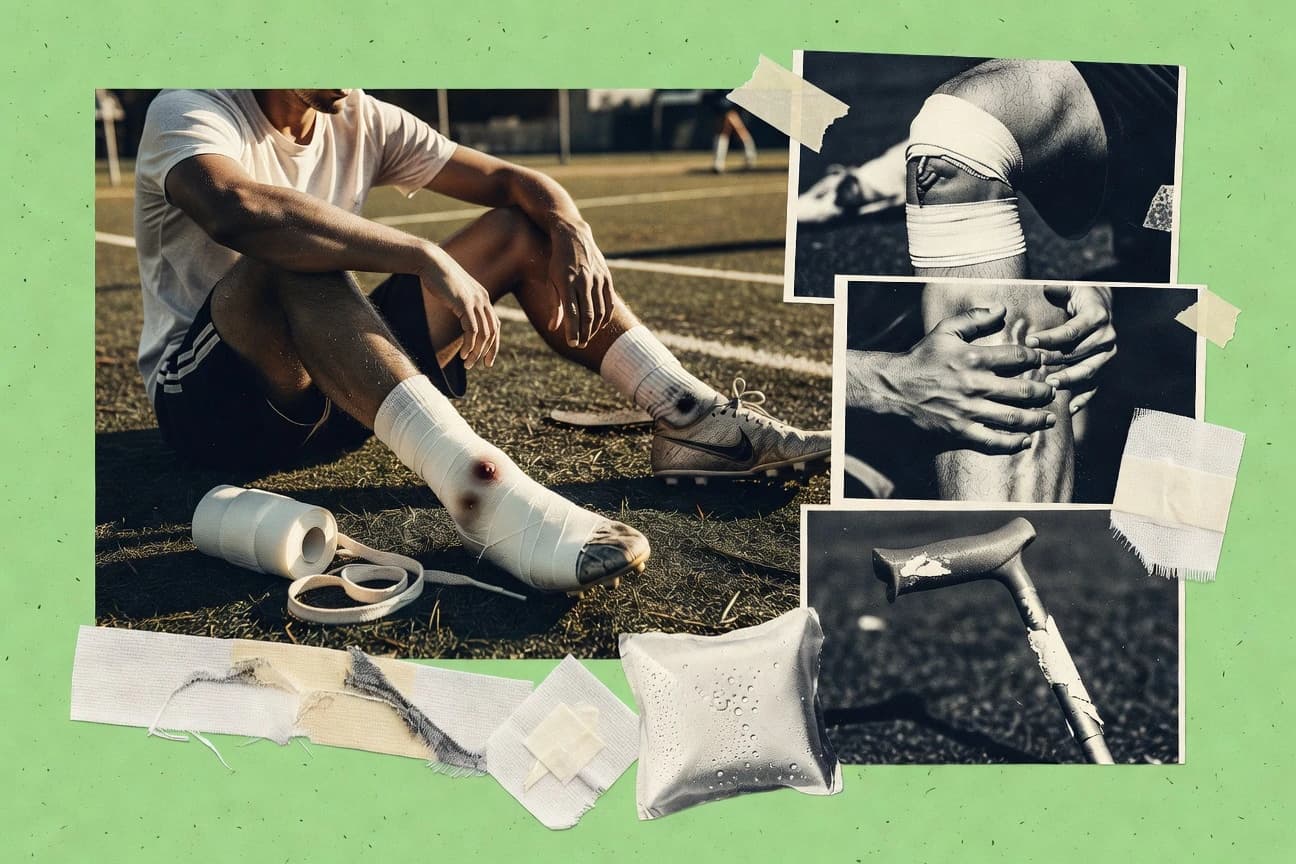

Female athletes aged 13-17 face about double the ACL injury rate of males. In the U.S., children under 10 account for roughly 30% of playground sports injuries that end in ER care. These statistics map how risk shifts by age and sport so recurring setbacks look less random and more preventable.
Key Takeaways
- Female athletes aged 13-17 have 2x higher ACL injury rate than males
- Ankle sprains comprise 15% of all sports injuries with 23,000 daily in U.S.
- In the United States, approximately 3.5 million children aged 14 and under receive medical treatment for sports and recreation-related injuries each year
- Neuromuscular training reduces ACL injuries by 51% in female athletes
- American football causes 414,188 injuries yearly in 5-24 age group
Nearly half of all sport injuries involve the lower body, making prevention and proper conditioning essential.
Related reading
01 · Category
Demographics17 stats
01
Female athletes aged 13-17 have 2x higher ACL injury rate than males
02
Children under 10 account for 30% of playground sports injuries leading to ER visits
03
Male soccer players aged 18-24 have 2.5x injury risk vs females
04
Overweight adolescents have 1.5x higher sports injury risk
05
Elite male athletes over 30 have 25% higher Achilles rupture risk
06
High school females in basketball have 1.9x ankle sprain rate vs males
07
Older recreational cyclists (>50) have 3x fracture risk per crash
08
Adolescent gymnasts have 5.4x higher elbow dislocation risk
09
Males in contact sports have 4x higher concussion rate post-2007
10
Female runners over 40 have 2.7x stress fracture incidence
11
Youth football players 6-12 have 70% higher ER visits vs older
12
Professional male tennis players have 21% injury risk increase per year age
13
Black athletes have 1.4x higher hamstring injury rate in NFL
14
Novice skiers have 3x injury rate vs experts
15
Pregnant athletes have 1.8x higher pelvic girdle pain incidence
16
Urban youth soccer players have 1.6x higher injury rate due to poor fields
17
Retired athletes 50+ have 40% prevalence of osteoarthritis from prior injuries
Interpretation
Demographics Interpretation
This sobering collection of statistics paints a stark portrait of athletic risk, revealing that injury is a deeply democratic but cruelly selective foe, targeting not just the elite pushing limits but also the young due to biology, the old due to time, and everyone in between due to a perfect storm of gender, body type, environment, and sheer inexperience.
02 · Category
Injury Types18 stats
01
Ankle sprains comprise 15% of all sports injuries with 23,000 daily in U.S.
02
ACL ruptures occur in 68 per 100,000 female athletes vs 27 per 100,000 males
03
Shoulder dislocations are 4.4 times more common in collision sports
04
Hamstring strains account for 12% of all soccer injuries
05
Concussions represent 8-11% of college football injuries
06
Meniscus tears occur in 61 per 100,000 skiing participants annually
07
Stress fractures make up 20% of sports medicine clinic visits in runners
08
Rotator cuff tears affect 17% of overhead athletes over 5 years
09
Plantar fasciitis incidence is 10% in runners training over 40km/week
10
Fractures account for 10-15% of basketball injuries, mostly hand/wrist
11
Groin injuries represent 18% of injuries in male soccer players
12
Patellofemoral pain syndrome affects 22% of female adolescent athletes
13
Cervical spine injuries occur in 1.1 per 100,000 rugby players
14
Quadriceps contusions are 9.3% of American football injuries
15
Epicondylitis (tennis elbow) is 1.45 cases per 100 amateur tennis matches
16
Achilles tendon ruptures peak at 33 per 100,000 in 30-39 year olds
17
Labral tears in hip affect 22-55% of athletes with groin pain
18
Ocular injuries in racquet sports are 8.1 per 100,000 participants
Interpretation
Injury Types Interpretation
While the daily avalanche of ankle sprains highlights our collective wobbliness, the stark gender gap in ACL tears, the shoulder's vulnerability in collisions, and the running body's penchant for stress fractures reveal a complex map of athletic sacrifice, where every sport, from soccer to skiing, exacts its own specific and often predictable toll.
03 · Category
Prevalence and Incidence20 stats
01
In the United States, approximately 3.5 million children aged 14 and under receive medical treatment for sports and recreation-related injuries each year
02
Globally, sports injuries account for 10-15% of all emergency department visits among adolescents
03
The incidence rate of sports-related injuries in high school athletes is 2.4 injuries per 1,000 athlete-exposures
04
In NCAA Division I football, the overall injury rate is 36.9 injuries per 1,000 athlete-exposures during practices
05
Amateur soccer players experience 7-11 injuries per 1,000 hours of match play
06
Basketball injuries represent 20% of all sports injuries treated in U.S. emergency departments
07
The annual incidence of sports concussions in youth soccer is 0.41 per 1,000 athlete-exposures
08
In Australia, sports injuries cost the healthcare system AUD 1.6 billion annually with an incidence of 1 in 17 people affected yearly
09
U.S. military personnel suffer 1.3 million sports-related injuries per year
10
Recreational runners have an injury incidence of 62.4% over a 2-year period
11
Volleyball players experience 4.9 injuries per 1,000 hours of training
12
In youth ice hockey, injury rates are 5.2 per 1,000 player-hours during games
13
Tennis elbow affects 40-50% of recreational tennis players annually
14
Swimming injuries occur at a rate of 2.6 per 1,000 hours of exposure
15
Cycling accidents lead to 900,000 injuries yearly in the EU
16
Gym-based injuries have an incidence of 1.3 per 1,000 hours in weightlifters
17
Skiing injuries decreased by 50% from 1970s to 2010s due to equipment, but still 2 per 1,000 skier-days
18
Rugby union has 81 injuries per 1,000 player-hours in matches
19
Handball goalkeepers suffer 3.4 upper limb injuries per 1,000 hours
20
Martial arts injuries rate is 9.82 per 1,000 exposures in amateurs
Interpretation
Prevalence and Incidence Interpretation
Our collective dedication to sports appears to be an incredibly efficient, if painful, global enterprise for keeping healthcare professionals busy and statisticians employed.
More related reading
04 · Category
Prevention and Recovery21 stats
01
Neuromuscular training reduces ACL injuries by 51% in female athletes
02
Helmets reduce cycling head injury risk by 63-88%
03
FIFA 11+ program cuts soccer injuries by 30-50%
04
ACL reconstruction return to sport rate is 63% at 2 years
05
Mouthguards reduce dental injuries by 60% in contact sports
06
Eccentric hamstring exercises lower strain risk by 51% in soccer
07
Ice application post-injury reduces swelling by 20-30%
08
Balance training cuts ankle sprain recurrence by 40%
09
PRP injections improve rotator cuff healing by 20% in trials
10
Concussion recovery averages 10-14 days in youth athletes
11
Rule changes in rugby reduced catastrophic spine injuries by 75%
12
Compression garments speed recovery by 10-20% post-marathon
13
Stem cell therapy shows 80% pain reduction in chronic tendonitis
14
Proper warm-up reduces soccer injury risk by 36%
15
Surgery vs conservative treatment for meniscus: 90% vs 70% return to sport
16
Sleep extension improves recovery, reducing injury risk by 1.7x
17
Taping reduces ankle injury risk by 36% in basketball
18
Sports injuries cost U.S. $33 billion annually in medical bills
19
Average ACL rehab time is 6-9 months to full return
20
Anti-inflammatory drugs shorten soft tissue injury recovery by 3-5 days
21
Periodized training reduces overuse injuries by 50% in runners
Interpretation
Prevention and Recovery Interpretation
It seems the clearest path to victory isn't just through talent and grit, but through the far less glamorous yet incredibly effective arsenal of mouthguards, eccentric exercises, proper warm-ups, and rule changes, which together form a masterclass in not getting hurt in the first place.
05 · Category
Sport-Specific21 stats
01
American football causes 414,188 injuries yearly in 5-24 age group
02
Soccer has 2 million injuries annually worldwide, 80% in amateurs
03
In NCAA basketball, ankle sprains are 25% of all injuries
04
Rugby has 90 injuries per 1,000 hours in elite matches
05
Baseball pitchers suffer 5.8 UCL tears per team per season
06
Ice hockey body checking increases injury risk by 3x in youth
07
Volleyball ankle injuries are 3.4 per 1,000 hours, 40% chronic
08
Track and field throwers have 22% shoulder injury prevalence
09
Cycling has 1 in 3 serious injuries being fractures in pros
10
Wrestling has 2.6 injuries per 1,000 exposures in high school
11
Gymnastics has 5.4 injuries per 1,000 hours in elites
12
Boxing causes 17.1% neurological injuries per bout
13
Skiing ACL injuries are 13% of all knee injuries on slopes
14
Tennis has 0.9 injuries per 1,000 sets played
15
Cheerleading has 37,060 ER visits yearly in U.S.
16
Swimming shoulder pain affects 40-90% of competitive swimmers
17
Golf low back pain incidence is 30% in amateurs yearly
18
Rowing rib stress fractures are 12-16% in national squads
19
NFL hamstring injuries sideline players 15.5 days average
20
Fencing knee injuries are 17% of total in competitions
21
Surfing lacerations are 42% of injuries, sharks rare at 0.5%
Interpretation
Sport-Specific Interpretation
From these varied statistics emerges the universal, painful truth that the pursuit of athletic glory, whether on a grassy pitch or a polished court, is an industry-wide subscription to the risk of hurt, often long before the trophies or paychecks arrive.
Reference
Cite This Report
This report is designed to be cited. We maintain stable URLs and versioned verification dates. Copy the format appropriate for your publication below.
APA
Rachel Svensson. (2026, February 13). Sport Injuries Statistics. Gitnux. https://gitnux.org/sport-injuries-statistics
MLA
Rachel Svensson. "Sport Injuries Statistics." Gitnux, 13 Feb 2026, https://gitnux.org/sport-injuries-statistics.
Chicago
Rachel Svensson. 2026. "Sport Injuries Statistics." Gitnux. https://gitnux.org/sport-injuries-statistics.
Sources & references
13 datasets cited across this report