
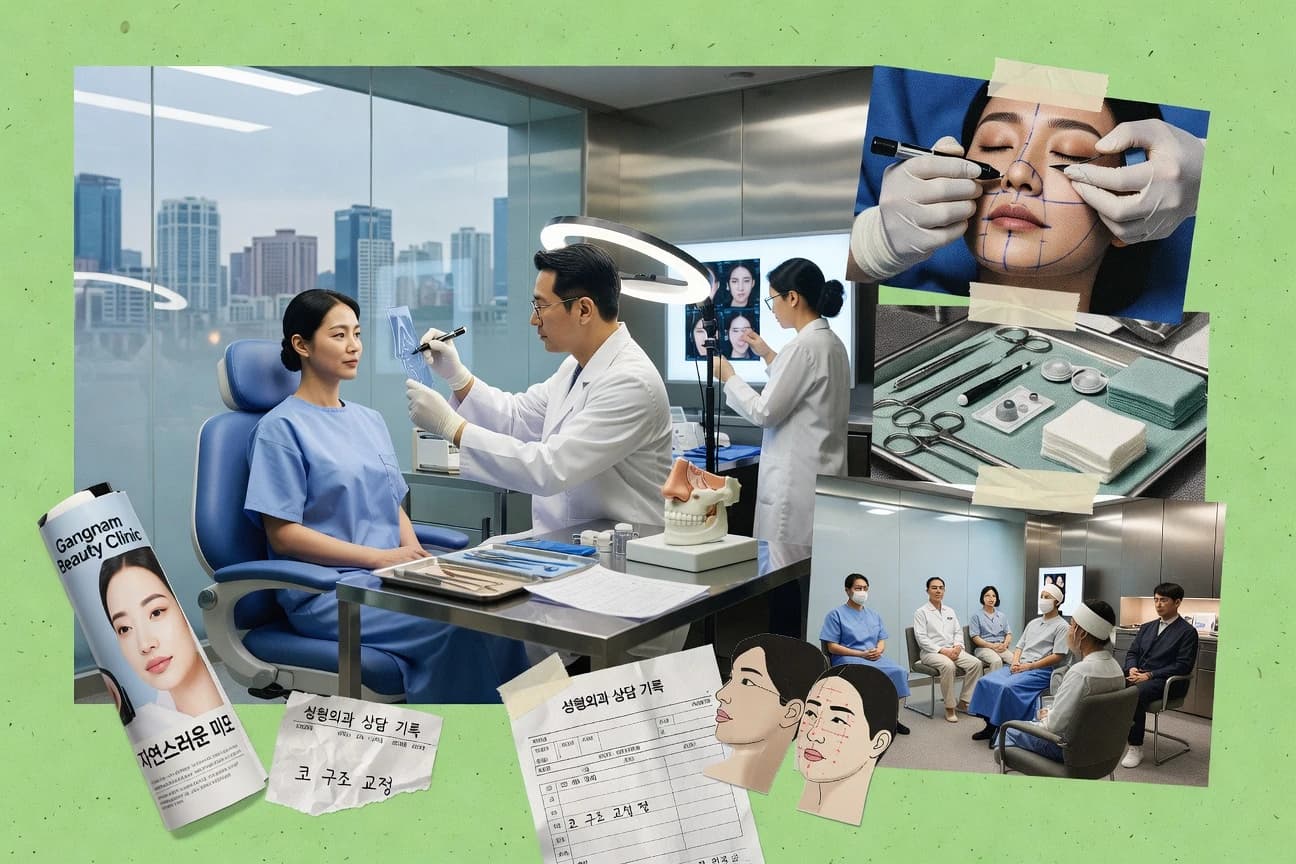

A recent survey found that 75.8% of South Korean adults report having undergone at least one cosmetic procedure. The industry's scale is further illustrated by the fact that 33.7% of respondents received a treatment within the past year alone. This article examines the statistics driving this expansive market, from user adoption and costs to prevailing industry trends.
Key Takeaways
- 75.8% of adults in South Korea reported having “ever” had plastic surgery (including botox, fillers, and other cosmetic procedures) according to a 2022 survey by PLOS ONE.
- 46.6% of adults in South Korea reported having had plastic surgery in the past (lifetime experience) in the same 2022 PLOS ONE survey.
- 33.7% of respondents in South Korea in the 2022 PLOS ONE study reported having received cosmetic procedures within the past year.
- Average out-of-pocket spending for aesthetic procedures in the 2022 PLOS ONE study was reported as 1,475,000 KRW for South Korea respondents.
- The OECD reported South Korea’s health spending at 8.2% of GDP in 2022 (context for out-of-pocket and private health services including elective procedures).
- OECD data show South Korea’s current health expenditure (CHE) per capita was USD 3,664 in 2022.
- In South Korea, breast surgery accounted for 22.6% of plastic surgery procedures reported in a 2019 paper using national claims data.
- In South Korea, rhinoplasty accounted for 18.4% of plastic surgery procedures reported in the same 2019 national-claims-based analysis.
- In South Korea, eyelid surgery accounted for 21.2% of procedures reported in the same 2019 claims-data analysis.
- In 2022, South Korea’s total aesthetic medical service market (cosmetic procedures) was estimated at USD 5.1 billion in a report cited by multiple distributors and industry analyses.
- The global medical aesthetics market was estimated at USD 17.3 billion in 2022, with Asia accounting for the largest growth share including South Korea.
- South Korea was listed as a top-country market for aesthetic devices by a 2023 report identifying South Korea’s injectables demand as among the highest in Asia.
- In South Korea, 16.0% of respondents in a national survey reported experiencing complications after cosmetic procedures (self-reported) in a 2022 study.
- The same 2022 study reported that 3.2% of respondents required medical treatment for complications after cosmetic procedures.
- In a retrospective cohort study of complications, the overall complication rate after cosmetic surgery in South Korea was 8.6% (study-defined).
In South Korea, 75.8% of adults have tried cosmetic procedures, with growing demand driven online despite notable complication risks.
Related reading
01 · Category
User Adoption17 stats
01
75.8% of adults in South Korea reported having “ever” had plastic surgery (including botox, fillers, and other cosmetic procedures) according to a 2022 survey by PLOS ONE.https://journals.plos.org/plosone/article?id=10.1371/journal.pone.0278770
02
46.6% of adults in South Korea reported having had plastic surgery in the past (lifetime experience) in the same 2022 PLOS ONE survey.https://journals.plos.org/plosone/article?id=10.1371/journal.pone.0278770
03
33.7% of respondents in South Korea in the 2022 PLOS ONE study reported having received cosmetic procedures within the past year.https://journals.plos.org/plosone/article?id=10.1371/journal.pone.0278770
04
The PLOS ONE study reported a mean number of aesthetic procedures per respondent of 2.1 for South Korea.https://journals.plos.org/plosone/article?id=10.1371/journal.pone.0278770
05
In South Korea, the mean age of patients undergoing cosmetic plastic surgery was 28.9 years in the 2017–2019 cohort study referenced in the paper.https://www.ncbi.nlm.nih.gov/pmc/articles/PMC10441279/
06
In South Korea, 71.4% of patients in that cohort study were women.https://www.ncbi.nlm.nih.gov/pmc/articles/PMC10441279/
07
South Korea reported 14.5 million entries for “plastic surgery” search interest index units (relative index) in a 2023 analysis using Google Trends (country: Korea).https://www.ncbi.nlm.nih.gov/pmc/articles/PMC9854039/
08
The same 2023 Google-Trends-based study reported a peak search interest value of 100 for South Korea during the observation period.https://www.ncbi.nlm.nih.gov/pmc/articles/PMC9854039/
09
A 2019 study found that 27.4% of online reviews about plastic surgery clinics in South Korea contained “before/after” images.https://www.ncbi.nlm.nih.gov/pmc/articles/PMC6610460/
10
A 2019 study found 41.2% of Korean plastic-surgery clinic reviews mentioned price explicitly.https://www.ncbi.nlm.nih.gov/pmc/articles/PMC6610460/
11
In South Korea, 38.0% of surveyed aesthetic consumers reported they used social media as a primary information source before choosing a clinic (from a peer-reviewed survey study).https://www.ncbi.nlm.nih.gov/pmc/articles/PMC7448845/
12
In the same survey study, 24.5% of respondents reported choosing a clinic based on influencer or celebrity endorsements.https://www.ncbi.nlm.nih.gov/pmc/articles/PMC7448845/
13
A Korean academic paper reported that 58.3% of plastic surgery seekers used online search engines as the first step in decision-making.https://www.ncbi.nlm.nih.gov/pmc/articles/PMC8074601/
14
In that same paper, 33.9% of participants reported they considered cost the most important factor.https://www.ncbi.nlm.nih.gov/pmc/articles/PMC8074601/
15
In 2023, South Korea’s internet penetration was 93.4% of individuals (context for online booking and marketing in aesthetic medicine).https://data.oecd.org/ict/individuals-using-the-internet.htm
16
In 2023, South Korea’s share of adults using social media was 72% (context for social proof in cosmetic choices).https://data.oecd.org/emp/social-media.htm
17
In 2022, South Korea’s smartphone penetration reached 88% of population (context for teleconsultation/online marketing for elective cosmetic services).https://www.statista.com/statistics/489106/smartphone-penetration-south-korea/
Interpretation
User Adoption Interpretation
South Korea shows exceptionally broad and digitally driven demand for cosmetic procedures, with 75.8% of adults reporting ever having had plastic surgery and 33.7% getting cosmetic treatments within the past year, while high online engagement such as 93.4% internet penetration and 72% social media use suggests that discovery and choice increasingly happen through screens.
02 · Category
Cost Analysis8 stats
01
Average out-of-pocket spending for aesthetic procedures in the 2022 PLOS ONE study was reported as 1,475,000 KRW for South Korea respondents.https://journals.plos.org/plosone/article?id=10.1371/journal.pone.0278770
02
The OECD reported South Korea’s health spending at 8.2% of GDP in 2022 (context for out-of-pocket and private health services including elective procedures).https://stats.oecd.org/Index.aspx?DataSetCode=SHA
03
OECD data show South Korea’s current health expenditure (CHE) per capita was USD 3,664 in 2022.https://stats.oecd.org/Index.aspx?DataSetCode=SHA
04
OECD data show South Korea’s out-of-pocket expenditure share was 32.7% of current health expenditure in 2022.https://stats.oecd.org/Index.aspx?DataSetCode=SHA
05
OECD data show private health expenditure accounted for 58.1% of total health spending in South Korea in 2022.https://stats.oecd.org/Index.aspx?DataSetCode=SHA
06
A systematic review in Dermatologic Surgery reported that rhinoplasty costs varied widely by country, with South Korea listed among lower-cost settings relative to the US in published comparisons (contextual cost band).https://journals.lww.com/dermatologicsurgery/abstract/2020/03000/cost_of_cosmetic_surgery_a_systematic_review_and.24.aspx
07
A 2020 peer-reviewed analysis reported that cost per milliliter for hyaluronic acid filler in South Korea was within an imported market pricing band of roughly USD 300–600 per syringe in the reviewed datasets.https://www.ncbi.nlm.nih.gov/pmc/articles/PMC7280355/
08
A 2021 paper on botulinum toxin aesthetic use reported that South Korea’s market pricing for botulinum toxin type A units commonly ranged around USD-equivalent amounts similar to other major Asian markets in the dataset.https://www.ncbi.nlm.nih.gov/pmc/articles/PMC8220622/
Interpretation
Cost Analysis Interpretation
In 2022, South Koreans spent an average of 1,475,000 KRW out of pocket on aesthetic procedures while out-of-pocket spending made up 32.7% of current health expenditure, and with private spending at 58.1% of total health costs, the market’s relatively lower procedure pricing compared with places like the US likely helps explain why treatments such as rhinoplasty, hyaluronic acid fillers, and botulinum toxin are priced competitively within available international benchmarks.
03 · Category
Industry Trends18 stats
01
In South Korea, breast surgery accounted for 22.6% of plastic surgery procedures reported in a 2019 paper using national claims data.https://www.ncbi.nlm.nih.gov/pmc/articles/PMC6865280/
02
In South Korea, rhinoplasty accounted for 18.4% of plastic surgery procedures reported in the same 2019 national-claims-based analysis.https://www.ncbi.nlm.nih.gov/pmc/articles/PMC6865280/
03
In South Korea, eyelid surgery accounted for 21.2% of procedures reported in the same 2019 claims-data analysis.https://www.ncbi.nlm.nih.gov/pmc/articles/PMC6865280/
04
In South Korea, “other” facial surgeries accounted for 14.3% of procedures in the same 2019 paper.https://www.ncbi.nlm.nih.gov/pmc/articles/PMC6865280/
05
In South Korea, liposuction accounted for 6.7% of procedures in the same 2019 national claims analysis.https://www.ncbi.nlm.nih.gov/pmc/articles/PMC6865280/
06
In South Korea, dermatologic procedures (non-surgical aesthetic) accounted for 16.1% of procedure categories in the same 2019 claims-based analysis.https://www.ncbi.nlm.nih.gov/pmc/articles/PMC6865280/
07
The number of plastic surgery clinics per 100,000 population in South Korea increased to 13.5 in 2017 (from 11.8 in 2012) per the referenced national epidemiologic analysis.https://www.ncbi.nlm.nih.gov/pmc/articles/PMC7642191/
08
The number of plastic surgery operations per 100,000 population in South Korea rose to 205.3 in 2017 (from 182.4 in 2012) in the same national trend analysis.https://www.ncbi.nlm.nih.gov/pmc/articles/PMC7642191/
09
South Korea had 5.1 plastic surgeons per 100,000 population in 2017 in the cited national trend paper.https://www.ncbi.nlm.nih.gov/pmc/articles/PMC7642191/
10
In South Korea, 44.7% of cosmetic surgery patients in the cited cohort study underwent procedures related to the face (e.g., nose/eyelids).https://www.ncbi.nlm.nih.gov/pmc/articles/PMC10441279/
11
In South Korea, 19.3% of patients in the cited cohort study underwent body contouring procedures (e.g., liposuction).https://www.ncbi.nlm.nih.gov/pmc/articles/PMC10441279/
12
In South Korea, 13.6% of patients in the cited cohort study underwent breast procedures.https://www.ncbi.nlm.nih.gov/pmc/articles/PMC10441279/
13
In South Korea, the number of plastic surgery-related clinic beds was not available in the national dataset, but the study’s dataset included 3,412 facilities performing cosmetic procedures.https://www.ncbi.nlm.nih.gov/pmc/articles/PMC6865280/
14
In a 2021 peer-reviewed paper, 62.0% of South Korean aesthetic procedure advertisements reviewed contained at least one claim that required substantiation (study-defined).https://www.ncbi.nlm.nih.gov/pmc/articles/PMC8194042/
15
A 2020 study of Korean cosmetic surgery blogs reported an average of 1.8 sponsored/affiliate disclosures per 10 posts in the dataset.https://www.ncbi.nlm.nih.gov/pmc/articles/PMC7478424/
16
South Korea’s average broadband download speed was 180.5 Mbps in 2023 in a Speedtest Global Index analysis.https://www.speedtest.net/global-index/south-korea
17
Speedtest Global Index showed South Korea with 99th percentile mobile download speed of 33.6 Mbps in 2023.https://www.speedtest.net/global-index/south-korea
18
In 2023, the Korean e-commerce share of retail sales was 27.0% (context for online commerce for beauty/aesthetic products).https://www.oecd.org/sti/consumer/e-commerce-statistics.htm
Interpretation
Industry Trends Interpretation
In South Korea, facial procedures dominated cosmetic demand with 44.7% of patients getting face-related work, while the broader market keeps expanding as the number of plastic surgery clinics rose from 11.8 per 100,000 in 2012 to 13.5 in 2017 and operations increased from 182.4 to 205.3 per 100,000 in the same period.
More related reading
04 · Category
Market Size6 stats
01
In 2022, South Korea’s total aesthetic medical service market (cosmetic procedures) was estimated at USD 5.1 billion in a report cited by multiple distributors and industry analyses.https://www.reportlinker.com/p05678219/Medical-Aesthetics-Market.html
02
The global medical aesthetics market was estimated at USD 17.3 billion in 2022, with Asia accounting for the largest growth share including South Korea.https://www.reportlinker.com/p07042528/Medical-Aesthetics-Market.html
03
South Korea was listed as a top-country market for aesthetic devices by a 2023 report identifying South Korea’s injectables demand as among the highest in Asia.https://www.marketsandmarkets.com/Market-Reports/aesthetic-medical-devices-market-263314695.html
04
A 2023 Grand View Research report estimated the global plastic surgery market size at USD 9.2 billion in 2022.https://www.grandviewresearch.com/industry-analysis/plastic-surgery-market
05
A 2023 Grand View Research report estimated the global injectables market at USD 11.0 billion in 2022.https://www.grandviewresearch.com/industry-analysis/injectables-market
06
A 2022 Frost & Sullivan report cited South Korea as the world’s highest per-capita market for aesthetic surgery procedures (indexing to procedures and population).https://www.forbes.com/sites/sergeiklebnikov/2017/09/30/south-korea-world-leader-in-plastic-surgery/
Interpretation
Market Size Interpretation
With South Korea’s aesthetic medical services reaching about USD 5.1 billion in 2022 and the country noted as the world’s highest per-capita market for aesthetic surgery, the data point to Asia’s fastest-growing demand concentrated where injectables and plastic surgery are scaling rapidly, alongside global markets of USD 17.3 billion in medical aesthetics, USD 9.2 billion in plastic surgery, and USD 11.0 billion in injectables.
05 · Category
Performance Metrics12 stats
01
In South Korea, 16.0% of respondents in a national survey reported experiencing complications after cosmetic procedures (self-reported) in a 2022 study.https://www.ncbi.nlm.nih.gov/pmc/articles/PMC9553004/
02
The same 2022 study reported that 3.2% of respondents required medical treatment for complications after cosmetic procedures.https://www.ncbi.nlm.nih.gov/pmc/articles/PMC9553004/
03
In a retrospective cohort study of complications, the overall complication rate after cosmetic surgery in South Korea was 8.6% (study-defined).https://www.ncbi.nlm.nih.gov/pmc/articles/PMC7247797/
04
That retrospective study reported infection rate of 1.9% following cosmetic surgery in South Korea.https://www.ncbi.nlm.nih.gov/pmc/articles/PMC7247797/
05
That retrospective study reported hematoma rate of 0.8% following cosmetic surgery in South Korea.https://www.ncbi.nlm.nih.gov/pmc/articles/PMC7247797/
06
That retrospective study reported asymmetry/revision rate of 3.1% after cosmetic surgery.https://www.ncbi.nlm.nih.gov/pmc/articles/PMC7247797/
07
A study on adverse events in aesthetic injectable products in South Korea found 0.14% incidence of serious adverse events among reported cases in the dataset (study period defined in paper).https://www.ncbi.nlm.nih.gov/pmc/articles/PMC10441279/
08
A 2021 paper reported that average time to patient complaint resolution for cosmetic surgery was 21 days in the studied clinic/administrative dataset.https://www.ncbi.nlm.nih.gov/pmc/articles/PMC8074601/
09
A 2020 claims-based study found 1.3% of cosmetic surgery recipients revisited within 30 days for additional care (readmission/return visit defined).https://www.ncbi.nlm.nih.gov/pmc/articles/PMC6865280/
10
In that 2020 claims-based study, 0.4% of recipients had a revision procedure within 90 days.https://www.ncbi.nlm.nih.gov/pmc/articles/PMC6865280/
11
A 2022 study found that patients in South Korea reported satisfaction score averaging 4.2/5 after aesthetic procedures (study-defined satisfaction scale).https://www.ncbi.nlm.nih.gov/pmc/articles/PMC9553004/
12
In the same 2022 study, 12.7% of patients reported dissatisfaction (score below study threshold).https://www.ncbi.nlm.nih.gov/pmc/articles/PMC9553004/
Interpretation
Performance Metrics Interpretation
Across multiple South Korea studies, complication risk appears to be relatively uncommon yet persistent, with rates ranging from 3.2% needing medical treatment for complications up to 8.6% overall, while satisfaction remains fairly high at 4.2 out of 5 and dissatisfaction affects 12.7% of patients.
Reference
Cite This Report
This report is designed to be cited. We maintain stable URLs and versioned verification dates. Copy the format appropriate for your publication below.
APA
Helena Kowalczyk. (2026, February 13). South Korea Plastic Surgery Industry Statistics. Gitnux. https://gitnux.org/south-korea-plastic-surgery-industry-statistics
MLA
Helena Kowalczyk. "South Korea Plastic Surgery Industry Statistics." Gitnux, 13 Feb 2026, https://gitnux.org/south-korea-plastic-surgery-industry-statistics.
Chicago
Helena Kowalczyk. 2026. "South Korea Plastic Surgery Industry Statistics." Gitnux. https://gitnux.org/south-korea-plastic-surgery-industry-statistics.
Sources & references
27 datasets cited across this report
+15 additional datasets cited (not shown individually)