GITNUXSOFTWARE ADVICE
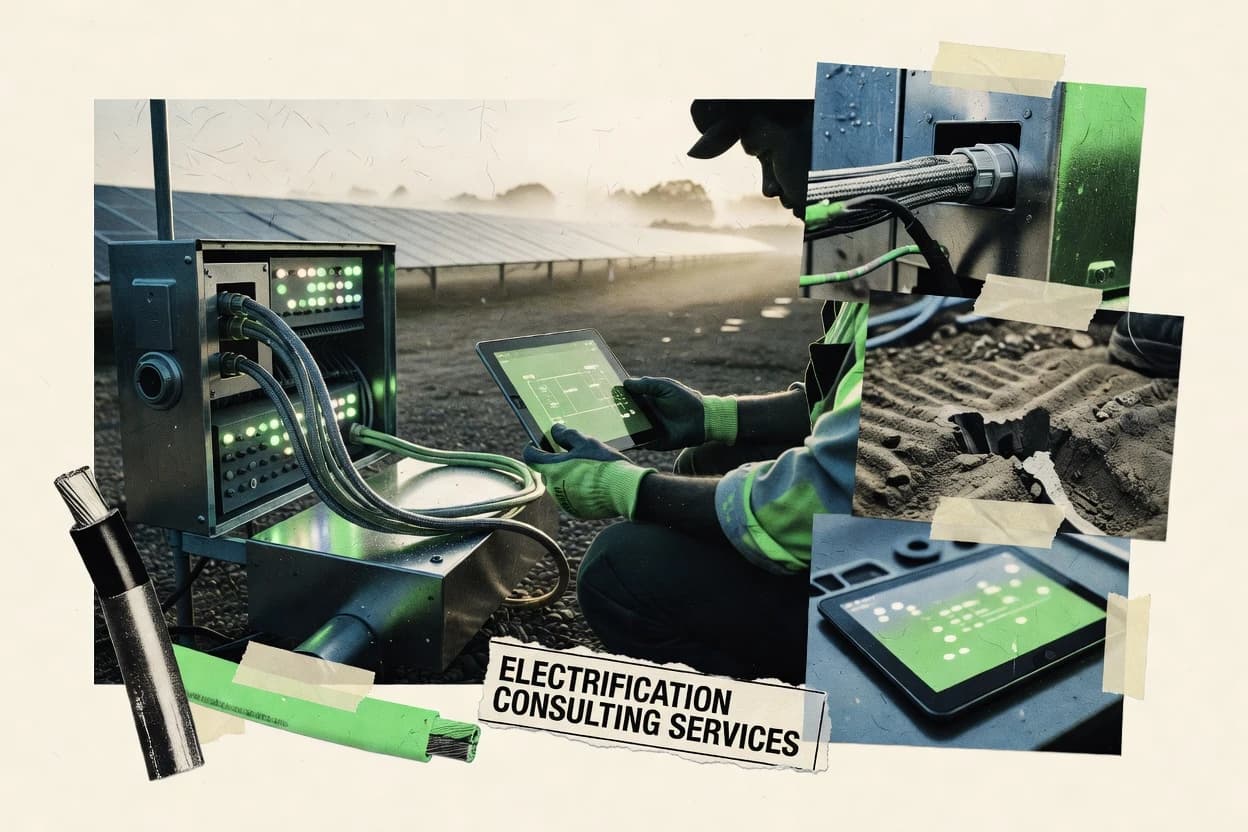
Environment EnergyTop 10 Best Electrification Consulting Services of 2026
Rank top electrification consulting firms with an editorial comparison of Guidehouse, Deloitte, PwC, plus Black & Veatch and Wood Mackenzie.

How we ranked these tools
Vendors set the topic, but our editors set the inclusion criteria and the evaluation framework before research starts.
AI search agents find sources, extract figures with provenance, and aggregate written reviews. They also transcribe video reviews and podcasts.
Framework: Features 40% · Ease 30% · Value 30%
Gitnux may earn a commission through links on this page — this does not influence rankings. Editorial policy
Black & Veatch is the best fit for utility-supported electrification scope when permitting and make-ready deliverables drive the timeline, whereas McKinsey & Company is the stronger choice if you need investment sequencing and executive-ready electrification roadmaps, and Burns & McDonnell works best when engineering teams want depot and distribution-constraint planning tied to site permitting.
Editor’s top 3 picks
Three quick recommendations before you dive into the full comparison below — each one leads on a different dimension.
Black & Veatch
Distribution system impact study outputs that directly shape interconnection capacity assumptions and charger sizing for fleet rollouts.
Best for: Fits when fleets need utility-supported charging scope tied to permitting and make-ready deliverables.
Wood Mackenzie
Editor pickPolicy-aware scenario modeling that connects fleet electrification strategy inputs to infrastructure constraint narratives.
Best for: Fits when market and policy-aware modeling must anchor electrification roadmaps across stakeholders.
McKinsey & Company
Editor pickRoadmap-to-execution design that maps electrification milestones to procurement sequencing and utility interconnection constraints.
Best for: Fits when large fleets need investment sequencing, utility coordination inputs, and executive-ready electrification roadmaps.
Comparison Table
Black & Veatch
specialistEngineering and construction firm providing electrification infrastructure, EV charging deployment, and grid modernization consulting.
Distribution system impact study outputs that directly shape interconnection capacity assumptions and charger sizing for fleet rollouts.
Black & Veatch applies engineering-led workflows that start with charging infrastructure assessment and end with utility and site execution artifacts for depot and workplace deployments. Teams use vehicle duty-cycle analysis and charging load forecasting to size chargers, design build requirements, and quantify operational impacts for fleet transition decisions. The firm’s integration depth tends to show up in how charging plans translate into distribution system impact study outputs that support interconnection and capacity decisions.
A tradeoff is that engagement artifacts are engineering-heavy and can require active client input on telematics feeds, routing assumptions, and site constraints to avoid rework. Black & Veatch fits best when a fleet operator or infrastructure owner needs a defensible electrification plan that can survive utility reviews and permitting scrutiny, not only an internal roadmap.
- +Utility-ready distribution studies that inform charger and interconnection sizing
- +Charging load forecasting grounded in vehicle duty-cycle inputs
- +Make-ready infrastructure scoping aligned to execution timelines
- +Engineering outputs support permitting and code compliance reviews
- –Requires detailed input from fleet ops to prevent model churn
- –Less suited for teams needing lightweight concept-only planning
- –Work products skew toward engineering deliverables over software integration
Fleet electrification teams
Depot rollout with utility interconnection
Earlier approvals and fewer redesigns
Infrastructure program managers
Workplace charging scale-up
Coordinated construction packages
Show 2 more scenarios
Engineering and facilities owners
Distribution capacity validation
Capacity decisions backed by analysis
Runs distribution system impact study work to validate transformer and feeder capacity limits.
Procurement and strategy leads
Electrification business case modeling
Clear procurement and transition plan
Uses total cost of ownership modeling to compare duty-cycle driven charging options.
Best for: Fits when fleets need utility-supported charging scope tied to permitting and make-ready deliverables.
Wood Mackenzie
specialistEnergy research and consulting firm providing electrification market analysis, EV supply chain advisory, and grid forecasts.
Policy-aware scenario modeling that connects fleet electrification strategy inputs to infrastructure constraint narratives.
Wood Mackenzie is a fit for electrification strategy work that requires market context for regulation, incentives, and regional adoption patterns. Engagement outputs commonly support fleet electrification strategy, charging infrastructure assessment, and distribution system impact study scoping. The delivery style is research-led, so deliverables tend to emphasize defensible narratives and scenario comparisons over rapid prototype tooling. Teams get value when internal stakeholders need a single, coherent analysis basis across procurement, engineering, and executive review.
A tradeoff is that the research depth can slow down work that needs tight, iterative engineering loops with frequent design changes. Wood Mackenzie is most useful when assumptions and planning horizons stabilize enough to model multiple cases and document rationale for permitting and code compliance. For teams running frequent hardware design revisions, engineering consultants with hands-on depot layouts may move faster.
- +Scenario work ties fleet adoption assumptions to regional infrastructure and policy context
- +Consistent analytics basis across strategy, charging assessment, and stakeholder deliverables
- +Decision-grade outputs support procurement planning and executive approvals
- +Strong coverage for infrastructure constraints and interconnection planning scope
- –Less suited for rapid operational iteration during depot layout engineering changes
- –Integration depth varies by engagement, not delivered as a packaged automation layer
- –Electric vehicle duty-cycle analysis may require input tuning for site-specific data
- –Advanced workflows depend on the client providing baseline fleet and route assumptions
Fleet strategy and procurement teams
Build electrification strategy with defensible assumptions
Clear roadmap for investment decisions
Charging program managers
Plan network and depot charging coverage
Prioritized charging rollout plan
Show 2 more scenarios
Regulatory and interconnection stakeholders
Scope distribution system impact study requests
Lower rework in utility submissions
Frames distribution and interconnection impacts to support utility review and permitting discussions.
Transport planning analysts
Evaluate duty-cycle and operational feasibility
More credible transition plan
Quantifies operational feasibility impacts from electrification assumptions across routes and usage patterns.
Best for: Fits when market and policy-aware modeling must anchor electrification roadmaps across stakeholders.
McKinsey & Company
enterprise_vendorGlobal management consultancy with a dedicated electrification and power practice advising utilities, automakers, and governments.
Roadmap-to-execution design that maps electrification milestones to procurement sequencing and utility interconnection constraints.
McKinsey & Company supports electrification planning with scenario design and financial modeling that align vehicle procurement choices to operating constraints and charging buildout timing. Work products commonly cover transport electrification roadmap structure, charging infrastructure assessment inputs, and emissions reduction modeling used for stakeholder decisions. Delivery quality is strongest when internal teams need executive-ready options that quantify tradeoffs and define next-step workstreams across functions.
A tradeoff appears when teams need hands-on configuration of charging assets, because McKinsey & Company focuses on consulting outputs rather than operating a charging software layer. A fit situation is a regional transit authority that must align depot charging design, utility coordination milestones, and capex phasing across multiple yards.
- +Decision-grade total cost of ownership modeling for vehicle and charging tradeoffs
- +Transport electrification roadmap planning that aligns infrastructure and procurement timing
- +Program governance design across stakeholders and delivery workstreams
- +Scenario analysis depth for fleet transition planning
- –Does not provide a native charging management software or API surface
- –Requires strong client data availability for duty-cycle and site assumptions
- –Implementation execution typically depends on client or partner delivery teams
- –Less suitable for rapid managed charging operations day-to-day
Fleet strategy and finance teams
Compare vehicle classes and charging timing
Funded transition plan approval
Transit agencies program offices
Phase depot upgrades across yards
De-risked deployment schedule
Show 2 more scenarios
Utilities and system planning liaisons
Align interconnection constraints to loads
Earlier grid planning alignment
Planning artifacts translate fleet electrification requirements into utility engagement steps.
Public sector climate leads
Quantify emissions outcomes for decisions
Measurable emissions reduction targets
Emissions reduction modeling supports stakeholder governance and funding narratives.
Best for: Fits when large fleets need investment sequencing, utility coordination inputs, and executive-ready electrification roadmaps.
Deloitte
enterprise_vendorBig Four firm providing electrification strategy, EV ecosystem advisory, and grid transformation consulting.
End-to-end coordination between charging infrastructure assessment findings and distribution system upgrade planning artifacts.
Deloitte delivers electrification consulting through program delivery models used across energy, mobility, and enterprise transformation engagements. The service depth shows up in transport electrification roadmap work, charging infrastructure assessment support, and TCO modeling for fleet vehicle transitions.
- +Program delivery rigor for fleet electrification roadmap and execution planning
- +Strong TCO modeling support for battery electric vehicle transition decisions
- +Distribution system impact study inputs for utility interconnection and upgrades
- +Cross-functional coverage spanning charging site readiness and compliance scoping
- –Integration-heavy engagements need structured client data access and governance
- –Automation and API surface are not a product-like capability users can self-serve
- –Workflows can run long due to stakeholder coordination and permitting dependencies
Best for: Fits when large fleets or municipalities need end-to-end electrification planning with grid and permitting constraints.
EY
enterprise_vendorBig Four firm offering electrification strategy, EV tax advisory, and energy transition consulting services.
Traceable assumption-to-decision documentation that ties charging network design, costs, and compliance tasks into one delivery narrative.
EY delivers electrification strategy and delivery consulting that connects fleet and grid constraints into executable roadmaps for regulated and multi-site organizations. Core engagements cover fleet electrification strategy, charging infrastructure assessment, and total cost of ownership modeling with scenario comparisons for duty cycles and procurement timing.
- +Cross-functional work connects charging plans to distribution and interconnection constraints
- +Fleet modeling outputs are structured for governance and executive decision reviews
- +Program delivery guidance covers multi-site rollout dependencies and sequencing
- +Strong documentation practices support stakeholder alignment across technical and legal teams
- –Automation and API surface are not a primary offering in most advisory engagements
- –Model refresh cadence can lag if data collection and site surveys are delayed
- –Operational tooling beyond consulting artifacts may require separate partners
- –Workstreams can become heavy for teams that only need a single site assessment
Best for: Fits when regulated enterprises need traceable electrification roadmaps and delivery governance across fleets and sites.
ICF
enterprise_vendorConsulting firm offering electrification planning, EV infrastructure deployment, and clean energy program management.
Distribution system impact study support that ties charging load plans to substation and feeder constraints for real-world implementation.
ICF delivers electrification consulting built around utility-facing studies and implementation planning for transport, depots, and charging networks. The firm’s work typically connects fleet electrification strategy to charging infrastructure assessment, permitting and code compliance, and distribution system impact studies.
- +Strong utility and permitting workflow coverage across charging deployments
- +Clear linkage between charging infrastructure assessment and grid impact constraints
- +Experience translating fleet requirements into depot charging design deliverables
- +Good documentation quality for stakeholder review and decision making
- –Heavier consulting process than product-like guided configuration
- –Limited evidence of a self-serve modeling interface for rapid iterations
- –Automation depth depends on engagement scope and data availability
- –Requires disciplined data collection from fleets and telematics sources
Best for: Fits when fleets need stakeholder-ready electrification planning tied to utility constraints and permitting timelines.
FEV
specialistEngineering services firm providing electrification consulting for vehicle powertrains, energy storage, and charging systems.
Transport electrification roadmap outputs built from vehicle duty-cycle analysis and charging impact assumptions.
FEV delivers electrification consulting focused on engineering-grade work such as vehicle duty-cycle analysis and transport electrification roadmap development. The firm supports charging infrastructure assessment with depot charging design inputs that translate into implementable technical requirements.
- +Vehicle duty-cycle analysis grounded in engineering assumptions
- +Roadmap deliverables translate fleet constraints into phased electrification plans
- +Charging infrastructure assessment ties depot needs to implementation requirements
- +Strong consulting depth for distribution system impact study inputs
- –Automation and API surface is not the primary delivery mechanism
- –Workshop-style engagements require structured data handoff from fleet teams
- –Managed charging operations guidance varies by engagement scope
Best for: Fits when engineering-led electrification studies must feed procurement, depot design, and interconnection planning.
PwC
enterprise_vendorBig Four consultancy providing electrification strategy, EV market analysis, and energy transition advisory.
Scenario-based transport electrification planning that explicitly connects charging load assumptions to utility interconnection and distribution system impact constraints.
PwC delivers electrification consulting through integrated energy, strategy, and risk advisory workstreams that connect grid constraints to fleet or infrastructure decisions. Core capabilities typically cover transport electrification roadmap development, total cost of ownership modeling, and charging infrastructure assessment tied to site and utility constraints.
- +Grid constraint and project sequencing analysis that ties into fleet and site decisions
- +Total cost of ownership modeling built around duty cycle assumptions and charging coverage
- +Transport electrification roadmap deliverables with implementation milestones and stakeholder plans
- +Incentive and compliance advisory work that reduces eligibility and documentation risk
- –Less suited for short, tool-driven assessments that need a fast self-serve workflow
- –Heavier reliance on PwC engagement management for end to end execution and governance
- –Advanced managed charging architecture design often requires detailed integration inputs
- –Charge point standards and interoperability validation may be limited without specific partner scope
Best for: Fits when large organizations need grid-linked electrification roadmaps and governance-ready business cases.
Guidehouse
enterprise_vendorSpecialist consultancy with utility electrification, transportation electrification, and distributed energy resources advisory.
Transport electrification roadmap deliverables that tie vehicle duty-cycle analysis to site power upgrade and charging phasing.
Guidehouse delivers electrification consulting through transport and fleet studies that translate charging and grid constraints into implementable plans. Delivery centers on workload-specific advisory such as charging infrastructure assessment, depot charging design, and transport electrification roadmap development tied to duty-cycle and total cost of ownership modeling.
- +Transport electrification roadmaps connect fleet duty-cycle needs to charging phasing decisions
- +Charging infrastructure assessment covers site constraints used in transformer capacity analysis
- +Depot charging design supports procurement and installation planning for facility-level rollouts
- +Utility interconnection inputs feed distribution system impact study scoping
- –Outputs depend on workshop cadence, document reviews, and client-provided fleet and site data
- –Smart charging and demand response logic is typically advisory, not an operational control stack
- –Hardware-agnostic charging management is covered through recommendations more than platform features
- –Automation and API surface for ongoing fleet operations is not a core delivery artifact
Best for: Fits when transport or fleet programs need end-to-end advisory outputs for charging and grid readiness.
Burns & McDonnell
specialistEngineering consultancy offering transportation electrification, substation design, and fleet electrification planning.
One integrated workflow connects transformer capacity analysis, charging load forecasting, and make-ready scope into a single deployment plan.
Burns & McDonnell delivers electrification consulting that pairs charging infrastructure assessments with distribution system impact studies, reducing disconnects between electrical constraints and deployment plans.
- +Integrates distribution impact assessment with charging design for fewer downstream surprises
- +Utility interconnection and make-ready scoping align electrical limits to deployment schedules
- +Depot and workplace charging designs map to operational charging behavior requirements
- +Strong multi-disciplinary coordination across engineering, planning, and compliance work
- –Project delivery depth can require more internal alignment to maintain shared assumptions
- –Public charging network integration work is less comprehensive than specialized charging-ops consultancies
- –Automation and API surface are not presented as a primary deliverable for program governance
- –Managed charging program management tends to depend on engagement scope rather than packaged modules
Best for: Fits when engineering-led teams need electrification roadmaps linked to distribution constraints and site permitting.
Conclusion
After evaluating 10 electrification consulting, Black & Veatch stands out as our overall top pick — it scored highest across our combined criteria of features, ease of use, and value, which is why it sits at #1 in the rankings above.
Use the comparison table and detailed reviews above to validate the fit against your own requirements before committing to a tool.
How to Choose the Right Electrification Consulting
Electrification consulting turns fleet and transport electrification goals into grid-linked delivery plans through charging infrastructure assessment, distribution system impact study outputs, and transformer and make-ready scoping. This buyer's guide covers Black & Veatch, Wood Mackenzie, McKinsey & Company, Deloitte, PwC, EY, ICF, FEV, Guidehouse, and Burns & McDonnell.
The providers differ in how they connect vehicle duty-cycle analysis to charging load forecasting, how they package permitting and code compliance artifacts, and how they handle smart charging logic versus operational charging control. Black & Veatch emphasizes utility-shaped distribution outputs that guide charger sizing and interconnection assumptions, while Wood Mackenzie frames scenario narratives that tie strategy inputs to infrastructure and policy constraints.
Electrification Consulting that links duty-cycle inputs to grid-ready charging roadmaps
Electrification consulting maps fleet electrification strategy into a transport electrification roadmap by translating vehicle duty-cycle analysis into charging load forecasting and site power upgrade needs. Many engagements also extend into charging infrastructure assessment deliverables that feed depot charging design and workplace charging deployment phasing.
Black & Veatch stands out for distribution system impact study outputs that shape interconnection capacity assumptions and charger sizing for fleet rollouts. McKinsey & Company focuses on roadmap-to-execution sequencing that aligns procurement timing with utility interconnection constraints, and it does not provide a native charging management software or API surface as part of its standard delivery.
Electrification Consulting capabilities that shape grid-linked delivery
Electrification consulting succeeds when charging demand inputs connect to distribution and interconnection constraints in deliverables that stakeholders can approve. Black & Veatch, for example, produces distribution system impact study outputs that directly shape interconnection capacity assumptions and charger sizing for fleet rollouts.
Grid constraint deliverables that drive charger sizing
Black & Veatch delivers utility-shaped distribution system outputs that guide charger and interconnection capacity assumptions for fleet rollouts. Burns & McDonnell integrates transformer capacity analysis with charging design to reduce downstream surprises in deployment planning.
Scenario and narrative modeling for strategy alignment
Wood Mackenzie runs policy-aware scenario modeling that connects fleet adoption assumptions to regional infrastructure and policy context. PwC provides scenario-based transport electrification planning that explicitly links charging load assumptions to utility interconnection and distribution system impact constraints.
Roadmap-to-execution sequencing and investment phasing
McKinsey & Company maps electrification milestones to procurement sequencing and utility interconnection constraints for executive-ready roadmaps. Deloitte coordinates charging infrastructure assessment findings with distribution system upgrade planning artifacts for end-to-end execution planning.
Assumption traceability and governance-ready documentation
EY ties charging network design, costs, and compliance tasks into traceable assumption-to-decision documentation. EY work is structured for executive decision reviews when regulated enterprises need delivery governance across fleets and sites.
Distribution and permitting workflow coverage for utility timelines
ICF supports utility and permitting workflows by linking charging load plans to substation and feeder constraints for real-world implementation. Black & Veatch fits when fleets need utility-supported charging scope tied to permitting and make-ready deliverables.
Engineering-led duty-cycle grounding for infrastructure impacts
FEV builds transport electrification roadmap outputs from vehicle duty-cycle analysis and charging impact assumptions for phased electrification plans. Guidehouse ties transport electrification roadmap deliverables to vehicle duty-cycle analysis and site power upgrade and charging phasing.
A decision framework for Electrification Consulting engagement fit
Electrification consulting engagements differ most by how they connect vehicle duty-cycle assumptions to grid-linked delivery artifacts. Some providers produce distribution-impact outputs designed to drive interconnection sizing, while others focus on policy-aware scenario narratives and stakeholder constraints.
Select the provider that matches the grid artifact you need to approve
If the approving authority expects interconnection capacity assumptions to be driven by distribution impact study outputs, Black & Veatch is the category fit. If the workstream needs an integrated plan that aligns transformer capacity analysis, charging load forecasting, and make-ready scope, Burns & McDonnell is the tighter match.
Choose the modeling philosophy based on how stakeholders consume constraints
If the engagement must connect electrification strategy inputs to infrastructure and policy narratives, Wood Mackenzie provides scenario work tied to regional context. If the decision needs governance-ready business cases that connect charging coverage assumptions to utility and distribution constraints, PwC offers scenario-based planning aligned to grid impact and sequencing.
Pick the roadmap engine based on procurement and interconnection timing
For large fleets that need investment sequencing tied to utility coordination, McKinsey & Company maps milestones to procurement sequencing and utility interconnection constraints. For municipalities or large programs that require end-to-end coordination between charging assessment findings and distribution upgrade planning, Deloitte connects the planning artifacts for execution.
Validate data handoff workload against internal fleet and site readiness
If fleet ops can provide detailed duty-cycle and site inputs on an iterative schedule, Black & Veatch can prevent model churn in charging load forecasting grounded in vehicle duty-cycle inputs. If the organization expects the cadence to slip due to delayed surveys, EY’s traceable assumption-to-decision documentation can still support governance even when refresh cadence lags.
Decide whether smart charging logic is advisory or requires operational control design
If advisory-level managed charging guidance is sufficient for roadmap-level decisions, Guidehouse is aligned since smart charging and demand response logic is typically advisory rather than an operational control stack. If the engagement requires deeper operational charging control beyond advisory recommendations, teams should avoid providers where automation and API surface are not a primary delivery mechanism such as Guidehouse.
Use a quick integration check for toolchain and iteration expectations
If the internal team needs a fast, tool-driven workflow with minimal engagement management overhead, ICF and Burns & McDonnell may feel heavier because they deliver consulting processes rather than product-like guided configuration. If internal teams can coordinate engagement cadence, FEV supports engineering-led duty-cycle analysis that translates fleet constraints into phased electrification plans for procurement and interconnection planning.
Who should engage electrification consultants for grid-linked charging delivery
Electrification consulting fits organizations that must translate fleet electrification strategy into transport electrification roadmap deliverables that connect directly to charging infrastructure assessment and grid constraints. Buyers should also consider governance and stakeholder acceptance when projects face permitting, code compliance, and distribution upgrade scrutiny.
Large fleet operators planning depot and workplace charging rollouts
Black & Veatch fits when the fleet requires utility-supported charging scope tied to permitting and make-ready deliverables. FEV fits when engineering-led duty-cycle analysis must feed depot design and interconnection planning.
Municipalities and regulated enterprises that need governance-ready roadmaps
EY fits regulated environments that require traceable assumption-to-decision documentation across fleets and sites. Deloitte fits municipalities or large programs that need end-to-end coordination between charging assessment findings and distribution system upgrade planning artifacts.
Organizations aligning electrification plans to policy and stakeholder constraint narratives
Wood Mackenzie fits when transport electrification strategy must anchor scenario narratives across stakeholders with regional infrastructure and policy context. PwC fits when governance-ready business cases must connect charging load assumptions to utility interconnection and distribution system impact constraints.
Engineering-led teams that need distribution constraints reflected in deployment plans
Burns & McDonnell fits when transformer capacity analysis, charging load forecasting, and make-ready scope must be packaged into a single deployment plan. ICF fits when utility and permitting workflow coverage must tie charging load plans to substation and feeder constraints.
Enterprises seeking roadmap guidance when operational charging control is not the primary deliverable
Guidehouse fits when the organization needs transport electrification roadmap outputs that connect duty-cycle analysis to site power upgrade and charging phasing. McKinsey & Company fits when investment sequencing and executive-ready electrification roadmaps matter more than providing a native charging management software or API surface.
Common Electrification Consulting mistakes that derail delivery
The highest-risk failure mode is misalignment between what the consulting team delivers and what stakeholders must approve for charging and interconnection. Another frequent failure mode is underestimating the internal data handoff workload needed to keep duty-cycle and site assumptions consistent across deliverables.
Treating interconnection and distribution constraints as after-the-fact checks
Black & Veatch shapes charger sizing and interconnection capacity assumptions using distribution system impact study outputs. Burns & McDonnell integrates transformer capacity analysis and make-ready scope in the deployment plan to prevent downstream surprises.
Assuming a fast self-serve workflow when the engagement requires structured data governance
Deloitte’s automation and API surface is not product-like and depends on structured client data access and governance. McKinsey & Company also does not provide a native charging management software or API surface and depends on strong client data availability for duty-cycle and site assumptions.
Expecting operational smart charging control from advisory roadmaps
Guidehouse delivers smart charging and demand response logic as advisory rather than as an operational control stack. Buyers should not model operational control requirements from roadmap deliverables when a control stack and automation surface are absent.
Picking a provider that cannot sustain iterative depot layout and engineering changes
Wood Mackenzie is less suited for rapid operational iteration during depot layout engineering changes and works better when scenario narratives remain stable. FEV supports phased electrification plans fed by engineering-led duty-cycle analysis, which helps when procurement and depot design need consistent assumptions.
Underfunding internal fleet and site survey work that drives model refresh cadence
EY notes model refresh cadence can lag if data collection and site surveys are delayed. Black & Veatch requires detailed input from fleet ops to prevent model churn in charging load forecasting grounded in vehicle duty-cycle inputs.
How We Selected and Ranked These Providers
We evaluated Black & Veatch, Wood Mackenzie, McKinsey & Company, Deloitte, PwC, EY, ICF, FEV, Guidehouse, and Burns & McDonnell on feature coverage and delivery depth tied to charging infrastructure assessment and grid-linked roadmap outputs. Features received 40% weight because distribution system impact study outputs and charging load forecasting grounded in vehicle duty-cycle inputs drive the core deliverables.
Ease/value each received 30% weight because engagements differ in how quickly they move from assumptions to stakeholder-ready artifacts, and because teams need predictable collaboration overhead. Black & Veatch ranked first because its distribution system impact study outputs directly shape interconnection capacity assumptions and charger sizing for fleet rollouts, and its charging load forecasting is grounded in vehicle duty-cycle inputs.
Frequently Asked Questions About Electrification Consulting
Which firm is best when utility interconnection constraints must shape depot charging phasing?
How do Guidehouse and Deloitte differ when translating charging infrastructure assessment into execution artifacts?
When should a transport electrification roadmap prioritize policy and incentives scenario modeling over engineering iteration?
What breaks if a consulting engagement assumes fixed vehicle operations but the duty cycle changes mid-project?
How do PwC and EY handle audit-ready traceability from modeling assumptions to compliance tasks?
Which provider is more suitable for multi-site regulated programs that need decision governance across fleets and depots?
How does ICF typically connect managed charging concepts to utility-facing studies?
Where does Guidehouse fall short when a team expects hands-on charging software configuration?
How should onboarding differ between Black & Veatch and PwC for data migration and integration with existing telemetry and planning systems?
Tools reviewed
Primary sources checked during evaluation.
Referenced in the comparison table and product reviews above.
Funding and competing interests
This study was co-funded by several of the vendors assessed in it. No single vendor funded it. Funders could propose the market studied.
They had no role in selecting vendors, setting or weighting criteria, analysing data or drawing conclusions, and they received the same factual-accuracy check as every other vendor assessed.
Market definition, inclusion rules and criteria weights were fixed by an editor before research began and did not change afterwards. Editorial process →
- Environment EnergyTop 10 Best Alternative Energy Consulting Services of 2026
- Automotive ServicesTop 10 Best Electric Vehicle Consulting Services of 2026
- Manufacturing EngineeringTop 10 Best Consultant Engineering Services of 2026
- Environment EnergyTop 10 Best Electricity Software of 2026
- Business Process OutsourcingTop 10 Best Consulting Services Software of 2026
Keep exploring
Comparing two specific tools?
Software Alternatives
See head-to-head software comparisons with feature breakdowns, pricing, and our recommendation for each use case.
Explore software alternatives→In this category
Environment Energy alternatives
See side-by-side comparisons of environment energy tools and pick the right one for your stack.
Compare environment energy tools→