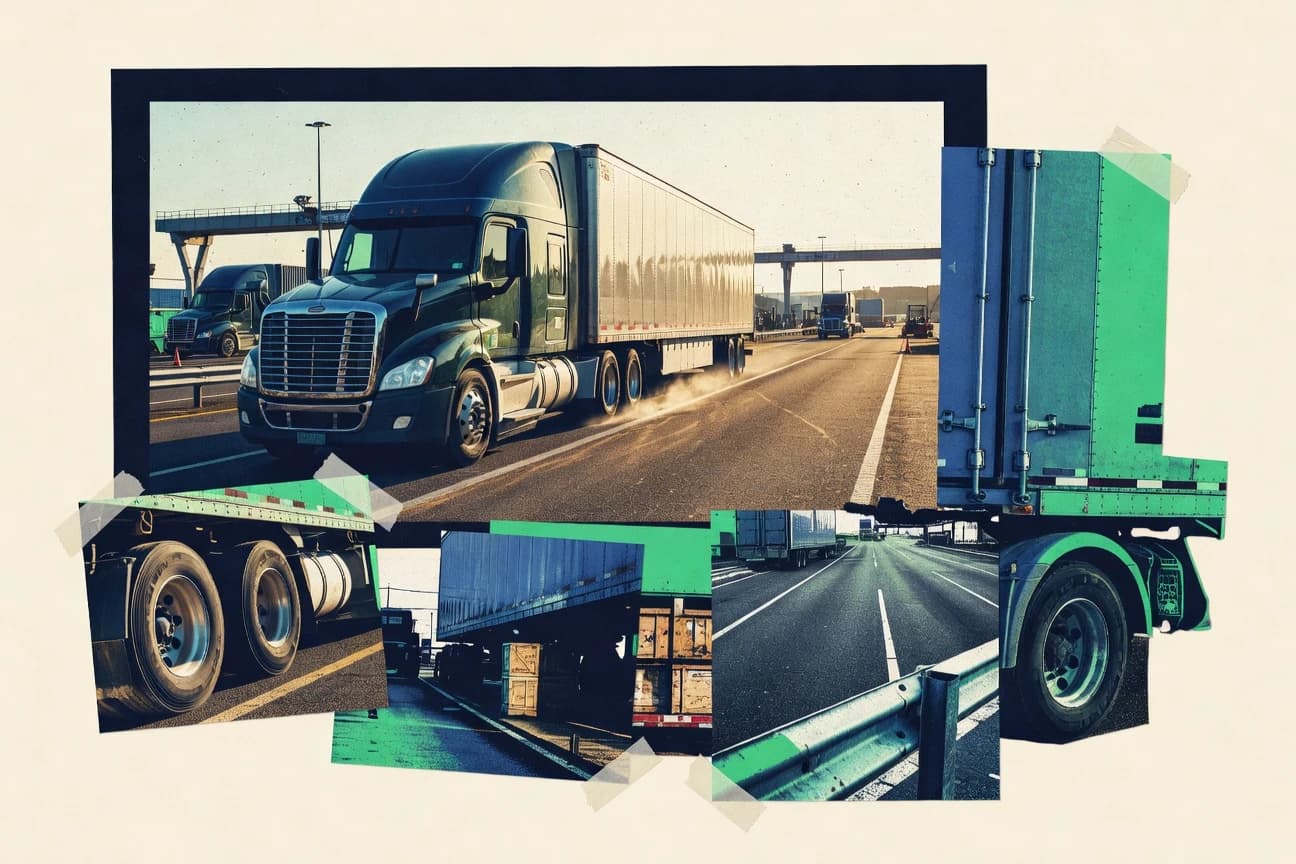

Semi truck operations face heavy scrutiny and high operating costs at the same time. FMCSA logged 4.1 million USDOT inspections in 2023, and 23.5% of inspected carriers were placed out of service for safety violations. Diesel averaged about $4.00 per gallon nationwide while trucks burned 39.0 billion gallons of on highway diesel, keeping fuel and compliance at the center of fleet performance.
Key Takeaways
- In 2022, 5,788 people were killed in crashes involving large trucks (fatality count tied to large-truck crash incidence)
- The U.S. Federal Motor Carrier Safety Administration reported 4.1 million USDOT inspections in 2023, covering carriers that operate semi trucks
- In 2023, FMCSA reported 23.5% of inspected carriers were placed out-of-service due to safety violations (carrier enforcement intensity)
- In 2019, trucks accounted for 77% of all U.S. freight transportation energy use, a major cost driver for semi truck fleets via fuel burn
- In 2023, EIA reported diesel fuel prices averaging about $4.00 per gallon nationwide (fuel price affects semi truck operating costs)
- In 2023, on-highway diesel fuel consumption in the U.S. was 39.0 billion gallons (diesel demand proxy for heavy trucking including semi trucks)
- In 2022, the U.S. motor carrier industry employed 2.2 million people (including truck drivers for freight, many semi truck roles)
- In 2022, OEMs in North America delivered 0.42 million Class 8 trucks, representing new capacity additions for semi trucking fleets
- $123.7 billion U.S. trucking industry revenue in 2023, representing the scale of the carrier market that employs semi trucks
- In 2023, EPA reported that the transportation sector was responsible for 29% of U.S. greenhouse gas emissions (with heavy-duty trucking a key contributor), affecting semi truck decarbonization pressure
- In 2024, the U.S. Infrastructure Investment and Jobs Act funded the National Electric Vehicle Infrastructure (NEVI) program with $5 billion total, indirectly enabling charging buildout for electric semi deployments
- 19% of fleets report being affected by supply chain disruptions for parts/maintenance, raising downtime and cost exposure for semi operations
In 2022 and 2023, enforcement tightened and costs rose for semi fleets, despite fuel demand and safety risks.
Related reading
01 · Category
Performance Metrics10 stats
01
In 2022, 5,788 people were killed in crashes involving large trucks (fatality count tied to large-truck crash incidence)https://crashstats.nhtsa.dot.gov/API/Public/ViewPublication/813449
02
The U.S. Federal Motor Carrier Safety Administration reported 4.1 million USDOT inspections in 2023, covering carriers that operate semi truckshttps://ai.fmcsa.dot.gov/SafetyInformation/assets/pdfs/Inspections/inspections_2023.pdf
03
In 2023, FMCSA reported 23.5% of inspected carriers were placed out-of-service due to safety violations (carrier enforcement intensity)https://ai.fmcsa.dot.gov/SafetyInformation/assets/pdfs/inspections/out_of_service_2023.pdf
04
In 2023, the FMCSA National Roadside Survey (NRS) found 5.6% of inspections resulted in out-of-service violations for commercial motor vehicles during roadside enforcement (safety/cost impact)https://rosap.ntl.bts.gov/view/dot/65367
05
In 2022, 9.1% of large-truck crashes were attributed to distracted driving (NHTSA analysis), indicating a behavior risk for semi truck drivershttps://crashstats.nhtsa.dot.gov/API/Public/ViewPublication/813277
06
In 2023, FMCSA reported that 5.0% of inspected vehicles had violations related to brake systems out-of-service (safety compliance metric relevant to semi trucks)https://ai.fmcsa.dot.gov/SafetyInformation/assets/pdfs/Inspections/violation_breaks_2023.pdf
07
In 2023, FMCSA reported 6.4% of inspections cited violations related to tires or wheels out-of-service (maintenance compliance metric for semi trucks)https://ai.fmcsa.dot.gov/SafetyInformation/assets/pdfs/Inspections/violation_tires_2023.pdf
08
The U.S. on-time pickup and delivery performance averaged 88% in 2023 among reported shippers/carriers in a logistics benchmarking dataset, affecting planning for semi truckinghttps://www.supplychain247.com/pdfs/2023_logistics_performance_benchmark.pdf
09
2023 national average for truck idling time was 7.8 hours per truck per week (U.S. fleet survey), indicating a productivity and emissions cost driver for semi operationshttps://www.arb.ca.gov/msprog/offroad/mobile-sources/truck-idling-survey.pdf
10
Approximately 8.7% of fatal crash drivers in the U.S. in 2022 had a BAC at or above 0.08 g/dL (NHTSA report), relevant to alcohol impairment risk for drivers operating semi truckshttps://crashstats.nhtsa.dot.gov/API/Public/ViewPublication/813152
Interpretation
Performance Metrics Interpretation
Performance metrics show persistent safety gaps in the semi truck industry, with 5.6% of 2023 roadside inspections leading to out of service violations and 23.5% of inspected carriers placed out of service for safety violations.
02 · Category
Cost Analysis5 stats
01
In 2019, trucks accounted for 77% of all U.S. freight transportation energy use, a major cost driver for semi truck fleets via fuel burnhttps://www.eia.gov/analysis/transportation/truck/
02
In 2023, EIA reported diesel fuel prices averaging about $4.00per gallon nationwide (fuel price affects semi truck operating costs)https://www.eia.gov/dnav/pet/hist/RBDDMUS2D.htm
03
In 2023, on-highway diesel fuel consumption in the U.S. was 39.0 billion gallons (diesel demand proxy for heavy trucking including semi trucks)https://www.eia.gov/dnav/pet/hist/LeafHandler.ashx?n=pet&s=ETCOTUS1&f=A
04
In 2023, average new Class 8 tractor sticker prices increased by about 8% year-over-year (retail price trend for semi trucks)https://www.trucknews.com/news/analysis-what-its-costing-to-buy-a-new-truck-in-2023-class-8-prices
05
On-highway diesel fuel use by heavy-duty vehicles accounted for about 80% of on-highway diesel consumption in the U.S. in 2019, showing the magnitude of fuel cost exposure for semi fleetshttps://www.eia.gov/outlooks/steo/report/diesel-use/
Interpretation
Cost Analysis Interpretation
For cost analysis, the combination of diesel price at about $4.00 per gallon in 2023 and 39.0 billion gallons of on-highway diesel consumption shows that fuel remains a dominant cost driver for semi truck fleets, especially since trucks accounted for 77% of U.S. freight energy use in 2019.
More related reading
03 · Category
Market Size4 stats
01
In 2022, the U.S. motor carrier industry employed 2.2 million people (including truck drivers for freight, many semi truck roles)https://www.bls.gov/oes/current/naics.htm
02
In 2022, OEMs in North America delivered 0.42 million Class 8 trucks, representing new capacity additions for semi trucking fleetshttps://www.atkearney.com/insights/transportation-logistics/class-8-deliveries
03
$123.7 billion U.S. trucking industry revenue in 2023, representing the scale of the carrier market that employs semi truckshttps://www.ibisworld.com/united-states/market-research-reports/trucking-industry/industry-statistics
04
The North American Class 8 truck market was valued at $93.4 billion in 2023, giving a proxy for semi truck capital market sizehttps://www.focus-economics.com/commodity-forecast/truck-market
Interpretation
Market Size Interpretation
In 2023, the U.S. trucking industry brought in $123.7 billion in revenue while the North American Class 8 truck market reached $93.4 billion, signaling that the semi truck business is driven by a large and capital intensive market rather than just by employment size.
04 · Category
Industry Trends3 stats
01
In 2023, EPA reported that the transportation sector was responsible for 29% of U.S. greenhouse gas emissions (with heavy-duty trucking a key contributor), affecting semi truck decarbonization pressurehttps://www.epa.gov/ghgemissions/sources-greenhouse-gas-emissions
02
In 2024, the U.S. Infrastructure Investment and Jobs Act funded the National Electric Vehicle Infrastructure (NEVI) program with $5 billion total, indirectly enabling charging buildout for electric semi deploymentshttps://www.federalregister.gov/documents/2023/06/02/2023-11743/nevi-formula-program-guidance
03
19% of fleets report being affected by supply chain disruptions for parts/maintenance, raising downtime and cost exposure for semi operationshttps://www.achrnews.com/articles/143861-supply-chain-challenges-hit-commercial-vehicle-maintenance
Interpretation
Industry Trends Interpretation
Industry trends show that with transportation responsible for 29% of U.S. greenhouse gas emissions and heavy duty trucking still needing cleaner options supported by the NEVI $5 billion push, fleets also face 19% reporting parts and maintenance supply chain disruptions that can compound both downtime and emissions reduction efforts.
report visual · Comparison
Safety & Compliance Snapshot for Semi Truck Operations
Out-of-service enforcement is a meaningful share of inspections, while crash-related risk factors (distraction, impairment) remain evident in large-truck crash data.
In 2023, FMCSA reported 23.5% of inspected carriers were placed out-of-service due to safety violations (carrier enforce23.5%
In 2022, 9.1% of large-truck crashes were attributed to distracted driving (NHTSA analysis), indicating a behavior risk
9.1%
Approximately 8.7% of fatal crash drivers in the U.S. in 2022 had a BAC at or above 0.08 g/dL (NHTSA report), relevant t
8.7%
In 2023, the FMCSA National Roadside Survey (NRS) found 5.6% of inspections resulted in out-of-service violations for co
5.6%
source-verifiedai.fmcsa.dot.gov · rosap.ntl.bts.gov · crashstats.nhtsa.dot.gov2023
Reference
Cite This Report
This report is designed to be cited. We maintain stable URLs and versioned verification dates. Copy the format appropriate for your publication below.
APA
Isabelle Moreau. (2026, February 13). Semi Truck Industry Statistics. Gitnux. https://gitnux.org/semi-truck-industry-statistics
MLA
Isabelle Moreau. "Semi Truck Industry Statistics." Gitnux, 13 Feb 2026, https://gitnux.org/semi-truck-industry-statistics.
Chicago
Isabelle Moreau. 2026. "Semi Truck Industry Statistics." Gitnux. https://gitnux.org/semi-truck-industry-statistics.
Sources & references
22 datasets cited across this report
+8 additional datasets cited (not shown individually)