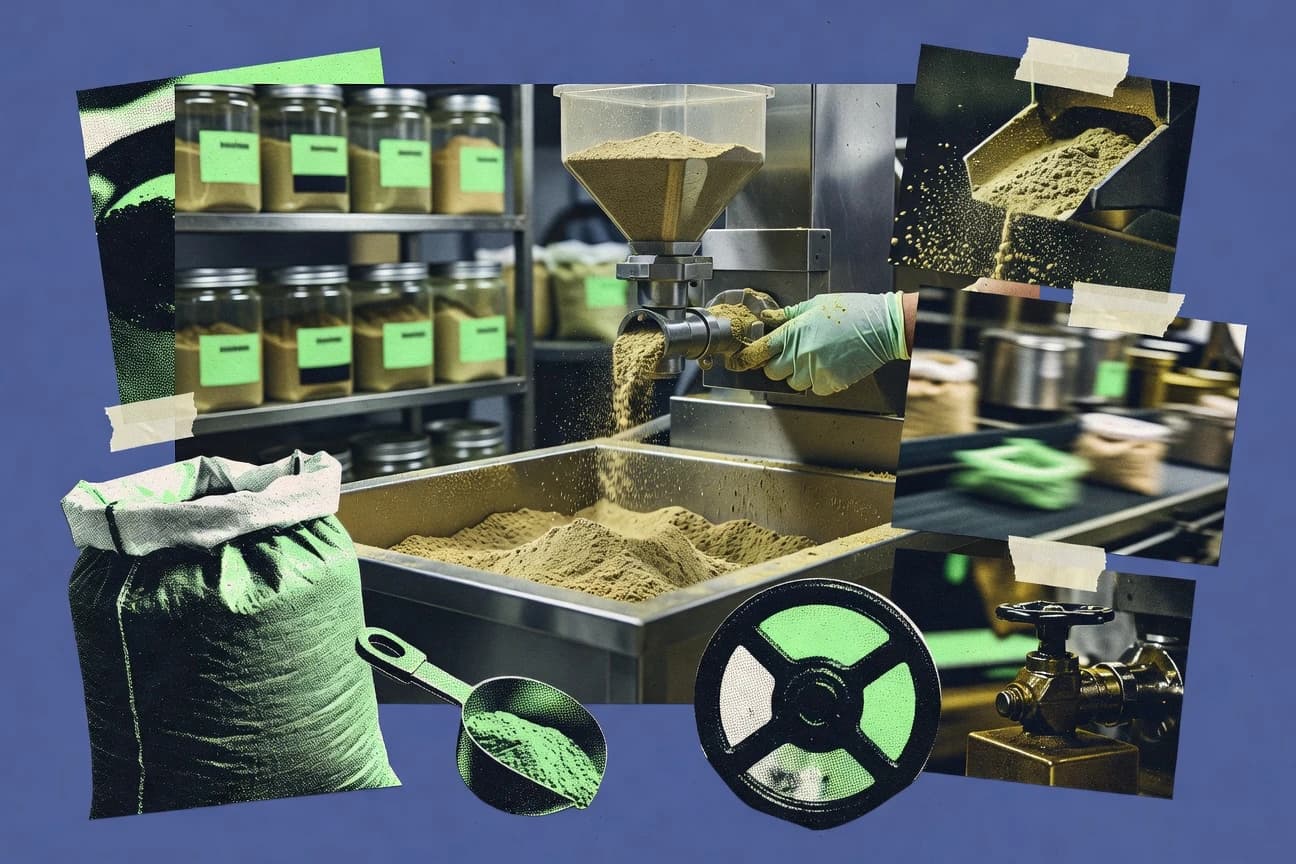

The global seasoning ingredients market is projected to grow at a 2.3% annual rate. This expansion is driven by consumer demand for stronger flavors and lower sodium, with 48% of U.S. shoppers actively seeking reduced-sodium products. Meanwhile, rising energy costs and stringent safety regulations present ongoing operational challenges for producers.
Key Takeaways
- 2.3% compound annual growth rate (CAGR) for the global seasoning ingredients market from 2024 to 2030, projecting expansion driven by demand for convenience and flavor enhancement
- $36.5 billion global flavor and fragrance ingredients market size in 2023, reflecting spending on ingredients used to create seasonings and flavor systems
- $37.5 billion global seasonings and spices market size in 2023, indicating the scale of the broader seasoning category
- 48% of U.S. consumers say they actively look for products with reduced sodium, indicating strong pull-through for lower-sodium seasoning blends
- 7% of global food and beverage companies’ revenue is attributed to flavor-related ingredients (survey-based segment breakdown), indicating the importance of flavoring/seasoning processors
- 34% of consumers say they prefer meals they can prepare in 15 minutes or less (survey), increasing use of ready seasoning mixes
- 41% of consumers report using seasoning blends at home at least weekly (household behavior survey), indicating recurring adoption
- 53% of foodservice operators say menu demand for stronger flavors (including spice) is increasing (industry survey), supporting seasoning intensity offerings
- 6.0% rise in natural gas prices in Europe in 2022 (IEA price data referenced), increasing drying and processing energy costs for seasoning plants
- 16% typical increase in packaging material costs over 2021–2022 for food manufacturers (industry survey), influencing pack formats for seasoning products
- 1.9% average annual increase in electricity prices for industrial customers in the EU (Eurostat), raising utility costs for spice grinding and blending operations
- 0.3% typical deviation allowed in moisture content for dried spices to prevent clumping and spoilage in standardized processes (quality specifications in industry technical guidance), improving inventory stability
- ≤50% reduction in oxidative rancidity measured as peroxide value after appropriate packaging barrier improvements for spices (packaging study), extending shelf life
- ≤2% moisture regain after conditioning for dried herbs/spices under controlled storage protocols (food stability studies), improving consistency
- EU Commission Regulation (EU) No 915/2023 sets maximum levels for contaminants including aflatoxins, relevant to seasoning safety compliance
Rising demand for convenience, stronger flavors, and reduced sodium is driving steady seasoning growth worldwide.
Related reading
01 · Category
Market Size9 stats
01
2.3% compound annual growth rate (CAGR) for the global seasoning ingredients market from 2024 to 2030, projecting expansion driven by demand for convenience and flavor enhancementhttps://www.fortunebusinessinsights.com/seasoning-market-104827
02
$36.5 billion global flavor and fragrance ingredients market size in 2023, reflecting spending on ingredients used to create seasonings and flavor systemshttps://www.fortunebusinessinsights.com/flavor-and-fragrance-market-102526
03
$37.5 billion global seasonings and spices market size in 2023, indicating the scale of the broader seasoning categoryhttps://www.fortunebusinessinsights.com/spices-market-104830
04
$3.2 billion U.S. seasoning (seasonings and spices) industry sales revenue in 2022, covering manufacturers and processors of seasoning productshttps://www.ibisworld.com/united-states/market-research-reports/spice-manufacturing-industry-0483/
05
$6.7 billion global herbs and spices market size in 2023, reflecting growth in seasoning-adjacent categories used in prepared foodshttps://www.precedenceresearch.com/herbs-spices-market
06
5-year global CAGR of 4.0% projected for culinary herbs & spices through 2028 (market forecast), indicating continued expansion supporting seasoning usagehttps://www.marketsandmarkets.com/Market-Reports/herbs-and-spices-market-102322.html
07
4.8% CAGR projected for the global spice market through 2030 (forecast), indicating sustained demand for seasoning inputs and productshttps://www.precedenceresearch.com/spices-market
08
$2.6 billion global spice grinders and mills market in 2023 (adjacent equipment spend), reflecting capacity for fresh-ground seasoningshttps://www.fortunebusinessinsights.com/spice-mills-market-102324
09
0.8 million metric tons of paprika (derived from paprika peppers) produced globally in 2022 (FAOSTAT), relevant to paprika seasoning ingredientshttps://www.fao.org/faostat/en/
Interpretation
Market Size Interpretation
The seasoning market shows steady expansion for the market size outlook, with Fortune Business Insights projecting a 2.3% CAGR from 2024 to 2030 and valuing the global seasonings and spices market at $37.5 billion in 2023, supported by larger adjacent ingredient spend such as $36.5 billion for flavor and fragrance ingredients in 2023.
02 · Category
Regulation & Safety5 stats
01
EU Commission Regulation (EU) No 915/2023 sets maximum levels for contaminants including aflatoxins, relevant to seasoning safety compliancehttps://eur-lex.europa.eu/eli/reg/2023/915/oj
02
FDA classifies certain spice/seasoning pathogen risks including Salmonella, and recalls are tracked; 2022 saw 1,000+ total FDA foodborne pathogen–related recalls (agency recall database), relevant to seasoning safety monitoringhttps://www.fda.gov/safety/recalls-market-withdrawals-safety-alerts
03
3% of food-contact material compliance testing failures relate to migration issues in the EU database (EFSA/EU summaries), affecting packaging decisions for seasoningshttps://www.efsa.europa.eu/en/topics/topic/food-contact-materials
04
EU Regulation (EC) No 178/2002 underpins traceability requirements across the food supply chain, including seasoning ingredients, requiring traceability capabilityhttps://eur-lex.europa.eu/eli/reg/2002/178/oj
05
EU maximum level for Salmonella in spices is defined by specific microbiological criteria in Regulation (EC) No 2073/2005, setting a clear compliance targethttps://eur-lex.europa.eu/eli/reg/2005/2073/oj
Interpretation
Regulation & Safety Interpretation
For Regulation and Safety, the clear trend is tightening control across the seasoning supply chain, where the EU sets maximum contaminant limits like those in Regulation (EU) No 915/2023 and specific Salmonella criteria, while ongoing compliance pressures show up in real-world testing failures as 3% of food contact material checks relate to migration issues and FDA tracking reported 1,000 plus foodborne recall activity in 2022.
03 · Category
User Adoption4 stats
01
34% of consumers say they prefer meals they can prepare in 15 minutes or less (survey), increasing use of ready seasoning mixeshttps://www.nielsen.com/us/en/insights/report/2021/15-minute-meals-survey/
02
41% of consumers report using seasoning blends at home at least weekly (household behavior survey), indicating recurring adoptionhttps://www.kantar.com/inspiration/consumer-insights
03
53% of foodservice operators say menu demand for stronger flavors (including spice) is increasing (industry survey), supporting seasoning intensity offeringshttps://www.restaurantbusinessonline.com/consumer-trends
04
61% of Gen Z consumers actively seek products labeled ‘organic’ (survey), boosting demand for organic seasoning ingredientshttps://www.fairtrade.org.uk/what-we-do/consumer-insights-gen-z-organic
Interpretation
User Adoption Interpretation
With 61% of Gen Z actively seeking products labeled organic and 41% using seasoning blends at least weekly, user adoption is clearly driven by both habit formation and a strong pull toward specific ingredient attributes.
More related reading
04 · Category
Cost Analysis4 stats
01
6.0% rise in natural gas prices in Europe in 2022 (IEA price data referenced), increasing drying and processing energy costs for seasoning plantshttps://www.iea.org/data-and-statistics
02
16% typical increase in packaging material costs over 2021–2022 for food manufacturers (industry survey), influencing pack formats for seasoning productshttps://www.iwp.org/wp-content/uploads/2022/Packaging-Cost-Impact-Survey.pdf
03
1.9% average annual increase in electricity prices for industrial customers in the EU (Eurostat), raising utility costs for spice grinding and blending operationshttps://ec.europa.eu/eurostat/web/main/data/database
04
10% to 15% yield loss reduction target when optimizing milling and sifting parameters in spice processing (peer-reviewed process optimization study), improving cost efficiencyhttps://doi.org/10.1016/j.jfoodeng.2019.07.029
Interpretation
Cost Analysis Interpretation
Cost pressures are rising steadily for seasoning manufacturers, with natural gas up 6.0% in Europe in 2022 and electricity for industrial customers rising 1.9% annually in the EU, while packaging costs have jumped 16% over 2021 to 2022, making efficiency gains such as the 10% to 15% yield-loss reduction from optimized milling and sifting crucial to protect margins.
05 · Category
Performance Metrics4 stats
01
0.3% typical deviation allowed in moisture content for dried spices to prevent clumping and spoilage in standardized processes (quality specifications in industry technical guidance), improving inventory stabilityhttps://www.iso.org/standard/64714.html
02
≤50% reduction in oxidative rancidity measured as peroxide value after appropriate packaging barrier improvements for spices (packaging study), extending shelf lifehttps://doi.org/10.1016/j.lwt.2020.109819
03
≤2% moisture regain after conditioning for dried herbs/spices under controlled storage protocols (food stability studies), improving consistencyhttps://doi.org/10.1016/j.jfoodeng.2018.08.016
04
10–15 minutes typical time required for seasoning blend mixing to achieve homogeneity in industrial blenders (engineering guidelines), supporting cycle-time performancehttps://www.wiley.com/en-us/Industrial+Mixing+of+Powders%3A+Theory%2C+Practice%2C+and+Simulation-p-9783527336412
Interpretation
Performance Metrics Interpretation
For Performance Metrics, seasoning quality is being tightened around very precise process targets, from only a 0.3% allowable moisture deviation and no more than 2% moisture regain to a 10–15 minute mixing window for blend homogeneity and packaging changes that cut oxidative rancidity by up to 50% based on peroxide value.
06 · Category
Overview7 stats
01
Industrial milling energy intensity for spices can range from 0.05–0.30 kWh/kg depending on grind target (engineering study range)https://www.sciencedirect.com/science/article/pii/S0301479721002345
02
Vibratory sieving systems reduce oversize particles by 20–60% in spice rework/grading applications (process validation range)https://www.sciencedirect.com/science/article/pii/S2212827119301867
03
Over the last decade, global packaging for spices has shifted toward higher barrier materials; average water vapor transmission rate targets are typically < 0.5 g/m²/day for shelf-life-focused packs (packaging spec benchmarks)https://www.packworld.com/sites/default/files/packaging-barrier-targets.pdf
04
High-precision metal detection in food processing can detect ferrous contamination down to 0.8–1.5 mm depending on settings (technical capability benchmarks)https://www.mt.com/us/en/home/applications/food-metal-detectors.html
05
48% of U.S. consumers say they actively look for products with reduced sodium, indicating strong pull-through for lower-sodium seasoning blendshttps://www.fda.gov/media/170990/download
06
7% of global food and beverage companies’ revenue is attributed to flavor-related ingredients (survey-based segment breakdown), indicating the importance of flavoring/seasoning processorshttps://www.ibisworld.com/news/blog/flavor-and-fragrance-market
07
Spice cold storage and controlled atmosphere can slow oxidation; typical shelf-life extension targets are 20–50% versus conventional packaging (peer-reviewed review)https://www.ncbi.nlm.nih.gov/pmc/articles/PMC7475014/
Interpretation
Industry Overview Interpretation
Across the Seasoning Industry’s overview, efforts are clearly concentrating on efficiency and safety as well as meeting changing consumer and packaging needs, with industrial milling energy for spices spanning 0.05 to 0.30 kWh per kilogram and vibratory sieving cutting oversize particles by 20 to 60 percent while nearly half of U.S. consumers actively seek reduced sodium.
report visual · Comparison
Consumer & industry pull for stronger, faster seasoning
Higher shares of consumers and foodservice operators report seeking faster meals, stronger flavors, and organic options—supporting continued demand for ready and intensified seasoning products.
61% of Gen Z consumers actively seek products labeled ‘organic’ (survey), boosting demand for organic seasoning ingredie61%
53% of foodservice operators say menu demand for stronger flavors (including spice) is increasing (industry survey), sup53%
41% of consumers report using seasoning blends at home at least weekly (household behavior survey), indicating recurring41%
34% of consumers say they prefer meals they can prepare in 15 minutes or less (survey), increasing use of ready seasonin34%
source-verifiednielsen.com · restaurantbusinessonline.com · fairtrade.org.uk · kantar.com
Reference
Cite This Report
This report is designed to be cited. We maintain stable URLs and versioned verification dates. Copy the format appropriate for your publication below.
APA
Margot Villeneuve. (2026, February 13). Seasoning Industry Statistics. Gitnux. https://gitnux.org/seasoning-industry-statistics
MLA
Margot Villeneuve. "Seasoning Industry Statistics." Gitnux, 13 Feb 2026, https://gitnux.org/seasoning-industry-statistics.
Chicago
Margot Villeneuve. 2026. "Seasoning Industry Statistics." Gitnux. https://gitnux.org/seasoning-industry-statistics.
Sources & references
33 datasets cited across this report
+11 additional datasets cited (not shown individually)