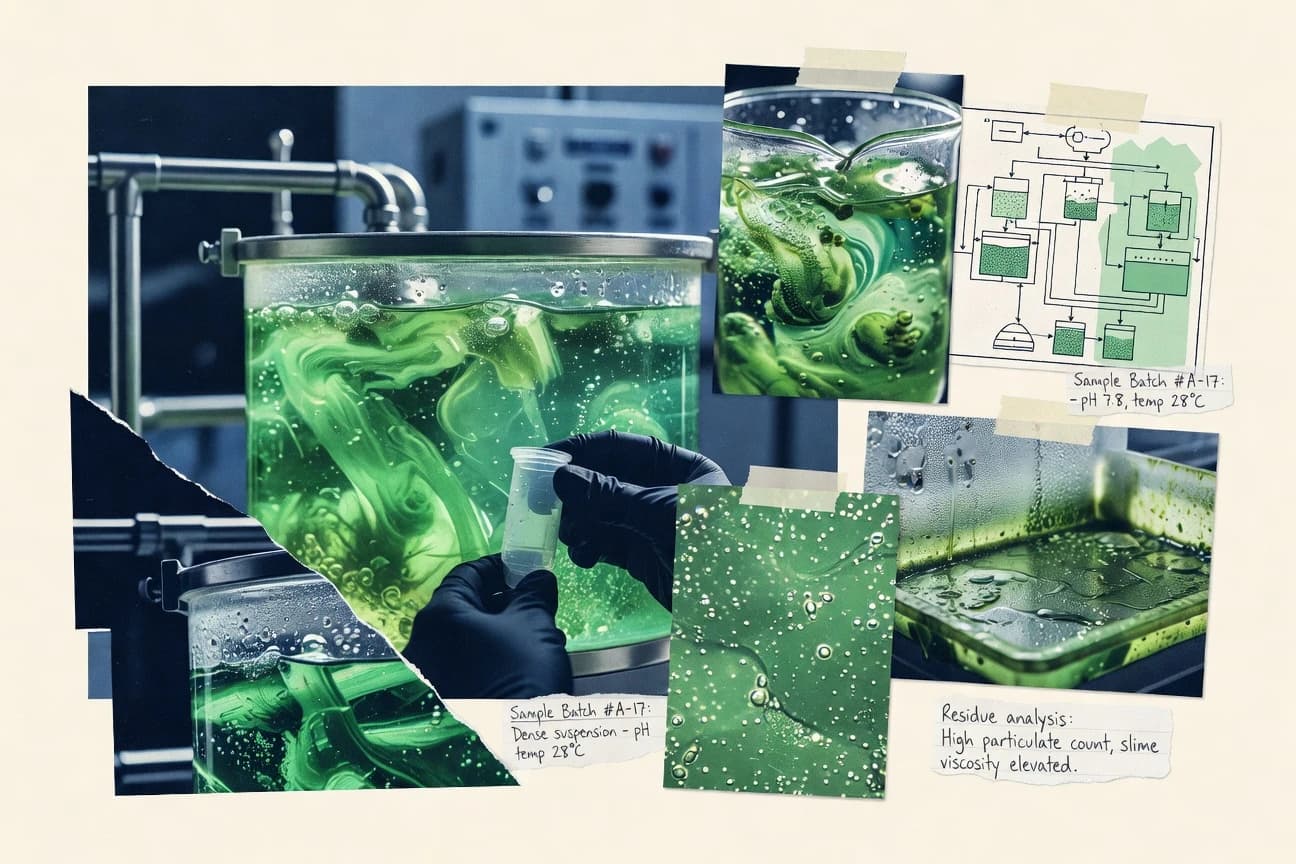

Microalgae connect directly to aquaculture and to a wider chain of food, feed, and bio-based ingredients. As aquaculture output has grown since 2010, structural demand rises for phytoplankton and microalgae inputs. Alongside strain performance and biomass composition, this industry also faces environmental and governance factors—from nutrient and wastewater coupling to contaminant controls and life-cycle impacts—plus evolving certification and regulatory requirements.
Key Takeaways
- The global aquaculture sector produced 82.1 million tonnes in 2018, and microalgae-based feeds (e.g., live feeds for hatcheries) are part of this downstream supply chain
- FAO reported that global aquaculture production reached 51.5 million tonnes in 2010 and 82.1 million tonnes by 2018, indicating growing demand for microalgae inputs to hatcheries
- FAO’s State of World Fisheries and Aquaculture notes continued growth in aquaculture output since 2010, creating structural demand for phytoplankton and microalgae-based live feed
- Microalgae can achieve significant heavy-metal removal from contaminated water; review studies often report over 50% reductions across multiple metals depending on pH, dose, and contact time
- Microalgae-based CO2 capture is frequently evaluated using greenhouse-gas accounting frameworks; studies compute potential carbon capture by combining flue-gas CO2 concentrations with algal productivity
- Microalgae biomass typically contains significant proteins; literature commonly reports protein fractions around 40–60% dry weight for Spirulina (species- and growth-dependent)
- Life-cycle assessments of microalgae photobioreactors show that electricity generation mix can swing total greenhouse-gas results by multiples (often >2x) across grid scenarios
- CO2 utilization rates in algal cultivation can be high in well-mixed systems; studies report CO2 transfer efficiencies from ~10% to >50% depending on sparging configuration and gas-liquid mass transfer
- Astaxanthin content in Haematococcus pluvialis biomass can reach very high levels under stress induction; studies report >1% dry weight astaxanthin in some production conditions
- EU microbiological limits: Enterobacteriaceae must be absent in 25 g and E. coli must be absent in 1 g for dried algae intended for food use (Regulation-style guidance summarized in EU-aligned specifications)
- US dietary supplement labeling: FDA classifies microalgae-derived supplements under dietary supplement rules (21 CFR 101.36) requiring identity/labeling content including ingredient amounts
- ISO 22000:2018 certification base reached 32,000 organizations globally in 2023 (standard for food safety management applicable to food-grade microalgae)
- The European Food Safety Authority (EFSA) evaluates safety of microalgae-derived novel foods and supplements; EFSA has issued multiple opinions on microalgae products including Arthrospira (Spirulina)
- European Commission maximum levels for contaminants in food-grade algae and algal products are regulated under EU food safety frameworks, influencing microalgae producer compliance costs and specs
- EU Regulation (EC) No 1333/2008 governs food additives, including some algal-derived additives used in food applications, shaping regulatory compliance for downstream products
Aquaculture is rapidly expanding and microalgae are increasingly vital for feeds, nutrients, and high value products.
Related reading
01 · Category
Industry Trends17 stats
01
The global aquaculture sector produced 82.1 million tonnes in 2018, and microalgae-based feeds (e.g., live feeds for hatcheries) are part of this downstream supply chainhttps://www.fao.org/fishery/en/facts-figures/aquaculture
02
FAO reported that global aquaculture production reached 51.5 million tonnes in 2010 and 82.1 million tonnes by 2018, indicating growing demand for microalgae inputs to hatcherieshttps://www.fao.org/3/ca9220en/ca9220en.pdf
03
FAO’s State of World Fisheries and Aquaculture notes continued growth in aquaculture output since 2010, creating structural demand for phytoplankton and microalgae-based live feedhttps://www.fao.org/3/i3720e/i3720e.pdf
04
Global fertilizer use exceeded 180 million tonnes of nutrients (N+P2O5+K2O) in recent years, making nutrient recovery and wastewater coupling a relevant opportunity for microalgae cultivation systemshttps://www.worldbank.org/en/topic/agriculture/brief/fertilizer-use
05
The global wastewater generated is growing; OECD data project substantial increases in global wastewater flows by 2050, supporting demand for wastewater-based biomanufacturing including algae systemshttps://www.oecd.org/water/future-of-water-systems-and-services-9789264302991-en.htm
06
Microalgae can support circular-economy nutrient recycling; studies report that coupling cultivation to wastewater can reduce freshwater nutrient demand substantially (often >50% reduction in nutrient inputs compared with synthetic media)https://www.ncbi.nlm.nih.gov/pmc/articles/PMC7600417/
07
Global municipal wastewater collected and treated in the OECD area exceeded 230 billion m³ per year in 2021 (context for wastewater-coupled microalgae systems)https://stats.oecd.org/Index.aspx?DataSetCode=WASTEWATER
08
Global aquaculture production reached 96.4 million tonnes (live weight equivalent) in 2022, supporting demand for microalgae-based feeds and feed ingredientshttps://www.fao.org/fishery/en
09
The global algae biomass market is projected to reach USD 4.3 billion by 2030 (reported growth CAGR ~6% as per industry forecasts using microalgae biomass as feedstock)https://www.fortunebusinessinsights.com/algae-biomass-market-107099
10
The global microalgae production market is forecast to grow to USD 10.7 billion by 2032 (forecast CAGR ~8% reported by vendor research)https://www.fortunebusinessinsights.com/microalgae-market-102241
11
Phycocyanin (Spirulina pigment) market projected to reach USD 1.6 billion by 2030 (demand linked to food and nutraceutical use of microalgae pigments)https://www.thebusinessresearchcompany.com/report/phycocyanin-global-market-report
12
51.5 million tonnes global aquaculture production (live weight equivalent) in 2010https://openknowledge.fao.org/server/api/core/bitstreams/b673bef5-f7a3-43eb-baf9-05221a9c34ef/content
13
62.2 million tonnes global aquaculture production (live weight equivalent) in 2014https://openknowledge.fao.org/server/api/core/bitstreams/b673bef5-f7a3-43eb-baf9-05221a9c34ef/content
14
69.9 million tonnes global aquaculture production (live weight equivalent) in 2016https://openknowledge.fao.org/server/api/core/bitstreams/b673bef5-f7a3-43eb-baf9-05221a9c34ef/content
15
72.1 million tonnes global aquaculture production (live weight equivalent) in 2017https://openknowledge.fao.org/server/api/core/bitstreams/b673bef5-f7a3-43eb-baf9-05221a9c34ef/content
16
82.1 million tonnes global aquaculture production (live weight equivalent) in 2018https://openknowledge.fao.org/server/api/core/bitstreams/b673bef5-f7a3-43eb-baf9-05221a9c34ef/content
17
96.4 million tonnes global aquaculture production (live weight equivalent) in 2022https://openknowledge.fao.org/server/api/core/bitstreams/9c3ed6a3-c2de-4e4b-b315-9ad6891d8d11/content
Interpretation
Industry Trends Interpretation
Global aquaculture growth from 51.5 million tonnes in 2010 to 82.1 million tonnes by 2018 is steadily expanding structural demand for microalgae-based feeds, while rising nutrient and wastewater pressures mean circular-economy nutrient recycling through microalgae is becoming an increasingly relevant industry trend.
02 · Category
Scientific Evidence5 stats
01
Microalgae can achieve significant heavy-metal removal from contaminated water; review studies often report over 50% reductions across multiple metals depending on pH, dose, and contact timehttps://www.ncbi.nlm.nih.gov/pmc/articles/PMC6001425/
02
Microalgae-based CO2 capture is frequently evaluated using greenhouse-gas accounting frameworks; studies compute potential carbon capture by combining flue-gas CO2 concentrations with algal productivityhttps://www.sciencedirect.com/science/article/pii/S0959652621000351
03
Microalgae biomass typically contains significant proteins; literature commonly reports protein fractions around 40–60% dry weight for Spirulina (species- and growth-dependent)https://www.ncbi.nlm.nih.gov/pmc/articles/PMC6140666/
04
Some microalgae strains used for omega-3 production can produce EPA-rich oils; studies report EPA proportions up to several tens of percent of total fatty acids in optimized cultivationhttps://www.sciencedirect.com/science/article/pii/S0960852420303189
05
Long-chain omega-3 production using algae is a recognized alternative to fish oil; peer-reviewed reviews report that algal EPA/DHA production can achieve high DHA/EPA concentrations under stress or growth-stage controlhttps://www.sciencedirect.com/science/article/pii/S1369702119300425
Interpretation
Scientific Evidence Interpretation
Scientific evidence suggests microalgae technologies can deliver measurable environmental and nutritional impacts, including over 50% heavy metal reductions and protein-rich biomass commonly at 40–60% of dry weight, while also supporting EPA and DHA production evaluated in peer-reviewed carbon capture frameworks.
03 · Category
Performance & Metrics5 stats
01
Life-cycle assessments of microalgae photobioreactors show that electricity generation mix can swing total greenhouse-gas results by multiples (often >2x) across grid scenarioshttps://www.sciencedirect.com/science/article/pii/S0960148119317017
02
CO2 utilization rates in algal cultivation can be high in well-mixed systems; studies report CO2 transfer efficiencies from ~10% to >50% depending on sparging configuration and gas-liquid mass transferhttps://www.sciencedirect.com/science/article/pii/S0960148115300877
03
Astaxanthin content in Haematococcus pluvialis biomass can reach very high levels under stress induction; studies report >1% dry weight astaxanthin in some production conditionshttps://www.sciencedirect.com/science/article/pii/S0958166913001685
04
In batch cultures, microalgae growth often follows logistic or exponential phases; doubling times of ~1–3 days are common for fast-growing Chlorella in controlled lab conditionshttps://www.sciencedirect.com/science/article/pii/S0960148116301215
05
Microalgae lipid productivity is reported in the literature as ~0.5–5 g/L/year equivalent ranges depending on strain and reactor operation in conversion-focused studieshttps://www.sciencedirect.com/science/article/pii/S1364032111000282
Interpretation
Performance & Metrics Interpretation
Across Performance and Metrics, reported microalgae outcomes vary widely by operating conditions, with doubling times commonly landing around 1 to 3 days and lipid productivity ranging from about 0.5 to 5 g per liter per year while CO2 transfer efficiencies swing roughly from 10% to over 50% and photobioreactor life cycle greenhouse results depend strongly on the electricity generation mix.
04 · Category
Regulatory Compliance5 stats
01
EU microbiological limits: Enterobacteriaceae must be absent in 25 g and E. coli must be absent in 1 g for dried algae intended for food use (Regulation-style guidance summarized in EU-aligned specifications)https://eur-lex.europa.eu/legal-content/EN/TXT/?uri=CELEX:31993D0485
02
US dietary supplement labeling: FDA classifies microalgae-derived supplements under dietary supplement rules (21 CFR 101.36) requiring identity/labeling content including ingredient amountshttps://www.ecfr.gov/current/title-21/chapter-I/subchapter-B/part-101/subpart-E/section-101.36
03
ISO 22000:2018 certification base reached 32,000 organizations globally in 2023 (standard for food safety management applicable to food-grade microalgae)https://www.iso.org/news/ref2636.html
04
EU REACH registrants must submit chemical safety reports for substances; REACH requires a Chemical Safety Assessment for manufactured/imported substances above 10 tonnes/year (threshold relevant for some algal feedstocks and chemical inputs used in cultivation)https://echa.europa.eu/regulations/reach/understanding-reach
05
In the US, dietary supplement manufacturing must follow cGMP under 21 CFR Part 111, which applies to microalgae-derived supplements such as Spirulina products sold as dietary supplementshttps://www.ecfr.gov/current/title-21/chapter-I/subchapter-B/part-111
Interpretation
Regulatory Compliance Interpretation
Regulatory oversight for microalgae products is tightening across major markets, with EU food safety rules demanding Enterobacteriaceae be absent in 25 g and E coli absent in 1 g for dried algae while globally 32,000 organizations held ISO 22000:2018 food safety certification in 2023, reflecting a clear compliance trend toward stronger standardized controls.
05 · Category
Policy & Regulation4 stats
01
The European Food Safety Authority (EFSA) evaluates safety of microalgae-derived novel foods and supplements; EFSA has issued multiple opinions on microalgae products including Arthrospira (Spirulina)https://www.efsa.europa.eu/en/efsajournal/pub/2309
02
European Commission maximum levels for contaminants in food-grade algae and algal products are regulated under EU food safety frameworks, influencing microalgae producer compliance costs and specshttps://eur-lex.europa.eu/eli/reg/2023/915/oj
03
EU Regulation (EC) No 1333/2008 governs food additives, including some algal-derived additives used in food applications, shaping regulatory compliance for downstream productshttps://eur-lex.europa.eu/eli/reg/2008/1333/oj
04
In the UK/EU, novel food authorization requirements under Regulation (EU) 2015/2283 can apply to microalgae ingredients intended as novel foodshttps://eur-lex.europa.eu/eli/reg/2015/2283/oj
Interpretation
Policy & Regulation Interpretation
Policy and regulation are increasingly centered on safety screening and authorization for microalgae products in both the EU and UK, with EFSA repeatedly assessing microalgae-derived novel foods and supplements and EU frameworks like Regulation (EC) No 1333/2008 and Regulation (EU) 2015/2283 shaping how contaminants, additives, and novel ingredients are permitted.
06 · Category
Overview12 stats
01
In a global trade report context, the specialty chemicals and nutraceuticals market segments that include algal carotenoids are multi-billion-dollar categories, enabling premium pricing for ‘natural’ pigmentshttps://www.grandviewresearch.com/industry-analysis/natural-astaxanthin-market
02
Grand View Research estimated the global astaxanthin market at several hundred million dollars with strong growth in recent years (driven by natural sources including microalgae)https://www.grandviewresearch.com/industry-analysis/astaxanthin-market
03
USD 370 million global market size for Spirulina in 2023https://www.globenewswire.com/news-release/2024/02/02/2817917/0/en/Spirulina-Market-Size-to-Reach-USD-620-7-Million-by-2030-at-a-CAGR-of-7-7.html
04
USD 2.4 billion global market size for astaxanthin in 2023 (Natural/Algal astaxanthin share contributes to microalgae-driven supply)https://www.globenewswire.com/news-release/2024/05/28/2888840/0/en/Astaxanthin-Market-Size-to-Reach-USD-4-7-Billion-by-2032-at-a-CAGR-of-9-6.html
05
Microalgae can contain 1.0–2.0% by dry weight β-carotene in optimized cultivation conditions (species-dependent; used industrially for carotenoid extraction)https://www.sciencedirect.com/topics/chemistry-and-materials-science/spirulina
06
Haematococcus pluvialis can accumulate astaxanthin up to ~3% of dry weight under stress (highly variable by strain and conditions)https://www.ncbi.nlm.nih.gov/pmc/articles/PMC6088162/
07
Chlorella vulgaris can reach theoretical maximum lipid contents around 20–40% of dry weight depending on nitrogen limitation (conversion studies report wide ranges)https://www.researchgate.net/publication/318026493_Lipid_production_by_microalgae_and_algorithms_for_biorefinery_applications
08
In a techno-economic assessment, NREL estimated microalgae biomass could reach cost of USD 2.34/gallon-equivalent under optimistic assumptions for 10,000 metric tons/year scale (2019 dollars)https://www.nrel.gov/docs/fy19osti/73015.pdf
09
Carbon intensity improvement potential: NREL modeled that using industrial flue gas and co-located wastewater nutrients can reduce modeled GHG emissions per kg biomass by up to ~50% compared with baseline scenarios (assumption-driven)https://www.nrel.gov/docs/fy12osti/55431.pdf
10
A 2020 systematic review reported that microalgae-based bioabsorption typically achieves heavy metal removal efficiencies commonly in the 70–99% range for individual metals in controlled conditions (pH and biomass dosage dependent)https://www.sciencedirect.com/science/article/pii/S0045653520303885
11
Typical harvesting of microalgae can be done by centrifugation; literature reports centrifugation energy demands often on the order of several Wh per liter of treated broth depending on target biomass concentrationhttps://www.sciencedirect.com/science/article/pii/S0960148111003181
12
Flocculation methods can reduce harvesting energy versus centrifugation; process studies report biomass concentration factors of >10x during flocculation under suitable chemistryhttps://www.sciencedirect.com/science/article/pii/S0960148119320663
Interpretation
Industry Overview Interpretation
Global demand for high-value microalgae products is already massive and still accelerating, with Spirulina at about USD 370 million in 2023 and astaxanthin around USD 2.4 billion, while industry-relevant pigments can reach roughly 1.0 to 2.0% beta-carotene and up to about 3% astaxanthin of dry weight under optimized or stress conditions.
Reference
Cite This Report
This report is designed to be cited. We maintain stable URLs and versioned verification dates. Copy the format appropriate for your publication below.
APA
Christopher Morgan. (2026, February 13). Microalgae Industry Statistics. Gitnux. https://gitnux.org/microalgae-industry-statistics
MLA
Christopher Morgan. "Microalgae Industry Statistics." Gitnux, 13 Feb 2026, https://gitnux.org/microalgae-industry-statistics.
Chicago
Christopher Morgan. 2026. "Microalgae Industry Statistics." Gitnux. https://gitnux.org/microalgae-industry-statistics.
Sources & references
44 datasets cited across this report
+26 additional datasets cited (not shown individually)