GitNux Logo
  • Editorial Process
Contact Us
Gitnux Logo
Contact Us
  • Home
  • Editorial Process
  • Contact Us
Gitnux Logo
  • Home
  • Blog
  • All Statistics
  • Services
  • Company
  • Privacy Policy
  • Contact
  • Partner
  • Careers
  • As Seen In

Our Services

Custom Market Research

Tailored research solutions designed around your specific business questions and strategic objectives.

Learn more →

Buy Industry Reports

Access comprehensive pre-made industry reports with instant download. Professional market intelligence at your fingertips.

Browse reports →

Software Advisory

Stop wasting months evaluating software vendors. Our analysts leverage 1,000+ AI-verified Best Lists to recommend the right tool for your business in 2–4 weeks.

Learn more →

Popular Categories

Ai In IndustryTechnology Digital MediaSafety AccidentsEntertainment EventsMedical Conditions DisordersMental Health PsychologyMarketing AdvertisingEducation LearningFinance Financial ServicesManufacturing EngineeringSocial Issues Societal TrendsPublic Safety CrimeHealthcare MedicineFood NutritionConsumer RetailHealth MedicineConstruction InfrastructureSports RecreationHr In IndustryDiversity Equity And Inclusion In IndustryGlobal Regional IndustriesBusiness FinanceCustomer Experience In IndustrySustainability In Industry

Find us on

Clutch · Sortlist · DesignRush · G2

GoodFirms · Crunchbase · Tracxn

How we make money

Gitnux.org is an independent market research platform. Primarily, we generate revenue on Gitnux through research projects we conduct for clients & external banner advertising. If we receive a commission for products or services, this is indicated with *.

© 2026 Gitnux. Independent market research platform.

Logos provided by Logo.dev

  1. Home
  2. Manufacturing Engineering
  3. Material Handling Industry Statistics

GITNUXREPORT 2026

Material Handling Industry Statistics

The material handling industry is large, growing rapidly, and becoming more automated for efficiency.

135 statistics5 sections7 min readUpdated 19 days ago

Key Statistics

Statistic 1

Automation adoption at 45% in large warehouses.

Statistic 2

AGVs reduce labor costs by 30%.

Statistic 3

AI in MH predicts maintenance 85% accurately.

Statistic 4

IoT sensors in 60% of new equipment.

Statistic 5

AS/RS throughput up 50% with automation.

Statistic 6

Cobots handle 20% of picking tasks.

Statistic 7

RFID tracking in 55% of supply chains.

Statistic 8

Drones for inventory 40% faster counts.

Statistic 9

Machine learning optimizes routes 25% efficiency.

Statistic 10

5G enables real-time MH control in 30% plants.

Statistic 11

Voice picking systems boost accuracy 99%.

Statistic 12

Blockchain for traceability in 15% MH ops.

Statistic 13

Predictive analytics cuts downtime 35%.

Statistic 14

Autonomous forklifts in 12% of facilities.

Statistic 15

AR glasses for training 50% faster onboarding.

Statistic 16

Big data analytics in 40% large DCs.

Statistic 17

Edge computing processes 70% MH data locally.

Statistic 18

Digital twins simulate 90% operations accurately.

Statistic 19

Cloud WMS adopted by 65% enterprises.

Statistic 20

Computer vision detects hazards 95% rate.

Statistic 21

Robotics process automation 25% admin tasks.

Statistic 22

Wearable tech monitors 30% worker fatigue.

Statistic 23

3D printing for parts reduces lead time 60%.

Statistic 24

Quantum computing pilots in 5% logistics firms.

Statistic 25

Swarm robotics tests efficiency +40%.

Statistic 26

Material handling industry employs 4.5 million in US.

Statistic 27

1.2 million forklift operators in North America.

Statistic 28

Warehouse workers grew 10% from 2019-2023.

Statistic 29

Average MH technician salary USD 55,000 annually.

Statistic 30

70% of MH jobs require high school diploma only.

Statistic 31

Labor shortage affects 60% of MH distributors.

Statistic 32

Women comprise 25% of warehouse workforce.

Statistic 33

Turnover rate 45% in material handling sector.

Statistic 34

500,000 new MH jobs projected by 2030.

Statistic 35

Training hours average 40 per new hire.

Statistic 36

Unionized workers 12% of MH industry.

Statistic 37

Overtime hours 15% above average in warehouses.

Statistic 38

Entry-level MH operator wage USD 18/hour.

Statistic 39

Aging workforce: 40% over 45 years old.

Statistic 40

Remote monitoring roles up 20% post-pandemic.

Statistic 41

Diversity hiring up 15% in MH firms.

Statistic 42

Contractor usage 30% of MH maintenance jobs.

Statistic 43

Shift work common in 75% of facilities.

Statistic 44

Benefits cover 85% of full-time MH employees.

Statistic 45

Apprenticeships train 50,000 MH workers yearly.

Statistic 46

Immigration fills 18% of MH labor gaps.

Statistic 47

Automation displaces 10% routine MH jobs.

Statistic 48

Supervisor roles 8% of MH employment.

Statistic 49

Wage growth 4.2% annually in MH sector.

Statistic 50

Part-time workers 22% of warehouse staff.

Statistic 51

Robotics specialists demand up 25%.

Statistic 52

Injury-related absences cost $1.5B yearly.

Statistic 53

Forklifts represent 40% of unit sales in material handling.

Statistic 54

Electric forklifts comprise 55% of new forklift sales.

Statistic 55

Conveyors used in 70% of warehouses globally.

Statistic 56

AGVs deployed in 25% of large distribution centers.

Statistic 57

Pallet racks installed in 85% of US warehouses.

Statistic 58

Overhead cranes utilized in 60% of manufacturing facilities.

Statistic 59

Reach trucks account for 20% of lift truck fleet.

Statistic 60

Automated storage systems in 15% of e-commerce warehouses.

Statistic 61

Bulk conveyors handle 50% of mining material movement.

Statistic 62

Order pickers used by 40% of order fulfillment operations.

Statistic 63

Robotic arms in 10% of automotive assembly lines.

Statistic 64

Pushback racks represent 12% of rack installations.

Statistic 65

Scissor lifts deployed in 30% of construction sites.

Statistic 66

Belt conveyors dominate 45% of conveyor market.

Statistic 67

Counterbalance forklifts 65% of forklift market share.

Statistic 68

Carton flow racks in 18% of high-volume warehouses.

Statistic 69

Jib cranes used in 25% of small manufacturing shops.

Statistic 70

Walkie stackers popular in 35% of retail DCs.

Statistic 71

Roller conveyors 30% of conveyor installations.

Statistic 72

Gantry cranes in 20% of port operations.

Statistic 73

Turret trucks for 8% of very narrow aisle storage.

Statistic 74

Pneumatic conveyors for 15% of food processing.

Statistic 75

Side loaders used in 5% of long load handling.

Statistic 76

Mezzanine floors in 22% of multi-level warehouses.

Statistic 77

Telescopic handlers 12% of construction equipment.

Statistic 78

Chain conveyors 18% in automotive plants.

Statistic 79

Swing reach trucks 7% of narrow aisle fleet.

Statistic 80

Global material handling equipment market size was USD 195.6 billion in 2022.

Statistic 81

North America material handling market projected to grow at 6.2% CAGR from 2023-2030.

Statistic 82

Automated material handling market expected to reach USD 72.2 billion by 2027.

Statistic 83

US material handling industry generates $251 billion annually.

Statistic 84

Forklifts account for 35% of material handling equipment market share.

Statistic 85

Conveyor systems market valued at USD 8.5 billion in 2023.

Statistic 86

Material handling robotics market to grow at 14.5% CAGR to 2030.

Statistic 87

Asia-Pacific material handling market CAGR of 7.1% from 2023-2028.

Statistic 88

Industrial trucks market size USD 60.4 billion by 2026.

Statistic 89

Storage and retrieval systems market at USD 12.3 billion in 2022.

Statistic 90

Global pallet market valued at USD 62.5 billion in 2023.

Statistic 91

E-commerce driving 9% annual growth in material handling.

Statistic 92

US material handling equipment sales reached $40 billion in 2022.

Statistic 93

AGV market projected to USD 5.2 billion by 2028.

Statistic 94

Cranes market size USD 45.6 billion in 2023.

Statistic 95

Material handling software market at USD 4.8 billion by 2027.

Statistic 96

Europe material handling market CAGR 5.8% to 2030.

Statistic 97

Lift trucks market revenue USD 55 billion in 2022.

Statistic 98

Bulk material handling market USD 35.2 billion by 2026.

Statistic 99

Warehouse automation market to hit USD 30 billion by 2025.

Statistic 100

Material handling services market growing at 6.5% CAGR.

Statistic 101

Overhead cranes segment 28% of crane market.

Statistic 102

Racking systems market USD 13.4 billion in 2023.

Statistic 103

Post-pandemic material handling growth 8.2% annually.

Statistic 104

Latin America material handling CAGR 6.9% to 2028.

Statistic 105

Sorting systems market USD 4.1 billion by 2027.

Statistic 106

Material handling equipment market in India USD 2.5 billion 2023.

Statistic 107

Hoists market size USD 12.9 billion by 2030.

Statistic 108

Global warehousing market USD 450 billion in 2022.

Statistic 109

Material handling industry expected 5.7% CAGR 2023-2032.

Statistic 110

Material handling industry reports 14 fatalities per 100,000 workers annually.

Statistic 111

Forklift accidents cause 85 deaths and 34,900 injuries yearly in US.

Statistic 112

20% of warehouse injuries from material handling equipment.

Statistic 113

OSHA standard 1910.178 covers 70% of forklift operations.

Statistic 114

Struck-by incidents 42% of material handling fatalities.

Statistic 115

70% of forklift tip-overs preventable with training.

Statistic 116

Ergonomic injuries account for 35% of MH worker claims.

Statistic 117

Conveyor-related injuries 25 per 100,000 workers.

Statistic 118

Lockout/Tagout violations top 10% of OSHA citations in MH.

Statistic 119

15% reduction in accidents with proximity sensors.

Statistic 120

Falls from lifts cause 12% of construction MH deaths.

Statistic 121

90% of forklift accidents operator-related.

Statistic 122

Hearing loss in 18% of MH equipment operators.

Statistic 123

Crane collapses 72 incidents yearly in US.

Statistic 124

Manual handling causes 30% of MSDs in warehouses.

Statistic 125

Safety training reduces incidents by 60%.

Statistic 126

Pinch point injuries 22% of conveyor accidents.

Statistic 127

Overhead crane inspections prevent 80% of failures.

Statistic 128

Fatigue contributes to 13% of MH accidents.

Statistic 129

PPE usage 95% compliance lowers injury rates 40%.

Statistic 130

Slip/trip/fall 15% of warehouse injuries.

Statistic 131

Electrical hazards 8% of MH fatalities.

Statistic 132

Guarding requirements cut conveyor injuries 50%.

Statistic 133

25 million workers exposed to MH hazards daily.

Statistic 134

Rollover protective structures save 1,200 lives yearly.

Statistic 135

Hazard communication standard applies to 65% MH chemicals.

1/135
Sources
Trusted by 500+ publications
Harvard Business ReviewThe GuardianFortuneMicrosoftWorld Economic ForumFast Company
Harvard Business ReviewThe GuardianFortune+497
Nathan Caldwell

Written by Nathan Caldwell·Edited by Maya Johansson·Fact-checked by Claire Beaumont

Published Feb 13, 2026·Last verified Mar 30, 2026·Next review: Sep 2026
Fact-checked via 4-step process— how we build this report
01Primary Source Collection

Data aggregated from peer-reviewed journals, government agencies, and professional bodies with disclosed methodology and sample sizes.

02Editorial Curation

Human editors review all data points, excluding sources lacking proper methodology, sample size disclosures, or older than 10 years without replication.

03AI-Powered Verification

Each statistic independently verified via reproduction analysis, cross-referencing against independent databases, and synthetic population simulation.

04Human Cross-Check

Final human editorial review of all AI-verified statistics. Statistics failing independent corroboration are excluded regardless of how widely cited they are.

Read our full methodology →

Statistics that fail independent corroboration are excluded.

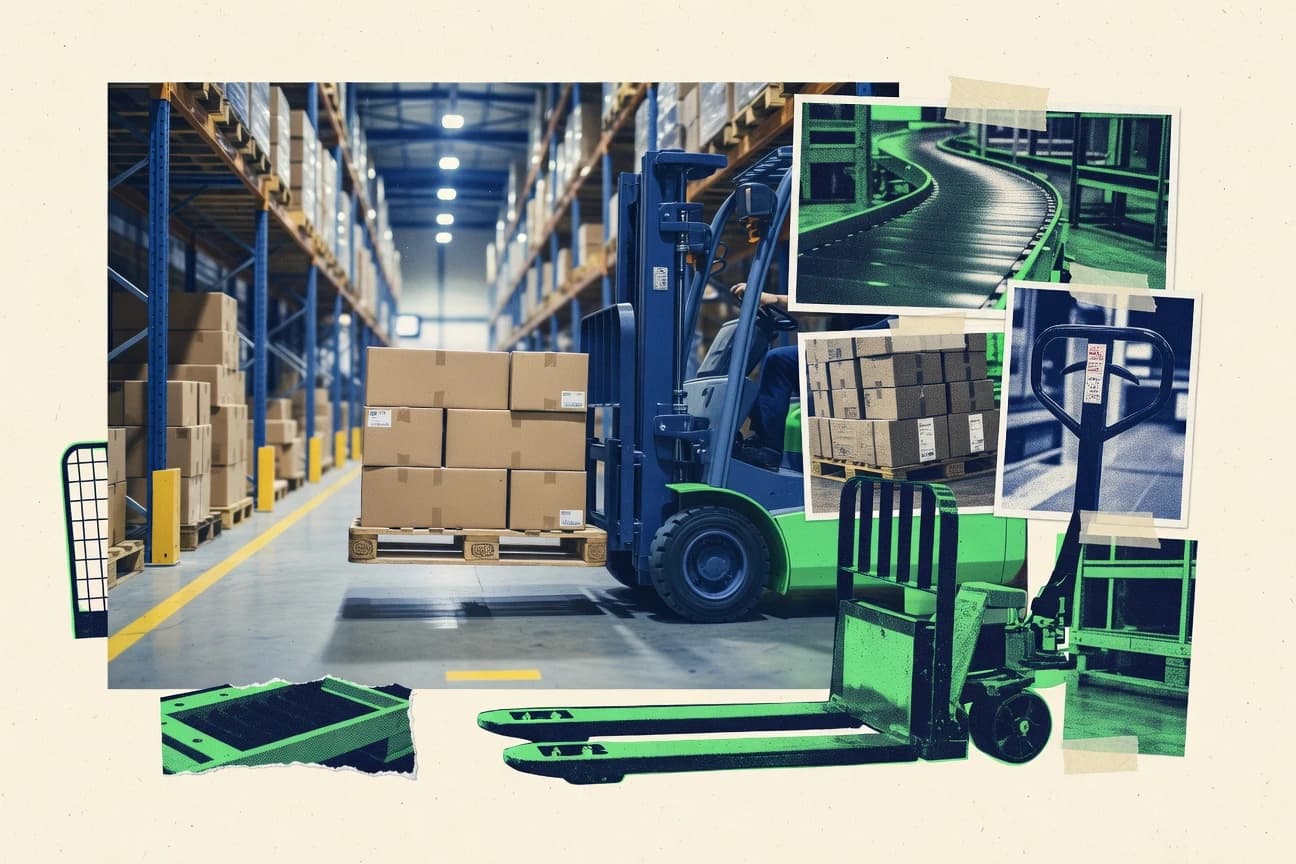
Picture a hidden engine powering our world—a nearly $200 billion industry where forklifts move mountains of goods, robots are rewiring warehouses, and safety innovations are saving lives while creating millions of careers.

Key Takeaways

  • 1Global material handling equipment market size was USD 195.6 billion in 2022.
  • 2North America material handling market projected to grow at 6.2% CAGR from 2023-2030.
  • 3Automated material handling market expected to reach USD 72.2 billion by 2027.
  • 4Forklifts represent 40% of unit sales in material handling.
  • 5Electric forklifts comprise 55% of new forklift sales.
  • 6Conveyors used in 70% of warehouses globally.
  • 7Material handling industry reports 14 fatalities per 100,000 workers annually.
  • 8Forklift accidents cause 85 deaths and 34,900 injuries yearly in US.
  • 920% of warehouse injuries from material handling equipment.
  • 10Material handling industry employs 4.5 million in US.
  • 111.2 million forklift operators in North America.
  • 12Warehouse workers grew 10% from 2019-2023.
  • 13Automation adoption at 45% in large warehouses.
  • 14AGVs reduce labor costs by 30%.
  • 15AI in MH predicts maintenance 85% accurately.

The material handling industry is large, growing rapidly, and becoming more automated for efficiency.

Automation and Technology

1Automation adoption at 45% in large warehouses.
Verified
2AGVs reduce labor costs by 30%.
Verified
3AI in MH predicts maintenance 85% accurately.
Verified
4IoT sensors in 60% of new equipment.
Directional
5AS/RS throughput up 50% with automation.
Single source
6Cobots handle 20% of picking tasks.
Verified
7RFID tracking in 55% of supply chains.
Verified
8Drones for inventory 40% faster counts.
Verified
9Machine learning optimizes routes 25% efficiency.
Directional
105G enables real-time MH control in 30% plants.
Single source
11Voice picking systems boost accuracy 99%.
Verified
12Blockchain for traceability in 15% MH ops.
Verified
13Predictive analytics cuts downtime 35%.
Verified
14Autonomous forklifts in 12% of facilities.
Directional
15AR glasses for training 50% faster onboarding.
Single source
16Big data analytics in 40% large DCs.
Verified
17Edge computing processes 70% MH data locally.
Verified
18Digital twins simulate 90% operations accurately.
Verified
19Cloud WMS adopted by 65% enterprises.
Directional
20Computer vision detects hazards 95% rate.
Single source
21Robotics process automation 25% admin tasks.
Verified
22Wearable tech monitors 30% worker fatigue.
Verified
233D printing for parts reduces lead time 60%.
Verified
24Quantum computing pilots in 5% logistics firms.
Directional
25Swarm robotics tests efficiency +40%.
Single source

Automation and Technology Interpretation

The warehouse of the future is already here, deploying a witty army of gadgets and data to squeeze every ounce of efficiency from 45% of large facilities, where robots handle the heavy lifting and the boring tasks, while AI plays fortune teller for machines, sensors gossip in real time, and workers are guided by augmented reality and their own voices to achieve near-perfect accuracy.

Employment and Labor

1Material handling industry employs 4.5 million in US.
Verified
21.2 million forklift operators in North America.
Verified
3Warehouse workers grew 10% from 2019-2023.
Verified
4Average MH technician salary USD 55,000 annually.
Directional
570% of MH jobs require high school diploma only.
Single source
6Labor shortage affects 60% of MH distributors.
Verified
7Women comprise 25% of warehouse workforce.
Verified
8Turnover rate 45% in material handling sector.
Verified
9500,000 new MH jobs projected by 2030.
Directional
10Training hours average 40 per new hire.
Single source
11Unionized workers 12% of MH industry.
Verified
12Overtime hours 15% above average in warehouses.
Verified
13Entry-level MH operator wage USD 18/hour.
Verified
14Aging workforce: 40% over 45 years old.
Directional
15Remote monitoring roles up 20% post-pandemic.
Single source
16Diversity hiring up 15% in MH firms.
Verified
17Contractor usage 30% of MH maintenance jobs.
Verified
18Shift work common in 75% of facilities.
Verified
19Benefits cover 85% of full-time MH employees.
Directional
20Apprenticeships train 50,000 MH workers yearly.
Single source
21Immigration fills 18% of MH labor gaps.
Verified
22Automation displaces 10% routine MH jobs.
Verified
23Supervisor roles 8% of MH employment.
Verified
24Wage growth 4.2% annually in MH sector.
Directional
25Part-time workers 22% of warehouse staff.
Single source
26Robotics specialists demand up 25%.
Verified
27Injury-related absences cost $1.5B yearly.
Verified

Employment and Labor Interpretation

The material handling industry is a paradox of booming demand and chronic instability, where over 4.5 million people find opportunity amidst 45% turnover, proving that moving boxes is serious business fueled by equal parts grit, forklifts, and a desperate scramble to train and retain a workforce before automation and age do the math for us.

Equipment Types and Usage

1Forklifts represent 40% of unit sales in material handling.
Verified
2Electric forklifts comprise 55% of new forklift sales.
Verified
3Conveyors used in 70% of warehouses globally.
Verified
4AGVs deployed in 25% of large distribution centers.
Directional
5Pallet racks installed in 85% of US warehouses.
Single source
6Overhead cranes utilized in 60% of manufacturing facilities.
Verified
7Reach trucks account for 20% of lift truck fleet.
Verified
8Automated storage systems in 15% of e-commerce warehouses.
Verified
9Bulk conveyors handle 50% of mining material movement.
Directional
10Order pickers used by 40% of order fulfillment operations.
Single source
11Robotic arms in 10% of automotive assembly lines.
Verified
12Pushback racks represent 12% of rack installations.
Verified
13Scissor lifts deployed in 30% of construction sites.
Verified
14Belt conveyors dominate 45% of conveyor market.
Directional
15Counterbalance forklifts 65% of forklift market share.
Single source
16Carton flow racks in 18% of high-volume warehouses.
Verified
17Jib cranes used in 25% of small manufacturing shops.
Verified
18Walkie stackers popular in 35% of retail DCs.
Verified
19Roller conveyors 30% of conveyor installations.
Directional
20Gantry cranes in 20% of port operations.
Single source
21Turret trucks for 8% of very narrow aisle storage.
Verified
22Pneumatic conveyors for 15% of food processing.
Verified
23Side loaders used in 5% of long load handling.
Verified
24Mezzanine floors in 22% of multi-level warehouses.
Directional
25Telescopic handlers 12% of construction equipment.
Single source
26Chain conveyors 18% in automotive plants.
Verified
27Swing reach trucks 7% of narrow aisle fleet.
Verified

Equipment Types and Usage Interpretation

In the material handling orchestra, we're still tuning the electric forklifts while the pallet rack percussion section holds a near-universal beat, but the robotic strings are just warming up for their solo.

Market Size and Growth

1Global material handling equipment market size was USD 195.6 billion in 2022.
Verified
2North America material handling market projected to grow at 6.2% CAGR from 2023-2030.
Verified
3Automated material handling market expected to reach USD 72.2 billion by 2027.
Verified
4US material handling industry generates $251 billion annually.
Directional
5Forklifts account for 35% of material handling equipment market share.
Single source
6Conveyor systems market valued at USD 8.5 billion in 2023.
Verified
7Material handling robotics market to grow at 14.5% CAGR to 2030.
Verified
8Asia-Pacific material handling market CAGR of 7.1% from 2023-2028.
Verified
9Industrial trucks market size USD 60.4 billion by 2026.
Directional
10Storage and retrieval systems market at USD 12.3 billion in 2022.
Single source
11Global pallet market valued at USD 62.5 billion in 2023.
Verified
12E-commerce driving 9% annual growth in material handling.
Verified
13US material handling equipment sales reached $40 billion in 2022.
Verified
14AGV market projected to USD 5.2 billion by 2028.
Directional
15Cranes market size USD 45.6 billion in 2023.
Single source
16Material handling software market at USD 4.8 billion by 2027.
Verified
17Europe material handling market CAGR 5.8% to 2030.
Verified
18Lift trucks market revenue USD 55 billion in 2022.
Verified
19Bulk material handling market USD 35.2 billion by 2026.
Directional
20Warehouse automation market to hit USD 30 billion by 2025.
Single source
21Material handling services market growing at 6.5% CAGR.
Verified
22Overhead cranes segment 28% of crane market.
Verified
23Racking systems market USD 13.4 billion in 2023.
Verified
24Post-pandemic material handling growth 8.2% annually.
Directional
25Latin America material handling CAGR 6.9% to 2028.
Single source
26Sorting systems market USD 4.1 billion by 2027.
Verified
27Material handling equipment market in India USD 2.5 billion 2023.
Verified
28Hoists market size USD 12.9 billion by 2030.
Verified
29Global warehousing market USD 450 billion in 2022.
Directional
30Material handling industry expected 5.7% CAGR 2023-2032.
Single source

Market Size and Growth Interpretation

While your unassuming pallet might seem humble, this $450 billion warehousing world is rapidly transforming into a high-stakes, automated ballet of robots, conveyors, and forklifts, all moving at a 14.5% growth rate to satisfy our insatiable e-commerce appetite.

Safety and Regulations

1Material handling industry reports 14 fatalities per 100,000 workers annually.
Verified
2Forklift accidents cause 85 deaths and 34,900 injuries yearly in US.
Verified
320% of warehouse injuries from material handling equipment.
Verified
4OSHA standard 1910.178 covers 70% of forklift operations.
Directional
5Struck-by incidents 42% of material handling fatalities.
Single source
670% of forklift tip-overs preventable with training.
Verified
7Ergonomic injuries account for 35% of MH worker claims.
Verified
8Conveyor-related injuries 25 per 100,000 workers.
Verified
9Lockout/Tagout violations top 10% of OSHA citations in MH.
Directional
1015% reduction in accidents with proximity sensors.
Single source
11Falls from lifts cause 12% of construction MH deaths.
Verified
1290% of forklift accidents operator-related.
Verified
13Hearing loss in 18% of MH equipment operators.
Verified
14Crane collapses 72 incidents yearly in US.
Directional
15Manual handling causes 30% of MSDs in warehouses.
Single source
16Safety training reduces incidents by 60%.
Verified
17Pinch point injuries 22% of conveyor accidents.
Verified
18Overhead crane inspections prevent 80% of failures.
Verified
19Fatigue contributes to 13% of MH accidents.
Directional
20PPE usage 95% compliance lowers injury rates 40%.
Single source
21Slip/trip/fall 15% of warehouse injuries.
Verified
22Electrical hazards 8% of MH fatalities.
Verified
23Guarding requirements cut conveyor injuries 50%.
Verified
2425 million workers exposed to MH hazards daily.
Directional
25Rollover protective structures save 1,200 lives yearly.
Single source
26Hazard communication standard applies to 65% MH chemicals.
Verified

Safety and Regulations Interpretation

Behind every dry statistic lies a preventable tragedy, because a shocking number of these deaths and injuries—from forklifts being tipped by untrained operators to limbs being crushed in unguarded gears—are not acts of God but failures of man, proving that the most critical piece of safety equipment isn't a sensor or a guard but a culture of relentless vigilance.

Sources & References

  • GRANDVIEWRESEARCH logo
    Reference 1
    GRANDVIEWRESEARCH
    grandviewresearch.com
    Visit source
  • MARKETSANDMARKETS logo
    Reference 2
    MARKETSANDMARKETS
    marketsandmarkets.com
    Visit source
  • MHI logo
    Reference 3
    MHI
    mhi.org
    Visit source
  • MHEDA logo
    Reference 4
    MHEDA
    mheda.org
    Visit source
  • STATISTA logo
    Reference 5
    STATISTA
    statista.com
    Visit source
  • FORTUNEBUSINESSINSIGHTS logo
    Reference 6
    FORTUNEBUSINESSINSIGHTS
    fortunebusinessinsights.com
    Visit source
  • RESEARCHANDMARKETS logo
    Reference 7
    RESEARCHANDMARKETS
    researchandmarkets.com
    Visit source
  • MORDORINTELLIGENCE logo
    Reference 8
    MORDORINTELLIGENCE
    mordorintelligence.com
    Visit source
  • PERSISTENCEMARKETRESEARCH logo
    Reference 9
    PERSISTENCEMARKETRESEARCH
    persistencemarketresearch.com
    Visit source
  • FUTUREMARKETINSIGHTS logo
    Reference 10
    FUTUREMARKETINSIGHTS
    futuremarketinsights.com
    Visit source
  • IMH logo
    Reference 11
    IMH
    imh.com
    Visit source
  • GMINSIGHTS logo
    Reference 12
    GMINSIGHTS
    gminsights.com
    Visit source
  • OSHA logo
    Reference 13
    OSHA
    osha.gov
    Visit source
  • BLS logo
    Reference 14
    BLS
    bls.gov
    Visit source
  • CDC logo
    Reference 15
    CDC
    cdc.gov
    Visit source
  • ITSEASYBEINGSAFE logo
    Reference 16
    ITSEASYBEINGSAFE
    itseasybeingsafe.com
    Visit source
  • NSC logo
    Reference 17
    NSC
    nsc.org
    Visit source
  • SALARY logo
    Reference 18
    SALARY
    salary.com
    Visit source
  • DOL logo
    Reference 19
    DOL
    dol.gov
    Visit source
  • GARTNER logo
    Reference 20
    GARTNER
    gartner.com
    Visit source
  • MCKINSEY logo
    Reference 21
    MCKINSEY
    mckinsey.com
    Visit source

Logos provided by Logo.dev

On this page

  1. 01Key Takeaways
  2. 02Automation and Technology
  3. 03Employment and Labor
  4. 04Equipment Types and Usage
  5. 05Market Size and Growth
  6. 06Safety and Regulations
Nathan Caldwell

Nathan Caldwell

Author

Maya Johansson
Editor
Claire Beaumont
Fact Checker

Our Commitment to Accuracy

  • Rigorous fact-checking process
  • Data from reputable sources
  • Regular updates to ensure relevance
Learn more

Explore More In This Category

  • Process Control Industry Statistics
  • Industrial Distribution Industry Statistics
  • Battery Materials Industry Statistics
  • Osat Industry Statistics
  • Aluminum Can Industry Statistics
  • Process Industry Statistics