
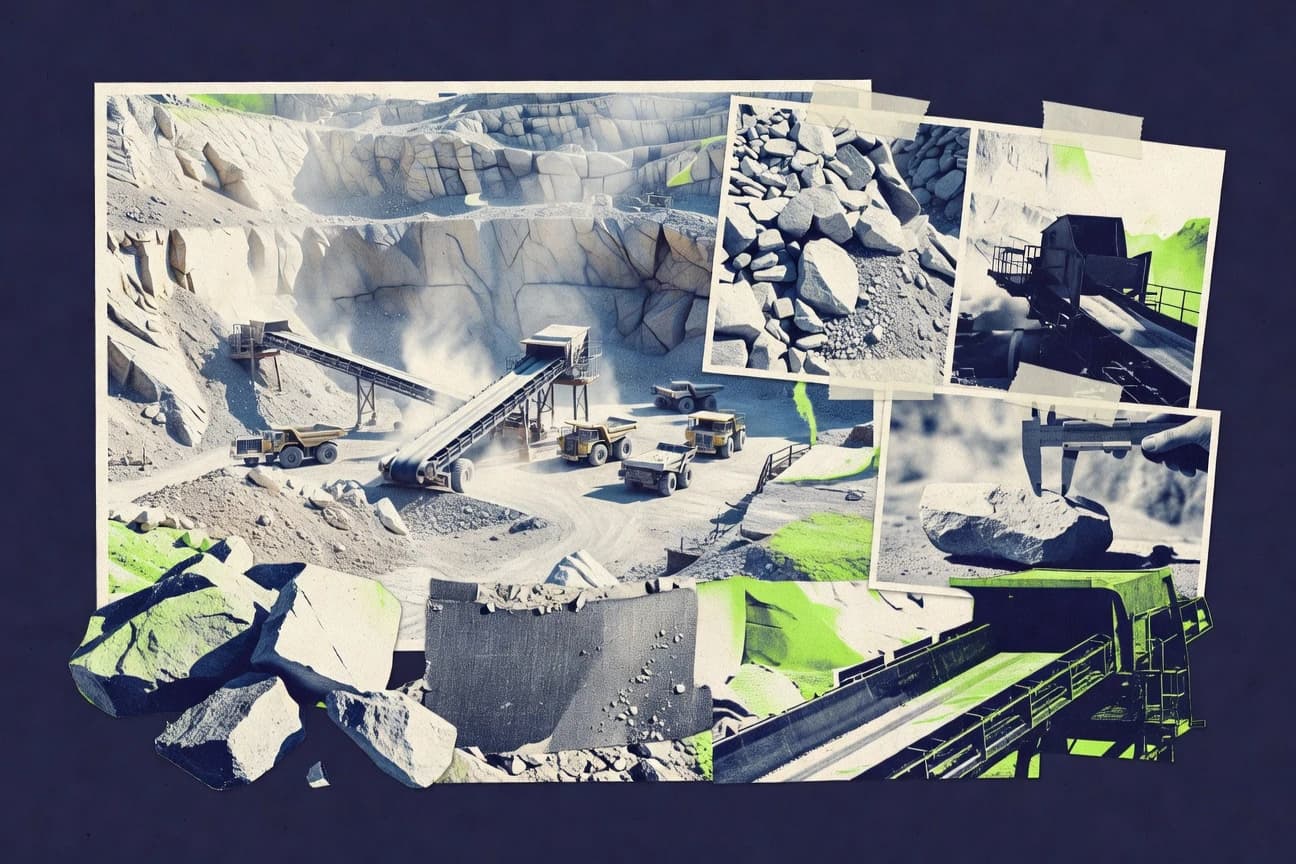

Cement production is responsible for about 2.3% of global man-made CO2 emissions, and the culprit is remarkably direct limestone calcination, where CaCO3 releases CO2 almost stoichiometrically. That same chemistry makes the averages look simple while the compliance picture is anything but, from EU ETS hundreds of monitored installations to scrubbers that can strip SO2 at roughly 90% plus removal. We pulled together the limestone industry dataset that links kiln temperatures, residence times, and mass balances to real-world verified emissions and market pressure.
Key Takeaways
- 2.3% of global man-made CO2 emissions come from cement production (limestone calcination is a core source within cement making).
- Cement production releases roughly 0.53 tonnes of CO2 per tonne of cement on average globally (a large portion derives from calcining limestone).
- Limestone calcination produces CO2 in a near-stoichiometric manner: CaCO3 → CaO + CO2, meaning about 44% of CaCO3 mass is released as CO2 (chemical basis for limestone-driven emissions in lime/cement).
- The global limestone market (including products such as crushed stone and lime) is estimated in the tens of billions of dollars annually; one vendor estimate placed it around $20+ billion in 2023 (market sizing varies by definition).
- U.S. hydrated lime production was 4.9 million metric tons in 2023, reflecting sustained demand for downstream Ca(OH)2 production from limestone.
- Lime kiln calcination temperatures are typically in the range of ~900–1,200°C to drive CaCO3 decomposition to CaO and CO2 (process requirement defining energy demand).
- The typical crushing process stages for aggregate production include primary, secondary, and tertiary crushing (3-stage crushing is a common operational configuration).
- In wet FGD, limestone is ground to a fine slurry; typical target particle sizes are in the tens of micrometers to improve SO2 mass transfer (grinding performance metric).
- A 2020 study reported that using waste heat recovery in cement kilns can reduce net energy use by roughly 10–20% depending on configuration and waste heat availability (energy efficiency metric).
- A 2018 life-cycle assessment review found that increasing clinker substitution can reduce cradle-to-gate GHG emissions by tens of percent, with specific reductions varying by replacement level (performance metric linked to limestone demand and clinker share).
- Carbonation of concrete uptake studies report that natural carbonation can progress at measurable rates; typical carbonation depths can be on the order of millimeters per year depending on conditions (performance metric for carbonate reactions).
- The International Energy Agency (IEA) reported that alternative fuels use in cement has been increasing; in 2022, the share of alternative fuels in cement plants in mature markets was typically in the tens of percent (industry trend metric).
- In the EU, the Fit for 55 policy increases demand for industrial decarbonization; cement and lime are covered by the EU ETS and Carbon Border Adjustment Mechanism considerations (trend affecting limestone-based process industries).
- In 2020–2023, many countries adopted stricter PM (particulate matter) controls for quarries and crushing operations; in the US, NAAQS focus increased compliance requirements (trend affecting production logistics).
- The EU ETS requires annual surrender of allowances by 30 April for the preceding monitoring year, a concrete compliance deadline affecting cement/lime operators’ verified emissions handling.
Limestone calcination drives cement’s CO2, releasing about 44 percent of CaCO3 as emissions worldwide.
Related reading
01 · Category
Sustainability & Emissions8 stats
01
2.3% of global man-made CO2 emissions come from cement production (limestone calcination is a core source within cement making).
02
Cement production releases roughly 0.53 tonnes of CO2 per tonne of cement on average globally (a large portion derives from calcining limestone).
03
Limestone calcination produces CO2 in a near-stoichiometric manner: CaCO3 → CaO + CO2, meaning about 44% of CaCO3 mass is released as CO2 (chemical basis for limestone-driven emissions in lime/cement).
04
In the EU, industrial emissions from cement and lime production fall under the ETS system; in 2023, the ETS aviation/cement/lime installations category included hundreds of installations with measurable annual verified emissions (category-level compliance basis).
05
For flue gas desulfurization (FGD), limestone utilization can reduce SO2 emissions substantially; typical wet FGD systems achieve about 90%+ SO2 removal efficiency (measured by emissions after scrubbers using limestone/gypsum process).
06
Wet limestone/limestone FGD systems typically remove sulfur in flue gas with outlet SO2 concentrations often on the order of 10–50 mg/Nm3 depending on design (performance metric tied to limestone-based scrubbing).
07
EPA emission factors show that cement plants can emit significant CO2 when producing clinker; the stoichiometric relationship implies limestone dominates process-related CO2 (emissions factor context).
08
A 2019 peer-reviewed review reported that carbon capture for cement would require capturing the majority of process and fuel CO2 due to limestone calcination as a major fraction of total CO2 (capture fraction discussed with process emissions).
Interpretation
Sustainability & Emissions Interpretation
In the Sustainability and Emissions category, limestone is a major CO2 driver because cement production accounts for 2.3% of global man made emissions and releases about 0.53 tonnes of CO2 per tonne of cement, reflecting the near stoichiometric calcination of CaCO3 where roughly 44% of the limestone mass becomes CO2.
02 · Category
Market Size2 stats
01
The global limestone market (including products such as crushed stone and lime) is estimated in the tens of billions of dollars annually; one vendor estimate placed it around $20+ billion in 2023 (market sizing varies by definition).
02
U.S. hydrated lime production was 4.9 million metric tons in 2023, reflecting sustained demand for downstream Ca(OH)2 production from limestone.
Interpretation
Market Size Interpretation
From a market size perspective, the limestone business is already a large global industry worth over $20 billion annually, and in the US hydrated lime production reached 4.9 million metric tons in 2023, underscoring strong and steady demand tied to limestone-derived Ca(OH)2.
03 · Category
Production & Logistics8 stats
01
Lime kiln calcination temperatures are typically in the range of ~900–1,200°C to drive CaCO3 decomposition to CaO and CO2 (process requirement defining energy demand).
02
The typical crushing process stages for aggregate production include primary, secondary, and tertiary crushing (3-stage crushing is a common operational configuration).
03
In wet FGD, limestone is ground to a fine slurry; typical target particle sizes are in the tens of micrometers to improve SO2 mass transfer (grinding performance metric).
04
In limestone calcination, typical residence times in rotary kilns are on the order of 30–60 minutes depending on temperature profile and feed (process metric affecting throughput).
05
The quicklime slaking reaction (CaO + H2O → Ca(OH)2) is widely used for hydration; industrial slaker systems typically use controlled residence times around minutes to avoid under/over-hydration (process control metric).
06
Scrubber gypsum byproduct from wet limestone FGD can be produced with purity suitable for wallboard; typical purity targets are often >90% CaSO4·2H2O (end-product quality metric).
07
In 2021, the World Bank reported that about 80% of global freight is moved by road/rail/ship depending on country, impacting limestone aggregate logistics distances (transport mode context for aggregates).
08
In the EU, the main air emissions from lime kilns are NOx, SO2, and particulate matter; emission limit values are regulated for kiln types and are specified in industrial permits under IED (measurable emission metrics).
Interpretation
Production & Logistics Interpretation
For Production and Logistics in the limestone industry, energy and throughput are tightly linked to operating ranges like 30 to 60 minute rotary kiln residence times and 900 to 1,200°C calcination temperatures, while logistics intensity is shaped by the fact that roughly 80% of global freight moves by road, rail, or ship.
More related reading
04 · Category
Performance Metrics15 stats
01
A 2020 study reported that using waste heat recovery in cement kilns can reduce net energy use by roughly 10–20% depending on configuration and waste heat availability (energy efficiency metric).
02
A 2018 life-cycle assessment review found that increasing clinker substitution can reduce cradle-to-gate GHG emissions by tens of percent, with specific reductions varying by replacement level (performance metric linked to limestone demand and clinker share).
03
Carbonation of concrete uptake studies report that natural carbonation can progress at measurable rates; typical carbonation depths can be on the order of millimeters per year depending on conditions (performance metric for carbonate reactions).
04
For limestone-based FGD, one-tonne of SO2 removed typically corresponds to about 1.5–1.7 tonnes of limestone consumed including process stoichiometry and practical excess (mass conversion metric).
05
Wet scrubber desulfurization mass balance typically uses a Ca/S molar ratio above 1 (often around 1.02–1.2) to ensure sufficient limestone utilization (chemical performance metric).
06
Slaking efficiency is often quantified by the fraction of CaO converted to Ca(OH)2; commercial lime slaking processes aim for near-complete conversion typically >95% (conversion performance metric).
07
Quicklime reactivity is measured by CO2 uptake (or reactivity tests such as lime reactivity/BS EN standards); industrial targets often correspond to CO2 uptake of multiple percent within test windows (reactivity performance metric).
08
Wet FGD gypsum dewatering performance is commonly expressed as percent solids; produced gypsum is often handled at solids levels above ~90% by mass at discharge (process performance metric).
09
A 2017 study reported that fineness of limestone filler in asphalt mixtures can improve moisture resistance and air void stability, with measurable changes in tensile strength ratios on the order of single-digit percentage points to tens depending on dosage (performance metric tied to particle size/filler).
10
A 2021 review reported that using lime treatment for soil stabilization can reduce unconfined compressive strength variability and increase strength by measurable multiples; improvements often range from 1.5× to 3× for suitable soils (stabilization performance metric).
11
Limestone can be used as a mineral filler in rubber; studies report reductions in compound Mooney viscosity and improvements in stiffness with dosage typically in the 10–50 phr range (mechanical performance metric).
12
A 2020 paper on CO2 mineralization with Ca-bearing materials reported that dissolution of CaCO3-derived sources is measurable with carbonation times often spanning days to weeks depending on particle size and temperature (reaction performance metric).
13
Dry FGD (dry sorbent injection / dry scrubbers) typically achieve 50–90% SO2 removal depending on system design and sorbent reactivity, providing a measurable range for limestone-based SO2 control performance.
14
ASTM C1107 specifies minimum compressive strength requirements for hydraulic cementitious materials; these affect limestone-based cement performance verification against standardized strength values (e.g., time-based compressive strength tests).
15
The U.S. EPA’s AP-42 compilation reports that cement kilns are among the highest contributors to particulate matter emissions at process steps, requiring controls (ESP/baghouse) that are quantified in AP-42 emission factor tables.
Interpretation
Performance Metrics Interpretation
Across key limestone-linked processes, performance outcomes are often expressed as concrete percentage ranges such as 10 to 20% energy savings from waste heat recovery in cement kilns or tens of percent lower cradle-to-gate GHG when clinker substitution rises, showing that performance metrics in the limestone industry tend to move in measurable, parameter dependent jumps rather than small changes.
05 · Category
Industry Trends7 stats
01
The International Energy Agency (IEA) reported that alternative fuels use in cement has been increasing; in 2022, the share of alternative fuels in cement plants in mature markets was typically in the tens of percent (industry trend metric).
02
In the EU, the Fit for 55 policy increases demand for industrial decarbonization; cement and lime are covered by the EU ETS and Carbon Border Adjustment Mechanism considerations (trend affecting limestone-based process industries).
03
In 2020–2023, many countries adopted stricter PM (particulate matter) controls for quarries and crushing operations; in the US, NAAQS focus increased compliance requirements (trend affecting production logistics).
04
In 2021, the World Steel Association reported that global crude steel production was about 1.95 billion tonnes (drives limestone flux demand in blast furnaces).
05
2022 global aluminum production was about 68 million tonnes (affects demand for limestone used in some metallurgical and chemical processing contexts; measurable industrial input trend).
06
2.8% year-over-year growth in global cement production in 2023 (vs. 2022), implying corresponding growth pressure on limestone and quarry outputs used for clinker and cement production.
07
11.7% of total European clinker capacity additions between 2022 and 2030 are expected in regions with limestone-rich basins, affecting limestone extraction volumes and associated quarry logistics.
Interpretation
Industry Trends Interpretation
Industry Trends in limestone are being pushed by cement and steel decarbonization and production growth, with 2023 global cement output up 2.8 percent year over year and alternative fuels in cement plants in mature markets typically reaching the tens of percent in 2022, driving stronger demand and tighter logistics for limestone supplies.
06 · Category
Regulatory & Compliance6 stats
01
The EU ETS requires annual surrender of allowances by 30 April for the preceding monitoring year, a concrete compliance deadline affecting cement/lime operators’ verified emissions handling.
02
The U.S. EPA’s National Emission Standards for Hazardous Air Pollutants for Lime Manufacturing require control of hazardous air pollutants for affected facilities, with standards enforced as part of federal compliance frameworks.
03
The IEA reported that process emissions from cement and lime are the main driver of remaining emissions after efficiency measures, quantified in the sector pathway analyses as a dominant share of total emissions (process vs fuel split).
04
In the U.S., Title V operating permits apply to major sources of air pollutants, and major source thresholds for stationary sources are commonly 100 tons per year for many regulated pollutants (threshold used in permit determinations).
05
In the U.S., the NAAQS for SO2 (1-hour average) is 75 ppb (effective standard used to regulate SO2 emissions from combustion and process sources including those with FGD controls).
06
U.S. EPA’s Cement Manufacturing NESHAP standards define work practice and emission limits for particulate matter from raw material preparation, kiln system, and clinker handling (quantified numeric standards depending on subpart).
Interpretation
Regulatory & Compliance Interpretation
Regulatory pressure is tightening across key cement and lime emissions points, with Europe requiring allowance surrender by April 30 and the United States setting major source thresholds around 100 tons per year while simultaneously enforcing SO2 limits of 75 ppb and NESHAP particulate standards across multiple kiln and clinker handling steps.
Reference
Cite This Report
This report is designed to be cited. We maintain stable URLs and versioned verification dates. Copy the format appropriate for your publication below.
APA
Lars Eriksen. (2026, February 13). Limestone Industry Statistics. Gitnux. https://gitnux.org/limestone-industry-statistics
MLA
Lars Eriksen. "Limestone Industry Statistics." Gitnux, 13 Feb 2026, https://gitnux.org/limestone-industry-statistics.
Chicago
Lars Eriksen. 2026. "Limestone Industry Statistics." Gitnux. https://gitnux.org/limestone-industry-statistics.
Sources & references
46 datasets cited across this report · attribution is report-level
+29 additional datasets cited (not shown individually)