
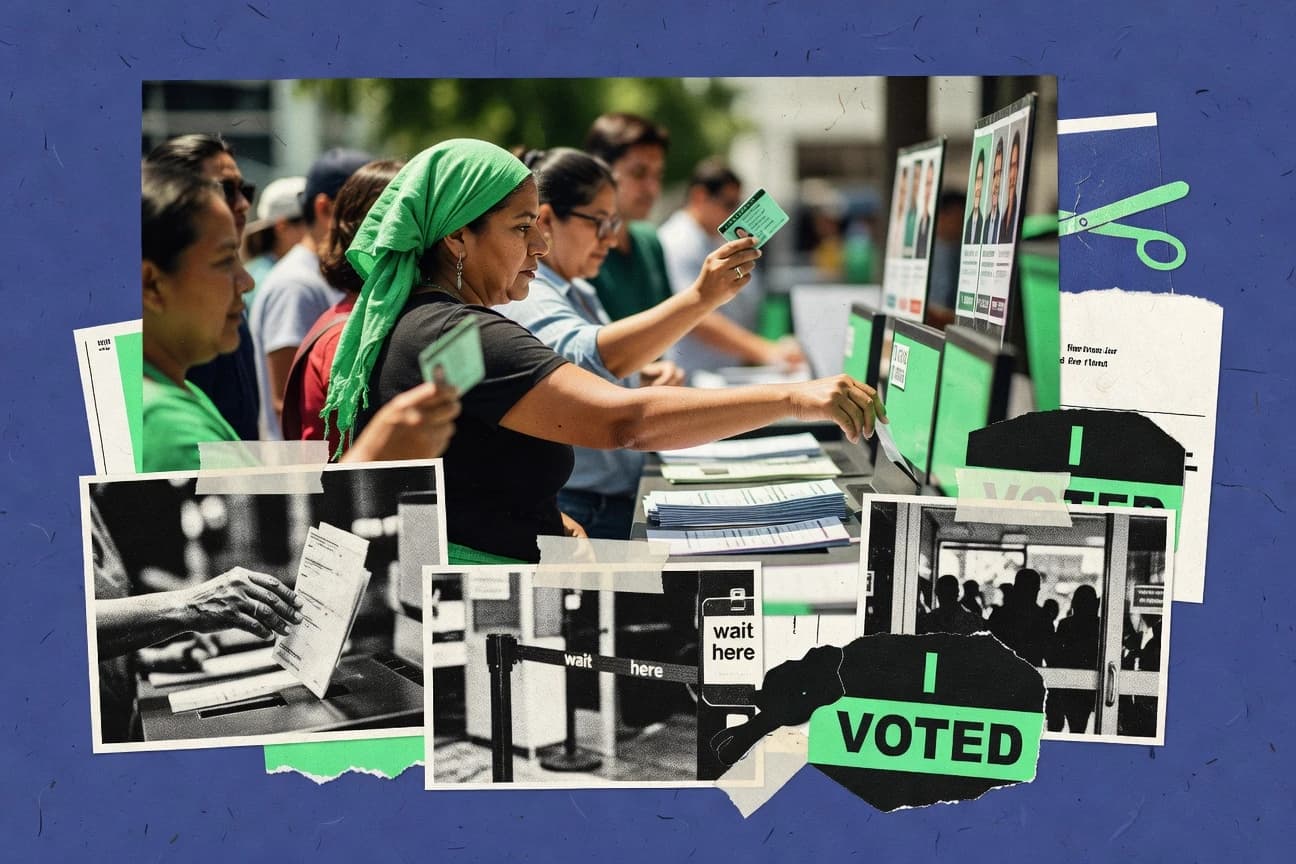

Latino voters now make up 13% of the U.S. electorate. Their turnout reached a record 53.7% in the most recent presidential election, reshaping key battleground states.
Key Takeaways
- In 2020, 36% of Latino voters nationwide were foreign-born, concentrated in growth states
- 45% of Latino voters prioritize economy/jobs in 2024 polls
- In 2020, 59% of Latino registered voters supported Biden, down from 66% for Clinton in 2016
- In the 2020 presidential election, Latino voter turnout reached 53.7% of eligible Latino voters nationwide, up from 47.0% in 2016
Latino voters are shaping election outcomes, with growing participation and influence in key swing states.
Related reading
01 · Category
Demographic Profiles22 stats
01
In 2020, 36% of Latino voters nationwide were foreign-born, concentrated in growth states
02
Latinos make up 13% of eligible voters in 2024, projected to 15% by 2028
03
64% of Latino eligible voters are U.S.-born in 2022, up from 58% in 2012
04
Mexican-origin Latinos comprise 62% of the Latino electorate, followed by Puerto Ricans 10%
05
Median age of Latino voters is 44 in 2020, younger than non-Hispanic whites at 52
06
22% of Latino eligible voters have college degrees, vs 36% non-Hispanic whites in 2022
07
Latino women are 52% of the Latino electorate in 2024
08
In battleground states, Latinos are 20% of eligible voters in Arizona, 19% Nevada 2024
09
Urban Latinos 58% of electorate, suburban 28%, rural 14% in 2020
10
Homeownership among Latino voters 49% in 2022, up from 45% in 2016
11
35% of Latino voters have incomes under $50k, 25% over $100k in 2022 surveys
12
Cuban-Americans 6% of national Latino voters but 36% in Florida
13
Puerto Ricans 9% nationally, concentrated in PA, NY, FL at higher shares
14
Salvadorans now 5% of Latino electorate, growing in DC, TX, CA
15
18-29 year olds 28% of Latino voters in 2020, vs 13% non-Hispanic whites
16
Seniors (65+) 14% of Latino electorate, growing rapidly
17
Evangelical Latinos 25% of voters, Catholic 52%, unaffiliated 18% in 2020
18
Married Latinos 55% of voters, singles 45% in 2022
19
Union household Latinos 18% of electorate, higher Dem lean
20
Military veteran Latinos 8% of voters
21
In Texas, 40% of eligible voters are Latino in 2024
22
Florida Latinos 27% of electorate, up from 18% in 2012
Interpretation
Demographic Profiles Interpretation
The Latino electorate is a young, fast-growing, and increasingly homegrown powerhouse, where the American Dream's complex math—balancing lower college degrees with rising homeownership, diverse origins with shared political weight, and deep faith with economic hustle—is being recalculated in every battleground suburb and city.
02 · Category
Issue Priorities and Influences20 stats
01
45% of Latino voters prioritize economy/jobs in 2024 polls
02
Immigration ranks 3rd for Latinos at 28% top issue in 2024, behind economy and healthcare
03
52% of Latinos cite inflation/cost of living as top concern in 2022 midterms
04
Crime/public safety rose to 35% priority for Latino GOP voters in 2022
05
Education/school choice supported by 48% of Latino parents voters in 2022
06
Abortion 22% top issue for Latinas post-Roe, up from 12% in 2020
07
Climate change 18% priority, higher among young Latinos at 32%
08
Gun violence 25% concern in urban Latino communities 2024
09
Healthcare access 40% top issue for uninsured Latinos (20% of pop)
10
Housing affordability 37% priority in CA/TX Latino voters 2024
11
55% Latinos support pathway to citizenship, influences Dem preference
12
Border security 42% priority for Latino Republicans
13
Small business support 31% key for entrepreneur Latinos
14
COVID response dissatisfaction 28% retroactive influence on 2022 vote
15
Student debt relief 24% priority for college Latinos
16
Social Security/Medicare 35% for seniors
17
Energy independence 29% concern amid gas prices
18
Mental health 22% rising issue post-pandemic
19
Infrastructure/jobs 41% from Biden bill influence
20
Foreign policy/Latin America ties 15% niche priority
Interpretation
Issue Priorities and Influences Interpretation
Latino voters, in a refreshingly pragmatic display, are telling politicians to fix the kitchen table economics first, but they’ll be watching the whole house—from the healthcare in the bedroom to the immigration papers in the home office—with a keen eye on whether you actually deliver.
More related reading
03 · Category
Party Affiliation and Support26 stats
01
In 2020, 59% of Latino registered voters supported Biden, down from 66% for Clinton in 2016
02
Latino support for Democrats fell to 57% in 2022 midterms from 63% in 2020, per exit polls
03
In Florida 2022, 58% of Latinos voted Republican, led by Cuban-Americans at 67%
04
Texas Latinos gave 55% to Democrats in 2020, but only 52% in 2022 governor's race
05
Among young Latino men (18-29), Republican support rose to 41% in 2022 from 32% in 2020
06
Puerto Ricans supported Democrats at 61% in 2020 Pennsylvania, but 54% in 2022
07
Mexican-Americans in Arizona backed Biden 58% in 2020, down to 53% for Kelly in 2022 Senate
08
45% of Latino evangelicals voted Republican in 2020, up from 38% in 2016
09
In Nevada 2020, Latinos voted 56% Democrat, pivotal for Biden win
10
California Latinos 68% Democrat in 2020, stable but with GOP gains among working-class
11
2024 New Hampshire primary saw 35% Latino GOP support, unusual shift
12
Among naturalized Latinos, 62% Democrat lean in 2022, vs 55% U.S.-born
13
Latino women supported Democrats 64% in 2020, dropping to 59% in 2022
14
College-educated Latinos 65% Democrat in 2022, non-college 52%
15
In 2008, 67% of Latinos voted for Obama (Dem), highest on record
16
2012 saw 71% Latino support for Obama
17
2004 Bush gained 40% Latino vote, up from 31% in 2000
18
Cuban-Americans 52% Republican in 2020, vs 35% for all Latinos
19
Mexican-Americans 63% Democrat in 2020
20
South Americans (Venezuelan/Colombian) 48% GOP in Florida 2022
21
Latino independents split 48% Dem 45% GOP in 2022
22
In 2022 Nevada Senate, Latinos 54% for Dem Cortez Masto
23
Georgia Latinos 60% Dem in 2022 Senate runoff
24
39% of Latinos identified as Democrats in 2023, down from 45% in 2016
25
Republican ID among Latinos rose to 28% in 2023 from 20% in 2016
26
Latino registered voters are 37% Democrat, 26% Republican, 33% independent in 2024 polls
Interpretation
Party Affiliation and Support Interpretation
While Democrats nervously clutch their maracas hoping for a generational loyalist bloc, the increasingly diverse and pragmatic Latino electorate is shaking its collective head, subtly shifting from a leaning monolith into a decisive—and thoroughly unpredictable—swing vote.
04 · Category
Turnout Rates30 stats
01
In the 2020 presidential election, Latino voter turnout reached 53.7% of eligible Latino voters nationwide, up from 47.0% in 2016
02
Latino eligible voter turnout in battleground states like Arizona was 57.0% in 2020, compared to 50.4% nationally for non-Latinos
03
Among Latino citizens aged 18-29, turnout was 51.4% in 2020, a 16-point increase from 2016's 35.4%
04
In Florida, Latino turnout among eligible voters hit 60.2% in 2020, driven by Cuban-American voters at 65.1%
05
Texas Latino turnout rose to 52.9% in 2020 from 46.5% in 2016, with South Texas border counties seeing 48.7% participation
06
Nevada's Latino eligible voter turnout was 55.3% in 2020, contributing to Biden's narrow win, up 12% from 2016
07
California's Latino turnout lagged at 49.2% in 2020 despite population size, compared to 58.4% for non-Hispanic whites
08
In 2018 midterms, Latino turnout was 50.4% nationally, highest for midterms on record
09
Puerto Rican turnout in Pennsylvania reached 58.1% in 2020, pivotal in key counties like Allentown
10
Mexican-American turnout in Arizona's 2020 election was 59.2%, boosted by youth mobilization
11
Among naturalized Latino citizens, turnout was 61.5% in 2020, higher than U.S.-born Latinos at 52.3%
12
In 2022 midterms, Latino turnout dropped to 47.2% nationally, down from 2020 peaks
13
New Mexico's Latino turnout was 62.4% in 2020, highest among states with large Latino populations
14
Colorado Latino eligible turnout hit 56.8% in 2020, with gains in suburban areas
15
In Georgia's 2020 election, Latino turnout surged 25% to 53.1% in Latino-heavy counties
16
Illinois Latino turnout was 51.7% in 2020, with Chicago's Puerto Rican communities at 54.2%
17
Michigan's small Latino population saw 49.8% turnout in 2020, up significantly from 2016
18
North Carolina Latino turnout reached 52.3% in 2020, key in urban areas like Charlotte
19
Virginia's Latino turnout was 54.9% in 2020, driven by Northern Virginia growth
20
Wisconsin Latino turnout in Milwaukee hit 50.6% in 2020, influencing close margins
21
In 2008, Latino turnout was 49.9% nationally, peaking under Obama mobilization
22
2012 Latino turnout dipped to 48.0%, still crucial in swing states
23
2004 Latino turnout was 44.6%, with strong gains in Florida and Nevada
24
Among Latino women, turnout was 55.2% in 2020, higher than Latino men at 52.1%
25
College-educated Latinos had 58.7% turnout in 2020 vs. 50.4% for non-college
26
Rural Latino turnout was 48.3% in 2020, lower than urban 54.1%
27
First-time Latino voters turnout was 62.1% in 2020 post-naturalization
28
In 2024 primaries, Latino turnout in California was 28.4% of eligible
29
Latino youth (18-24) turnout in Texas 2022 midterms was 38.2%
30
Overall Latino turnout in 2022 dropped 6.5 points from 2020 to 47.2%
Interpretation
Turnout Rates Interpretation
While often treated as a monolith by political strategists, the Latino electorate in America is a vibrant and decisive mosaic, rising sharply in key battlegrounds yet still fighting against a persistent enthusiasm gap, proving that when mobilized, they don't just vote—they sway entire elections.
Reference
Cite This Report
This report is designed to be cited. We maintain stable URLs and versioned verification dates. Copy the format appropriate for your publication below.
APA
Alexander Schmidt. (2026, February 13). Latino Voting Statistics. Gitnux. https://gitnux.org/latino-voting-statistics
MLA
Alexander Schmidt. "Latino Voting Statistics." Gitnux, 13 Feb 2026, https://gitnux.org/latino-voting-statistics.
Chicago
Alexander Schmidt. 2026. "Latino Voting Statistics." Gitnux. https://gitnux.org/latino-voting-statistics.
Sources & references
47 datasets cited across this report · attribution is report-level