
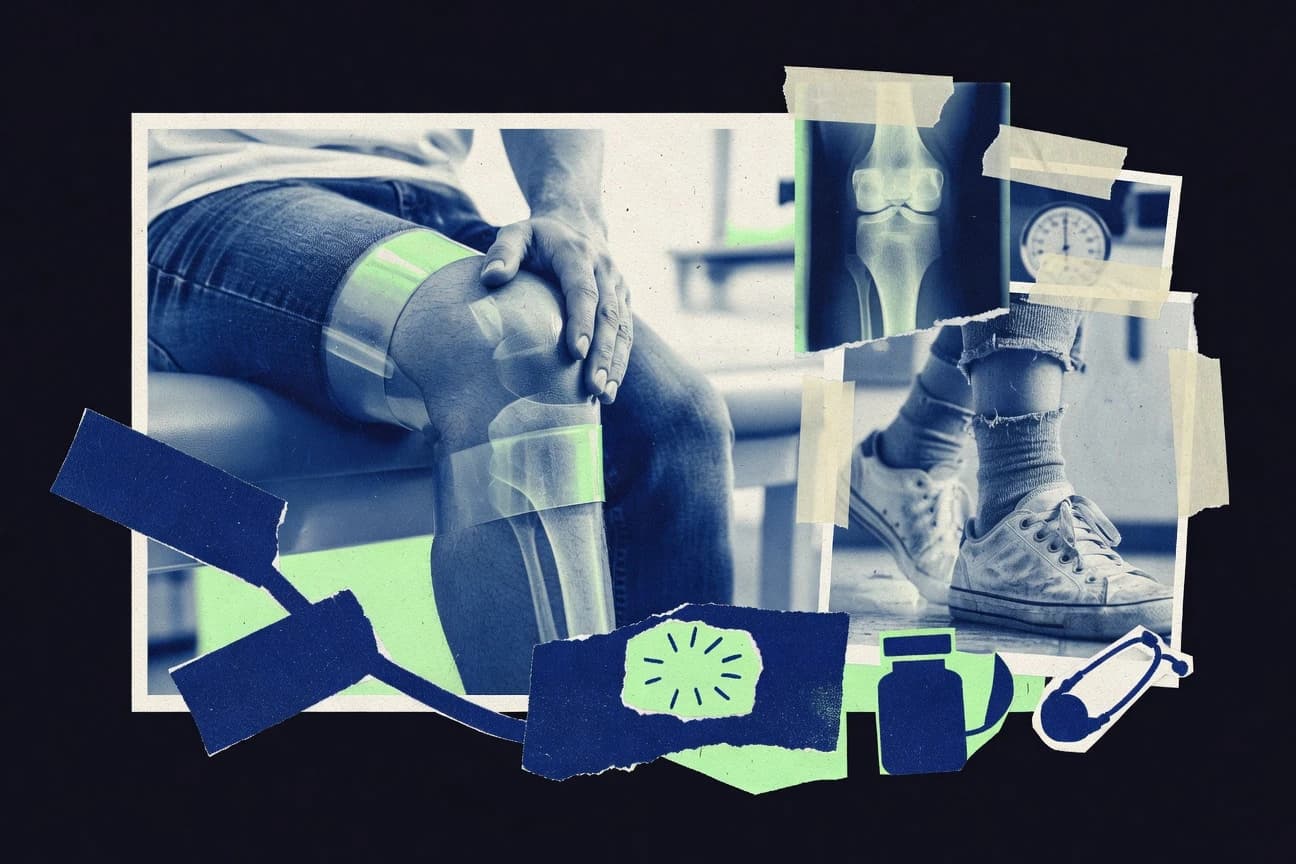

About 25% of US adults aged 50 and older report knee pain on most days. That prevalence reflects multiple pathways to injury and degeneration, including obesity, varus malalignment, and previous knee injury. Knee osteoarthritis risk also shifts with estrogen deficiency and quadriceps weakness, changing both onset and progression.
Key Takeaways
- Obesity increases knee OA risk by 4-5 fold in US adults under 50
- Each 1 kg/m² increase in BMI raises knee OA risk by 6% in women
- Former elite athletes have 2.3 times higher odds of knee OA than non-athletes
- Approximately 25% of adults aged 50 and older in the United States report experiencing knee pain on most days
- Globally, knee osteoarthritis affects over 300 million people, making it one of the leading causes of disability worldwide as per 2020 estimates
- In the UK, 19% of adults aged 45 and over have knee pain, rising to 37% in those over 75 years old according to the 2019 Health Survey
- 10-year TKA survivorship 92% for pain relief in osteoarthritis
- 20% of TKA patients report moderate-severe pain at 1 year post-op
- Knee OA progresses to TKA need in 15% within 10 years of diagnosis
- Pain on medial knee palpation has 89% sensitivity for medial meniscus tear
- Morning stiffness lasting <30 minutes occurs in 70% of knee OA patients
- Effusion detected in 50% of acute knee injuries via physical exam
- Intra-articular corticosteroid injection relieves pain in 70% knee OA for 4 weeks
- Physical therapy with exercise reduces knee pain by 20-30% in 12 weeks for OA
- TKA success rate 80-90% pain relief at 1 year in end-stage knee OA
Knee pain is driven by weight, injury, and alignment, affecting hundreds of millions worldwide.
Related reading
01 · Category
Causes and Risk Factors29 stats
01
Obesity increases knee OA risk by 4-5 fold in US adults under 50
02
Each 1 kg/m² increase in BMI raises knee OA risk by 6% in women
03
Former elite athletes have 2.3 times higher odds of knee OA than non-athletes
04
Quadriceps weakness increases knee pain risk by 1.8 times in older adults
05
Heavy physical occupational work doubles the risk of severe knee OA
06
Meniscal tears contribute to 30% of knee pain cases in middle-aged adults without OA
07
Genetic variants in GDF5 gene increase knee OA susceptibility by 1.5-2 fold
08
Varus malalignment raises medial knee OA progression risk 4-fold over 18 months
09
Smoking is associated with 50% lower risk of knee OA in some cohorts
10
High-impact sports like soccer increase knee OA risk by 3.5 times
11
Estrogen deficiency post-menopause elevates knee OA incidence by 2 times
12
Previous knee injury triples the lifetime risk of symptomatic knee OA
13
Diabetes mellitus increases knee OA prevalence by 2.3 fold
14
Prolonged kneeling (>1 hour/day) raises knee OA odds ratio to 2.3
15
African American women have 2-fold higher knee OA risk than Caucasians
16
Vitamin D deficiency correlates with 1.8 times higher knee pain severity
17
Squatting occupation increases tibiofemoral OA by 3.6 times in Asian populations
18
Heberden's nodes presence predicts knee OA with OR 2.1
19
Hyperlipidemia associates with 1.4 fold increased knee OA risk
20
ACL reconstruction leads to 4-6 times higher OA rates 10-15 years post-surgery
21
Low socioeconomic status raises knee pain chronicity risk by 1.7 times
22
Patellofemoral maltracking contributes to 20-30% of anterior knee pain in adolescents
23
Metabolic syndrome components increase knee OA odds by 2.3 fold
24
Frequent stair climbing (>2 flights/day) OR 1.9 for knee OA
25
Hand OA comorbidity elevates knee OA risk 2.5 fold
26
Childhood obesity triples adult knee OA risk
27
Crystal arthropathies like CPPD cause 5-10% of acute knee pain in elderly
28
Prolonged sitting (>6 hours/day) paradoxically increases knee pain risk by 1.4 fold
29
Bursitis accounts for 8% of knee pain referrals to rheumatologists
Interpretation
Causes and Risk Factors Interpretation
It seems the cruel arithmetic of knee pain assigns points for everything from carrying a few extra pounds to having once been fantastically fit, meaning that whether you're an elite athlete, a construction worker, or just trying to enjoy a long sit, your knees have probably already filed a grievance against you.
02 · Category
Prevalence and Epidemiology29 stats
01
Approximately 25% of adults aged 50 and older in the United States report experiencing knee pain on most days
02
Globally, knee osteoarthritis affects over 300 million people, making it one of the leading causes of disability worldwide as per 2020 estimates
03
In the UK, 19% of adults aged 45 and over have knee pain, rising to 37% in those over 75 years old according to the 2019 Health Survey
04
Women are 1.6 times more likely than men to develop symptomatic knee osteoarthritis, with prevalence rates of 13.1% in women vs 8.2% in men aged 60+
05
In Australia, knee pain affects 34% of people over 65, contributing to 4.2 million GP visits annually for musculoskeletal issues
06
The lifetime risk of symptomatic knee osteoarthritis is 44.7% for men and 57.1% for women in the US population
07
Knee pain prevalence increases from 10% in ages 20-29 to 45% in ages 70-79 in community-dwelling adults
08
In Japan, radiographic knee osteoarthritis is present in 51.1% of women and 41.2% of men aged 60-69
09
US annual healthcare costs for knee osteoarthritis exceed $136 billion, with knee pain being a major driver
10
In rural China, knee pain prevalence is 22.5% among adults over 40, higher than urban rates of 15.8%
11
European prevalence of knee pain in general population is 21%, with chronic pain at 10%
12
In Canada, 21% of adults report knee pain lasting more than 6 months
13
Knee pain accounts for 4% of all primary care consultations in the Netherlands
14
In India, knee osteoarthritis prevalence is 28.7% in urban elderly vs 22.1% in rural
15
US Veterans have a 2.5-fold higher prevalence of knee osteoarthritis at 27% compared to civilians
16
In Sweden, 20% of women and 12% of men aged 50+ report persistent knee pain
17
Global burden of knee osteoarthritis measured in DALYs is 9.9 million, ranking it 12th for disability
18
In South Korea, knee pain prevalence is 39.2% in women over 50 vs 20.6% in men
19
Brazilian adults over 50 show 15.2% prevalence of knee pain with functional limitation
20
In Germany, 29% of adults aged 30-79 report knee pain episodes yearly
21
Finnish twins study shows heritability of knee osteoarthritis at 60-65%
22
In Singapore, knee osteoarthritis radiographic prevalence is 21.5% in adults over 50
23
US Framingham study: knee OA prevalence 23.8% in women, 11.8% in men over 70
24
In Spain, knee pain affects 16.8% of population over 20
25
New Zealand Maori population has 1.5 times higher knee OA rates than Europeans
26
In Turkey, knee OA symptomatic prevalence is 7.7% in adults over 15
27
Italian elderly knee pain prevalence is 34.2%
28
In Poland, 24% of adults over 40 report chronic knee pain
29
Malaysian Chinese have 12.4% knee OA prevalence over 50
Interpretation
Prevalence and Epidemiology Interpretation
Knee pain is a democratic tyrant, treating half the human race like a standing reservation at a clinic while casually billing the global economy over a hundred billion dollars for the privilege.
03 · Category
Prognosis and Complications30 stats
01
10-year TKA survivorship 92% for pain relief in osteoarthritis
02
20% of TKA patients report moderate-severe pain at 1 year post-op
03
Knee OA progresses to TKA need in 15% within 10 years of diagnosis
04
Chronic knee pain post-meniscectomy in 20% at 10 years for degenerative tears
05
30% of conservatively managed ACL tears develop OA within 10-20 years
06
Untreated knee effusion resolves spontaneously in 70% within 4 weeks
07
Knee OA pain fluctuates, with 50% worsening over 2 years untreated
08
Infection rate post-TKA 1-2%, leading to revision in 50% cases
09
5-year mortality post-TKA 8.7%, higher in comorbid patients
10
Patellofemoral pain syndrome resolves in 90% adolescents within 5 years
11
Radiographic progression of knee OA 40% over 2 years in non-surgical
12
Deep vein thrombosis post-TKA 40-60% without prophylaxis
13
25% of knee pain patients develop contralateral symptoms within 5 years
14
Functional limitation persists in 15% after 1 year PT for knee OA
15
Periprosthetic fracture post-TKA 0.5-2.5% lifetime risk
16
Knee buckling episodes predict falls in 28% chronic knee pain elderly
17
10-year UKA survivorship 90% for pain relief in unicompartmental OA
18
Depression comorbidity doubles poor pain outcome risk post-TKA
19
Cartilage defects >2cm² progress to OA in 60% over 5 years
20
Stiffness post-TKA (>10° extension lag) in 5-10%
21
40% of acute knee injuries have long-term pain >2 years
22
Obesity BMI>35 predicts 2-fold higher revision risk post-TKA
23
Synovitis persistence on MRI predicts poor PT response in 55%
24
15-20% TKA patients dissatisfied with pain relief at 5 years
25
Meniscal extrusion >3mm forecasts rapid OA progression in 70%
26
Neuropathic pain post-TKA in 10-15%, resistant to standard therapy
27
Conservative management succeeds in 50% first-episode patellar dislocation
28
Bone marrow lesions on MRI double pain progression risk over 2 years
29
5% annual progression rate from moderate to severe knee OA disability
30
Heterotopic ossification post-TKA 5-20%, symptomatic in 1%
Interpretation
Prognosis and Complications Interpretation
The knee is a fickle negotiator, offering decent odds for a pain-free decade after replacement surgery, yet it holds a grudge with a significant chance of lingering misery, rapid decline if ignored, and a full menu of sobering complications that remind us it's a high-stakes joint that never truly forgets an insult.
04 · Category
Symptoms and Diagnosis30 stats
01
Pain on medial knee palpation has 89% sensitivity for medial meniscus tear
02
Morning stiffness lasting <30 minutes occurs in 70% of knee OA patients
03
Effusion detected in 50% of acute knee injuries via physical exam
04
WOMAC pain subscale scores >40 indicate moderate-severe knee pain in 65% cases
05
Patellar grind test positive in 92% of patellofemoral pain syndrome cases
06
Night pain present in 40% of advanced knee OA, correlating with bone marrow lesions
07
McMurray test sensitivity 48-86% for medial meniscus tears in knee pain
08
VAS pain score >5/10 in 55% of chronic knee pain patients at rest
09
Crepitus on motion reported by 80% of radiographic knee OA patients
10
Lachman test detects 85-95% of ACL tears causing knee instability pain
11
Pain with squatting specific for patellar pathology at 75% PPV
12
KOOS pain domain <70 indicates significant impairment in 70% patients
13
Locking sensation in 25% of meniscal injury knee pain presentations
14
Thermography shows elevated knee temperature in 60% inflammatory arthritis cases
15
Thessaly test at 20° flexion has 89% sensitivity for meniscal tears
16
Pain aggravated by stairs in 85% of patellofemoral OA subgroup
17
MRI detects bone marrow edema in 76% of subacute knee pain with normal X-ray
18
Neuropathic pain descriptors (burning, shooting) in 20% of knee OA patients
19
Apley distraction test specificity 92% for lateral meniscus pathology
20
Gait analysis shows antalgic limp in 65% moderate knee pain cases
21
Ultrasound effusion volume >10ml correlates with pain VAS >4 in 80%
22
Pivot shift test positive in 90% chronic ACL deficient knees with giving way
23
SF-36 bodily pain score <45 in 50% chronic knee pain populations
24
Pain referral from hip to knee occurs in 28% of hip OA cases
25
Joint line tenderness sensitivity 88% for meniscal injury diagnosis
26
IKDC subjective knee score <70 in 60% symptomatic knee pathology
27
Hyperextension pain indicates posterior capsule strain in 70% cases
28
EMG shows quadriceps inhibition in 75% acute knee pain post-injury
29
Double leg stance asymmetry >10% predicts knee pain chronicity
30
Capsular pattern restriction (flexion>extension) in 55% adhesive capsulitis mimicking knee pain
Interpretation
Symptoms and Diagnosis Interpretation
If your knee is talking in percentages—like an 89% chance a morning stiff jab is osteoarthritis gate-crashing your day or a 92% likelihood that grinding means your kneecap is throwing a tantrum—then decoding its statistical complaints requires a diagnostician who listens not just to the numbers, but to the very human story of pain they represent.
05 · Category
Treatment and Management30 stats
01
Intra-articular corticosteroid injection relieves pain in 70% knee OA for 4 weeks
02
Physical therapy with exercise reduces knee pain by 20-30% in 12 weeks for OA
03
TKA success rate 80-90% pain relief at 1 year in end-stage knee OA
04
Acetaminophen 4g/day provides 12% pain reduction vs placebo in knee OA
05
PRP injections yield 25% better pain scores than HA at 6 months in knee OA
06
Weight loss of 5% body weight reduces knee pain by 50% in obese OA patients
07
NSAIDs like ibuprofen reduce knee pain VAS by 1.3 points short-term
08
Quadriceps strengthening increases pain-free walking distance by 43% in 8 weeks
09
ACL reconstruction restores stability in 85-95% cases, reducing pain
10
Tai Chi practice decreases knee OA pain by 24% over 12 weeks
11
Meniscectomy arthroscopy provides 2-year pain relief in 60% degenerative tears
12
Duloxetine 60mg/day reduces knee OA pain by 23% vs 14% placebo
13
Knee brace use improves pain and function by 15-20% in medial OA
14
Hyaluronic acid injections offer 30% pain reduction lasting 6 months in 50% patients
15
Cognitive behavioral therapy reduces knee pain catastrophizing by 40%
16
TENS unit application decreases acute knee pain by 50% in post-op patients
17
Glucosamine sulfate 1500mg/day slows knee OA progression and pain in 25%
18
Aquatic therapy improves WOMAC pain scores by 28% in knee OA
19
Genicular nerve radiofrequency ablation provides 6-month pain relief in 74%
20
Manual therapy mobilization reduces knee pain by 2 points VAS acutely
21
Stem cell injections show 40% WOMAC improvement at 2 years in knee OA
22
Topical capsaicin 0.025% cream relieves knee OA pain in 40% users
23
Balance training reduces fall risk and knee pain recurrence by 35%
24
Low-level laser therapy decreases knee pain by 21% in meta-analysis
25
Orthotic insoles correct alignment reducing pain by 12% in varus knees
26
Mindfulness meditation lowers knee pain intensity by 23% chronically
27
Partial meniscectomy success 70% pain-free at 5 years for traumatic tears
28
Vitamin D supplementation 2000IU/day improves pain in deficient knee OA by 25%
29
Shockwave therapy reduces calcific tendinopathy knee pain by 60%
30
Yoga program decreases knee pain by 35% and improves function 20%
Interpretation
Treatment and Management Interpretation
Between injections, exercise, and a whole spectrum of options from weight loss to nerve ablation, the data proves there's no one magic fix for knee pain, but rather a toolkit where the most effective strategy is often the simplest lifestyle change you can consistently stick with.
Reference
Cite This Report
This report is designed to be cited. We maintain stable URLs and versioned verification dates. Copy the format appropriate for your publication below.
APA
Henrik Dahl. (2026, February 13). Knee Pain Statistics. Gitnux. https://gitnux.org/knee-pain-statistics
MLA
Henrik Dahl. "Knee Pain Statistics." Gitnux, 13 Feb 2026, https://gitnux.org/knee-pain-statistics.
Chicago
Henrik Dahl. 2026. "Knee Pain Statistics." Gitnux. https://gitnux.org/knee-pain-statistics.
Sources & references
18 datasets cited across this report · attribution is report-level