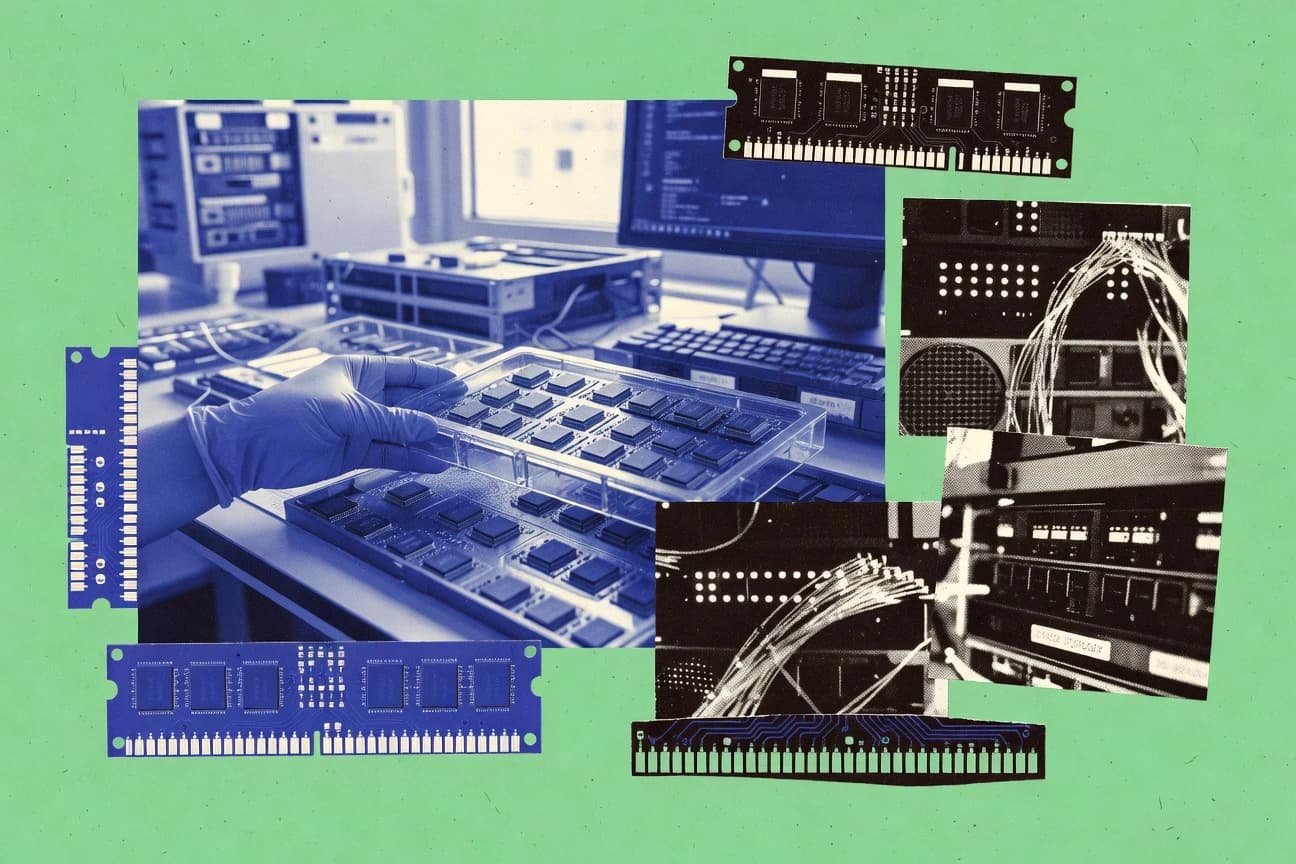

Enterprise adoption of in-memory databases has reached 85 percent. Redis handles one million operations per second on a single node with one millisecond latency. The global market stands at 7.2 billion dollars and is projected to reach 25.4 billion dollars.
Key Takeaways
- In-memory DB adoption in enterprises reached 85% in 2023, up from 72% in 2021.
- 62% of organizations shifted to cloud-native in-memory DBs by end of 2023.
- Real-time analytics using in-memory tech adopted by 70% of BFSI firms in 2023.
- 92% of organizations predict in-memory DBs central to AI workloads by 2027.
- In-memory market projected to hit USD 50 billion by 2032 at 22% CAGR.
- Vector databases in-memory to grow at 35% CAGR to 2030 for GenAI.
- Redis Labs reported 45% YoY revenue growth in in-memory DB services in FY2023.
- SAP HANA captured 22% of enterprise in-memory DB market share in 2023.
- Oracle TimesTen held 12% market share in real-time in-memory DBs in 2023.
- The global in-memory database market was valued at USD 7.2 billion in 2023 and is expected to grow to USD 25.4 billion by 2030 at a CAGR of 19.8%.
- In-memory computing market in North America accounted for 38% share in 2023, driven by high adoption in BFSI sector.
- Asia-Pacific in-memory database market is projected to grow at the highest CAGR of 21.5% from 2024 to 2030 due to digital transformation initiatives.
- Redis benchmarks show 1 million ops/sec on single node with 1ms latency in 2023 tests.
- SAP HANA processes 1 TB data in under 3 seconds for ad-hoc queries per TPC-H benchmark.
- Oracle In-Memory Database achieves 100x speedup over disk-based for OLTP workloads.
By 2023, enterprises rapidly adopted in-memory databases, reaching 85% adoption and driving cloud-native real-time analytics.
Related reading
01 · Category
Adoption & Trends20 stats
01
In-memory DB adoption in enterprises reached 85% in 2023, up from 72% in 2021.
02
62% of organizations shifted to cloud-native in-memory DBs by end of 2023.
03
Real-time analytics using in-memory tech adopted by 70% of BFSI firms in 2023.
04
55% of retail companies implemented in-memory for personalization engines 2023.
05
Healthcare providers using in-memory DBs for patient data rose to 48% in 2023.
06
40% of telecom operators deployed in-memory for 5G network slicing in 2023.
07
Manufacturing IoT deployments with in-memory processing hit 52% adoption 2023.
08
67% of e-commerce platforms use in-memory caching for session management 2023.
09
Hybrid/multi-cloud in-memory strategies adopted by 58% of enterprises in 2023.
10
Open-source in-memory DBs like Redis used by 82% of developers in 2023 survey.
11
In-memory columnar stores adopted for BI by 61% of analytics teams in 2023.
12
Edge computing in-memory processing rolled out in 35% of industrial apps 2023.
13
71% of gaming companies use in-memory for leaderboards and matchmaking 2023.
14
Fraud detection systems with in-memory DBs implemented by 76% banks 2023.
15
49% of SaaS providers integrated in-memory for microservices in 2023.
16
Kubernetes-native in-memory operators deployed by 44% container users 2023.
17
AI/ML workloads using in-memory vector stores rose to 53% in 2023.
18
39% of logistics firms adopted in-memory for supply chain optimization 2023.
19
Streaming data platforms with in-memory buffering used by 64% in 2023.
20
Zero-trust architectures incorporating in-memory security hit 42% adoption 2023.
Interpretation
Adoption & Trends Interpretation
The corporate world has officially decided that memory is the new disk, with enterprises racing to think at processor speed in everything from fraud-busting banks to lag-averse gamers.
02 · Category
Future Trends & Forecasts24 stats
01
92% of organizations predict in-memory DBs central to AI workloads by 2027.
02
In-memory market projected to hit USD 50 billion by 2032 at 22% CAGR.
03
Vector databases in-memory to grow at 35% CAGR to 2030 for GenAI.
04
Edge in-memory computing forecast to reach USD 5 billion by 2028.
05
Quantum-inspired in-memory algos expected in 20% of HPC by 2030.
06
Serverless in-memory DBs to capture 30% cloud market by 2027.
07
Sustainable in-memory hardware (low-power) to dominate 40% deployments by 2030.
08
Blockchain-integrated in-memory ledgers forecast for 15% finance apps by 2028.
09
Autonomous DBs with in-memory auto-tuning in 60% enterprises by 2026.
10
5G-driven real-time in-memory to explode in telecom, 25% CAGR to 2030.
11
Metaverse apps to rely on in-memory for 80% low-latency interactions by 2028.
12
Privacy-enhanced in-memory computing (PEIM) adoption to hit 35% by 2030.
13
Neuromorphic chips for in-memory to enter production in 10% data centers 2030.
14
Carbon-aware in-memory scheduling in 50% cloud providers by 2027.
15
In-memory for digital twins projected to grow 28% CAGR in manufacturing.
16
GenAI RAG systems using in-memory vectors to be 70% standard by 2026.
17
Federated learning with in-memory to secure 25% AI training by 2030.
18
In-memory optical storage hybrids forecast for petabyte-scale by 2035.
19
Regulatory compliance driving in-memory encryption to 90% by 2028.
20
In-memory DBaaS market to reach USD 15 billion by 2028 at 24% CAGR.
21
Multi-tenant in-memory isolation tech to enable 45% SaaS growth by 2030.
22
In-memory for autonomous vehicles data processing to surge 40% CAGR.
23
Sustainable DRAM advancements to cut in-memory energy use by 50% by 2030.
24
In-memory graph analytics for fraud to prevent $10T losses annually by 2030.
Interpretation
Future Trends & Forecasts Interpretation
While the in-memory database market explodes with promises of AI dominance, energy savings, and fraud-busting speeds, it’s clear the tech world is collectively betting that the future is too fast, too important, and frankly too impatient to wait for a disk.
More related reading
04 · Category
Market Size & Growth27 stats
01
The global in-memory database market was valued at USD 7.2 billion in 2023 and is expected to grow to USD 25.4 billion by 2030 at a CAGR of 19.8%.
02
In-memory computing market in North America accounted for 38% share in 2023, driven by high adoption in BFSI sector.
03
Asia-Pacific in-memory database market is projected to grow at the highest CAGR of 21.5% from 2024 to 2030 due to digital transformation initiatives.
04
The in-memory database market in Europe reached USD 2.1 billion in 2023, with Germany leading at 25% regional share.
05
Cloud-based in-memory databases segment dominated with 62% market share in 2023, valued at USD 4.5 billion.
06
On-premises in-memory DB deployments saw a decline to 28% market share in 2023 from 35% in 2020.
07
In-memory analytics sub-segment grew by 22% YoY in 2023, reaching USD 3.8 billion globally.
08
Hybrid cloud in-memory solutions market expanded to USD 1.9 billion in 2023, up 25% from previous year.
09
BFSI sector contributed 29% to global in-memory DB market revenue in 2023, totaling USD 2.1 billion.
10
Healthcare in-memory database adoption drove segment growth to USD 0.9 billion in 2023 at 18% CAGR.
11
Retail sector's in-memory DB market hit USD 1.2 billion in 2023, fueled by real-time personalization.
12
Telecom in-memory market grew to USD 1.1 billion in 2023 with 20.3% YoY increase.
13
Manufacturing segment valued at USD 0.8 billion in 2023, projected 23% CAGR to 2030.
14
Government sector in-memory DB spending reached USD 0.7 billion globally in 2023.
15
Energy & Utilities segment grew 17% to USD 0.6 billion in 2023.
16
Global in-memory DB market revenue forecast for 2025 stands at USD 10.5 billion.
17
Latin America in-memory market expected to reach USD 0.5 billion by 2027 at 15% CAGR.
18
Middle East & Africa segment valued at USD 0.4 billion in 2023, growing at 16.8% CAGR.
19
SQL in-memory DBs held 55% market share in 2023, valued at USD 4.0 billion.
20
NoSQL in-memory DB market reached USD 3.2 billion in 2023 with 24% growth.
21
Multimodel in-memory DBs segment emerging at USD 0.5 billion in 2023.
22
Key-value store in-memory type dominated with 40% share in 2023.
23
Document store in-memory market at USD 1.5 billion in 2023.
24
Graph database in-memory segment grew to USD 0.8 billion in 2023.
25
Time-series in-memory DB market valued at USD 0.7 billion in 2023.
26
In-memory DB market in SMEs segment reached USD 1.8 billion in 2023.
27
Large enterprises held 72% share of in-memory DB market in 2023.
Interpretation
Market Size & Growth Interpretation
The global in-memory database market is exploding faster than a forgotten cache on a Friday afternoon, with everyone from cautious bankers to ambitious startups betting the farm that the future of data is too impatient for disk drives.
05 · Category
Performance & Benchmarks20 stats
01
Redis benchmarks show 1 million ops/sec on single node with 1ms latency in 2023 tests.
02
SAP HANA processes 1 TB data in under 3 seconds for ad-hoc queries per TPC-H benchmark.
03
Oracle In-Memory Database achieves 100x speedup over disk-based for OLTP workloads.
04
VoltDB handles 5 million TPS in cluster config per YCSB benchmark 2023.
05
Memcached delivers 4.5 million GETs/sec on commodity hardware benchmarks.
06
SingleStore queries 100 billion rows in sub-second times per TPC-DS 2023.
07
Hazelcast IMDG scales to 1 PB data with <1ms p99 latency in WAN tests.
08
Aerospike achieves 1.2 million TPS at 99.999% uptime in Flash-optimized benchmarks.
09
GridGain processes 2 million events/sec for CEP workloads benchmarked 2023.
10
Kx kdb+ compresses 1 TB tick data to 10 GB with 100 microsec query times.
11
Couchbase in-memory bucket sustains 500k ops/sec with 200us latency p99.
12
IBM Db2 BLU delivers 50x faster analytics vs traditional row stores per benchmark.
13
Apache Ignite scales to 10k nodes with linear throughput in TPC-C tests 2023.
14
Teradata Columnar In-Memory queries 10 TB in 1 minute per industry benchmark.
15
Redis on AWS Graviton3 hits 2x perf of x86 in memory-bound workloads 2023.
16
Microsoft Hekaton (In-Memory OLTP) reduces latency by 30x for contended txns.
17
Amazon MemoryDB sustains 100k RPS with multi-AZ durability benchmarks.
18
Google Memorystore for Redis Enterprise achieves 1M ops/sec per shard 2023.
19
Azure HDInsight with In-Memory Hive queries 1 PB in hours vs days.
20
Infinispan Hot Rod protocol delivers 500k ops/sec cross-DC with persistence.
Interpretation
Performance & Benchmarks Interpretation
While today's in-memory databases boast about performing millions of operations per second with sub-millisecond latency, the subtext is clear: your excuse for slow data is now officially obsolete.
Reference
Cite This Report
This report is designed to be cited. We maintain stable URLs and versioned verification dates. Copy the format appropriate for your publication below.
APA
Leah Kessler. (2026, February 13). In-Memory Database Industry Statistics. Gitnux. https://gitnux.org/in-memory-database-industry-statistics
MLA
Leah Kessler. "In-Memory Database Industry Statistics." Gitnux, 13 Feb 2026, https://gitnux.org/in-memory-database-industry-statistics.
Chicago
Leah Kessler. 2026. "In-Memory Database Industry Statistics." Gitnux. https://gitnux.org/in-memory-database-industry-statistics.
Sources & references
61 datasets cited across this report
 aws.amazon.com
 shopify.com