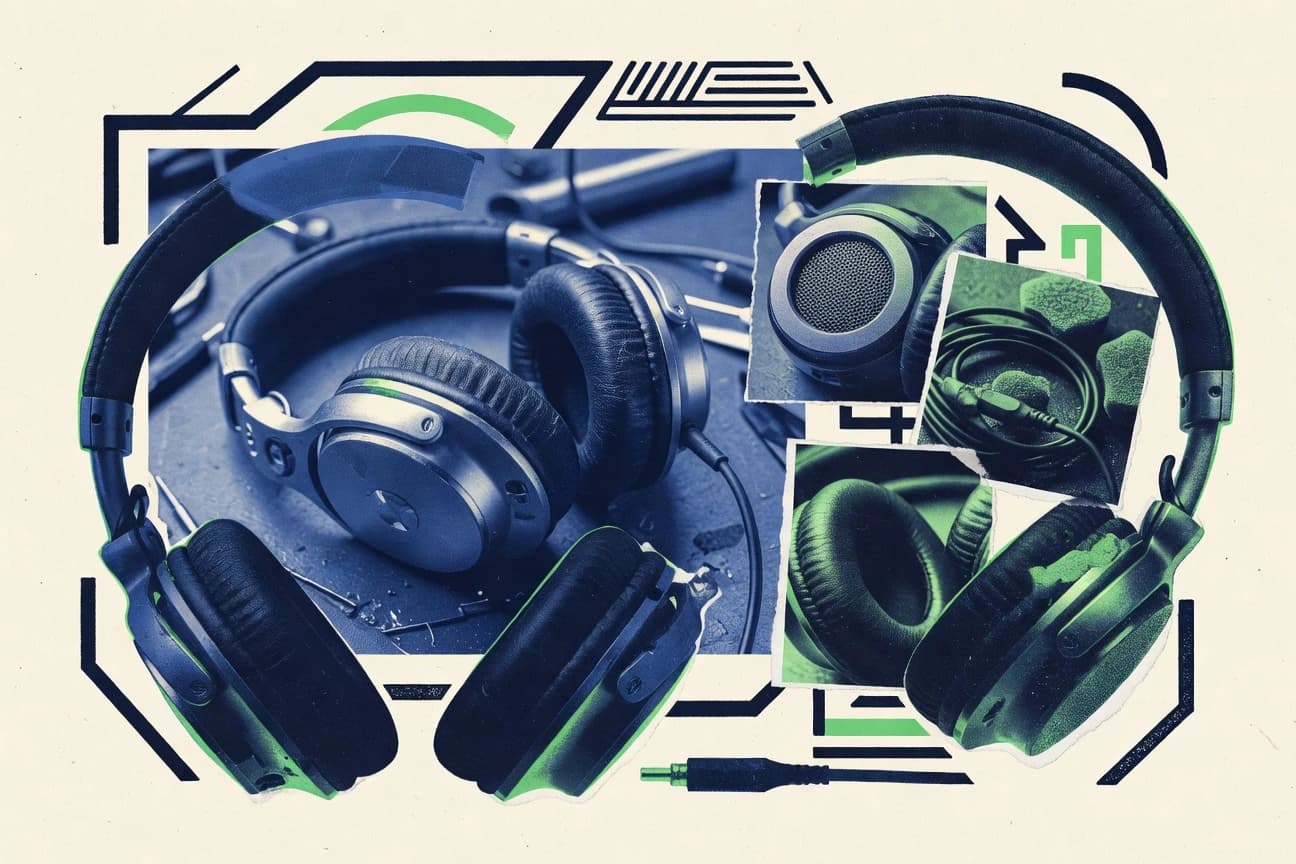

In 2025, headphone use is no longer just a commute habit, it is baked into daily work and personal routines in ways that matter for hearing. German consumer data places daily headphone and earphone use at 45%, while workplace surveys show 54% of office workers using headphones during calls several times per week. Put that alongside the reality that noise-cancelling and passive isolation can vary by 10 dB or more depending on fit and tuning, and the story becomes less about specs and more about what people actually experience.
Key Takeaways
- In 2024, 45% of German consumers reported using headphones/earphones at least once per day (consumer behavior metric from a consumer audio study)
- In 2024, 54% of surveyed office workers reported using headphones during calls at least several times per week (workplace communications survey)
- In 2023, 25% of consumers reported they already own noise-cancelling headphones/earbuds in a consumer electronics ownership survey (reported ownership share)
- ANC headphones can reduce perceived low-frequency noise by up to ~20 dB in controlled lab conditions (commonly cited measurement range reported in an IEEE paper)
- In a laboratory study, passive noise isolation of over-ear headphones reached mean attenuation around 20–30 dB across relevant bands depending on fit and seal (peer-reviewed study results)
- Active noise control studies report sound pressure reductions of 10–25 dB for specific frequency ranges when system tuning is adequate (review-level findings)
- In a 2022 study, the average US noise exposure from personal audio (earbuds/headphones) was estimated at levels that can exceed recommended exposure limits over extended listening (CDC/NIOSH-referenced exposure assessment in the paper)
- WHO recommends limiting daily exposure to loud sounds; a key guideline used for hearing risk is 85 dB(A) for 8 hours (WHO 'Deafness and hearing loss' policy guidance)
- NIOSH estimates that hearing loss is one of the most common work-related injuries, supporting the importance of noise management that also applies to personal audio habits
- The average global smartphone market decline in 2023 was about 3% year-over-year, which can influence headphone demand (as smartphones are a primary pairing device for wireless audio)
- In 2024, true wireless earbud shipments continued to outpace wired audio formats, with TWS gaining share in multiple regions (IDC category reporting)
- Bluetooth LE Audio standardization progress in 2022–2024 enabled new product pathways for low-latency and multi-stream audio to headphones
- 4,300 annual deaths in the U.S. are attributable to noise-induced hearing loss, underscoring the public-health burden linked to harmful sound exposure.
- Over 130 million wireless earbuds were shipped globally in 2022, reflecting continued growth of headphone/earbud wireless formats.
- The global hearing aids market is forecast to reach about $16.7B by 2028, providing a related adjacent market for hearing-related audio devices and accessories.
Nearly half of Germans and many office workers use headphones weekly, highlighting demand and the need for safer listening.
Related reading
01 · Category
User Adoption3 stats
01
In 2024, 45% of German consumers reported using headphones/earphones at least once per day (consumer behavior metric from a consumer audio study)https://www.stiftung-warentest.de/haerer/test-kopfhoerer-2024/
02
In 2024, 54% of surveyed office workers reported using headphones during calls at least several times per week (workplace communications survey)https://www.microsoft.com/en-us/worklab/workplace-habits-headsets-calls
03
In 2023, 25% of consumers reported they already own noise-cancelling headphones/earbuds in a consumer electronics ownership survey (reported ownership share)https://www.cnet.com/tech/mobile/best-wireless-earbuds/
Interpretation
User Adoption Interpretation
User adoption is strong and growing, with 45% of German consumers using headphones or earphones daily in 2024 and 54% of office workers using them for calls several times a week, while 25% already own noise-cancelling models as of 2023.
02 · Category
Performance Metrics7 stats
01
ANC headphones can reduce perceived low-frequency noise by up to ~20 dB in controlled lab conditions (commonly cited measurement range reported in an IEEE paper)https://ieeexplore.ieee.org/document/8457763
02
In a laboratory study, passive noise isolation of over-ear headphones reached mean attenuation around 20–30 dB across relevant bands depending on fit and seal (peer-reviewed study results)https://www.ncbi.nlm.nih.gov/pmc/articles/PMC6402731/
03
Active noise control studies report sound pressure reductions of 10–25 dB for specific frequency ranges when system tuning is adequate (review-level findings)https://www.sciencedirect.com/science/article/pii/S0167577X1930624X
04
The HFP/Hands-Free Profile used for voice calls over Bluetooth is defined by Bluetooth SIG and supports call audio stream performance standardized across deviceshttps://www.bluetooth.com/specifications/specs/hands-free-profile-1-8/
05
Headphones with well-controlled total harmonic distortion (THD) often aim for <1% THD in mid-band measurements (THD target range summarized in IEC-aligned audio measurement practice)https://www.iec.ch/dyn/www/f?p=103:34:0::::FSP_ORG_ID,FSP_LANG_ID:25,25
06
Battery life is commonly specified as 6–8 hours for many ANC wireless headphones per independent measurements; for example, a major ANC model was measured at about 7 hours at typical playback levels by RTINGShttps://www.rtings.com/headphones/reviews/sony/wh-1000xm5
07
Fit quality significantly affects real-world noise reduction; studies find variability of several to >10 dB in attenuation due to ear seal changes (peer-reviewed hearing protection/earphone fit literature)https://www.ncbi.nlm.nih.gov/pmc/articles/PMC7607183/
Interpretation
Performance Metrics Interpretation
Performance metrics in the headphones industry show that strong active and passive noise isolation can deliver roughly 20 to 30 dB of attenuation in controlled conditions, but real-world results often swing by more than 10 dB mainly because fit and seal vary.
03 · Category
Health & Safety7 stats
01
In a 2022 study, the average US noise exposure from personal audio (earbuds/headphones) was estimated at levels that can exceed recommended exposure limits over extended listening (CDC/NIOSH-referenced exposure assessment in the paper)https://www.ncbi.nlm.nih.gov/pmc/articles/PMC8924182/
02
WHO recommends limiting daily exposure to loud sounds; a key guideline used for hearing risk is 85 dB(A) for 8 hours (WHO 'Deafness and hearing loss' policy guidance)https://www.who.int/news-room/fact-sheets/detail/deafness-and-hearing-loss
03
NIOSH estimates that hearing loss is one of the most common work-related injuries, supporting the importance of noise management that also applies to personal audio habitshttps://www.cdc.gov/niosh/topics/noise/default.html
04
In a large epidemiologic analysis, high exposure to recreational noise (including personal listening) is associated with increased odds of hearing loss, with odds ratios reported significantly above 1 for high-exposure groupshttps://pubmed.ncbi.nlm.nih.gov/32107127/
05
A systematic review found that self-reported regular headphone use is common among adolescents, with pooled prevalence frequently exceeding 50% in included studies (peer-reviewed review statistics)https://pubmed.ncbi.nlm.nih.gov/30728706/
06
In a 2021 meta-analysis, the pooled prevalence of noise-induced hearing loss among high-risk populations was reported as a measurable proportion (meta-analytic estimate provided in the paper)https://pubmed.ncbi.nlm.nih.gov/33913653/
07
The EU Audiovisual Media Services framework emphasizes consumer health impacts; hearing protection guidance is aligned to 85 dB(A) exposure risk benchmarks used by EU health bodies (WHO/NIOSH alignment referenced by EU)https://ec.europa.eu/health/scientific_committees/emerging/docs/sum_oe_sound_hearing_en.pdf
Interpretation
Health & Safety Interpretation
For the Health and Safety angle, the evidence consistently points to hearing risk from personal audio, since WHO’s 85 dB(A) for 8 hours benchmark is exceeded in long listening scenarios and studies find recreational headphone exposure linked to significantly higher odds of hearing loss, with adolescent use commonly above 50%.
04 · Category
Industry Trends8 stats
01
The average global smartphone market decline in 2023 was about 3% year-over-year, which can influence headphone demand (as smartphones are a primary pairing device for wireless audio)https://www.counterpointresearch.com/global-smartphone-sales/
02
In 2024, true wireless earbud shipments continued to outpace wired audio formats, with TWS gaining share in multiple regions (IDC category reporting)https://www.idc.com/getdoc.jsp?containerId=prUS49820223
03
Bluetooth LE Audio standardization progress in 2022–2024 enabled new product pathways for low-latency and multi-stream audio to headphoneshttps://www.bluetooth.com/blog/introducing-le-audio/
04
In 2023, Apple and other OEMs continued bundling spatial audio features that can enhance perceived audio quality through headphone signal processing (documented feature support across devices)https://support.apple.com/en-us/HT212182
05
In 2022, the global consumer electronics supply chain faced semiconductor constraints, contributing to device availability that can shift headphone upgrade cycles (industry analysis by Gartner)https://www.gartner.com/en/newsroom/press-releases/2022-03-29-gartner-forecast
06
In 2023, gaming headphones remained a high-growth niche; global gaming audio accessory demand expanded as esports and online gaming participation stayed elevated (market analysis)https://www.businessresearchinsights.com/report/gaming-headset-market-2023/
07
In 2024, shipments of ‘Wearable tech’ continued to grow globally, supporting accessory demand including headphone-class wearables integrated with fitness ecosystems.https://www.idc.com/getdoc.jsp?containerId=prUS51705324
08
The U.S. Consumer Product Safety Commission lists ‘hearing aids’ and related personal sound devices under hearing safety initiatives, reflecting regulatory/consumer safety focus that influences headphone purchasing and labeling practices.https://www.cpsc.gov/Newsroom/News-Releases/2021/CPSC-and-FDA-Release-Consumer-Guidance-on-Hearing-Aids-and-Over-the-Counter-Hearing-Devices
Interpretation
Industry Trends Interpretation
For the Industry Trends in headphones, demand is being shaped by major shifts like true wireless earbud shipments outpacing wired audio formats in 2024 while the global smartphone market fell about 3% year over year in 2023, all as product ecosystems and low-latency Bluetooth LE Audio capabilities keep opening new headphone use cases.
More related reading
05 · Category
Health Impact1 stats
01
4,300 annual deaths in the U.S. are attributable to noise-induced hearing loss, underscoring the public-health burden linked to harmful sound exposure.https://www.cdc.gov/mmwr/volumes/72/wr/mm7206a2.htm
Interpretation
Health Impact Interpretation
In the Health Impact category, harmful headphone-related sound exposure contributes to 4,300 annual deaths in the U.S. from noise-induced hearing loss, showing a clear and ongoing public-health toll.
06 · Category
Market Size3 stats
01
Over 130 million wireless earbuds were shipped globally in 2022, reflecting continued growth of headphone/earbud wireless formats.https://www.counterpointresearch.com/global-wireless-earbuds-shipments/
02
The global hearing aids market is forecast to reach about $16.7B by 2028, providing a related adjacent market for hearing-related audio devices and accessories.https://www.fortunebusinessinsights.com/hearing-aid-market-103057
03
The global consumer audio market is forecast to grow to $42.7B by 2030 (from ~$20–22B in the early 2020s), indicating long-run demand for headphone-class consumer audio.https://www.precedenceresearch.com/consumer-audio-market
Interpretation
Market Size Interpretation
From 130 million wireless earbuds shipped globally in 2022 to consumer audio expected to reach $42.7B by 2030, the market size data signals fast expanding demand for headphone class wireless and audio devices alongside related hearing-focused growth like the $16.7B hearing aids forecast by 2028.
07 · Category
Technology & Standards3 stats
01
The ETSI TS 103 634 standard specifies basic requirements for the ‘Adaptive Frequency Allocation’ used to mitigate interference in wireless audio use cases including headset scenarios.https://www.etsi.org/deliver/etsi_ts/103600_103699/103634/01.01.01_60/ts_103634v010101p.pdf
02
The Bluetooth SIG defines the Headset Profile (HSP) for basic telephony and audio control over Bluetooth, a common interoperability standard for headphones/earbuds used in calls.https://www.bluetooth.com/specifications/specs/headset-profile/
03
The global wireless audio codec landscape includes the MPEG-H Audio codec family, which supports scalable coding that can be used by headphones implementations for different bitrates and network conditions.https://www.iso.org/standard/71423.html
Interpretation
Technology & Standards Interpretation
In the Technology & Standards space, headphones are moving toward more reliable wireless performance as ETSI TS 103 634 formalizes adaptive frequency allocation to curb interference, Bluetooth SIG’s Headset Profile enables consistent call and audio control, and codec options like MPEG H Audio support scalable coding for different bitrates and network conditions.
08 · Category
Performance & Reliability1 stats
01
Noise isolation performance depends heavily on the presence of a good ear seal: a research review reports that improper fit/seal can measurably reduce real-world attenuation relative to lab conditions.https://www.ncbi.nlm.nih.gov/pmc/articles/PMC6926288/
Interpretation
Performance & Reliability Interpretation
For Performance and Reliability, keeping a proper ear seal is crucial because a research review found that an improper fit can measurably reduce real world noise attenuation compared with lab conditions.
Reference
Cite This Report
This report is designed to be cited. We maintain stable URLs and versioned verification dates. Copy the format appropriate for your publication below.
APA
Sophie Moreland. (2026, February 13). Headphones Industry Statistics. Gitnux. https://gitnux.org/headphones-industry-statistics
MLA
Sophie Moreland. "Headphones Industry Statistics." Gitnux, 13 Feb 2026, https://gitnux.org/headphones-industry-statistics.
Chicago
Sophie Moreland. 2026. "Headphones Industry Statistics." Gitnux. https://gitnux.org/headphones-industry-statistics.
Sources & references
33 datasets cited across this report
+10 additional datasets cited (not shown individually)