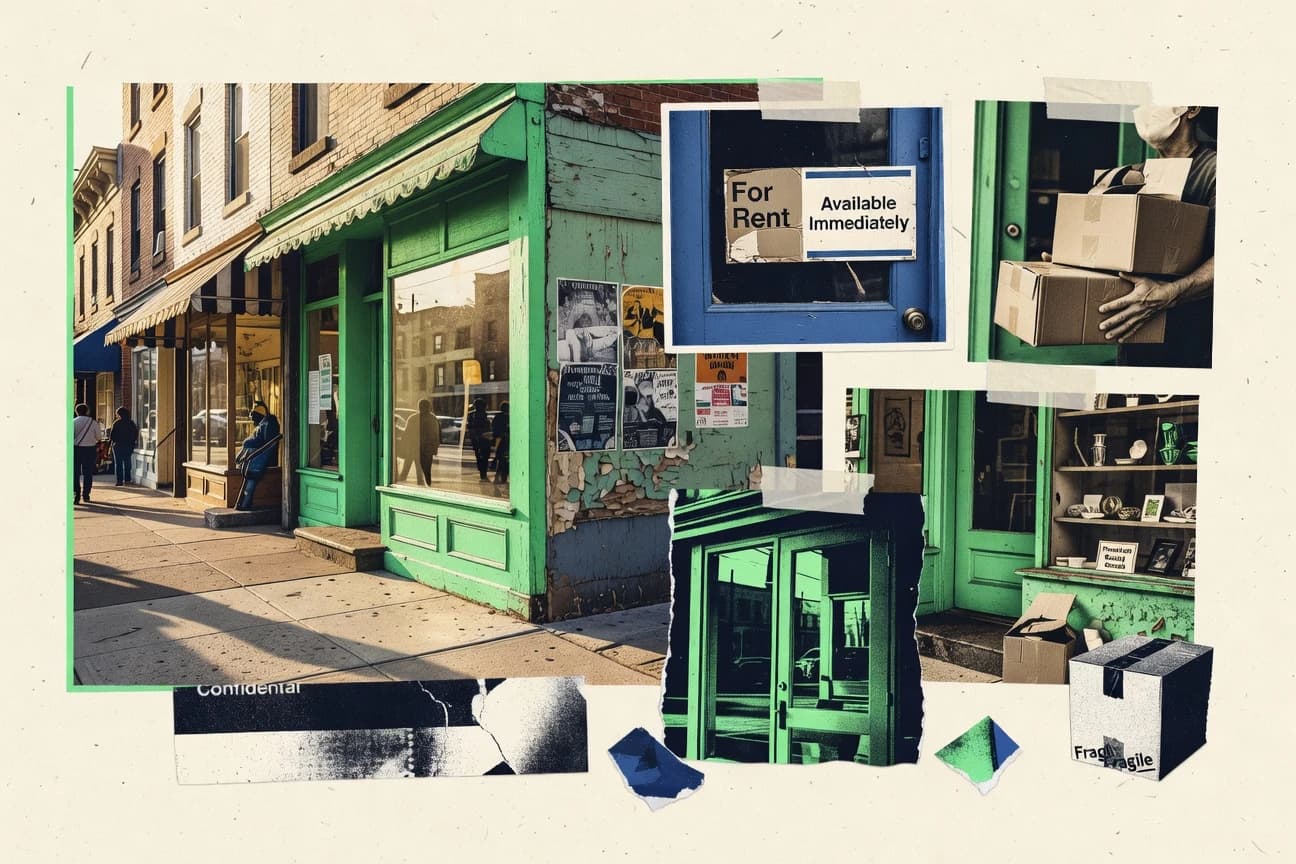

Gentrification reshapes neighborhoods as investment and housing costs change, often putting pressure on renters and low-income households. In 2016–2018, many places that experienced higher rent growth also saw declining low-income residency, and other research links gentrification to involuntary relocation risk. This page explores where these pressures concentrate, why they unfold unevenly, and which policy and housing-supply responses can reduce harm.
Key Takeaways
- 56% of respondents in an Urban Land Institute (ULI) survey said they believed there is a role for local government in mitigating displacement pressures associated with redevelopment
- In 2016–2018, 27% of U.S. census tracts with higher rent growth also saw reductions in the share of low-income residents
- Between 2000 and 2013, 1.2 million households were displaced or experienced involuntary relocation risk in areas undergoing gentrification and related change (estimated displacement associated with gentrification)
- In 2020, the median per-unit price of multifamily deals in the U.S. was $205,000 (investment intensity indicator relevant to neighborhood redevelopment)
- In 2023, U.S. construction spending reached $1.94 trillion (redevelopment capacity and neighborhood investment proxy)
- In 2022, U.S. property tax revenue totaled $727 billion (revenue base impacting local budgets and redevelopment financing)
- In 2023, the median single-family home price in the U.S. was $416,800 (price levels that often rise in gentrifying areas)
- In 2023, the CPI for Rent of Primary Residence increased by 5.6% year-over-year (rental inflation measure tied to neighborhood displacement pressures)
- In 2022, the median asking rent for U.S. apartments was $1,650 per month (rents level used to assess neighborhood affordability pressures)
- In 2023, the Black population share in the U.S. was 12.6% (demographic baseline for assessing disproportionate impacts)
- In 2022, 12.7% of U.S. residents were foreign-born (immigrant population share affecting neighborhood dynamics)
- In 2022, 15.2% of U.S. residents had a disability (relevant to housing stability and displacement vulnerability)
- In 2022, 39% of U.S. residents reported living within a 10-minute walk of a transit stop (transit access enabling neighborhood redevelopment)
- In 2021, U.S. high-speed internet penetration reached 87% of households (telecom access can accelerate demand for neighborhoods)
- In 2023, U.S. rental listings increased by 5% quarter-over-quarter in major metros (supply dynamics relevant to price impacts)
Gentrification pressures are rising as rent burdens climb, displacement risks grow, and redevelopment spending accelerates nationwide.
Related reading
01 · Category
Displacement & Housing8 stats
01
56% of respondents in an Urban Land Institute (ULI) survey said they believed there is a role for local government in mitigating displacement pressures associated with redevelopmenthttps://uli.org/wp-content/uploads/2020/01/Displacement-and-Gentrification.pdf
02
In 2016–2018, 27% of U.S. census tracts with higher rent growth also saw reductions in the share of low-income residentshttps://www.pnas.org/doi/10.1073/pnas.2022253118
03
Between 2000 and 2013, 1.2 million households were displaced or experienced involuntary relocation risk in areas undergoing gentrification and related change (estimated displacement associated with gentrification)https://www.nber.org/papers/w24815
04
19% of U.S. renters reported they spent 50% or more of household income on rent (a threshold associated with severe housing cost burden and higher displacement risk)https://www.jchs.harvard.edu/sites/default/files/Harvard_JCHS_Fall_2023_National%20Low%20Income%20Housing%20Coalition.pdf
05
25% of U.S. renters live in neighborhoods with rising rents and increasing income (share reflecting co-occurrence of rent and income growth consistent with gentrification patterns)https://www.nber.org/papers/w30169
06
In a study of Chicago neighborhoods, displacement risk increased by 21% in blocks experiencing higher rates of property value increases consistent with gentrification (relative risk estimate)https://www.sciencedirect.com/science/article/pii/S004727272200080X
07
In 2019, U.S. renters with incomes below $35,000experienced a median rent increase of 5.5% compared with higher-income renters (distributional rent growth indicator)https://www.census.gov/library/publications/2020/demo/p60-270.html
08
6.0% of housing units were removed from the rental stock annually in selected high-growth urban markets where redevelopment and conversions accelerated (rental stock loss rate)https://www.jstor.org/stable/48709819
Interpretation
Displacement & Housing Interpretation
Across displacement and housing outcomes, evidence shows that rising housing pressures are closely tied to losing low income residents, with 27% of census tracts that saw higher rent growth also experiencing reductions in the share of low-income residents between 2016 and 2018 and 1.2 million households displaced or at involuntary relocation risk during 2000 to 2013.
02 · Category
Investment & Development3 stats
01
In 2020, the median per-unit price of multifamily deals in the U.S. was $205,000(investment intensity indicator relevant to neighborhood redevelopment)https://www.cbre.com/insights/reports/us-investment-transaction-report-2021
02
In 2023, U.S. construction spending reached $1.94 trillion (redevelopment capacity and neighborhood investment proxy)https://www.census.gov/construction/c30/c30index.html
03
In 2022, U.S. property tax revenue totaled $727 billion (revenue base impacting local budgets and redevelopment financing)https://www.taxpolicycenter.org/statistics/property-tax-revenue
Interpretation
Investment & Development Interpretation
In 2023, the United States poured $1.94 trillion into construction while median multifamily deal pricing reached $205,000 in 2020 and property tax revenue climbed to $727 billion in 2022, signaling that strong investment and development capacity is likely to keep fueling gentrification pressures in neighborhoods.
03 · Category
Prices, Rents & Income5 stats
01
In 2023, the median single-family home price in the U.S. was $416,800(price levels that often rise in gentrifying areas)https://fred.stlouisfed.org/series/MSPUS
02
In 2023, the CPI for Rent of Primary Residence increased by 5.6% year-over-year (rental inflation measure tied to neighborhood displacement pressures)https://fred.stlouisfed.org/series/CUSR0000SEHA
03
In 2022, the median asking rent for U.S. apartments was $1,650per month (rents level used to assess neighborhood affordability pressures)https://www.apartmentlist.com/research/national-rent-data
04
In 2023, the U.S. poverty rate was 12.1% (share of people below poverty line affecting displacement vulnerability)https://www.census.gov/library/publications/2024/demo/p60-282.html
05
In 2022, mortgage interest rates averaged 5.51% for a 30-year fixed mortgage (interest rates influencing home prices in neighborhood change)https://fred.stlouisfed.org/series/MORTGAGE30US
Interpretation
Prices, Rents & Income Interpretation
In 2023, rising costs across the housing spectrum were evident as the median single-family home price hit $416,800 alongside a 5.6% year-over-year increase in rent for primary residences, underscoring how Prices, Rents & Income pressures can intensify displacement risk.
More related reading
04 · Category
Demographics & Segregation3 stats
01
In 2023, the Black population share in the U.S. was 12.6% (demographic baseline for assessing disproportionate impacts)https://www.census.gov/quickfacts/fact/table/US/RHI125223
02
In 2022, 12.7% of U.S. residents were foreign-born (immigrant population share affecting neighborhood dynamics)https://www.census.gov/quickfacts/fact/table/US/PST045223
03
In 2022, 15.2% of U.S. residents had a disability (relevant to housing stability and displacement vulnerability)https://www.cdc.gov/nchs/fastats/disability.htm
Interpretation
Demographics & Segregation Interpretation
In the demographics and segregation lens of gentrification, the United States entered 2023 with a Black population share of 12.6% alongside a growing mix of residents shaped by immigration and vulnerability, including 12.7% foreign-born and 15.2% living with disabilities in 2022.
05 · Category
Local Change Indicators4 stats
01
In 2022, 39% of U.S. residents reported living within a 10-minute walk of a transit stop (transit access enabling neighborhood redevelopment)https://ntrl.ntis.gov/NTRL/dashboard/searchResults/titleDetail/NTIS-10618766.xhtml
02
In 2021, U.S. high-speed internet penetration reached 87% of households (telecom access can accelerate demand for neighborhoods)https://www.fcc.gov/reports-research/reports/broadband-progress-report/2021-broadband-progress-report
03
In 2023, U.S. rental listings increased by 5% quarter-over-quarter in major metros (supply dynamics relevant to price impacts)https://www.apartmentlist.com/research/rental-market-report-2023
04
In 2021, “for-sale” listings in the U.S. rose by 24% year-over-year (inventory changes that can coincide with neighborhood reinvestment cycles)https://fred.stlouisfed.org/series/ACTLISCOUUS
Interpretation
Local Change Indicators Interpretation
Local Change Indicators suggest gentrification pressures are building in everyday life as 39% of U.S. residents lived within a 10-minute walk of transit stops in 2022 and, alongside strengthening connectivity with 87% high-speed internet penetration in 2021 and rising housing supply signals like a 5% quarterly uptick in rental listings in 2023 and a 24% year-over-year surge in for-sale listings in 2021.
Reference
Cite This Report
This report is designed to be cited. We maintain stable URLs and versioned verification dates. Copy the format appropriate for your publication below.
APA
Min-ji Park. (2026, February 13). Gentrification Statistics. Gitnux. https://gitnux.org/gentrification-statistics
MLA
Min-ji Park. "Gentrification Statistics." Gitnux, 13 Feb 2026, https://gitnux.org/gentrification-statistics.
Chicago
Min-ji Park. 2026. "Gentrification Statistics." Gitnux. https://gitnux.org/gentrification-statistics.
Sources & references
23 datasets cited across this report
+9 additional datasets cited (not shown individually)