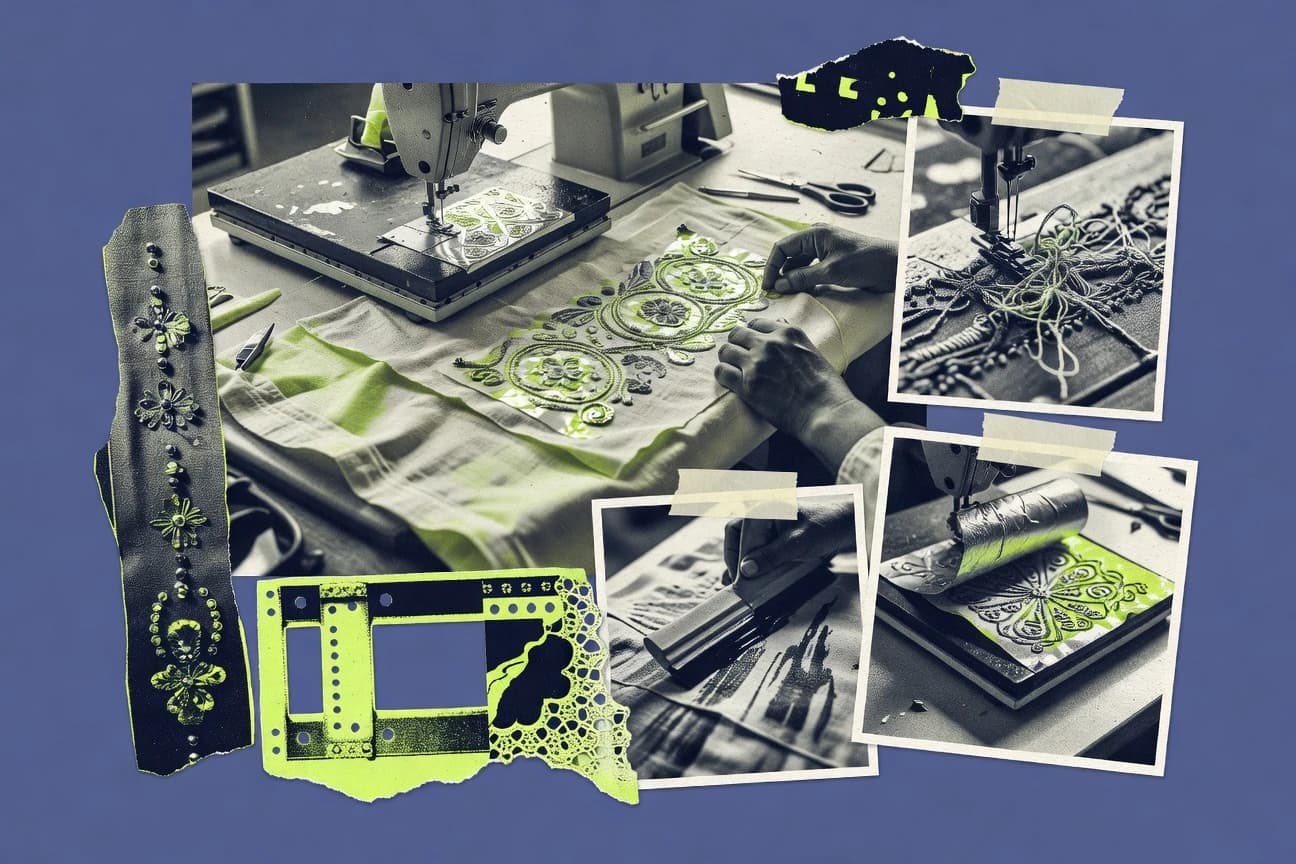

Garment decoration spans a $1.3 billion garment printing and dyeing chemicals market, while sublimation printing alone is projected to reach $13.2 billion. The figures in this article track the pressures behind that growth, from 56% of apparel companies citing better production flexibility with digital printing to wastewater treatment systems cutting COD by 70% to 95%.
Key Takeaways
- $1.3 billion projected market size for the global garment printing and dyeing chemicals market in 2023, establishing the market scale tied to garment decoration processes
- $3.0 billion projected textile printing market size in 2022, giving a baseline for printing-based garment decoration
- $48.3 billion projected textile chemicals market size by 2032, showing expansion supporting garment decoration supply chains
- 56% of apparel companies using digital printing report improved production flexibility, linking digital decoration adoption to operational advantages
- Wastewater treatment can reduce chemical oxygen demand (COD) by 70%–95% in textile effluent treatment systems, reducing compliance cost risks
- Reactive dyes fixation rates often reported around 60%–90% depending on process controls, influencing dye usage and cost in decoration wet processing
- Sublimation printing typical colorfastness requirements meet ISO 105 standards for dye fixation when properly processed, improving durability/perceived quality
- Water-based inks can reduce volatile organic compound (VOC) emissions relative to solvent inks; VOC reduction on the order of ~50% is reported in comparative studies for inkjet inks
- Thermal transfer printing improves line sharpness by reducing ink spread; studies report microscopic dot gain reductions with optimized thermal transfer conditions (quantified in-microns)
- Regulation of azo dyes: EU has banned/restricted certain carcinogenic azo colorants; producers must comply with REACH/Annex XVII limits, shaping decoration input chemistry compliance
- EU Ecolabel for textile products sets limit values for hazardous substances (e.g., specific dye classes), impacting garment decoration chemistry and testing
- California Proposition 65 requires warnings for exposure to listed chemicals; this affects compliance for garment decoration chemicals containing Prop 65-listed substances
- The EU Waste Framework Directive sets a 2035 target for reuse/recycling of municipal packaging waste at 65%, impacting recycling programs for garment packaging used in distribution
- Peer-reviewed study estimates that washing releases thousands of microfibers; reported mean fiber release rates range from ~1000 to ~10,000 fibers per wash for synthetic fabrics (measured quantities)
- A life-cycle assessment comparing screen printing vs digital printing reports that digital can reduce environmental impact by up to ~30% in certain scenarios (quantified in study)
Digital garment printing is rapidly growing, cutting environmental impacts through better chemicals, curing, and wastewater treatment.
Related reading
01 · Category
Market Size4 stats
01
$1.3 billion projected market size for the global garment printing and dyeing chemicals market in 2023, establishing the market scale tied to garment decoration processeshttps://www.precedenceresearch.com/garment-printing-and-dyeing-chemicals-market
02
$3.0 billion projected textile printing market size in 2022, giving a baseline for printing-based garment decorationhttps://www.precedenceresearch.com/textile-printing-market
03
$48.3 billion projected textile chemicals market size by 2032, showing expansion supporting garment decoration supply chainshttps://www.precedenceresearch.com/textile-chemicals-market
04
The global sublimation printing market is forecast to reach $13.2 billion by 2030, indicating continued growth for decoration methodshttps://www.fortunebusinessinsights.com/sublimation-printing-market-106996
Interpretation
Market Size Interpretation
The market size data points to strong, expanding demand for garment decoration as garment printing and dyeing chemicals are projected to reach $1.3 billion in 2023 and the sublimation printing market is expected to grow to $13.2 billion by 2030, reflecting rapid growth in the chemical and printing sectors that underpin these decoration supply chains.
02 · Category
Industry Trends1 stats
01
56% of apparel companies using digital printing report improved production flexibility, linking digital decoration adoption to operational advantageshttps://www.inkworld.com/inkjet-digital-printing/article/21621765/digital-textile-printing-survey-results
Interpretation
Industry Trends Interpretation
With 56% of apparel companies using digital printing reporting improved production flexibility, the industry trend points to digital decoration as a practical way to make garment operations more adaptable and responsive.
03 · Category
Cost Analysis2 stats
01
Wastewater treatment can reduce chemical oxygen demand (COD) by 70%–95% in textile effluent treatment systems, reducing compliance cost riskshttps://www.sciencedirect.com/science/article/pii/S0045653516300490
02
Reactive dyes fixation rates often reported around 60%–90% depending on process controls, influencing dye usage and cost in decoration wet processinghttps://www.ncbi.nlm.nih.gov/pmc/articles/PMC6635932/
Interpretation
Cost Analysis Interpretation
In cost analysis for garment decoration, wastewater treatment can cut COD by 70% to 95%, while reactive dye fixation rates typically land around 60% to 90%, meaning process control and treatment efficiency can materially drive compliance and dye usage costs.
More related reading
04 · Category
Performance Metrics5 stats
01
Sublimation printing typical colorfastness requirements meet ISO 105 standards for dye fixation when properly processed, improving durability/perceived qualityhttps://www.iso.org/standard/33428.html
02
Water-based inks can reduce volatile organic compound (VOC) emissions relative to solvent inks; VOC reduction on the order of ~50% is reported in comparative studies for inkjet inkshttps://www.sciencedirect.com/science/article/pii/S0165993606000632
03
Thermal transfer printing improves line sharpness by reducing ink spread; studies report microscopic dot gain reductions with optimized thermal transfer conditions (quantified in-microns)https://www.tandfonline.com/doi/abs/10.1080/10408390903002620
04
Digital textile printing can achieve image resolution up to 720×1440 dpi (market specification range), improving decoration detail fidelityhttps://www.agfa.com/en/solutions/inkjet-printing/textile/digital-textile-printing
05
UV-curable inks for textile applications can achieve fast cure times (seconds) under UV exposure, reducing curing energy and cycle timehttps://www.sciencedirect.com/science/article/pii/S0045653517305741
Interpretation
Performance Metrics Interpretation
Performance metrics in garment decoration are trending toward higher quality and faster, cleaner production, with colorfastness meeting ISO 105 when properly processed, VOC emissions from water-based inks reported around 50% lower than solvent options, and digital textile printing reaching up to 720×1440 dpi for sharper decoration detail.
05 · Category
Regulation & Compliance7 stats
01
Regulation of azo dyes: EU has banned/restricted certain carcinogenic azo colorants; producers must comply with REACH/Annex XVII limits, shaping decoration input chemistry compliancehttps://eur-lex.europa.eu/legal-content/EN/TXT/?uri=CELEX:02006R190720200101
02
EU Ecolabel for textile products sets limit values for hazardous substances (e.g., specific dye classes), impacting garment decoration chemistry and testinghttps://eur-lex.europa.eu/legal-content/EN/TXT/?uri=CELEX:32014D0565
03
California Proposition 65 requires warnings for exposure to listed chemicals; this affects compliance for garment decoration chemicals containing Prop 65-listed substanceshttps://oehha.ca.gov/proposition-65
04
Formaldehyde limits in textiles are quantified under EU rules for children’s clothing; the legal limit is 16 ppm (dry weight) for certain categories (quantified)https://eur-lex.europa.eu/legal-content/EN/TXT/?uri=CELEX:32009D0336
05
Ink/chemical safety is governed in many jurisdictions via CLP classification and labeling; EU CLP regulation sets hazard communication thresholds (quantified)https://eur-lex.europa.eu/eli/reg/2008/1272/oj
06
In the U.S., EPA defines textile manufacturing under NAAQS and wastewater effluent frameworks; permit requirements quantify discharge limits through NPDES/Effluent Guidelineshttps://www.epa.gov/npdes
07
Textile dyes and pigments shipments are influenced by hazardous waste rules; Basel Convention controls transboundary movement of hazardous wastes with quantified annex listingshttps://www.basel.int/Implementation/LegalMatters/ConventionText/tabid/1274/Default.aspx
Interpretation
Regulation & Compliance Interpretation
For Regulation & Compliance, garment decoration is being tightened through specific, measurable limits such as the EU formaldehyde cap of 16 ppm for certain children’s textiles and REACH and Ecolabel restrictions on hazardous dye classes, forcing producers to manage chemical risks and labeling requirements across markets like California’s Proposition 65.
06 · Category
Sustainability Metrics4 stats
01
The EU Waste Framework Directive sets a 2035 target for reuse/recycling of municipal packaging waste at 65%, impacting recycling programs for garment packaging used in distributionhttps://eur-lex.europa.eu/legal-content/EN/TXT/?uri=CELEX:32018L0852
02
Peer-reviewed study estimates that washing releases thousands of microfibers; reported mean fiber release rates range from ~1000 to ~10,000 fibers per wash for synthetic fabrics (measured quantities)https://www.science.org/doi/10.1126/sciadv.aas2809
03
A life-cycle assessment comparing screen printing vs digital printing reports that digital can reduce environmental impact by up to ~30% in certain scenarios (quantified in study)https://www.sciencedirect.com/science/article/pii/S0959652614006580
04
A study on dyeing/finishing wastewater indicates treated effluent can meet discharge thresholds when reducing color by ~80%–95% (measured)https://www.tandfonline.com/doi/abs/10.1080/10643389.2014.885989
Interpretation
Sustainability Metrics Interpretation
Across sustainability metrics in garment decoration, the biggest measurable gains are coming from cutting waste and inputs, with reuse and recycling targets rising to 65% by 2035, digital printing potentially lowering environmental impact by up to about 30%, and dyeing wastewater color reductions of roughly 80% to 95% helping meet discharge thresholds.
report visual · Projection
Garment Decoration Supply Chain: Printing, chemicals, and continued market growth
Market projections indicate sustained expansion for garment decoration-related printing and textile chemical segments through the end of the decade.
3,000,000,000 Market size (USD)
Start
+20.35%
CAGR · 8y
13,203,528,634 Market size (USD)
Projected
20222030
source-verifiedprecedenceresearch.com · fortunebusinessinsights.com2030
Reference
Cite This Report
This report is designed to be cited. We maintain stable URLs and versioned verification dates. Copy the format appropriate for your publication below.
APA
Helena Kowalczyk. (2026, February 13). Garment Decoration Industry Statistics. Gitnux. https://gitnux.org/garment-decoration-industry-statistics
MLA
Helena Kowalczyk. "Garment Decoration Industry Statistics." Gitnux, 13 Feb 2026, https://gitnux.org/garment-decoration-industry-statistics.
Chicago
Helena Kowalczyk. 2026. "Garment Decoration Industry Statistics." Gitnux. https://gitnux.org/garment-decoration-industry-statistics.
Sources & references
23 datasets cited across this report
+10 additional datasets cited (not shown individually)