
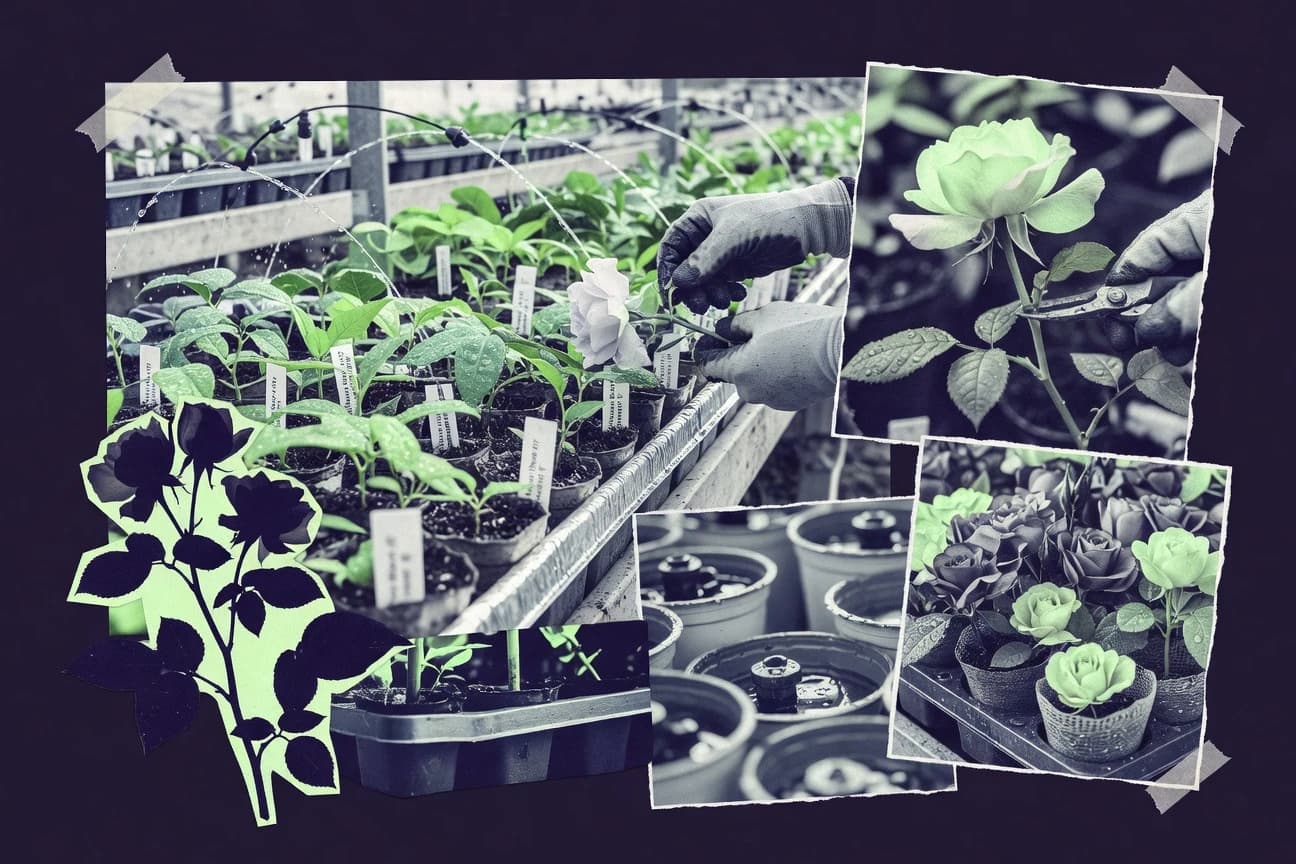

The global floriculture market is projected to reach $149.2 billion by 2032. Trade is concentrated, with the Netherlands holding 35.3% of global flower export value while a 1°C storage error can cut vase life by several days. This article pulls together the market, cost, logistics, and sustainability figures shaping flower production and sales.
Key Takeaways
- $149.2 billion projected global floriculture market size by 2032, signaling expected long-term growth
- China held a 19.0% share of global flower exports by volume in 2020, highlighting its leading exporter role
- The Netherlands held a 35.3% share of global flower exports by value in 2020, confirming its central position in global floriculture trade
- Colombia accounted for 14.7% of global flower exports by value in 2020, indicating major Latin American export importance
- Ecuador exported about $1.2 billion of flowers in 2022, emphasizing its large-scale production and export economy role
- In 2022, energy costs were the largest operating cost item reported by Dutch greenhouse growers, exceeding labor and other variable costs for many operations
- A 1°C increase above the recommended storage temperature can shorten vase life by several days for many cut flowers, emphasizing tight temperature control
- Ethylene exposure can reduce vase life for many ornamental cut flowers by damaging floral tissues, making ethylene management a key quality lever
- The EU’s 2018/2019 ban on certain single-use plastics affects packaging choices for floriculture and related retail presentation
- Nearly 60% of Dutch greenhouse horticulture farms use some form of climate computer technology (automation), enabling precise conditions for ornamental crops
- 90%+ of energy used in Dutch greenhouse horticulture is from fuel (primarily natural gas and other fuels) in typical operations, making energy efficiency critical for floriculture competitiveness
- 92% of consumers consider freshness important when buying flowers (drives adoption of cold chain and postharvest handling standards)
- A meta-analysis in Postharvest Biology and Technology reports that pre-cooling reduces decay and extends shelf life for many cut flowers, with effect sizes varying by species and conditions
- A peer-reviewed study in Frontiers in Plant Science reports that UV-C treatments can extend postharvest longevity of ornamental flowers by reducing microbial load (quality-impact mechanism for logistics)
- Global production of ornamental plants is estimated at about 18.5 billion units annually (reflecting the massive volume base behind floriculture retail)
Global floriculture is set for strong growth, driven by major exporters and rising sustainability and quality demands.
Related reading
01 · Category
Industry Trends8 stats
01
China held a 19.0% share of global flower exports by volume in 2020, highlighting its leading exporter role
02
The Netherlands held a 35.3% share of global flower exports by value in 2020, confirming its central position in global floriculture trade
03
Colombia accounted for 14.7% of global flower exports by value in 2020, indicating major Latin American export importance
04
The EU’s Green Deal targets net-zero greenhouse gas emissions by 2050, setting regulatory pressure on greenhouse energy use for floriculture operators
05
40% of EU citizens consider sustainability important in purchasing decisions, influencing demand signals for responsibly produced flowers
06
In 2020, the share of consumers that would pay more for sustainable products was 37% in the EU, supporting willingness to pay for sustainable floriculture
07
In 2023, 26% of Dutch greenhouse growers reported using renewable heat or planned renewables, reflecting decarbonization pathways in ornamental production
08
In 2022, Dutch greenhouse growers adopted LED lighting on an estimated 9–10% of greenhouse area used for ornamental crops (lighting expansion trend supporting production timing and quality)
Interpretation
Industry Trends Interpretation
Under Industry Trends, the floriculture market is increasingly shaped by sustainability and trade dominance, with the Netherlands taking 35.3% of global flower exports by value in 2020 and 37% of EU consumers in 2020 willing to pay more for sustainable products, while EU Green Deal pressure adds regulatory urgency to greener greenhouse practices.
02 · Category
Postharvest & Logistics4 stats
01
92% of consumers consider freshness important when buying flowers (drives adoption of cold chain and postharvest handling standards)
02
A meta-analysis in Postharvest Biology and Technology reports that pre-cooling reduces decay and extends shelf life for many cut flowers, with effect sizes varying by species and conditions
03
A peer-reviewed study in Frontiers in Plant Science reports that UV-C treatments can extend postharvest longevity of ornamental flowers by reducing microbial load (quality-impact mechanism for logistics)
04
A review in Scientia Horticulturae found that fungicide and biological control strategies can reduce postharvest disease incidence in cut flowers, improving marketable life
Interpretation
Postharvest & Logistics Interpretation
With 92% of consumers prioritizing freshness, the postharvest and logistics side is increasingly about protecting that promise through better handling, since pre-cooling can extend shelf life and approaches like UV-C and improved disease control can further reduce postharvest losses for cut flowers.
03 · Category
Production Scale3 stats
01
Global production of ornamental plants is estimated at about 18.5 billion units annually (reflecting the massive volume base behind floriculture retail)
02
In 2022, Colombia exported about 2.2 billion stems of flowers to the world (quantifying the stem-volume backbone of its export industry)
03
Ecuador’s rose sector reached roughly 60,000 hectares of agricultural footprint for flowers and related crops in the early 2020s (indicating cultivation scale)
Interpretation
Production Scale Interpretation
Production at scale in floriculture is massive, with around 18.5 billion ornamental plants produced globally each year, and major exporters like Colombia shipping about 2.2 billion flower stems while Ecuador’s rose sector alone covers roughly 60,000 hectares, showing how volume and land footprint underpin the industry’s reach.
More related reading
04 · Category
Quality & Post Harvest2 stats
01
A 1°C increase above the recommended storage temperature can shorten vase life by several days for many cut flowers, emphasizing tight temperature control
02
Ethylene exposure can reduce vase life for many ornamental cut flowers by damaging floral tissues, making ethylene management a key quality lever
Interpretation
Quality & Post Harvest Interpretation
In the Quality and Post Harvest focus, even a 1°C rise above the recommended storage temperature can cut vase life by several days for many cut flowers and ethylene exposure further shortens it by damaging floral tissues, making tight temperature control and ethylene management essential.
05 · Category
Regulation & Compliance2 stats
01
In 2023, the EU’s Packaging and Packaging Waste Regulation framework continued implementation steps that require compliance for retailers supplying packaged goods (including flowers in consumer packs)
02
A 2022 peer-reviewed study in Industrial Crops & Products estimated that biogenic packaging materials can reduce life-cycle greenhouse gas emissions compared with conventional plastics in multiple supply-chain scenarios
Interpretation
Regulation & Compliance Interpretation
In 2023, the EU’s Packaging and Packaging Waste Regulation framework kept expanding its implementation steps for retailers, reinforcing how Regulation and Compliance is tightening in practice while research in 2022 suggests biogenic packaging materials could cut life cycle greenhouse gas emissions.
06 · Category
Industry Overview6 stats
01
$149.2 billion projected global floriculture market size by 2032, signaling expected long-term growth
02
Ecuador exported about $1.2 billion of flowers in 2022, emphasizing its large-scale production and export economy role
03
In 2022, energy costs were the largest operating cost item reported by Dutch greenhouse growers, exceeding labor and other variable costs for many operations
04
The EU’s 2018/2019 ban on certain single-use plastics affects packaging choices for floriculture and related retail presentation
05
Nearly 60% of Dutch greenhouse horticulture farms use some form of climate computer technology (automation), enabling precise conditions for ornamental crops
06
90%+ of energy used in Dutch greenhouse horticulture is from fuel (primarily natural gas and other fuels) in typical operations, making energy efficiency critical for floriculture competitiveness
Interpretation
Industry Overview Interpretation
The industry overview shows strong long-term momentum with the global floriculture market projected to reach $149.2 billion by 2032, while the Netherlands illustrates why growth relies heavily on technology and energy, with nearly 60% of greenhouse farms using climate computers and 90% or more of greenhouse energy coming from fuel.
report visual · Breakdown
Global export leaders: by value vs by volume (2020)
Netherlands leads in export value while China leads in export volume share in 2020.
40%
40% of EU citizens consider sustainability important in purchasing decisions, influencing demand signals for responsibly
60%
Nearly 60% of Dutch greenhouse horticulture farms use some form of climate computer technology (automation), enabling pr
source-verifiedeuropa.eu · edepot.wur.nl
Reference
Cite This Report
This report is designed to be cited. We maintain stable URLs and versioned verification dates. Copy the format appropriate for your publication below.
APA
Helena Kowalczyk. (2026, February 13). Floriculture Industry Statistics. Gitnux. https://gitnux.org/floriculture-industry-statistics
MLA
Helena Kowalczyk. "Floriculture Industry Statistics." Gitnux, 13 Feb 2026, https://gitnux.org/floriculture-industry-statistics.
Chicago
Helena Kowalczyk. 2026. "Floriculture Industry Statistics." Gitnux. https://gitnux.org/floriculture-industry-statistics.
Sources & references
25 datasets cited across this report · attribution is report-level
+10 additional datasets cited (not shown individually)