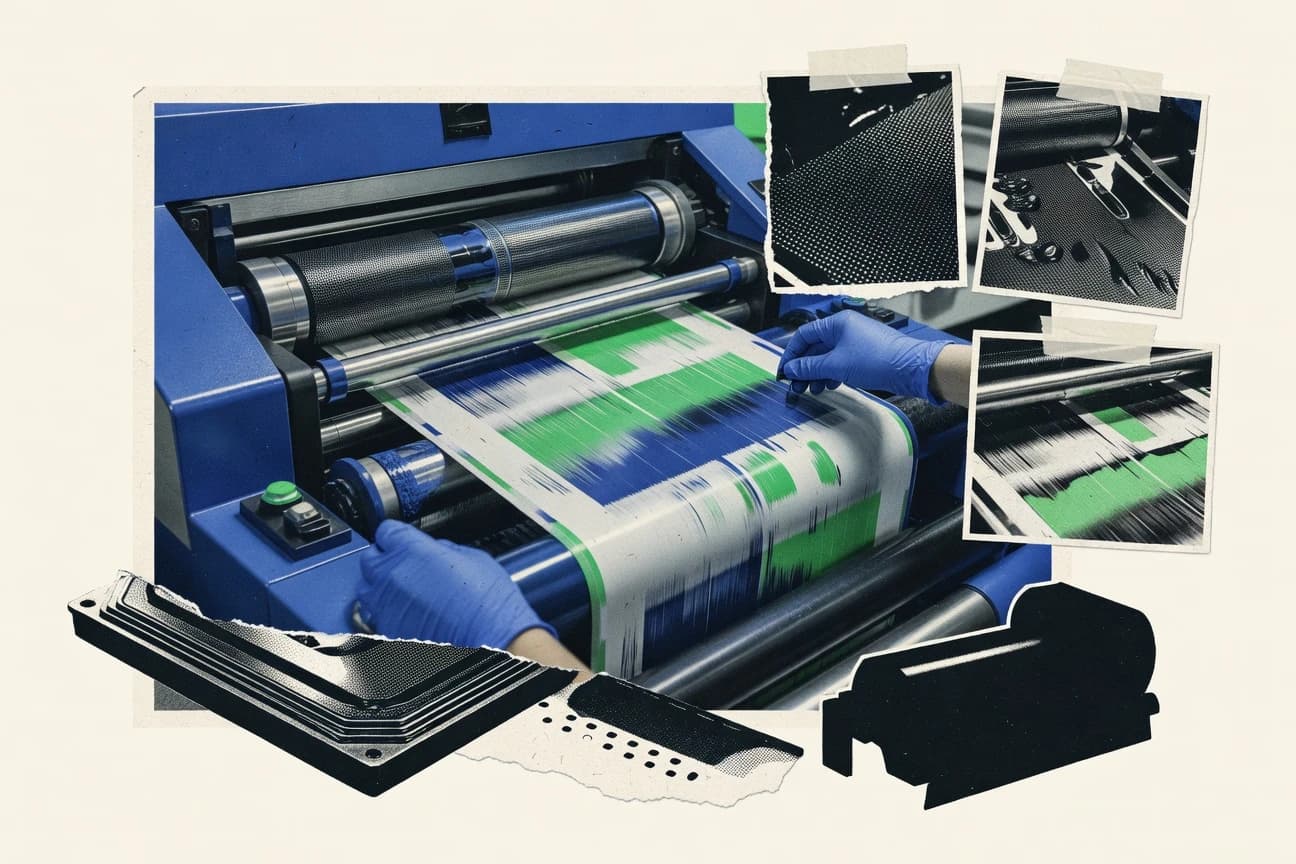

The global packaging market is on track to reach $1.2 trillion by 2030, with flexography playing a central role in printing flexible films and corrugated packaging at massive scale. At the same time, solvent based inks still make up 10 to 15% of ink formulations, even as regulations and sustainability targets push plants toward lower VOC, UV, and water based alternatives. The result is a fast-moving balance between throughput, compliance, and chemical cost pressure that is reshaping flexographic printing operations worldwide.
Key Takeaways
- 8.5% projected CAGR for global packaging printing markets over 2024–2030, with flexographic printing positioned as a key process for flexible packaging
- 75% of flexible packaging is printed using rotogravure, flexography, or screen printing, with flexography a central contributor in the category (flexography commonly used for flexible packaging films)
- The global packaging market is forecast to reach $1.2 trillion by 2030, providing demand tailwinds for packaging printing processes such as flexography
- 54% of packaging professionals expect sustainability to be a top priority for packaging in 2024, supporting increased demand for lower-impact printing methods and inks used in flexography
- EU Regulation (EC) No 1907/2006 (REACH) governs chemicals used in inks and coatings, with substances in flexographic ink systems increasingly subject to restriction and authorization
- UV-curable inks can achieve lower drying/curing energy usage in-process because they cure instantly under UV, reducing reliance on long air-dry times common in solvent-based flexo
- UV flexo presses can reduce solvent-related downtime by eliminating evaporation steps required for solvent drying, improving throughput versus solvent-based flexo lines in comparable operating conditions
- CO2 emissions from printing and paper supply chains are often dominated by energy usage, making energy monitoring and efficiency improvements a primary lever for flexo plants seeking reductions (industry lifecycle perspective)
- Lifecycle assessments for printing frequently find that transport and electricity can account for large shares of total impacts, motivating efficiency measures at production sites
- UV-curing energy costs can be offset by lower VOC abatement and reduced dryer infrastructure, lowering total energy and compliance-related costs versus solvent systems in many facilities
- Ink and coatings price volatility can be traced to chemical feedstock costs; the World Bank commodity markets dataset provides feedstock price series impacting ink cost structure
- Energy costs in industrial printing depend on heating/curing and ventilation; US EIA industrial electricity price changes impact converter OPEX materially (monitored annually)
- 31% of packaging material is paper/cardboard, plastic, and others vary by geography; flexible plastic growth supports flexo label and film printing demand
- AI-assisted inspection systems are being deployed for defect detection in wide-format and packaging printing; vendors commonly report real-time defect classification to reduce manual checks
- 4.0% of global greenhouse gas emissions come from industry (excluding electricity and heat), highlighting the relevance of industrial energy-efficiency improvements for printing operations such as flexography.
Flexography is set to grow fast as packaging demand and sustainability push lower VOC inks and UV curing.
Related reading
01 · Category
Market Size7 stats
01
8.5% projected CAGR for global packaging printing markets over 2024–2030, with flexographic printing positioned as a key process for flexible packaginghttps://www.fortunebusinessinsights.com/packaging-printing-market-102127
02
75% of flexible packaging is printed using rotogravure, flexography, or screen printing, with flexography a central contributor in the category (flexography commonly used for flexible packaging films)https://www.ncbi.nlm.nih.gov/pmc/articles/PMC7710569/
03
The global packaging market is forecast to reach $1.2 trillion by 2030, providing demand tailwinds for packaging printing processes such as flexographyhttps://www.alliedmarketresearch.com/packaging-market-A11755
04
10–15% of printing ink formulation is made up of solvents in solvent-based inks, driving a clear performance and sustainability incentive for lower-VOC flexo ink systemshttps://www.sciencedirect.com/topics/engineering/printing-ink
05
Flexographic printing is widely used for corrugated packaging and flexible packaging films, covering high-volume SKUs where rapid changeovers are valuable (increased adoption in packaging production lines)https://www.paperdistributor.com/flexographic-printing-basics/
06
Flexographic printing is widely used for flexible packaging and has a large installed base of presses globally, with the flexographic printing value chain supporting high-volume packaging runs—data summarized by the printing industry association in its market overview.https://www.fespa.com/insights/the-flexographic-printing-market-a-global-perspective
07
In 2022, global plastics production exceeded 400 million tonnes, supporting continued demand for flexible packaging films that are commonly printed using flexographic processes.https://www.oecd.org/en/data.html
Interpretation
Market Size Interpretation
With global packaging printing poised for an 8.5% projected CAGR through 2030 and packaging demand forecast to hit $1.2 trillion, flexographic printing is likely to keep expanding as a core flexible packaging method that already reaches 75% of flexible packaging printing channels.
02 · Category
Industry Trends7 stats
01
54% of packaging professionals expect sustainability to be a top priority for packaging in 2024, supporting increased demand for lower-impact printing methods and inks used in flexographyhttps://www.packworld.com/sustainability/article/21200001/packaging-professionals-report-sustainability-top-priority
02
EU Regulation (EC) No 1907/2006 (REACH) governs chemicals used in inks and coatings, with substances in flexographic ink systems increasingly subject to restriction and authorizationhttps://eur-lex.europa.eu/eli/reg/2006/1907/oj
03
UV-curable inks can achieve lower drying/curing energy usage in-process because they cure instantly under UV, reducing reliance on long air-dry times common in solvent-based flexohttps://www.sciencedirect.com/topics/materials-science/uv-curing
04
Water-based inks are formulated to reduce VOC emissions compared with conventional solvent inks; one industry chemistry reference notes VOC contents are typically lower for water-based systemshttps://www.sciencedirect.com/topics/engineering/water-based-ink
05
EU Packaging and Packaging Waste Regulation proposal aims to standardize reuse and recycling requirements, influencing flexible packaging formats printed in flexohttps://environment.ec.europa.eu/topics/waste-and-recycling/packaging-waste_en
06
G7 countries implemented stricter air-quality and emissions rules that increase pressure to reduce VOCs and hazardous air pollutants from printing operations, including flexo plantshttps://www.oecd.org/environment/air-pollution-impacts.htm
07
UV/EB curing market growth averaged 8.5% annually from 2019–2023 (global), indicating continued momentum for UV-curable ink/process adoption relevant to UV flexography.https://www.inkworldmagazine.com/uv-eb-curing-industry-growth-reaches-new-milestones/
Interpretation
Industry Trends Interpretation
With 54% of packaging professionals expecting sustainability to be a top priority for 2024, flexography is increasingly trending toward lower-impact choices like UV-curable and water-based inks as tightening EU chemical rules and tougher G7 air-quality standards push the industry to reduce VOCs and hazardous emissions.
03 · Category
Performance Metrics3 stats
01
UV flexo presses can reduce solvent-related downtime by eliminating evaporation steps required for solvent drying, improving throughput versus solvent-based flexo lines in comparable operating conditionshttps://www.hubergroup.com/en/knowledge-centre/uv-curing-for-printing/
02
CO2 emissions from printing and paper supply chains are often dominated by energy usage, making energy monitoring and efficiency improvements a primary lever for flexo plants seeking reductions (industry lifecycle perspective)https://www.sciencedirect.com/science/article/pii/S0959652619310944
03
Lifecycle assessments for printing frequently find that transport and electricity can account for large shares of total impacts, motivating efficiency measures at production siteshttps://www.sciencedirect.com/topics/engineering/life-cycle-assessment
Interpretation
Performance Metrics Interpretation
Across performance metrics, UV flexo can cut solvent related downtime by removing the evaporation drying step, while lifecycle findings show that energy use often dominates CO2 emissions so monitoring and improving electricity efficiency is a key way to boost both throughput and environmental performance.
04 · Category
Cost Analysis5 stats
01
UV-curing energy costs can be offset by lower VOC abatement and reduced dryer infrastructure, lowering total energy and compliance-related costs versus solvent systems in many facilitieshttps://www.uvsolutions.com/cost-of-uv-vs-solvent-printing
02
Ink and coatings price volatility can be traced to chemical feedstock costs; the World Bank commodity markets dataset provides feedstock price series impacting ink cost structurehttps://www.worldbank.org/en/research/commodity-markets
03
Energy costs in industrial printing depend on heating/curing and ventilation; US EIA industrial electricity price changes impact converter OPEX materially (monitored annually)https://www.eia.gov/electricity/data/browser/
04
Natural gas price movements affect kiln/dryer energy costs where used; US EIA provides monthly natural gas prices that influence utility OPEX for printing plantshttps://www.eia.gov/dnav/ng/ng_pri_sum_dcu_nus_m.htm
05
In the US, commercial businesses reported spending about $12.2 billion on pollution control expenditures in 2022 (latest available), showing the broader cost structure that can affect printing plants’ compliance budgets.https://www.bls.gov/cew/data.htm
Interpretation
Cost Analysis Interpretation
For cost analysis, flexo plants can often reduce total energy and compliance outlays because UV-curing systems may cut dryer infrastructure and VOC abatement compared with solvent setups, while broader OPEX pressures are tracked through inputs like electricity and natural gas prices and even wider pollution control spending that reached about $12.2 billion in 2022 for US businesses.
More related reading
05 · Category
Technology & Automation2 stats
01
31% of packaging material is paper/cardboard, plastic, and others vary by geography; flexible plastic growth supports flexo label and film printing demandhttps://www.oecd.org/environment/waste/statistics/
02
AI-assisted inspection systems are being deployed for defect detection in wide-format and packaging printing; vendors commonly report real-time defect classification to reduce manual checkshttps://www.sensitech.com/solutions/ai-machine-vision-inspection/
Interpretation
Technology & Automation Interpretation
With 31% of packaging materials tied to paper, cardboard, plastic, and others, flexography is increasingly pairing that growth demand with technology, as AI-assisted inspection systems deliver real-time defect classification to cut manual checks in label and packaging printing.
06 · Category
Environmental Impact3 stats
01
4.0% of global greenhouse gas emissions come from industry (excluding electricity and heat), highlighting the relevance of industrial energy-efficiency improvements for printing operations such as flexography.https://ourworldindata.org/emissions-by-sector
02
The World Health Organization (WHO) estimates that ambient air pollution caused about 6.7 million premature deaths in 2019, reinforcing that reducing emissions (e.g., VOCs from solvent-based inks) is a public-health priority.https://www.who.int/news-room/fact-sheets/detail/ambient-(outdoor)-air-quality-and-health
03
A review in the Journal of Cleaner Production reports that substituting solvents with water-based or high-solids formulations can reduce VOC emissions substantially (often by 50–90% depending on formulation and process), supporting the emissions case for lower-VOC flexo inks.https://www.sciencedirect.com/science/article/pii/S0959652620306362
Interpretation
Environmental Impact Interpretation
Environmental impact is a clear focus for flexographic printing because industry accounts for 4.0% of global greenhouse gas emissions and shifting from solvents to water-based or high-solids formulations can cut VOC emissions by roughly 50–90%, which matters for public health given WHO’s estimate of 6.7 million premature deaths from ambient air pollution in 2019.
07 · Category
Regulatory Compliance3 stats
01
Under REACH, companies must register substances manufactured or imported at 1 tonne per year or more, shaping chemical availability and compliance processes for ink and coating constituents used in flexography.https://echa.europa.eu/regulations/reach/understanding-reach/registration
02
ECHA reports that the REACH registration database includes hundreds of thousands of substance registrations (by 2024: 25,000+ registered substances), indicating extensive compliance demands for chemical supply chains including inks.https://echa.europa.eu/information-on-chemicals/registered-substances
03
The Occupational Safety and Health Administration (OSHA) has a permissible exposure limit (PEL) of 5 mg/m3 for respirable crystalline silica (for many operations), reflecting workplace safety drivers that can extend to dust/control practices in printrooms handling dry powders and coatings.https://www.osha.gov/laws-regs/regulations/standardnumber/1910/1910.1053
Interpretation
Regulatory Compliance Interpretation
For regulatory compliance in flexographic printing, the reach around chemical registration is expanding fast as ECHA counts 25,000 plus registered substances by 2024, while OSHA’s 5 mg/m3 respirable crystalline silica PEL reinforces that workplace exposure limits and chemical availability requirements must be managed together.
Reference
Cite This Report
This report is designed to be cited. We maintain stable URLs and versioned verification dates. Copy the format appropriate for your publication below.
APA
Nathan Caldwell. (2026, February 13). Flexographic Printing Industry Statistics. Gitnux. https://gitnux.org/flexographic-printing-industry-statistics
MLA
Nathan Caldwell. "Flexographic Printing Industry Statistics." Gitnux, 13 Feb 2026, https://gitnux.org/flexographic-printing-industry-statistics.
Chicago
Nathan Caldwell. 2026. "Flexographic Printing Industry Statistics." Gitnux. https://gitnux.org/flexographic-printing-industry-statistics.
Sources & references
30 datasets cited across this report
+9 additional datasets cited (not shown individually)