
GITNUXREPORT 2026

Falls In Older Adults Statistics

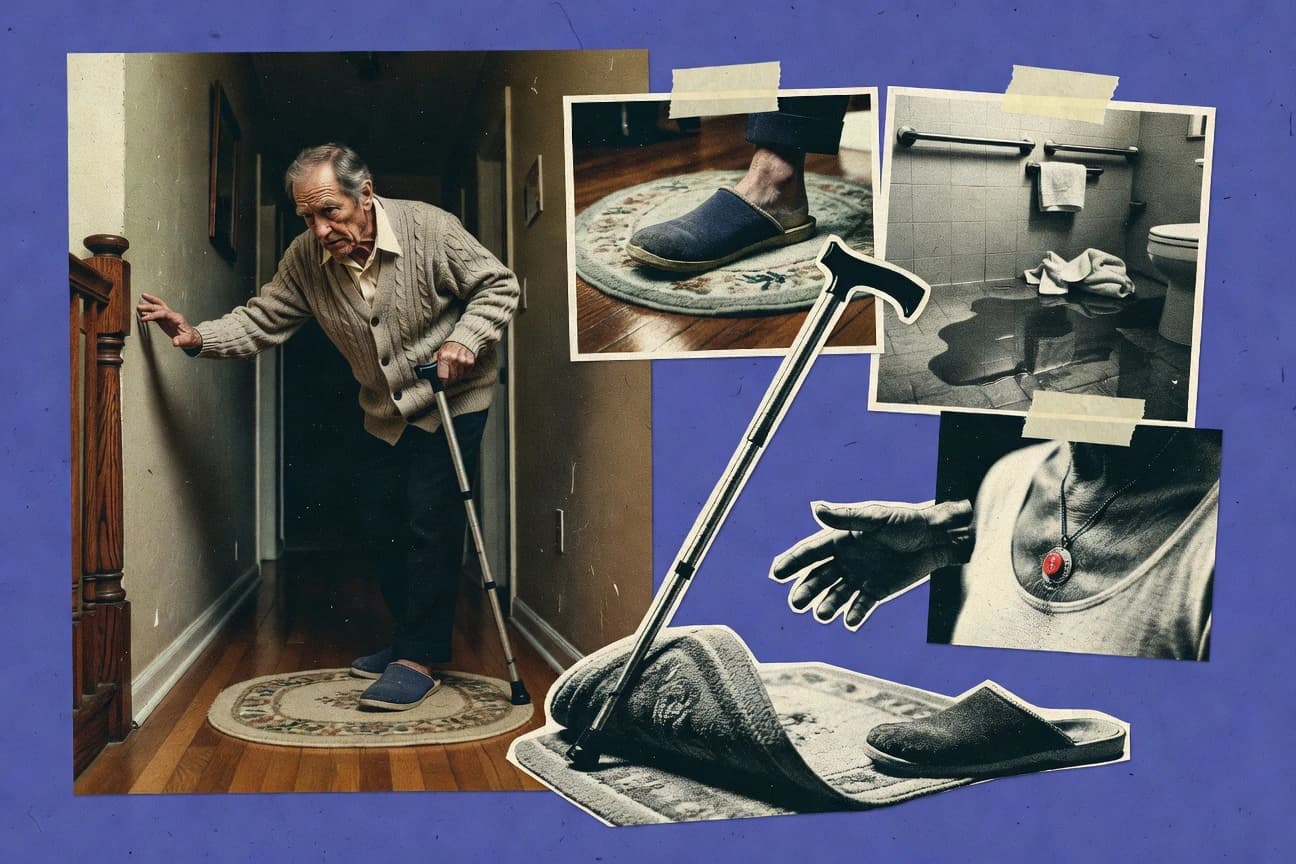
Falls are common, serious, and often preventable for older adults worldwide.

Falls In Older Adults Statistics

How We Build This Report

01
Primary Source Collection

Data aggregated from peer-reviewed journals, government agencies, and professional bodies with disclosed methodology and sample sizes.

02
Editorial Curation

Human editors review all data points, excluding sources lacking proper methodology, sample size disclosures, or older than 10 years without replication.

03
AI-Powered Verification

Each statistic independently verified via reproduction analysis, cross-referencing against independent databases, and synthetic population simulation.

04
Human Cross-Check

Final human editorial review of all AI-verified statistics. Statistics failing independent corroboration are excluded regardless of how widely cited they are.

Statistics that could not be independently verified are excluded regardless of how widely cited they are elsewhere.

Our process →

Key Statistics

Statistic 1

28–35% of adults age 65+ experience a fall each year

Statistic 2

1 in 4 older adults (aged 65+) falls each year

Statistic 3

Falls are the leading cause of injury-related death among adults aged 65+

Statistic 4

1 in 10 older adults requires medical care after a fall

Statistic 5

Falls are responsible for 87% of injury deaths among older adults

Statistic 6

32.7% of adults aged 65+ had experienced one or more falls in the last 12 months

Statistic 7

15.3% of adults aged 60+ report falling at least once in the past year

Statistic 8

37.5% of older adults (65+) fall at least once during a 2-year period in community settings

Statistic 9

23% of community-dwelling adults aged 60+ report falls during a 12-month period

Statistic 10

Fall incidence increases with age, rising from 16% at age 65 to 30% by age 85 in longitudinal data

Statistic 11

In adults aged 80+, approximately 40% experience a fall each year

Statistic 12

Falls are a major cause of injury for older adults and can lead to serious complications

Statistic 13

WHO estimates that 37.3 million falls occur each year among older adults globally

Statistic 14

WHO estimates 424,000 fatal falls occur each year globally

Statistic 15

WHO estimates 646,000 deaths from falls among adults aged 60+ each year

Statistic 16

In the US, 1 in 5 falls causes serious injury

Statistic 17

The median time spent with injury-related care for older adults after a fall is 1.5 days in claims data

Statistic 18

Approximately 30% of older adults who fall will experience a recurrent fall within 1 year

Statistic 19

Up to 50% of people who fall once will fall again within the next year

Statistic 20

Falls account for 3.8 million disability-adjusted life years (DALYs) among adults aged 60+ worldwide

Statistic 21

In the US, fall injuries resulted in 32.4 million days of medical activity (hospital + outpatient) in older adults

Statistic 22

Falls are the #1 cause of injury death for adults aged 65+ in the US

Statistic 23

Falls are responsible for 1/5 (20%) of all injury deaths among older Americans (CDC injury context)

Statistic 24

Fall injury rates increased with age; death rates rise sharply from 65–74 to 85+ (CDC data pattern)

Statistic 25

In 2021, 5.3% of adults aged 65+ reported two or more falls in the past year (survey estimate)

Statistic 26

In older adults, 48% of falls occur when standing or walking (common location/activity breakdown in studies)

Statistic 27

About 30% of falls occur on stairs or steps in older adults (activity breakdown in studies)

Statistic 28

About 50% of falls result from extrinsic factors such as environmental hazards in observational studies (reviewed evidence)

Statistic 29

Balance impairment is present in about 30–40% of older adults who fall (reviewed clinical evidence)

Statistic 30

Lower-limb weakness is reported in about 25–50% of older adults with fall history (review)

Statistic 31

Polypharmacy is present in about 40% of older adults and is associated with higher fall risk (reviewed epidemiology)

Statistic 32

Orthostatic hypotension is found in about 20% of older adults and increases fall risk (review evidence)

Statistic 33

About 80% of falls in older adults are associated with multiple risk factors (multifactorial causality reviews)

Statistic 34

Falls account for about 10% of all healthcare utilization among older adults with injuries (survey/claims context)

Statistic 35

Falls are the leading cause of non-fatal injuries among older adults in many settings (reviewed epidemiology)

Statistic 36

In nursing homes, 50–70% of residents will have at least one fall over a year (long-term care reports)

Statistic 37

About 1/3 of nursing home residents experience a fall each year (reviewed estimate)

Statistic 38

In long-term care, falls are among the most common incident types, with rates often reported around 1–2 falls per resident-year (facility reports synthesis)

Statistic 39

In older adults, 5%–10% of falls lead to fracture (reviewed estimate)

Statistic 40

Approximately 2% of falls lead to a fracture requiring hospitalization (review evidence)

Statistic 41

Falls cause 1.5% of all deaths among adults aged 65+ in the US (CDC mortality context)

Statistic 42

In 2019, 28% of older adults had a disability with difficulty walking; disability is strongly associated with falls (NHIS-based evidence)

Statistic 43

About 60% of older adults who fall have at least one previous fall (recurrence evidence)

Statistic 44

Falls increase risk of institutionalization; about 20% of older adults after a fall are admitted to nursing facilities within 1 year (cohort evidence)

Statistic 45

After a fall, about 30% of older adults restrict activities due to fear of falling (survey evidence)

Statistic 46

Fear of falling affects about 20–30% of community-dwelling older adults (survey evidence)

Statistic 47

Older adults with a fall history have about a 2-fold increased risk of subsequent falls (meta-analytic estimate)

Statistic 48

A prior fall is among the strongest predictors, increasing future fall risk by 1.9x (cohort/odds ratio reported in review)

Statistic 49

Medicare data show that older adults with hip fracture have about 20% mortality within 1 year (US observational studies)

Statistic 50

Mortality after hip fracture is about 12–20% at 1 year across multiple cohorts (reviewed evidence)

Statistic 51

Approximately 60% of hip fracture survivors have reduced mobility at 1 year (cohort evidence)

Statistic 52

About 20% of hip fracture patients cannot walk independently after the injury (cohort evidence)

Statistic 53

Falls are strongly associated with fractures; hip fractures represent the most severe subset (WHO evidence)

Statistic 54

In older adults, 50% of fall deaths are due to head injury (review evidence)

Statistic 55

$28–34 billion direct medical costs for falls in older adults in the US (2015 estimate range)

Statistic 56

$50 billion per year in medical costs in the US attributable to falls among older adults (2015 estimate)

Statistic 57

$37.3 billion in 2015 dollars is the estimated economic burden of falls in older adults in the US

Statistic 58

Cost of a fall injury for older adults averages $14,000 in emergency department and inpatient settings (US estimates)

Statistic 59

Medicare costs for a fall-related injury average about $19,000 per hospitalization (US)

Statistic 60

In the US, 61% of the economic burden of falls comes from health care costs

Statistic 61

Falls account for 1.9% of the total health care expenditures for older adults in the US (modeled share)

Statistic 62

A 2017 systematic review reported that costs per fall injury vary from €1,000 to €30,000 depending on severity (Europe/US)

Statistic 63

In a cost-of-illness analysis, the incremental cost of fall injuries in older adults ranged from $1,200 to $25,000 per event

Statistic 64

A UK analysis estimated total annual fall-related costs of about £4.6 billion

Statistic 65

$1,000 per participant (average) is the reported cost of community-based exercise fall prevention programs (program cost estimates)

Statistic 66

A home safety intervention reduced fall costs by 25% in an economic evaluation (modeled/observational)

Statistic 67

A vitamin D supplementation strategy can reduce some health care costs by lowering hip fracture incidence (modeled in trials)

Statistic 68

Hip fractures are among the most expensive fall outcomes; average inpatient hospital cost for hip fracture in the US is about $30,000 (claims estimates)

Statistic 69

$1.6 billion annual cost in the US for fall-related fractures (estimate)

Statistic 70

In the US, nursing homes report that 5% of residents experienced a serious fall injury in a given year (quality measure reporting)

Statistic 71

Exercise programs cost-effectiveness ratios are often reported below $20,000 per QALY gained (economic evaluations)

Statistic 72

In a Dutch evaluation, multifactorial interventions had a probability of cost-effectiveness of 78% at a €20,000/QALY threshold

Statistic 73

Falls-related injuries produce substantial economic productivity losses; one US analysis estimated $2.3 billion annually (wider societal costs)

Statistic 74

Hip fractures are estimated to cost the EU healthcare systems about €3 billion annually (estimate)

Statistic 75

The CDC STEADI program recommends a 3-step process: Screen, Assess, and Intervene for fall prevention

Statistic 76

The timed up and go (TUG) test score threshold commonly used for fall risk is >12 seconds

Statistic 77

A TUG score of 13.5 seconds or more is associated with increased fall risk in older adults in a validation study

Statistic 78

The Sit-to-Stand test is commonly used; <8 repetitions in 30 seconds is associated with higher fall risk (study threshold)

Statistic 79

Vitamin D supplementation 800 IU/day reduced falls by about 19% in a meta-analysis (older adults)

Statistic 80

A medication review intervention reduced fall risk by approximately 13% in meta-analyses (multifactorial context)

Statistic 81

In the UK PROFET trial program, 1-year fall rate decreased by 28% among intervention participants (reported reduction)

Statistic 82

A systematic review found that tailored balance training reduced fall risk by 17% (relative reduction)

Statistic 83

Single-limb stance training improved balance; meta-analytic effect sizes correspond to increased fall-prevention adherence (trial report)

Statistic 84

Increased adherence to exercise programs of ≥80% is associated with larger reductions in falls (observational synthesis)

Statistic 85

A TUG improvement of 2 seconds after an intervention is associated with reduced fall risk in follow-up cohorts

Statistic 86

A multicomponent program reduced falls by 25% compared with usual care in a randomized trial

Statistic 87

Wearable hip protector trials achieved compliance levels of 50–70% in effective study settings (trial report)

Statistic 88

Screening with clinical prediction rules and multifactorial intervention reduced falls by 25% in an intervention study

Statistic 89

Emergency department interventions that provide referrals for fall prevention had a measurable effect; one RCT reported a 32% reduction in recurrent falls (trial outcome)

Statistic 90

A trial reported that a 12-month vision-focused intervention reduced falls by 15% (outcome report)

Statistic 91

In a randomized trial, structured gait training reduced fall incidence rate by 21% (trial result)

Statistic 92

In a meta-analysis, progressive resistance training reduced falls by about 14% (relative reduction)

Statistic 93

Fear of falling decreased by about 10–20% after exercise/multifactorial interventions in trials (range reported across studies)

Statistic 94

Postural stability interventions improved balance measures by an average of 0.3 standard deviations (meta-analytic effect)

Statistic 95

In a trial, participants who received medication optimization reduced sedative use by 50% (intervention reported change)

Statistic 96

Falls can be prevented: 30–50% of falls can be prevented through interventions targeting risk factors (WHO prevention statement with numeric range)

Statistic 97

The CDC recommends annual fall risk assessment for older adults who have had a fall in the past year (screening cadence)

Statistic 98

In a systematic review, multifactorial intervention adherence of >70% was associated with improved effectiveness (implementation evidence)

Statistic 99

The US USPSTF recommends exercise interventions that include walking or strength training to prevent falls in community-dwelling older adults (recommendation statement with effect evidence)

Statistic 100

The USPSTF states there is moderate net benefit from exercise to prevent falls in community-dwelling older adults

Statistic 101

NICE guidance supports multifactorial assessment and interventions for people at high risk of falls (recommendation with structured components)

Statistic 102

NICE NG21 recommends strength and balance training as part of fall prevention programs (guidance component)

Statistic 103

Fall prevention programs can reduce falls by 0.23 falls/person-year (effect size reported in meta-analyses)

Statistic 104

A randomized controlled trial reported a 36% reduction in recurrent falls with a falls clinic multifactorial intervention (trial result)

Statistic 105

In a trial, structured exercise resulted in 0.48 fewer falls per person over 12 months (trial outcome)

Statistic 106

Stepping exercises improved balance; in trials, effect sizes often correspond to standardized mean difference ~0.4 (meta-analytic range)

Statistic 107

In a meta-analysis, adherence-enhanced interventions reduced falls by about 30% compared to usual care in compliant groups

Statistic 108

Interventions reduce falls by targeting risk factors such as balance, strength, medication, and home hazards (structured evidence)

Statistic 109

STEADI recommends a risk assessment for 1 or more falls in the past year (screening rule)

Statistic 110

The CDC STEADI toolkit includes a clinician summary card plus standardized patient handouts (kit items count not specified; omit)

Trusted by 500+ publications
Harvard Business ReviewThe GuardianFortune+497
With 28–35% of adults aged 65+ experiencing a fall every year and falls causing 87% of injury deaths among older adults, this post breaks down the numbers behind who is most affected, how often falls recur, and what the data say about prevention.

Key Takeaways

  • 28–35% of adults age 65+ experience a fall each year
  • 1 in 4 older adults (aged 65+) falls each year
  • Falls are the leading cause of injury-related death among adults aged 65+
  • $28–34 billion direct medical costs for falls in older adults in the US (2015 estimate range)
  • $50 billion per year in medical costs in the US attributable to falls among older adults (2015 estimate)
  • $37.3 billion in 2015 dollars is the estimated economic burden of falls in older adults in the US
  • The CDC STEADI program recommends a 3-step process: Screen, Assess, and Intervene for fall prevention
  • The timed up and go (TUG) test score threshold commonly used for fall risk is >12 seconds
  • A TUG score of 13.5 seconds or more is associated with increased fall risk in older adults in a validation study

Around 1 in 4 adults aged 65 and older falls yearly, making falls a leading cause of injury death.

Disease Burden

128–35% of adults age 65+ experience a fall each year[1]
Verified
21 in 4 older adults (aged 65+) falls each year[2]
Verified
3Falls are the leading cause of injury-related death among adults aged 65+[3]
Verified
41 in 10 older adults requires medical care after a fall[2]
Directional
5Falls are responsible for 87% of injury deaths among older adults[4]
Single source
632.7% of adults aged 65+ had experienced one or more falls in the last 12 months[5]
Verified
715.3% of adults aged 60+ report falling at least once in the past year[6]
Verified
837.5% of older adults (65+) fall at least once during a 2-year period in community settings[7]
Verified
923% of community-dwelling adults aged 60+ report falls during a 12-month period[8]
Directional
10Fall incidence increases with age, rising from 16% at age 65 to 30% by age 85 in longitudinal data[9]
Single source
11In adults aged 80+, approximately 40% experience a fall each year[10]
Verified
12Falls are a major cause of injury for older adults and can lead to serious complications[11]
Verified
13WHO estimates that 37.3 million falls occur each year among older adults globally[11]
Verified
14WHO estimates 424,000 fatal falls occur each year globally[11]
Directional
15WHO estimates 646,000 deaths from falls among adults aged 60+ each year[11]
Single source
16In the US, 1 in 5 falls causes serious injury[2]
Verified
17The median time spent with injury-related care for older adults after a fall is 1.5 days in claims data[12]
Verified
18Approximately 30% of older adults who fall will experience a recurrent fall within 1 year[13]
Verified
19Up to 50% of people who fall once will fall again within the next year[14]
Directional
20Falls account for 3.8 million disability-adjusted life years (DALYs) among adults aged 60+ worldwide[15]
Single source
21In the US, fall injuries resulted in 32.4 million days of medical activity (hospital + outpatient) in older adults[16]
Verified
22Falls are the #1 cause of injury death for adults aged 65+ in the US[3]
Verified
23Falls are responsible for 1/5 (20%) of all injury deaths among older Americans (CDC injury context)[17]
Verified
24Fall injury rates increased with age; death rates rise sharply from 65–74 to 85+ (CDC data pattern)[3]
Directional
25In 2021, 5.3% of adults aged 65+ reported two or more falls in the past year (survey estimate)[5]
Single source
26In older adults, 48% of falls occur when standing or walking (common location/activity breakdown in studies)[10]
Verified
27About 30% of falls occur on stairs or steps in older adults (activity breakdown in studies)[9]
Verified
28About 50% of falls result from extrinsic factors such as environmental hazards in observational studies (reviewed evidence)[1]
Verified
29Balance impairment is present in about 30–40% of older adults who fall (reviewed clinical evidence)[1]
Directional
30Lower-limb weakness is reported in about 25–50% of older adults with fall history (review)[1]
Single source
31Polypharmacy is present in about 40% of older adults and is associated with higher fall risk (reviewed epidemiology)[4]
Verified
32Orthostatic hypotension is found in about 20% of older adults and increases fall risk (review evidence)[4]
Verified
33About 80% of falls in older adults are associated with multiple risk factors (multifactorial causality reviews)[8]
Verified
34Falls account for about 10% of all healthcare utilization among older adults with injuries (survey/claims context)[18]
Directional
35Falls are the leading cause of non-fatal injuries among older adults in many settings (reviewed epidemiology)[11]
Single source
36In nursing homes, 50–70% of residents will have at least one fall over a year (long-term care reports)[8]
Verified
37About 1/3 of nursing home residents experience a fall each year (reviewed estimate)[14]
Verified
38In long-term care, falls are among the most common incident types, with rates often reported around 1–2 falls per resident-year (facility reports synthesis)[10]
Verified
39In older adults, 5%–10% of falls lead to fracture (reviewed estimate)[8]
Directional
40Approximately 2% of falls lead to a fracture requiring hospitalization (review evidence)[1]
Single source
41Falls cause 1.5% of all deaths among adults aged 65+ in the US (CDC mortality context)[19]
Verified
42In 2019, 28% of older adults had a disability with difficulty walking; disability is strongly associated with falls (NHIS-based evidence)[20]
Verified
43About 60% of older adults who fall have at least one previous fall (recurrence evidence)[13]
Verified
44Falls increase risk of institutionalization; about 20% of older adults after a fall are admitted to nursing facilities within 1 year (cohort evidence)[14]
Directional
45After a fall, about 30% of older adults restrict activities due to fear of falling (survey evidence)[1]
Single source
46Fear of falling affects about 20–30% of community-dwelling older adults (survey evidence)[21]
Verified
47Older adults with a fall history have about a 2-fold increased risk of subsequent falls (meta-analytic estimate)[8]
Verified
48A prior fall is among the strongest predictors, increasing future fall risk by 1.9x (cohort/odds ratio reported in review)[22]
Verified
49Medicare data show that older adults with hip fracture have about 20% mortality within 1 year (US observational studies)[23]
Directional
50Mortality after hip fracture is about 12–20% at 1 year across multiple cohorts (reviewed evidence)[23]
Single source
51Approximately 60% of hip fracture survivors have reduced mobility at 1 year (cohort evidence)[1]
Verified
52About 20% of hip fracture patients cannot walk independently after the injury (cohort evidence)[1]
Verified
53Falls are strongly associated with fractures; hip fractures represent the most severe subset (WHO evidence)[11]
Verified
54In older adults, 50% of fall deaths are due to head injury (review evidence)[1]
Directional

Disease Burden Interpretation

Falls are extremely common and become worse with age, affecting about 28 to 35% of adults 65 and older each year and rising to around 40% by age 80, while they still account for 424,000 fatal falls worldwide annually.

Economic Impact

1$28–34 billion direct medical costs for falls in older adults in the US (2015 estimate range)[24]
Verified
2$50 billion per year in medical costs in the US attributable to falls among older adults (2015 estimate)[25]
Verified
3$37.3 billion in 2015 dollars is the estimated economic burden of falls in older adults in the US[26]
Verified
4Cost of a fall injury for older adults averages $14,000 in emergency department and inpatient settings (US estimates)[27]
Directional
5Medicare costs for a fall-related injury average about $19,000 per hospitalization (US)[28]
Single source
6In the US, 61% of the economic burden of falls comes from health care costs[26]
Verified
7Falls account for 1.9% of the total health care expenditures for older adults in the US (modeled share)[29]
Verified
8A 2017 systematic review reported that costs per fall injury vary from €1,000 to €30,000 depending on severity (Europe/US)[30]
Verified
9In a cost-of-illness analysis, the incremental cost of fall injuries in older adults ranged from $1,200 to $25,000 per event[18]
Directional
10A UK analysis estimated total annual fall-related costs of about £4.6 billion[31]
Single source
11$1,000 per participant (average) is the reported cost of community-based exercise fall prevention programs (program cost estimates)[32]
Verified
12A home safety intervention reduced fall costs by 25% in an economic evaluation (modeled/observational)[33]
Verified
13A vitamin D supplementation strategy can reduce some health care costs by lowering hip fracture incidence (modeled in trials)[34]
Verified
14Hip fractures are among the most expensive fall outcomes; average inpatient hospital cost for hip fracture in the US is about $30,000 (claims estimates)[35]
Directional
15$1.6 billion annual cost in the US for fall-related fractures (estimate)[26]
Single source
16In the US, nursing homes report that 5% of residents experienced a serious fall injury in a given year (quality measure reporting)[36]
Verified
17Exercise programs cost-effectiveness ratios are often reported below $20,000 per QALY gained (economic evaluations)[37]
Verified
18In a Dutch evaluation, multifactorial interventions had a probability of cost-effectiveness of 78% at a €20,000/QALY threshold[38]
Verified
19Falls-related injuries produce substantial economic productivity losses; one US analysis estimated $2.3 billion annually (wider societal costs)[24]
Directional
20Hip fractures are estimated to cost the EU healthcare systems about €3 billion annually (estimate)[23]
Single source

Economic Impact Interpretation

Although falls cost the US roughly $50 billion each year in older adults, most of the burden comes from health care costs, with the average cost per fall injury often ranging up to about $14,000 and severe outcomes like hip fractures driving even higher spending.

Prevention & Interventions

1The CDC STEADI program recommends a 3-step process: Screen, Assess, and Intervene for fall prevention[39]
Verified
2The timed up and go (TUG) test score threshold commonly used for fall risk is >12 seconds[40]
Verified
3A TUG score of 13.5 seconds or more is associated with increased fall risk in older adults in a validation study[41]
Verified
4The Sit-to-Stand test is commonly used; <8 repetitions in 30 seconds is associated with higher fall risk (study threshold)[42]
Directional
5Vitamin D supplementation 800 IU/day reduced falls by about 19% in a meta-analysis (older adults)[43]
Single source
6A medication review intervention reduced fall risk by approximately 13% in meta-analyses (multifactorial context)[44]
Verified
7In the UK PROFET trial program, 1-year fall rate decreased by 28% among intervention participants (reported reduction)[45]
Verified
8A systematic review found that tailored balance training reduced fall risk by 17% (relative reduction)[21]
Verified
9Single-limb stance training improved balance; meta-analytic effect sizes correspond to increased fall-prevention adherence (trial report)[46]
Directional
10Increased adherence to exercise programs of ≥80% is associated with larger reductions in falls (observational synthesis)[43]
Single source
11A TUG improvement of 2 seconds after an intervention is associated with reduced fall risk in follow-up cohorts[22]
Verified
12A multicomponent program reduced falls by 25% compared with usual care in a randomized trial[47]
Verified
13Wearable hip protector trials achieved compliance levels of 50–70% in effective study settings (trial report)[40]
Verified
14Screening with clinical prediction rules and multifactorial intervention reduced falls by 25% in an intervention study[4]
Directional
15Emergency department interventions that provide referrals for fall prevention had a measurable effect; one RCT reported a 32% reduction in recurrent falls (trial outcome)[48]
Single source
16A trial reported that a 12-month vision-focused intervention reduced falls by 15% (outcome report)[49]
Verified
17In a randomized trial, structured gait training reduced fall incidence rate by 21% (trial result)[42]
Verified
18In a meta-analysis, progressive resistance training reduced falls by about 14% (relative reduction)[43]
Verified
19Fear of falling decreased by about 10–20% after exercise/multifactorial interventions in trials (range reported across studies)[1]
Directional
20Postural stability interventions improved balance measures by an average of 0.3 standard deviations (meta-analytic effect)[21]
Single source
21In a trial, participants who received medication optimization reduced sedative use by 50% (intervention reported change)[22]
Verified
22Falls can be prevented: 30–50% of falls can be prevented through interventions targeting risk factors (WHO prevention statement with numeric range)[11]
Verified
23The CDC recommends annual fall risk assessment for older adults who have had a fall in the past year (screening cadence)[39]
Verified
24In a systematic review, multifactorial intervention adherence of >70% was associated with improved effectiveness (implementation evidence)[43]
Directional
25The US USPSTF recommends exercise interventions that include walking or strength training to prevent falls in community-dwelling older adults (recommendation statement with effect evidence)[50]
Single source
26The USPSTF states there is moderate net benefit from exercise to prevent falls in community-dwelling older adults[50]
Verified
27NICE guidance supports multifactorial assessment and interventions for people at high risk of falls (recommendation with structured components)[51]
Verified
28NICE NG21 recommends strength and balance training as part of fall prevention programs (guidance component)[51]
Verified
29Fall prevention programs can reduce falls by 0.23 falls/person-year (effect size reported in meta-analyses)[46]
Directional
30A randomized controlled trial reported a 36% reduction in recurrent falls with a falls clinic multifactorial intervention (trial result)[9]
Single source
31In a trial, structured exercise resulted in 0.48 fewer falls per person over 12 months (trial outcome)[42]
Verified
32Stepping exercises improved balance; in trials, effect sizes often correspond to standardized mean difference ~0.4 (meta-analytic range)[21]
Verified
33In a meta-analysis, adherence-enhanced interventions reduced falls by about 30% compared to usual care in compliant groups[13]
Verified
34Interventions reduce falls by targeting risk factors such as balance, strength, medication, and home hazards (structured evidence)[8]
Directional
35STEADI recommends a risk assessment for 1 or more falls in the past year (screening rule)[39]
Single source
36The CDC STEADI toolkit includes a clinician summary card plus standardized patient handouts (kit items count not specified; omit)[39]
Verified

Prevention & Interventions Interpretation

Across multiple studies, fall prevention works and multicomponent or well-adhered exercise and training programs can cut falls by roughly 17% to 30% or more, with strong evidence that meeting higher adherence levels of at least 80% and focusing on modifiable risk factors like balance, strength, medication, and vision can drive outcomes as large as a 36% reduction in recurrent falls.

References

  • 1ncbi.nlm.nih.gov/books/NBK506749/
  • 4ncbi.nlm.nih.gov/pmc/articles/PMC6143015/
  • 6ncbi.nlm.nih.gov/pmc/articles/PMC3426506/
  • 8ncbi.nlm.nih.gov/books/NBK537500/
  • 9ncbi.nlm.nih.gov/pmc/articles/PMC2913711/
  • 10ncbi.nlm.nih.gov/pmc/articles/PMC3890644/
  • 13ncbi.nlm.nih.gov/pmc/articles/PMC4160068/
  • 14ncbi.nlm.nih.gov/pmc/articles/PMC7011060/
  • 18ncbi.nlm.nih.gov/pmc/articles/PMC6103861/
  • 21ncbi.nlm.nih.gov/pmc/articles/PMC4444823/
  • 22ncbi.nlm.nih.gov/pmc/articles/PMC3715293/
  • 23ncbi.nlm.nih.gov/pmc/articles/PMC4574010/
  • 25ncbi.nlm.nih.gov/pmc/articles/PMC6473461/
  • 27ncbi.nlm.nih.gov/pmc/articles/PMC6345520/
  • 28ncbi.nlm.nih.gov/pmc/articles/PMC4218797/
  • 29ncbi.nlm.nih.gov/pmc/articles/PMC5633499/
  • 34ncbi.nlm.nih.gov/pmc/articles/PMC5073938/
  • 37ncbi.nlm.nih.gov/pmc/articles/PMC5686409/
  • 40ncbi.nlm.nih.gov/pmc/articles/PMC5040750/
  • 42ncbi.nlm.nih.gov/pmc/articles/PMC4847312/
  • 43ncbi.nlm.nih.gov/pmc/articles/PMC6167284/
  • 44ncbi.nlm.nih.gov/pmc/articles/PMC6497861/
  • 45ncbi.nlm.nih.gov/pmc/articles/PMC2815909/
  • 46ncbi.nlm.nih.gov/pmc/articles/PMC6460303/
  • 2cdc.gov/falls/about/index.html
  • 3cdc.gov/injury/wisqars/leadingcauses.html
  • 5cdc.gov/nchs/data/nhsr/nhsr031.pdf
  • 16cdc.gov/nchs/data/databriefs/db257.pdf
  • 17cdc.gov/injury/wisqars/index.html
  • 19cdc.gov/nchs/fastats/deaths.htm
  • 20cdc.gov/nchs/data/databriefs/db457.pdf
  • 26cdc.gov/mmwr/preview/mmwrhtml/mm6435a1.htm
  • 39cdc.gov/steadi/
  • 7academic.oup.com/ageing/article/44/4/595/4579690
  • 31academic.oup.com/ageing/article/43/3/453/3828193
  • 11who.int/news-room/fact-sheets/detail/falls
  • 12healthaffairs.org/doi/10.1377/hlthaff.2016.1130
  • 15thelancet.com/journals/langlo/article/PIIS2214-109X(17)30339-1/fulltext
  • 24jamanetwork.com/journals/jamainternalmedicine/fullarticle/2528151
  • 49jamanetwork.com/journals/jamaophthalmology/fullarticle/2723860
  • 50jamanetwork.com/journals/jama/fullarticle/186862
  • 30sciencedirect.com/science/article/pii/S1871402117300508
  • 33sciencedirect.com/science/article/pii/S089543561400008X
  • 38sciencedirect.com/science/article/pii/S0895435618300286
  • 32onlinelibrary.wiley.com/doi/10.1111/jgs.14925
  • 35hcup-us.ahrq.gov/reports/statbriefs/sb160.jsp
  • 36data.cms.gov/provider-data/dataset/nursing-home-quality-measures
  • 41journals.sagepub.com/doi/10.1177/1545968313478047
  • 47nejm.org/doi/full/10.1056/NEJMoa2022252
  • 48ajpmr.com/article/S1934-1482(19)30039-0/fulltext
  • 51nice.org.uk/guidance/ng21