



GITNUXREPORT 2026

Denim Industry Statistics

The global denim industry is rapidly growing and shifting toward sustainable, premium products.

Alexander Schmidt

Alexander Schmidt

Research Analyst specializing in technology and digital transformation trends.

First published: Feb 13, 2026

Our Commitment to Accuracy

Rigorous fact-checking · Reputable sources · Regular updatesLearn more

Key Statistics

Statistic 1

Global per capita denim consumption averages 2.5 pieces annually in 2023.

Statistic 2

US consumers bought 1.2 billion denim items in 2022, avg 3.6 per person.

Statistic 3

Women's denim jeans sales grew 7% YoY in Europe 2023, 450 million units.

Statistic 4

China domestic denim consumption hit 1.5 billion pieces in 2022.

Statistic 5

Online denim sales in India surged 25% to 150 million units in FY2023.

Statistic 6

Millennials account for 45% of global denim purchases, per 2023 survey.

Statistic 7

Brazil denim consumption per capita is 4.2 jeans yearly, highest in LATAM 2022.

Statistic 8

Japan premium denim sales reached 50 million units at avg USD 150/pair in 2023.

Statistic 9

Gen Z drives 30% rise in wide-leg denim demand in US 2023.

Statistic 10

Middle East denim imports totaled 200 million pieces in 2022.

Statistic 11

Australia denim market consumption 80 million units, 3% growth 2023.

Statistic 12

Russia denim sales dropped 10% to 90 million units due to sanctions 2023.

Statistic 13

Africa denim consumption grew 12% to 300 million pieces in 2022.

Statistic 14

65% of global consumers prefer stretch denim, per 2023 Nielsen survey.

Statistic 15

South Korea denim sales hit 120 million units, K-pop influence 2023.

Statistic 16

The global denim market size was valued at approximately USD 72.5 billion in 2022 and is expected to grow to USD 102.3 billion by 2030 at a CAGR of 4.4%.

Statistic 17

In 2023, the denim jeans segment accounted for 65% of the total global denim market revenue.

Statistic 18

Asia-Pacific region held 45% share of the global denim market in 2022, driven by high production in China and India.

Statistic 19

The premium denim segment is projected to grow at a CAGR of 5.2% from 2023 to 2030, reaching USD 25 billion.

Statistic 20

US denim market revenue reached USD 18.4 billion in 2022, with jeans comprising 72% of sales.

Statistic 21

European denim market grew by 3.8% YoY in 2023, valued at EUR 15.2 billion.

Statistic 22

Sustainable denim market segment expanded to USD 12.1 billion globally in 2023.

Statistic 23

Online sales channel for denim grew 12% in 2022, representing 28% of total market.

Statistic 24

Indian denim market valued at INR 450 billion in FY2023, with 8% growth.

Statistic 25

Denim market in Brazil reached BRL 25 billion in 2022, CAGR 6.1% projected to 2028.

Statistic 26

Global denim market size was valued at approximately USD 72.5 billion in 2022 and is expected to grow to USD 102.3 billion by 2030 at a CAGR of 4.4%.

Statistic 27

In 2023, the denim jeans segment accounted for 65% of the total global denim market revenue.

Statistic 28

Asia-Pacific region held 45% share of the global denim market in 2022, driven by high production in China and India.

Statistic 29

The premium denim segment is projected to grow at a CAGR of 5.2% from 2023 to 2030, reaching USD 25 billion.

Statistic 30

US denim market revenue reached USD 18.4 billion in 2022, with jeans comprising 72% of sales.

Statistic 31

European denim market grew by 3.8% YoY in 2023, valued at EUR 15.2 billion.

Statistic 32

Sustainable denim market segment expanded to USD 12.1 billion globally in 2023.

Statistic 33

Online sales channel for denim grew 12% in 2022, representing 28% of total market.

Statistic 34

Indian denim market valued at INR 450 billion in FY2023, with 8% growth.

Statistic 35

Denim market in Brazil reached BRL 25 billion in 2022, CAGR 6.1% projected to 2028.

Statistic 36

Global denim production reached 6.2 billion meters in 2022.

Statistic 37

China produced 55% of world's denim fabric in 2023, approximately 3.4 billion meters.

Statistic 38

Turkey's denim manufacturing output was 250 million jeans in 2022.

Statistic 39

Bangladesh exported 120 million denim garments worth USD 4.2 billion in 2023.

Statistic 40

Italy produced 15 million premium denim jeans in 2022 using advanced laser tech.

Statistic 41

Vietnam's denim production capacity hit 200 million pieces annually by 2023.

Statistic 42

Pakistan denim mills produced 1.2 billion meters of fabric in FY2023.

Statistic 43

US denim manufacturing declined to 5% of global output in 2022, focusing on premium.

Statistic 44

Average water usage per pair of jeans in global production is 7,500 liters, per 2023 study.

Statistic 45

70% of global denim is indigo dyed using synthetic processes in 2023.

Statistic 46

Mexico produced 80 million denim garments for export in 2022.

Statistic 47

Egypt's denim industry output grew 15% to 50 million meters in 2023.

Statistic 48

Indonesia denim production reached 100 million jeans in 2022.

Statistic 49

Global denim washing plants number over 5,000, processing 4 billion pieces yearly.

Statistic 50

Nigeria emerging as denim hub with 20 million meters produced in 2023.

Statistic 51

Peru denim production specializes in organic, 12 million jeans in 2022.

Statistic 52

Denim recycling rates globally at 15% in 2023, up from 8% in 2019.

Statistic 53

Water usage in denim production totals 2.6 trillion liters annually worldwide.

Statistic 54

20% of global denim uses organic cotton in 2023, double from 2018.

Statistic 55

Chemical dyes in denim cause 17% of industrial water pollution globally.

Statistic 56

Sustainable denim brands grew sales by 28% in 2022 to USD 18 billion.

Statistic 57

Landfill waste from denim jeans: 1.4 million tons per year globally.

Statistic 58

Energy consumption for denim production averages 33 kWh per pair.

Statistic 59

50 top denim brands committed to 100% recycled water by 2030.

Statistic 60

CO2 emissions from denim supply chain: 1.5 billion kg annually.

Statistic 61

BCI cotton used in 35% of denim production in 2023.

Statistic 62

Microplastic shedding from denim washing: 500,000 tons/year globally.

Statistic 63

Zero-waste denim cutting tech adopted by 20% of factories in 2023.

Statistic 64

Recycled polyester in denim reached 12% blend in 2022 products.

Statistic 65

Ozone depletion from denim chemicals: 0.2% of total industry impact.

Statistic 66

40% reduction in water use achieved by laser finishing vs traditional.

Statistic 67

Global denim industry employs 10 million workers directly in 2023.

Statistic 68

Levi Strauss hired 5,000 in sustainable manufacturing roles 2022-2023.

Statistic 69

25% rise in baggy and wide-leg denim styles sales in 2023.

Statistic 70

AI-driven denim design tools adopted by 15% of brands in 2023.

Statistic 71

Denim employment in India supports 2.5 million jobs in 2023.

Statistic 72

Laser distressing tech reduces finishing time by 90%, used in 30% factories.

Statistic 73

Over 50% of new denim collections feature recycled materials in 2024.

Statistic 74

Turkey denim sector employs 200,000, exports USD 5B in 2023.

Statistic 75

Barrel-fit jeans trend boosted sales 40% for mid-tier brands 2023.

Statistic 76

3D knitting for denim reduces waste by 25%, piloted by 10 brands.

Statistic 77

Bangladesh garment workers in denim: 1 million, avg wage USD 100/month.

Statistic 78

Smart denim with embedded tech launched by 5 major brands 2023.

Statistic 79

China denim workforce down 10% to 3 million due to automation 2023.

Statistic 80

Athleisure denim hybrids sales up 35% in 2023 globally.

Statistic 81

Vietnam denim jobs grew 20% to 500,000 in 2023.

Trusted by 500+ publications
Harvard Business ReviewThe GuardianFortune+497
Beyond the staggering 6.2 billion meters of fabric produced annually lies a multi-billion dollar global denim industry in constant evolution, from Asia-Pacific's production dominance and a booming premium segment to the urgent push for sustainability and the powerful sway of next-generation consumer trends.

Key Takeaways

  • The global denim market size was valued at approximately USD 72.5 billion in 2022 and is expected to grow to USD 102.3 billion by 2030 at a CAGR of 4.4%.
  • In 2023, the denim jeans segment accounted for 65% of the total global denim market revenue.
  • Asia-Pacific region held 45% share of the global denim market in 2022, driven by high production in China and India.
  • Global denim production reached 6.2 billion meters in 2022.
  • China produced 55% of world's denim fabric in 2023, approximately 3.4 billion meters.
  • Turkey's denim manufacturing output was 250 million jeans in 2022.
  • Global per capita denim consumption averages 2.5 pieces annually in 2023.
  • US consumers bought 1.2 billion denim items in 2022, avg 3.6 per person.
  • Women's denim jeans sales grew 7% YoY in Europe 2023, 450 million units.
  • Denim recycling rates globally at 15% in 2023, up from 8% in 2019.
  • Water usage in denim production totals 2.6 trillion liters annually worldwide.
  • 20% of global denim uses organic cotton in 2023, double from 2018.
  • Global denim industry employs 10 million workers directly in 2023.
  • Levi Strauss hired 5,000 in sustainable manufacturing roles 2022-2023.
  • 25% rise in baggy and wide-leg denim styles sales in 2023.

The global denim industry is rapidly growing and shifting toward sustainable, premium products.

Consumption and Demand

  • Global per capita denim consumption averages 2.5 pieces annually in 2023.
  • US consumers bought 1.2 billion denim items in 2022, avg 3.6 per person.
  • Women's denim jeans sales grew 7% YoY in Europe 2023, 450 million units.
  • China domestic denim consumption hit 1.5 billion pieces in 2022.
  • Online denim sales in India surged 25% to 150 million units in FY2023.
  • Millennials account for 45% of global denim purchases, per 2023 survey.
  • Brazil denim consumption per capita is 4.2 jeans yearly, highest in LATAM 2022.
  • Japan premium denim sales reached 50 million units at avg USD 150/pair in 2023.
  • Gen Z drives 30% rise in wide-leg denim demand in US 2023.
  • Middle East denim imports totaled 200 million pieces in 2022.
  • Australia denim market consumption 80 million units, 3% growth 2023.
  • Russia denim sales dropped 10% to 90 million units due to sanctions 2023.
  • Africa denim consumption grew 12% to 300 million pieces in 2022.
  • 65% of global consumers prefer stretch denim, per 2023 Nielsen survey.
  • South Korea denim sales hit 120 million units, K-pop influence 2023.

Consumption and Demand Interpretation

While humanity’s uniform of blue democracy continues to expand its global empire—from Brazil’s 4.2 pairs-per-capita sovereignty to Gen Z's wide-leg coups and the stretchy comfort demanded by a 65% majority—its frontiers are not without friction, as seen in Russia’s sanctioned retreat and Japan’s premium outposts.

Market Size and Growth

  • The global denim market size was valued at approximately USD 72.5 billion in 2022 and is expected to grow to USD 102.3 billion by 2030 at a CAGR of 4.4%.
  • In 2023, the denim jeans segment accounted for 65% of the total global denim market revenue.
  • Asia-Pacific region held 45% share of the global denim market in 2022, driven by high production in China and India.
  • The premium denim segment is projected to grow at a CAGR of 5.2% from 2023 to 2030, reaching USD 25 billion.
  • US denim market revenue reached USD 18.4 billion in 2022, with jeans comprising 72% of sales.
  • European denim market grew by 3.8% YoY in 2023, valued at EUR 15.2 billion.
  • Sustainable denim market segment expanded to USD 12.1 billion globally in 2023.
  • Online sales channel for denim grew 12% in 2022, representing 28% of total market.
  • Indian denim market valued at INR 450 billion in FY2023, with 8% growth.
  • Denim market in Brazil reached BRL 25 billion in 2022, CAGR 6.1% projected to 2028.
  • Global denim market size was valued at approximately USD 72.5 billion in 2022 and is expected to grow to USD 102.3 billion by 2030 at a CAGR of 4.4%.
  • In 2023, the denim jeans segment accounted for 65% of the total global denim market revenue.
  • Asia-Pacific region held 45% share of the global denim market in 2022, driven by high production in China and India.
  • The premium denim segment is projected to grow at a CAGR of 5.2% from 2023 to 2030, reaching USD 25 billion.
  • US denim market revenue reached USD 18.4 billion in 2022, with jeans comprising 72% of sales.
  • European denim market grew by 3.8% YoY in 2023, valued at EUR 15.2 billion.
  • Sustainable denim market segment expanded to USD 12.1 billion globally in 2023.
  • Online sales channel for denim grew 12% in 2022, representing 28% of total market.
  • Indian denim market valued at INR 450 billion in FY2023, with 8% growth.
  • Denim market in Brazil reached BRL 25 billion in 2022, CAGR 6.1% projected to 2028.

Market Size and Growth Interpretation

The world is stubbornly clinging to its jeans, with the global market projected to stretch to over $100 billion by 2030 as everyone from cost-conscious shoppers in Asia to luxury buyers online and eco-advocates ensures denim's enduring reign.

Production and Manufacturing

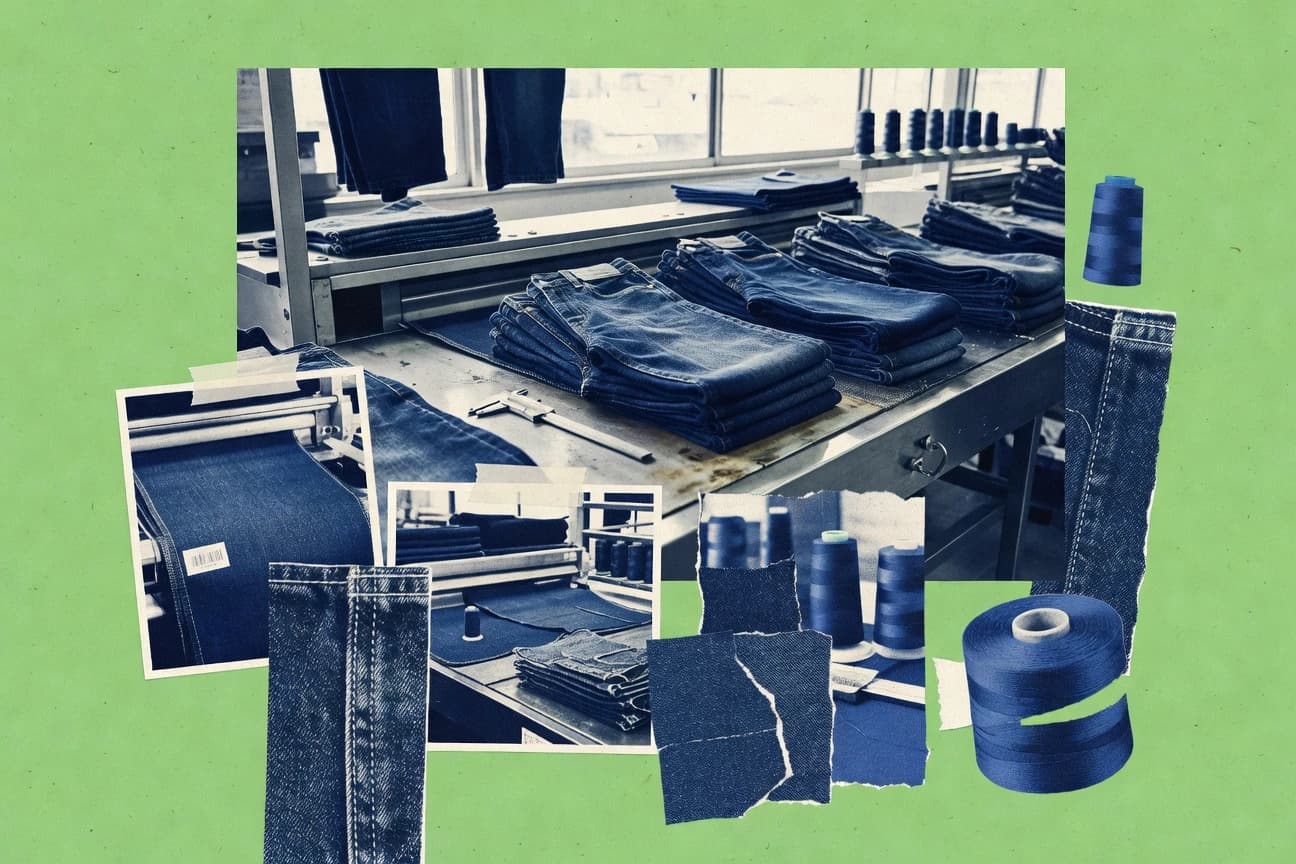
  • Global denim production reached 6.2 billion meters in 2022.
  • China produced 55% of world's denim fabric in 2023, approximately 3.4 billion meters.
  • Turkey's denim manufacturing output was 250 million jeans in 2022.
  • Bangladesh exported 120 million denim garments worth USD 4.2 billion in 2023.
  • Italy produced 15 million premium denim jeans in 2022 using advanced laser tech.
  • Vietnam's denim production capacity hit 200 million pieces annually by 2023.
  • Pakistan denim mills produced 1.2 billion meters of fabric in FY2023.
  • US denim manufacturing declined to 5% of global output in 2022, focusing on premium.
  • Average water usage per pair of jeans in global production is 7,500 liters, per 2023 study.
  • 70% of global denim is indigo dyed using synthetic processes in 2023.
  • Mexico produced 80 million denim garments for export in 2022.
  • Egypt's denim industry output grew 15% to 50 million meters in 2023.
  • Indonesia denim production reached 100 million jeans in 2022.
  • Global denim washing plants number over 5,000, processing 4 billion pieces yearly.
  • Nigeria emerging as denim hub with 20 million meters produced in 2023.
  • Peru denim production specializes in organic, 12 million jeans in 2022.

Production and Manufacturing Interpretation

The denim industry's tapestry weaves a stark contrast, where the staggering 7,500-liter water footprint of a single pair of jeans stands in sobering counterpoint to the 6.2-billion-meter global output driven by China's dominance, leaving nations like Italy and the US to stitch their futures into the premium, sustainable margins.

Sustainability and Environmental Impact

  • Denim recycling rates globally at 15% in 2023, up from 8% in 2019.
  • Water usage in denim production totals 2.6 trillion liters annually worldwide.
  • 20% of global denim uses organic cotton in 2023, double from 2018.
  • Chemical dyes in denim cause 17% of industrial water pollution globally.
  • Sustainable denim brands grew sales by 28% in 2022 to USD 18 billion.
  • Landfill waste from denim jeans: 1.4 million tons per year globally.
  • Energy consumption for denim production averages 33 kWh per pair.
  • 50 top denim brands committed to 100% recycled water by 2030.
  • CO2 emissions from denim supply chain: 1.5 billion kg annually.
  • BCI cotton used in 35% of denim production in 2023.
  • Microplastic shedding from denim washing: 500,000 tons/year globally.
  • Zero-waste denim cutting tech adopted by 20% of factories in 2023.
  • Recycled polyester in denim reached 12% blend in 2022 products.
  • Ozone depletion from denim chemicals: 0.2% of total industry impact.
  • 40% reduction in water use achieved by laser finishing vs traditional.

Sustainability and Environmental Impact Interpretation

We are making undeniable progress, from doubling recycling rates to slashing water use with lasers, yet the sobering reality remains that denim's immense footprint—from its two trillion liter thirst to its half million tons of shedding microplastics—demands we treat every new commitment not as a victory lap but as a desperate sprint toward genuine sustainability.

Trends, Innovations, and Employment

  • Global denim industry employs 10 million workers directly in 2023.
  • Levi Strauss hired 5,000 in sustainable manufacturing roles 2022-2023.
  • 25% rise in baggy and wide-leg denim styles sales in 2023.
  • AI-driven denim design tools adopted by 15% of brands in 2023.
  • Denim employment in India supports 2.5 million jobs in 2023.
  • Laser distressing tech reduces finishing time by 90%, used in 30% factories.
  • Over 50% of new denim collections feature recycled materials in 2024.
  • Turkey denim sector employs 200,000, exports USD 5B in 2023.
  • Barrel-fit jeans trend boosted sales 40% for mid-tier brands 2023.
  • 3D knitting for denim reduces waste by 25%, piloted by 10 brands.
  • Bangladesh garment workers in denim: 1 million, avg wage USD 100/month.
  • Smart denim with embedded tech launched by 5 major brands 2023.
  • China denim workforce down 10% to 3 million due to automation 2023.
  • Athleisure denim hybrids sales up 35% in 2023 globally.
  • Vietnam denim jobs grew 20% to 500,000 in 2023.

Trends, Innovations, and Employment Interpretation

The global denim industry, employing millions from Bangladesh to Turkey, is navigating a fascinating evolution where surging trends like baggy fits and athleisure are being stitched together with sustainable threads—from AI design and laser tech reducing waste to recycled materials and stark wage disparities, revealing a fabric whose future is being cut by both innovation and enduring human realities.

Sources & References