
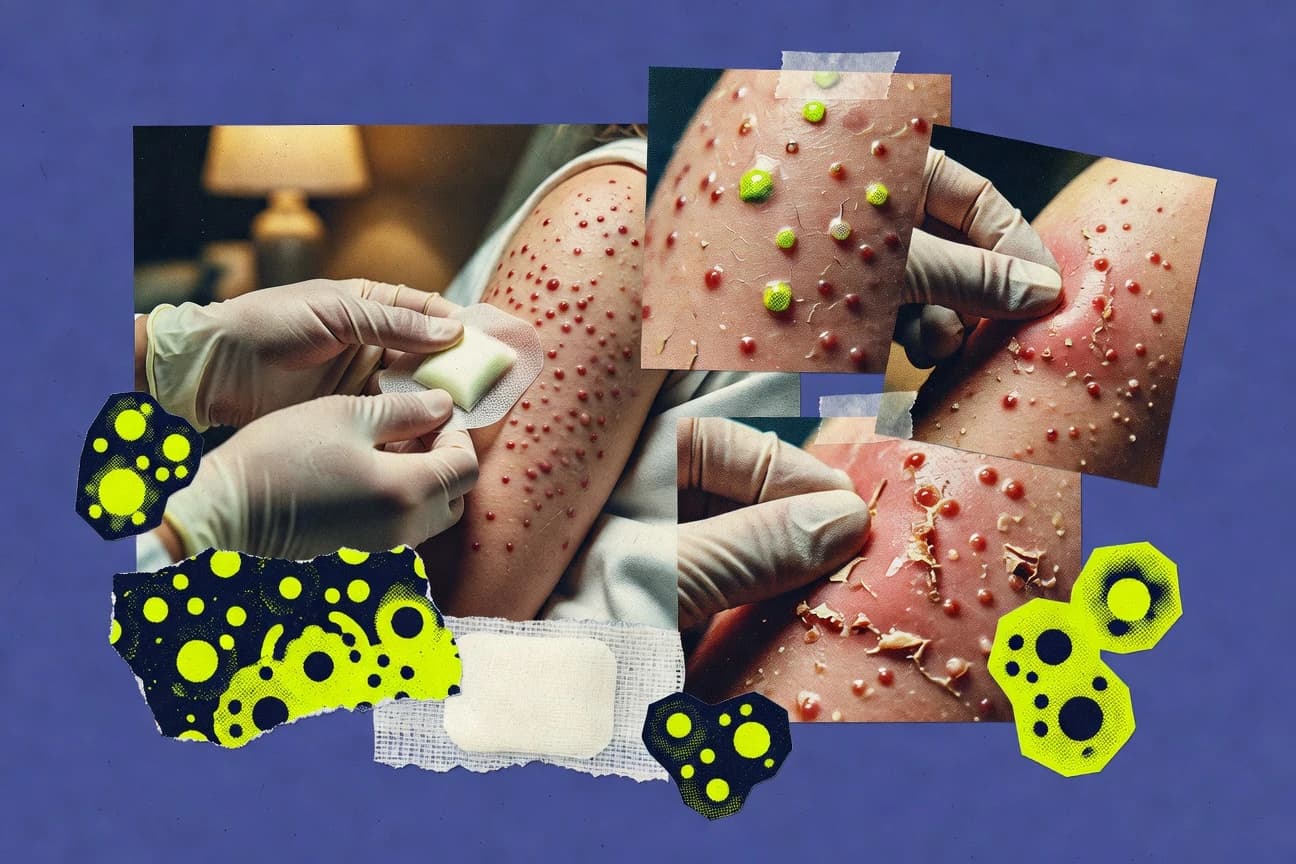

Even with today’s vaccine coverage, chickenpox still tracks in precise numbers, including varicella pneumonia in about 0.25% of adults and encephalitis in roughly 1 out of 33,000 childhood cases. Before vaccination, the US recorded about 4 million cases each year, but post 1995 that has fallen by more than 90% to around 150,000 to 200,000 annually. We also break down what happens inside the timeline of infection, from when rash crops start to when contagiousness peaks.
Key Takeaways
- Bacterial superinfection complicates 5-10% of chickenpox cases, primarily skin and soft tissue infections from scratching
- Varicella pneumonia occurs in 1/400 adults (0.25%), with mortality 10-15% untreated
- Encephalitis risk in chickenpox is 1/33,000 cases in children, presenting 5-10 days post-rash with ataxia or seizures
- Before widespread vaccination, approximately 4 million cases of chickenpox occurred annually in the United States, affecting nearly all children by adolescence
- In the pre-vaccine era (1990s), the annual incidence rate of chickenpox in the US was about 140 cases per 1,000 susceptible children under 10 years old
- Globally, varicella (chickenpox) causes an estimated 140 million cases per year worldwide, predominantly in children under 10
- Chickenpox rash typically begins with 250-500 small red macules that evolve into vesicles within 24 hours
- Incubation period for chickenpox is 10-21 days, with a mean of 14-16 days from exposure to rash onset
- Prodromal symptoms precede rash in 20-25% of adult chickenpox cases, including fever, malaise, and headache for 1-2 days
- Chickenpox infectivity peaks 1-2 days before rash onset, lasting until all lesions crust over (typically day 5-7)
- Airborne transmission of VZV occurs via droplet nuclei from respiratory tract, with infectious particles viable up to 2 hours in air
- Direct contact with vesicle fluid transmits VZV in 90% of susceptible household contacts
- Two-dose varicella vaccination is 97% effective against moderate/severe disease in US children
- First dose of varicella vaccine (12-15 months) provides 80-85% protection against any disease, 95% against severe
- Universal varicella vaccination since 1995 reduced US deaths by 88%, from 100-150 to 10-20/year
Vaccination has dramatically reduced chickenpox worldwide, but complications like pneumonia and encephalitis still occur rarely.
Related reading
01 · Category
Complications20 stats
01
Bacterial superinfection complicates 5-10% of chickenpox cases, primarily skin and soft tissue infections from scratching
02
Varicella pneumonia occurs in 1/400 adults (0.25%), with mortality 10-15% untreated
03
Encephalitis risk in chickenpox is 1/33,000 cases in children, presenting 5-10 days post-rash with ataxia or seizures
04
Bacterial sepsis mortality from chickenpox-associated Group A Strep is 2-5% in hospitalized children
05
Congenital varicella syndrome affects 0.4-2% of fetuses from maternal infection weeks 8-20, with limb hypoplasia in 20%
06
Necrotizing fasciitis reported in 0.1-0.3% of chickenpox cases, often Strep pyogenes
07
Cerebellar ataxia in 1/4,000 pediatric chickenpox cases, self-limiting in 80%
08
Reye syndrome risk increased 20-30 fold with aspirin use in chickenpox febrile children
09
Thrombocytopenia (<100,000/mm³) in 1-3% of chickenpox patients, usually mild and resolves
10
Neonatal varicella mortality 7-30% if rash onset days 4-10 post-delivery untreated
11
Myocarditis rare (1/10,000 cases), but fatal in 25% of reported chickenpox instances
12
Secondary bacterial skin infections (impetigo, cellulitis) in 20-30% of scratched lesions
13
Disseminated zoster (multi-dermatomal) in 20-50% of immunocompromised chickenpox patients
14
Acute retinal necrosis in 0.1% of adult chickenpox, leading to blindness in 50% untreated
15
Hemorrhagic varicella (petechiae/purpura) in 1-5% of adults, associated with thrombocytopenia
16
Guillain-Barré syndrome post-chickenpox in 1/100,000 cases
17
Arthritis (transient) in 5-10% of children during acute chickenpox phase
18
Liver enzyme elevation (ALT >2x normal) in 15-20% of hospitalized cases
19
Mortality in US immunocompetent children post-vaccine: <1/100,000 cases
20
Varicella vaccine effectiveness against severe complications is 85-95% with two doses
Interpretation
Complications Interpretation
Chickenpox complications are uncommon but can be severe, with skin bacterial superinfection occurring in about 5–10% of cases and rare life threatening outcomes like varicella pneumonia in 1 in 400 adults and encephalitis in 1 in 33,000 children.
02 · Category
Incidence And Prevalence30 stats
01
Before widespread vaccination, approximately 4 million cases of chickenpox occurred annually in the United States, affecting nearly all children by adolescence
02
In the pre-vaccine era (1990s), the annual incidence rate of chickenpox in the US was about 140 cases per 1,000 susceptible children under 10 years old
03
Globally, varicella (chickenpox) causes an estimated 140 million cases per year worldwide, predominantly in children under 10
04
In the US post-1995 vaccination era, chickenpox incidence dropped by over 90%, from 4 million to about 150,000-200,000 cases annually
05
Among unvaccinated US children aged 1-4 years, the pre-vaccine incidence was 957 cases per 100,000 population annually
06
In Europe, varicella incidence varies from 500-1,500 cases per 100,000 population yearly in unvaccinated populations
07
In Australia before vaccination programs, there were about 200,000-300,000 chickenpox cases per year
08
In developing countries, chickenpox attack rates in households can reach 87% among susceptible contacts
09
US varicella-related hospitalizations declined 88% from 10,582 in 1995 to 1,268 in 2008 post-vaccination
10
Globally, varicella mortality is estimated at 4,200 deaths per year, mostly in children under 4 in developing regions
11
In the US, chickenpox incidence in adults pre-vaccine was 2-3 cases per 1,000 population annually
12
Post-vaccination (2000-2010), US varicella cases fell to 20-40 per 100,000 population
13
In India, annual chickenpox incidence in urban areas is about 1.5-2% of the child population
14
During outbreaks in unvaccinated communities, secondary attack rates for chickenpox are 65-87%
15
In the UK pre-vaccination, there were 200,000-300,000 GP consultations for chickenpox yearly
16
Varicella incidence in US adolescents (10-19 years) pre-vaccine was 25-30% cumulative by age 15
17
In Africa, varicella seroprevalence reaches 80% by age 10 in many countries, indicating high childhood incidence
18
Post-two-dose vaccine era (2006+), US cases stabilized at ~10,000-20,000 annually
19
In Japan post-vaccination (2014), varicella notifications dropped 75% to under 50,000 cases/year
20
Household incidence among siblings of chickenpox cases is 80-90% in susceptible children
21
In the US, varicella incidence peaked in winter-spring, with 25-30% higher rates January-March
22
Latin America reports 1-2 million varicella cases annually pre-vaccination
23
Seroprevalence studies show 90% of US adults born before 1980 are immune from prior infection
24
In daycare settings, chickenpox introduction leads to 70-90% attack rates in susceptibles
25
Global economic burden of varicella pre-vaccination estimated at $4-5 billion USD annually
26
In Canada, pre-vaccine varicella caused 200,000 cases and 50 deaths yearly
27
Incidence in immunocompromised US children pre-vaccine was 25-50 times higher than general population
28
Post-vaccination breakthrough varicella in US occurs at 2-5% annual risk in vaccinated children
29
In Germany, mandatory reporting showed 800,000-1 million cases pre-vaccination
30
Urban vs rural US incidence pre-vaccine: 150 vs 200 per 100,000 higher in rural areas due to crowding
Interpretation
Incidence And Prevalence Interpretation
For the Incidence And Prevalence trend, chickenpox fell dramatically in the US after vaccination, with annual cases dropping from about 4 million to roughly 150,000 to 200,000 and incidence dropping by over 90%, compared with a pre-vaccine rate of about 140 cases per 1,000 susceptible children per year in the 1990s.
03 · Category
Symptoms And Diagnosis18 stats
01
Chickenpox rash typically begins with 250-500 small red macules that evolve into vesicles within 24 hours
02
Incubation period for chickenpox is 10-21 days, with a mean of 14-16 days from exposure to rash onset
03
Prodromal symptoms precede rash in 20-25% of adult chickenpox cases, including fever, malaise, and headache for 1-2 days
04
Total rash duration in uncomplicated chickenpox is 5-10 days, with new lesions appearing in crops every 2-4 days
05
Vesicles in chickenpox are described as "dew drops on a rose petal," superficial and surrounded by erythematous base, numbering 200-500 typically
06
Fever in chickenpox peaks at 38-39°C (100.4-102.2°F), lasting 2-4 days concurrent with rash progression
07
Pruritus (itching) is severe in 70-80% of chickenpox patients, peaking days 3-5 post-rash onset
08
Oral lesions occur in 20-50% of chickenpox cases, appearing as shallow ulcers on soft palate before skin rash
09
Diagnosis of chickenpox is clinical in 95% of cases based on characteristic centrifugal rash distribution (trunk > extremities)
10
Leukopenia (WBC <4,000/mm³) occurs in 25-30% of chickenpox patients during acute phase
11
In children, rash starts on scalp and trunk, spreading to face and extremities, with 50-100 new lesions daily initially
12
Adults with chickenpox have 2-3 times more lesions (800-1,000) and higher fever than children
13
Conjunctivitis or photophobia reported in 5-10% of chickenpox cases due to eyelid vesicle involvement
14
PCR detection of VZV DNA from vesicle fluid has sensitivity >95% for chickenpox diagnosis
15
Tzanck smear shows multinucleated giant cells in 80% of vesicular scrapings from chickenpox lesions
16
Anorexia and abdominal pain precede rash in 10-15% of pediatric chickenpox cases
17
Breakthrough varicella post-vaccination presents with fewer lesions (<50) and milder fever (<38.9°C) in 85% of cases
18
Splenomegaly detected in 10-20% of hospitalized chickenpox children via ultrasound
Interpretation
Symptoms And Diagnosis Interpretation
For the Symptoms And Diagnosis picture of chickenpox, rash usually starts after about 14 to 16 days incubation, beginning as 250 to 500 red macules that turn into vesicles within 24 hours and follow a fever of 38 to 39°C for 2 to 4 days while new lesions appear in crops every 2 to 4 days over a total 5 to 10 day course.
04 · Category
Transmission21 stats
01
Chickenpox infectivity peaks 1-2 days before rash onset, lasting until all lesions crust over (typically day 5-7)
02
Airborne transmission of VZV occurs via droplet nuclei from respiratory tract, with infectious particles viable up to 2 hours in air
03
Direct contact with vesicle fluid transmits VZV in 90% of susceptible household contacts
04
Secondary attack rate in susceptible siblings is 87% (range 70-90%) after chickenpox exposure at home
05
Virus shedding from respiratory tract begins 2 days pre-rash and lasts 5-21 days post-onset in immunocompetent hosts
06
Hospital transmission risk: 28-87% attack rate among susceptible staff without precautions
07
VZV remains infectious on environmental surfaces for 4 hours at room temperature
08
Incubation-derived transmission: index case infects 60-80% of classroom susceptibles within 2 weeks
09
Airborne spread documented over 100 meters in hospital ventilation systems
10
R0 (basic reproduction number) for chickenpox is 8.5-12.5 in unvaccinated populations
11
Maternal transmission to fetus (congenital varicella) occurs in 2% of pregnancies with maternal rash at 13-20 weeks gestation
12
Nosocomial varicella outbreaks report 20-40% staff seroconversion without airborne isolation
13
Virus in crusted lesions is non-infectious after 7 days, but respiratory shedding continues
14
Daycare outbreak attack rates: 80-100% in unvaccinated children under 3 years
15
Serial interval (generation time) for chickenpox is 12-21 days, mean 15 days
16
VZV DNA detectable in air samples from patient rooms up to 4 days post-rash onset
17
Perinatal transmission risk 20-40% if maternal rash within 5 days before to 2 days after delivery
18
Community serial cases show 1 case generates 10-12 secondary cases pre-vaccination
19
Isolation until lesion crusting prevents 95% of secondary household transmissions
20
Breakthrough varicella transmission rate is 15-30% lower than wild-type disease
21
Pre-symptomatic transmission accounts for 30-50% of chickenpox spread in households
Interpretation
Transmission Interpretation
For chickenpox, transmission is highest just before and after rash onset, with infectivity peaking 1 to 2 days beforehand and airborne VZV remaining viable in air for up to 2 hours, which helps explain why household and healthcare spread can be very efficient, with secondary attack rates of 87% among siblings and 28 to 87% among unprotected staff.
05 · Category
Vaccination And Control21 stats
01
Two-dose varicella vaccination is 97% effective against moderate/severe disease in US children
02
First dose of varicella vaccine (12-15 months) provides 80-85% protection against any disease, 95% against severe
03
Universal varicella vaccination since 1995 reduced US deaths by 88%, from 100-150 to 10-20/year
04
Vaccine coverage in US: 92% for one dose, 88% for two doses among 19-35 month olds (2021)
05
Herd immunity threshold for varicella estimated at 90-92% population immunity
06
Breakthrough varicella rate post-two doses: 0.3-1% per year in vaccinated children
07
Live attenuated Oka strain vaccine causes mild rash in 5% of recipients (2-5 lesions)
08
Post-exposure prophylaxis with varicella vaccine within 3-5 days prevents infection in 70-90% of susceptibles
09
Economic savings from US varicella vaccination: $1.5 billion in direct medical costs 1995-2010
10
MMRV vaccine (combined) used for second dose in 1-12 year olds, with varicella component identical to monovalent
11
Contraindication: immunocompromised patients have 1-2% dissemination risk with live vaccine
12
Duration of vaccine immunity: >20 years with 98% seropositivity post-two doses in studies
13
School mandates increased US coverage to 95% in high-vax states, reducing outbreaks 99%
14
Japan introduced routine varicella vaccination in 2014, reducing cases by 89% by 2019
15
Acyclovir prophylaxis post-exposure in immunocompromised prevents severe disease in 80%
16
Two-dose schedule: 4-6 years apart, boosts efficacy from 82% to 92% against infection
17
Vaccine storage: 2-8°C, efficacy loss <10% after 24 months if proper cold chain
18
Outbreak control: ring vaccination achieves 85% containment in schools within 2 weeks
19
Pregnancy deferral: wait 1 month post-vaccination due to theoretical fetal risk <1/100,000
20
Global rollout: 40 countries include varicella vaccine in routine immunization by 2023
21
Cost-effectiveness: $29,000-$50,000 per QALY gained in high-income countries
Interpretation
Vaccination And Control Interpretation
With two-dose varicella vaccination being 97% effective and cutting US deaths by 88% since universal vaccination began in 1995, strong coverage around 92% for one dose and near herd immunity levels of 90 to 92% helps keep breakthrough disease low at only 0.3 to 1% per year in vaccinated children.
report visual · Comparison
Chickenpox complications: how common and how severe
Severe complications are rare overall, but some risks (especially in vulnerable groups and untreated severe cases) can be substantial.
Encephalitis risk in chickenpox is 1/33,000 cases in children, presenting 5-10 days post-rash with ataxia or seizures33,000
Neonatal varicella mortality 7-30% if rash onset days 4-10 post-delivery untreated
-30%
Myocarditis rare (1/10,000 cases), but fatal in 25% of reported chickenpox instances
25%
Varicella pneumonia occurs in 1/400 adults (0.25%), with mortality 10-15% untreated
0.25%
Reference
Cite This Report
This report is designed to be cited. We maintain stable URLs and versioned verification dates. Copy the format appropriate for your publication below.
APA
Elena Vasquez. (2026, February 13). Chickenpox Statistics. Gitnux. https://gitnux.org/chickenpox-statistics
MLA
Elena Vasquez. "Chickenpox Statistics." Gitnux, 13 Feb 2026, https://gitnux.org/chickenpox-statistics.
Chicago
Elena Vasquez. 2026. "Chickenpox Statistics." Gitnux. https://gitnux.org/chickenpox-statistics.
Sources & references
20 datasets cited across this report · attribution is report-level