
GITNUXSOFTWARE ADVICE
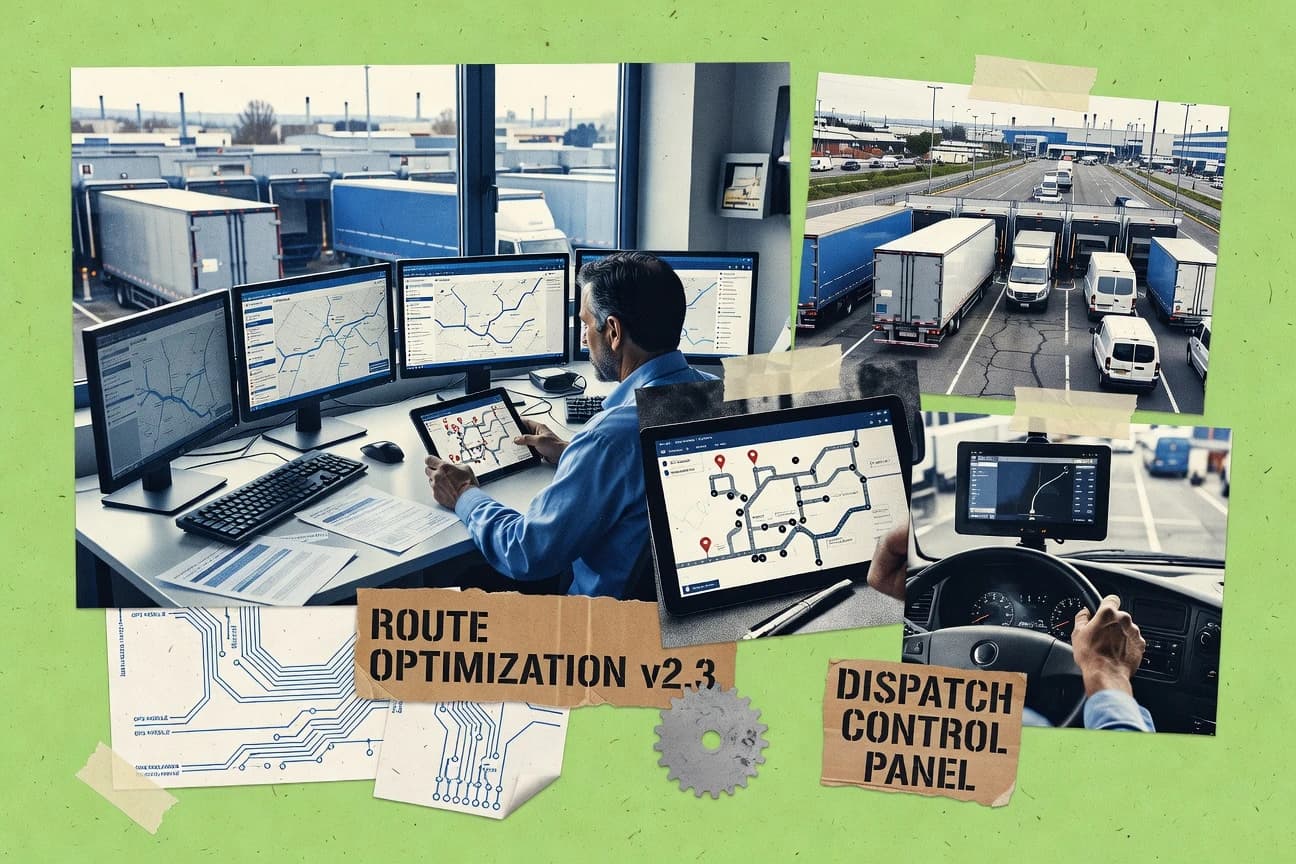
Transportation LogisticsTop 10 Best Transport Routing Software of 2026
Top 10 transport routing software ranked by routing features, costs, and deployment for logistics teams comparing tools like MyRouteOnline and GraphHopper.

How we ranked these tools
Core product claims cross-referenced against official documentation, changelogs, and independent technical reviews.
Analyzed video reviews and hundreds of written evaluations to capture real-world user experiences with each tool.
AI persona simulations modeled how different user types would experience each tool across common use cases and workflows.
Final rankings reviewed and approved by our editorial team with authority to override AI-generated scores based on domain expertise.
Score: Features 40% · Ease 30% · Value 30%
Gitnux may earn a commission through links on this page — this does not influence rankings. Editorial policy
MyRouteOnline is the best fit for dispatch teams that need fast multi-stop route sequencing and practical exports for daily delivery batching, whereas GraphHopper works better if you’re integrating turn-by-turn optimization into an existing TMS or dispatch stack.
Editor’s top 3 picks
Three quick recommendations before you dive into the full comparison below — each one leads on a different dimension.
MyRouteOnline
Batch-oriented route optimization from operational stop data with ordered sequences ready for dispatch review and export.
Built for fits when dispatch teams need fast route sequencing and usable exports for daily delivery batching..
GraphHopper
Editor pickHigh-throughput routing API that returns route geometries and timing details suitable for map rendering and driver guidance.
Built for fits when routing results must be integrated into an existing dispatch or TMS stack..
Maptitude
Editor pickGIS-driven route planning with map-first QA and exportable route artifacts for planning governance.
Built for fits when planners need GIS-driven route planning with strong visualization and controlled handoffs..
Comparison Table
MyRouteOnline
SMBMulti-stop route planning software for businesses and delivery drivers.
Batch-oriented route optimization from operational stop data with ordered sequences ready for dispatch review and export.
MyRouteOnline centers on route planning from spreadsheet-style inputs, including stop geocoding and address validation workflows that reduce bad coordinates. Route outputs include ordered stop sequences and travel summaries designed for dispatch review and downstream handoff. Automation support is practical for recurring planning because teams can rerun optimizations as stop sets and constraints change. The setup is geared toward transportation operators who need routing outputs quickly rather than full custom workflow development.
A key tradeoff is that advanced orchestration for dispatch-to-driver workflows often requires external tooling rather than deep, native governance and policy controls. It fits best when routing is the primary problem to solve, such as last-mile delivery batches with defined capacities and stop sequences that must be finalized for daily operations.
- +Route sequences generated from common stop lists and constraint inputs
- +Address parsing and geocoding workflows reduce coordinate and formatting issues
- +Exports route plans for dispatch review and driver handoff workflows
- +Re-optimizing batches supports routine operational re-planning cycles
- –Governance controls for large multi-team organizations are limited
- –Deep dispatch-to-driver orchestration depends on external systems
Last-mile operations teams
Daily van routes for many stops
Lower manual planning time
Field service dispatchers
Multi-stop territory planning
Fewer missed visit sequences
Show 2 more scenarios
Logistics analysts
Scenario reruns for constraint changes
Faster planning iterations
Re-optimize routes when stop sets, service times, or vehicle limits vary across days.
Freight coordinators
Export-ready routing handoffs
Cleaner downstream execution
Produce dispatch-ready route outputs from stop inputs to share with operational teams.
Best for: Fits when dispatch teams need fast route sequencing and usable exports for daily delivery batching.
GraphHopper
API-firstOpen-source routing engine with a commercial API for turn-by-turn directions and route optimization.
High-throughput routing API that returns route geometries and timing details suitable for map rendering and driver guidance.
Fleet and logistics teams use GraphHopper when routing needs must be integrated into existing applications through a documented API surface. The routing engine supports route planning endpoints that return path geometry and timing details needed for map display and driver guidance. Batch and matrix style requests fit throughput-sensitive use cases like multi-vehicle evaluation and candidate stop sequencing.
A key tradeoff is that advanced operations like full dispatch orchestration and driver mobile workflows are not shipped as an all-in-one dispatch suite, so teams must wire routing outputs into their own dispatch tools. GraphHopper fits when a TMS or dispatch system already exists and the main gap is production routing with constraint-aware results.
Operationally, GraphHopper works best with a clear geocoding and address validation pipeline so input coordinates remain consistent for repeatable route calculations. Teams that already manage location normalization and stop lists can keep automation tight.
- +API-first route planning with geometry and timing outputs
- +Batch routing and matrix-style requests support throughput needs
- +Request parameters make constraint handling configurable
- +Road-network engine enables consistent turn-by-turn guidance
- –Dispatch orchestration and driver app workflows require external wiring
- –Input location quality heavily affects route outcomes
- –Large optimization studies can demand careful performance planning
- –Advanced fleet governance like RBAC and audit log are not routing-native
TMS and dispatch engineering teams
Integrate routing into existing workflows
Faster integration cycles
Last-mile logistics ops teams
Reoptimize routes with traffic-aware inputs
Lower missed deadlines
Show 2 more scenarios
Geo-data and routing platform teams
Normalize coordinates for consistent planning
More predictable routing
Using stable location inputs improves route consistency across batches and vehicles.
Fleet analysts and optimization teams
Evaluate many stop pair candidates
Shorter evaluation loops
Matrix-style requests help compare route costs across many potential assignments.
Best for: Fits when routing results must be integrated into an existing dispatch or TMS stack.
Maptitude
API-firstGIS and territory planning software with vehicle routing and logistics analysis tools.
GIS-driven route planning with map-first QA and exportable route artifacts for planning governance.
Maptitude focuses on building transport routes on top of a road-network map model, then validating and visualizing the results in map views and route reports. Stop geocoding and address hygiene workflows support planning accuracy, and route options can be tested by adjusting inputs and constraints. Route outputs include map layers and printable or exportable artifacts that fit governance-heavy planning processes.
A key tradeoff is that deeper automation and real-time reoptimization depend on how the planning work plugs into other systems, rather than being native dispatch execution. It fits best for weekly or daily route planning cycles where address quality work and route QA happen before field delivery execution.
- +GIS-grade routing workbench for route QA and map-based stakeholder review
- +Strong stop preparation workflows for accurate geocoding and route shapes
- +Exportable route plans that fit into existing TMS or dispatch pipelines
- +Constraint-driven planning supports scenario testing across networks
- –Automation depth for real-time reoptimization is limited without external integration
- –Configuration effort rises with complex constraints and large stop counts
- –Driver-facing dispatch and ELD-linked compliance workflows are not the primary focus
- –Workflow design relies on planners to manage handoff artifacts
Route planning analysts
Daily stop planning with route QA
Fewer missed stops during rollout
Field operations coordinators
Plan delivery runs for recurring routes
More consistent driver assignments
Show 2 more scenarios
Location and territory teams
Territory-based routing for sales logistics
Clearer territory coverage
Use spatial grouping and route planning artifacts to align service areas with delivery workloads.
Transportation analysts
Constraint testing for network redesign
Better fleet utilization planning
Adjust stops and planning constraints to evaluate route impacts across candidate network setups.
Best for: Fits when planners need GIS-driven route planning with strong visualization and controlled handoffs.
PTV Route Optimiser
enterpriseTransport planning software for vehicle routing, scheduling, and fleet capacity management.
Built-in constraint and road-network modeling for realistic travel times improves time-window feasibility in optimized schedules.
PTV Route Optimiser from PTV focuses on route planning and optimization using road-network map data and constraint handling for logistics operations. The tool sequences stops, manages multi-depot scenarios, and supports service-time and delivery time-window constraints commonly required in transportation planning. It is designed to feed dispatch and driver workflows through integration points that connect optimized routes to downstream TMS and operational systems.
- +Constraint-driven routing supports time windows and service times
- +Multi-depot route planning fits large network operations
- +Road-network map data improves realism of travel times
- +Workflow integrations connect optimized plans to execution systems
- –Configuration work is required to encode business rules and constraints
- –Large datasets can require tuning to reach desired solve times
- –Deep analytics depends on how results are exported to other tools
- –Less suited for highly interactive dynamic replanning without external triggers
Best for: Fits when logistics teams need constraint-based route plans feeding TMS dispatch workflows at scale.
ORTEC
enterpriseOptimization software for transport planning, vehicle routing, workforce scheduling, and logistics.
Advanced optimization configuration that balances multiple routing objectives under detailed service and time constraints, then exports to dispatch workflows.
ORTEC performs route planning and operational optimization for transport networks that need quantified constraints and measurable execution feedback. The solution supports planning for multi-stop delivery and depot-based operations and then drives dispatch-to-field execution with integration points for carrier systems.
ORTEC also places emphasis on configuration of routing objectives and constraints, including time and service constraints, before exporting results to execution workflows. Governance for change control and model updates is handled through its admin and deployment workflow rather than via spreadsheets.
- +Constraint-heavy planning supports realistic routing policies and service rules
- +Integration patterns fit TMS and dispatch workflows without manual route reentry
- +Optimization outputs can be reoptimized using live operational inputs
- +Scenario configuration supports repeatable planning runs for network changes
- –Setup requires transport-domain configuration discipline and routing policy clarity
- –User interface depth can feel administrative for planners who expect point-and-click editing
- –Real-time changes depend on feed quality and integration design to avoid stale routes
- –Mobile-facing execution features often require pairing with external dispatch apps
Best for: Fits when transport planners need constraint-rich route sequencing and tight dispatch integration across depots.
Valhalla
API-firstOpen-source routing engine developed by Mapzen, now maintained by the Linux Foundation.
Time-aware routing parameters that shape travel-speed assumptions and output cost breakdowns per request.
Valhalla focuses on routing for road networks with time-dependent travel speeds and multi-criteria travel behavior, rather than a purely dispatch-oriented workflow. Core capabilities include turn-by-turn route generation from road-network map data, itinerary building from multiple stops, and support for routing constraints that mirror real-world driving restrictions.
Automation and integration come through an API surface that accepts coordinates and returns route geometry plus cost metrics for downstream optimization systems. Valhalla is most distinct as an OpenStreetMap-based routing engine paired with configurable routing parameters that production teams can embed into existing delivery or logistics stacks.
- +API returns route geometry and travel cost metrics for pipeline automation
- +Configurable routing parameters support scenario-based travel behavior
- +Coordinates-based requests fit geocoding-light workflows
- +Turn-by-turn outputs are usable for driver-facing navigation
- –Stop clustering and full VRP solving are not the primary focus
- –Time-dependent behavior requires careful parameter tuning to match operations
- –Large-scale optimization workloads may need external orchestration
- –Address normalization and validation are outside the routing engine scope
Best for: Fits when routing teams need an API-first, OSM-aligned path engine feeding a separate dispatch optimizer.
TripGo
API-firstMultimodal routing API covering public transit, driving, cycling, and walking.
Route plans are generated from shipment lists into vehicle-assigned, stop-sequenced schedules suited for time-windowed dispatch runs.
TripGo focuses on transport routing with a workflow that starts from shipment inputs and produces route plans with stop-level sequencing. Core capabilities include route calculation, assignment of vehicles to routes, and schedule constraints to support time-windowed delivery scenarios.
The product is designed for dispatch-to-driver execution by linking planned routes to day-of-operations tasks. Automation support centers on importing route inputs and repeating optimization runs when stops or constraints change.
- +Stop import workflow reduces manual route setup for recurring runs
- +Time-window constraint handling fits common delivery scheduling needs
- +Route plan output supports dispatch handoff and stop sequencing execution
- +Re-optimization behavior supports operational changes during the day
- –Geocoding and address validation controls need careful data preparation
- –Driver-level execution features are limited without a separate mobile process
- –Advanced multi-depot scenarios require more routing setup discipline
- –API documentation coverage is not as detailed as the routing UI
Best for: Fits when operations teams need route plans from shipment inputs with time-window constraints and repeatable daily dispatch workflow.
Route4Me
enterpriseRoute planning and fleet management software for multi-stop transportation operations.
Stop-to-itinerary generation with practical driver-ready routing artifacts for frequent dispatch-to-driver replans.
Route4Me targets transport routing teams that need route planning and sequencing across many stops, with outputs designed for dispatch and driver execution. The tool’s routing engine supports practical constraints like capacity limits and service-time handling, then translates plans into shareable route itineraries.
Route4Me also focuses on operational workflows through route optimization updates and delivery execution artifacts such as stop-level directions and proof-of-delivery style capture. Integration depth centers on mapping, address processing, and the dispatch-to-driver handoff rather than deep bidirectional links to every warehouse or telematics stack.
- +Produces stop-sequenced routes that fit dispatch and driver delivery workflows
- +Constraint-aware routing supports capacity and delivery service-time realities
- +Operational outputs are easy to share as route itineraries and stop instructions
- +Automates route updates for stop list changes and reoptimization needs
- –Advanced fleet compliance and ELD-style integrations are not its core strength
- –Complex multi-depot workflows require careful stop grouping and plan management
- –Deep TMS and warehouse system synchronization may require custom integration work
- –Territory-based planning still needs manual governance for consistent outcomes
Best for: Fits when mid-size delivery teams need multi-stop route sequencing with operational dispatch outputs and periodic reoptimization.
Track-POD
SMBDelivery management software with route planning, electronic proof of delivery, and driver tracking.
Stop-level ePOD capture that updates delivery completion status inside the routing workflow.
Track-POD supports delivery routing workflows that combine driver dispatch with proof of delivery capture. Route planning centers on sequencing stops for delivery runs and enforcing delivery time constraints at the stop level.
The system focuses on operational execution, including ePOD collection for completed stops and route status visibility during the run. Integration depth shows up mainly through workflow hooks around delivery completion and driver-facing execution rather than deep TMS replacement.
- +Driver-facing execution ties delivery completion to route progress tracking
- +ePOD capture records delivery outcomes at the stop level
- +Stop sequencing supports time-constrained delivery workflows
- +Operational UI keeps dispatch and in-route visibility in one workflow
- –Advanced routing controls are limited compared with full-scale VRP solvers
- –Integration options for telematics and ELD-style feeds are not a first-class focus
- –Territory planning and multi-depot routing depth appear constrained
- –Reporting granularity for route optimization experiments needs extra operational handling
Best for: Fits when last-mile operations need stop sequencing and ePOD tied to dispatch-to-driver execution.
RouteSavvy
SMBWeb-based route planning and optimization tool for multi-stop routes.
Batch route generation that recalculates route assignments from stop lists and routing constraints for recurring schedules.
RouteSavvy targets organizations that need repeatable route planning and dispatch workflows, with emphasis on batch route generation and ongoing schedule updates. The core capabilities center on building routes from stop lists, assigning stops to vehicles and time constraints, and exporting the results for downstream operations.
RouteSavvy is also used to manage field-facing delivery execution artifacts such as route sequencing and stop status tracking. Automation is primarily driven through configurable routing rules and re-planning cycles rather than code-based customization.
- +Batch route generation supports recurring schedules without manual sequencing
- +Exports route outputs for dispatch and operational systems
- +Configurable routing rules cover common constraints for delivery stop planning
- +Route status tracking supports day-of-operations visibility
- –Limited visibility into algorithm controls compared with specialist routing suites
- –Integration surface for telematics and ELD workflows is not a primary focus
- –Dynamic reoptimization is constrained to re-run planning rather than continuous updates
- –Admin governance features like fine-grained RBAC and audit logs are not clearly positioned
Best for: Fits when mid-size delivery teams need repeatable dispatch planning and exportable route outputs.
Conclusion
After evaluating 10 transportation logistics, MyRouteOnline stands out as our overall top pick — it scored highest across our combined criteria of features, ease of use, and value, which is why it sits at #1 in the rankings above.
Use the comparison table and detailed reviews above to validate the fit against your own requirements before committing to a tool.
How to Choose the Right transport routing software
Transport routing software selects routes and stop sequences from operational inputs like shipment lists, location sets, and delivery constraints, then turns those results into dispatch-ready plans. This buyer's guide covers MyRouteOnline with batch-oriented route optimization, GraphHopper with an API-first routing engine, and ORTEC with constraint-rich planning that exports into dispatch workflows.
The category differences show up in how outputs are generated and handed off. Some tools prioritize ordered sequences ready for dispatch review and export, while others prioritize routing geometries and timing outputs that plug into a TMS or a custom workflow.
Transport routing software that generates dispatch-ready route plans from constraints
Transport routing software converts stop data and business rules into optimized route plans for vehicle routing problem variants like time-windowed scheduling and multi-depot networks. The practical focus is on producing route sequences or route geometries that dispatch teams can review and operational systems can consume.
MyRouteOnline centers on batch-oriented optimization from operational stop data, generating ordered sequences suitable for daily delivery batching with exportable outputs. GraphHopper centers on high-throughput API routing that returns route geometry and timing details for integration into existing dispatch or TMS stacks.
Category-specific evaluation criteria for transport routing software outputs
Transport routing software only delivers value when route outputs match the handoff format dispatch and drivers can use. Some tools generate ordered stop sequences and batch-ready exports like MyRouteOnline and RouteSavvy. Other tools generate route geometries and timing payloads that plug into an existing TMS or map stack like GraphHopper and Valhalla.
Route planning also needs predictable behavior under real constraints because the failure mode is not a wrong map, it is an unusable schedule. Tools like PTV Route Optimiser and ORTEC focus on constraint-driven feasibility so time-window and service-time policies stay intact through planning and export. Tools like Track-POD add stop-level execution feedback so completion status updates inside the routing workflow.
Dispatch-ready sequencing and export formats
MyRouteOnline generates batch-oriented route sequences from operational stop data and exports ordered sequences for dispatch review. RouteSavvy also produces batch route generation with exportable route outputs for recurring dispatch planning.
API-first routing geometries and timing payloads
GraphHopper is built around an API that returns route geometries and timing details suitable for map rendering and driver guidance. Valhalla returns time-aware route geometry and travel cost metrics with configurable routing parameters for scenario testing.
Constraint modeling that preserves feasibility
PTV Route Optimiser includes built-in constraint and road-network modeling that improves time-window feasibility in optimized schedules. ORTEC balances multiple routing objectives under detailed service and time constraints and then exports into dispatch workflows across depots.
Throughput for batch solving and route matrices
GraphHopper supports batch routing and matrix-style requests so teams can generate many route planning inputs at scale. MyRouteOnline focuses on batch-oriented optimization from operational stop lists and ordered sequences ready for dispatch review.
GIS planning workbench and stakeholder review artifacts
Maptitude provides a GIS-driven routing workbench with map-first QA and exportable route artifacts for planning governance. It also emphasizes stop preparation workflows that reduce geocoding and route shape errors.
Multi-depot planning with scalable operations
PTV Route Optimiser supports multi-depot route planning for large network operations. ORTEC includes routing policy exports aligned with depot-spanning dispatch workflows.
How to choose transport routing software based on integration depth and automation surface
The decision starts with where the routing results must land in the operating workflow. Tools like GraphHopper and Valhalla assume route results will be consumed by an external dispatch or optimizer because they are API-first and focused on geometry and timing payloads. Tools like MyRouteOnline and Route4Me generate stop-sequenced plans from shipment inputs that fit recurring dispatch-to-driver replans.
The second fork is whether planning needs advanced constraint policy encoding or whether daily batching from operational stop data is the priority. ORTEC and PTV Route Optimiser support constraint-heavy planning for policies like service rules and time-window feasibility. Track-POD and TripGo focus more on tying dispatch execution to route progress and stop completion signals rather than being full-scale VRP solve engines.
Match routing output format to the dispatch system handoff
If dispatch requires ordered stop sequences and exportable route plans, compare MyRouteOnline with RouteSavvy and Route4Me for how they generate stop-ordered schedules. If dispatch or driver tooling consumes route geometry and travel-cost metrics, compare GraphHopper with Valhalla for API payload structure and timing detail.
Choose the product philosophy for constraint feasibility
If the workflow depends on encoding detailed routing policies and keeping schedules feasible with realistic travel times, evaluate PTV Route Optimiser and ORTEC. If the workflow is driven by operational stop lists that need repeatable batching and ordered sequences, evaluate MyRouteOnline and RouteSavvy.
Plan for stop location quality and geocoding responsibility
If address parsing and geocoding workflows are part of day-to-day routing hygiene, compare MyRouteOnline with TripGo because both emphasize stop import or parsing to reduce coordinate and formatting issues. If location quality is already curated upstream, GraphHopper can still work well but route outcomes depend heavily on input location quality.
Map automation and orchestration to the systems that will own execution
If route planning must be embedded into a custom pipeline, prioritize GraphHopper because its API-first route planning supports map integration and throughput. If dispatch execution needs deeper coupling between completion and routing progress, compare Track-POD with Route4Me for ePOD or stop-level execution ties.
Account for governance and operator workload in planning operations
If planning governance requires map-based QA and stakeholder review artifacts, compare Maptitude with tools that focus on batch sequencing. If planners prefer direct constraint encoding and realistic travel time modeling, compare PTV Route Optimiser with ORTEC for how constraint configuration affects solve time and usability.
Who should use which transport routing approach
Transport routing software choices cluster around dispatch workflow shape and integration ownership. Teams that run daily delivery batching from shipment and stop lists usually need stop-sequenced outputs and exportable plans like MyRouteOnline and Route4Me. Teams building routing into a platform with map and navigation surfaces usually need API-driven route geometries like GraphHopper and Valhalla.
Large operators also need planning scale across depots and constraint policies. PTV Route Optimiser and ORTEC serve teams that encode service and time policies and then export to dispatch workflows across depots. Track-POD serves last-mile execution teams that need stop-level ePOD capture tied to dispatch progress rather than only planning outputs.
Dispatch teams running recurring batches of deliveries
MyRouteOnline generates batch-oriented route sequences with ordered sequences ready for dispatch review and export, which matches daily batching operations. RouteSavvy also generates batch routes from stop lists for recurring scheduling with exportable outputs.
Engineering teams integrating routing into TMS and map pipelines
GraphHopper returns route geometries and timing details through an API that supports throughput needs like batch routing and matrix-style requests. Valhalla returns time-aware routing parameters and cost breakdowns suitable for scenario-based automation in an external workflow.
Logistics planners who must encode service and time-window policies
PTV Route Optimiser includes built-in constraint and road-network modeling that targets time-window feasibility, which reduces downstream dispatch failures. ORTEC supports constraint-heavy planning under detailed service and time constraints and exports into dispatch workflows across depots.
Last-mile operators connecting delivery completion to route progress
Track-POD captures stop-level ePOD and updates delivery completion status inside the routing workflow. TripGo generates vehicle-assigned, stop-sequenced schedules from shipment lists with time-window constraints for repeated dispatch runs.
Common pitfalls when buying transport routing software
A recurring mistake is choosing a solver based on map visuals instead of the operational output format dispatch needs. GraphHopper can deliver route geometries through an API, but dispatch orchestration and driver app workflows require external wiring. Maptitude can produce GIS-grade artifacts for planning governance, but automation depth for real-time reoptimization may require external integration.
Another mistake is underestimating constraint configuration workload and input quality hygiene. ORTEC requires transport-domain configuration discipline and routing policy clarity, and PTV Route Optimiser requires encoding business rules and constraints to model travel times realistically. Several tools also depend on address parsing and geocoding inputs, so weak stop data reduces solve quality even when the routing engine is capable.
Selecting an API-first routing engine and then expecting it to run dispatch and driver execution by itself
GraphHopper provides route planning via an API with geometry and timing outputs, but dispatch orchestration and driver app workflows depend on external wiring. Valhalla also returns route geometry and cost metrics that require a separate dispatch and optimization workflow.
Assuming constraint-heavy feasibility will work without explicit policy encoding
PTV Route Optimiser requires configuration to encode business rules and constraints for realistic time-window feasibility. ORTEC requires transport-domain configuration discipline and routing policy clarity before exporting constraint-rich route sequences.
Treating geocoding quality as an afterthought during stop import
MyRouteOnline reduces coordinate and formatting issues with address parsing and geocoding workflows, but it still relies on usable operational stop data. GraphHopper route outcomes depend heavily on input location quality, so noisy addresses create incorrect route geometries and timing.
Buying stop-completion tooling without checking how much planning control is available
Track-POD focuses on stop-level ePOD capture and delivery outcome tracking, while advanced routing controls are limited compared with full-scale VRP solvers. If planning complexity is the priority, ORTEC or PTV Route Optimiser support more constraint-rich planning for feasible schedules.
How We Selected and Ranked These Tools
We evaluated transport routing software by route output usefulness for dispatch workflows and by how each tool fits either batch export or API consumption. Features account for 40% of the ranking because ordered stop sequences, geometry and timing payloads, and constraint modeling determine whether routing results become usable plans.
Ease and value each account for 30% because setup effort varies from ORTEC constraint configuration discipline to MyRouteOnline batch-oriented operational stop sequencing. MyRouteOnline earned the highest placement because it combines batch-oriented route optimization from operational stop data with ordered sequences that are ready for dispatch review and export.
Frequently Asked Questions About transport routing software
How do MyRouteOnline and RouteSavvy differ in batch route generation for recurring schedules?
Which tools are most API-first for routing results into an existing dispatch or TMS stack?
How should GraphHopper and Valhalla be configured when time-dependent travel speeds affect routing costs?
What breaks when routing requirements include service-time constraints and delivery time windows?
When multi-depot routing and depot-based planning are required, which platforms align best with the workflow?
How do Track-POD and Route4Me handle proof-of-delivery within the routing and dispatch-to-driver loop?
How do TripGo and Track-POD differ when shipment inputs change during the day and reruns are needed?
What data preparation steps do Maptitude and GraphHopper require for road-network accuracy?
How do admin controls and governance workflows differ between ORTEC and a spreadsheet-driven planning process?
Tools reviewed
Primary sources checked during evaluation.
Referenced in the comparison table and product reviews above.
- Transportation LogisticsTop 10 Best Routing Software of 2026
- Transportation LogisticsTop 10 Best Vehicle Routing Problem Software of 2026
- Transportation LogisticsTop 10 Best Oversize Load Routing Software of 2026
- Transportation LogisticsTop 10 Best Scheduling Delivery Route Optimization Software of 2026
- Transportation LogisticsTop 10 Best Cloud Based Freight Forwarding Software of 2026
Keep exploring
Comparing two specific tools?
Software Alternatives
See head-to-head software comparisons with feature breakdowns, pricing, and our recommendation for each use case.
Explore software alternatives→In this category
Transportation Logistics alternatives
See side-by-side comparisons of transportation logistics tools and pick the right one for your stack.
Compare transportation logistics tools→