
GITNUXSOFTWARE ADVICE
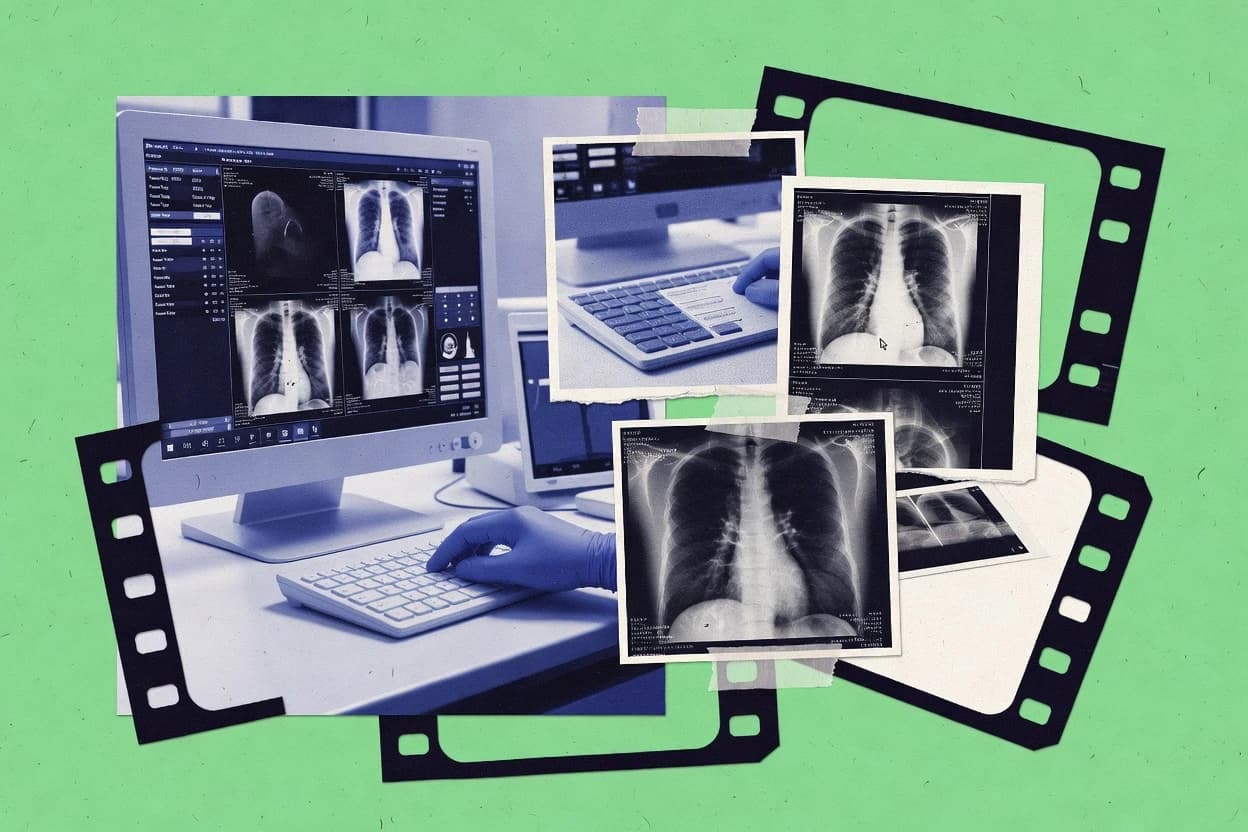
Healthcare MedicineTop 10 Best Radiology Viewing Software of 2026
Ranking and comparison of radiology viewing software for clinical teams, with notes on Sectra PACS, Impax, and Centricity PACS.

How we ranked these tools
Core product claims cross-referenced against official documentation, changelogs, and independent technical reviews.
Analyzed video reviews and hundreds of written evaluations to capture real-world user experiences with each tool.
AI persona simulations modeled how different user types would experience each tool across common use cases and workflows.
Final rankings reviewed and approved by our editorial team with authority to override AI-generated scores based on domain expertise.
Score: Features 40% · Ease 30% · Value 30%
Gitnux may earn a commission through links on this page — this does not influence rankings. Editorial policy
RadiAnt DICOM Viewer is the best pick for teams that want fast local DICOM reading with strong recon tools and SR support, while Horos makes the most sense as a free entry workstation for routine review, and Weasis fits if you need an API-first viewer UI fed by DICOMweb for consistent multi-site workflows.
Editor’s top 3 picks
Three quick recommendations before you dive into the full comparison below — each one leads on a different dimension.
RadiAnt DICOM Viewer
Real-time MPR and MIP reconstruction inside the viewer for rapid multi-plane consistency checks.
Built for fits when teams need local DICOM reading with fast recon tools and SR support..
OsiriX MD
Editor pickStructured report rendering in the same viewing workflow reduces context switching during case review.
Built for fits when clinical teams need local DICOM viewing speed for routine read work and recon viewing..
Weasis
Editor pickDICOMweb-friendly viewing workflow that pulls remote studies into a local desktop interpretation session.
Built for fits when teams want a consistent DICOM viewer UI using DICOMweb-fed studies and local interpretation tools..
Comparison Table
RadiAnt DICOM Viewer
vertical specialistWindows DICOM viewer for radiology image review with fast loading, MPR, 3D volume rendering, and CD export.
Real-time MPR and MIP reconstruction inside the viewer for rapid multi-plane consistency checks.
RadiAnt DICOM Viewer supports offline study viewing, which fits sites that receive DICOM via removable media or local image transfer workflows. The application includes hanging-style navigation inside a single viewer session and provides practical tools for measurements, annotations, and window and level tuning. Structured report rendering is included for reading and reviewing DICOM SR objects without leaving the viewer.
A key tradeoff is that RadiAnt is not a PACS or DICOMweb service, so it depends on upstream systems for modality worklist, storage, and routing. It fits short turnaround review situations where a single operator needs rapid access to pre-fetched studies and consistent rendering across multiple cases.
- +Fast study navigation with responsive multi-planar and projection views
- +MPR and MIP reconstructions help verify anatomy across planes
- +Built-in DICOM SR viewing for structured report review
- +Measurement and annotation tools support review workflow consistency
- –No native PACS capabilities for storage, routing, or worklist management
- –DICOMweb integration is not the core workflow for retrieval and caching
- –Advanced deployment governance requires external IT controls
- –Deep enterprise integration needs custom environment setup
Radiology reading rooms
Pre-fetched studies on local workstations
Faster case turnaround for reviews
Surgeons and clinicians
Procedure planning with annotated images
Clearer planning documentation
Show 2 more scenarios
Teleradiology teams
External image transfer for reads
Consistent reads across sites
Local viewing supports structured report review after study export and transfer.
Informatics teams
Desktop viewer validation and QA
Fewer reading artifacts in QA
The viewer provides a controlled rendering environment for checking SR content and recon output.
Best for: Fits when teams need local DICOM reading with fast recon tools and SR support.
OsiriX MD
vertical specialistMac-based DICOM viewer for radiology workflows with 2D viewing, MPR, 3D post-processing, and PACS connectivity.
Structured report rendering in the same viewing workflow reduces context switching during case review.
OsiriX MD is positioned as a local DICOM viewing workflow rather than a cloud-native PACS client, so it fits teams that review images on a dedicated machine and need consistent rendering across sessions. The viewer includes core interpretation ergonomics like window level controls, image navigation, and measurement tools used during case review. Structured report rendering and SR navigation support review of non-image content that ships alongside studies in many DICOM deployments.
A key tradeoff is that governance controls and enterprise integration features are not its primary strength compared with full PACS workstations, so large environments often rely on external routing and study delivery. OsiriX MD works best when staff need a fast, repeatable viewing environment for daily read work or for short-turnaround teleradiology review that already provides DICOM studies to the machine.
- +Strong DICOM review ergonomics for windowing, annotations, and measurements
- +Multi-planar and volume views support recon work without switching tools
- +Structured report viewer helps keep image and SR content together
- +Offline-first workflow suits secure sites that limit external access
- –Enterprise RBAC and audit log coverage is limited versus enterprise PACS clients
- –Automation and API surface are weaker than full integration-centered platforms
- –Performance on very large cohorts depends on local hardware capacity
- –Advanced orchestration like queue-driven workflow often needs external systems
Radiologists and read room leads
Daily reads with recon support
Faster case assessment
Teleradiology operations teams
Review shipped DICOM studies
Consistent turnarounds
Show 1 more scenario
Imaging informatics staff
Study viewer for SR-containing cases
Fewer handoffs
Keeps image and SR content in one session for validation and review workflows.
Best for: Fits when clinical teams need local DICOM viewing speed for routine read work and recon viewing.
Weasis
API-firstOpen-source DICOM viewer for desktop and web-integrated use with multi-modality image review support.
DICOMweb-friendly viewing workflow that pulls remote studies into a local desktop interpretation session.
Weasis provides a thick-client DICOM viewer built around series and image navigation, with tools for measurements and annotations that radiologists can apply during interpretation. The viewer supports multi-frame display and common reconstruction workflows such as MPR and MIP where the source data is available for those views. DICOMweb connectivity supports WADO-RS retrieval and related query flows, which reduces the need for custom gateways when remote imaging services already expose DICOMweb endpoints. Weasis fits teams that need consistent workstation behavior across sites rather than a tightly coupled PACS-first UI.
A practical tradeoff is that Weasis relies on integration work outside the viewer for authentication, study routing, and any PACS-specific workflow automation. It is a strong fit for teleradiology or cross-vendor viewing when studies are accessible through DICOMweb, and the local workstation workflow needs to stay consistent. It can be less efficient when teams require deep modality ordering integration, report lifecycle controls, or proprietary PACS hanging protocols that are authored inside a specific PACS.
- +Desktop DICOM viewing with measurement and annotation tools
- +DICOMweb retrieval supports remote study access without proprietary connectors
- +Multi-frame rendering supports complex imaging series workflows
- +Customizable layout behavior supports practical hanging workflows
- –Workflow automation depends on external orchestration and integration work
- –Deep PACS-native features like ordering and report lifecycle are limited
Radiology reading teams
Daily interpretation across mixed sites
More consistent reading workflow
Teleradiology operations
Read from external imaging services
Faster study access
Show 2 more scenarios
PACS integrators
Viewer layer for heterogeneous stacks
Lower integration fragmentation
Acts as a reusable DICOM viewing client that can sit alongside multiple backend systems.
Imaging IT governance
Standardize workstation rendering tools
Reduced UI drift
Helps standardize local interpretation tools across sites with shared configuration.
Best for: Fits when teams want a consistent DICOM viewer UI using DICOMweb-fed studies and local interpretation tools.
Horos
vertical specialistFree open-source medical image viewer for macOS built for DICOM review, MPR, and 3D visualization.
Native macOS thick-client volume display with multi-planar reconstruction inside a plugin-extensible workstation.
Horos is an open-source radiology viewing software that repackages the core of a widely used macOS DICOM workstation workflow. It centers on a local, thick-client experience with hanging-protocol style workflows, multi-planar reconstruction views, and common DICOM display controls.
Horos supports DICOM browsing and study organization while adding extension points through its plugin ecosystem. The result is a viewer that fits teams who want local imaging performance and custom workstation behavior without building a thin-client web stack.
- +Local thick-client rendering supports fast volume interaction for complex studies
- +Multi-planar and 3D viewing workflows cover common radiology reading tasks
- +Hanging-protocol style layout workflows reduce clicks across recurring exams
- +Plugin ecosystem enables workstation extension for niche clinical needs
- –Enterprise governance controls like RBAC and centralized audit logging are not native
- –DICOMweb and HL7-style orchestration are not the primary integration surface
- –Fleet management and provisioning need IT discipline since it is largely local-first
- –Mac-focused workstation deployment limits standardization for Windows-only teams
Best for: Fits when radiology teams need a fast local DICOM workstation with configurable layouts and imaging workflows.
MicroDicom
SMBWindows DICOM viewer with image browsing, measurement tools, anonymization, and basic export functions.
DICOMweb-driven study loading supports streamlined workflows that avoid manual media imports for viewing.
MicroDicom is a radiology viewing tool focused on fast DICOM study display in everyday worklists. It supports key viewer workflows such as series navigation, window and level control, and basic measurement tools for interpretation review.
It also supports common DICOMweb access patterns so facilities can load studies from imaging endpoints without manual media steps. Configuration favors practical deployment, with integration options that fit lightweight PACS workstation needs rather than deep enterprise orchestration.
- +Responsive DICOM viewer interactions for series browsing and reformatting checks
- +Practical window and level controls for quick image tuning during review
- +DICOMweb study access reduces manual transfer steps in daily workflows
- +Straightforward annotation and measurement tools for spot review tasks
- –Limited enterprise governance controls compared with full PACS workstation suites
- –Advanced 3D and multi-modality reconstruction workflows are not the focus
Best for: Fits when radiology teams need a lightweight DICOM viewer for daily review and DICOMweb retrieval.
Sectra PACS
enterpriseDiagnostic imaging platform with radiology viewing, reporting workflow, and enterprise image management.
Hanging-protocol workflow with structured report rendering supports interpretation-first study navigation.
Sectra PACS targets hospital radiology departments that need tightly controlled image viewing across modalities and sites. It supports thick-client and thin-client viewing workflows with hanging-protocol driven navigation, so users can move from accession to interpretation without manual steps.
Image handling includes volume workflows such as MPR and MIP, plus structured content rendering for radiology reports. Integration focus centers on interoperability with enterprise systems used around PACS, including common DICOM and web-viewer paths for remote access.
- +Protocol-driven study navigation reduces click-path variation between users
- +Consistent thick and thin viewer support for local and remote clinical sessions
- +Strong handling for volume and reconstruction workflows during interpretation
- +Structured report rendering supports report-centric viewing without external tooling
- –Viewer customization relies on configuration that can slow iterative workflow changes
- –Remote access setups can require careful network and role configuration for consistent access
Best for: Fits when radiology teams need protocol-based viewing plus controlled remote access across departments.
Carestream Vue PACS
enterpriseEnterprise PACS with diagnostic image viewing, radiology workflow tools, and image distribution across care settings.
Structured report viewing is integrated into the reading workflow as a first-class experience, not an afterthought add-on.
Carestream Vue PACS is a radiology viewing workflow built around a mature DICOM workstation experience and enterprise rollout patterns. The viewer supports standard DICOM image navigation, hanging-protocol style study presentation, and structured report viewing for clinical interpretation sessions.
Vue PACS integrates into Carestream enterprise imaging environments, with emphasis on routing, configuration, and workstation-level governance for modality and reading operations. Administrators get configuration controls that matter for scaling viewing performance and standardizing reader screens across sites.
- +Hanging-protocol style study presentation reduces manual layout work
- +Structured report rendering supports SR content during interpretation
- +Enterprise workstation configuration supports consistent reader experiences
- +Good handling of common DICOM viewing navigation patterns
- –Automation and API extensibility depends heavily on Carestream integration paths
- –Advanced workflow automation typically requires careful site setup
- –3D volume rendering capabilities are less central than 2D workstation workflows
- –Thin-client deployments can feel less consistent across environments
Best for: Fits when mid-size clinical groups need consistent workstation viewing and structured report support within a Carestream-centric environment.
PostDICOM
SMBCloud PACS and DICOM viewer for viewing, sharing, and storing radiology studies through a web browser.
Multi-frame and sequence viewing behavior is tuned for rapid frame stepping during routine interpretation.
PostDICOM is a DICOM viewer designed for radiology workflows that require fast image loading in a thin-client style experience. It focuses on core viewing and study navigation features like multi-frame display and common tools such as windowing and measurement.
Teams using it for cross-site work typically evaluate how well it integrates with their existing PACS or DICOMweb retrieval layer. It is most useful when the viewing interface must stay consistent across users while still supporting practical inspection tasks.
- +Quick study browsing for day-to-day review with minimal click depth
- +Strong multi-frame handling for sequences that require frame stepping
- +Measurement and annotation tools cover typical read-room inspection needs
- +Works well as a centralized viewer for distributed teams
- –Advanced post-processing options are limited compared with full PACS workstations
- –Hanging-protocol style workflows require external orchestration
- –Customization depth for viewer layout and tools is not comparable to major PACS clients
- –Multi-modality configuration can add integration effort in complex environments
Best for: Fits when teams need a consistent DICOM viewing interface for routine reviews and lightweight inspection.
Orthanc OHIF Viewer
API-firstOrthanc integration for OHIF that enables browser-based DICOM viewing on top of the Orthanc imaging server.
OHIF UI component extensibility paired with Orthanc-backed DICOM retrieval for tailored viewing workflows.
Orthanc OHIF Viewer renders DICOM studies from an Orthanc server and pairs them with an OHIF-style web interface. It supports DICOMweb-style retrieval paths used by many deployments, including study and series browsing and image access via standard web endpoints.
The viewer is positioned around extensibility through OHIF components, which helps teams adapt UI and workflows without replacing the imaging backend. Integration depth depends on how the Orthanc server is provisioned to expose archives, and throughput depends on server-side indexing and how frequently studies are fetched by the client.
- +Direct Orthanc server integration with clean study and series browsing
- +OHIF component extensibility for custom UI and workflow widgets
- +Supports standard DICOM access patterns through server endpoints
- +Works well for thin-client viewing when the backend is stable
- –Feature coverage depends on the OHIF build and included plugins
- –Requires disciplined deployment configuration to keep DICOMweb endpoints consistent
Best for: Fits when teams want a customizable web DICOM viewer backed by an Orthanc archive.
Fujifilm Synapse
enterpriseFujifilm enterprise PACS with integrated diagnostic radiology viewing and reporting used in hospitals and imaging centers.
Hanging-protocol style workflow organization driven by enterprise configuration for consistent study presentation.
Fujifilm Synapse is a radiology viewing software built around Fujifilm image workflow components, with an integration focus for clinical imaging environments. The viewer layer supports common DICOM viewing tasks such as multi-series navigation, hanging-protocol style organization, and configurable display behavior.
Synapse also fits into enterprise workflows that require consistent study access across sites, rather than a purely standalone local workstation experience. Its fit is strongest when governance, configuration, and integration with the surrounding Fujifilm ecosystem matter more than single-user experimentation.
- +Configurable reading workflows tied to enterprise imaging practices
- +Study access consistency across deployments when integrated with Fujifilm systems
- +Good handling of typical viewing tasks for clinical interpretation
- +View configuration supports standardized presentation for teams
- –Less flexible for custom viewer workflows than heavier PACS workstation products
- –Best outcomes depend on configuration discipline across environments
Best for: Fits when teams standardize interpretation workflows using Fujifilm integrations rather than building custom viewer experiences.
Conclusion
After evaluating 10 healthcare medicine, RadiAnt DICOM Viewer stands out as our overall top pick — it scored highest across our combined criteria of features, ease of use, and value, which is why it sits at #1 in the rankings above.
Use the comparison table and detailed reviews above to validate the fit against your own requirements before committing to a tool.
How to Choose the Right radiology viewing software
Radiology viewing software supports local interpretation, remote study access, and structured report display inside a reading workflow. This buyer guide covers RadiAnt DICOM Viewer, OsiriX MD, Weasis, Horos, MicroDicom, Sectra PACS, Carestream Vue PACS, PostDICOM, Orthanc OHIF Viewer, and Fujifilm Synapse.
The biggest differences show up in reconstruction speed for MPR and MIP, DICOMweb-oriented retrieval, hanging-protocol study presentation, and governance depth for enterprise control. Attention also focuses on how Sectra PACS, Impax, and Centricity PACS fit into viewing and workflow governance expectations even when this list centers on viewer and PACS workstation experiences.
Radiology viewing software for DICOM reading, DICOMweb retrieval, and structured report workflow
Radiology viewing software is the interface used to browse DICOM studies, render images and derived views, and capture clinical review actions such as measurement and annotation. It may run as a local thick client like Horos and RadiAnt DICOM Viewer or as a web viewer like Orthanc OHIF Viewer paired with an Orthanc archive.
Teams also evaluate viewing products by how they handle reconstructions and reading ergonomics during interpretation. RadiAnt DICOM Viewer adds real-time MPR and MIP reconstruction inside the viewer to support rapid multi-plane consistency checks, while OsiriX MD integrates structured report rendering into the same reading workflow to reduce context switching between image review and SR context. Integration patterns matter too because Weasis and MicroDicom emphasize DICOMweb-fed viewing sessions for remote study access without proprietary connector work.
Radiology viewing software evaluation criteria that change real workflows
Viewing software is judged by how quickly it supports interpretation actions like multi-plane review, structured report context switching, and frame stepping in routine workflows. These actions decide throughput because users spend time inside reconstruction tools, measurement tools, and study navigation rather than in setup screens.
In-view reconstruction speed for MPR and MIP checks
RadiAnt DICOM Viewer provides real-time MPR and MIP reconstruction inside the viewer for rapid multi-plane consistency checks, which suits interpretation workflows that require quick cross-plane verification. Sectra PACS supports hanging-protocol study navigation with structured report rendering, which improves protocol-driven presentation but does not match RadiAnt’s viewer-first recon emphasis.
Structured report rendering integrated into the reading workflow
OsiriX MD renders structured reports in the same viewing workflow as the image review, which reduces context switching when SR context is needed during interpretation. Carestream Vue PACS integrates structured report viewing as a first-class experience within the reading workflow, which supports consistent SR display but ties automation and extensibility to Carestream integration paths.
DICOMweb-fed viewing sessions for remote study access
Weasis supports a DICOMweb-friendly viewing workflow that pulls remote studies into a local desktop interpretation session, which supports consistent viewer UI even when data retrieval is remote. MicroDicom also uses DICOMweb-driven study loading to avoid manual media imports for daily review, which fits lightweight viewing but provides less enterprise workflow depth.
Hanging-protocol workflow organization for standardized presentation
Sectra PACS emphasizes a hanging-protocol workflow with structured report rendering, which reduces click-path variation between users when study presentation must be consistent. Fujifilm Synapse also organizes reading workflows with enterprise configuration for consistent study presentation, which standardizes access across deployments when Fujifilm integrations are already in place.
Multi-frame stepping behavior tuned for sequence interpretation
PostDICOM is tuned for rapid frame stepping during routine interpretation, which helps when reviewers frequently move through frames in sequences. RadiAnt DICOM Viewer focuses on in-view reconstruction speed with MPR and MIP, which supports multi-plane checks but is not positioned as a sequence-stepping specialist.
How to choose radiology viewing software based on workflow control and integration shape
Radiology teams usually choose based on whether the viewer is the primary interpretation engine or whether the enterprise system drives study presentation and access. The second decision axis is automation and API surface because DICOM retrieval, orchestration, and UI behavior tend to depend on external systems when governance is not native to the viewer.
Choose viewer-first reconstruction when interpretation depends on rapid multi-plane consistency checks
Select RadiAnt DICOM Viewer when multi-plane consistency checks depend on real-time MPR and MIP reconstruction inside the viewer. Select Horos when thick-client local volume interaction and multi-planar workflows inside a macOS workstation matter more than enterprise workflow governance.
Choose SR-in-context rendering when structured reports must remain visible during image review
Choose OsiriX MD when structured report rendering inside the same reading workflow reduces context switching during case review. Choose Carestream Vue PACS when hanging-protocol style presentation plus structured report rendering must stay consistent inside a Carestream-centric environment.
Choose DICOMweb-fed viewing when remote access must work inside a consistent local UI
Choose Weasis when remote studies must be pulled into a local desktop interpretation session using a DICOMweb-friendly workflow. Choose MicroDicom when lightweight viewing with DICOMweb-driven study loading is the priority and advanced enterprise governance is not required.
Choose protocol and configuration-driven presentation when standardization reduces click-path variation across users
Choose Sectra PACS when protocol-driven study navigation and structured report rendering reduce variation between departments and users. Choose Fujifilm Synapse when enterprise imaging practices and configured reading workflows must stay consistent across deployments through Fujifilm integrations.
Choose Orthanc-backed web viewing when customization must stay tied to a controlled archive
Choose Orthanc OHIF Viewer when web-based viewer customization is needed while DICOM retrieval must stay integrated with an Orthanc archive. Choose Weasis instead when the workflow priority is DICOMweb-fed desktop interpretation using a viewer UI that stays consistent for local review.
Who benefits from each radiology viewing software path
Teams that prioritize local interpretation speed usually favor thick or desktop viewers that keep recon and measurement responsive. Teams that prioritize cross-site governance and controlled access usually favor PACS workstation experiences with hanging-protocol presentation and deeper administrative controls.
Radiologists and reading rooms standardizing multi-plane checks during interpretation
RadiAnt DICOM Viewer fits teams that require real-time MPR and MIP reconstruction inside the viewer for rapid multi-plane consistency checks. Horos fits teams that want fast local thick-client volume interaction with multi-planar and 3D viewing workflows.
Groups that require structured reports to stay in context during image review
OsiriX MD fits teams that want structured report rendering inside the same reading workflow to reduce context switching. Carestream Vue PACS fits teams that need hanging-protocol study presentation with structured report viewing as a first-class reading experience.
Organizations building remote interpretation sessions without proprietary retrieval connectors
Weasis fits teams that want DICOMweb-fed studies pulled into a local desktop interpretation session for consistent viewing UI. MicroDicom fits teams that need lightweight DICOMweb-driven study loading for daily review with minimal media handling.
Enterprises that standardize study presentation to reduce user-to-user workflow variation
Sectra PACS fits teams that need protocol-based navigation plus structured report rendering for interpretation-first study movement. Fujifilm Synapse fits teams that standardize reading workflows using enterprise configuration tied to Fujifilm integrations.
Web teams customizing viewing interfaces while keeping archive retrieval consistent
Orthanc OHIF Viewer fits teams that need OHIF UI component extensibility while retrieval stays anchored to an Orthanc server. Orthanc-backed web deployment choices pair naturally with web-based workflows where configuration discipline must keep DICOMweb endpoints consistent.
Common radiology viewing software buying pitfalls
Buyers often underestimate how much governance and workflow automation depend on whether the viewer is a standalone interpretation client or part of a PACS workstation suite. Buyers also overestimate how much DICOMweb retrieval can be treated as a plug-and-play feature without orchestration and endpoint consistency work.
Selecting a standalone viewer for enterprise worklist, routing, and storage needs
RadiAnt DICOM Viewer is positioned as a local DICOM reading tool without native PACS capabilities for storage, routing, or worklist management. Sectra PACS is designed to support protocol-based viewing plus controlled remote access across departments, which aligns with enterprise workflow expectations.
Assuming structured report viewing will behave like a full SR-centric workflow across all readers
OsiriX MD integrates structured report rendering into the same reading workflow, which matters when SR context cannot be separated from image review. Carestream Vue PACS also integrates structured report viewing first-class, but automation and API extensibility depend heavily on Carestream integration paths.
Treating DICOMweb viewing as purely a viewer feature rather than an orchestration requirement
Weasis emphasizes a DICOMweb-friendly workflow where automation depends on external orchestration and integration work. Orthanc OHIF Viewer requires disciplined deployment configuration to keep DICOMweb endpoints consistent, which affects web viewer behavior.
Over-customizing thick or desktop workflows without planning for configuration iteration costs
Sectra PACS highlights that viewer customization relies on configuration that can slow iterative workflow changes. Fujifilm Synapse supports standardization through enterprise configuration, which reduces freedom for custom viewer workflows compared with heavier PACS workstation products.
Choosing a viewer that handles recon workflows but not the sequence stepping rhythm required by routine cases
PostDICOM is tuned for rapid multi-frame and sequence viewing behavior with strong frame stepping for routine interpretation. RadiAnt DICOM Viewer prioritizes MPR and MIP reconstruction speed inside the viewer, which is strong for multi-plane checks but not positioned as the frame-stepping specialist.
How We Selected and Ranked These Tools
We evaluated RadiAnt DICOM Viewer, OsiriX MD, Weasis, Horos, MicroDicom, Sectra PACS, Carestream Vue PACS, PostDICOM, Orthanc OHIF Viewer, and Fujifilm Synapse on interpretation-relevant capabilities and workflow behavior. Features accounted for 40% of the ranking, ease and responsiveness accounted for 30%, and value for the intended workflow fit accounted for the remaining 30%.
RadiAnt DICOM Viewer separated itself by providing real-time MPR and MIP reconstruction inside the viewer for rapid multi-plane consistency checks while still delivering strong study navigation and responsive multi-planar and projection views. RadiAnt also scored highest on overall and features among the listed tools, which matched the guide’s focus on recon speed, structured review context, and practical reading ergonomics.
Frequently Asked Questions About radiology viewing software
How does RadiAnt DICOM Viewer differ from Horos for thick-client multi-planar reading workflows?
When does Weasis work better than a traditional PACS-integrated viewer like Sectra PACS for remote study access?
What structured report workflow is handled differently in Carestream Vue PACS versus OsiriX MD?
Which tool best supports thin-client style viewing for multi-frame inspection in routine reviews?
How do integrations and APIs change what Orthanc OHIF Viewer can expose compared with a local tool like RadiAnt DICOM Viewer?
What data migration steps commonly affect adoption when moving viewing workflows to Sectra PACS or Fujifilm Synapse?
Where do admin controls usually matter most when standardizing reader screens across sites using Carestream Vue PACS or Fujifilm Synapse?
What breaks if an environment expects a DICOMweb-first retrieval workflow but selects MicroDicom instead of Weasis or Orthanc OHIF Viewer?
Which tool offers the strongest extensibility path for tailoring a web viewer interface while keeping the backend fixed?
How do multi-frame and sequence viewing behaviors compare between PostDICOM and Orthanc OHIF Viewer during routine inspection tasks?
Tools reviewed
Primary sources checked during evaluation.
Referenced in the comparison table and product reviews above.
- Healthcare MedicineTop 10 Best Radiology Software of 2026
- Healthcare MedicineTop 10 Best Ct Scan Viewing Software of 2026
- Healthcare MedicineTop 10 Best Radiology Speech Recognition Software of 2026
- Healthcare MedicineTop 10 Best Radiology Management Services of 2026
- Healthcare MedicineTop 10 Best Radiology Second Opinion Services of 2026
Keep exploring
Comparing two specific tools?
Software Alternatives
See head-to-head software comparisons with feature breakdowns, pricing, and our recommendation for each use case.
Explore software alternatives→In this category
Healthcare Medicine alternatives
See side-by-side comparisons of healthcare medicine tools and pick the right one for your stack.
Compare healthcare medicine tools→