GITNUXSOFTWARE ADVICE
Healthcare MedicineTop 10 Best Durable Medical Equipment Software of 2026
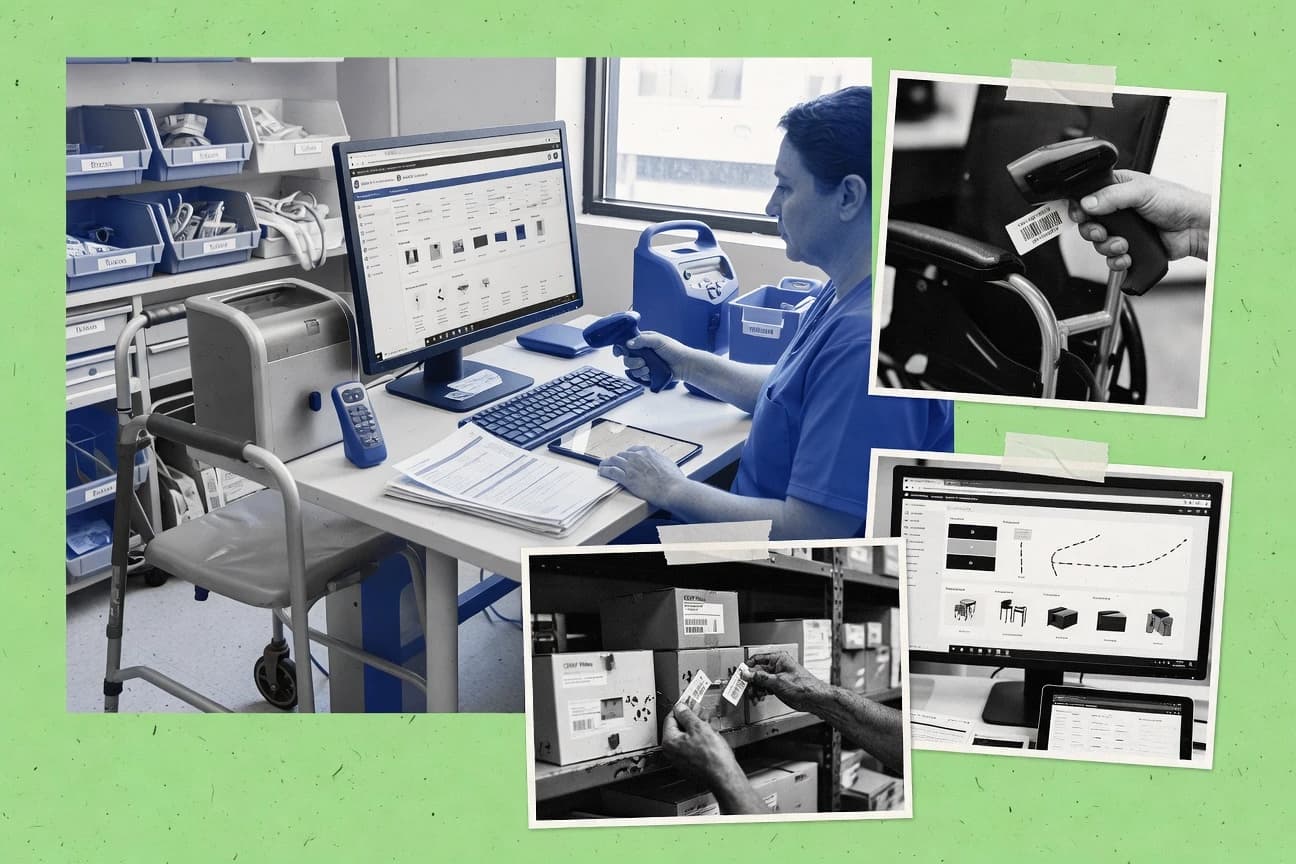
Top 10 durable medical equipment software ranked for DME teams, with side-by-side evaluation of Curasev, TeamDME, and NikoHealth.

How we ranked these tools
An editor sets the topic, the inclusion criteria, and the evaluation framework before research starts.
AI search agents find sources, extract figures with provenance, and aggregate written reviews. They also transcribe video reviews and podcasts.
Framework: Features 40% · Ease 30% · Value 30%
Gitnux may earn a commission through links on this page — this does not influence rankings. Editorial policy
Curasev is the strongest fit if your DME team runs document-driven resupply cycles that must tie compliance and delivery tracking to billing, whereas WellSky suits larger, recurring resupply workflows when you need delivery documentation connected to billing outputs.
Editor’s top 3 picks
Three quick recommendations before you dive into the full comparison below — each one leads on a different dimension.
Curasev
Event-based documentation and fulfillment state tracking connect delivery outcomes to the originating supply request.
Best for: Fits when DME teams need document-driven workflow automation across repeated resupply cycles.
TeamDME
Editor pickCase-driven resupply flow that carries item requirements through scheduling, delivery updates, and return handling.
Best for: Fits when mid-size DME teams need recurring resupply workflows with tracking and delivery status control.
NikoHealth
Editor pickCase lifecycle tracking that ties documentation tasks to fulfillment statuses so staff work from one shared timeline.
Best for: Fits when mid-size DME teams need case workflows that link documentation to delivery operations.
Comparison Table
Curasev
vertical specialistAI-powered cloud DME and HME software unifying billing, inventory, delivery tracking, and compliance management.
Event-based documentation and fulfillment state tracking connect delivery outcomes to the originating supply request.
Curasev is positioned as durable medical equipment operations software that coordinates clinical and logistics steps in one workflow. Core capabilities typically include standardized order handling, fulfillment task tracking, and documentation artifacts used during ongoing supply cycles. The system is also built for operational continuity when inventory and patient delivery streams require frequent updates.
A key tradeoff is that deep workflow configuration requires process ownership so intake fields, states, and task rules remain consistent across teams. Curasev fits best when multiple staff roles handle intake, authorizations, and dispatch coordination and when delivery outcomes must be tied back to the originating request.
- +Workflow orchestration ties intake, fulfillment, and documentation into one operational chain
- +Resupply-oriented ordering supports continued-need work without rebuilding processes each cycle
- +Task and status tracking reduces handoff gaps between office staff and dispatch
- +Operational visibility supports consistent follow-ups across active delivery queues
- –Workflow setup requires discipline to keep intake and task rules consistent across teams
- –Complex edge cases can require customization rather than using out-of-the-box defaults
- –Some payer-facing details need dedicated operational mapping during implementation
- –Integration depth depends on how fulfillment systems and records are connected
DME operations managers
Coordinate delivery, returns, and follow-ups
Fewer missed returns and follow-ups
Intake and referral teams
Standardize patient intake workflows
Lower intake correction workload
Show 2 more scenarios
Clinical documentation staff
Maintain continued-need evidence
More consistent renewals
Resupply-oriented documentation flows keep continued-need packets organized per active supply cycle.
Dispatch and warehouse teams
Plan routing and track fulfillment progress
Faster turnaround from order to delivery
Task tracking ties fulfillment progress to request states to coordinate warehouse and delivery steps.
Best for: Fits when DME teams need document-driven workflow automation across repeated resupply cycles.
TeamDME
vertical specialistDME software for billing, inventory, orders, and provider operations.
Case-driven resupply flow that carries item requirements through scheduling, delivery updates, and return handling.
TeamDME fits DME operations that run high-volume resupplies and need consistent documentation handoffs across referral, order creation, fulfillment, and proof artifacts. Inventory handling supports serial-number and lot tracking workflows for regulated products, and the order records keep those tracking details available during pickup and return cycles. Admin controls support role-based access so operations, dispatch, and management users can see only the functions they need for day-to-day throughput.
A key tradeoff is that teams typically need defined internal SOPs for document ownership and status transitions to prevent gaps between clinical requirements and fulfillment readiness. TeamDME works best when delivery and returns are managed through repeatable status flows and when staff follow a consistent intake-to-order checklist.
- +Resupply automation ties recurring requests to fulfillment status updates
- +Serial and lot tracking stays linked to order and delivery records
- +Role-based access supports separate dispatch and operations responsibilities
- +Order documents and activity history help keep handoffs consistent
- –Status transition governance requires clear internal SOPs
- –Some payer-specific work still needs manual review in practice
- –Advanced workflow configuration takes more effort than basic setup
- –Reporting depth can require tighter data definitions across teams
Operations managers
Recurring supply cases across multiple locations
Fewer missed resupplies
DME dispatch teams
Pickup and return tracking
Cleaner return completion
Show 2 more scenarios
Inventory coordinators
Serialized or lot-controlled products
Lower tracking errors
Links item tracking details to orders so fulfillment uses the correct inventory units.
Compliance and billing staff
Documentation handoffs for claims prep
Faster doc verification
Keeps order-linked documents and activity history available during claims-related review.
Best for: Fits when mid-size DME teams need recurring resupply workflows with tracking and delivery status control.
NikoHealth
vertical specialistCloud-based software for DME and HME providers.
Case lifecycle tracking that ties documentation tasks to fulfillment statuses so staff work from one shared timeline.
NikoHealth centers around intake to fulfillment, with structured fields that carry patient, payer, and order details into later documentation tasks. The workflow model supports recurring resupply behavior through repeatable order and follow-up steps instead of one-off handling. Teams can map status updates to operational checkpoints like delivery confirmation and return processing so exceptions surface before the case closes. Integration depth is strongest when EHR-connected teams want orders and documentation to stay consistent across multiple internal roles.
A tradeoff is that NikoHealth aligns best to organizations that can adopt its case-oriented workflow model rather than forcing every process into freeform spreadsheets. It fits situations where multiple teams touch one patient case, such as intake coordinators, documentation staff, and operations teams coordinating delivery and returns.
- +Case-based workflow keeps documentation and fulfillment steps in sync
- +Operational status updates connect delivery and return steps to one record
- +Structured intake fields reduce manual re-entry across roles
- +Automation around repeat follow-ups supports ongoing supply cases
- –Workflow alignment requires configuration discipline to match internal processes
- –Complex payer logic can still require manual exception handling
- –Field customization depth may not cover every clinic-specific process variant
- –Some integrations rely on add-ons to reach full operational coverage
DME operations managers
Track delivery and returns per case
Fewer lost handoffs
Prior authorization teams
Coordinate evidence with payer steps
Cleaner submission packets
Show 2 more scenarios
Referral and intake coordinators
Standardize intake into structured order data
Lower re-entry workload
Consistent intake fields reduce rework when orders move to processing and delivery.
Clinical documentation staff
Maintain continued-need evidence
Less last-minute paperwork
Repeatable follow-up steps support continued-need documentation across resupply cycles.
Best for: Fits when mid-size DME teams need case workflows that link documentation to delivery operations.
WellSky
enterpriseHealthcare software that includes solutions for durable medical equipment providers.
Continued-need and resupply workflow support that keeps ongoing authorization and delivery records aligned through recurring orders.
WellSky is a DMEPOS-focused software suite that centers workflows around patient eligibility, ordering, and delivery execution. It supports durable medical equipment business processes tied to Medicare supplier requirements, including continued-need documentation and proof-of-delivery capture.
- +Resupply and ongoing order workflows designed for recurring patient needs
- +Delivery execution records support proof-of-delivery style documentation
- +Strong linkage from ordering steps to billing-ready artifacts and codes
- +Workflow configuration helps align intake to warehouse and fulfillment steps
- –Automation depth can require disciplined setup for accurate patient-to-order mapping
- –Coverage across complex rental edge cases may need add-on workflow tailoring
- –Reporting views can require training for operational users
- –External integration paths may need middleware for nonstandard clearinghouse setups
Best for: Fits when DME teams need recurring resupply automation with delivery documentation tied to billing outputs.
Anaqua DME
SMBDME billing and revenue cycle management software for durable medical equipment suppliers.
API-first automation tied to DME order and delivery events enables external provisioning and status synchronization without manual rework.
Anaqua DME manages end-to-end durable medical equipment workflows from intake through documentation and delivery proof capture. It focuses on DMEPOS operational needs such as order handling, authorization documentation support, and pickup and return tracking tied to rental cycles.
- +API-driven workflow automation supports tight integration with existing DME systems
- +Pickup and return tracking supports rental cycle visibility across locations
- +Audit logs support operational oversight for supplier standard workflows
- +Role-based access control supports departmental segregation of duties
- –Config-heavy setup is required to map documents and statuses to internal policies
- –EDI claims throughput and clearinghouse handling depend on external integration design
- –Advanced customization needs governance discipline to avoid workflow drift
- –Reporting is constrained to configured fields and event types
Best for: Fits when DME operations need API-based automation, delivery proof capture, and audit logging for compliance workflows.
Computers Unlimited TPS
enterpriseTIMS software suite for home medical equipment, respiratory, and pharmacy operations.
Pickup and return tracking that links device movement records to the resupply and rental documentation trail.
Computers Unlimited TPS targets durable medical and supply operations that run multiple fulfillment stages for the same patient record. The workflow emphasis centers on connecting operational events to billing-ready documentation, including delivery and pickup artifacts.
- +Rental cycle tracking ties operational events to billing documentation workflow
- +Pickup and return tracking supports end-to-end device movement records
- +Resupply ordering supports recurring supply workflows for ongoing patient use
- +DMEPOS-friendly coding entry supports HCPCS-driven claim data preparation
- –Automation depth is limited outside the core fulfillment and order lifecycle
- –Payer eligibility verification and prior authorization tooling is not consistently workflow-native
- –EHR-style integrations are not a guaranteed path for standard data exchange
- –Role separation controls appear basic for large multi-user billing operations
Best for: Fits when DME operations need disciplined delivery, return, and resupply tracking tied to billing artifacts.
Brightree
enterpriseCloud software for DME, HME, pharmacy, and complex care operations.
Rental cycle management with pickup and return tracking tied to ongoing documentation requirements for continued service.
Brightree focuses on DME order-to-billing workflow execution with automation and documentation capture tied to Medicare-style supplier processes. The system covers referral and intake to delivery, including pickup and return tracking for rental cycles, plus resupply and recurring supply ordering.
- +Automation for recurring supply orders that reduces manual resupply work
- +Rental cycle controls that support pickup, return, and continued-need documentation
- +EDI-oriented claims and remittance workflow supports high-throughput billing operations
- +Role-based access controls and audit visibility support operational governance
- –Requires configuration effort to match local processes for authorization and CMN collection
- –Workflow customization can feel restrictive for nonstandard device categories
- –Exception handling depth varies by payer workflow maturity and data readiness
- –Inventory and proof capture workflows need disciplined data entry at intake
Best for: Fits when DME teams need automated resupply and rental-cycle tracking tied to Medicare-style documentation.
Medtrade
vertical specialistDME and HME management platform for order processing and inventory control.
Configurable documentation and tasking workflows that connect payer requirements to operational fulfillment events.
Medtrade is a DME-focused software suite that centers on payer and documentation workflows rather than generic ERP features.
- +Eligibility and documentation tasking designed for payer decision timing
- +Delivery and returns tracking supports proof workflows
- +Workflow configuration supports recurring ordering cycles
- +Claims preparation aligned to standard DME claim handoffs
- –Automation depth depends on configuration and disciplined workflow design
- –Not all operational centers map cleanly without add-on processes
- –Some edge-case documentation patterns require manual review steps
- –Reporting customization can be limited for uncommon operational KPIs
Best for: Fits when DME teams need payer-driven workflow automation with delivery and returns traceability.
BFLOW
vertical specialistAI-powered DME/HME billing and revenue cycle management platform with integrated intake, claims, and workforce operations.
Delivery and pickup documentation is built into the billing workflow so claims are tied to proof-of-delivery events.
BFLOW handles DMEPOS billing workflows with an emphasis on end-to-end claim readiness, from intake to claim status tracking.
- +End-to-end claim workflow tracking tied to delivery documentation
- +Recurring resupply ordering supports repeat dispensing cycles
- +HCPCS coding workflows reduce manual chart-to-claim mapping
- +Configuration controls for billing rules help standardize processing
- –Automation depth for prior authorization and medical necessity needs stricter setup
- –Audit trail granularity can feel limited for complex multi-warehouse operations
- –Inventory lot and serial tracking coverage appears narrower than full traceability needs
- –External integration options may require manual export steps for some clearinghouses
Best for: Fits when mid-market DME teams need structured claim workflow plus resupply automation without heavy custom build.
DME4DME
SMBAll-in-one operations platform for DME providers combining intake, billing, inventory, and claims management.
Rental cycle management with operational return and continued-need documentation flow across the same order record.
DME4DME targets DME operations that need end-to-end workflow support from intake through delivery and documentation. Core modules cover customer and order workflows, inventory and tracking, rental life cycle handling, and delivery and pickup execution.
- +Workflow coverage spans intake, order handling, delivery execution, and documentation
- +Inventory and item tracking support reduces manual reconciliation across rental cycles
- +Rental cycle management helps operational teams handle returns and continued usage
- +Accreditation tracking ties compliance artifacts to operational records
- –Limited detail on DMEPOS billing artifacts can force manual preprocessing for claims
- –Automation depth depends on available integrations and API surface for key handoffs
- –Configuration and governance are needed to keep coded requirements consistent
- –Operational reports can be slower to adapt without tailored reporting exports
Best for: Fits when DME teams need structured order and tracking workflows with rental handling.
Conclusion
After evaluating 10 durable medical equipment software, Curasev stands out as our overall top pick — it scored highest across our combined criteria of features, ease of use, and value, which is why it sits at #1 in the rankings above.
Use the comparison table and detailed reviews above to validate the fit against your own requirements before committing to a tool.
How to Choose the Right Durable Medical Equipment Software
Durable medical equipment software connects DME intake, resupply ordering, and delivery outcomes into a workflow record staff can act on. The tools covered in this guide include Curasev, TeamDME, NikoHealth, WellSky, Anaqua DME, Computers Unlimited TPS, Brightree, Medtrade, BFLOW, and DME4DME.
Across these tools, the differentiators show up in how documentation events and fulfillment status updates stay linked, and how resupply cycles carry requirements forward. Curasev leads with event-based documentation and fulfillment state tracking that ties delivery outcomes to the originating supply request.
Durable Medical Equipment Software for resupply, rental-cycle operations, and documentation-to-fulfillment workflows
Durable medical equipment software manages DME operational workflows for ongoing patients by linking item requirements, delivery execution, and returns to the same case, order, or fulfillment record. The category typically tracks rental-cycle activity and continued-need documentation so staff work from one timeline instead of disconnected forms.
Curasev emphasizes event-based documentation and fulfillment state tracking that connects delivery outcomes to the originating supply request. TeamDME uses a case-driven resupply flow that carries item requirements through scheduling, delivery updates, and return handling with serial and lot tracking linked to order and delivery records.
Integration depth and workflow event linkage for DME resupply, delivery, and documentation
Durable medical equipment teams need workflow linkage between intake requirements, fulfillment state changes, and the documentation trail that follows the same case, order, or fulfillment record. Tools that attach documentation events to fulfillment outcomes reduce handoffs between scheduling, warehouse execution, and claims-ready proof steps.
Event-based fulfillment state tracking tied to originating supply requests
Curasev connects delivery outcomes to the originating supply request using event-based documentation and fulfillment state tracking. DME4DME also ties rental-cycle management and return handling to the same order record, but Curasev centers on event linkage as the workflow backbone.
Case-driven resupply flows with scheduling, delivery updates, and return handling
TeamDME uses a case-driven resupply flow that carries item requirements through scheduling, delivery updates, and return handling with serial and lot tracking linked to order and delivery records. NikoHealth runs a case lifecycle timeline that ties documentation tasks to fulfillment statuses, keeping staff work aligned to one shared timeline.
Resupply and continued-need continuity across recurring orders
WellSky is designed around continued-need and resupply workflow support that keeps ongoing authorization and delivery records aligned through recurring orders. Brightree also supports automated resupply and rental-cycle tracking tied to continued-service documentation, but it focuses more on rental controls with pickup and return tracking tied to documentation requirements.
API surface for automation with external provisioning and status synchronization
Anaqua DME is API-first and ties automation to DME order and delivery events to enable external provisioning and status synchronization without manual rework. BFLOW emphasizes structured claim workflow tied to delivery documentation events, but it is not presented as API-first for external status provisioning.
Pickup and return documentation linked to the billing and rental documentation trail
Computers Unlimited TPS includes pickup and return tracking that links device movement records to the resupply and rental documentation trail, including rental cycle tracking tied to billing documentation workflow. Computers Unlimited TPS pairs that operational movement chain with the proof workflow expectations needed for structured claim tracking.
Payer-timed eligibility and documentation tasking that follows operational events
Medtrade supports configurable documentation and tasking workflows that connect payer requirements to operational fulfillment events, including eligibility and documentation tasking designed for payer decision timing. Medtrade’s traceability emphasis is aimed at delivery and returns traceability, while TeamDME’s strength centers on resupply case tracking and return handling.
Governed workflow transitions for delivery and return statuses across teams
Curasev’s operational chain ties intake, fulfillment, and documentation into one chain, which makes transition governance a workflow design concern rather than a reporting afterthought. NikoHealth and TeamDME both align documentation work with fulfillment status changes, but both highlight that workflow alignment requires internal configuration discipline and clear SOPs.
How to choose Durable Medical Equipment Software for documentation-to-fulfillment control
Short-term training wins matter less than whether workflow transitions stay consistent across intake, fulfillment, and documentation teams. The deciding factor is the tool’s automation and event linkage model for moving from an item requirement to delivery proof and then into the next resupply or rental cycle.
Select the workflow backbone: event-driven fulfillment vs case timelines
Choose Curasev when delivery outcomes must be connected to the originating supply request through event-based documentation and fulfillment state tracking. Choose NikoHealth when staff productivity depends on a shared case lifecycle timeline that ties documentation tasks to fulfillment statuses so the same record drives documentation and delivery operations.
Choose the resupply operating model: requirement carry-forward vs case-driven resupply orchestration
Choose WellSky when ongoing authorization and delivery records must stay aligned through recurring orders using continued-need and resupply workflow support. Choose TeamDME when recurring resupply workflows require scheduling, delivery updates, and return handling carried through a case with serial and lot tracking linked to order and delivery records.
Confirm rental-cycle continuity for pickup and return across locations
Choose Computers Unlimited TPS when pickup and return tracking must link device movement records to the resupply and rental documentation trail for end-to-end rental cycle visibility. Choose Brightree when rental cycle controls must automate recurring supply orders with pickup, return, and continued-need documentation requirements tied to continued service.
Demand an automation interface when external systems own provisioning and status updates
Choose Anaqua DME when external provisioning and delivery status synchronization must be driven by API-first automation tied to DME order and delivery events. Choose BFLOW when the primary need is structured claim workflow tracking tied to proof-of-delivery events without heavy emphasis on external status provisioning as a native design goal.
Stress-test payer timing and documentation tasking against operational execution
Choose Medtrade when payer-driven workflow automation must connect eligibility and documentation task timing to delivery and returns traceability through configurable workflows. Choose Anaqua DME when audit logging and pickup and return tracking for compliance workflows must align to API-driven workflow automation rather than only configuration-driven tasking.
Validate governance capacity for status transitions and exception handling
If internal SOPs vary by team, Curasev, TeamDME, and NikoHealth require workflow setup discipline so intake and task rules remain consistent and case documentation stays synchronized to fulfillment statuses. If exceptions appear often, NikoHealth and TeamDME both indicate complex payer logic can require manual exception handling, so governance needs should be validated in workflow configuration sessions.
Who benefits from Durable Medical Equipment Software built for documentation and fulfillment linkage
DME teams benefit when the same workflow record ties documentation tasks to fulfillment outcomes so staff do not reconcile disconnected forms. The best fit depends on whether operations run on recurring resupply cycles, rental-cycle control, or case-driven timelines across pickup and return events.
Mid-size DME providers running recurring resupply cycles with serial and lot tracking
TeamDME provides resupply automation that ties recurring requests to fulfillment status updates while keeping serial and lot tracking linked to order and delivery records. The same case flow carries item requirements through scheduling, delivery updates, and return handling, which reduces manual coordination.
DME operators that need documentation tasks synchronized to fulfillment statuses for staff productivity
NikoHealth centers on case lifecycle tracking that ties documentation tasks to fulfillment statuses so staff work from one shared timeline. Its operational status updates connect delivery and return steps to one record, which lowers the odds of documentation drifting from fulfillment.
Teams focused on continued-need continuity through recurring orders and authorization alignment
WellSky is built for continued-need and resupply workflow support that keeps ongoing authorization and delivery records aligned through recurring orders. Brightree also emphasizes continued service with rental-cycle controls, pickup and return tracking, and continued-need documentation requirements.
DME organizations with external systems that must drive provisioning and status synchronization
Anaqua DME is API-first for workflow automation tied to DME order and delivery events so external provisioning and status synchronization can happen without manual rework. This design suits operators that already have a system responsible for generating or consuming status updates.
Operations that require strict pickup and return traceability tied to the rental documentation trail
Computers Unlimited TPS ties pickup and return tracking to resupply and rental documentation trail continuity, including rental cycle tracking connected to billing documentation workflow. This fit aligns with organizations that view device movement records as a first-class operational artifact.
Common pitfalls when implementing Durable Medical Equipment Software for resupply and documentation workflows
Most implementation failures come from mismatch between workflow transitions and how teams actually process intake, delivery execution, and return handling. Another frequent failure is treating documentation as a separate task stream instead of a state machine connected to fulfillment events.
Running intake and task rules that differ by team while relying on case or event linkage to keep documentation aligned
Curasev warns that workflow setup requires discipline to keep intake and task rules consistent across teams, because event-based documentation and fulfillment state tracking depends on that consistency. TeamDME and NikoHealth also flag workflow alignment and configuration discipline to match internal processes so documentation stays synchronized to delivery statuses.
Assuming automation depth covers payer exceptions without manual review
NikoHealth notes that complex payer logic can still require manual exception handling when edge cases fall outside configured automation paths. TeamDME similarly indicates payer-specific work may need manual review in practice, so exception queues and ownership should be defined before go-live.
Overlooking how rental edge cases affect recurring resupply continuity and patient-to-order mapping
WellSky highlights that automation depth can require disciplined setup for accurate patient-to-order mapping, especially when continued-need continuity spans recurring orders. Brightree cautions that workflow customization can feel restrictive for nonstandard device categories, so edge-case device types must be modeled during configuration.
Treating delivery proof as a standalone step instead of binding it to the claims workflow record
BFLOW builds delivery and pickup documentation directly into the billing workflow so claims tie to proof-of-delivery events, which avoids separating proof from billing artifacts. If an implementation separates proof collection from claim record state transitions, audit trail granularity can degrade for complex multi-warehouse operations in tools like Computers Unlimited TPS.
Choosing a tool without validating integration design constraints for throughput and status synchronization
Anaqua DME calls out that EDI claims throughput and clearinghouse handling depend on external integration design, which can become a bottleneck if integration patterns are not planned. DME4DME notes limited detail on DMEPOS billing artifacts can force manual preprocessing for claims when integrations are not ready to carry billing-relevant artifacts.
How We Selected and Ranked These Tools
We evaluated Curasev, TeamDME, NikoHealth, WellSky, Anaqua DME, Computers Unlimited TPS, Brightree, Medtrade, BFLOW, and DME4DME using feature depth for documentation-to-fulfillment event linkage, resupply cycle automation, and pickup and return traceability. We weighted features at 40% and used ease and value at 30% each based on how quickly teams can configure consistent workflow transitions and avoid exception-driven manual work.
Curasev separated itself by connecting event-based documentation to fulfillment state tracking so delivery outcomes link back to the originating supply request. This event-to-request linkage became the ranking differentiator over tools that center more on case timelines, recurring order continuity, or workflow task configuration.
Frequently Asked Questions About Durable Medical Equipment Software
How do Curasev and TeamDME differ in handling delivery outcomes tied to the originating request?
Which tool connects payer eligibility verification to prior authorization and continued-need evidence without breaking the workflow handoff?
How is recurring resupply automation configured across Brightree and WellSky?
What breaks if a DME team cannot capture proof-of-delivery artifacts in the same workflow stage as ordering and rental handling?
How do Anaqua DME and DME4DME approach API and external system synchronization?
How do these products handle admin controls and auditability for workflow changes during delivery and returns?
Where does accreditation-related tracking fit in DME4DME compared with other workflow-first systems?
How do invoice-to-claim workflows differ between Computers Unlimited TPS and BFLOW?
Which workflow system uses case-driven timelines to keep documentation tasks aligned with fulfillment statuses?
Tools reviewed
Primary sources checked during evaluation.
Referenced in the comparison table and product reviews above.
- Healthcare MedicineTop 10 Best Home Medical Equipment Software of 2026
- Healthcare MedicineTop 10 Best Dme Hme Software of 2026
- Healthcare MedicineTop 10 Best Medical Device Tracking Software of 2026
- Healthcare MedicineTop 10 Best Medical Equipment Planning Software of 2026
- Automotive ServicesTop 10 Best Heavy Equipment Repair Software of 2026
Keep exploring
Comparing two specific tools?
Software Alternatives
See head-to-head software comparisons with feature breakdowns, pricing, and our recommendation for each use case.
Explore software alternatives→In this category
Healthcare Medicine alternatives
See side-by-side comparisons of healthcare medicine tools and pick the right one for your stack.
Compare healthcare medicine tools→