
GITNUXSOFTWARE ADVICE
Transportation LogisticsTop 10 Best Delivery Manager Software of 2026
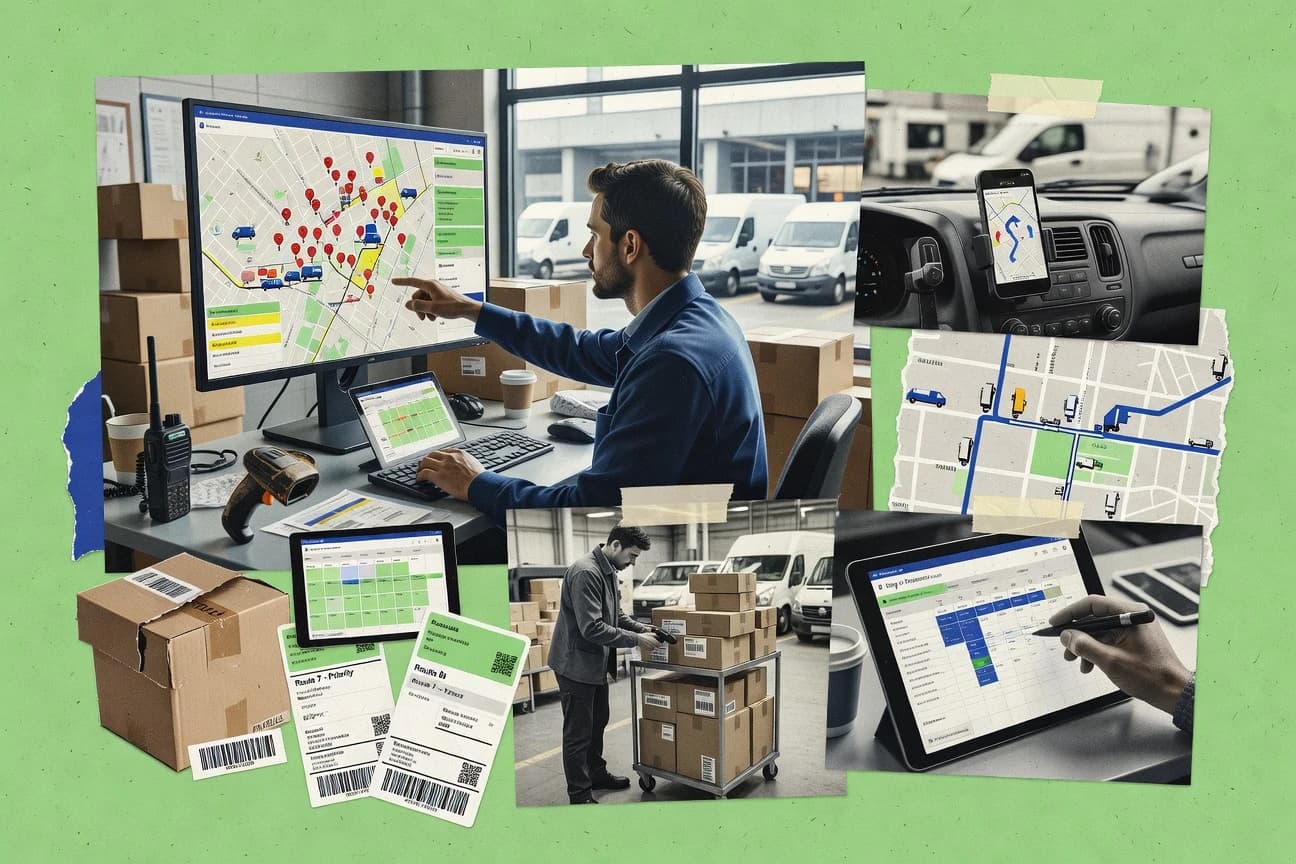
Ranked comparison of delivery manager software for routing, dispatch, tracking, and reporting, covering Onfleet, Route4Me, ClickPost, and others.

How we ranked these tools
Core product claims cross-referenced against official documentation, changelogs, and independent technical reviews.
Analyzed video reviews and hundreds of written evaluations to capture real-world user experiences with each tool.
AI persona simulations modeled how different user types would experience each tool across common use cases and workflows.
Final rankings reviewed and approved by our editorial team with authority to override AI-generated scores based on domain expertise.
Score: Features 40% · Ease 30% · Value 30%
Gitnux may earn a commission through links on this page — this does not influence rankings. Editorial policy
Onfleet is the best fit for mid-size delivery teams that need dispatch plus proof-of-delivery with API-driven event updates, whereas ClickPost works well for e-commerce teams where reliable shipment confirmation and exception reporting across many stops are the priority.
Editor’s top 3 picks
Three quick recommendations before you dive into the full comparison below — each one leads on a different dimension.
Onfleet
Stop-level proof of delivery captured in the driver mobile workflow updates delivery status through integrations.
Built for fits when mid-size delivery teams need dispatch plus proof-of-delivery with API-driven event updates..
Route4Me
Editor pickStop-level delivery confirmation that ties execution events back to assigned routes and dispatcher visibility.
Built for fits when delivery managers need multi-stop routing, dispatch control, and proof capture for frequent route updates..
ClickPost
Editor pickDelivery confirmation workflow that ties stop-level scanning events to exception outcomes for faster operational correction.
Built for fits when delivery execution needs reliable confirmation and exception reporting across many stops..
Comparison Table
Onfleet
SMBLast-mile delivery management platform with driver tracking, route optimization, and proof of delivery.
Stop-level proof of delivery captured in the driver mobile workflow updates delivery status through integrations.
Onfleet fits delivery manager teams that need dispatching, route sequencing, and delivery confirmation in one operational loop. Driver mobile capture supports delivery confirmation details per stop and records delivery exceptions when outcomes differ from planned status. Reporting groups activity by route and delivery outcome so dispatchers can review where and why delays happen. The automation surface is driven by API and webhooks that connect order data from an order management system and push delivery events back into downstream tools.
A tradeoff is that full automation depends on consistent stop creation and event mapping from the upstream system. Operational setups that rely on legacy address quality need careful geocoding and stop data hygiene to avoid misrouted stops. One common usage situation is daily dispatch where orders arrive in batches, dispatch board assignments go out to drivers, and proof of delivery events update internal shipment records.
- +Dispatch board maps stops to couriers with clear status at the stop level
- +Proof of delivery capture supports consistent delivery confirmations per address
- +Webhooks and API enable automated event updates for order and shipment records
- +Dynamic updates reflect delivery outcomes so dispatchers can act on exceptions quickly
- –Route outcomes depend on stop data quality and geocoding accuracy
- –Advanced automation requires engineering around event mapping and idempotency
- –Exception workflows can be limited when multiple custom delivery states are needed
- –Planning and reporting are strongest for delivery workflows rather than broad logistics ops
Last-mile dispatch managers
Assign routes and confirm multi-stop deliveries
Fewer missed confirmations
Ops teams for e-commerce delivery
Sync orders to delivery stops automatically
Automated status propagation
Show 2 more scenarios
Field operations coordinators
Handle exceptions with driver-captured outcomes
Faster exception resolution
Driver updates for failed delivery attempts feed reporting so coordinators can reassign work.
3PL operations analysts
Analyze route performance by outcome
Actionable delivery metrics
Delivery analytics summarize per-route activity and delivery results for operational review.
Best for: Fits when mid-size delivery teams need dispatch plus proof-of-delivery with API-driven event updates.
Route4Me
SMBRoute optimization platform with delivery management features for multi-stop logistics.
Stop-level delivery confirmation that ties execution events back to assigned routes and dispatcher visibility.
Route4Me fits delivery operations that plan multi-stop workloads and need a dispatcher view tied to stop sequencing and delivery outcomes. The workflow supports generating route plans, assigning stops to drivers, and collecting delivery confirmation data that can be used for delivery exception handling. The system is also geared toward operational throughput, since routing and updates are centered on handling many stops per run.
A key tradeoff is that tight integration with existing order management and mobile delivery app workflows depends on how the team connects Route4Me to its current stack. Route4Me works best when a delivery manager can define consistent stop data up front and then rely on updates from dispatch and courier execution to keep the route plan aligned.
- +Route optimization is built around multi-stop route sequencing for planning at scale
- +Dispatch and stop-level status support clear driver assignment and operational visibility
- +Electronic proof workflows give delivery managers structured delivery completion records
- +Operational rerouting supports change handling without rebuilding workflows from scratch
- –Deep order-system integration requires careful setup of data mapping and sync timing
- –Some teams need process training to keep stop attributes consistent for rerouting accuracy
- –Exception workflows can feel granular when delivery operations use very flexible SOPs
Last-mile delivery operations
Daily multi-stop route planning
Fewer missed deliveries
Courier management teams
Dispatching across a growing fleet
Cleaner handoffs to operations
Show 2 more scenarios
Field service logistics teams
Rerouting for delivery exceptions
Reduced route plan drift
Updates routes when stop outcomes deviate and maintains dispatcher control over changes.
Operations analysts
Measuring delivery execution performance
Actionable delivery analytics
Uses stop completion records to review delivery performance by route and driver.
Best for: Fits when delivery managers need multi-stop routing, dispatch control, and proof capture for frequent route updates.
ClickPost
vertical specialistPost-purchase and delivery management platform for e-commerce shipment tracking.
Delivery confirmation workflow that ties stop-level scanning events to exception outcomes for faster operational correction.
ClickPost is geared for teams that need consistent proof of delivery capture and delivery exception handling across many stops and couriers. The workflow design ties delivery status back to shipment visibility so customers and operations teams can follow what happened at each stop. Integration behavior is strongest when order management or warehouse systems publish shipment and stop events that ClickPost can consume and reflect in tracking.
A tradeoff appears when teams require deep routing optimization inside ClickPost, because routing and sequencing capabilities are not the center of the product. ClickPost fits best when dispatching and courier assignment are already established elsewhere, and ClickPost provides dependable confirmation and exception reporting. One common usage situation is multi-carrier last-mile execution where the priority is accurate delivery confirmation and fast exception triage.
- +Strong proof capture workflow across multiple delivery stops
- +Webhook-friendly delivery status updates that reduce manual reconciliation
- +Clear exception reporting for failed deliveries and missed attempts
- +Shipment and stop tracking stays aligned with operational execution
- –Routing optimization depth is weaker than dispatch-first routing suites
- –Setup requires careful mapping of stop statuses to execution steps
- –Complex multi-warehouse sequencing can demand extra integration logic
- –Analytics are more execution-focused than capacity-planning oriented
Last-mile delivery operations
Exception triage across courier attempts
Fewer unresolved exceptions
Logistics engineering teams
Automated status sync via webhooks
Less manual spreadsheet work
Show 2 more scenarios
E-commerce fulfillment teams
Proof of delivery for customer support
Faster case resolution
Support teams access delivery confirmations mapped to each order and stop.
Carrier management teams
Consistent tracking across carriers
More accurate customer updates
Teams standardize delivery confirmation and tracking outcomes regardless of courier partner.
Best for: Fits when delivery execution needs reliable confirmation and exception reporting across many stops.
Track-POD
vertical specialistDelivery management software for electronic proof of delivery, route planning, tracking, and driver workflows.
Proof of delivery capture at the stop level with shipment-linked event history.
Track-POD focuses on delivery tracking workflows for dispatch teams that need stop-level delivery confirmation and driver event visibility. The core capability is proof of delivery capture with barcode or scan-friendly confirmation and a delivery history trail that ties events to shipments.
Operations coverage includes delivery status updates for exceptions and driver-reported issues, plus configurable delivery notes and confirmations per stop. Integration and automation matter for delivery managers who need shipment and tracking data to flow between Track-POD and existing systems via APIs and webhook-style event posting.
- +Stop-level proof of delivery creates an auditable event trail per shipment
- +Barcode or scan-friendly confirmations reduce signature and data entry errors
- +Delivery exception handling keeps dispatch informed with driver event timestamps
- +API and event callbacks support shipment status automation and system sync
- –Route planning depth is limited compared with dedicated last-mile optimization tools
- –Geofencing and automated rerouting controls require setup discipline
Best for: Fits when dispatch teams need proof of delivery tracking and exception visibility with API-driven automation.
Dispatch Science
vertical specialistDelivery management software for route optimization, dispatch, driver communication, and customer tracking.
Stop-level delivery exception handling that updates shipment and delivery status while maintaining a consistent dispatch queue.
Dispatch Science manages delivery operations by combining a dispatch board workflow with route planning that pushes tasks to couriers and tracks outcomes. It supports shipment-level tracking with proof of delivery capture and structured delivery exceptions that keep manifests and delivery status aligned.
Dispatch Science also exposes an integration surface for syncing orders, updating delivery events, and receiving delivery confirmations. Automation is centered on assigning stops to couriers, enforcing delivery windows, and rerouting when delivery attempts fail.
- +Dispatch board supports stop-to-courier assignment and operational status control
- +Delivery confirmation workflows capture proof of delivery at the stop level
- +Delivery exception handling keeps manifests aligned with failed and reattempted stops
- +Integration surface supports syncing delivery events and acknowledgements via API webhooks
- –Operations setup requires disciplined mapping between stops, shipments, and courier identities
- –Advanced routing behaviors depend on clean input data like geocoding accuracy
Best for: Fits when delivery teams need stop-level tracking with exception-driven reassignments and strong event integrations.
Descartes Last Mile
enterpriseLast-mile delivery software with route planning, dispatch, delivery tracking, and customer notifications.
Stop-level electronic proof of delivery workflows integrated with exception handling and rerouting decisions.
Descartes Last Mile is a logistics delivery manager focused on coordinating delivery execution across dispatch, tracking, and customer-facing delivery updates. It supports multi-stop routing and stop-level delivery activities, then ties those stops to electronic proof of delivery and exception handling workflows.
Descartes also exposes integration points for order and event flows so the dispatch and tracking state can stay aligned with upstream systems. Teams typically use it to enforce delivery commitments through operational rules that govern rerouting, confirmations, and operational reporting.
- +Stop-level delivery execution maps clearly to proof of delivery and exceptions
- +Multi-stop routing supports sequence planning and re-optimization during execution
- +Integration focus connects delivery state to upstream order and event flows
- +Operational reporting covers delivery outcomes tied to execution events
- –Complex configuration is needed to align rules, stops, and exception workflows
- –Dispatch board usability depends on setup of stop visibility and task routing
Best for: Fits when enterprise logistics teams need dispatch control tied to proof of delivery and exception workflows.
TransVirtual
vertical specialistTransport management software for delivery scheduling, dispatch, tracking, manifests, and electronic proof of delivery.
Stop-focused delivery confirmation workflow designed to capture completion per field stop from the driver side.
TransVirtual focuses on dispatch and delivery operations built around driver execution, shipment workflows, and proof of completion steps. The product supports delivery tracking by stop so dispatchers can monitor field progress and act on exceptions.
It also includes mobile-oriented delivery confirmation workflows, which reduces manual updates in back-office systems. Integration options and automation paths center on connecting shipment and dispatch events to external order and operational systems.
- +Stop-level delivery monitoring supports dispatcher follow-up on exceptions
- +Mobile delivery confirmation reduces back-office reconciliation work
- +Dispatch workflows map cleanly to multi-stop execution stages
- +Operational updates can be pushed to connected systems through integration hooks
- –Advanced route planning depth looks narrower than routing-first competitors
- –Exception handling needs deliberate configuration to match field behavior
- –Integration paths can require engineering time for event mapping
- –Reporting breadth for delivery analytics appears less expansive than specialist tools
Best for: Fits when teams need dispatch execution and proof-of-delivery workflows with external system integration.
Locus
enterpriseDelivery orchestration software for route planning, dispatch, tracking, and delivery analytics.
Stop-level delivery confirmation with exception handling that carries through dispatch and status updates.
Locus (locus.sh) targets delivery operations with routing, dispatch, and proof-of-delivery workflows built for high stop counts. It supports multi-stop routing with driver dispatch controls and mobile delivery confirmation, including stop-level exceptions when deliveries fail.
Locus also offers automation hooks through an API and webhook surface for order updates, status changes, and operational event sync. Reporting focuses on delivery performance, route execution outcomes, and operational visibility across shipments and delivery attempts.
- +Multi-stop routing that reduces manual route sequencing work
- +Stop-level delivery confirmation workflow for exception-aware operations
- +API and webhooks for syncing order state and delivery events
- +Dispatch controls for assigning shipments to drivers from a central view
- –Operational accuracy depends on strong geocoding and address normalization inputs
- –Exception workflows need defined recovery steps to avoid driver confusion
- –Advanced routing behavior can require careful configuration of constraints
- –Reporting filters stay operationally useful but limited for deep custom analytics
Best for: Fits when mid-size delivery teams need dispatch plus proof-of-delivery with API-driven event sync.
WorkWave Route Manager
SMBRoute management software for scheduling, route optimization, dispatch, mobile work, and customer communication.
Proof of delivery workflow is integrated into dispatch execution so exceptions and confirmations stay aligned per stop.
WorkWave Route Manager builds delivery routes and supports day-of-operations dispatch for multi-stop courier work. It emphasizes stop-level sequencing, route changes during execution, and driver-facing confirmation workflows that help close out deliveries with fewer back-office steps.
Route planning and execution connect to WorkWave’s broader logistics and field-service tooling, which helps teams reuse customer and stop data across planning, dispatch, and reporting. Route performance reporting focuses on operational visibility for exceptions and delivery outcomes rather than only map visualization.
- +Stop-level routing and sequencing for multi-stop delivery runs
- +Day-of-operations rerouting workflows for dispatch corrections
- +Delivery confirmation tracking tied to execution status
- +Reporting that centers on delivery outcomes and exception handling
- –Operational setup requires route and stop data hygiene
- –Automation depth depends on integration with the surrounding WorkWave stack
- –Limited room for custom workflows beyond supported configuration
- –Dispatch board design can feel dense for first-time operators
Best for: Fits when delivery ops need dispatch control and stop-level execution visibility tied to WorkWave data.
Zeo Route Planner
SMBRoute planning software for multi-stop deliveries, driver dispatch, tracking, and customer notifications.
Stop-level delivery confirmation within the route workflow, so dispatch closure aligns with the exact planned sequence.
Zeo Route Planner is a route planning and dispatch tool aimed at last-mile delivery workflows. It focuses on multi-stop route sequencing with map-based optimization and stop-level scheduling so field teams can execute consistent runs.
The product also supports delivery execution features like route views and delivery confirmation tied to stops. Integration and automation depth depends on how the available import, export, and notification options fit into an existing dispatch and order process.
- +Route sequencing is built around multi-stop delivery execution
- +Map-based planning makes it easier to validate stop order visually
- +Delivery confirmation is tied to individual stops for cleaner closure
- +Operational views support dispatch-day planning without heavy setup
- –Advanced API and webhook automation for deep OSM and CRM syncing are not clearly documented
- –Governance controls like fine-grained RBAC and audit logging are limited or unclear
- –Complex exception handling workflows require manual dispatcher intervention
- –High-volume routing runs may need process tuning to avoid delays
Best for: Fits when small or mid-size fleets need consistent multi-stop routing with stop-level delivery confirmation.
Conclusion
After evaluating 10 transportation logistics, Onfleet stands out as our overall top pick — it scored highest across our combined criteria of features, ease of use, and value, which is why it sits at #1 in the rankings above.
Use the comparison table and detailed reviews above to validate the fit against your own requirements before committing to a tool.
How to Choose the Right delivery manager software
Delivery manager software orchestrates delivery routing, driver dispatch, stop-level tracking, and delivery confirmation workflows into a single operational view. This buyer’s guide covers Onfleet, Route4Me, ClickPost, Track-POD, Dispatch Science, Descartes Last Mile, TransVirtual, Locus, WorkWave Route Manager, and Zeo Route Planner.
The tools in this guide differ most in how they map execution events back to stops and assigned routes through integrations and webhook-friendly status updates. Onfleet leads with stop-level proof-of-delivery captured in the driver mobile workflow that drives consistent delivery status changes through event updates, while Route4Me ties execution visibility to multi-stop route sequencing and stop-level confirmation.
Delivery manager software for routing, dispatch, and stop-level delivery confirmation
Delivery manager software manages how delivery teams plan route sequences, assign couriers, and track execution at the stop level from dispatch through proof of delivery. It typically coordinates a dispatcher workflow with a driver mobile delivery flow and turns field scans into delivery confirmation outcomes.
Onfleet and Route4Me illustrate the category focus on stop-level execution state tied to dispatcher visibility. Onfleet centers stop-level proof capture that updates delivery status through integrations, while Route4Me pairs multi-stop route sequencing and dispatch control with stop-level status so frequent route changes stay visible to dispatch.
Stop-level execution mapping, routing control, and automation surfaces
Delivery manager software succeeds when stop-level outcomes flow back to the dispatcher view with minimal manual reconciliation. Onfleet and Route4Me both anchor execution on stop-to-courier state so operational updates stay aligned with the route plan.
Stop-level proof of delivery tied to the execution workflow
Onfleet captures stop-level proof of delivery in the driver mobile workflow and pushes consistent delivery status updates through integrations. Route4Me also ties stop-level delivery confirmation to dispatcher visibility, which helps teams close delivery runs against the assigned route.
Multi-stop route sequencing and planning at scale
Route4Me builds multi-stop route sequencing for planning at scale, then keeps dispatch and stop-level status visible during execution. Zeo Route Planner sequences multi-stop delivery execution so dispatch closure matches the planned order.
Exception handling that updates stop and shipment state together
Dispatch Science provides stop-level delivery exception handling that updates shipment and delivery status while maintaining a consistent dispatch queue. Descartes Last Mile couples stop-level electronic proof workflows with exception handling and rerouting decisions.
Event-driven integration surfaces for dispatch and delivery updates
ClickPost is webhook-friendly for delivery status updates that reduce manual reconciliation after stop scans. Track-POD uses shipment-linked event history so API-driven automation can act on proof and exceptions with an auditable trail.
Operational governance for accurate execution and rerouting
Onfleet’s route outcomes depend on stop data quality and geocoding accuracy, which makes address governance part of operational success. Locus also depends on strong geocoding and address normalization so exception-aware dispatch stays consistent during day-of-operations changes.
Choose by execution-to-stop mapping depth and automation control
The core choice is how each platform maps execution events back to stops and assigned routes. Onfleet and Track-POD emphasize stop-level proof capture and event updates, while Route4Me emphasizes multi-stop route sequencing and dispatch control for frequent route changes.
Start with the stop execution unit that must stay authoritative
If the stop must drive delivery status changes through integrations, Onfleet fits delivery workflows that depend on stop-level proof of delivery in the driver mobile flow. If route execution must stay tightly aligned to the planned stop sequence at dispatch closure, Zeo Route Planner keeps closure tied to the exact multi-stop order.
Decide whether route planning or dispatch-first control is the primary workflow
Route4Me is built around multi-stop route sequencing for planning at scale, then uses dispatch and stop-level status to keep execution visible. Dispatch Science keeps a consistent dispatch queue while handling stop-level exceptions, which suits teams that need exception-driven reassignments.
Match exception handling depth to how teams recover from failures
Descartes Last Mile integrates stop-level electronic proof workflows with exception handling and rerouting decisions, which suits enterprise workflows with complex recovery rules. TransVirtual and Locus both provide stop-focused delivery confirmation workflows with exception-aware dispatch follow-up, which works when recovery steps are configured to match field behavior.
Validate integration event mapping and sync timing requirements early
ClickPost is webhook-friendly for delivery status updates that reduce manual reconciliation after stop scans. Route4Me and WorkWave Route Manager both require operational setup for route and stop data hygiene, which affects how reliably automated dispatch corrections apply.
Stress-test the data dependencies that affect rerouting accuracy
Onfleet and Locus both depend on geocoding accuracy and address normalization, so stop data quality directly affects route outcomes and exception correctness. Track-POD limits route planning depth versus dedicated last-mile optimization tools, so advanced rerouting controls may require more structured input data.
Plan around governance and configuration constraints for exception workflows
Descartes Last Mile requires complex configuration to align rules, stops, and exception workflows, which fits teams that can sustain governance over time. Zeo Route Planner has limited clarity on deep automation and governance controls, so teams needing fine-grained role management and audit-style oversight should evaluate those controls before rollout.
Who delivery manager software fits best by execution and integration needs
Delivery manager software fits teams that must run multi-stop delivery execution with stop-level confirmation and dispatcher visibility. Onfleet and Route4Me fit operational models where the stop event stream must keep delivery status and route execution synchronized.
Mid-size delivery teams running daily dispatch with stop-level proof
Onfleet matches teams that need dispatch board visibility plus consistent delivery confirmations per address through integration-driven event updates.
Operations teams managing frequent multi-stop rerouting at scale
Route4Me suits teams that need multi-stop route sequencing for planning and then rely on dispatcher visibility during execution updates.
Organizations with heavy exception-driven reassignments
Dispatch Science and Descartes Last Mile fit exception-first operations where stop-level exceptions update shipment and delivery state and then trigger rerouting decisions.
Teams building automation around webhook and API-driven status events
ClickPost and Track-POD support automated reconciliation by pushing delivery status updates and proof events with shipment-linked histories that downstream systems can consume.
Enterprises coordinating complex rule sets across dispatch, stops, and courier identities
Descartes Last Mile fits enterprise dispatch control tied to proof of delivery and exception workflows, provided the team can sustain complex configuration.
Delivery manager software pitfalls that break stop-level execution
Most delivery execution failures come from mismatched stop attributes, incomplete event mapping, or insufficient governance over the data that drives rerouting and confirmation. These mistakes show up as dispatcher views that lag driver reality or as exception outcomes that do not map back to shipments.
Treating stop-level proof capture as a standalone feature instead of an execution state backbone
Onfleet and Route4Me both tie proof and confirmation to dispatcher-visible stop status, so stop mapping must be complete for delivery confirmations to remain consistent across integrations.
Allowing inconsistent stop attributes and identities to enter the workflow
Dispatch Science requires disciplined mapping between stops, shipments, and courier identities, so data mismatches create exception reassignments that do not match the driver assignment.
Ignoring geocoding and address normalization dependencies before route optimization
Onfleet and Locus both depend on geocoding accuracy, so address errors distort route outcomes and can make rerouting decisions appear wrong to dispatch.
Overestimating route optimization depth when using proof-focused tools
Track-POD emphasizes proof and auditable event history, so teams that need deeper routing and rerouting controls should compare planning depth versus dispatch-first solutions.
Assuming deep automation and governance controls are fully documented and ready for audit-style oversight
Zeo Route Planner does not clearly document advanced API and webhook automation for deep syncing and has limited or unclear governance controls, so teams needing fine-grained administration should validate those controls early.
How We Selected and Ranked These Tools
We evaluated Onfleet, Route4Me, ClickPost, Track-POD, Dispatch Science, Descartes Last Mile, TransVirtual, Locus, WorkWave Route Manager, and Zeo Route Planner on delivery workflow coverage that ties execution events back to stop-level outcomes. We scored features at 40% based on dispatch execution visibility, proof of delivery workflow depth, and exception handling that updates shipment and delivery status.
We scored ease of use and value at 30% each by measuring how directly each platform operationalizes stop-level execution without requiring extensive engineering around event mapping. Onfleet separated itself by combining a dispatch board that maps stops to couriers with stop-level proof capture in the driver mobile workflow and integration-driven status updates that keep delivery confirmations consistent at the stop level.
Frequently Asked Questions About delivery manager software
How do Onfleet and Route4Me handle stop-level status updates during multi-stop dispatch?
Which tools provide an API and webhook-style event surface for delivery lifecycle automation?
When should ClickPost be chosen over a dispatch-board-first workflow like Dispatch Science?
What breaks if proof of delivery workflows do not link events to specific stops and shipments?
Which delivery managers support delivery exception handling that updates both operational status and reassignments?
How do Track-POD and TransVirtual reduce back-office manual updates after driver execution?
Where does Route4Me fall short compared with Onfleet when teams need dispatch visibility from driver execution feedback loops?
What administrative controls and auditability expectations should be validated before onboarding Descartes Last Mile or WorkWave Route Manager?
How should data migration be approached when moving existing manifests or order-to-stop mappings into Locus or Onfleet?
Tools reviewed
Primary sources checked during evaluation.
Referenced in the comparison table and product reviews above.
- Transportation LogisticsTop 10 Best Delivery Business Software of 2026
- Transportation LogisticsTop 10 Best Fleet Manager Software of 2026
- Transportation LogisticsTop 10 Best Last Mile Delivery Tracking Software of 2026
- Transportation LogisticsTop 10 Best Delivery Route Planner Software of 2026
- Transportation LogisticsTop 10 Best On Demand Delivery Management Software of 2026
Keep exploring
Comparing two specific tools?
Software Alternatives
See head-to-head software comparisons with feature breakdowns, pricing, and our recommendation for each use case.
Explore software alternatives→In this category
Transportation Logistics alternatives
See side-by-side comparisons of transportation logistics tools and pick the right one for your stack.
Compare transportation logistics tools→