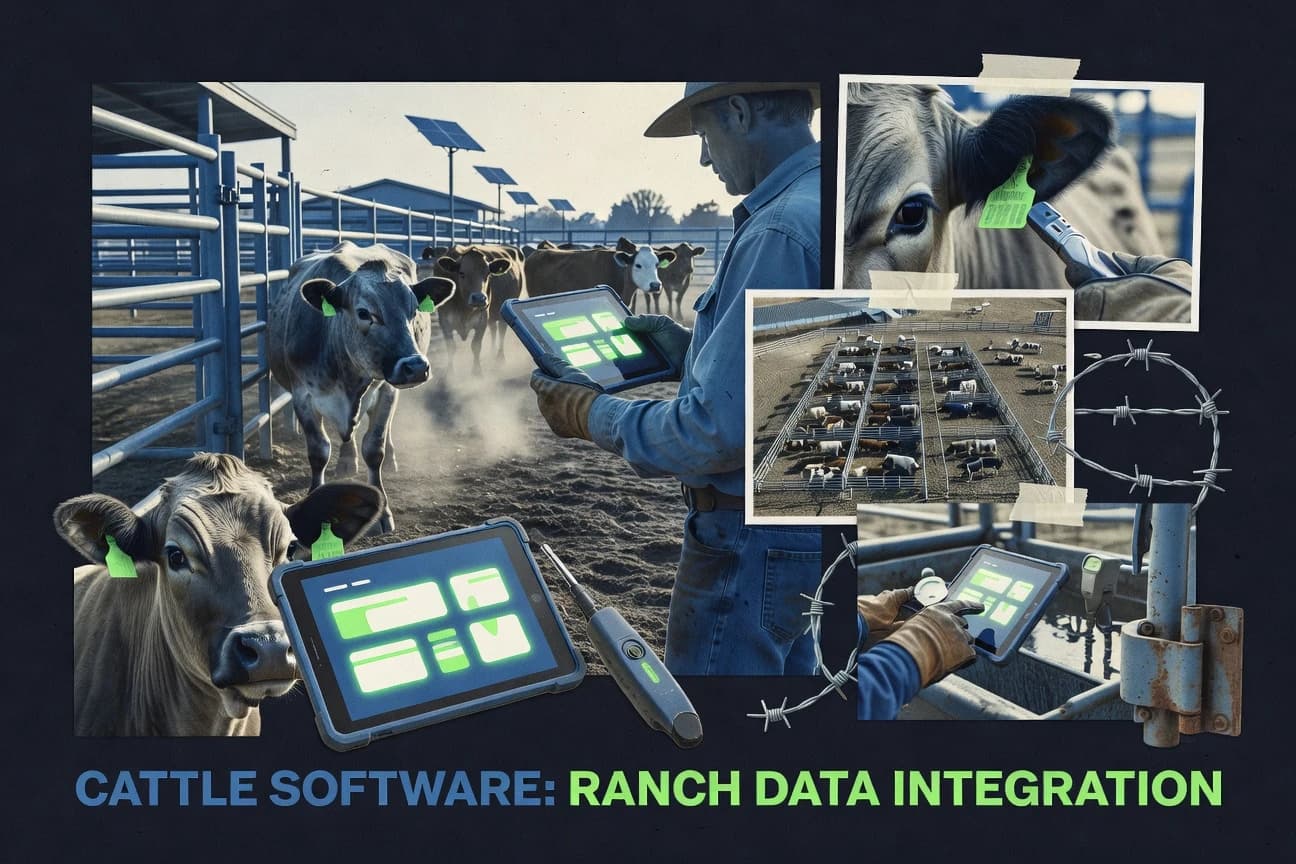
GITNUXSOFTWARE ADVICE
Agriculture FarmingTop 10 Best Cattle Software of 2026
Top 10 ranking of cattle software for farm managers and analysts, covering key features, limits, and uses for tools like CattleMax and PastureMap.

How we ranked these tools
Gitnux editors write the brief first: the topic, the inclusion rules, and the frame for what belongs.
Agents extract product evidence with provenance, then collect written reviews and transcribe video reviews and podcasts.
Framework: Features 40% · Ease 30% · Value 30%
Gitnux may earn a commission through links on this page — this does not influence rankings. Editorial policy
CattleMax is the best fit for teams that need end-to-end cattle traceability from ID events through calving and treatments, while Farmbrite is the smoother entry for keeping animal record continuity and move tracking without heavy integrations, and Allflex Livestock Intelligence T4G works best if identification-linked monitoring is the priority.
Editor’s top 3 picks
Three quick recommendations before you dive into the full comparison below — each one leads on a different dimension.
CattleMax
Inventory-linked event timelines keep breeding, pregnancy, calving, and treatments synchronized per animal record.
Best for: Fits when teams need end-to-end traceability from ID events through calving and treatments.
Allflex Livestock Intelligence T4G
Editor pickTag-driven individual event capture that updates animal records during movement and handling workflows.
Best for: Fits when cattle operations need identification-linked record continuity across handling and compliance.
PastureMap
Editor pickMap-based grazing planning links fields, dates, and grazing history for operational traceability.
Best for: Fits when grazing rotation and movement documentation are the primary farm data need.
Comparison Table
CattleMax
vertical specialistCattleMax manages cattle records, herd history, inventory, and ranch operations.
Inventory-linked event timelines keep breeding, pregnancy, calving, and treatments synchronized per animal record.
CattleMax supports structured capture of individual animal records, including identification fields, event logs, and lineage-related breeding entries. The herd calendar view helps operations teams plan upcoming checks and capture outcomes without rekeying past notes into multiple screens. Health documentation stays linked to the animal so treatments and follow-ups remain traceable across time.
A tradeoff is that advanced automation depends on how strongly the team standardizes event entry habits and uses consistent naming for lots, pens, and movement destinations. CattleMax fits best when staff need tight traceability from identification through calving outcomes and treatment history, such as dairy or beef operations running repeatable herd protocols.
- +Event logs attach directly to each individual animal record
- +Herd calendar supports planning around recurring checks
- +Health and treatment notes remain linked for withdrawal traceability
- +Inventory-driven movements reduce orphaned lot or pen records
- –Automation depth relies on consistent staff data entry patterns
- –Complex multi-herd reporting can require manual filtering
- –Third-party integrations are not as visible as in API-first cattle tools
- –Bulk edits take careful workflow setup to avoid mismatched fields
Dairy herd managers
Track breeding through calving outcomes
Fewer missed due dates
Beef cow-calf operations
Manage movement and sale lot history
Clear traceability for audits
Show 2 more scenarios
Veterinary technicians
Document treatments with withdrawal tracking
Reduced medication mix-ups
Treatment and follow-up notes remain attached to the correct animal inventory entry.
Farm admin staff
Standardize health protocols across herds
More uniform herd documentation
Health events are logged in a consistent structure across repeated protocol steps.
Best for: Fits when teams need end-to-end traceability from ID events through calving and treatments.
Allflex Livestock Intelligence T4G
vertical specialistElectronic identification and monitoring systems for cattle operations.
Tag-driven individual event capture that updates animal records during movement and handling workflows.
Allflex Livestock Intelligence T4G centers on managing individual animal records linked to electronic identification events and on building traceable herd histories for operational and reporting needs. It supports day-to-day documentation such as breeding-related records, health protocol entries, and treatment and withdrawal tracking tied back to identified animals. Integration depth is strongest when using Allflex capture devices, because the data ingestion path aligns with EID reading and tag-driven record matching.
A key tradeoff is that broad interoperability depends on integration configuration rather than being equally smooth for every third-party device category. T4G is a strong fit when farms need accurate animal-level continuity across teams, such as moving animals through handling points while keeping breeding and treatment histories consistent.
- +Animal histories stay tied to identification events for traceable records
- +Handling workflows can update records at the point of capture
- +Breeding and health entries map to individual cattle instead of pen-level notes
- +Hardware-aligned data capture reduces manual record mismatch
- –Third-party device integration can require more setup than native capture paths
- –Record entry workflows can feel structured for operations teams
- –Some reporting requires administrator-managed templates and governance
- –Automation options are centered on operational events rather than free-form workflows
Feedlot operations teams
Maintain withdrawal and treatment traceability
Fewer misapplied withdrawals
Breeding managers
Control mating and pregnancy documentation
Cleaner breeding decision records
Show 1 more scenario
Farm administrators
Coordinate multi-team herd record updates
Reduced duplicate data entry
Operational events update shared animal records so staff work from one history.
Best for: Fits when cattle operations need identification-linked record continuity across handling and compliance.
PastureMap
vertical specialistPastureMap manages grazing plans, pasture maps, livestock movements, and land records.
Map-based grazing planning links fields, dates, and grazing history for operational traceability.
PastureMap centers grazing management workflows, so day-to-day pasture rotation planning, grazing records, and field-level history are the core way to manage cattle operations. Herd records are structured around grazing context, which helps connect animal inventory needs to where and when animals are moved. The product fits teams that run recurring grazing blocks and want operational traceability rather than only animal recordkeeping.
A practical tradeoff is that PastureMap is less geared toward deep reproductive event capture like estrus synchronization and artificial insemination notes than animal-first herd management systems. PastureMap works best when grazing planning and movement documentation are the main operational pain points, and when additional veterinary detail can live in separate tools.
- +Map-first grazing planning keeps rotation decisions tied to fields
- +Grazing records create an auditable trail of pasture use
- +Animal records connect to movement context during pasture changes
- +Operational workflows align with recurring herd move routines
- –Reproductive workflow depth is weaker than animal-first systems
- –More planning discipline needed to keep field assignments consistent
- –Complex reporting for non-grazing metrics can require workarounds
- –Integrations for EID readers and scale-head data are limited
Grazing-focused farm managers
Plan pasture rotation by grazing blocks
Clear pasture utilization history
Herd operations teams
Track movements tied to grazing events
Faster movement documentation
Show 2 more scenarios
Consultants and farm advisors
Review rotation outcomes in field context
Better rotation recommendations
Compare planned versus actual field usage across grazing periods.
Small herd owners
Replace paper grazing logs
Less manual recordkeeping
Maintain daily grazing records with consistent field assignments.
Best for: Fits when grazing rotation and movement documentation are the primary farm data need.
Ranch Manager
vertical specialistRanch Manager supports cattle records, breeding data, grazing activities, and ranch administration.
Per-animal event timeline that connects identification, breeding outcomes, health treatments, and movement history in one record view.
Ranch Manager is a ranch operations system focused on individual animal records and end-to-end herd workflows from identification through sales. The app supports practical data capture for weights, breeding and pregnancy events, and health and treatment history, then organizes that history by animal so staff can find it quickly.
- +Individual animal record history ties events together across months
- +Movement tracking supports lot and inventory updates as animals change locations
- +Breeding and pregnancy event logging fits routine herd planning workflows
- +Health and treatment records keep protocol details attached to each animal
- –Bulk changes across large herds can require repeated manual record entry
- –Advanced automation and workflow branching depend on operational discipline
- –Integration depth is limited when compared with tools that support more device ecosystems
- –Reporting customization can feel constrained for niche herd KPIs
Best for: Fits when ranch teams need complete per-animal history and practical herd event tracking.
Smartbow
vertical specialistEar-tag-based localization and herd monitoring system for cattle.
Configurable herd workflows that enforce status transitions on individual animal records during breeding, calving, and follow-up steps.
Smartbow is a cattle herd management system focused on connecting animal identification, movement, and event history into one operational record. It supports structured management workflows for breeding and calving events, plus ongoing tracking for weights and herd inventory changes.
- +Event-driven records keep breeding and calving history attached to each animal
- +Operational workflows reduce duplicate entry during routine herd checks
- +Identifier-first approach supports consistent herd inventory updates
- +Configurable forms fit farm-specific processes without custom development
- –API documentation and extensibility details are limited for third-party developers
- –Role-based permissions depth may be insufficient for multi-operator governance
- –Reporting needs manual configuration for farm-specific KPI views
- –Movement workflows can require careful setup to avoid inconsistent statuses
Best for: Fits when farm teams need structured animal event tracking tied to identifiers.
HerdDogg
vertical specialistBluetooth ear-tag sensors with mobile app for cattle data collection.
Animal-history timeline view that consolidates identification, handling events, and lifecycle records in one traceable thread.
HerdDogg is a cattle herd management system focused on individual animal records and ear tag workflows. It centralizes herd inventory with move and event tracking so staff can keep identification aligned with real-world handling.
- +Individual animal records link identification to events across the herd lifecycle.
- +Event capture workflows map handling actions to auditable animal history.
- +Inventory tracking supports lot-level and movement-related record continuity.
- +Reproductive and treatment records stay tied to the same animal profile.
- –EID reader integration and scale-head integration require practical field configuration.
- –Cross-team RBAC and granular governance controls appear limited for large orgs.
- –Advanced automation like multi-step approval flows can be constrained.
- –Health protocol templates may not cover every local veterinary workflow.
Best for: Fits when cattle operations need consistent animal event capture from tags into core herd records.
AgriWebb
vertical specialistAgriWebb provides livestock records, grazing management, compliance tools, and farm planning.
Offline-ready mobile capture that syncs individual animal events into a single herd history timeline across devices.
AgriWebb is a cattle-focused farm management system built around electronic animal records tied to identification and daily farm activity capture. It supports herd management workflows such as individual animal histories, movement tracking, and structured health and treatment documentation.
- +Electronic animal record capture for daily herd events
- +Movement logging that preserves individual history across transactions
- +Breeding and calving record workflows tied to the animal card
- +Health and treatment entries with repeatable protocol fields
- –Reporting relies on consistent record entry discipline by farm staff
- –Few workflow automation hooks for multi-farm governance at scale
- –EID reader integration coverage can require pairing with existing hardware workflows
- –Complex feeding and ration workflows need careful setup to stay consistent
Best for: Fits when farm teams need animal-level histories plus practical health and breeding record capture with minimal manual rework.
Farmbrite
SMBFarmbrite combines livestock records, grazing plans, production tracking, and general farm management.
Event-linked animal history with move tracking keeps treatments and inventory changes attached to the same identifier.
Farmbrite positions itself for cattle operations that need herd management plus day-to-day documentation tied to individual animals. Records are organized around identifiable animals and move events, so inventory, treatments, and transfers can be kept in one place.
- +Animal-centric records link IDs to treatments, events, and history
- +Move and inventory tracking supports lot-level visibility during transfers
- +Recurring tasks help structure breeding and health protocol checklists
- +Import and export flows support migration and routine data reconciliation
- –Deep automation beyond checklists requires more process design effort
- –RBAC granularity can be limiting for multi-manager operations
- –EID reader and scale-head integrations are not universal without setup
- –Structured workflows for heat detection and pregnancy steps can feel rigid
Best for: Fits when a cattle team wants animal record continuity and move tracking without building custom integrations.
BoviSync
enterpriseBoviSync provides dairy herd data management, reproduction tracking, health records, and analytics.
Event-linked animal timelines that connect reproductive outcomes and health entries to the same animal profile.
BoviSync manages cattle herd records with a focus on individual animal history and traceable events from identification through lifecycle updates. The core workflow centers on maintaining consistent animal profiles, tracking breeding and calving outcomes, and logging health and treatment details tied to each animal.
- +Event-based animal history that keeps lifecycle updates tied to one identifier
- +Structured forms for health, treatments, and reproductive events
- +Workflow consistency for multi-person data entry and record maintenance
- +Integration potential through API-first extensibility for farm systems
- –Quality of automation depends on clean animal identifier setup
- –Some herd-wide analytics take extra steps versus event logs
- –Cross-farm movement workflows can require custom configuration discipline
- –Deeper governance controls require deliberate admin practices
Best for: Fits when medium farms need consistent individual animal records with event traceability.
Uniform-Agri
enterpriseUniform-Agri provides dairy herd management, animal records, reproduction tracking, and farm analytics.
Operational event journaling that connects treatments and reproduction milestones to persistent individual animal histories.
Uniform-Agri is a cattle-focused system that centers day-to-day herd management workflows rather than general farming administration. It supports individual animal records tied to identification practices and keeps breeding, health, and movement information in one place for recurring tasks.
- +Event-first record keeping for treatments, breeding milestones, and calving outcomes
- +Individual animal record structure supports long-lived herd history
- +Movement records reduce manual reconciliation between inventory lists
- +Staff access control supports multi-user farm operations
- –Automation coverage for complex herd protocols is limited
- –Integration surface for external systems is not clearly expansive
- –Data entry speed depends on consistent form configuration by admins
Best for: Fits when a cattle operation needs structured animal records and routine event capture across multiple herd users.
Conclusion
After evaluating 10 cattle software, CattleMax stands out as our overall top pick — it scored highest across our combined criteria of features, ease of use, and value, which is why it sits at #1 in the rankings above.
Use the comparison table and detailed reviews above to validate the fit against your own requirements before committing to a tool.
How to Choose the Right Cattle Software
This buyer's guide covers ten cattle software tools used for herd management and individual animal records, including CattleMax, Allflex Livestock Intelligence T4G, PastureMap, Ranch Manager, Smartbow, HerdDogg, AgriWebb, Farmbrite, BoviSync, and Uniform-Agri.
It maps each tool to concrete workflows like tag-driven animal record capture, map-first grazing planning, and inventory-linked movement timelines so teams can match software behavior to farm operations.
Cattle Software that keeps animal IDs, herd events, and operational history connected
Cattle software centralizes individual animal records and links each herd event to a persistent identity, so breeding, health treatments, movement, and calving outcomes stay traceable over time.
Some systems emphasize identification workflows built around EID capture and handling events, like Allflex Livestock Intelligence T4G, while others prioritize operational planning around land use and grazing rotation, like PastureMap.
Most teams use these tools to reduce record drift across staff, maintain auditable event trails, and keep animal histories usable for recurring protocols like vaccinations, calving follow-ups, and withdrawal tracking.
Evaluation criteria for cattle record continuity, planning traceability, and operational governance
Cattle record workflows fail when the software breaks the chain between identification, movement, and the right animal or field context.
The features that matter most show up in how event timelines get created, how workflows enforce correct status and data entry patterns, and how staff permissioning and templates control report consistency.
Inventory-linked event timelines per animal record
CattleMax keeps breeding, pregnancy, calving, and treatments synchronized using inventory-driven movements so events remain attached to the correct individual history instead of orphaned lot or pen notes.
Tag-driven event capture that updates animal profiles during handling
Allflex Livestock Intelligence T4G ties tag-based updates to handling and movement so identification events can update records at the point of capture instead of requiring later reconciliation.
Map-first grazing planning tied to field history
PastureMap links fields, dates, and grazing history into a traceable rotation record so operational decisions remain grounded in what was actually grazed rather than spreadsheet notes.
Configurable status-transition workflows for breeding and calving
Smartbow uses configurable forms and status-based processes to enforce the next step in breeding, calving, and follow-up so routine records do not drift across operators.
Offline-ready mobile capture that syncs herd timelines across devices
AgriWebb supports offline-ready mobile event capture and then syncs individual animal events into a shared herd history timeline so field work does not block record continuity.
Per-animal movement tracking that stays auditable across lots and stages
Ranch Manager connects identification, breeding outcomes, health treatments, and movement history in one record view so inventory changes remain auditable as animals change locations.
Choose the cattle tool that matches the farm's event capture and record ownership model
The first decision is which “source of truth” the operation can reliably produce, either identification and handling events in the chute like Allflex Livestock Intelligence T4G or grazing and field usage decisions like PastureMap.
The second decision is how workflows keep staff from creating inconsistent records, using enforced status transitions like Smartbow or structured offline capture like AgriWebb.
Start with the record chain that must never break
If record traceability from ID events through calving and treatments is the priority, use CattleMax because inventory-linked event timelines keep those milestones synchronized per animal record. If record continuity must update during movement and handling workflows, use Allflex Livestock Intelligence T4G because tag-driven capture updates animal records when capture happens.
Pick the workflow shape based on where data is created in the field
Choose PastureMap when field-level rotation planning and grazing history are the primary operations data, because map-first planning ties decisions to what was actually grazed. Choose HerdDogg when Bluetooth ear-tag sensor capture drives consistent animal-history timelines, because animal-history views consolidate identification, handling events, and lifecycle records.
Match automation expectations to the tool's workflow enforcement style
If automation needs are mostly structured protocol steps, Smartbow can fit because configurable herd workflows enforce status transitions on individual animal records. If automation needs are centered on repeatable data entry patterns across staff, Ranch Manager and AgriWebb fit because their event logging and record forms keep histories consistent over months.
Decide how staff will handle connectivity and multi-device capture
If field capture must work without connectivity, choose AgriWebb because offline-ready mobile capture syncs animal events into a single herd history timeline across devices. If the operation expects capture to happen around an identification hardware path, Allflex Livestock Intelligence T4G fits because its data path aligns with tag capture and handling workflows.
Verify reporting and governance fit with the team's template discipline
If report generation requires administrator-managed templates and governance, Smartbow and Allflex Livestock Intelligence T4G may need more template planning before day-to-day use. If multi-operator governance needs are strict, prioritize tools that provide granular role-based permissions and admin controls like Uniform-Agri, because cross-team governance depth is limited in several other tools.
Plan for data migration and integration dependencies before committing
If the team requires broad integrations beyond device ecosystems, tools with less visible third-party integration pathways like CattleMax can add manual filtering work for complex multi-herd reporting. If the team expects importing and exporting for reconciliation, Farmbrite fits because import and export flows support migration and routine data reconciliation.
Cattle Software segments by operational priority and record ownership
Different farms prioritize different “truth” sources, so the best fit depends on where events are created and who owns record correctness.
These segments map directly to the stated best-for guidance for each tool and highlight the workflow each tool is built to execute.
End-to-end traceability teams that need per-animal event synchronization
CattleMax fits teams that need end-to-end traceability from ID events through calving and treatments because inventory-linked event timelines keep those milestones synchronized per animal record. Ranch Manager also supports this style because it connects identification, breeding outcomes, health treatments, and movement history in one record view.
Operations that capture data at the point of handling with tag-driven updates
Allflex Livestock Intelligence T4G fits cattle operations that need identification-linked record continuity across handling and compliance because tag-driven individual event capture updates animal records during movement and handling workflows. HerdDogg fits operations that rely on ear-tag sensor capture, because animal-history timeline views consolidate tag-driven identification and lifecycle records.
Grazing-centric operations that must audit rotation decisions by field
PastureMap fits when grazing rotation and movement documentation are the primary farm data need because map-based grazing planning links fields, dates, and grazing history for operational traceability. It is less aligned with deep reproductive workflow needs compared with animal-first systems like CattleMax and Ranch Manager.
Teams that standardize protocols through enforced status transitions or structured forms
Smartbow fits farm teams that need structured animal event tracking tied to identifiers because configurable herd workflows enforce status transitions during breeding, calving, and follow-up steps. AgriWebb fits teams that want repeatable health and breeding record capture with minimal manual rework because it supports offline-ready mobile capture that syncs into a single herd history timeline across devices.
Multi-user dairy or mixed-herd teams that need routine event capture across staff
Uniform-Agri fits cattle operations that need structured animal records and routine event capture across multiple herd users because it emphasizes operational capture and staff access control for multi-user farming operations. BoviSync fits medium farms that need consistent individual animal records with event traceability because it uses structured forms for health, treatments, and reproductive events tied to the same animal profile.
Operational pitfalls that show up when Cattle Software is mismatched to field workflows
Cattle software failures usually happen when staff data entry patterns do not match the tool's assumptions, when bulk edits create field mismatches, or when integrations rely on setup discipline.
Common issues also appear in how reporting templates and workflow branching are handled across multiple herds and multiple operators.
Choosing a tool that does not preserve the event-to-animal attachment during movements
If identification and movement continuity is the priority, use CattleMax or Ranch Manager because both keep per-animal timelines connected to movement and treatments. Tools like PastureMap focus more on grazing fields and can leave reproductive workflow depth weaker than animal-first systems when that chain must stay tight.
Expecting deep automation without enforcing structured data entry patterns
If automation is expected to handle complex herd protocols without staff discipline, Smartbow and HerdDogg can still require careful setup because automation depth depends on consistent operational patterns and correct statuses. Uniform-Agri also limits automation coverage for complex herd protocols, so it works best when workflows can follow repeatable event capture.
Underestimating reporting setup requirements for niche herd KPIs
If reporting customization must be highly specific, Ranch Manager and Allflex Livestock Intelligence T4G can require administrator-managed templates and workflow discipline. CattleMax can require manual filtering for complex multi-herd reporting, so reporting needs should be validated early.
Ignoring integration paths for device capture and external data
If EID reader and scale-head integration must work out of the box, PastureMap and HerdDogg can require practical field configuration and pairing steps. If the operation depends on third-party integrations beyond the tool's primary ecosystem, CattleMax has less visible third-party integration pathways, so integration planning must be part of selection.
Allowing bulk edits without a controlled workflow for field mapping
If bulk edits are a frequent workflow, CattleMax requires careful workflow setup to avoid mismatched fields during edits. Farmbrite and BoviSync can also shift risk into record consistency because structured forms work best when identifiers and entry patterns are maintained cleanly.
How We Selected and Ranked These Tools
We evaluated CattleMax, Allflex Livestock Intelligence T4G, PastureMap, Ranch Manager, Smartbow, HerdDogg, AgriWebb, Farmbrite, BoviSync, and Uniform-Agri on features, ease of use, and value, then calculated an overall rating as a weighted average where features carry the most weight and ease of use and value each contribute the same share.
This editorial research used criteria-based scoring from the provided tool descriptions and captured strengths and limits, without assuming lab-style testing or private benchmark experiments for any product. The evaluation focused on how each tool actually handles event timelines, identification capture, planning traceability, and operational workflows across day-to-day ranch tasks.
CattleMax stands apart by tying breeding, pregnancy, calving, and treatments to inventory-linked event timelines on a per-animal basis, which directly lifted the features score and supported a higher overall rating because traceability is built into the event timeline mechanism rather than added through separate steps.
Frequently Asked Questions About Cattle Software
How does CattleMax keep reproduction timelines consistent with herd movements?
Which tools update animal records directly from EID reader workflows?
How should data migration work when switching from spreadsheets to structured animal records?
What RBAC and admin controls are typically needed for multi-user herd entry?
When should Offline capture be a deciding factor in cattle recordkeeping?
What breaks if a workflow separates movement logs from individual animal histories?
How do configurable forms and status transitions affect data quality during breeding and calving?
Which tool fits grazing rotation documentation as the primary operational record?
Where does API extensibility matter most for cattle operations with existing systems?
Tools reviewed
Primary sources checked during evaluation.
Referenced in the comparison table and product reviews above.
- Agriculture FarmingTop 10 Best Cattle Management Software of 2026
- Agriculture FarmingTop 10 Best Cattle Record Keeping Software of 2026
- Agriculture FarmingTop 10 Best Beef Cattle Software of 2026
- Agriculture FarmingTop 10 Best Cattle Tracking Software of 2026
- Agriculture FarmingTop 10 Best Cow Calf Software of 2026
Keep exploring
Comparing two specific tools?
Software Alternatives
See head-to-head software comparisons with feature breakdowns, pricing, and our recommendation for each use case.
Explore software alternatives→In this category
Agriculture Farming alternatives
See side-by-side comparisons of agriculture farming tools and pick the right one for your stack.
Compare agriculture farming tools→