GITNUXSOFTWARE ADVICE
Science ResearchTop 10 Best Biorepository Software of 2026
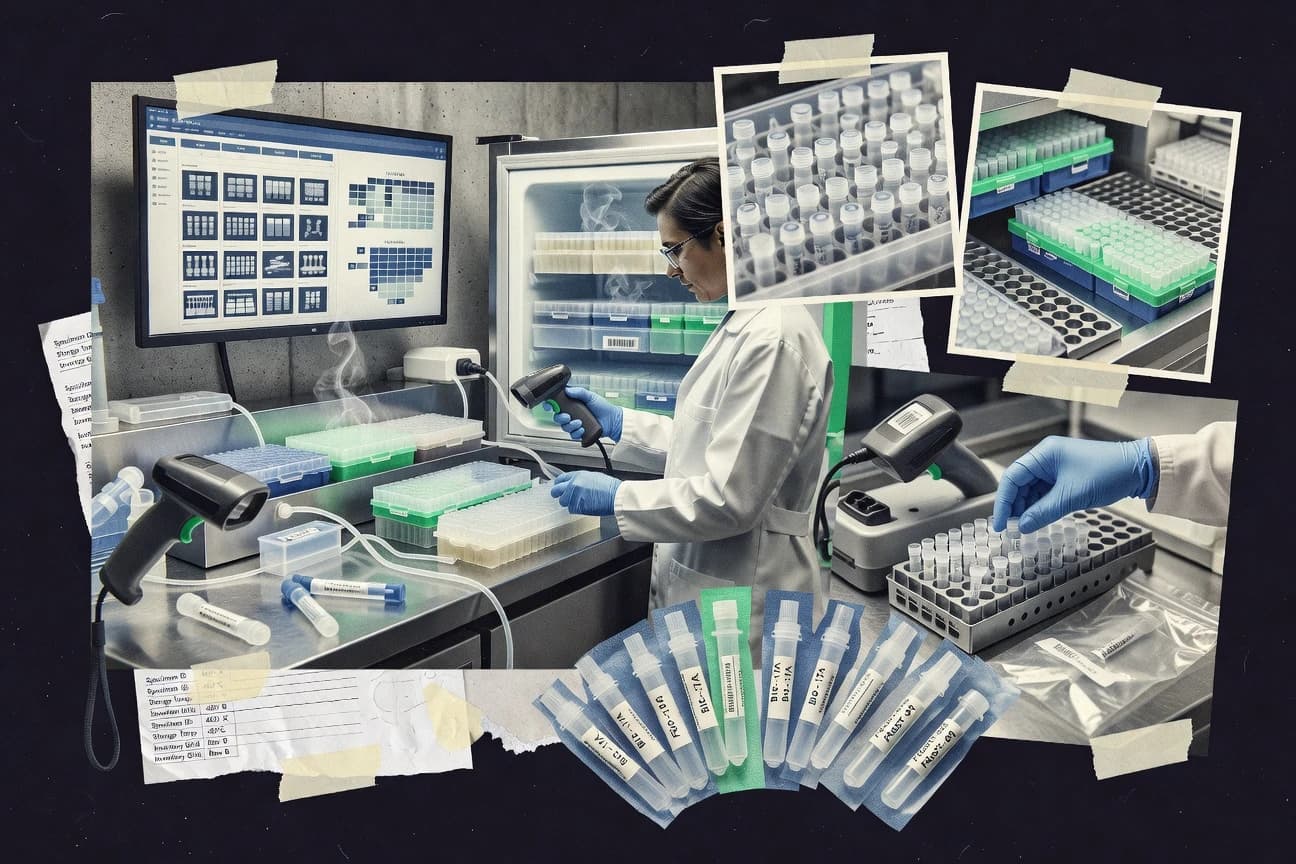
Roundup comparing biorepository software options, including fit for workflows, features, and data management needs for lab and biobank teams.

How we ranked these tools
Before any source is gathered, an editor locks the question, what qualifies, and how the piece will be judged.
Search agents gather the source set and the review record, including transcriptions of video reviews and podcasts.
Framework: Features 40% · Ease 30% · Value 30%
Gitnux may earn a commission through links on this page — this does not influence rankings. Editorial policy
Labguru is the best pick for SMB biorepositories that need barcode-driven inventory and audit history tied to freezer locations because its storage location mapping links freezer hierarchies to scan events, while Sapio Sciences is a strong alternative for teams that prioritize custody events since it captures chain-of-custody at aliquot movement time in one audit trail.
Editor’s top 3 picks
Three quick recommendations before you dive into the full comparison below — each one leads on a different dimension.
Labguru
Storage location mapping that links freezer hierarchies to barcode scan events for specimen tracking.
Best for: Fits when biorepositories need barcode-based inventory control and audit history tied to freezer locations.
Sapio Sciences
Editor pickChain of custody events are captured at aliquot movement time, linking custody, storage location, and disposition in one audit trail.
Best for: Fits when biorepositories need custody traceability and freezer automation with barcode driven workflows.
STARLIMS
Editor pickBarcode-first inventory operations tied to configurable parent-child specimen lineage for aliquot tracking.
Best for: Fits when biobanks need barcode-driven inventory control with governed workflows across freezers and sites.
Comparison Table
Labguru
SMBCombined LIMS and ELN platform with sample inventory, freezer mapping, and chain-of-custody features.
Storage location mapping that links freezer hierarchies to barcode scan events for specimen tracking.
Labguru focuses on biorepository workflows that connect sample accessioning to storage layout operations, including freezer and box mapping. The system supports specimen tracking with barcode labeling for day-to-day aliquot handling and chain-of-custody visibility across locations.
Labguru’s automation and integration surface centers on laboratory data exchange and operational synchronization rather than standalone sample spreadsheets. It also provides governance artifacts like audit history so sample movement and disposition changes can be reviewed after the fact.
- +Barcode-driven specimen tracking that ties labels to freezer and location records
- +Parent-child aliquot lineage view for audit-friendly sample movement history
- +Automation hooks for workflow execution tied to accessioning and storage steps
- +Audit trail records operational changes across inventory and disposition
- –Advanced configuration for storage hierarchies can slow initial rollout
- –Some biobank interoperability needs extra integration work for external standards
- –Temperature excursion workflows require careful process design to match operations
- –Complex disposition and consent workflows may need tighter process mapping
Best for: Fits when biorepositories need barcode-based inventory control and audit history tied to freezer locations.
Sapio Sciences
enterpriseCloud and laboratory informatics software supporting biobank, sample, and research workflows.
Chain of custody events are captured at aliquot movement time, linking custody, storage location, and disposition in one audit trail.
Sapio Sciences is built around operational specimen workflows that start with accessioning and continue through aliquot management, storage location mapping, and sample disposition handling. The audit trail records actions at the specimen and aliquot level, which supports traceable chain of custody across transfers and processing events. Barcode labeling and scanning drive pick and place operations in freezer layouts, reducing manual transcription during retrieval and replenishment.
A key tradeoff is that dense biobank governance often needs explicit configuration of workflows, locations, and roles before routine operations scale across sites. Sapio Sciences fits best when a biorepository has recurring accession and aliquot movement patterns that require controlled custody events and frequent freezer location lookups.
- +Aliquot level tracking supports controlled movements and custody events
- +Audit trail captures specimen changes tied to workflows
- +Barcode scanning works with freezer box and rack layouts
- +Role based permissions narrow who can modify sample state
- –Complex site setups require careful workflow and location configuration
- –Advanced interoperability may depend on mapping work for existing lab systems
- –Multi protocol management can require more planning for edge cases
- –Complex disposition rules can slow initial adoption for new teams
Biobank operations teams
Aliquot retrieval across freezer locations
Fewer transcription errors
Clinical study data managers
Accessioning with coded specimen linkage
Cleaner study traceability
Show 2 more scenarios
Laboratory automation coordinators
Status updates after processing runs
Faster downstream planning
Configured workflows update aliquot state as protocols complete and items move into storage.
Compliance and quality leads
Governed edits with audit review
Stronger change accountability
Role based permissions and action history support review of custody relevant changes.
Best for: Fits when biorepositories need custody traceability and freezer automation with barcode driven workflows.
STARLIMS
enterpriseEnterprise LIMS with biorepository capabilities for regulated specimen control and chain of custody.
Barcode-first inventory operations tied to configurable parent-child specimen lineage for aliquot tracking.
STARLIMS is a biorepository software used for specimen inventory management, accessioning, and end-to-end tracking from collection through storage and disposition. It emphasizes barcode-driven workflows, freezer and storage location mapping, and configurable specimen relationships for parent-child aliquot structures.
Automation and governance features cover audit trail expectations, role-based access controls, and operational configurations that support multi-site lab handling. Integration depth is built around standard lab interoperability patterns, including laboratory information system and external data exchange for downstream research repositories.
- +Barcode-centric accessioning and tracking across inventory locations
- +Configurable parent-child specimen relationships for aliquot lineage
- +Audit trail support for chain-of-custody style operational review
- +Workflow configuration for freezer and storage layouts
- –Requires careful configuration to keep freezer layouts and scans consistent
- –Biorepository data standards support can depend on integration work
- –Admin workflows can feel heavy for small teams with low specimen throughput
- –External system integration often needs project-level mapping effort
Best for: Fits when biobanks need barcode-driven inventory control with governed workflows across freezers and sites.
LabVantage Biobanking
enterpriseBiobanking capabilities within an enterprise laboratory information management platform.
Configurable biorepository inventory workflows that tie specimen genealogy to storage placement and disposition events.
LabVantage Biobanking is built around specimen and storage operations, so teams can manage aliquot management, freezer management layouts, and box and rack positioning through a structured inventory workflow. Operational governance is reinforced with activity history that supports chain of custody style tracking during transfers and status changes. Integration depth is geared toward biorepository interoperability needs, including export and exchange patterns for downstream systems and audit reporting workflows.
- +Strong specimen lifecycle workflow coverage across accession, storage, and disposition
- +Supports parent child relationships for aliquot genealogy and traceable downstream derivations
- +Storage location mapping supports box and rack layouts with barcode-driven scanning
- +Operational audit trail supports chain of custody style traceability during transfers
- –Deep configuration of freezer and container hierarchies requires upfront planning
- –Workflow changes can slow down operations without dedicated admin support
- –Barcode and label strategy needs alignment with scanning practices
- –Integration setup can require technical resources for stable data synchronization
Best for: Fits when biobanks need controlled specimen workflows and storage mapping with traceable inventory actions.
LabCollector
SMBLaboratory information management software with sample, inventory, and biobank modules.
Barcode-driven sample handling tied to aliquot lineage and custody status updates in a single workflow.
LabCollector is a biorepository management system built around accessioning, sample tracking, and storage location mapping. It supports chain of custody workflows and aliquot management tied to parent-child sample relationships.
- +Chain of custody workflows connect requests to handoffs with explicit status changes
- +Barcode-driven scanning reduces data entry errors during box and rack handling
- +Aliquot lineage modeling keeps parent-child relationships consistent across transfers
- +Inventory views map samples to physical storage locations for faster retrieval
- –Deep configuration for freezer layouts can require careful governance of templates
- –Complex disposition workflows may need process discipline to avoid stale states
- –Automation integrations often require custom mapping work for external systems
- –Role separation and audit granularity feel limited for tightly segmented governance
Best for: Fits when biorepositories need barcode-based tracking, aliquot lineage, and controlled custody workflows.
Modul-Bio MBioLIMS BioBanking
vertical specialistWeb-based LIMS specifically designed for biobanks, biological resource centres, and cohort studies.
Parent-child aliquot genealogy tied to storage mapping, so freezer location history remains traceable per derivative sample.
Modul-Bio MBioLIMS BioBanking is a biorepository-focused LIMS capability set for managing biospecimen inventory, storage locations, and custody-linked sample workflows. It centers on accessioning, barcode-driven tracking across freezer layouts, and controlled specimen state changes for disposition and downstream use.
- +Strong specimen genealogy support for parent-child aliquot lineage tracking
- +Barcode-driven movement capture across freezer layouts reduces manual data entry
- +Configurable accessioning and handling workflows fit staged biobank operations
- +Audit trail coverage supports chain of custody requirements for regulated work
- –Workflow configuration requires governance discipline to avoid inconsistent specimen states
- –Advanced reporting depends on administrators building query and views
- –Integration effort can be material when the LIMS-to-biobank boundaries are unclear
- –Freezer layout accuracy is critical and errors propagate into scan-based workflows
Best for: Fits when biobank operations need scan-based inventory control and custody-linked workflow states.
BSI Systems
vertical specialistBiological Specimen Inventory LIMS for customizable specimen lifecycle tracking across multi-repository operations.
Traceable handling records that connect specimen identity to scan events and storage locations within configured workflows.
BSI Systems provides biorepository software for sample accessioning, inventory control, and freezer location mapping. Its distinct focus is operational workflows around specimen identity, storage layout navigation, and traceable handling across the sample lifecycle.
- +Barcode driven specimen lookup tied to freezer and location mapping
- +Chain of custody style handling records with time ordered audit history
- +Supports parent child sample relationships for derived and processed specimens
- +Administrative roles and controlled workflow states for multi user operations
- –Deep configuration is needed to align freezer layouts and barcode standards
- –API coverage for external systems is narrower than platforms built for HL7 FHIR exchange
- –Automations depend on configured workflow templates rather than rule authoring
- –Cross site interoperability tooling is limited for multi repository data standards
Best for: Fits when biobanks need strong barcode and freezer location workflows with tight custody audit trails and role controlled operations.
Instem Matrix Gemini Biobank Manager
enterpriseLIMS with a dedicated biobank management module supporting ISBER best practices and consent tracking.
Workflow-driven handling of specimen and aliquot lineage tied to storage moves, so chain-of-events remains consistent during processing.
Instem Matrix Gemini Biobank Manager manages biobank sample accessioning, storage locations, and tracking across freezer layouts with barcode-friendly workflows. The core focus centers on parent-child relationships between specimens and aliquots, plus custody-style history for changes in sample location and disposition.
- +Configurable accessioning and storage workflow steps for consistent intake handling
- +Explicit support for parent-child specimen and aliquot lineage during processing
- +Barcode-oriented scanning flows for faster specimen status and location updates
- +Audit-style traceability across storage and disposition changes for governance
- –Deep configuration is required to match complex freezer and box layouts
- –HL7 or FHIR connectivity depends on integration work rather than out-of-the-box mapping
- –Advanced temperature and freeze-thaw modeling requires careful process alignment
- –Complex multi-site governance needs more administrative overhead than smaller operations
Best for: Fits when mid-size biobanks need workflow-driven accessioning with strong aliquot lineage and storage tracking.
Nautilus LIMS
enterpriseLaboratory information management system from Thermo Fisher Scientific with biobanking and sample management modules.
Custody-aware sample accessioning tied to structured parent-child lineage and barcode-driven inventory state updates.
Nautilus LIMS tracks specimens through collection, processing, and storage operations with freezer and location mapping for boxes, racks, and storage positions. Sample accessioning workflows tie incoming materials to donor or subject-coded identifiers and chain of custody records. Barcode labeling and 2D scanning reduce manual transcription errors during box moves, aliquoting, and retrieval.
- +Strong custody-aware specimen tracking for audit-friendly transitions
- +2D barcode scanning supports fast inventory moves and aliquot handling
- +Parent-child relationships maintain lineage from collection to derived aliquots
- +Freezer and storage location mapping supports precise box and rack layouts
- –Workflow and status setup requires governance discipline across sites
- –Integration depth varies by lab system and may need custom mapping
- –Complex layouts can increase administrator configuration effort
- –Reporting for nonstandard biobank KPIs may require additional configuration
Best for: Fits when biobanks need barcode-driven specimen lineage with custody tracking across multiple storage layouts.
LabKey Sample Manager
enterpriseCloud-based biorepository software for specimen lifecycle tracking, freezer storage, and chain-of-custody management.
Sample accessioning and disposition updates run against a governed schema with lineage-aware relationships and a queryable audit trail.
LabKey Sample Manager supports biorepository sample accessioning and storage location tracking with barcode-driven workflows. LabKey’s sample and parent child relationships, disposition logic, and audit trail are implemented through its governed data tables and query layer.
- +Audit trail on sample changes with role-based access controls
- +Parent child relationships enable lineage views across aliquots
- +Barcode and label workflows reduce manual inventory entry errors
- +API support enables automated accessioning and status updates
- –Complex configuration for freezer layouts and barcode label templates
- –Workflow customization depends on scripting and LabKey server features
- –Some biobank interoperability needs extra integration work
- –Operational governance is stronger for structured data than ad hoc spreadsheets
Best for: Fits when biorepository teams need governed sample workflows with lineage and barcode operations plus API automation.
Conclusion
After evaluating 10 biorepository software, Labguru stands out as our overall top pick — it scored highest across our combined criteria of features, ease of use, and value, which is why it sits at #1 in the rankings above.
Use the comparison table and detailed reviews above to validate the fit against your own requirements before committing to a tool.
How to Choose the Right Biorepository Software
This buyer’s guide covers 10 biorepository software platforms focused on biospecimen inventory management, sample accessioning, and chain of custody workflows using barcode-driven operations. Sapio Sciences, LabVantage Biobanking, Nautilus LIMS, LabCollector, LabKey Sample Manager, STARLIMS, Labguru, BSI Systems, Instem Matrix Gemini Biobank Manager, and Modul-Bio MBioLIMS BioBanking are included.
Across the tools, integration depth, automation and API surface, and admin and governance controls determine whether teams can keep custody, storage location mapping, and disposition states consistent during high-throughput freezer operations. Each section centers on how access controls, audit trails, and workflow configuration affect specimen tracking across aliquot lineage and freezer layouts.
Biorepository Software for governed biospecimen inventory, custody, and aliquot lineage
Biorepository software manages the end-to-end lifecycle of biospecimens from accessioning through storage moves and final disposition, while keeping storage location mapping tied to physical box and rack layouts. Many systems model parent-child aliquot genealogy so downstream derivatives retain traceable lineage during repeated freeze-thaw cycle events.
Platforms such as Sapio Sciences and LabVantage Biobanking tie chain of custody events to movement time and link specimen changes to configured workflows, including barcode scans that update inventory state. These tools also differ in how they support governed workflows and extensibility through automation interfaces, which affects integration with lab systems and audit readiness for custody transitions.
Integration, custody automation, and governed specimen lineage
Biorepository software must keep chain of custody, storage location mapping, and disposition states aligned as barcodes drive inventory moves across freezer layouts. The practical differentiators are how each platform links custody events to aliquot movements, how workflow configuration is governed, and how extensibility is delivered through an automation and API surface.
Custody events tied to storage moves and disposition
Sapio Sciences captures chain of custody events at aliquot movement time and ties custody to storage location and disposition in one audit trail. LabCollector connects requests to handoffs with explicit status changes in barcode-driven workflows.
Parent-child aliquot genealogy across inventory moves
LabVantage Biobanking supports parent child relationships so aliquot genealogy stays traceable from storage placement through disposition. LabKey Sample Manager models parent child relationships so lineage views remain available across barcode operations.
Barcode-driven state updates across box and rack layouts
Nautilus LIMS uses 2D barcode scanning to update inventory state during custody-aware specimen accessioning across multiple storage layouts. Labguru ties barcode scan events to freezer location mapping so specimen identity stays aligned with freezer hierarchies.
Governed workflow execution with audit trail visibility
LabKey Sample Manager runs sample accessioning and disposition updates against a governed schema with a queryable audit trail. STARLIMS supports barcode-first inventory operations with configurable parent-child lineage tied to configurable inventory locations.
Interoperability via automation and API surface depth
LabKey Sample Manager supports API automation alongside governed workflows and barcode operations for integration with lab systems. Sapio Sciences may require mapping work for existing lab system interoperability when lab integrations are not already aligned to configured workflows.
Configuration and governance controls for freezer hierarchies
LabVantage Biobanking provides controlled specimen workflows and storage mapping but requires upfront planning for deep freezer and container hierarchy configuration. Nautilus LIMS demands governance discipline for workflow and status setup across sites to avoid inconsistent custody transitions.
Choose based on workflow model, integration surface, and governance needs
The main decision is how the platform represents custody and inventory state transitions during accessioning, storage moves, and disposition. The next decision is whether the team can govern freezer templates and status workflows at scale, and whether integrations will be handled through an API automation surface or manual mapping work.
Map custody to movement time or to workflow handoffs
Select Sapio Sciences when custody events must be captured at aliquot movement time so audit trail entries link custody, storage location, and disposition in one sequence. Select LabCollector when custody visibility is driven by explicit request-to-handoff status changes within a barcode-driven chain of custody workflow.
Confirm the platform’s lineage model matches parent-child operations
Choose LabVantage Biobanking or LabKey Sample Manager when the biorepository needs parent child relationships that remain queryable from accessioning through aliquot lineage and downstream derivations. Choose STARLIMS or Labguru when the lineage view must stay tightly coupled to barcode-first inventory operations and location mapping during active freezer handling.
Test barcode scanning coverage against the planned storage layout complexity
Choose Nautilus LIMS when 2D barcode scanning must update inventory state across multiple storage layouts while maintaining custody-aware specimen tracking. Choose Labguru or BSI Systems when the barcode lookup flow must tie directly to freezer hierarchies and configured location records during daily retrieval and put-away.
Decide how integrations will be built and who owns mapping work
Choose LabKey Sample Manager when the integration path expects API automation around a governed schema and lineage-aware relationships. Choose Sapio Sciences when the integration path is willing to do mapping work for existing lab systems so interoperability aligns to configured workflows.
Validate freezer template governance to prevent stale states
Choose LabVantage Biobanking when the admin team can invest in upfront planning for freezer and container hierarchies so workflow changes do not slow operations. Choose Nautilus LIMS or LabCollector when governance discipline across sites is available to keep workflow and status setup consistent and prevent stale disposition states.
Teams that should evaluate these platforms first
Biorepository teams should evaluate these platforms when custody and storage location mapping must remain consistent across aliquot movements, freezer layouts, and disposition workflows. The best fit depends on whether lineage visibility is a core requirement and whether operations rely on barcode-driven throughput that requires workflow state correctness.
Biobanks running high-volume freezer operations with 2D barcode scanning
Nautilus LIMS supports 2D barcode scanning to update inventory state during custody-aware accessioning and barcode-driven specimen lineage handling.
Biorepositories that must tie custody events to movement time and disposition in one audit trail
Sapio Sciences records chain of custody events at aliquot movement time and links those events to storage location and disposition.
Programs that need governed lineage and lineage views across parent-child aliquots
LabKey Sample Manager provides governed schema support and parent child relationships that keep lineage views queryable across aliquot operations.
Organizations that want configurable workflows with traceable lifecycle coverage
LabVantage Biobanking delivers specimen lifecycle workflow coverage across accession, storage, and disposition, with parent child relationships tied to inventory placement.
Teams integrating external systems and requiring API automation for workflow execution
LabKey Sample Manager includes API automation for governed sample workflows, while Sapio Sciences may require mapping work for interoperability with existing lab systems.
Common configuration and operational pitfalls in Biorepository Software rollouts
Rollouts fail when freezer hierarchy templates, barcode label templates, or workflow status setups diverge from real-world handling patterns. Operational risk also rises when audit trail visibility and lineage correctness are treated as afterthoughts instead of enforced behaviors during barcode-driven custody transitions.
Treating freezer layouts and barcode label templates as a one-time setup
LabVantage Biobanking requires upfront planning for freezer and container hierarchies, and LabKey Sample Manager requires configuration for freezer layouts and barcode label templates to avoid mismatches during scanning.
Allowing workflow status definitions to drift across sites
Nautilus LIMS requires governance discipline across sites for workflow and status setup, and LabCollector can accumulate stale states when disposition workflows are not followed with consistent process discipline.
Assuming lineage visibility exists without aligning parent-child relationships to operations
LabKey Sample Manager enables lineage views through parent child relationships only when configured to match the planned aliquot workflow steps, and LabVantage Biobanking keeps genealogy traceable only when its controlled specimen lifecycle workflows are maintained.
Planning integrations without accounting for mapping work
Sapio Sciences interoperability may depend on mapping work for existing lab systems, and BSI Systems has narrower API coverage for external systems compared to platforms designed for HL7 FHIR exchange.
How We Selected and Ranked These Tools
We evaluated biorepository software for integration depth, automation and API surface, and admin and governance controls that affect chain of custody, storage location mapping, and disposition state correctness. Feature coverage accounted for 40% of the ranking, ease and rollout friction accounted for 30%, and operational value accounted for the remaining 30%.
Sapio Sciences earned the top position because chain of custody events are captured at aliquot movement time and tied to storage location and disposition in one audit trail, which directly reduces custody drift during barcode-driven freezer operations. The ranking also reflected how well each platform keeps parent-child lineage and barcode-driven inventory state updates aligned during configured workflows.
Frequently Asked Questions About Biorepository Software
How do Sapio Sciences and LabKey Sample Manager handle accessioning workflows with parent-child lineage?
Which tools provide an API or programmatic surface for automation of sample inventory updates?
When does barcode scanning integrate into inventory state updates across tools like Nautilus LIMS and LabCollector?
What breaks if chain-of-custody events are captured at the wrong workflow stage, as compared across Sapio Sciences and BSI Systems?
Which biorepository systems support SSO and role-based access controls for sample management operations?
How does LabVantage Biobanking compare to Instem Matrix Gemini Biobank Manager for configuring workflow-driven storage mapping and disposition decisions?
Where does modular extensibility fit when integrating biobank operations with external lab systems, and how do Labguru and Modul-Bio MBioLIMS BioBanking differ?
What integration or data-migration approach is required when replacing spreadsheet-based freezer tracking with freezer layout mapping in STARLIMS and LabCollector?
What tradeoff appears when a team needs custody-aware genealogy at aliquot movement time, compared across STARLIMS and Modul-Bio MBioLIMS BioBanking?
Tools reviewed
Primary sources checked during evaluation.
Referenced in the comparison table and product reviews above.
Funding and competing interests
This study was co-funded by several of the vendors assessed in it. No single vendor funded it. Funders could propose the market studied.
They had no role in selecting vendors, setting or weighting criteria, analysing data or drawing conclusions, and they received the same factual-accuracy check as every other vendor assessed.
Market definition, inclusion rules and criteria weights were fixed by an editor before research began and did not change afterwards. Editorial process →
- Science ResearchTop 10 Best Biorepository Management Software of 2026
- Business FinanceTop 10 Best Document Repository Software of 2026
- Healthcare MedicineTop 10 Best Blood Banking Software of 2026
- Data Science AnalyticsTop 10 Best Biostatistics Software of 2026
- Science ResearchTop 10 Best Medical Research Software of 2026
Keep exploring
Comparing two specific tools?
Software Alternatives
See head-to-head software comparisons with feature breakdowns, pricing, and our recommendation for each use case.
Explore software alternatives→In this category
Science Research alternatives
See side-by-side comparisons of science research tools and pick the right one for your stack.
Compare science research tools→